8 Arizona Shrubs That Stay Full Without Constant Summer Watering
Arizona yards are honest. They will tell you exactly what they think of your plant choices. Usually by August, usually without mercy.
The nursery visit goes well. The plants look fresh and full of potential sitting in their little black pots. You get them home, get them in the ground, and feel genuinely good about the whole thing.
Then summer arrives, and not everyone makes it to September looking the way you hoped.
Some shrubs quietly demand more water, more attention, and more patience than any reasonable person signed up for. Others seem to read the situation immediately and just get on with it.
The difference between those two groups is not always obvious at the nursery. That is exactly what makes finding the right shrub feel like discovering a well-kept secret.
And once you know which plants actually belong here, your yard starts working with you instead of against you. If only someone had pointed them out earlier, right?
1. Texas Sage Keeps Its Silver Shape With Low Water
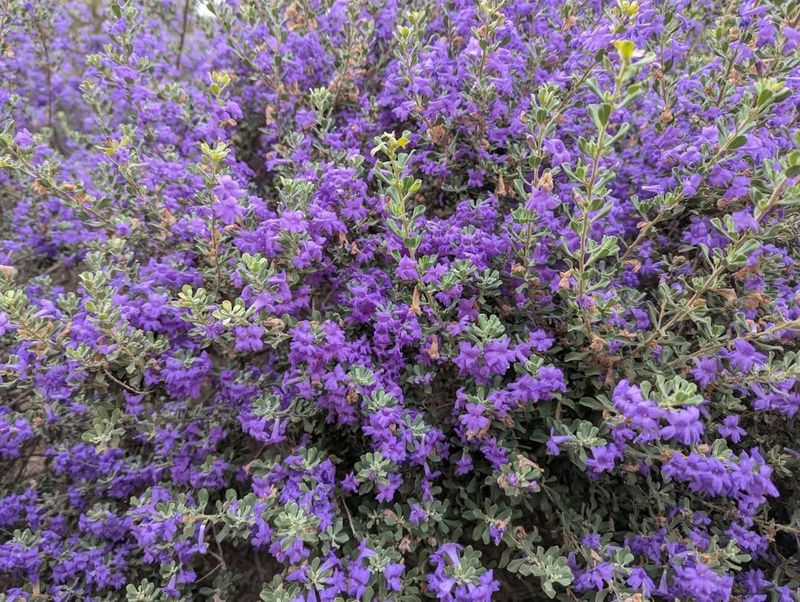
Texas sage knows how to look polished in serious heat. That silvery foliage catches the light, softens harsh spaces, and gives the yard a calm desert glow.
Then, when conditions line up, purple blooms suddenly appear like the plant had been saving a secret. That is part of its charm.
This shrub is a favorite in many Arizona landscapes because it can stay full without constant watering once established. Its pale leaves help reflect sunlight, which gives it that cool-toned look even when the air feels anything but cool.
Texas sage usually grows into a rounded shrub around five or six feet tall and wide. That size makes it useful as a loose screen, a background plant, or a soft hedge. It can also anchor a dry front yard without looking stiff.
Give it full sun if you want the best form and bloom potential. This is not a plant that wants to sit in deep shade and ponder life. It wants light, heat, and space.
Well-drained soil matters too. Rocky or sandy ground can suit it well. Heavy soil that holds water for too long may cause problems, so avoid soggy planting spots.
During the first year or two, water deeply enough to help roots settle. After that, Texas sage often needs far less attention. An occasional deep soak during the hottest stretches may keep it looking better.
Pruning should stay light. A gentle shaping once a year can help keep the mound tidy. Avoid cutting it into a tight ball, because the natural form is part of the beauty.
You may hear people call it a “barometer bush” because blooms often follow humidity shifts. That makes it feel like a plant with a weather report hidden in its branches.
So just plant it well, give it room, and let the silver do the talking.
2. Fairy Duster Brings Airy Blooms To Dry Arizona Beds
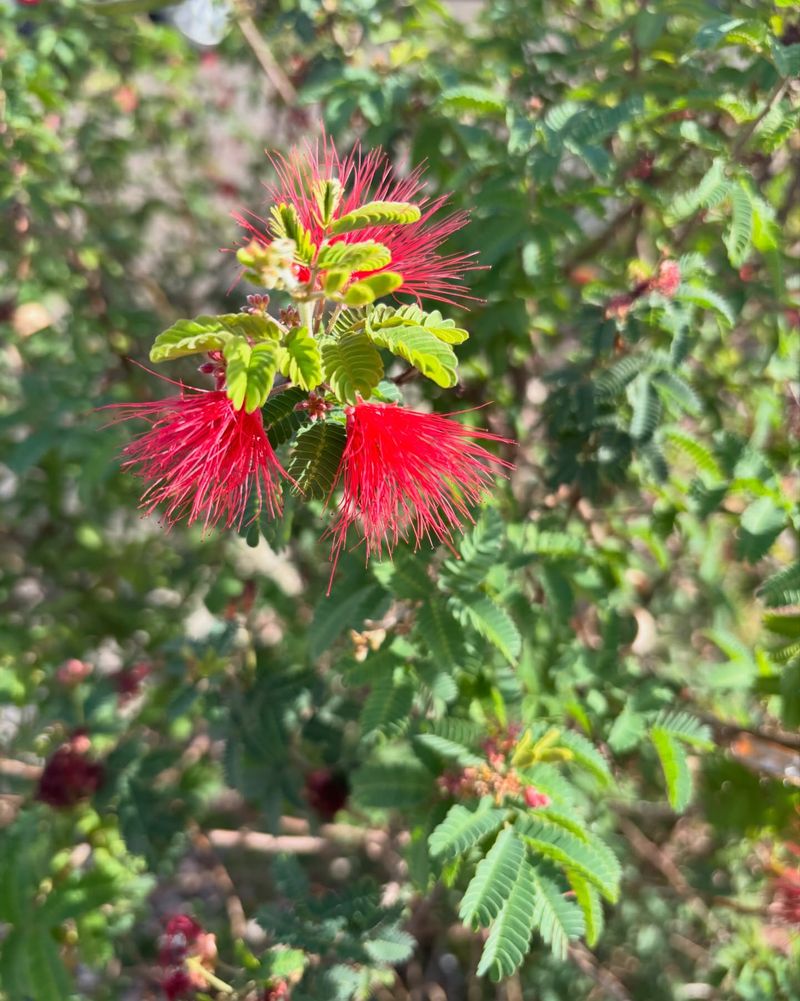
Fairy duster sounds like something from a storybook. Then you see the blooms, and the name makes sense.
Your Arizona Garden Changes Every Week. Your Plan Should Too.
Gardening in Arizona changes quickly throughout the season. Every Friday you’ll receive a simple weekly plan showing exactly what to plant, prune, fertilize, harvest, and protect so you never miss the right timing.
Those fluffy pink-red flowers look soft, playful, and almost too delicate for an Arizona summer. But this shrub has more grit than its name suggests.
Fairy duster grows as a low, airy mound, often around two to four feet tall. That makes it helpful in dry borders, path edges, rock gardens, and open spaces that need softness without bulk.
Its fine-textured foliage gives the bed a lighter feel. In a landscape filled with gravel, stone, cactus, and bold shapes, fairy duster adds a welcome contrast.
The flowers can attract hummingbirds and native bees. That means this small shrub can bring movement and life into a quiet corner of the yard. If you like watching the garden from a patio chair, this plant gives you a reason to look twice.
Fairy duster usually blooms in late winter and spring. It may bloom again after summer rains, especially when conditions are favorable. That second little show can feel like a bonus round.
Plant it in full sun or light shade. Full sun often brings the strongest growth, but a little filtered shade may help in extra hot spots.
Well-drained soil is important. This shrub does not need rich, pampered ground. It is more comfortable in lean desert soil than in a constantly wet bed.
Water regularly during the first season while the roots settle. Once established, fairy duster may get by with very little extra water. A deep drink during long hot stretches can help it stay fuller.
Pruning is simple. Trim lightly if the shape gets uneven, but let the plant keep its relaxed, airy form. It looks delicate, but it knows how to handle a dry Arizona bed with style.
3. Chuparosa Fills Sunny Spaces With Hummingbird Color
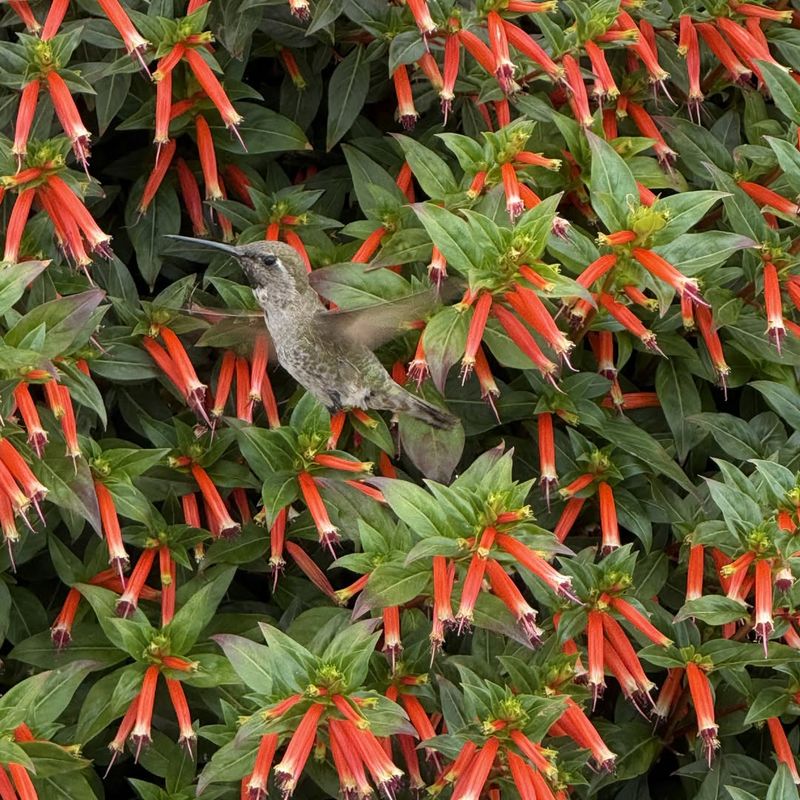
Some yard corners seem to dare you. They get full sun. They reflect heat from walls or pavement. They look bare no matter what you try.
Chuparosa may be the shrub that turns that stubborn spot into something lively. This Sonoran Desert native brings bright tubular flowers, often in red or orange-red tones.
Those blooms are shaped like an invitation for hummingbirds. And hummingbirds tend to accept. That makes chuparosa a strong choice if you want color and wildlife activity without constant fussing.
The plant usually grows about four to five feet tall and wide. It has a loose, open form, so it fills space without feeling too heavy.
The stems can stay green even when leaves become sparse during dry periods. That green-stemmed look helps it keep a presence in the landscape even when conditions are tough.
Chuparosa often blooms from late winter into spring. It may offer another round after monsoon moisture arrives. For a low-water yard, that timing can be a real treat.
Plant it in full sun for the best bloom show. It can handle reflected heat near south- or west-facing walls better than many softer shrubs.
Still, young plants need help getting started. Water deeply during the first season so the roots can settle into the soil. After establishment, ease back and let the plant adapt to its dry rhythm.
Good drainage matters. Avoid placing chuparosa where water lingers after irrigation or storms. A light pruning after bloom can help guide the shape. You do not need to make it formal. This shrub looks best with some natural movement.
Think of chuparosa as the garden’s hummer magnet with desert manners. It brings color, energy, and a little winged excitement to places that need a spark.
4. Desert Ruellia Holds A Soft Look Through Heat
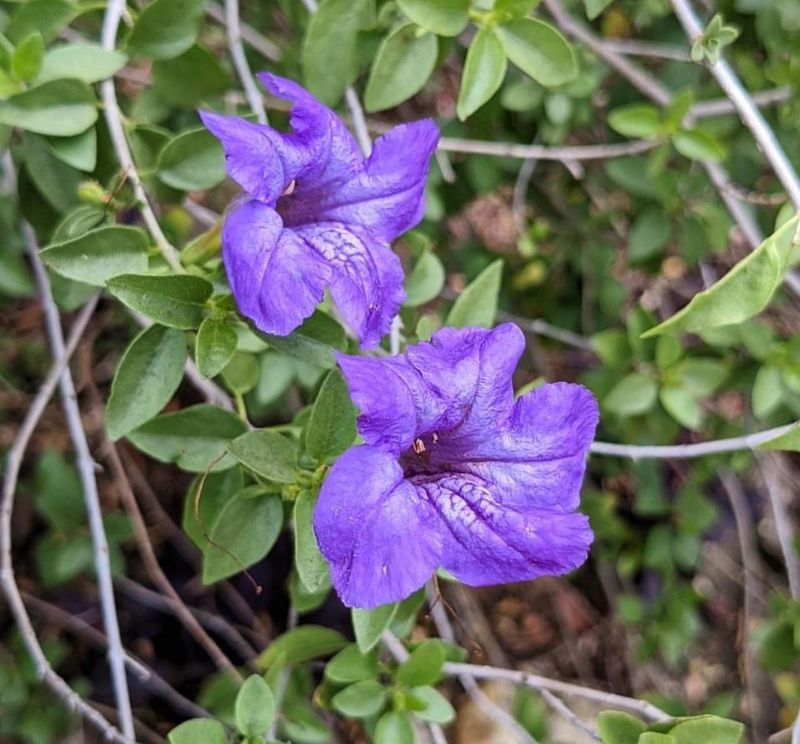
Desert-tough plants do not all have to look sharp and serious. Desert ruellia is a perfect example.
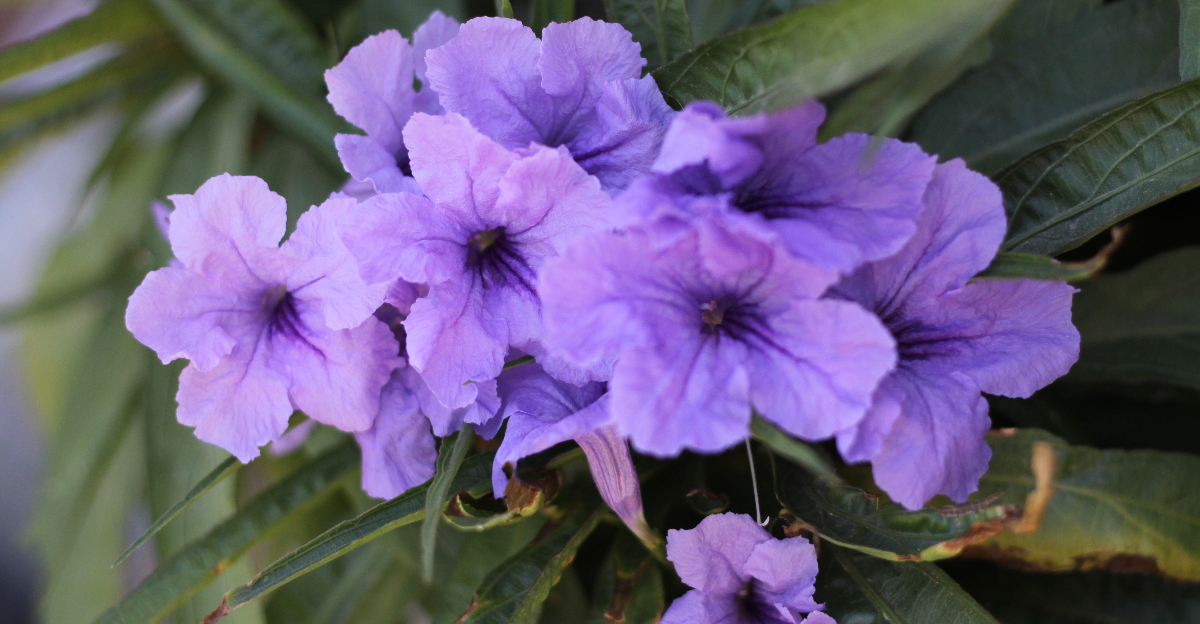
This shrub forms a soft, rounded mound with cheerful purple trumpet-shaped flowers. It brings a lush feeling to dry landscapes without asking for tropical-style watering.
That makes it especially useful in Arizona yards where you want a gentler look. Not every bed needs spikes, stones, and hard lines. Sometimes a soft shape changes the whole mood.
Desert ruellia usually grows around two to three feet tall and three to four feet wide. That size works well in front borders, along walkways, or around larger desert plants.
It can fill empty spaces without feeling oversized. It also helps connect bolder plants visually, like a quiet bridge between strong shapes.
Purple flowers often appear heavily in spring and fall. Lighter blooming may continue through summer, depending on heat, water, and exposure. Even when it is not blooming, the rounded form gives the bed structure.
Plant desert ruellia in full sun to partial shade. That flexibility is helpful in real yards, where light can shift around walls, patios, and desert trees.
In very hot spots, a bit of afternoon shade may help the foliage look fresher. In brighter areas, bloom may be stronger.
Water regularly during establishment. Once roots are settled, a deep watering every few weeks in summer may be enough in many landscapes.
Avoid shallow daily watering. Deep, less frequent watering usually supports stronger root growth. Prune lightly if needed to keep the mound neat. Do not over-shape it into something stiff. Its relaxed form is part of the appeal.
It is purple, practical, and pleasantly unfussy. That is ruellia good news for a hot, dry bed.
5. Turpentine Bush Stays Compact In Harsh Desert Sun
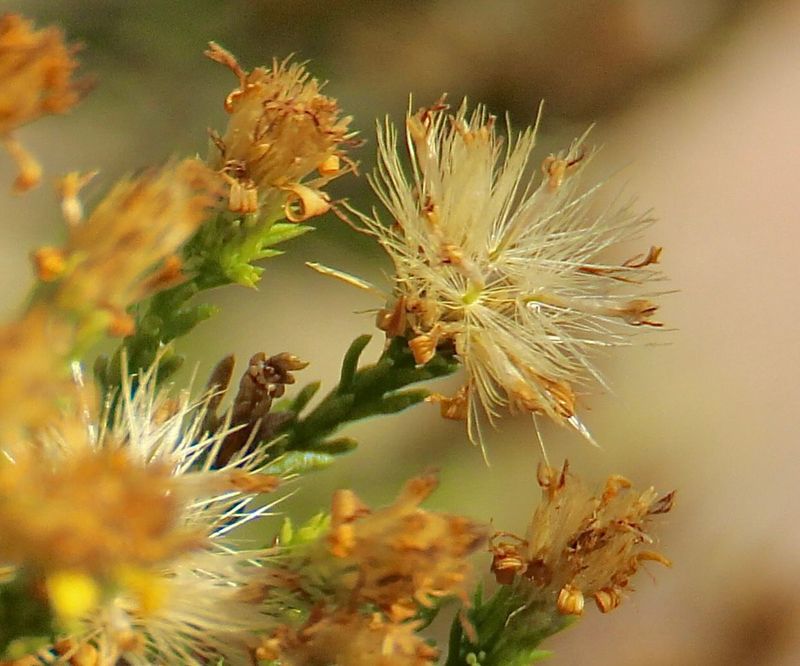
Turpentine bush is not always the first shrub people notice at the nursery. That might be a mistake.
This compact native shrub has a quiet confidence that makes it valuable in low-care Arizona landscapes.
It stays relatively small, keeps a tidy shape, and brings golden flowers in fall when many yards need a lift. That late-season color is one of its best features.
By the time autumn arrives, some desert beds can look a little flat. Turpentine bush steps in with bright yellow blooms that feel surprisingly cheerful against gravel and rock.
The plant usually stays under three feet tall and wide. That compact size makes it useful in borders, rock gardens, entry beds, and small spaces where larger shrubs would feel pushy.
It can also work well in mass plantings. Several plants repeated along a slope or dry edge can create rhythm without much maintenance.
Full sun suits turpentine bush well. It is comfortable in bright, exposed spaces and can handle reflected heat once established.
Rocky, lean, and well-drained soil is often a good match. This is not a shrub that needs rich soil or constant attention.
The leaves release a resinous scent when brushed or crushed. Some gardeners enjoy it. Others simply let the plant do its job from a respectful distance. Either way, the scent is part of its desert personality.
Water during the first summer while roots establish. After that, it may need only occasional deep watering during long dry stretches.
Pruning is usually minimal. A light trim after bloom or in early spring can help keep it compact.
Turpentine bush is the small shrub with golden timing. It does not demand attention all year, then quietly steals the fall scene. That is a bright idea for tight desert spaces.
6. Brittlebush Covers Bare Spots With Silver Foliage
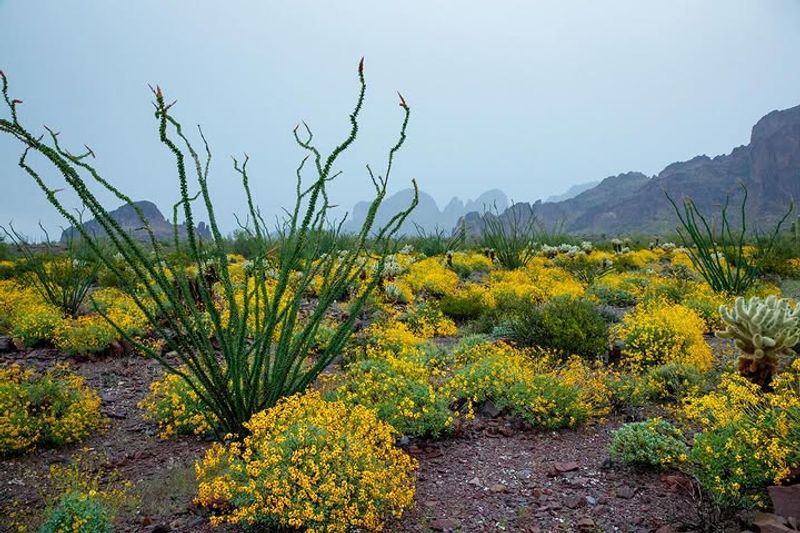
Almost every yard seems to have one awkward patch. A gravel bed that looks too empty. A slope that needs coverage. A strip between the driveway and wall that never feels finished.
Brittlebush was made for places like that. This native shrub forms a rounded mound of silver-gray foliage that reflects sunlight beautifully. Even before it blooms, it can make a dry area look more intentional.
That silver color is a design gift. It pairs well with gravel, boulders, cactus, agave, and warm-toned walls. It also helps brighten areas that might otherwise look flat.
In spring, brittlebush sends up stems topped with yellow daisy-like flowers. The contrast between yellow blooms and silver leaves can be striking. It gives the plant a cheerful, desert-wildflower feeling.
Brittlebush usually grows around two to three feet tall and wide. That makes it useful for mass planting, slopes, open beds, and naturalistic desert gardens.
During the hottest, driest stretches, the plant may shed some leaves to conserve moisture. That is part of its desert strategy. When conditions improve, fresh growth often returns.
Plant it in full sun and fast-draining soil. Avoid low areas where water collects. This shrub prefers dry, lean conditions over rich, wet ones.
Water during the first growing season while roots settle. Once established, brittlebush often needs very little extra irrigation.
A light trim after spring bloom can help keep the mound tidier. Avoid heavy shaping, since the natural form is part of the charm.
Brittlebush can turn bare, hot areas into planted spaces that look planned rather than forgotten. That is a brittle bit brilliant for Arizona gardens.
7. Littleleaf Cordia Handles Dry Heat With A Neat Form
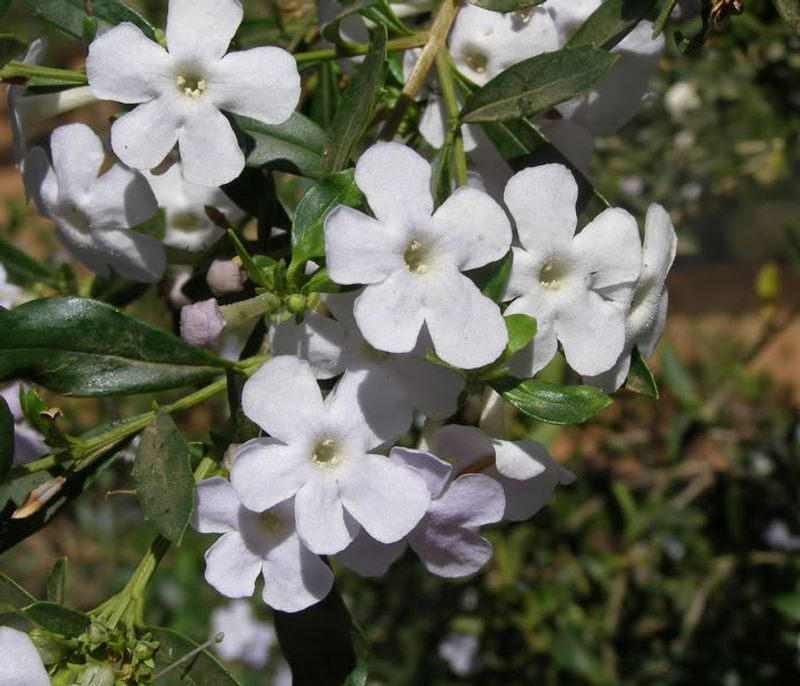
Some desert shrubs look wild. Littleleaf cordia looks a bit more buttoned-up. That makes it especially useful near entries, patios, walkways, and foundation areas where you want a cleaner appearance.
It has small dark green leaves, a naturally tidy shape, and white flowers that brighten the plant through warm months. For a low-water shrub, it can look surprisingly polished.
Littleleaf cordia usually grows around four to six feet tall and wide. That gives it enough size to work as a foundation shrub, informal screen, or background plant. It can also soften hard surfaces near stucco walls, pavers, or stone borders.
One of its strongest qualities is heat tolerance. It can handle reflected heat from walls, driveways, and patios once established. That makes it helpful in the exact spots where many plants look stressed.
Plant it in full sun for strong flowering and a fuller shape. Some light shade may work too, especially in extra hot microclimates.
Well-drained soil is important. Like many desert-friendly shrubs, littleleaf cordia does not appreciate sitting in wet soil for long.
During the first year, water deeply and regularly enough to establish roots. After a season or two, you can usually reduce irrigation. A deep soak once or twice a month in summer may support a fuller look.
Pruning can stay light. Trim gently to guide the form or remove awkward growth. Avoid over-shearing, which can take away its natural charm.
This shrub works nicely with desert ruellia, fairy duster, agave, or ornamental grasses. It brings structure without looking stiff.
Think of littleleaf cordia as the desert yard’s neat friend. It shows up looking composed, handles heat well, and does not ask for constant pampering. That is useful landscaping, am I right?
8. Cliffrose Adds Feathery Texture Without Daily Soaking
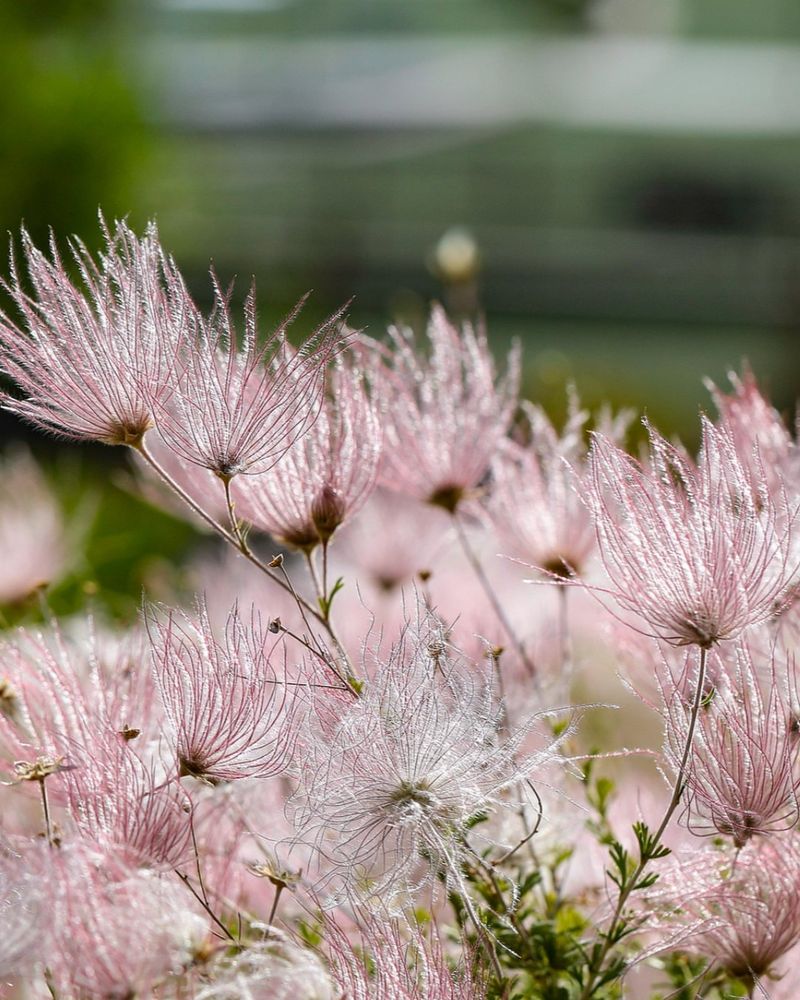
From a distance, cliffrose can look like a soft, airy desert shrub. Up close, the details get even better. Creamy flowers bring a faint rose-like scent. Small lobed leaves add texture.
After bloom, feathery seed plumes catch the light and give the whole plant a wispy glow. It is the kind of shrub that rewards anyone who slows down to look.
Cliffrose can grow taller than many shrubs on this list, often reaching six feet or more in the right conditions. That height makes it useful as a backdrop, loose screen, or freestanding focal point.
It feels especially at home in naturalistic desert gardens, rocky slopes, and open landscapes where its airy form has room to show.
This plant prefers full sun and excellent drainage. Rocky or sandy native soil is often better than rich, heavily amended soil. Too much pampering can work against it.
That is a useful reminder. Some desert plants are not asking for luxury. They are asking for the right kind of restraint.
Water young cliffrose plants while they establish. After the first year or two, they may need only occasional deep watering, especially at higher elevations. Lower desert areas may require a bit more support during extreme heat.
The flowers can attract native bees. Wildlife may also use the plant in different ways, depending on the location. Pruning should be minimal. Shape lightly if needed, but let the natural form remain open and feathery.
That’s how you get height, scent, texture, and movement without daily soaking. That is a cliffhanger worth planting.