These Oregon Backyard Trees Give You Fruit, Shade, And Privacy At Once
A backyard tree should earn its space. In Oregon, the best choices can do more than sit pretty in the corner.
They can cool a patio, screen a neighbor’s window, and give you something delicious to pick when the season is right. That kind of tree changes how a yard feels and how often you use it.
Instead of adding separate plants for shade, privacy, and food, one well chosen tree can handle several jobs at once.
The trick is finding varieties that fit Oregon’s weather, your available space, and the level of care you actually want to give.
Plant the right tree, and your backyard can feel more private, more comfortable, and a lot more rewarding every year.
1. Fig Trees Give Oregon Backyards Fast Shade And Sweet Fruit
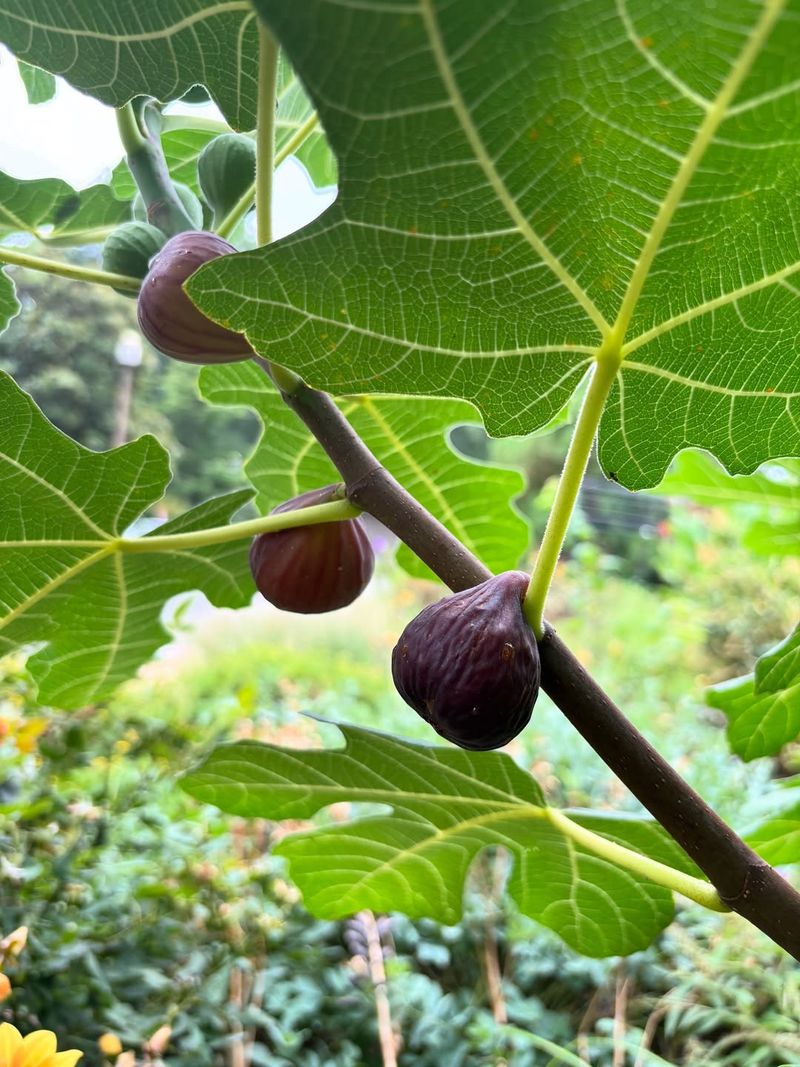
Few backyard trees grow as fast or as boldly as a fig. Within just a few years of planting, a fig tree can reach ten to fifteen feet tall and spread wide enough to shade a patio or cover a garden bench.
That kind of quick growth is hard to beat when you want results fast. In our state’s mild valleys, figs thrive with very little extra care.
They love warm summers and do not mind the wet winters that come with Pacific Northwest living.
Varieties like ‘Brown Turkey’ and ‘Desert King’ are especially well-suited to local conditions and produce reliably every season.
The large, deeply lobed leaves are what really make this tree stand out. They grow thick and close together, forming a natural privacy wall that blocks sightlines from neighbors or the street.
You get shade, screening, and fruit all from one plant.
Harvesting figs is one of summer’s simple pleasures. The fruit ripens in late summer and early fall, turning soft and sweet right on the branch.
You can eat them fresh, dry them, or make jam with very little effort.
Figs also work well in containers if your yard is small. A large pot on a deck or patio can hold a fig tree for years.
Just move it to a sheltered spot during cold snaps, and it will reward you generously come harvest time.
2. Asian Pears Create A Productive Screen With Spring Flowers
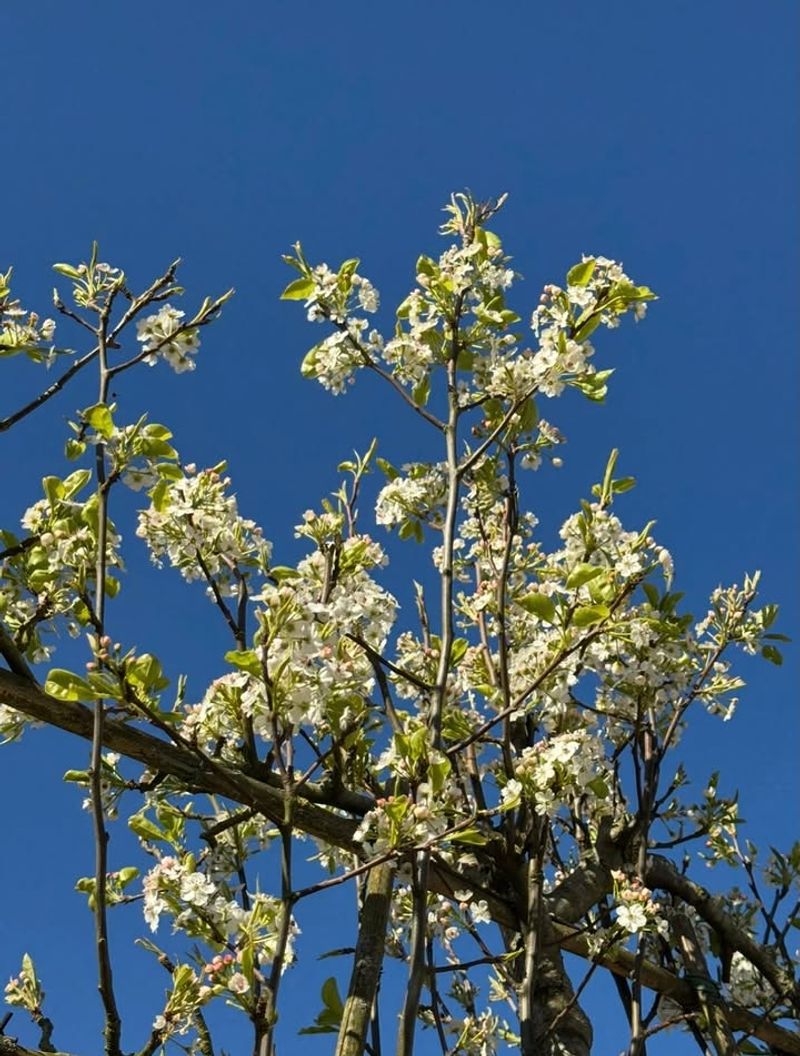
Every spring, Asian pear trees burst into clouds of white blossoms that look almost too pretty to be real. Bees love them, neighbors notice them, and the show lasts for weeks before the leaves fully fill in.
It is one of the most cheerful signs that the growing season has arrived.
Once the flowers fade, the tree gets to work. Asian pears develop round, crisp fruit that looks more like an apple than a traditional pear.
The flavor is sweet, juicy, and refreshing, and the texture stays firm even after picking, which makes them easy to store and share.
These trees grow tall and upright, making them a natural choice for planting along a fence line or property edge.
A row of two or three trees creates a soft green screen that fills in quickly over the summer months. By midsummer, the canopy is thick enough to block views and reduce noise.
Your Oregon Garden Changes Every Week. Your Plan Should Too.
Gardening in Oregon changes quickly throughout the season. Every Friday you’ll receive a simple weekly plan showing exactly what to plant, prune, fertilize, harvest, and protect so you never miss the right timing.
Our state’s climate suits Asian pears very well. They handle the wet spring weather without issue and produce heavy crops in most valley locations.
Varieties like ‘Hosui’ and ’20th Century’ are popular picks for home gardeners here.
Pollination is one thing to keep in mind. Most Asian pear varieties need a second tree nearby to produce fruit well.
Planting two different varieties close together solves that easily and doubles your spring flower display at the same time.
3. European Pears Add Height, Shade, And Reliable Backyard Fruit
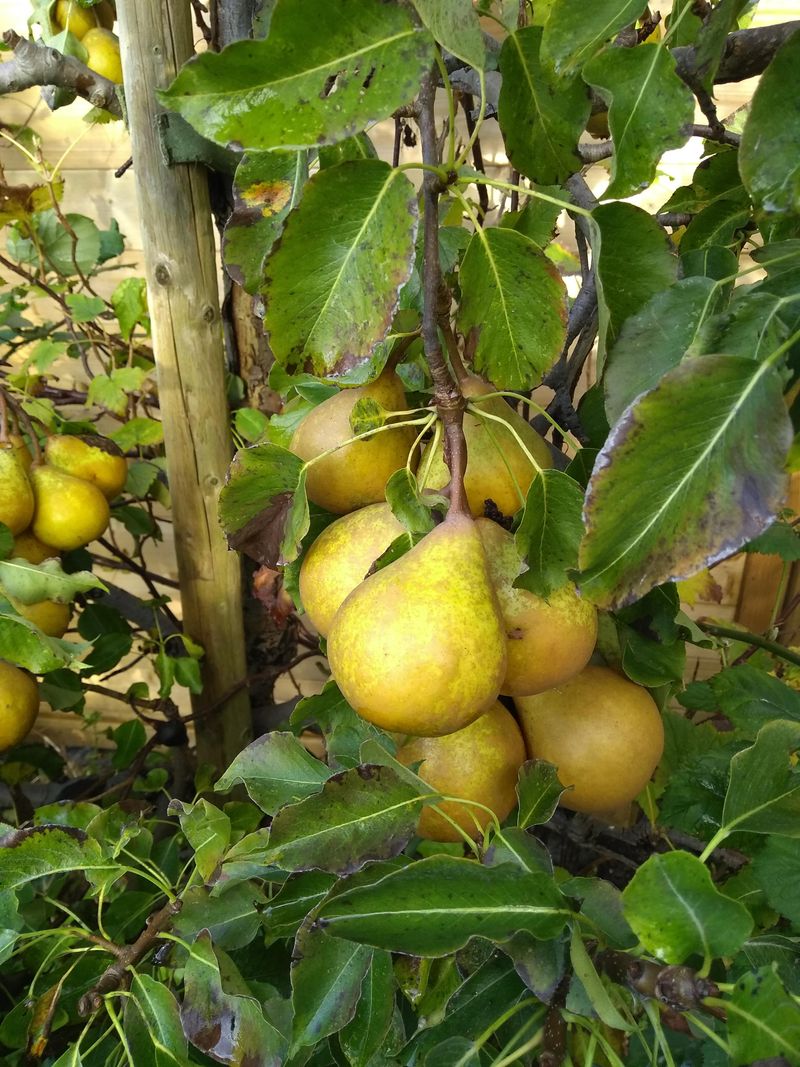
There is something deeply satisfying about growing a tree that your grandparents might have grown too. European pears have been staples of home orchards for centuries, and for good reason.
They are reliable, long-lived, and produce some of the most flavorful fruit you will ever taste straight from the tree.
Height is one of their biggest advantages. Left unpruned, European pears can reach twenty-five feet or more, which makes them excellent shade trees for larger yards.
Even with regular pruning to keep them manageable, they still develop a broad, leafy canopy that cools a yard nicely on hot summer afternoons.
Varieties like ‘Bartlett,’ ‘Bosc,’ and ‘Comice’ all perform well across our state’s growing regions. They ripen in late summer and fall, giving you a long harvest window.
The fruit stores well in a cool garage or cellar, so you can enjoy pears for weeks after picking them.
Along a fence or property line, European pears create a tall, dense screen that softens the look of any yard.
Their upright growth habit means they do not spread too wide, so they fit nicely even in narrower spaces between homes.
Like Asian pears, most European varieties benefit from cross-pollination. Planting two compatible varieties nearby increases your fruit production significantly.
Check with a local nursery to find the best pairing for your specific yard and growing zone.
4. Plum Trees Bring Privacy With A Heavy Summer Harvest
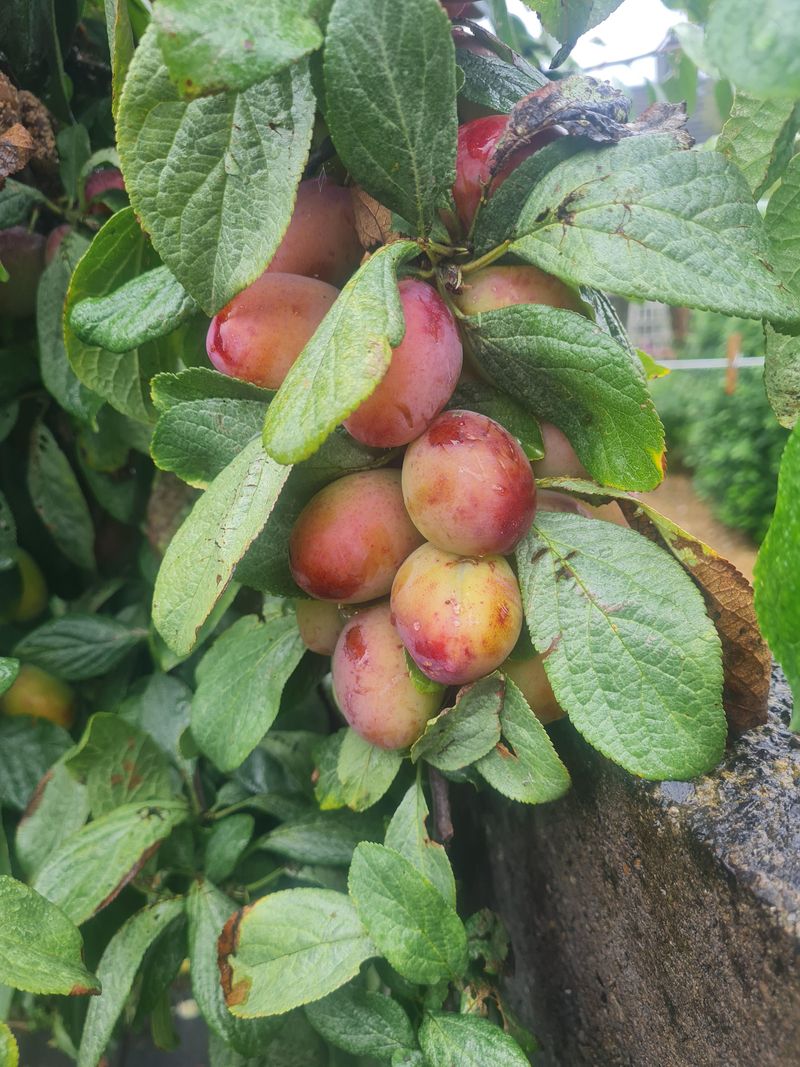
When a plum tree is in full fruit, it is one of the most generous things growing in any backyard.
Branches bend low under the weight of dozens of deep purple, red, or yellow plums, and the smell alone is enough to stop you in your tracks.
Summer just feels richer when you have one of these trees nearby.
Plum trees grow quickly and fill out into a round, bushy shape that works beautifully as a natural privacy screen.
The dense summer foliage blocks sightlines effectively, and the canopy spreads wide enough to provide real shade for a seating area or garden bench.
European plums like ‘Italian Prune’ and ‘Stanley’ are longtime favorites in our state’s yards and orchards.
They are tough, adaptable, and produce reliably even in years with unpredictable spring weather.
Japanese plum varieties like ‘Methley’ ripen earlier and offer a sweeter, juicier flavor that many backyard growers prefer.
Caring for a plum tree is straightforward. Annual pruning keeps the canopy open and the fruit production strong.
Thinning the fruit in early summer prevents branches from breaking under heavy crops and leads to larger, better-tasting plums come harvest time.
Plums are also incredibly versatile in the kitchen. Fresh eating is wonderful, but they also make excellent jam, pie filling, and dried fruit.
If your tree produces more than you can use, neighbors and local food banks are almost always happy to take the extras.
5. Apple Trees Work As Shade, Privacy, And Classic Oregon Fruit
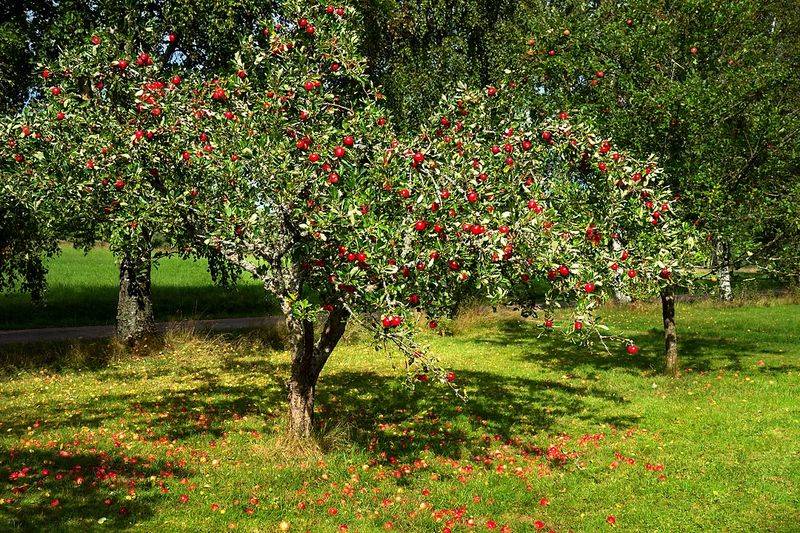
Ask almost anyone what fruit tree belongs in a backyard, and the apple is usually the first answer. It is a classic for a reason.
Apple trees are adaptable, long-lived, and produce fruit that nearly everyone loves. They also grow into beautiful, broad-canopied trees that shade a yard with real character.
Our state is genuinely one of the best places in the country to grow apples. The combination of warm summers, cool nights, and reliable rainfall produces crisp, flavorful fruit that rivals anything found in a grocery store.
Varieties like ‘Honeycrisp,’ ‘Gravenstein,’ and ‘Fuji’ all thrive here with minimal fuss.
For privacy, semi-dwarf apple trees planted in a row create a dense, leafy screen that fills in nicely by midsummer. The canopy stays full from spring through fall, giving you months of coverage.
Even in winter, the branching structure adds visual interest to the yard.
Apples need cross-pollination to produce well, so plan to plant at least two compatible varieties nearby.
Many local nurseries sell trees that are already grafted with two varieties on a single trunk, which solves the pollination problem neatly in a small space.
Harvest season runs from late summer through mid-fall depending on the variety. Fresh apples store for weeks in a cool spot, and they are endlessly useful in the kitchen.
Pies, cider, applesauce, and simple snacking make the harvest feel like a genuine celebration every single year.
6. Mulberries Grow Into A Leafy Screen With Easy Summer Fruit
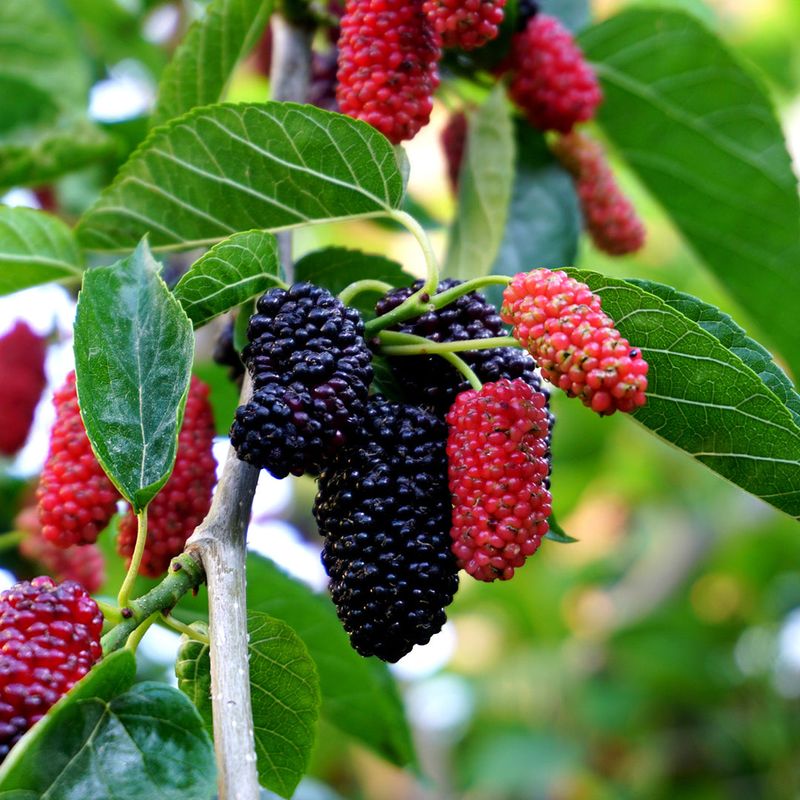
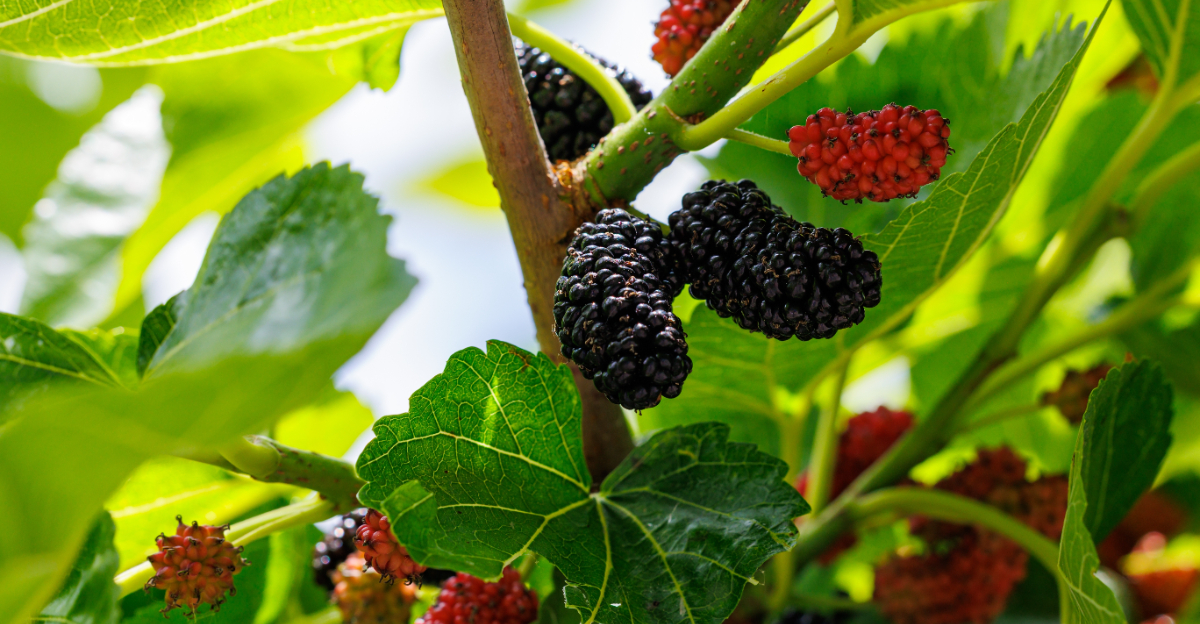
Mulberries might be the most underrated backyard tree in the entire Pacific Northwest. Most people have never grown one, and that is a real shame.
Once established, a mulberry tree grows fast, spreads wide, and produces so much fruit that you will be eating berries by the handful all summer long.
The growth rate is genuinely impressive. A young mulberry can put on several feet of new growth each year, and the canopy fills in densely enough to block views, reduce wind, and shade a large area in just a few seasons.
Few other fruiting trees match that kind of speed.
Red and black mulberry varieties both perform well across our state’s mild growing regions.
The berries ripen over several weeks in early to midsummer, which means a long picking season rather than one overwhelming rush.
They taste like a cross between a blackberry and a raspberry, sweet with a slight tang.
One honest thing to know upfront: mulberries stain. The ripe fruit drops freely from the tree, so planting one over a concrete patio is not ideal.
Place it over a lawn or garden bed instead, where fallen fruit feeds birds and breaks down naturally into the soil.
Mulberries need almost no fertilizing or spraying once they settle in. They handle both dry summers and wet winters without complaint.
For gardeners who want maximum results with minimum effort, this tree is about as close to effortless as fruit growing gets.
7. Serviceberries Offer Spring Flowers, Edible Berries, And Soft Privacy
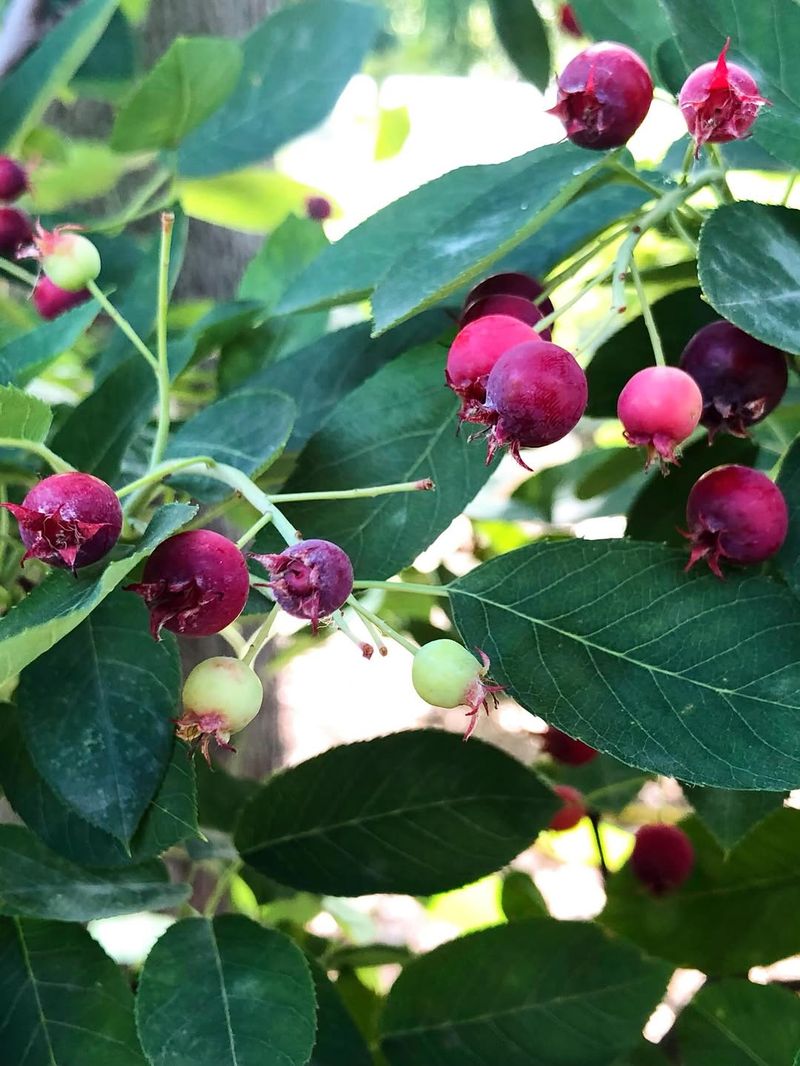
Serviceberries are one of those plants that quietly do everything right without ever demanding attention.
They bloom earlier than almost any other fruiting tree, filling late winter and early spring with clusters of delicate white flowers.
Pollinators arrive the moment the blossoms open, making the whole yard feel alive again after the gray winter months.
Native to North America and perfectly adapted to our state’s climate, serviceberries are as tough as they are beautiful. They handle shade, clay soil, and wet winters without skipping a beat.
That kind of resilience makes them a smart choice for yards where other trees have struggled.
The berries ripen in early summer, turning from red to deep blue-purple as they sweeten. They taste similar to blueberries, mild and sweet with a slightly nutty finish.
Birds love them just as much as people do, so picking early gives you the best chance at a full harvest before the wildlife moves in.
As a privacy screen, serviceberries work best along a fence line or property edge where their natural multi-stem form fills in softly over time.
They do not create a hard wall the way a dense evergreen might, but they provide a beautiful, layered screen that feels more like a woodland edge than a barrier.
Heights vary by variety, ranging from eight to twenty-five feet depending on the type you choose.
‘Autumn Brilliance’ and ‘Rainbow Pillar’ are two popular selections that offer strong structure, reliable fruit, and stunning fall color all in one package.