These Are The Georgia Native Plants That Bloom In The Hardest Months When Nothing Else Does
There is a stretch of the year when many gardens start to slow down, colors fade, and most plants struggle to keep going. Beds that looked full earlier in the season can suddenly feel quiet, with fewer blooms and less activity overall.
Native plants handle that shift differently. Some are built to tolerate heat, humidity, and tough conditions without losing their ability to produce flowers when other plants have already faded out.
Instead of shutting down, they keep the landscape active through the most difficult part of the growing season.
Georgia gardens often deal with this mid-season slowdown, especially when long stretches of heat and moisture stress common ornamentals.
Choosing the right natives can make a noticeable difference in how the yard looks and performs during that time.
These plants continue blooming when most others stop, bringing steady color back exactly when the garden needs it most.
1. Butterfly Weed Keeps Blooming Through Summer Heat
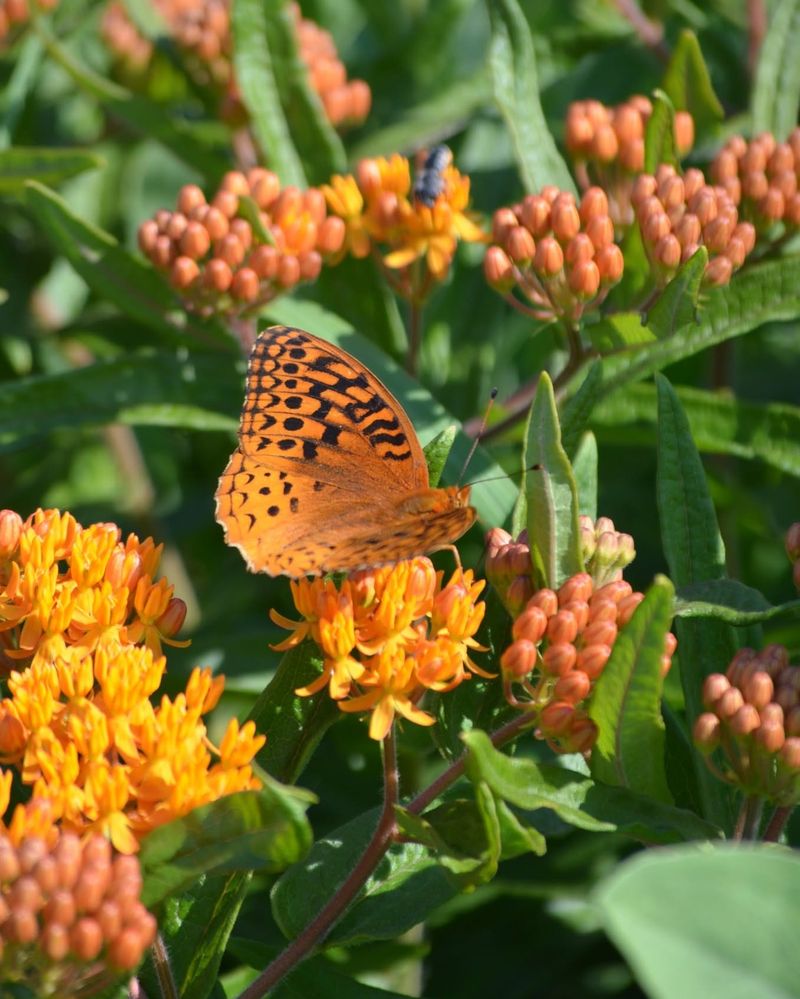
Few plants put on a show quite like butterfly weed during the peak of summer. Bright orange clusters sit on top of stiff, upright stems while everything around them wilts.
Monarchs, swallowtails, and bumblebees flock to those blooms constantly.
Butterfly weed belongs to the milkweed family, but it behaves differently from its cousins. It grows in dry, well-drained soil and handles full sun without complaint.
Sandy or rocky ground suits it perfectly, and it actually struggles in heavy, wet clay.
Once established, it needs almost no watering. Roots go deep, which is how it survives weeks without rain.
New gardeners often panic when it seems slow to emerge in spring, but patience pays off.
Plant it in a spot with six or more hours of direct sun. Avoid moving it once it is settled, because transplanting disturbs the deep taproot.
Leave it alone and it will reward you every July and August without fail.
Seed pods form after blooming and split open to release silky white fibers. Letting those pods mature feeds birds and spreads new plants naturally.
Cutting plants back hard in late fall keeps clumps tidy for next season.
2. Blazing Star Produces Color During The Hottest Weeks
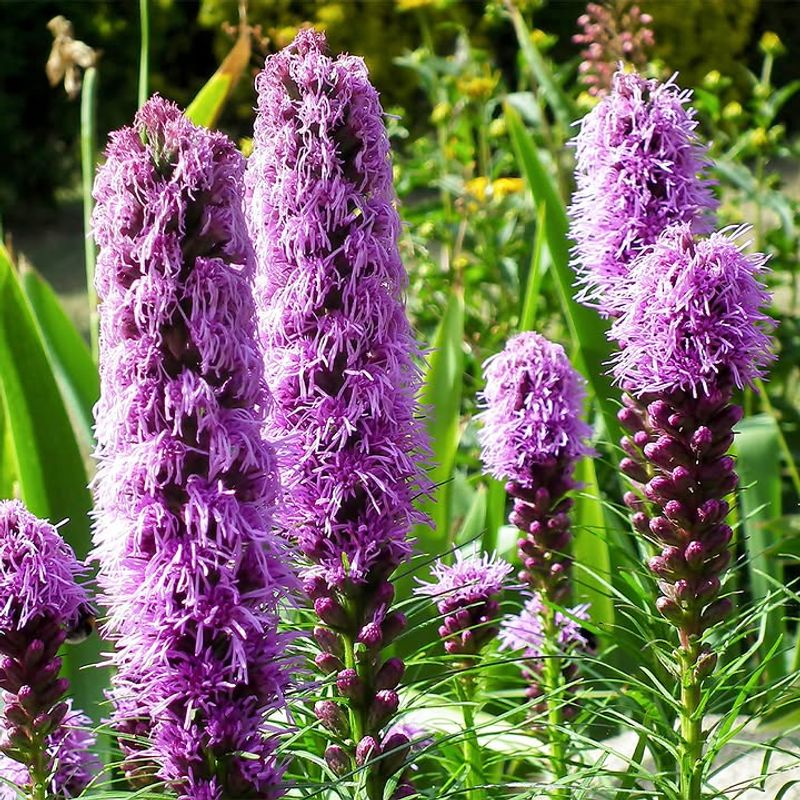
Purple spikes shooting straight up from the ground in July look almost too dramatic to be real. Blazing star pulls that off every single year without extra watering or fussing.
Gardeners who plant it once rarely stop buying more.
Blooms open from the top of the spike downward, which is unusual for most flowers. That quirk stretches the blooming period over several weeks instead of all at once.
Pollinators appreciate the extended access to nectar.
Full sun and well-drained soil are the main requirements. Heavy clay that stays wet through winter can rot the corms, so raised beds or amended soil helps in low spots.
Sandy loam is ideal.
Blazing star grows from a small corm, similar to a bulb. Plant corms about three inches deep in fall or early spring.
Groups of five or more create a stronger visual punch than single plants scattered randomly.
Your Georgia Garden Changes Every Week. Your Plan Should Too.
Gardening in Georgia changes quickly throughout the season. Every Friday you’ll receive a simple weekly plan showing exactly what to plant, prune, fertilize, harvest, and protect so you never miss the right timing.
Goldfinches absolutely love the seed heads that form after blooming. Leaving those stems standing through winter feeds birds and adds structure to the garden.
Cut them back in late winter before new growth appears in spring.
Native bees use blazing star heavily during late summer when other nectar sources run thin. Planting it near other late bloomers creates a reliable food corridor for pollinators trying to build up reserves before cooler weather arrives.
3. Purple Coneflower Continues Flowering As Temperatures Rise
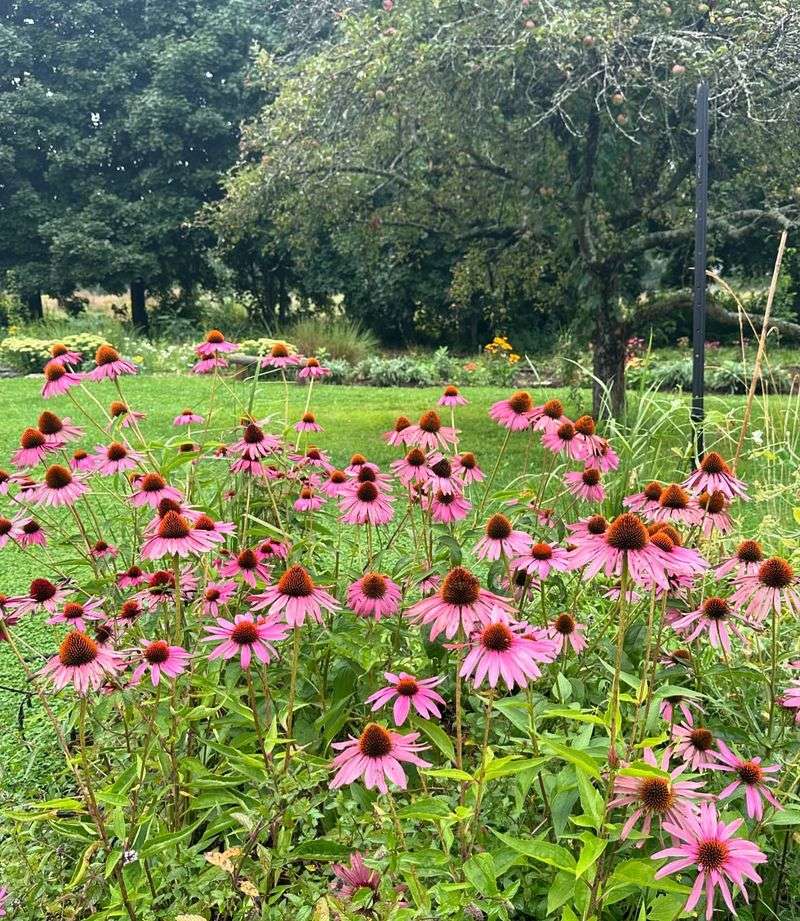
Purple coneflower is one of those plants that seems genuinely unbothered by heat. Daisy-like blooms with drooping pink-purple petals and a spiky orange-brown center keep opening through July and August.
Bees treat those cones like a buffet table.
Echinacea purpurea is the most common species for home gardens. It adapts to a wide range of soils, including clay, as long as drainage is decent.
Average fertility is all it needs, and extra fertilizer actually reduces blooming.
Plants grow two to four feet tall depending on soil richness and sun exposure. Full sun produces the most flowers.
Partial shade is tolerated but usually results in leggier plants with fewer blooms.
Deadheading spent flowers encourages more blooms to form. Leaving some seed heads standing through fall feeds goldfinches and chickadees.
Striking a balance between deadheading and leaving seeds is a personal choice every gardener makes differently.
Purple coneflower spreads slowly by seed and by clump division. Clumps can be divided every three to four years to keep plants vigorous.
Fresh divisions establish quickly and often bloom the same season they are moved.
Across the Southeast, this plant earns its space every year with almost no help. It handles drought once roots are established, shrugs off humidity, and blooms long enough to carry a garden through the toughest stretch of summer.
4. Narrowleaf Mountain Mint Blooms Through Summer
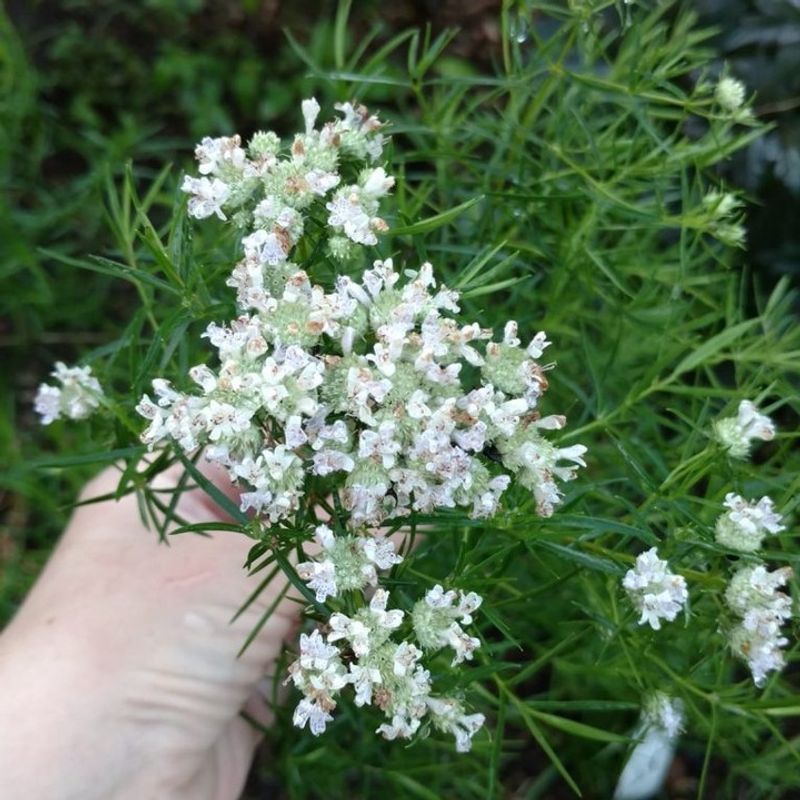
Walk past mountain mint on a warm afternoon and the scent hits you immediately. It smells clean and sharp, like a mix of spearmint and something wilder.
That fragrance alone makes it worth growing, but the blooms are what really steal the show.
Tiny white flowers with faint purple markings cover the plant from late June into August. Native bees go absolutely wild for it.
Mountain mint species attract an impressive diversity of bees and are often considered among the most valuable native plants for pollinators in the eastern United States.
Narrowleaf mountain mint grows two to three feet tall and spreads by rhizomes. In good soil it spreads aggressively, so planting it inside a buried barrier or in a contained bed keeps it from taking over.
It is worth managing because the pollinator value is exceptional.
Full sun brings out the strongest blooming. Partial shade is tolerated but reduces flower production noticeably.
Average to poor soil suits it fine, and rich soil tends to push leafy growth at the expense of flowers.
Deer tend to avoid it because of the strong scent. That makes it useful in gardens where deer pressure is high and other plants get browsed regularly.
Pairing it with plants deer avoid creates a more reliable planting overall.
Cut plants back by half in late spring to encourage bushier growth and more blooming stems. That single step makes a real difference in how full and productive the plant looks through summer.
5. Goldenrod Brightens The Garden Late In The Season
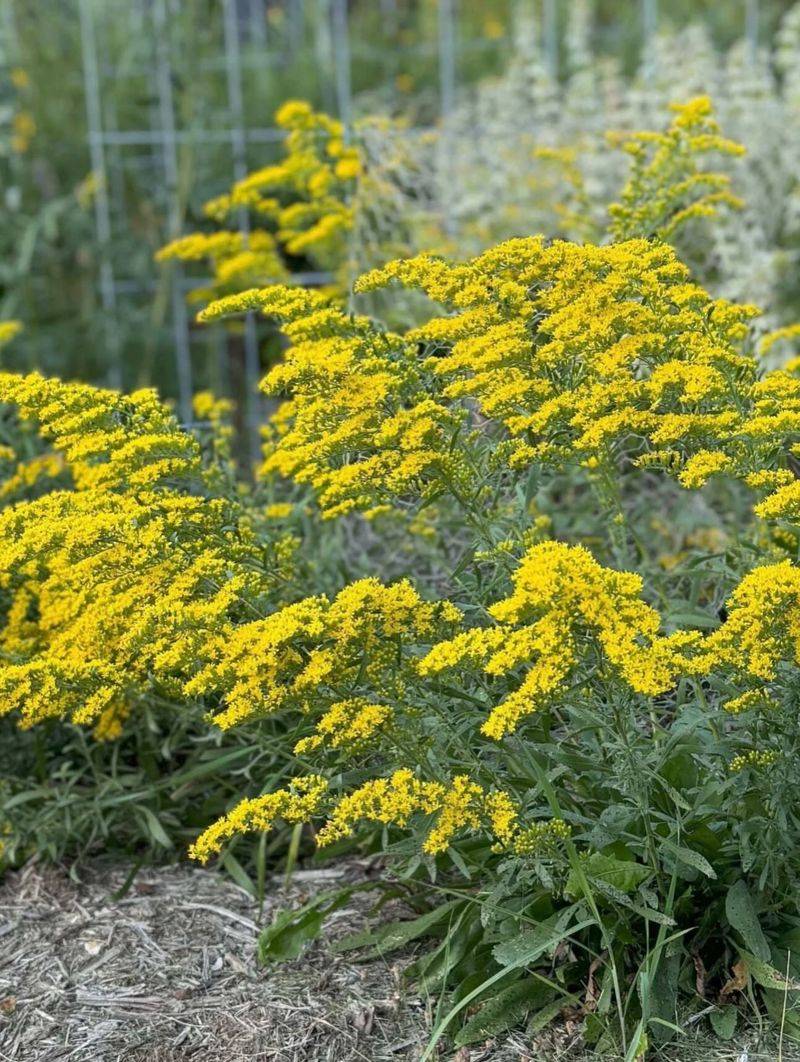
Goldenrod gets blamed for hay fever it did not cause. Ragweed blooms at the same time and spreads pollen through the air, but goldenrod gets the bad reputation because it is more visible.
Goldenrod pollen is heavy and sticky, carried by insects rather than wind.
Blooming typically starts in August and continues into October depending on the species. Stiff goldenrod, wrinkleleaf goldenrod, and seaside goldenrod are all native to the Southeast and worth seeking out for home gardens.
Each has slightly different height and habit.
Bright yellow plumes arch outward on tall stems and create a warm, golden effect in late summer beds. Combining goldenrod with purple asters or blue mistflower creates a color contrast that looks intentional and polished.
The pairing is classic for a reason.
Average to poor soil suits goldenrod well. Rich soil encourages floppy growth and spreading.
Planting in a contained bed or mowing around the edges keeps aggressive spreaders in check without much effort.
Butterflies, bees, and beetles all feed on goldenrod heavily before cooler weather arrives. It is one of the most important late-season nectar sources in the eastern United States.
Removing it from a garden removes a major food source at a critical time.
Birds feed on the seeds through fall and winter. Leaving stems standing until late winter supports both seed-eating birds and overwintering insects that shelter inside hollow stems.
Spring cleanup is easier and more ecologically sound than fall cleanup.
6. Aromatic Aster Flowers When Many Plants Slow Down
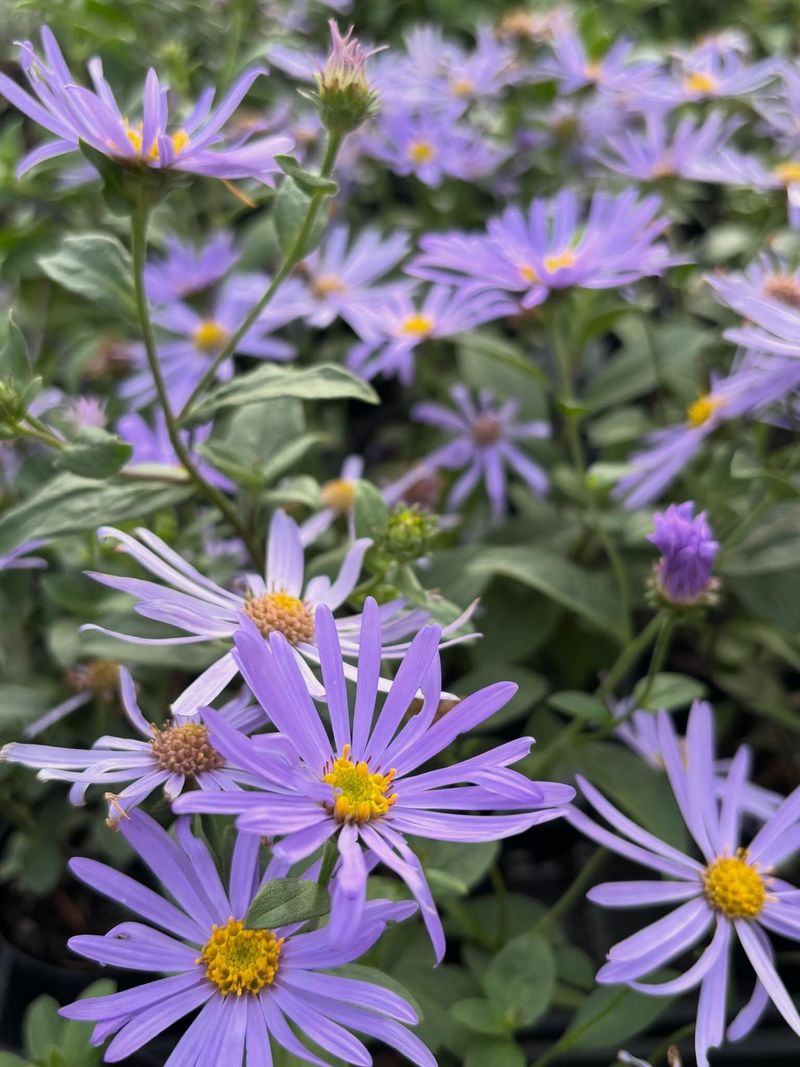
September hits and most perennials are winding down. Aromatic aster is just getting started.
Compact mounds suddenly explode with hundreds of small purple daisy-like flowers with bright yellow centers, and pollinators show up in numbers that seem almost frantic.
Symphyotrichum oblongifolium earns its common name honestly. Crush a leaf and a sharp, resinous fragrance releases instantly.
It is not unpleasant but it is definitely distinctive. Deer tend to avoid plants with strong scents, which makes this one a practical choice in browse-heavy areas.
Plants grow one to two feet tall and spread into loose mounds over time. Full sun and well-drained soil are the main requirements.
Poor or rocky soil actually suits it better than rich amended beds, which push leafy growth over flowers.
Cutting plants back by one-third in early June delays blooming slightly and keeps the mound compact. Without that trim, plants can get leggy by late summer.
One cut in early summer makes a noticeable difference in fall appearance.
Aromatic aster blooms overlap with goldenrod, creating a natural purple and yellow color combination that requires zero design effort. Planting them side by side looks intentional and maximizes late-season pollinator support at the same time.
Monarchs passing through the Southeast during fall migration rely heavily on asters for fuel. Having aromatic aster in bloom during September and October makes your yard a meaningful stop along that migration corridor.
Small plantings genuinely matter at that scale.
7. Blue Mistflower Extends Color Into Fall
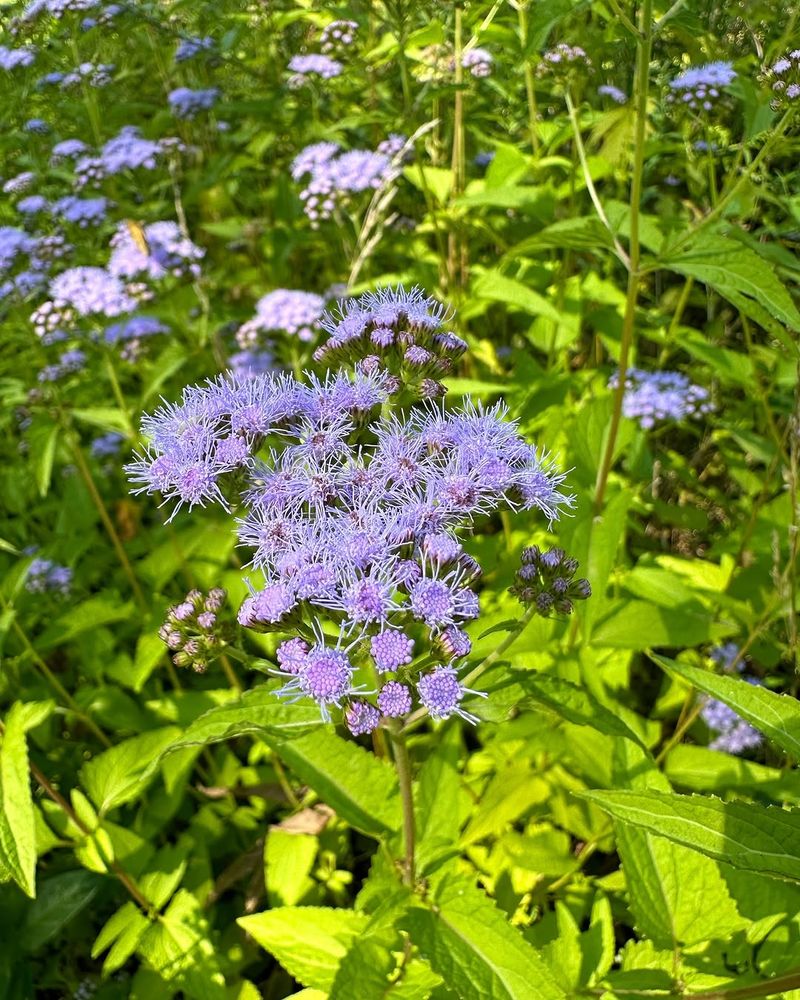
Blue mistflower looks like someone airbrushed soft lavender-blue over the garden. Fluffy, buttonlike flower clusters cover the plant from late August through October, arriving exactly when most other color has faded.
Monarchs and native bees treat it like a late-season lifeline.
Conoclinium coelestinum grows naturally along stream banks and woodland edges, so it handles partial shade better than most late bloomers. A spot with morning sun and afternoon shade suits it well.
It also grows in full sun if moisture is consistent.
Height reaches two to three feet, and plants spread by rhizomes into loose colonies. In moist, fertile soil that spreading can be vigorous.
Pulling unwanted stems by hand in spring keeps colonies from overtaking nearby plants without much effort.
Soil moisture matters more than soil type. Blue mistflower tolerates clay, loam, and sandy soils as long as they do not dry out completely in summer.
Mulching around the base helps retain moisture during dry stretches.
The color is genuinely unusual for a fall-blooming native. Most fall natives lean toward yellow, orange, or purple.
That soft blue-purple tone creates contrast in late-season beds that is hard to achieve any other way.
Pairing blue mistflower with goldenrod and aromatic aster creates a three-plant combination that covers August through October with almost no maintenance.
All three are native to the Southeast, all three support pollinators heavily, and all three handle average garden conditions without much intervention.
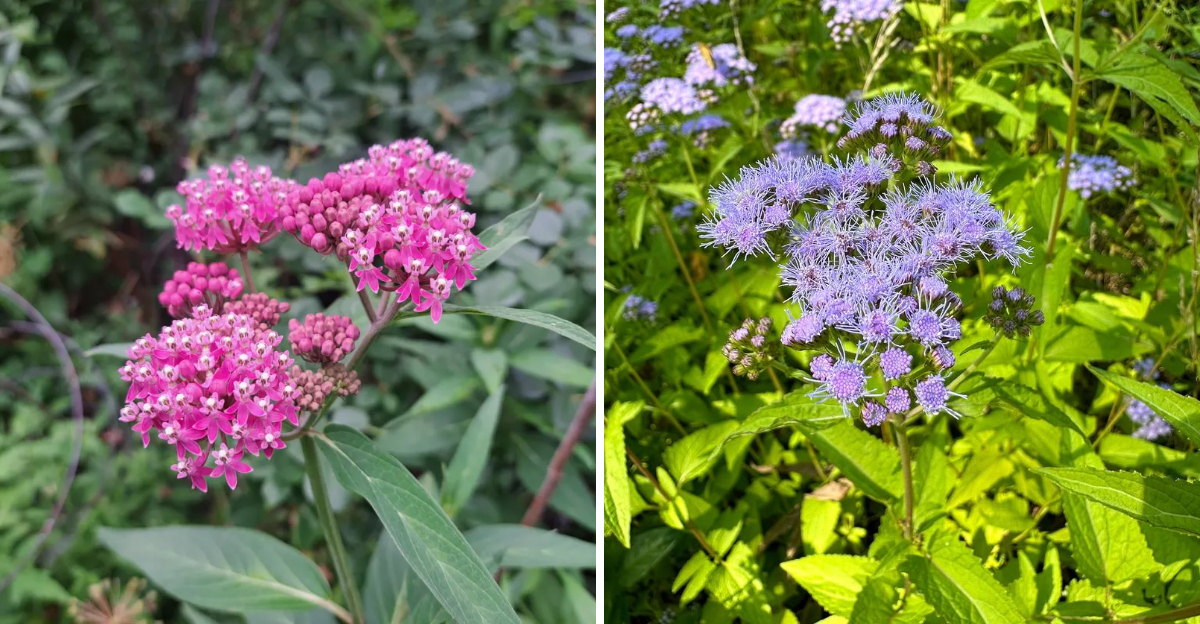
8. Swamp Milkweed Delivers Blooms During Hot Weather
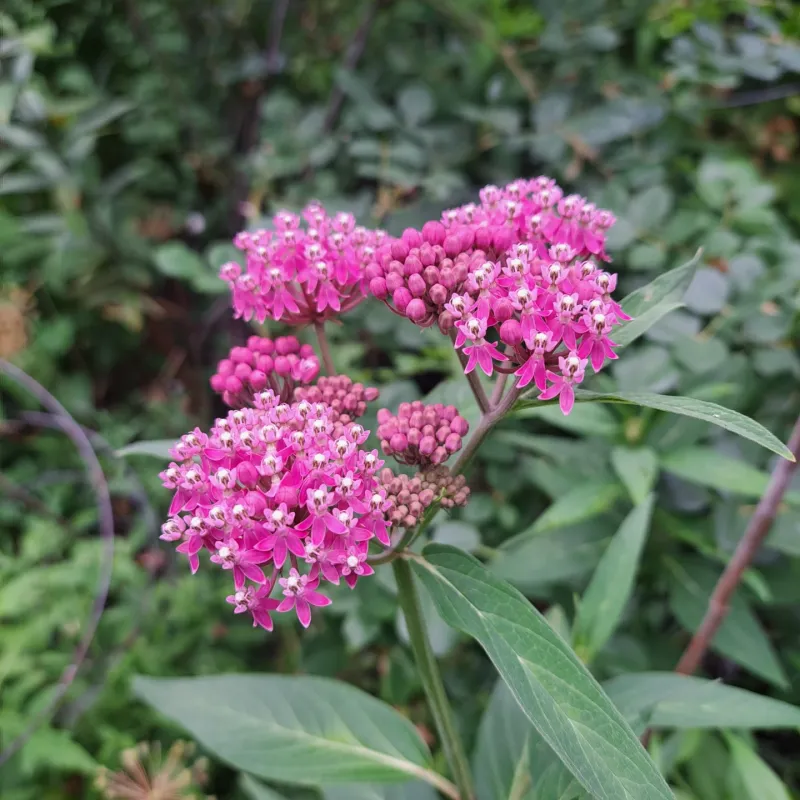
Not every yard is bone dry in summer. Low spots, rain gardens, and areas near downspouts stay consistently moist, and swamp milkweed was built for exactly those conditions.
It blooms through July and August with clusters of rosy pink flowers that attract monarchs reliably.
Stems reach three to five feet tall, making it a strong vertical presence at the back of a border or in a naturalized area. It does not flop or need staking under normal conditions.
Wind resistance is solid even on tall plants.
Unlike butterfly weed, swamp milkweed handles wet clay without rotting. Consistently moist soil is where it performs best.
It will grow in average garden soil with supplemental watering, but it really shines where moisture is naturally available.
Monarch caterpillars feed on the leaves, so expect some chewing. That chewing is a good sign, not a problem.
Hosting caterpillars is part of why this plant matters so much ecologically.
Seed pods split open in fall and release seeds with silky white fibers. Collecting a few pods before they open lets you start new plants indoors over winter.
Seeds need a cold stratification period to germinate well in spring.
Swamp milkweed works well planted alongside Joe Pye weed, cardinal flower, and blue flag iris in rain gardens. Combining plants with similar moisture needs reduces maintenance and creates a more cohesive look through the season.