The Basil Mistake Georgia Gardeners Make Every Summer That Ruins The Flavor
Nothing is more disappointing than picking fresh basil and realizing it does not taste as rich as you expected. Everything looked healthy, so the flavor should have been perfect.
That small surprise leaves many gardeners wondering what went wrong.
The answer is often hiding in an everyday habit that seems completely harmless. Summer routines can quietly change the way basil grows without making the problem obvious.
Small choices made at the wrong time can affect every harvest afterward.
Georgia gardeners often blame the weather, but one common mistake has a much bigger impact on flavor. Once you know what to avoid, every harvest becomes far more satisfying.
Fresh leaves should taste as good as they smell. One simple change can make all the difference before your next harvest begins again.
1. Letting Basil Flower Changes The Flavor
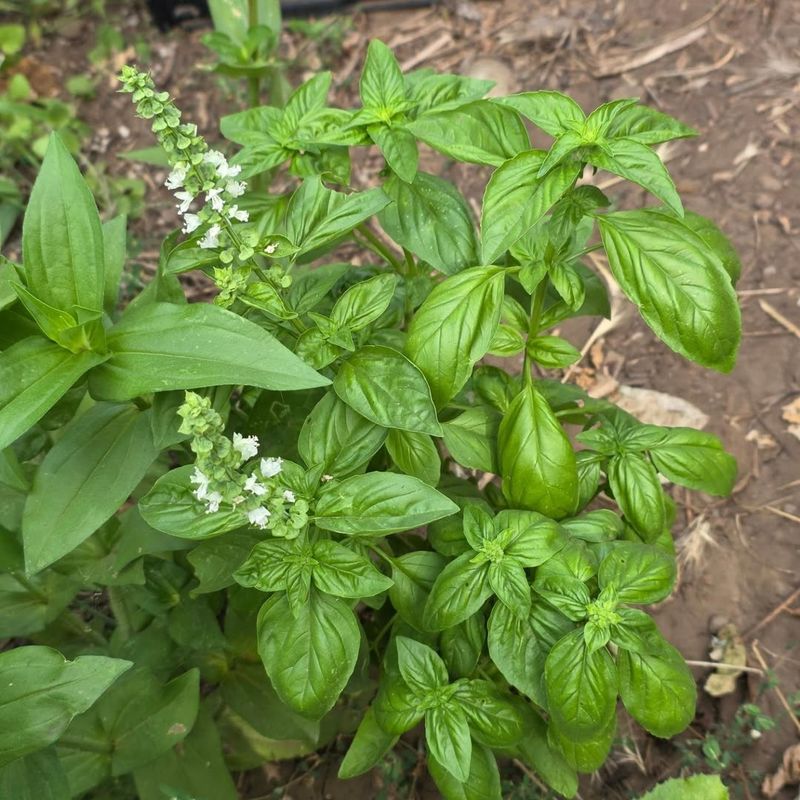
Flowering basil smells beautiful, but your taste buds will tell a different story. Once a basil plant shifts into bloom mode, the leaves turn noticeably bitter and lose most of their sweet, peppery punch.
It happens fast, especially in humid summer heat.
Basil is a warm-season annual with one goal: produce seeds before the season ends. When it starts sending up flower stalks, it redirects energy away from leaf production.
Leaves become smaller, tougher, and sharper in flavor. That classic basil taste you love in pasta or caprese salads starts to fade.
Gardeners often leave flowers on because they look pretty or attract pollinators. Both are fair reasons, but not if good flavor is the goal.
Once flowers fully open and seeds begin forming, recovering that sweet flavor from the same plant becomes much harder.
Pinching off flower buds before they open keeps the plant focused on growing fresh leaves. It also encourages branching, which means more harvest points over the season.
A plant that never flowers can keep producing well into fall in many climates. Checking plants every few days during peak summer growth helps catch buds early.
Missing even one week can push a plant past the point where flavor holds well.
2. Remove Flower Buds As Soon As They Appear
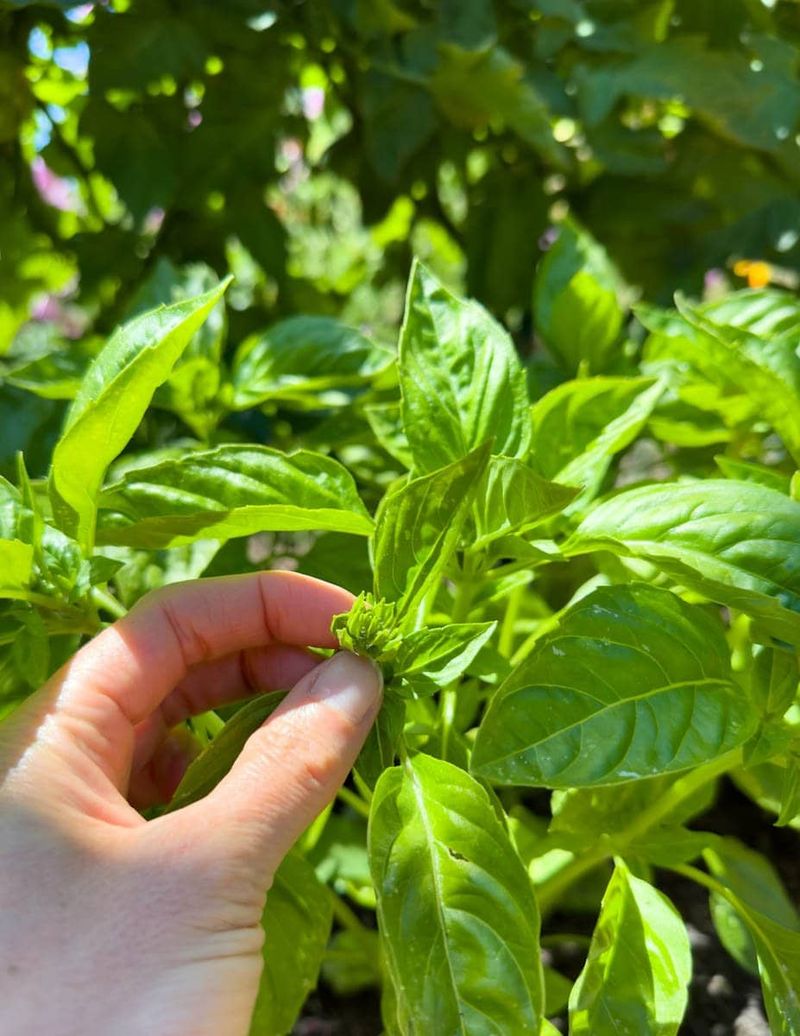
Bud removal sounds tedious, but it takes about thirty seconds per plant. Catching them early is the whole trick.
Tiny buds are easy to pinch off with two fingers, and the plant barely notices.
Wait too long, and those buds become open flowers. Open flowers become seed pods.
At that point, the plant has already shifted its priorities, and leaf flavor suffers for it. Staying ahead of the flowering cycle is the most reliable way to protect basil quality through the hottest months.
Use clean fingertips or small scissors to remove the top cluster of growth where buds form. Cut just above a set of healthy leaves.
New side shoots will sprout from those leaf nodes within days. Over time, this creates a fuller, bushier plant with far more usable leaves than one left to grow straight up and flower.
In Georgia summers, basil can attempt to bolt multiple times in a single season. Heat and long daylight hours trigger the response.
Your Georgia Garden Changes Every Week. Your Plan Should Too.
Gardening in Georgia changes quickly throughout the season. Every Friday you’ll receive a simple weekly plan showing exactly what to plant, prune, fertilize, harvest, and protect so you never miss the right timing.
A plant that bolted once can recover some flavor if buds are removed promptly and the plant is watered well. Recovery is not instant, but new growth coming in after pinching tends to taste much better than the older leaves left behind.
3. Grow Basil In Full Sun For Stronger Flavor
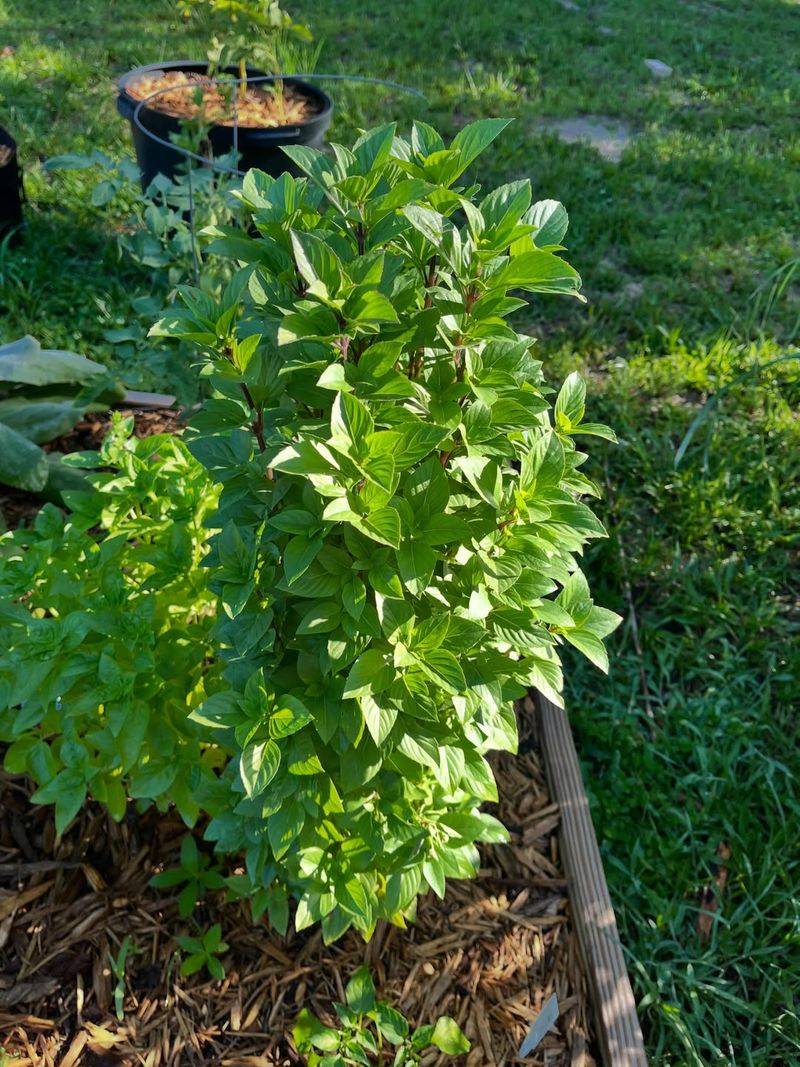
Shade-grown basil might survive, but it will not thrill you. Basil grown in partial shade tends to produce larger, softer leaves with noticeably weaker flavor.
Full sun is where the real intensity develops.
Basil needs at least six to eight hours of direct sunlight each day to produce the essential oils responsible for its signature aroma and taste. Those oils concentrate more in plants exposed to consistent, strong light.
Less sun means fewer oils, which directly translates to blander leaves on your cutting board.
Planting location matters more than many gardeners expect. A spot that gets morning sun but heavy afternoon shade may feel like a compromise, but basil often performs better in sites with steady, uninterrupted light.
Reflected heat from walls or fences can help in spots where direct sun hours fall slightly short.
Container-grown basil has an advantage here. Pots can be moved to follow the sun as seasons shift or as nearby plants grow taller and create shade.
Raised beds in open areas tend to outperform in-ground plots tucked against buildings or under trees.
4. Harvest From The Top Instead Of The Bottom
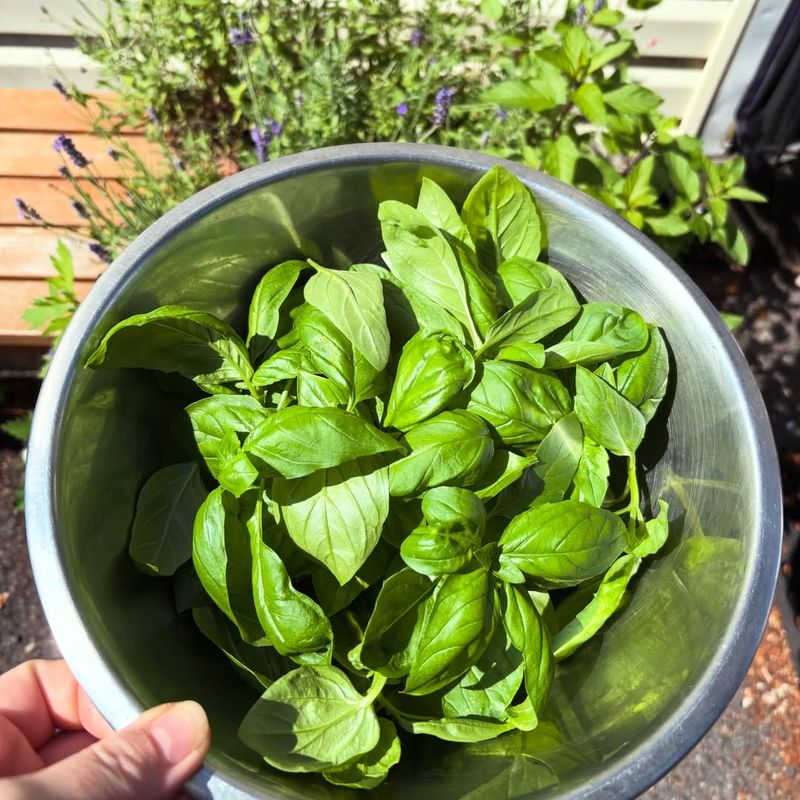
Grabbing leaves from the bottom of a basil plant feels natural, but it works against you. Bottom leaves tend to be older, sometimes yellowing, and lower in flavor concentration.
Harvesting from the top changes everything about how the plant responds.
When you cut from the top, you remove the growing tip. Removing that tip signals the plant to send out two new shoots from just below the cut.
Each of those shoots eventually becomes its own growing tip. Over several harvests, one stem turns into four, then eight.
More stems means more leaves, more often.
Bottom harvesting does the opposite. Leaves are removed without disrupting growth patterns.
The plant continues reaching upward, gets taller and leggier, and flowers faster. Flavor development slows as the plant stretches rather than branches out.
Cut stems rather than pulling individual leaves whenever possible. Snip just above a set of leaves using clean scissors or garden shears.
Leave at least two sets of leaves on each stem so the plant retains enough energy to bounce back quickly. New growth from a top harvest usually appears within five to seven days under good growing conditions.
Repeating this approach every one to two weeks keeps plants compact and productive.
5. Water Deeply When The Soil Begins To Dry
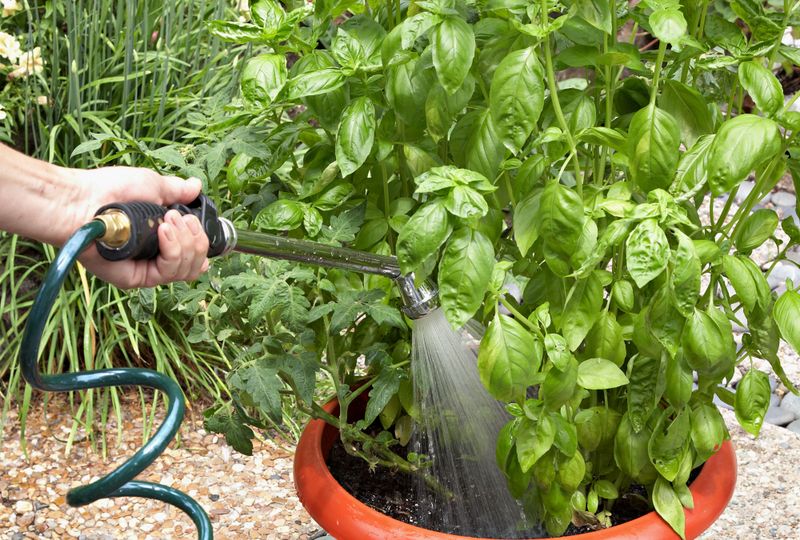
Frequent shallow watering is one of the quieter ways to weaken basil. Roots chase moisture, and when water only reaches the top inch of soil, roots stay shallow.
Shallow roots make for plants that stress easily and produce less flavorful leaves.
Deep watering encourages roots to grow downward. Deeper roots access more stable moisture and nutrients.
Plants with deeper root systems handle summer heat more reliably and maintain steadier growth even when temperatures spike.
Check soil moisture before watering rather than following a fixed schedule. Push a finger about two inches into the soil near the base of the plant.
If it feels dry at that depth, water thoroughly. If it still feels moist, wait another day.
Basil prefers consistent moisture but does not perform well sitting in waterlogged soil for extended periods.
Watering at the base of the plant, rather than overhead, helps reduce the risk of fungal issues on the leaves. Wet foliage sitting overnight can invite problems, especially in warm, humid climates where moisture lingers.
Morning watering is generally preferable since soil has time to drain and leaf surfaces dry out before evening.
Mulching around the base of plants with a thin layer of straw or wood chips can help retain soil moisture between watering sessions.
6. Pick Leaves Before The Afternoon Heat
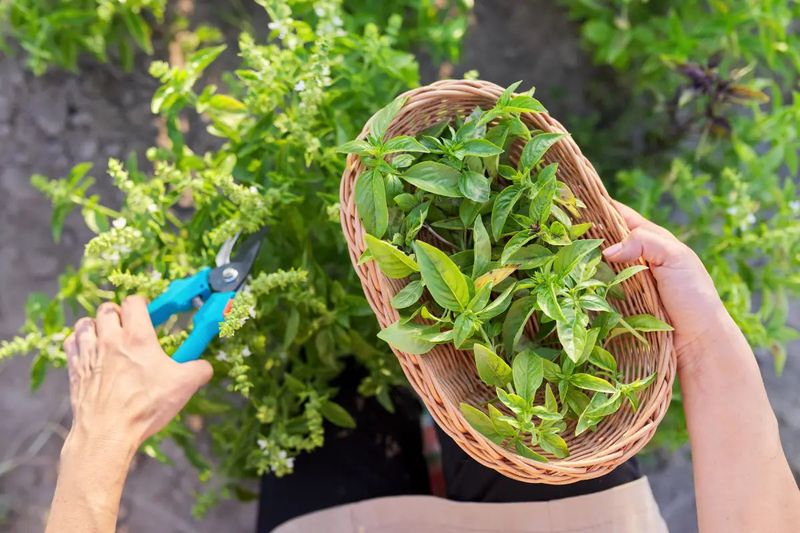
Timing your harvest makes a real difference in how basil tastes. Leaves picked in the early morning carry more essential oils than those gathered in the heat of the afternoon.
It sounds minor, but the flavor gap is worth paying attention to.
Essential oils in basil leaves are volatile compounds. Heat causes them to evaporate faster than they can be replenished.
By midday, especially on hot Southern summer days, some of that aromatic intensity has already been lost to the air. Morning picking captures leaves at their most flavorful point in the day.
Early morning also works well because plants have had overnight hours to recover from daytime heat stress. Leaves are typically firmer, better hydrated, and more vibrant at that hour.
They hold up better after cutting and stay fresh longer before use.
Aim to harvest before ten in the morning when possible. If morning picking is not realistic on a given day, early evening after temperatures begin to drop is a reasonable alternative.
Avoid harvesting during peak afternoon heat, particularly when temperatures climb above ninety degrees.
Leaves cut during those conditions tend to wilt faster and bruise more easily during handling.
7. Harvest Often To Keep Plants Producing
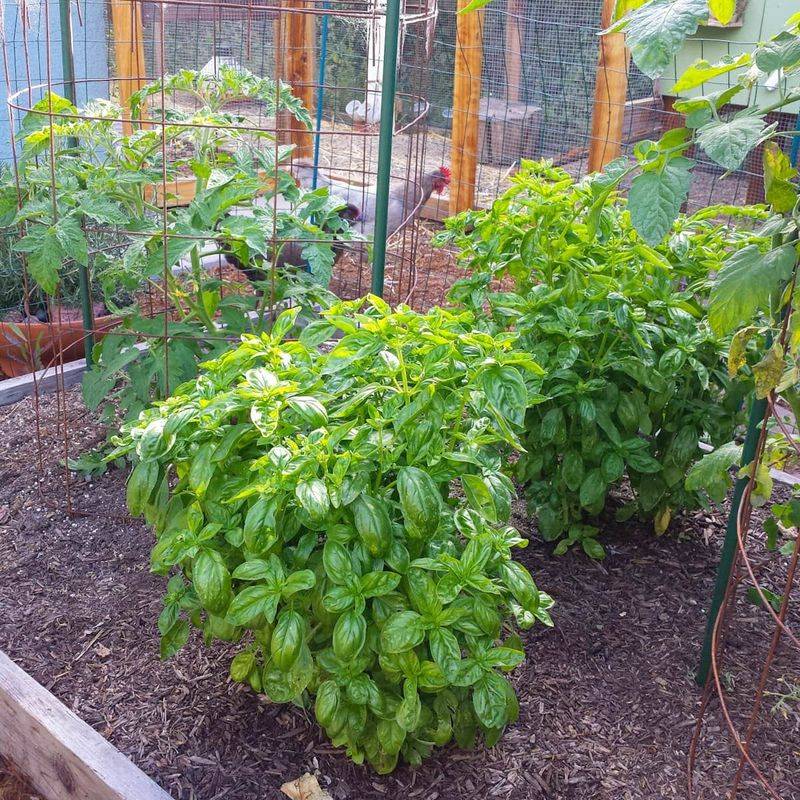
Leaving basil alone for weeks at a time is a common mistake. Plants that are not harvested regularly tend to bolt faster, grow woody, and shift focus toward reproduction rather than leaf production.
Frequent harvesting keeps that cycle from taking over.
Basil responds well to regular cutting. Each harvest triggers new growth and keeps the plant in an active, vegetative state.
Plants that are cut back consistently tend to stay bushier, produce softer leaves, and hold better flavor for longer stretches of the growing season.
A good general rhythm is harvesting every seven to fourteen days, depending on how fast your specific plants are growing. In peak summer warmth, basil can grow surprisingly fast.
Skipping two or three weeks is often enough time for a plant to send up flower stalks and begin the bolting process.
You do not need a large harvest every time. Even a small cutting from the top of each stem is enough to reset the growth pattern and delay flowering.
Consistent light harvesting often outperforms occasional heavy cutting in terms of sustained leaf quality over the full season.