How California Gardeners Are Turning Tiny Spaces Into Lush Private Retreats
Small yards in California have a reputation for being limiting. Not enough room for a real garden. Not enough space to actually relax. Not enough privacy to feel like the yard belongs to you rather than to everyone who can see over the fence.
That reputation is wrong, and the proof is sitting in backyards all over the state right now.
Some of the most beautiful, most private, most genuinely enjoyable outdoor spaces in California are also the smallest.
They just look that way because someone figured out a handful of specific tricks that most homeowners never discover on their own.
Do you know what the actual difference is between a small yard that feels cramped and one that feels like a private retreat?
It is not the square footage. It is not the budget. It comes down to a few surprisingly simple decisions about how space gets used vertically, how sound gets managed, and which plants pull triple duty instead of just one.
The ideas showing up in California yards right now are worth knowing about.
1. Vertical Gardens Fill Walls With Greens And Blooms
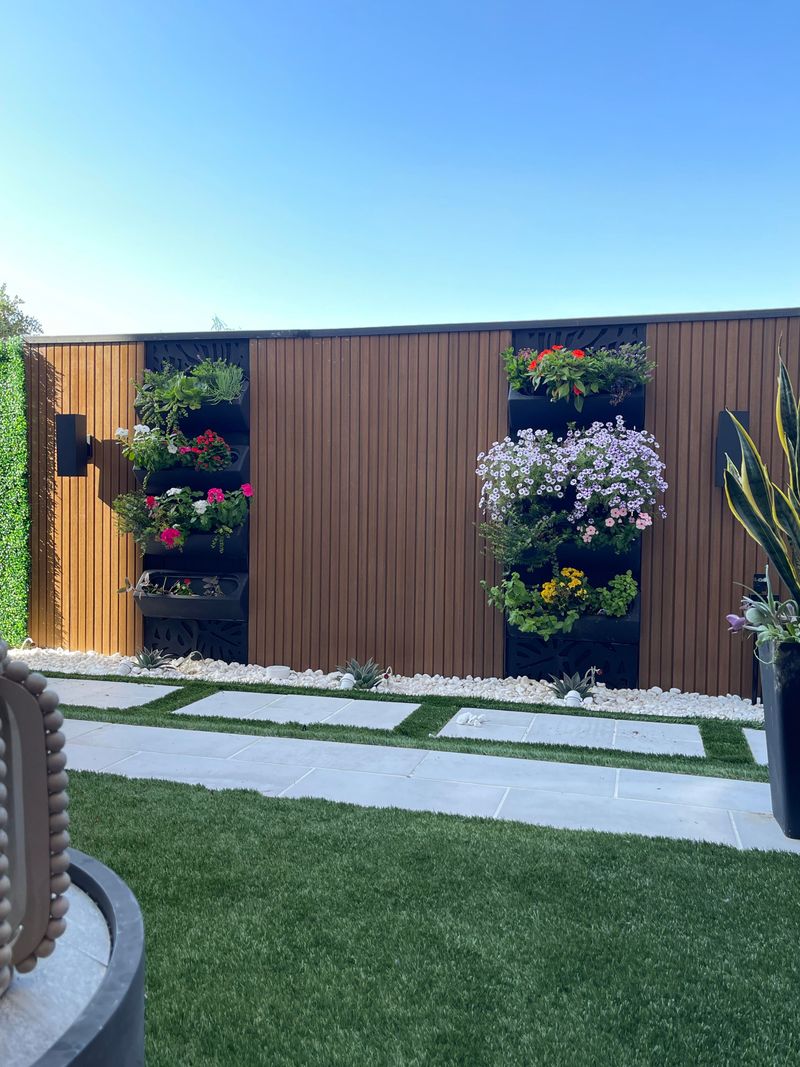
Blank walls are basically free real estate, and many California gardeners are leaving them completely unclaimed.
A vertical garden turns any fence, stucco wall, or wooden panel into a living display of color and texture.
Vertical plantings also reduce surface temperatures on sun-baked walls, which matters considerably during California’s long, hot summers.
Starting simple works well. Pocket felt planters cost very little and attach easily with screws or hooks. Fill them with herbs near the kitchen door, or create visual impact with trailing pothos, compact ferns, and small flowering annuals.
Strawberries also perform surprisingly well in vertical setups and produce fruit across the season.
The practical key is choosing plants with similar water needs so one thorough watering satisfies everything.
Drip irrigation systems designed for vertical walls are widely available and make maintenance straightforward. A thoughtfully planted vertical garden can cover a six-foot wall with greenery within a single growing season.
Renters appreciate this approach because most pocket planters require minimal wall contact and come down cleanly when needed.
Even an apartment balcony with a single railing-mounted strip feels noticeably more lush with plants running vertically rather than spread across limited floor space.
The wall is there regardless. The question is whether it contributes to the space or just stares back at you.
A blank stucco wall in California has potential. It just needs someone to finally introduce it to a plant.
2. Mini Fountains Add Sound And Calm In Tight Yards
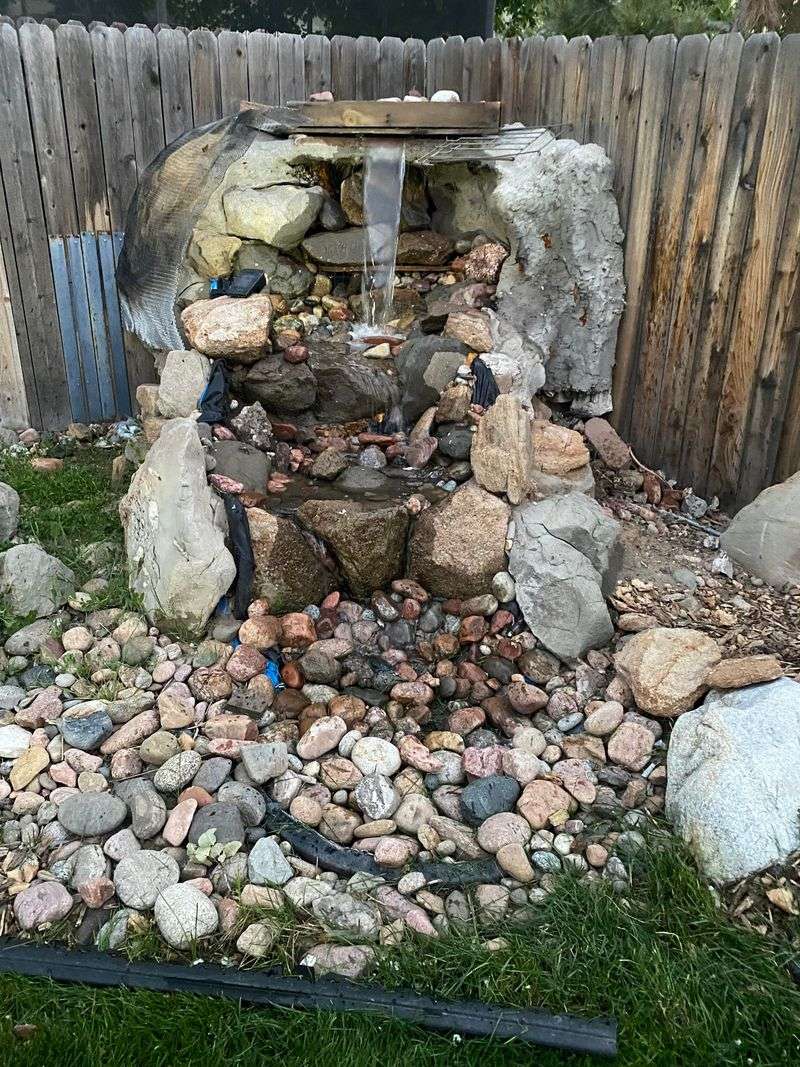
Sound is one of the most underrated tools in garden design, and small-space gardeners usually never use it.
A fountain tucked into a corner does something plants alone cannot accomplish. It masks street noise, neighbor sounds, and city buzz with the steady, calming rhythm of moving water.
Compact urban yards that feel impossibly close to everything suddenly feel considerably further away.
Mini fountains come in tabletop sizes that fit on a bistro table, freestanding styles around two feet tall, and wall-mounted versions that take up almost no floor space.
Your California Garden Changes Every Week. Your Plan Should Too.
Gardening in California changes quickly throughout the season. Every Friday you’ll receive a simple weekly plan showing exactly what to plant, prune, fertilize, harvest, and protect so you never miss the right timing.
Solar-powered models are particularly practical in sunny California since they run without wiring or ongoing electricity costs. Setup is genuinely simple.
Water features also attract birds and pollinators, adding movement and life to a small yard in ways that stationary plants cannot replicate.
Maintenance is lighter than most people expect. A weekly top-off and an occasional rinse of the pump filter keeps most fountains running smoothly through the season. Clean mineral buildup with diluted vinegar, then rinse thoroughly before refilling.
Placement matters more than size. Positioning the fountain near where you actually sit makes the sound immediately present when you relax outside.
A yard with moving water feels intentional and calming. A yard without it is just a yard.
3. Potted Citrus Trees Bring Color And Scent All Season
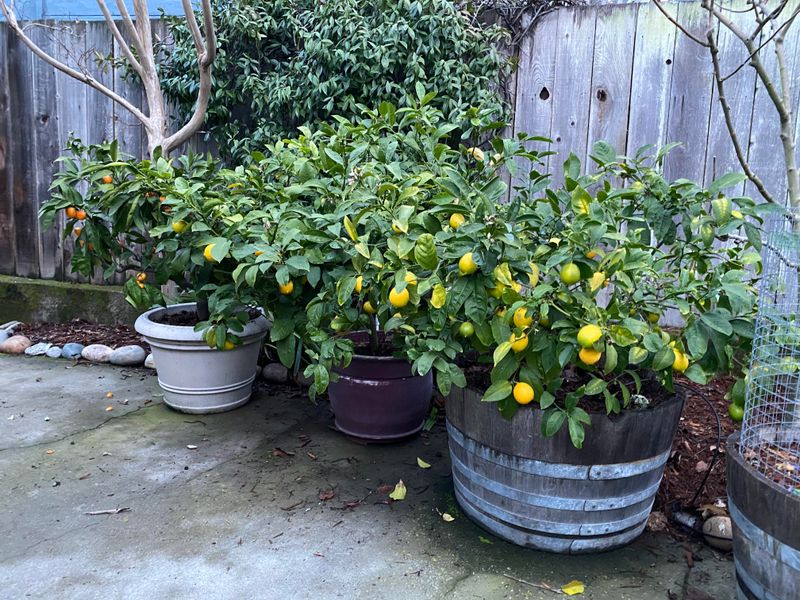
Few plants deliver as much as a dwarf citrus tree in a small California garden. One well-placed container Meyer lemon offers fragrant white blossoms in late winter, glossy green foliage through spring and summer, and bright yellow fruit by fall.
That is three seasons of genuinely enjoyable sensory experience from a single pot in a corner.
Dwarf varieties like Improved Meyer lemon, Bearss lime, and Calamondin orange work well in containers because their root systems stay manageable and canopies rarely exceed six feet.
A 15 to 20 gallon container with excellent drainage keeps these trees healthy long-term. A well-draining potting mix formulated specifically for citrus outperforms standard garden soil, which tends to compact and retain too much moisture.
Feeding follows a straightforward schedule. A slow-release citrus fertilizer in early spring, midsummer, and early fall provides steady nutrition without risk of overfeeding.
Watering deeply but infrequently, allowing the top two inches of soil to dry between waterings, mimics the Mediterranean conditions citrus genuinely prefers.
The scent is the detail most people underestimate until they experience it. When a potted citrus blooms near a seating area, the fragrance is remarkable. Guests consistently ask what that smell is.
You get to casually point to your lemon tree like it requires no explanation. It is one of the better moments small-space gardening offers.
4. Trellises With Jasmine Create Green Privacy Screens
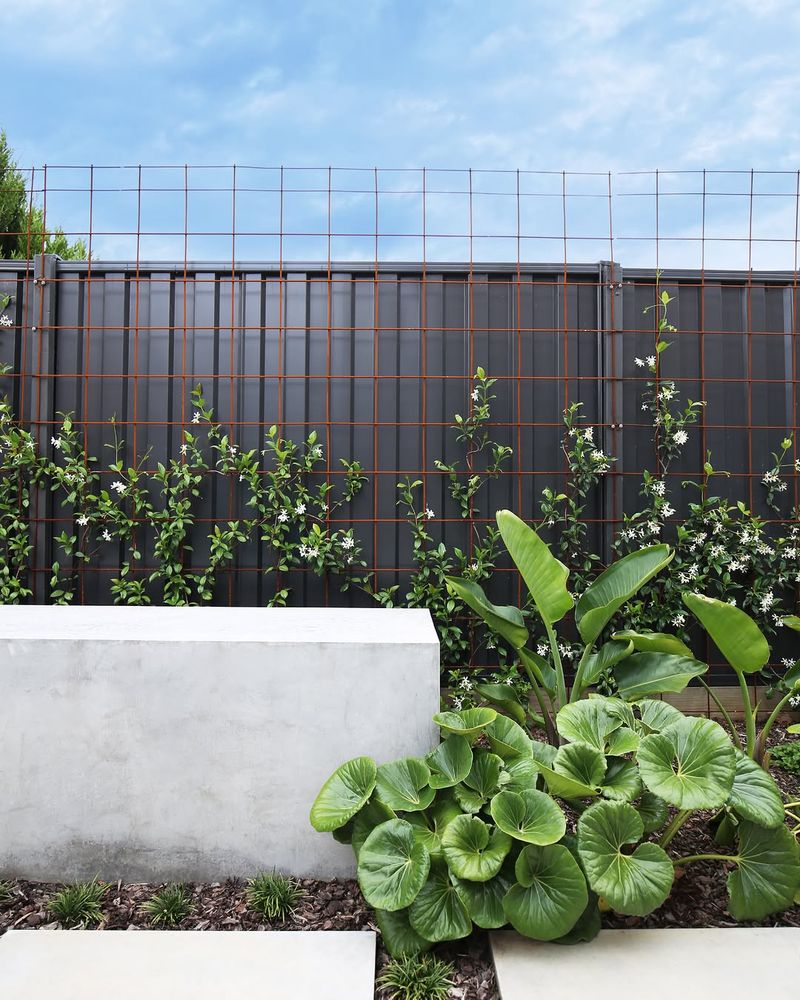
Privacy is consistently the top wish homeowners have for small backyards. A jasmine-covered trellis delivers it without the cost or permanence of raising a solid fence.
Star jasmine is one of the hardiest and most fragrant vines available for California climates, thriving across most of the state from zones 8 through 11.
A simple cedar or metal trellis installed against an existing fence gives jasmine the structure it needs to climb quickly and consistently.
Star jasmine can grow up to three feet per year under good conditions. A bare trellis becomes a dense green wall within two growing seasons.
The white flowers that appear in late spring and early summer carry a scent that blends vanilla and gardenia, and it travels surprisingly far on a still evening.
Maintenance stays minimal once established. A light trim after the main bloom period keeps the plant tidy and pushes fresh growth for the following season.
Jasmine also becomes drought-tolerant once mature, which matters significantly for California gardeners managing water costs.
For stronger privacy impact, layer the trellis in front of a solid fence rather than replacing it. The combination of structure and living green creates a backdrop that reads as intentional and resort-like rather than improvised.
Neighbors will assume you hired a landscape architect. The reality is a single vine and a cedar trellis. You do not have to correct them.
5. Layered Planting With Ferns And Succulents Adds Depth
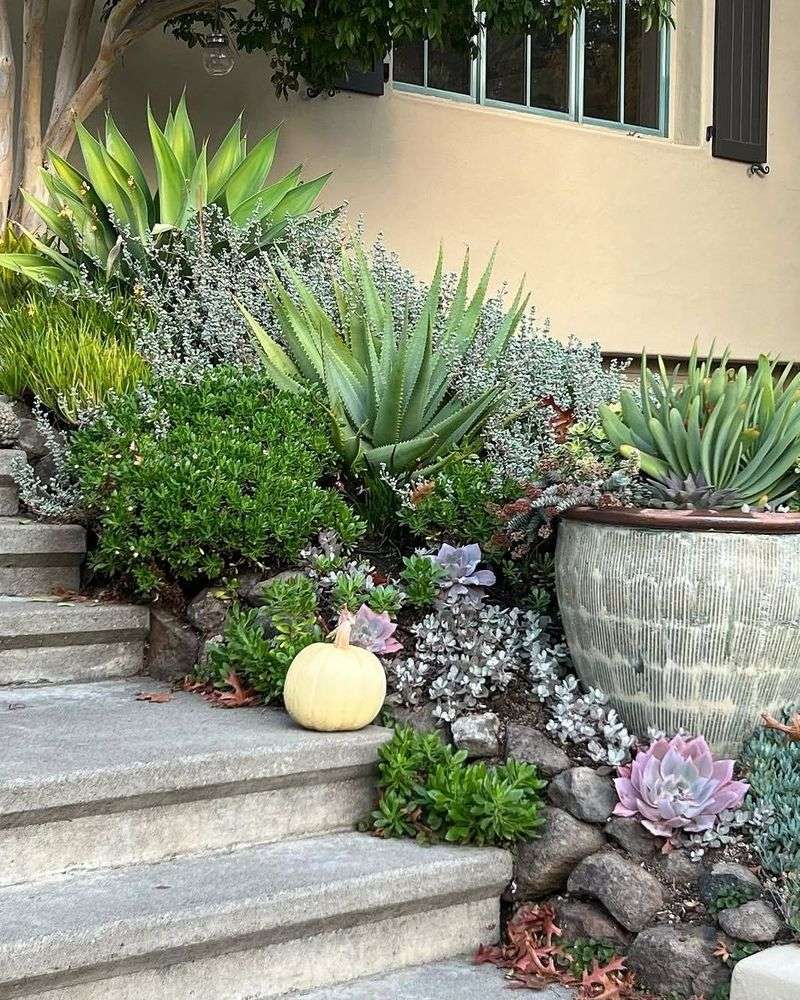
Flat, single-level planting makes a small garden look smaller. It is one of the most common mistakes in compact spaces, and it is entirely avoidable.
Layered planting places tall plants at the back, medium plants through the middle, and low growers along the front edge.
This structure creates a sense of depth that makes the eye perceive more space than actually exists. Professional landscape designers rely on this principle constantly.
Combining ferns and succulents seems counterintuitive since ferns prefer moisture and succulents prefer dry conditions. With correct zoning it works beautifully.
Moisture-loving ferns like sword fern or Australian tree fern settle well into shadier, lower spots where water naturally collects. Drought-tolerant echeverias, sedums, and aeoniums thrive in sunnier, elevated sections with fast drainage.
Mixing plant textures adds visual interest that keeps the eye moving through the space. Fine, feathery fern fronds alongside smooth, geometric succulent rosettes create a richness that single-texture plantings simply cannot achieve.
Color layering reinforces the effect. Deep forest green ferns in the back and mid layers with silvery-blue or burgundy succulents anchoring the front creates contrast that looks finished and thoughtful.
A space barely six feet wide can read like an entire landscape when it is layered with intention and variety.
The eye does not measure square footage. It responds to depth, texture, and contrast. Give it those things and it stops noticing the size.
6. Fairy Lights Slide Through Foliage For Cozy Nights
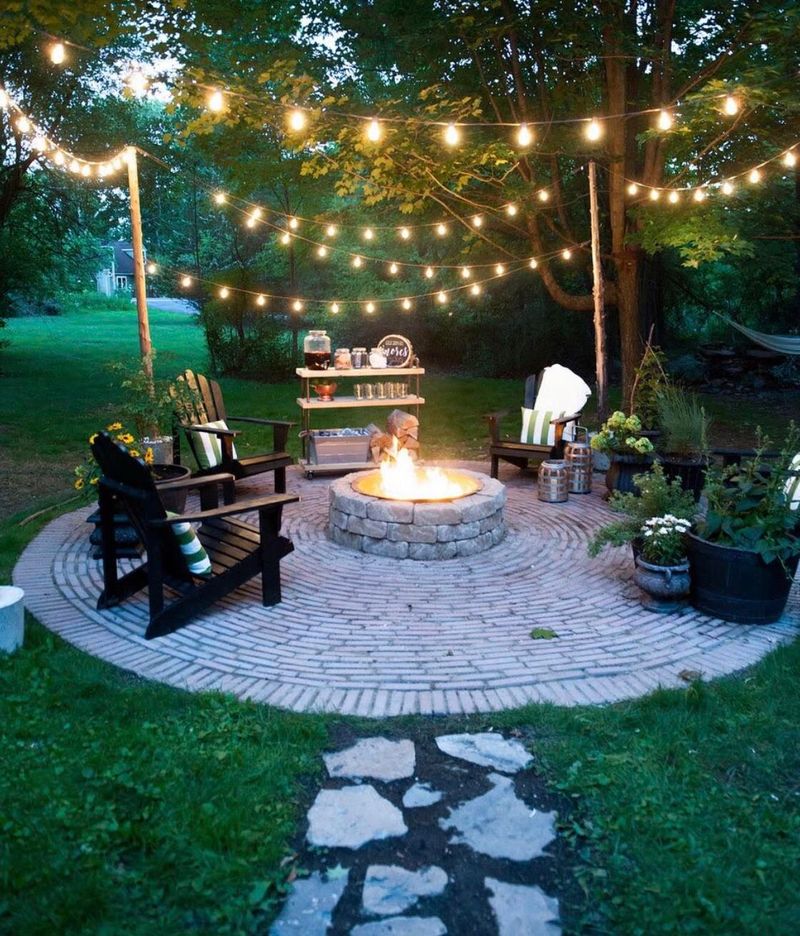
There is a specific moment in the early evening, just after the sun drops behind the fence, when a small garden either disappears into shadow or becomes genuinely magical.
Fairy lights are what create that second outcome.
Warm white LED string lights are the most popular choice because they mimic candlelight without any fire risk and use minimal electricity.
Solar-powered versions charge through the day and switch on automatically at dusk, requiring almost no ongoing management.
A single strand of 50 lights woven through a jasmine vine or draped across a fern-filled corner creates a glow that is soft and surprisingly dramatic at the same time.
The critical technique is avoiding straight lines. Lights strung in rigid, evenly spaced rows look like a parking lot perimeter rather than a garden.
Weaving strands randomly through branches and foliage, letting some lights peek through and others stay tucked deeper into the greenery, produces a result that feels organic and warm.
Outdoor lighting extends the usable hours of a small patio significantly, particularly during California’s long evenings from May through October.
A garden that glows at night stops functioning as background and becomes a destination.
The plants do the work during the day. The lights carry the space after sunset, and a garden that performs well in both light conditions is genuinely twice as useful as one that only shows up between 9 a.m. and 6 p.m.
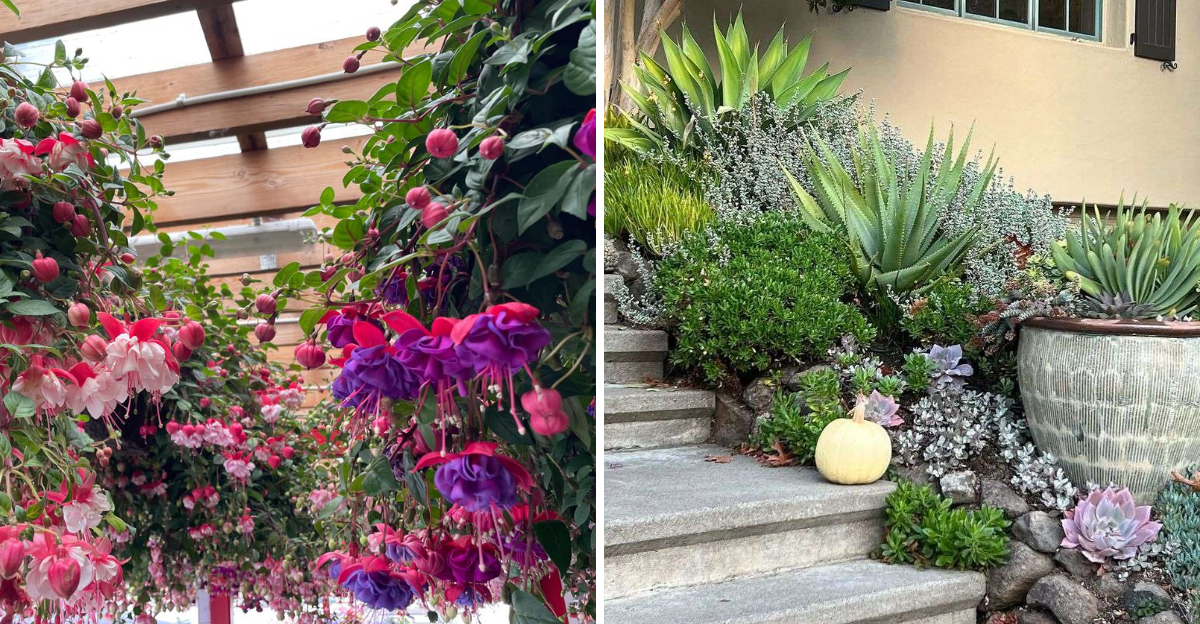
7. Hanging Baskets Make Small Patios Feel High End
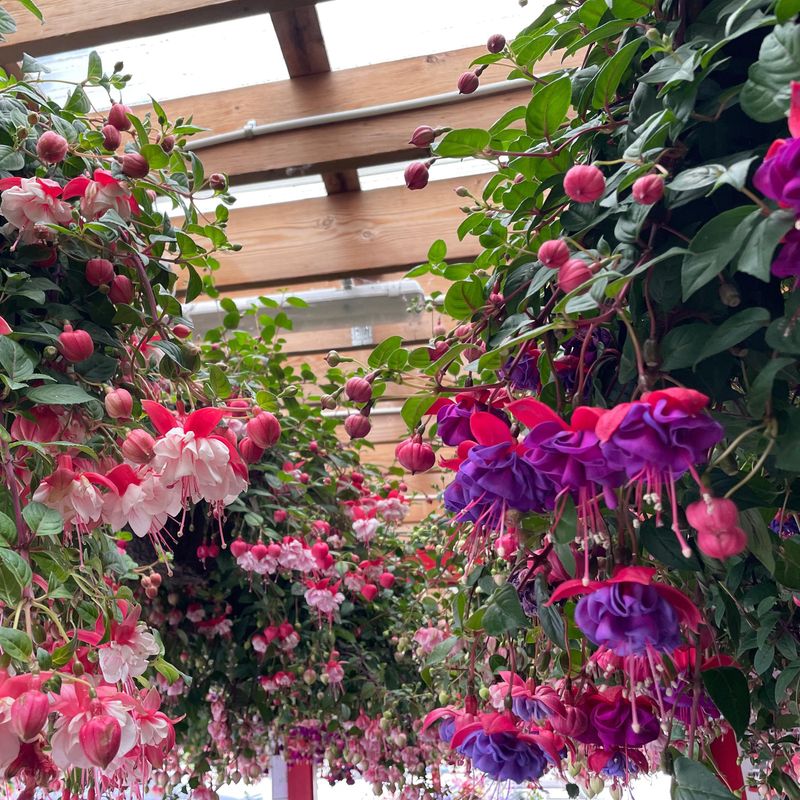
A well-planted hanging basket does one thing immediately and consistently. It draws the eye upward.
That vertical movement changes how a patio reads entirely. Suddenly the space feels taller, more layered, and considerably more polished without a single change to the floor plan.
Plants that thrive in California hanging baskets combine heat tolerance with continuous color. Trailing lantana handles full sun well, attracts butterflies reliably, and blooms from spring through the first cool nights of fall.
Fuchsia suits shadier spots with dramatic two-toned flowers that look almost too refined to be real. Mixing trailing and upright varieties within a single basket creates a fuller, more dynamic display than either type alone.
Watering is where hanging baskets require the most attention. Exposed to air on all sides, they dry out faster than ground-level containers and may need daily watering during California heat waves.
The design impact multiplies with grouping. Three baskets hung at different heights from a pergola beam creates a cascading canopy of color.
A single basket is a nice touch. Three at different heights is a design decision. The difference between the two is noticeable from the moment you walk outside.
8. Colorful Containers Let You Adapt The Garden Anytime
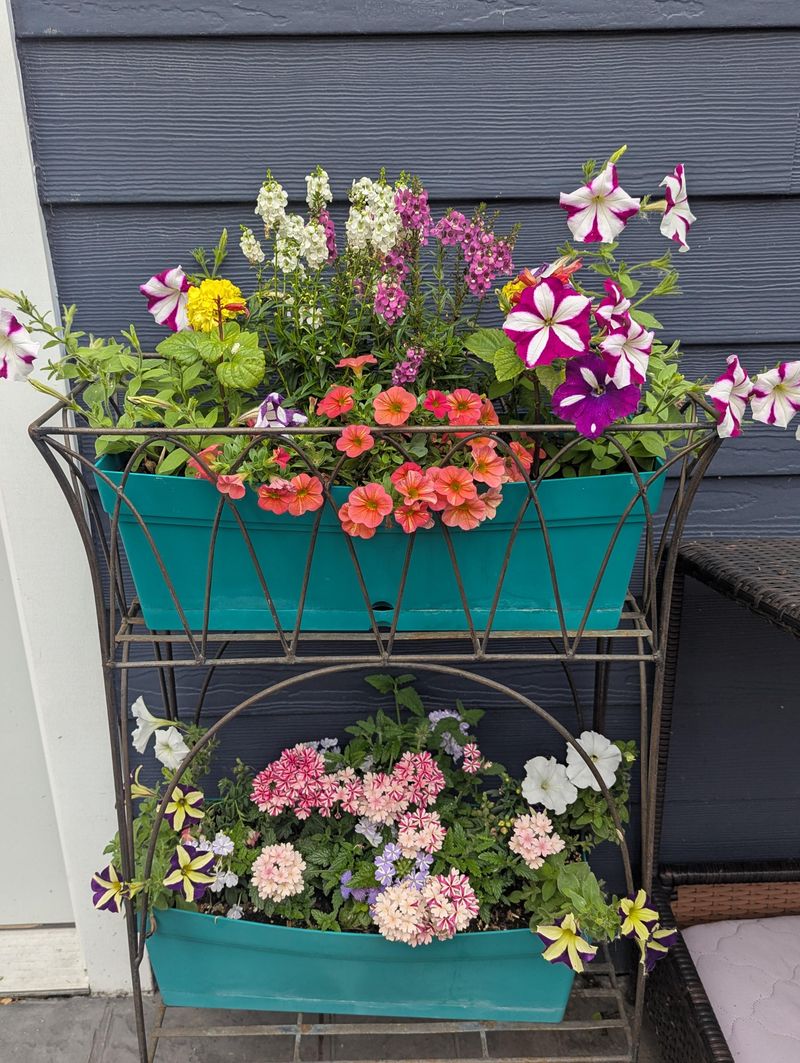
Flexibility is the genuine advantage container gardening offers, and California’s variable microclimates make that advantage especially practical.
A plant struggling in harsh afternoon sun on a south-facing wall can thrive after moving two feet into dappled shade. Containers make that adjustment happen in minutes.
Bold containers can create strong visual anchors.Cobalt blue glazed pots, deep terracotta, and matte black planters create strong visual anchors in a small space.
Grouping containers in odd numbers, particularly threes and fives, produces arrangements that look natural and considered rather than symmetrical and rigid.
Mixing container sizes within a grouping adds the same layered depth as in-ground planting. A tall pot with a small olive tree, flanked by two medium pots of trailing rosemary, creates a complete designed vignette from three containers. The whole arrangement rearranges in under ten minutes.
Seasonal swapping is where containers genuinely outperform garden beds. When one plant finishes blooming, swap it out without disturbing anything else around it. California’s mild climate means something is almost always ready to perform.
The patio can look fresh and new every month of the year without any permanent changes to the space.
Container gardening is essentially the option to change your mind whenever you want. Given how often gardens evolve, that flexibility is worth considerably more than it sounds.