Ohio Hydrangeas Are Ready To Bloom (Just Don’t Make These 8 Mistakes This Month)
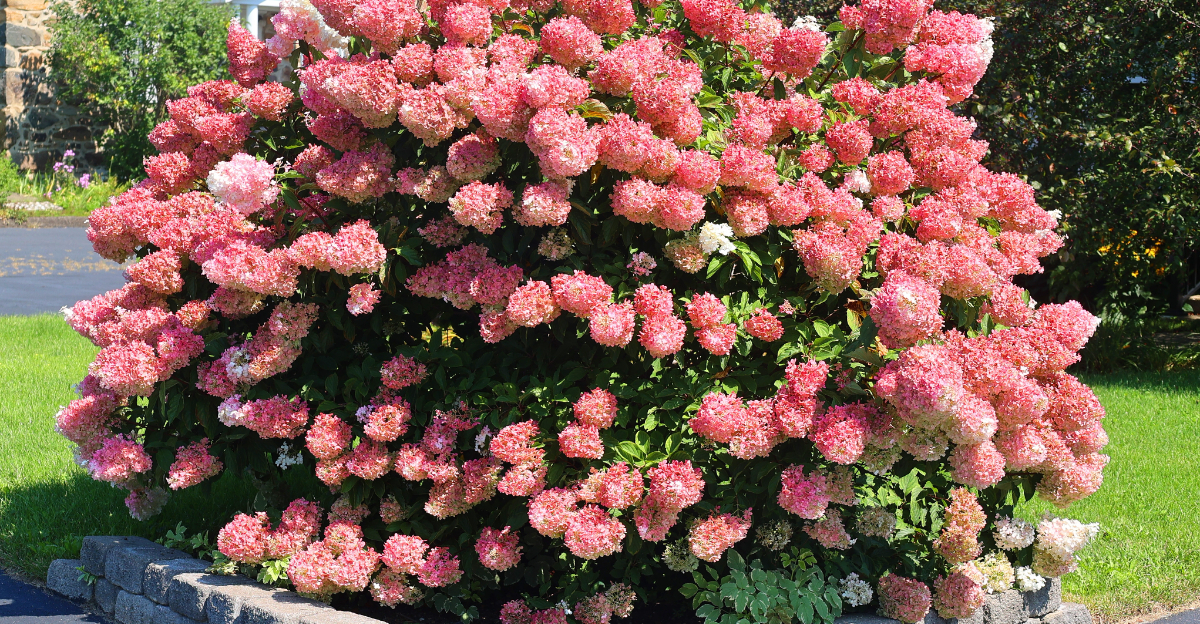
Ohio hydrangeas are loaded with potential right now. Buds forming, stems pushing up strong, everything pointing toward the kind of bloom season that makes the whole garden worth it.
June is the month that seals the deal, good or bad. A handful of mistakes made right now will not show consequences immediately.
They show up later, when buds drop before opening and blooms come in smaller than expected. Sometimes a plant that looked healthy in June hits a wall in July with no obvious explanation.
Most of these mistakes are easy ones. Watering at the wrong time of day.
Fertilizing when the plant needs something else entirely. Pruning out of habit instead of knowledge.
Ohio summers are not forgiving once a hydrangea gets stressed at the wrong moment. June is shorter than it feels and hydrangeas are keeping score whether you are paying attention or not.
1. Pruning Old-Wood Hydrangeas Now Can Remove This Year’s Flowers
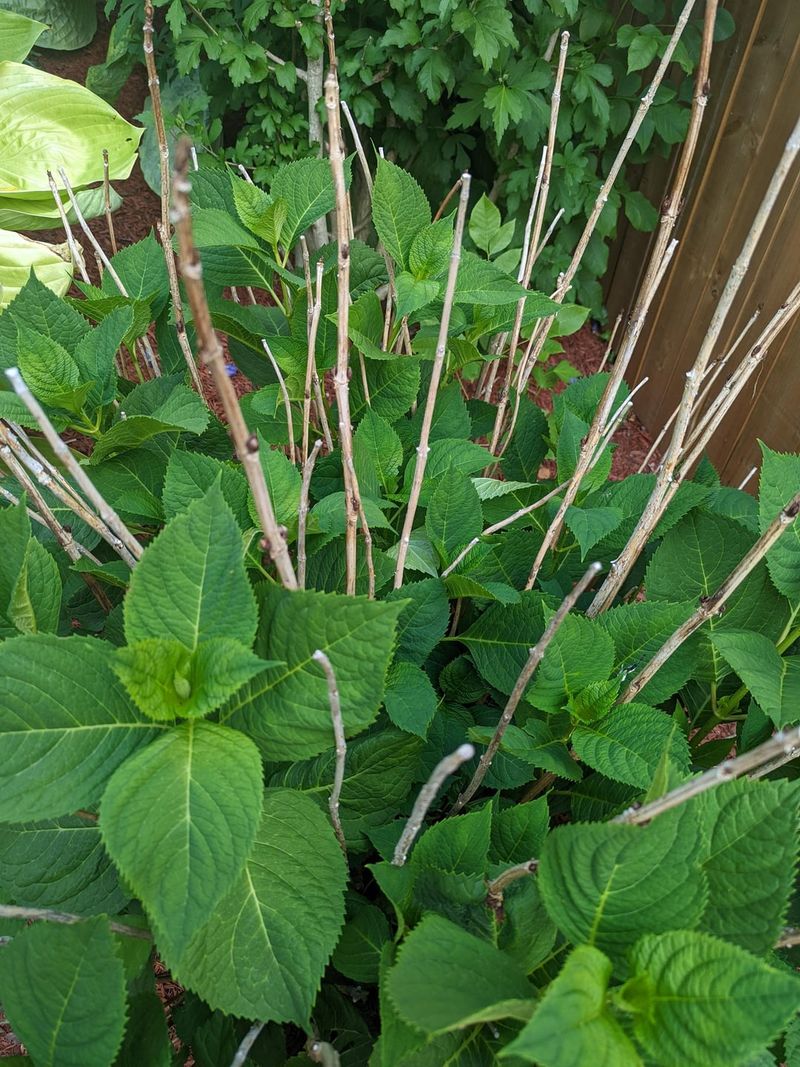
Grabbing the pruners in June feels productive, but for bigleaf, oakleaf, mountain, and some climbing hydrangeas, that single cut could cost you every bloom this season. These types set their flower buds on old wood, meaning the stems that grew last year are already carrying the buds that will open this summer.
Cut those stems now, and the flowers go with them.
The mistake usually happens when gardeners see a leggy shrub and want to tidy it up. The problem is that healthy-looking old stems with visible buds are not the ones that need removing.
Ohio State University Extension guidance consistently points out that pruning timing depends on the hydrangea species, not a calendar date.
Panicle and smooth hydrangeas are different. Those types bloom on new wood produced this season, so late winter or early spring pruning works fine for them.
But bigleaf and oakleaf types need a much more careful approach.
If you must do any cutting right now, limit it to stems that are clearly damaged, hollow, or show no signs of life after the plant has leafed out. Identify your hydrangea type before touching it with pruners this month.
2. Letting New Plantings Dry Out Stresses Buds Before They Open
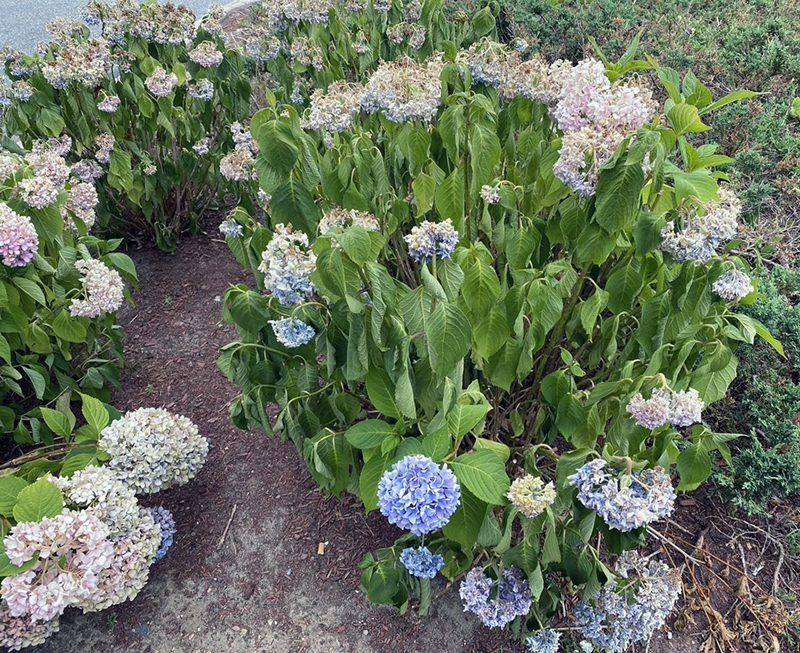
A hydrangea planted this spring is still working to establish its root system, and June heat can turn against it fast. Unlike a mature, well-rooted shrub, a new planting has a limited network of roots to pull moisture from.
When the weather turns hot, windy, or dry, that young plant can struggle quickly.
Drought stress on a new hydrangea does not always show up as wilting right away. Sometimes the first sign is buds that stall, shrivel, or open weakly.
By the time leaves droop dramatically, the plant has already been under stress for a while.
Pay close attention to hydrangeas planted near foundations, sidewalks, driveways, or walls that reflect heat. Those spots dry out faster than open garden beds.
Check the soil with your finger before watering. If the top inch or two feels dry, water deeply and slowly rather than giving a quick sprinkle.
Your Ohio Garden Changes Every Week. Your Plan Should Too.
Gardening in Ohio changes quickly throughout the season. Every Friday you’ll receive a simple weekly plan showing exactly what to plant, prune, fertilize, harvest, and protect so you never miss the right timing.
A two-to-three inch layer of mulch around the base helps hold moisture between waterings. Keep mulch a few inches away from the main stem to allow air circulation.
Consistent moisture during establishment makes a bigger difference than almost any other care step this month.
3. Overwatering Heavy Clay Soil Can Leave Roots Struggling
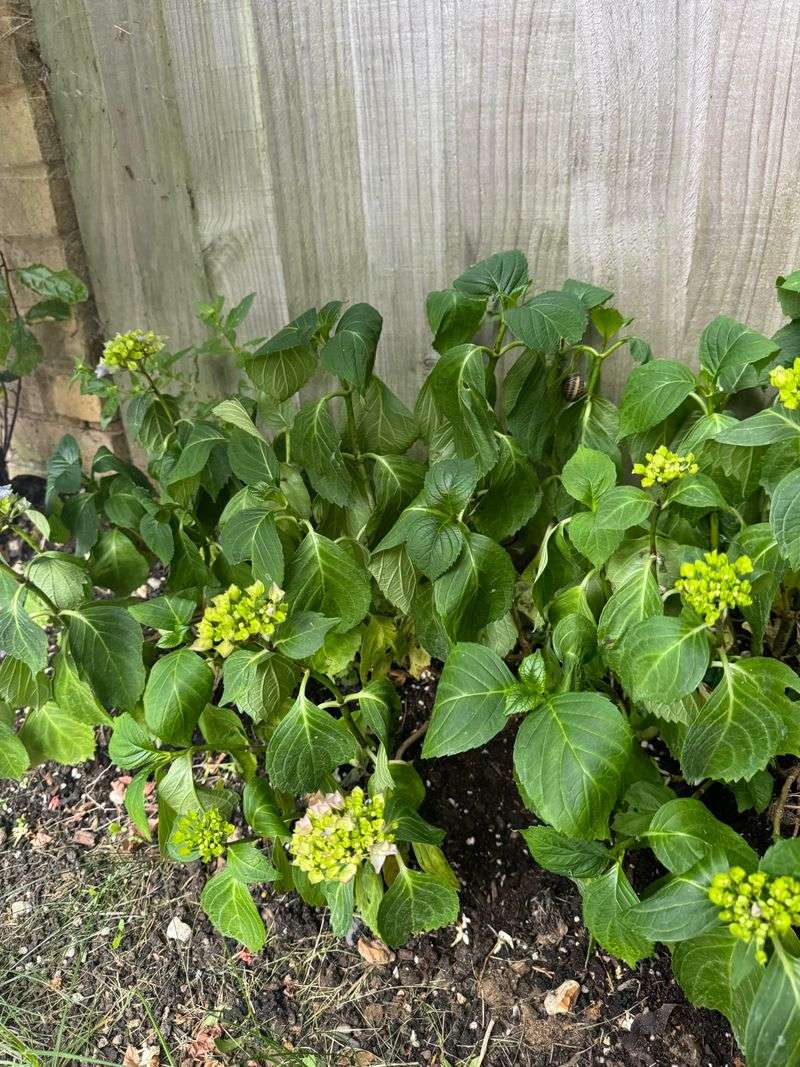
Many local gardens sit on clay-heavy soil that holds moisture much longer than gardeners expect, especially after a string of rainy days. Hydrangeas like consistent moisture, but they do not like sitting in soggy ground.
Overwatering, or simply watering on a fixed schedule without checking conditions, can leave roots starved of oxygen.
Roots in waterlogged soil cannot function properly. The plant may look stressed even though the soil is wet, which sometimes leads gardeners to water even more.
That cycle makes things worse rather than better.
Before watering any established hydrangea in a clay-based bed, press your finger two inches into the soil. If it still feels damp, skip the watering.
Low spots in the yard that collect runoff are especially risky for hydrangeas. Improving drainage at planting time, by amending the soil or choosing a slightly raised planting area, makes a lasting difference.
Mulch is helpful for moisture retention, but piling it too thickly or pushing it against the main stem can trap excess moisture right where the plant is most vulnerable. A light, even layer spread several inches from the stem is the right approach.
Let the soil guide your watering decisions, not the calendar.
4. Feeding Too Much Nitrogen Pushes Leaves Instead Of Blooms
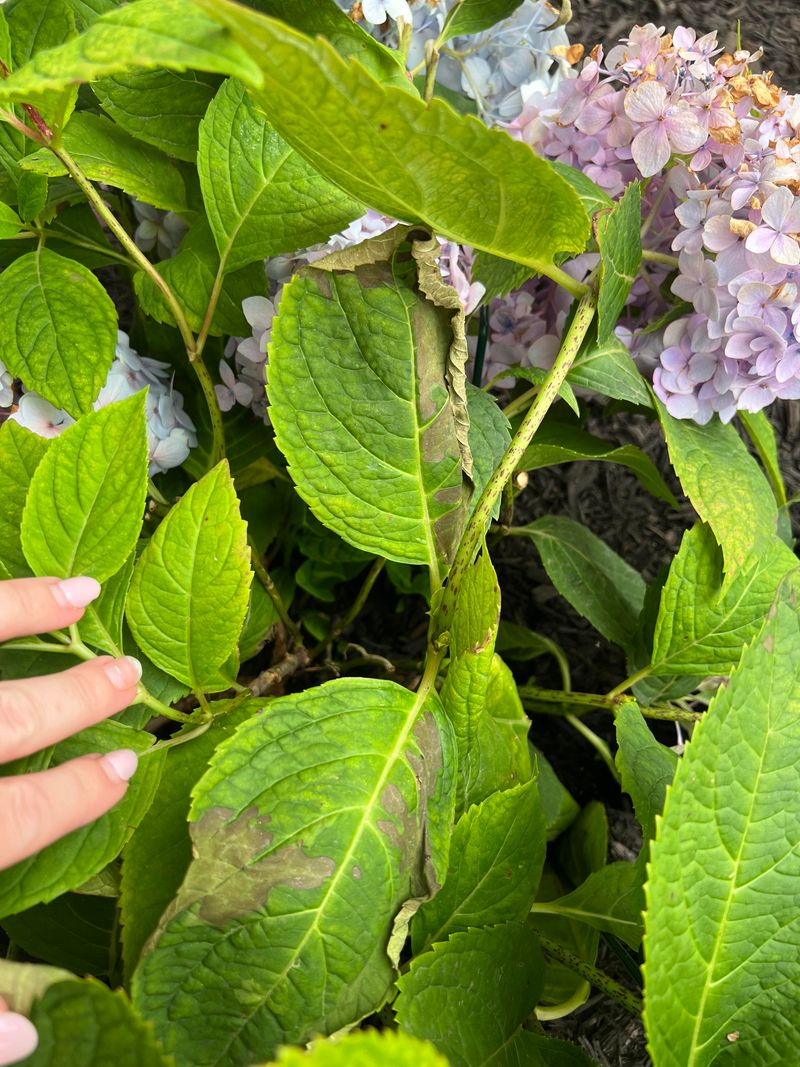
Watching buds come in slowly can make any gardener anxious, and that anxiety sometimes leads to reaching for fertilizer as a fix. But feeding a hydrangea a heavy dose of nitrogen when buds are forming can actually work against you.
High nitrogen encourages the plant to push leafy, vegetative growth instead of putting energy into flowering.
The result is often a full, lush-looking shrub with plenty of green but very few blooms. Nitrogen is not the enemy, but the balance and timing matter.
Buckeye State gardeners are often surprised to find that their well-fed hydrangeas underperform compared to plants that received more modest care.
Ohio State University Extension recommends soil testing as the most reliable way to understand what your soil actually needs before adding any fertilizer.
Guessing at nutrients, or applying more than the product label directs, rarely helps and often causes problems.
Avoid fertilizing plants that are already under stress from drought, root issues, or recent transplanting. A stressed plant cannot use nutrients efficiently.
If you do fertilize, follow the label carefully and avoid products designed for lawns, which tend to be very high in nitrogen. Balanced, bloom-supporting fertilizers applied at the right time are far more useful than heavy feeding in June.
5. Planting In Harsh Afternoon Sun Can Scorch Tender Growth
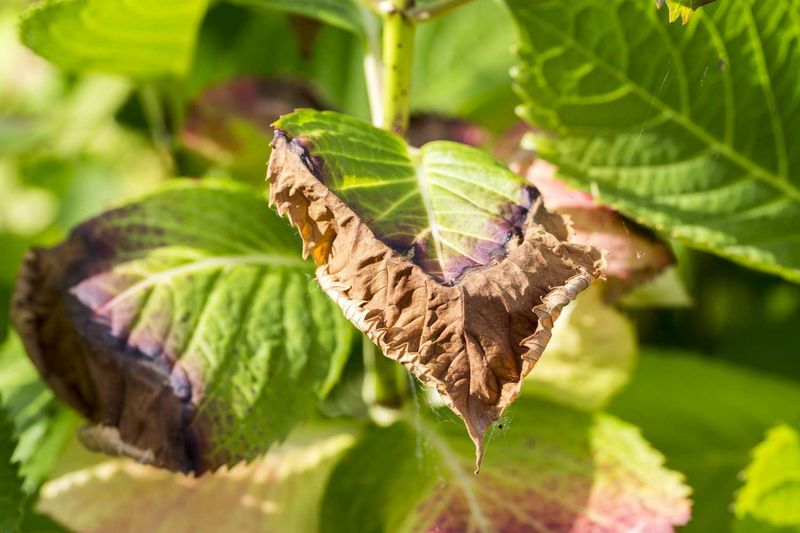
Most hydrangeas prefer a spot where they catch morning sun and settle into shade during the hottest afternoon hours. Bigleaf and oakleaf types are especially sensitive to harsh summer sun.
A west-facing bed next to a concrete driveway or brick wall can scorch leaves and stress developing buds.
Reflected heat from hard surfaces raises temperatures well above what the air thermometer reads. A hydrangea that looks fine in May can start showing scorched, papery leaf edges by late June if it is planted in a harsh spot.
The damage is not always dramatic at first, but it adds up over the season.
Panicle hydrangeas are generally more tolerant of sun and heat than bigleaf types, but even they perform better with some afternoon relief in very hot, exposed sites. Site selection before planting is the best prevention.
Once a shrub is established, moving it is possible but stressful for the plant.
For container hydrangeas, the fix is simpler. Move pots to a shadier spot during peak afternoon heat, especially on hot, dry days.
If a garden-bed hydrangea is struggling with sun, a temporary shade cloth can reduce stress. A nearby taller plant providing natural cover can also help while buds are opening this month.
6. Ignoring Winter-Damaged Stems Makes Shrubs Look Messy
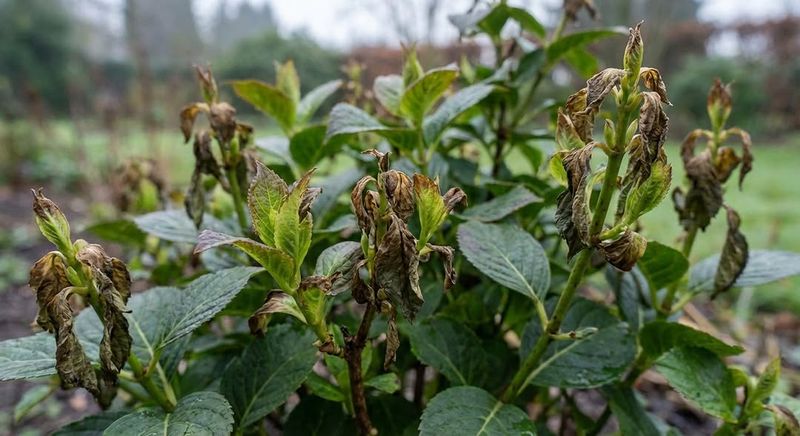
After a tough winter, some hydrangeas carry a mix of healthy, budded stems alongside ones that are clearly struggling. This is especially common with old-wood types in the northern and eastern regions of the state.
Temperatures there can be harsh enough to damage stems that were not fully protected.
The tricky part is knowing which stems to remove. Cutting too early in spring, before the plant has fully leafed out, makes it hard to tell live wood from damaged wood.
Waiting until you can clearly see where growth is emerging gives you a much more accurate picture.
A simple scratch test can help. Use a fingernail or small knife to gently scratch the surface of a stem.
Green tissue underneath means the stem is alive. Dry, brown, or hollow tissue usually means that section is not going to produce growth or blooms this season.
Remove only the clearly damaged portions, cutting back to a healthy node or to the base if the whole stem is affected. Avoid removing budded stems just because they look a little ragged on the outside.
Sometimes old-wood stems that appear rough on the surface are still carrying viable flower buds. Patience before cutting pays off with better bloom counts this summer.
7. Trimming Too Deep Can Cost Future Flower Buds
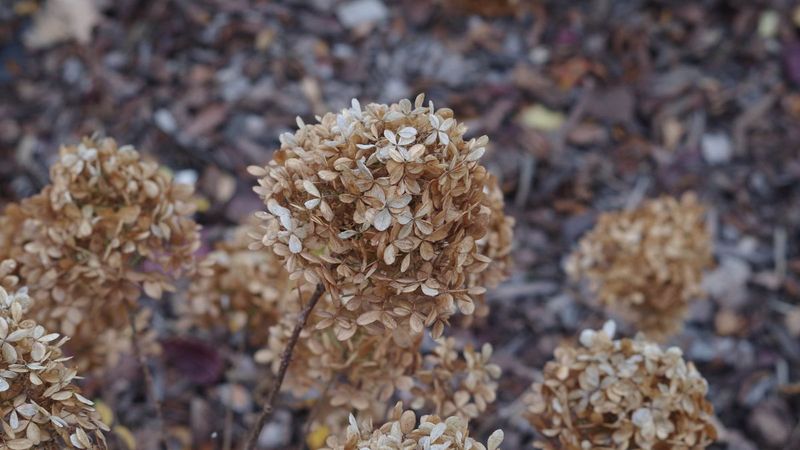
Removing spent blooms keeps a hydrangea looking tidy, and for most types it is a low-risk task. But on old-wood hydrangeas, where and how deep you cut matters more than most gardeners realize.
Cutting too far down the stem in search of a cleaner look can remove the buds that are already forming for next season.
The safest approach for bigleaf and oakleaf types is to snip just below the faded flower head, taking as little stem as possible. That small cut removes the spent bloom without disturbing the nodes lower on the stem where next year’s buds will develop.
Trimming is not required for bloom. Hydrangeas do not need spent flowers removed to produce new ones the way some annuals do.
The main reason most gardeners trim is appearance, and that is a perfectly valid reason. Just keep the cuts shallow.
Some gardeners choose to leave dried blooms in place through fall and winter. The papery, aged flower heads add texture to the late-season garden and can provide some minor insulation around the stem tips.
If you like the look, skipping trimming entirely is a reasonable choice. Avoid confusing a light trimming session with a full pruning, since those are very different tasks with very different consequences for next year’s flowers.
8. Treating Every Hydrangea Type The Same Leads To Bad Timing
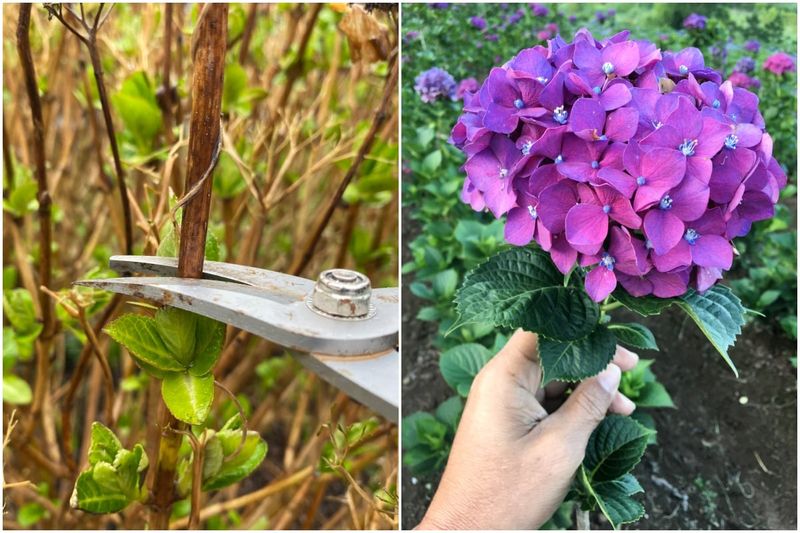
One of the most common root causes behind failed blooms, poor pruning outcomes, and frustrated gardeners is simple misidentification. Not all hydrangeas work the same way, and treating them as if they do leads to mistakes that repeat year after year.
Smooth and panicle types bloom on new wood and respond well to late winter or early spring pruning. Bigleaf and oakleaf types bloom on old wood and need a completely different approach.
Misidentifying a bigleaf as a panicle, then cutting it hard in early spring, can leave the plant with nothing to bloom on for the entire season. The shrub will look healthy and green by June, but there will be no flowers.
That confusion happens more often than most gardeners admit.
Save plant tags when you bring a new hydrangea home. If tags are long gone, look up the cultivar name and observe when and how it blooms.
Then check guidance from Ohio State University Extension or Ohioline before making any major pruning decisions. Local Extension offices can also help with identification.
Before you prune, fertilize, or move any hydrangea this month, take a moment to confirm what type it is. That single step prevents most of the mistakes covered in this article and sets the whole plant up for a stronger, more reliable bloom season year after year.