These Heat-Smart Plants Make California Yards Look Better As Summer Gets Closer
The closer summer gets, the more a California yard shows what it is made of. Tender plants may fade, thirsty ones may sulk, and bare spots can start looking even harsher in the sun.
Heat smart plants change that story. They bring color, texture, and shape just when the garden needs it most.
Instead of demanding constant rescue, the right choices settle into the season with confidence.
They can make patios feel softer, front yards look sharper, and dry borders feel full instead of forgotten.
This is not about planting a yard that simply survives summer. It is about choosing plants that still look good as the weather turns brighter, hotter, and drier.
Pick the right heat ready favorites, and your yard can move into summer looking fresh instead of worn out.
1. California Fuchsia Gets Better As Summer Heats Up
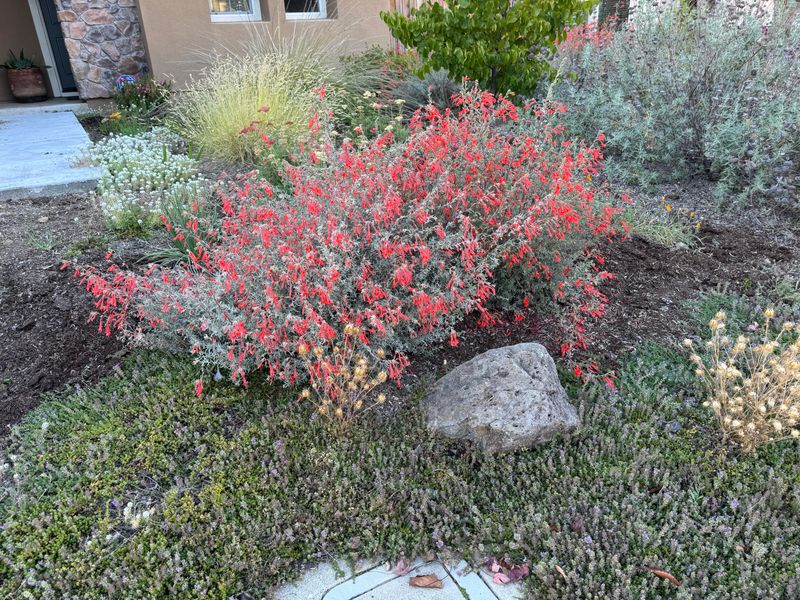
Most plants start to struggle once temperatures climb past 90 degrees, but California Fuchsia seems to wake up.
This native wildflower produces brilliant red and orange trumpet-shaped blooms that pop against its silvery-green leaves. The hotter it gets, the more it seems to show off.
Native to dry slopes and rocky hillsides across our state, this plant knows how to handle drought. Once it gets established in your yard, it rarely needs extra water.
It spreads low along the ground and can fill in bare patches beautifully. It works great along borders, slopes, and garden edges.
Hummingbirds absolutely love it. If you want to bring more wildlife into your yard without doing much extra work, this plant is a solid choice.
It blooms from late summer into fall, which is when many other plants have already stopped producing flowers.
Plant it in full sun and well-draining soil. Avoid overwatering, especially in summer.
Too much moisture can actually cause more problems than too little. Trim it back in late winter to encourage fresh, full growth in spring.
It bounces back reliably every year with almost no fuss.
For gardeners who want color, wildlife, and low water use all in one plant, this one checks every box on the list.
2. Lantana Keeps Color Coming Through Hot Weather
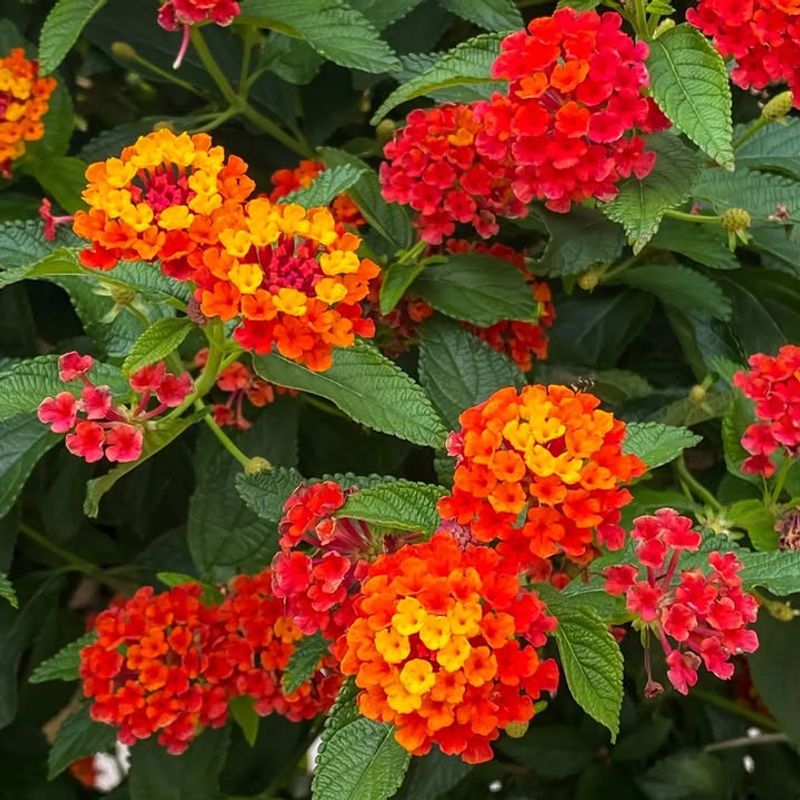
Few plants put on a show quite like Lantana does in the middle of summer. The clusters of tiny flowers come in yellow, orange, pink, red, and purple, sometimes all on the same plant.
When most yards start looking tired from the heat, Lantana just keeps going.
It is one of the toughest flowering plants you can grow in warm, dry climates. Once it gets settled in, it needs very little water and almost no fertilizer.
It handles heat, wind, and dry soil without complaint. That kind of reliability is hard to find in a flowering plant.
Lantana works well in containers, raised beds, and garden borders. It spills nicely over edges and fills space quickly.
Butterflies are drawn to it constantly, so your yard gets extra life and movement during the summer months.
Plant it where it gets at least six hours of direct sun each day. Water it lightly until the roots get established, then pull back.
Your California Garden Changes Every Week. Your Plan Should Too.
Gardening in California changes quickly throughout the season. Every Friday you’ll receive a simple weekly plan showing exactly what to plant, prune, fertilize, harvest, and protect so you never miss the right timing.
Avoid planting it near areas where small children or pets play, since the berries are not safe to eat.
Deadheading, or removing spent flower clusters, is not required but can encourage faster regrowth. With Lantana in your yard, hot days become the best days for color.
3. Bougainvillea Loves Heat And Rewards It With Color
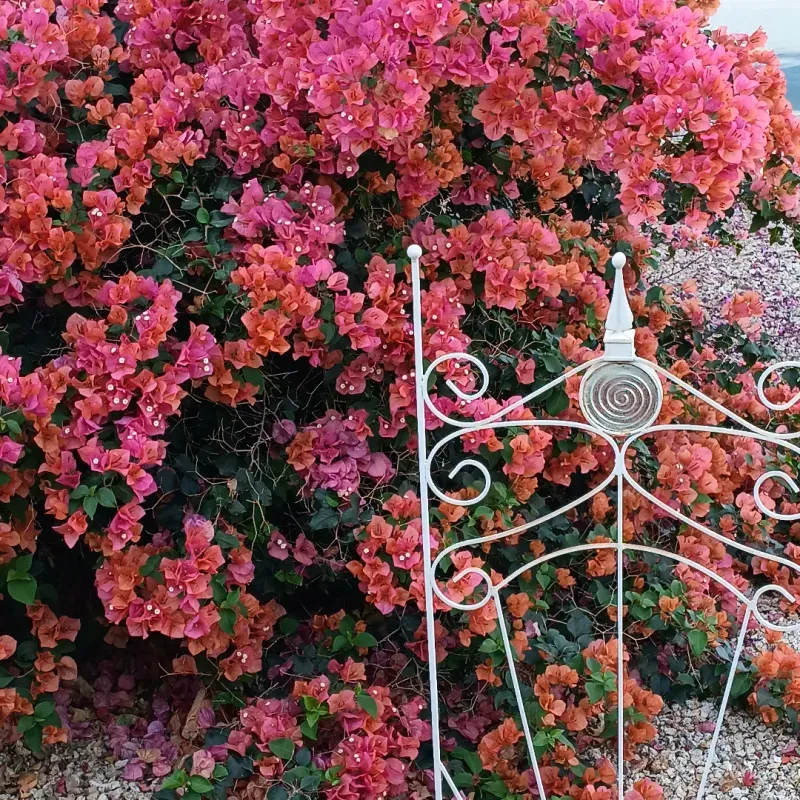
There is something almost theatrical about Bougainvillea. When it is in full bloom, the entire plant turns into a wall of color.
Magenta, orange, white, red, and purple are all possible, depending on the variety. And the hotter the summer gets, the more dramatic the display becomes.
Bougainvillea thrives on neglect in the best possible way. It actually blooms better when it is a little stressed from dry conditions.
Overwatering or over-fertilizing with nitrogen will push it to grow leaves instead of flowers. The trick is to water deeply but infrequently and let the soil dry out between sessions.
It grows fast and can cover fences, trellises, and walls with very little encouragement. Thorns are part of the deal, so keep that in mind when choosing a spot.
Thick gloves are a smart investment when trimming this one.
Full sun is non-negotiable for strong blooming. It does not handle frost well, but in most parts of our state, that is rarely a concern.
Plant it against a south or west-facing wall for maximum heat exposure. Once it gets going, it becomes one of the most eye-catching features in any yard.
Few plants deliver this much visual impact with this little effort required from the gardener.
4. Gaillardia Keeps Blooming When Other Flowers Fade
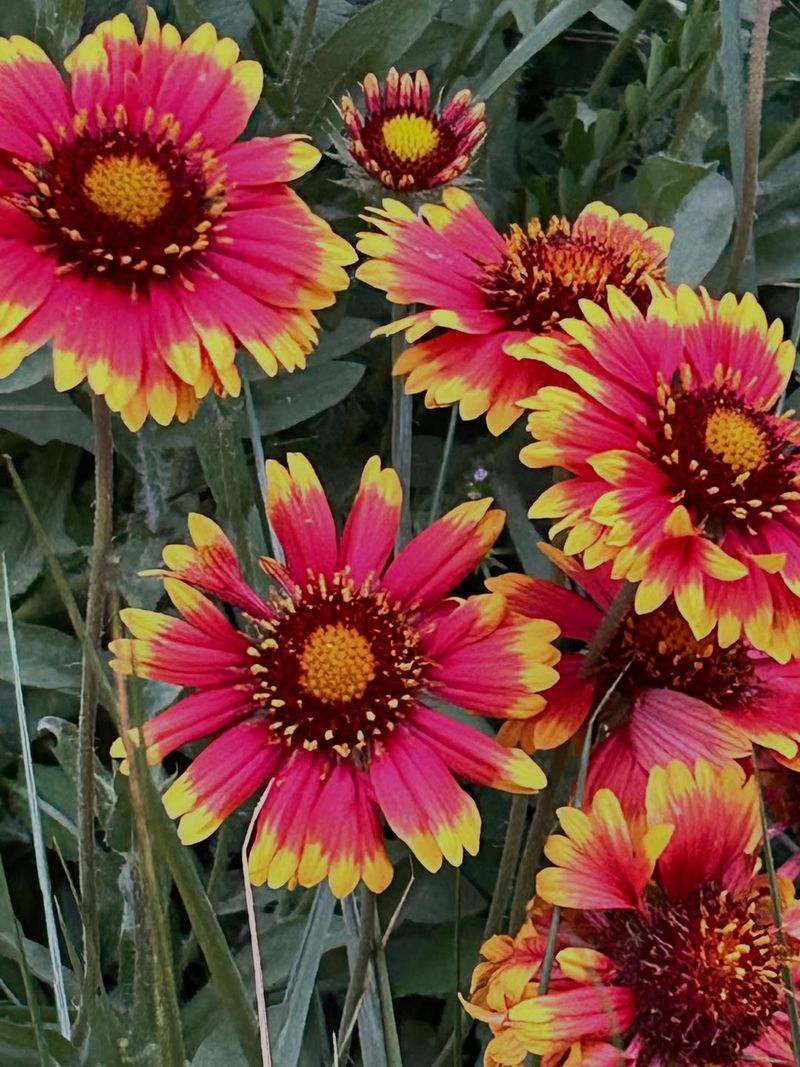
Known as the blanket flower, Gaillardia has a warm, fiery look that feels right at home in a summer yard. The blooms are bold rings of red, orange, and yellow that resemble tiny sunsets.
And unlike many summer flowers, it does not stop blooming when the heat gets intense.
This plant is native to North America and has adapted well to hot, dry conditions. It grows in poor soil without much fuss and does not need regular fertilizing.
In fact, too-rich soil can make it grow floppy and weak. Lean, well-drained ground is where it does its best work.
Gaillardia is a great choice for gardeners who want long-season color. It starts blooming in late spring and can keep going all the way into fall with some light deadheading.
Removing spent flowers regularly encourages the plant to push out new blooms faster.
It pairs well with other drought-tolerant plants like yarrow and salvia. Bees and butterflies visit it regularly, making it a great addition for pollinator gardens.
Plant it in full sun and give it room to spread slightly. It grows about one to two feet tall and wide, making it a good fit for borders and containers.
For reliable summer color that does not require constant attention, Gaillardia earns its place in any warm-weather yard.
5. Yarrow Handles Dry Heat With Soft Summer Color
Yarrow has been growing in tough conditions for thousands of years, and it shows no signs of slowing down.
Ancient cultures used it for medicinal purposes, and gardeners today value it for something different: its ability to look soft and delicate while surviving brutal summer heat.
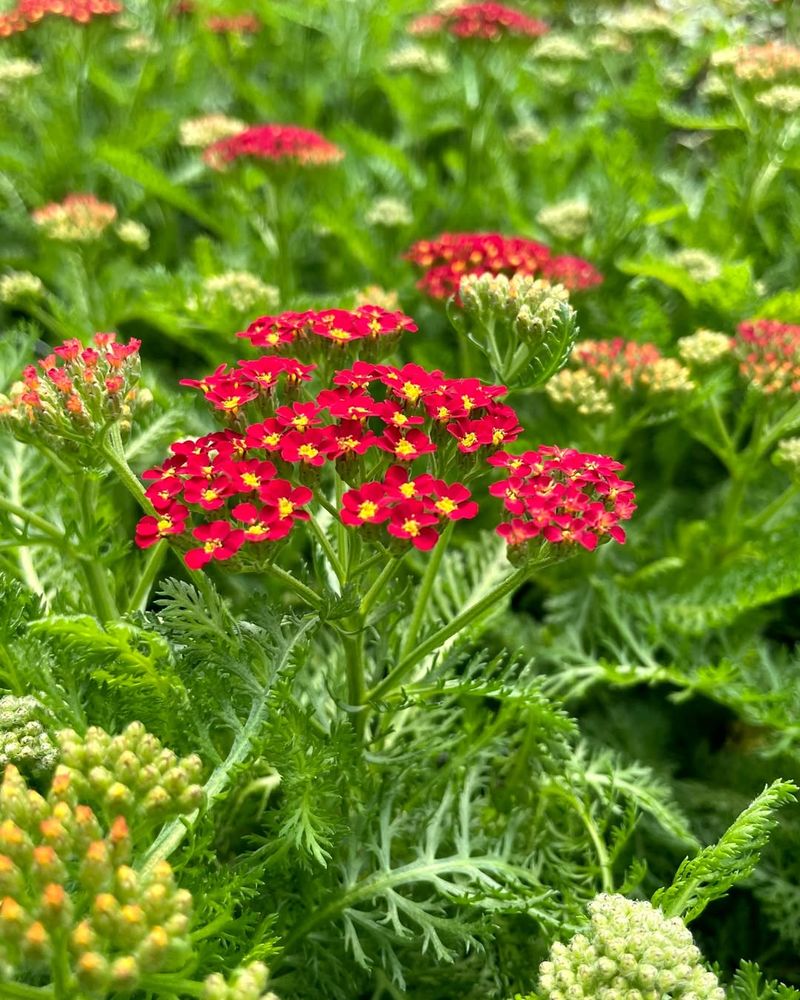
The flat-topped flower clusters come in yellow, white, pink, and red. The feathery foliage adds texture even when the plant is not blooming.
It is one of those plants that looks intentional and designed, even though it basically takes care of itself.
In our state, yarrow is a standout choice for slopes, dry borders, and low-water landscaping projects. It spreads over time and fills in gaps without becoming invasive in most settings.
That spreading habit can actually save you money on mulch and ground cover.
Plant it in full sun and well-draining soil. It does not like wet feet, so avoid areas that collect standing water.
Once established, it rarely needs supplemental watering. Divide clumps every few years to keep growth looking tidy and full.
Yarrow also works well as a cut flower, so you can bring some of that summer color indoors.
Pollinators swarm it throughout the blooming season, which adds even more life and energy to any yard during the warmer months.
6. Rosemary Gives Structure When Softer Plants Struggle
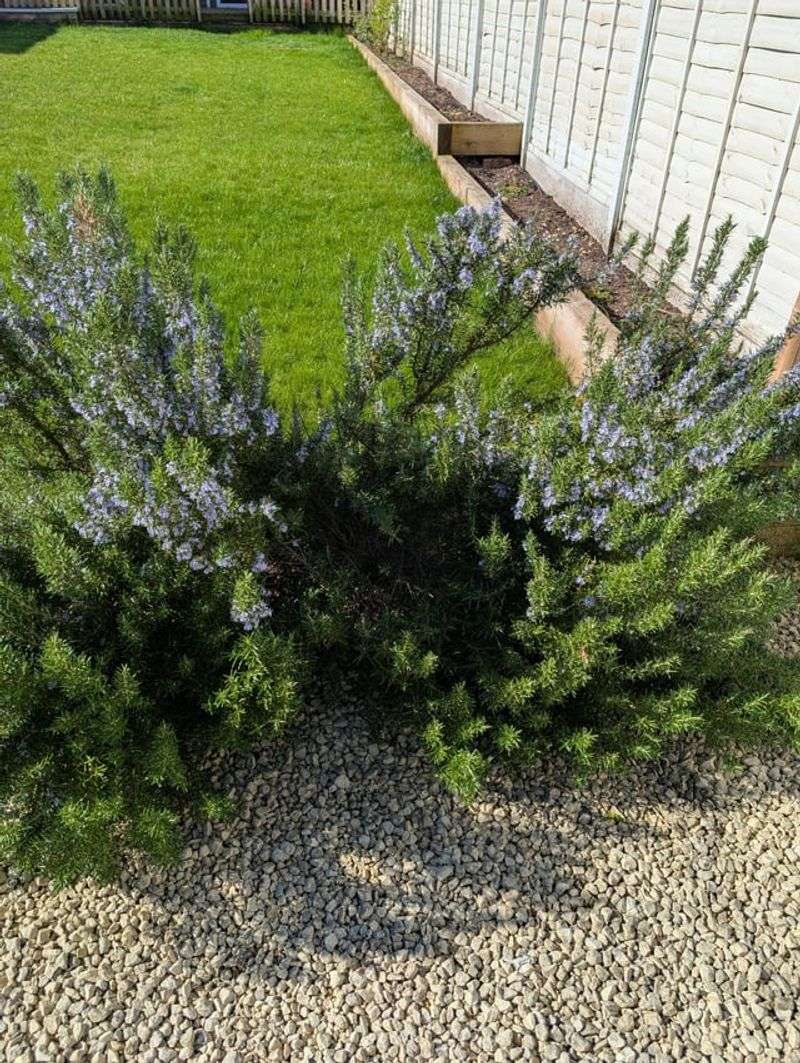
When summer heat flattens softer plants, Rosemary stands tall. This aromatic herb doubles as a tough landscape shrub that keeps its shape and color all year long.
The dark green, needle-like leaves stay sharp and full even during the driest stretches of summer.
Rosemary has deep roots in Mediterranean climates, which share a lot in common with conditions across much of our state. It was built for hot, dry summers and mild winters.
Once it gets established, it asks for almost nothing. No extra fertilizer, no regular watering, no fuss.
There are several varieties to choose from. Upright types can grow several feet tall and work well as informal hedges or privacy screens.
Trailing varieties spill over walls and raised beds with a relaxed, natural look. Both types bloom in late winter or early spring with small purple-blue flowers that attract bees.
Use Rosemary as a backbone plant in your garden design. Pair it with flowering plants like Gaillardia or Lantana to balance structure with color.
It holds its shape without much pruning, which keeps maintenance low. As a bonus, you can clip fresh sprigs for cooking anytime you want.
Few plants offer that kind of double value in a yard.
Strong, reliable, and fragrant, Rosemary is one of the hardest-working plants you can grow in a warm-weather garden.
7. Agave Makes Summer Yards Look Sharp And Intentional
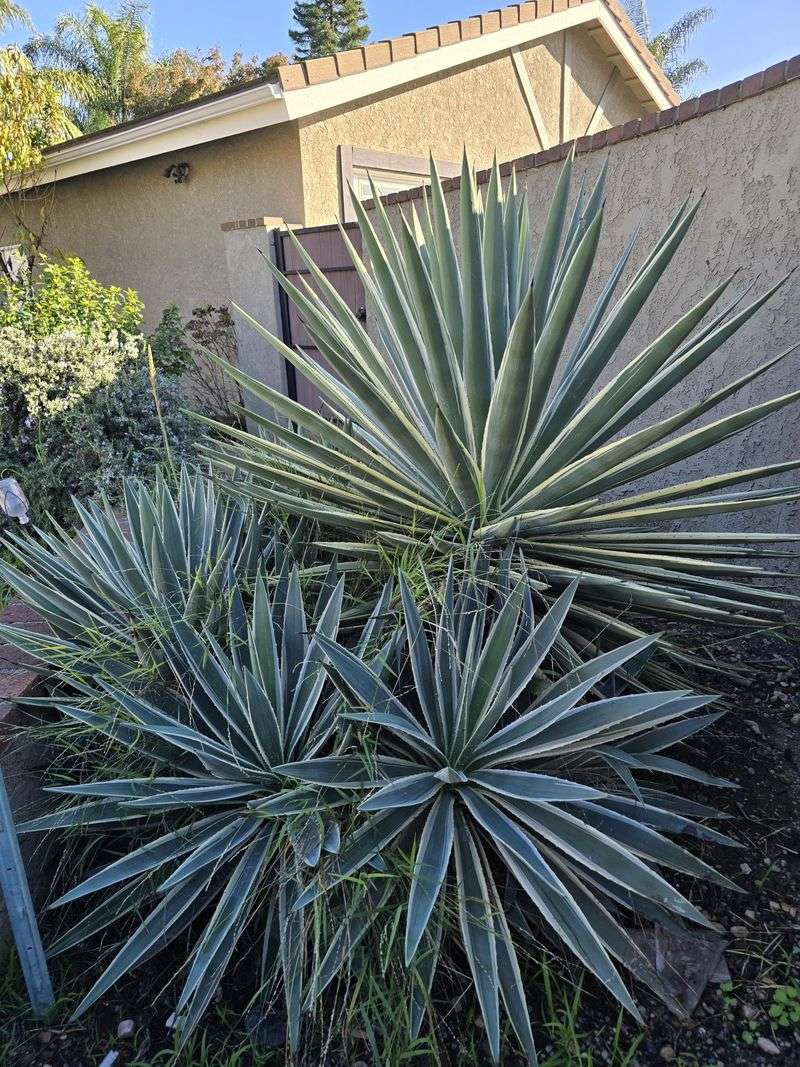
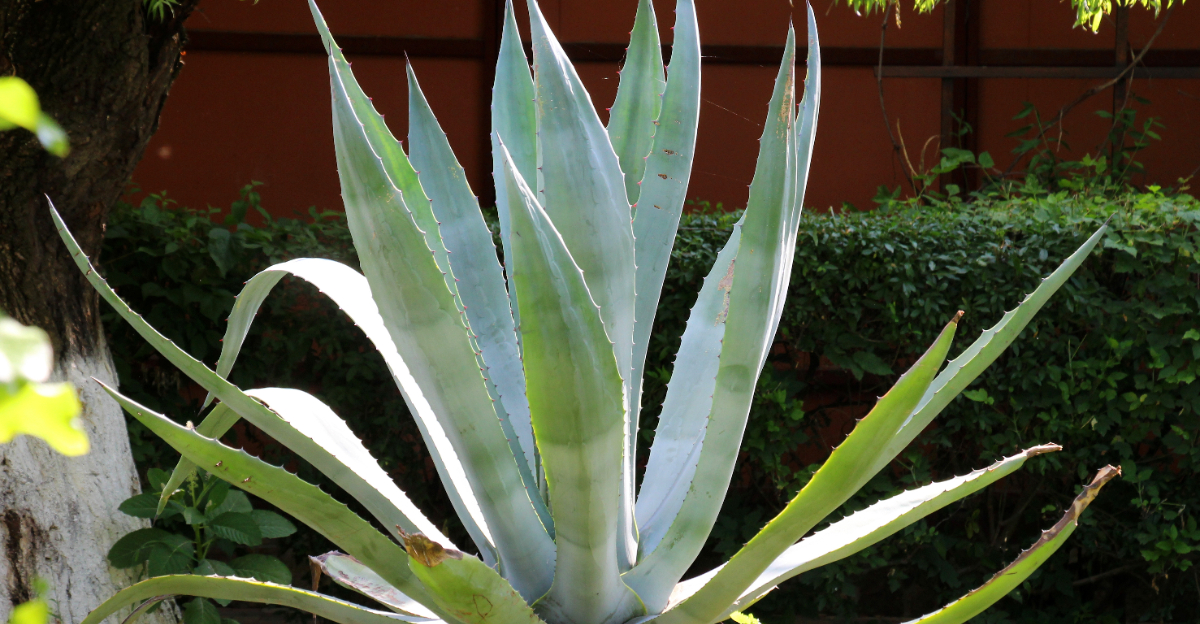
Bold, architectural, and completely unbothered by heat, Agave is the kind of plant that makes a yard look like it was designed by a professional.
The thick, pointed leaves form a dramatic rosette shape that draws the eye immediately. It is a statement plant in the truest sense.
Agave stores water in its thick leaves, which is how it survives long dry periods without any help from a garden hose. In hot, dry climates, that kind of self-sufficiency is worth a lot.
Once planted in the right spot, it can go weeks without a single drop of supplemental water.
There are many varieties available, ranging from small tabletop sizes to large specimens that can span several feet wide. Smaller types work well in containers or as accent plants near walkways.
Larger ones make bold focal points in open garden beds or on slopes.
Full sun and fast-draining soil are the two main requirements. Avoid heavy clay that holds moisture, since soggy roots are one of the few things that can seriously harm this plant.
Space them away from high-traffic areas because the leaf tips are sharp. A layer of gravel mulch around the base looks great and helps with drainage.
Agave brings a clean, modern look to summer yards without demanding anything in return.
8. Deer Grass Adds Movement Without Needing Much Water
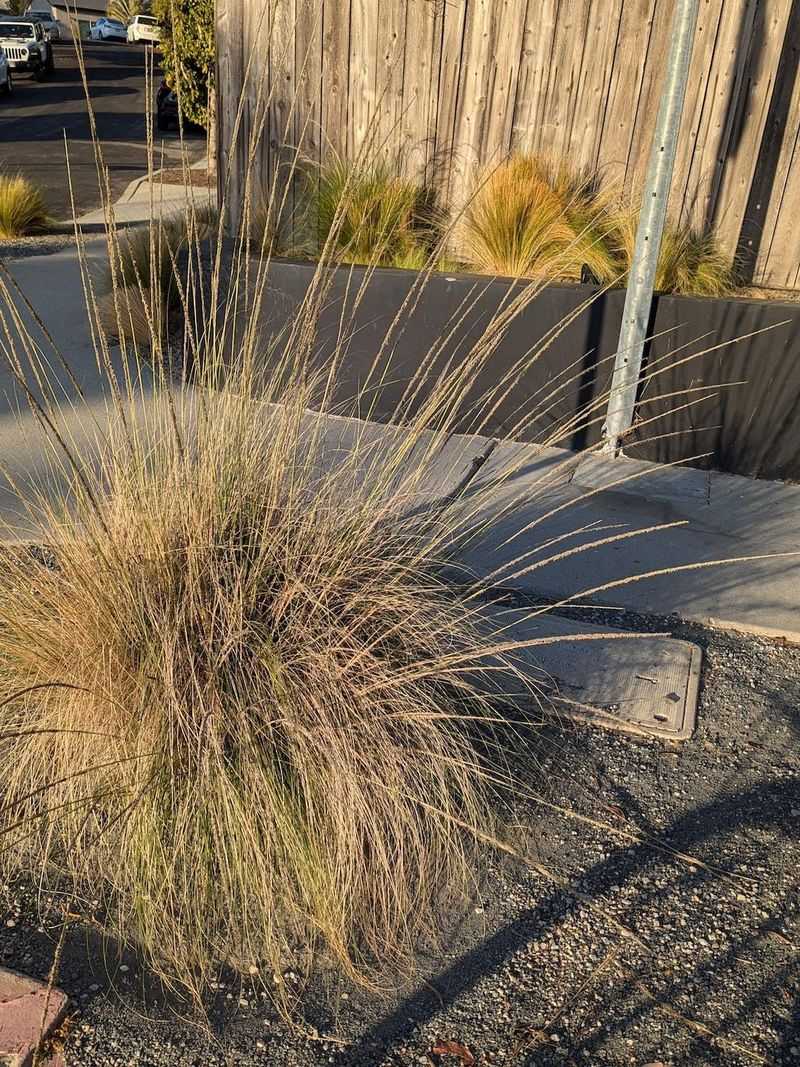
Not every yard needs to be full of flowers to look beautiful. Deer Grass proves that point every single summer.
This native ornamental grass forms graceful, fountain-like mounds that move with the slightest breeze, adding life and rhythm to any outdoor space.
Originally found in dry foothills and oak woodlands across our state, Deer Grass is completely at home in hot, low-water conditions. It does not need rich soil or frequent irrigation once it gets established.
Tall, slender seed stalks rise above the mound in summer, catching light in a way that looks almost magical in the late afternoon.
It pairs well with flowering drought-tolerant plants like California Fuchsia and Yarrow. The contrast between its soft, flowing texture and the bold colors of nearby flowers creates a balanced, layered look that landscape designers love.
It also works well on slopes where erosion can be a concern. Plant it in full sun or partial shade and water it lightly during its first summer. After that, rainfall in most parts of our state is usually enough to keep it healthy.
Divide large clumps every few years to keep them looking full and tidy.
Deer Grass is low-drama and high-reward, exactly the kind of plant a smart summer yard needs.