California Groundcovers That Replace Lawn In Full Sun With Little Water After Year One
A full sun lawn can ask for more water than many California homeowners want to give. Groundcovers offer a smarter way to keep the yard looking green and finished without the same thirsty routine.
The first year still matters because young plants need help settling in. After that, the right choices can handle heat with much less attention.
They can spread across open soil and soften bare areas that would otherwise look unfinished. Some stay low enough for a tidy front yard look.
Others bring flowers that make the space feel more alive than plain turf. The key is choosing plants that match your sun, soil, and foot traffic needs.
Once established, drought-smart groundcovers can turn a high-maintenance lawn area into a cleaner, easier landscape.
1. Dwarf Coyote Brush Covers Sunny Slopes And Parkways
Slopes and parkway strips are two of the hardest spots to plant in any yard. Erosion, foot traffic, and reflected heat from pavement make most plants struggle.
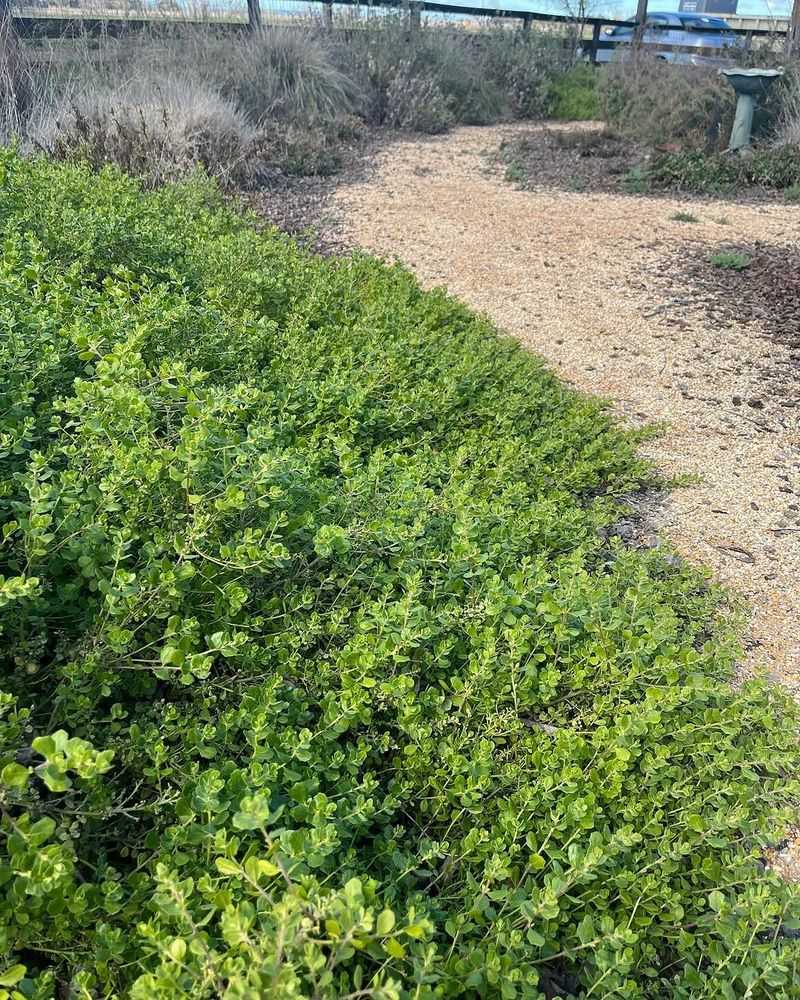
Dwarf Coyote Brush, or Baccharis pilularis, was practically built for these conditions.
It is a native shrub that grows in a low, spreading form, reaching about one to two feet tall and spreading six feet or more.
The dense growth shades the soil underneath, which helps hold moisture and prevent erosion on slopes.
That root system also grips the soil tightly, making it a great choice for hillside planting.
Once established, it is one of the most drought-tolerant plants on this list. Native to coastal scrub and chaparral habitats, it evolved to handle long dry summers with no supplemental water at all.
Year one requires regular irrigation, but after that, rainfall usually handles things in most parts of California.
The foliage is small, dark green, and resinous, giving it a slightly sticky texture and a mild pleasant scent. It does not flower in a showy way, but the small blooms attract native bees and beneficial insects in late summer and fall.
Pruning once a year in late winter keeps it from getting woody in the center. A light shearing encourages fresh growth from the base and keeps the mat looking dense and full. It is a workhorse plant that asks for very little in return.
2. Common Lippia Replaces Lawn With A Low Flowering Mat
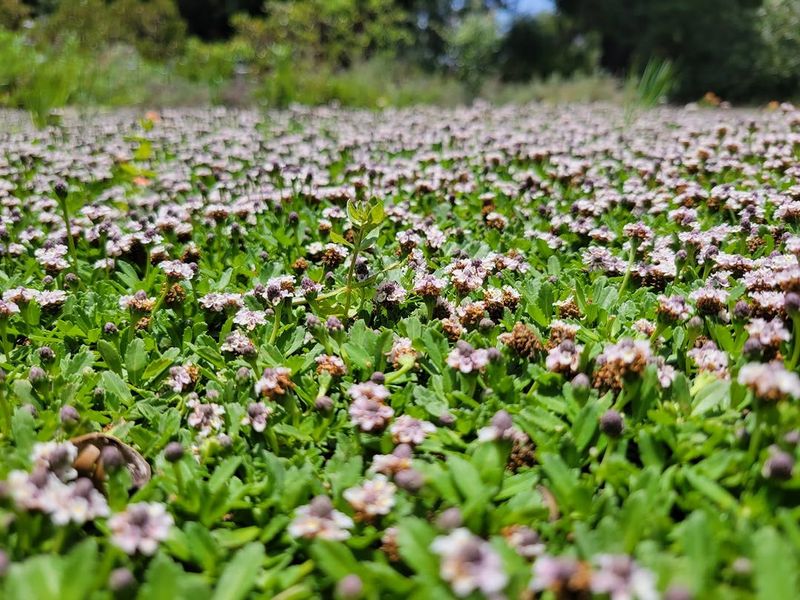
Few groundcovers work as hard as Common Lippia, also known as Phyla nodiflora. It creeps low and fast, forming a dense mat that stays mostly flat, which makes it a natural replacement for turf grass in full sun areas.
Foot traffic is not a problem for this tough little plant. It handles light to moderate walking, which is more than most groundcovers can say.
That makes it especially useful in front yards where people cut across the lawn.
The small flowers are a nice bonus. Tiny white and lavender blooms appear throughout the warm months, attracting bees and butterflies without any extra effort from you.
Some homeowners actually enjoy the subtle color it adds. Watering during the first year is important to help the roots establish. After that, Common Lippia gets by on very little supplemental water.
Your California Garden Changes Every Week. Your Plan Should Too.
Gardening in California changes quickly throughout the season. Every Friday you’ll receive a simple weekly plan showing exactly what to plant, prune, fertilize, harvest, and protect so you never miss the right timing.
In many lower-elevation areas, rainfall alone keeps it going through fall and winter. It spreads by runners, so it fills in gaps quickly and crowds out weeds as it goes.
Keep an eye on borders, though, because it can creep into garden beds if not edged. A simple plastic border or regular trimming keeps it in check.
This plant is not native but has naturalized widely across California and performs reliably in hot, dry conditions. It stays green most of the year and goes semi-dormant in cold winters in northern regions.
3. Silver Carpet Gives Hot Yards A Tight Low Groundcover
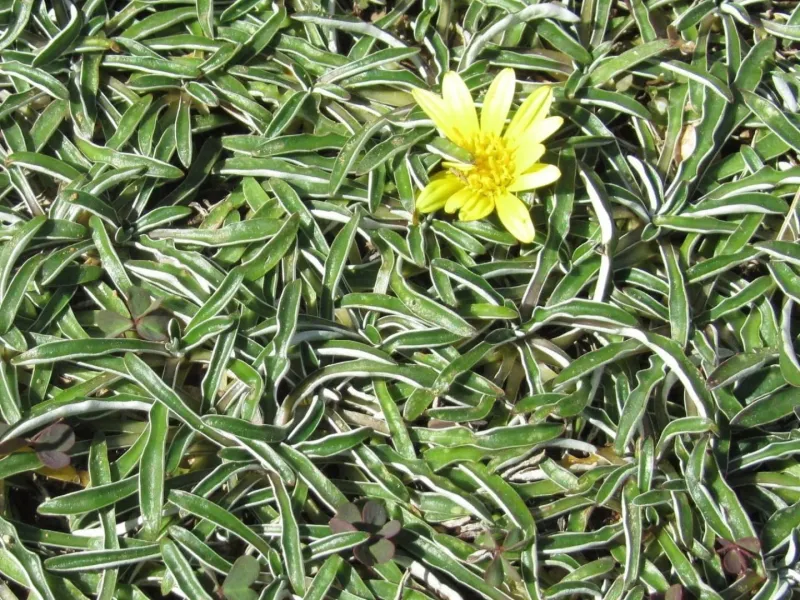
Dymondia margaretae, commonly called Silver Carpet, is one of the most elegant low groundcovers available for hot, dry yards.
The leaves are narrow and silvery-green on top with white undersides, giving the whole mat a soft, shimmery look that stands out in a garden.
It grows only about two inches tall, which makes it ideal for areas where you want ground coverage without any visual bulk.
Between stepping stones, along pathways, or as a replacement for a small lawn panel, Silver Carpet fits in beautifully.
Small yellow daisy-like flowers appear in summer, adding a cheerful touch without making the plant look weedy.
The blooms are modest and stay close to the foliage, so the overall effect is tidy and refined rather than wild.
One of its best qualities is how well it handles foot traffic. It is not as tough as Kurapia or Lippia under heavy use, but it tolerates occasional stepping without falling apart.
Many gardeners use it between pavers where grass would struggle to survive.
Watering once a week during the first summer is usually enough to get it established. After that, twice-monthly deep watering in summer is sufficient in most inland areas.
Coastal gardens may need even less. Silver Carpet is not native to California but has been used successfully here for decades.
It does not spread aggressively, so it stays where you put it. That controlled growth makes it easier to manage than some faster-spreading options.
4. Kurapia Handles Full Sun With Far Less Water Than Grass
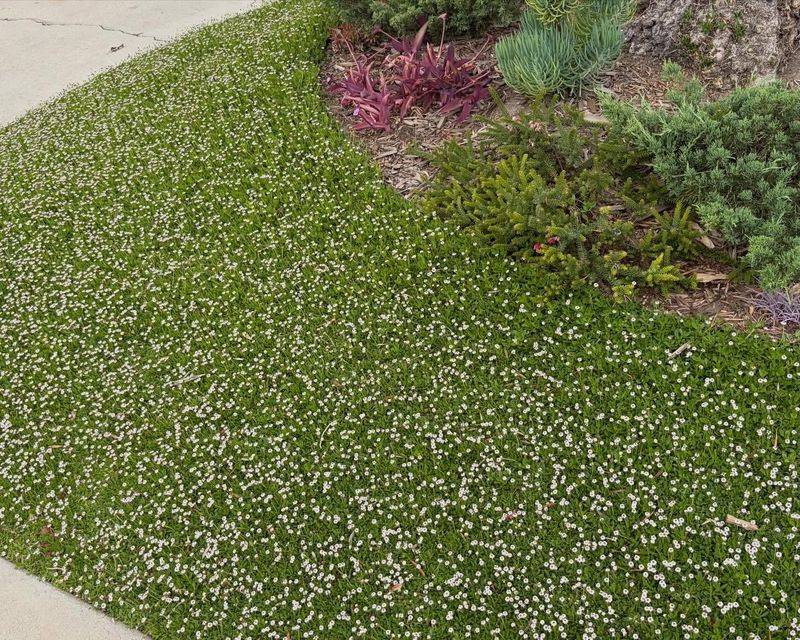
Kurapia is one of the newer lawn alternatives making a big splash in water-wise gardening circles.
It is a sterile, improved variety of Phyla nodiflora that was developed specifically to outperform common versions in both appearance and durability.
What sets Kurapia apart is how refined it looks compared to regular Lippia. The mat stays tighter, the color is a richer green, and the flowers are more uniform.
It genuinely mimics the look of a well-kept lawn without the water bill.
Research from university extension programs has shown that Kurapia uses up to 80 percent less water than traditional turf once established. That is a significant reduction that adds up fast during a long dry season.
Planting is done with plugs or sod rolls, and it spreads quickly once roots take hold. Full coverage of a typical front yard can happen within one growing season if planted at the right spacing.
Mowing once or twice a year keeps it tidy, though many homeowners skip it entirely.
It handles heat well and does not scorch easily, even in inland valleys where summer temperatures regularly exceed 100 degrees.
The roots go deep enough to find moisture that shallow grass roots cannot reach.
After the first year, supplemental watering can be reduced to once or twice a month in summer. In cooler coastal areas, even that may not be necessary. It is a genuinely low-effort choice for a sun-baked yard.
5. Carmel Creeper Creates A Wide Native Lawn Alternative
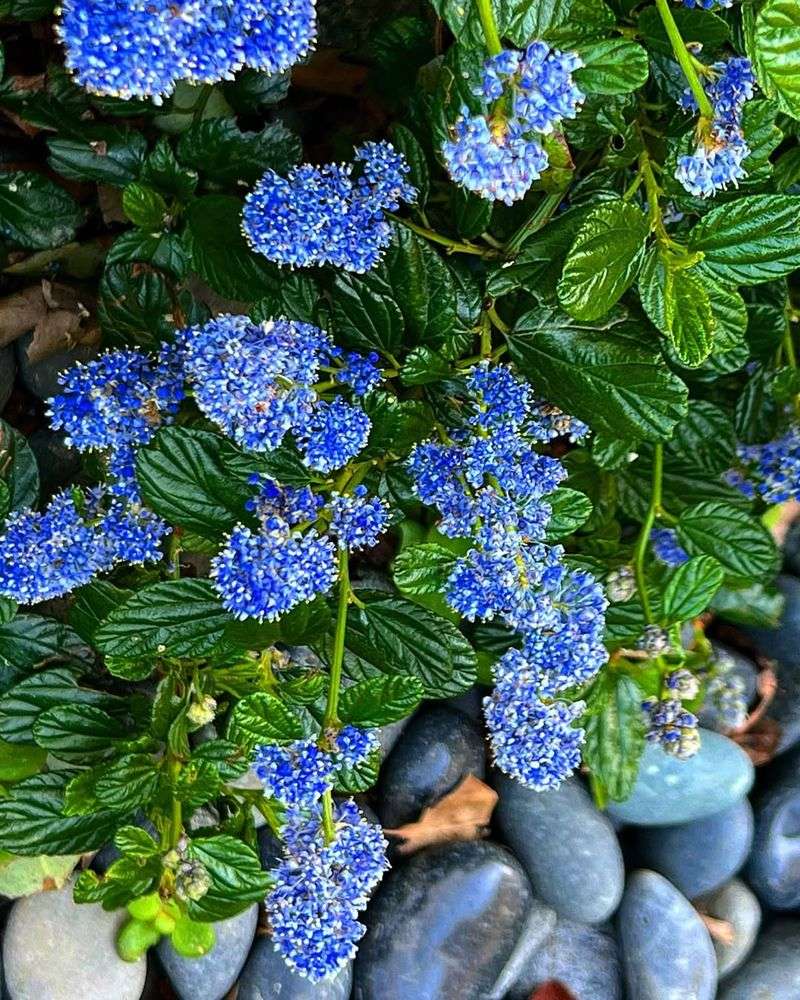
There is something genuinely exciting about a plant that covers ground fast, blooms in vivid blue, and barely needs water once it is settled.
Carmel Creeper, the low-growing form of Ceanothus griseus horizontalis, does all three with ease.
Native to the coastal bluffs near Carmel, this plant has been a favorite of water-wise gardeners for decades.
It spreads wide and low, typically reaching two to three feet tall and eight to ten feet across over time. A single plant can cover a surprising amount of ground.
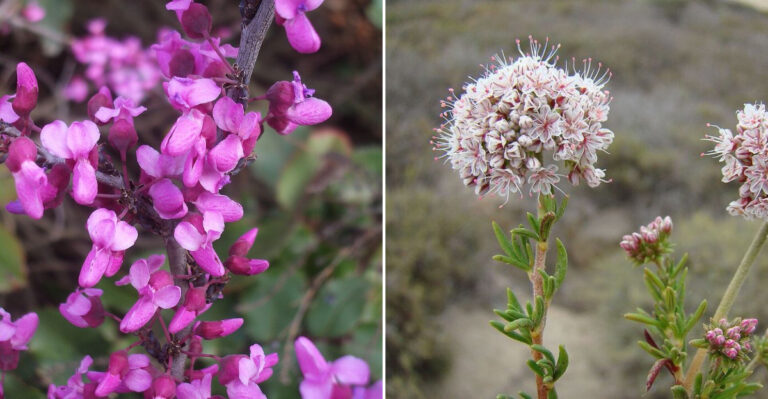
The spring bloom is one of the best features. Dense clusters of small blue to lavender flowers appear in late winter and early spring, covering the whole plant in color.
Bees absolutely swarm it during bloom time, making it a valuable pollinator plant as well.
After flowering, the dark green foliage stays attractive through the rest of the year. It does not go dormant or look tired in summer heat, which is more than you can say for many flowering shrubs.
The leaves have a slightly glossy texture that reflects light nicely. Planting in well-drained soil is important. Like most native shrubs, Carmel Creeper does not like wet feet, especially in summer.
Avoid planting near irrigation systems that run year-round, as too much summer water can cause root rot.
Once established after the first year, it rarely needs any supplemental watering in coastal or inland areas. A tough, beautiful, and genuinely native option for replacing a water-hungry lawn.
6. Prostrate Manzanita Gives Dry Gardens Evergreen Coverage
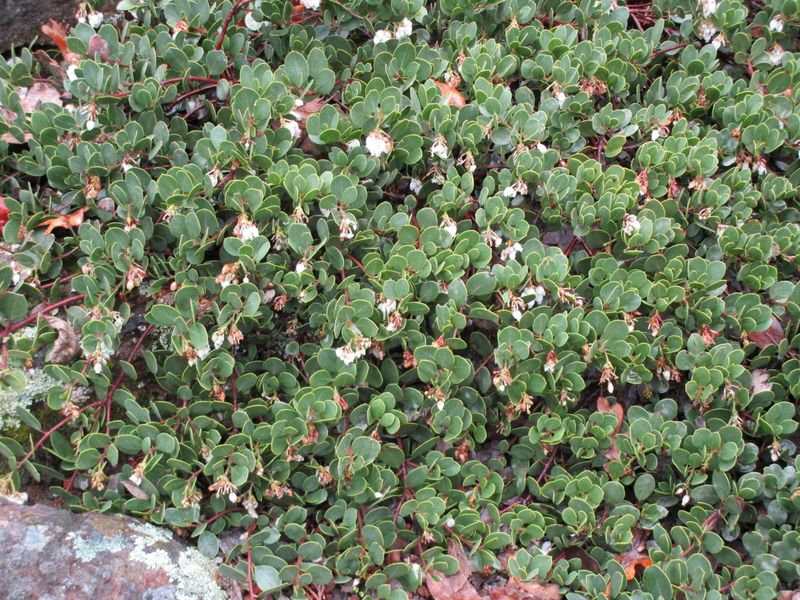
Manzanitas have a reputation for being tough, and the low-growing prostrate forms live up to that reputation completely.
Varieties like Arctostaphylos edmundsii ‘Carmel Sur’ and ‘Little Sur’ hug the ground and spread outward, creating a dense evergreen mat that looks great year-round.
The foliage is rich and deep green, with a slightly leathery texture that holds up beautifully in heat and drought.
Even during the driest summer months, prostrate manzanita keeps its color and structure without any extra watering once it is past the establishment phase.
Winter and early spring bring small, urn-shaped flowers in white or pale pink. They are delicate and charming, and they attract hummingbirds and native bees before most other plants have started blooming.
That early season value is hard to match. Growth is slow compared to some other groundcovers on this list.
Patience is required in the first couple of years, but the payoff is a groundcover that truly lasts for decades with minimal care.
Once established, manzanitas are among the most drought-tolerant plants in California.
Drainage is critical. These plants evolved on rocky hillsides and sandy soils, so heavy clay or poorly draining spots are not suitable.
Amending the soil or planting on a slight slope helps prevent problems with standing water in winter.
No summer water is needed after year one in most parts of California. An occasional deep soak every three to four weeks during extreme heat waves is all that is ever needed.
7. Creeping Sage Softens Full-Sun Beds With Fragrant Foliage
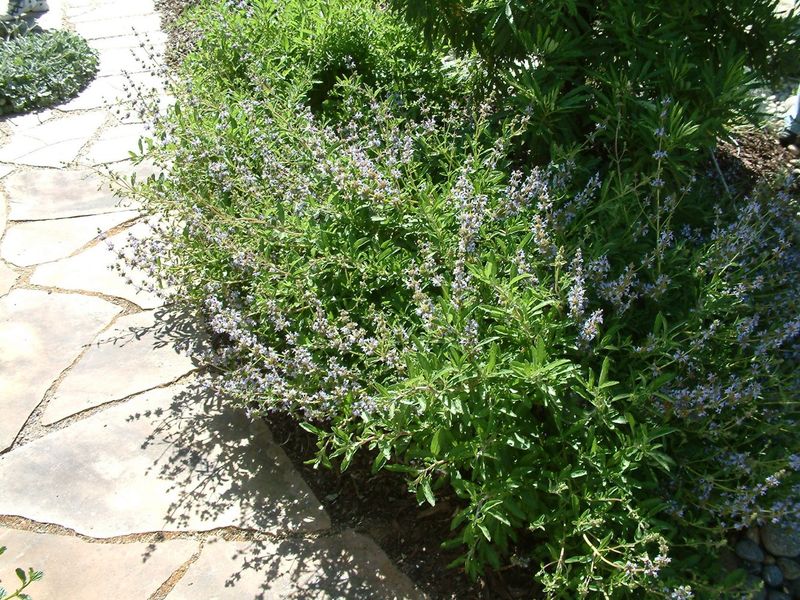
Running your hand across a patch of Creeping Sage is one of those simple garden pleasures that never gets old.
The soft, gray-green leaves release a strong, pleasant herbal scent the moment you brush against them, filling the air around you with something that smells like the wild hillsides of California.
Salvia sonomensis is native to the oak woodlands and rocky slopes of northern regions. It spreads low and wide, reaching about one foot tall and up to six feet across.
The growth is loose enough to look natural but dense enough to shade out weeds beneath it.
Lavender-blue flowers appear in spring and are a reliable food source for native bees and hummingbirds.
The bloom period is not extremely long, but the fragrant foliage more than makes up for it during the rest of the year.
Like most native sages, this one wants sharp drainage and full sun. It will not perform well in heavy clay or in spots that stay wet during winter rains.
Raised beds, slopes, or sandy soil are ideal planting sites.
After establishment, summer water should be minimal. Too much irrigation in summer is actually one of the main reasons sages struggle or decline.
Letting the soil dry out completely between waterings mimics the natural summer drought conditions it evolved in.
Pruning lightly after flowering keeps the plant from getting leggy. A quick trim encourages fresh basal growth and keeps the mat looking tidy and full throughout the growing season.
8. Beach Strawberry Spreads Through Sunny Coastal Yards
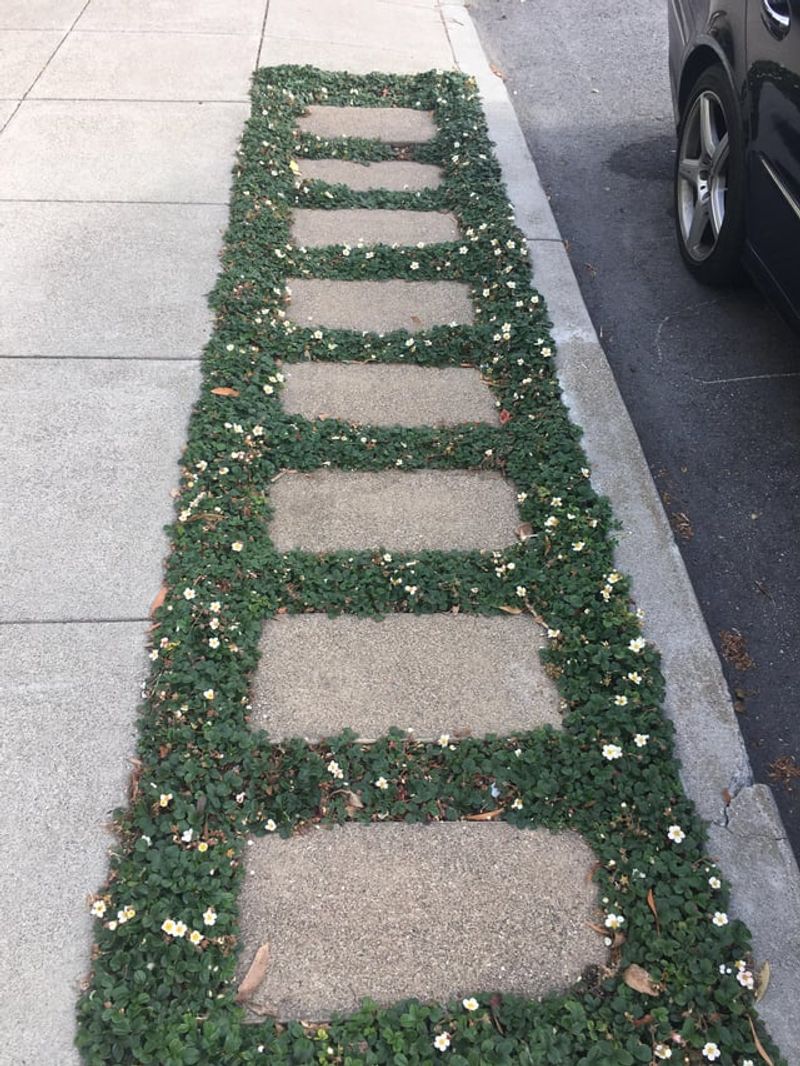
Not many groundcovers can offer edible fruit while also covering the ground efficiently, but Beach Strawberry manages to do exactly that.
Fragaria chiloensis is a native coastal plant that spreads by runners, filling in open ground with bright green, glossy foliage and cheerful white flowers.
Small red strawberries follow the flowers in spring and early summer. They are not as large or sweet as commercial varieties, but birds love them, and kids find them fun to discover.
The plant earns its keep on looks alone, though, even without the fruit.
It performs best in coastal and near-coastal areas where summer temperatures stay moderate.
In hot inland valleys, it can struggle during the peak of summer without some afternoon shade or supplemental water.
For those regions, pairing it with taller plants that provide afternoon shade helps a lot.
Along the coast and in mild areas, Beach Strawberry is remarkably self-sufficient after the first year. It spreads at a steady pace, sending out runners that root wherever they touch the soil.
Within two growing seasons, a few starts can fill a surprisingly large area.
The foliage stays green and attractive through winter, which is a major plus for year-round curb appeal. It does not go brown or dormant in mild coastal climates, giving you consistent coverage every month of the year.
Mowing or shearing once a year in late winter refreshes the planting and encourages vigorous new growth from the base. It is a simple maintenance step that keeps the patch looking its best.
9. California Aster Fills Open Ground With Late Flowers
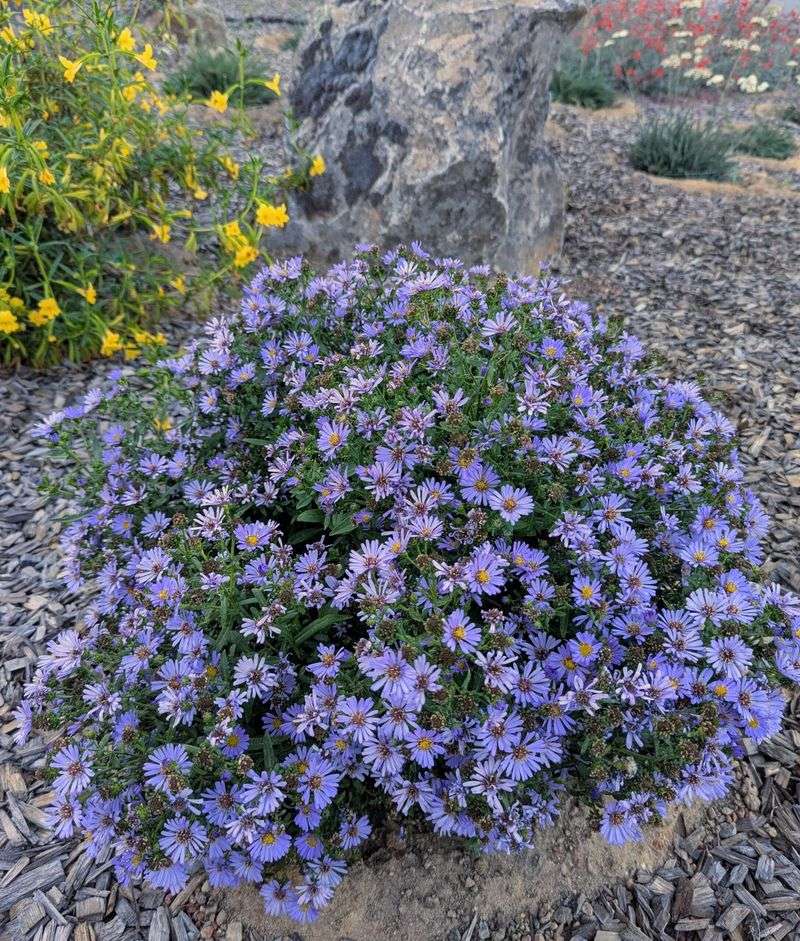
Most groundcovers are done flowering by midsummer, but California Aster saves its show for fall when almost everything else in the garden has gone quiet.
Masses of small lavender daisy-like flowers with bright yellow centers cover the plant from late summer through November, bringing color back to the yard at exactly the right time.
Symphyotrichum chilense is a native perennial that spreads by underground rhizomes, forming a low, loose mat of soft green foliage. It reaches about one to two feet tall in bloom and spreads outward steadily each year.
The late-season flowers are a critical food source for migrating butterflies and native bees preparing for winter.
Planting this in an open, sunny spot essentially creates a pollinator refueling station during one of the most important times of year for native insects.
Growth is moderate in the first year and picks up noticeably in year two. Once established, it spreads reliably and fills in bare spots without becoming invasive or overwhelming nearby plants.
It plays well with other natives like Dwarf Coyote Brush and Creeping Sage.
Summer water requirements drop significantly after establishment. In most parts of the state, a deep watering every two to three weeks during the driest months is enough to keep it healthy and blooming on schedule.
Cutting the whole planting back to a few inches in late winter removes old stems and gives fresh growth a clean start. New shoots emerge quickly, and the plant rebounds fast once warm weather returns.