The Vine Spreading Through Ohio Backyards This Summer And How To Stop It
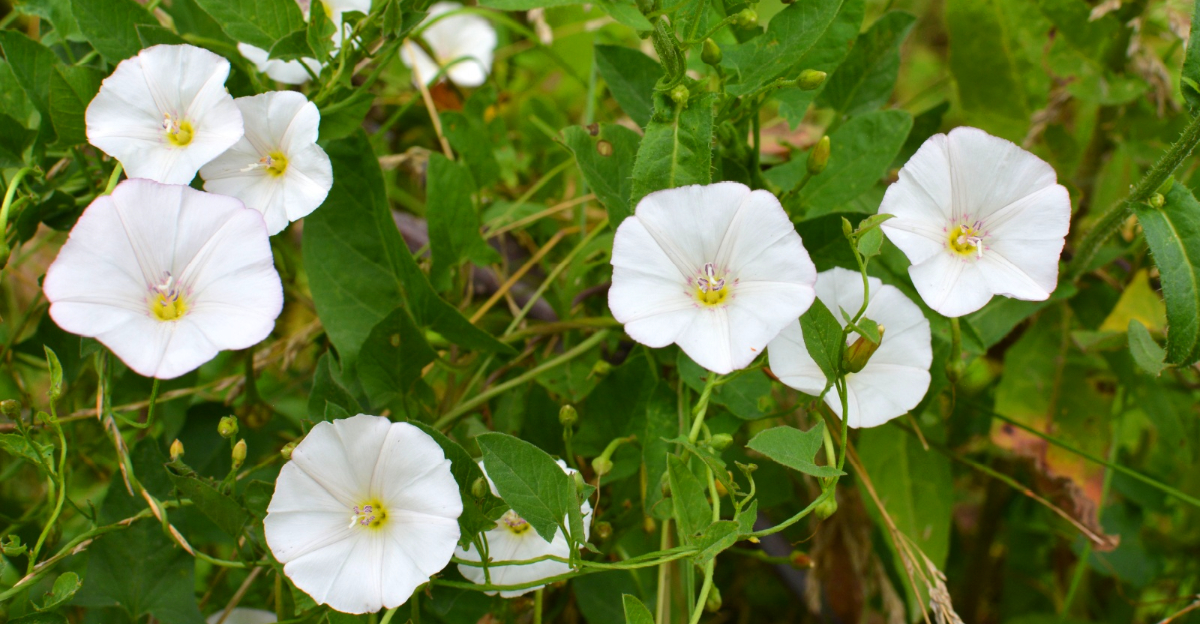
If something in your Ohio backyard has been quietly taking over all summer and you can’t quite figure out what it is, there’s a decent chance it’s field bindweed.
And if it is, you have our full sympathy.
This vine is a committed opportunist. Garden beds, fence lines, shrub borders, lawn edges: it genuinely does not care where it grows as long as it can wrap itself around something and keep going.
The really frustrating part is that pulling it rarely solves the problem, because the root system running underground is doing most of the work and is not impressed by a quick tug.
The good news is that field bindweed can absolutely be managed over time with the right approach.
It just requires a little patience and a lot of consistency. You’ve got this.
1. Field Bindweed Spreads Fast In Summer
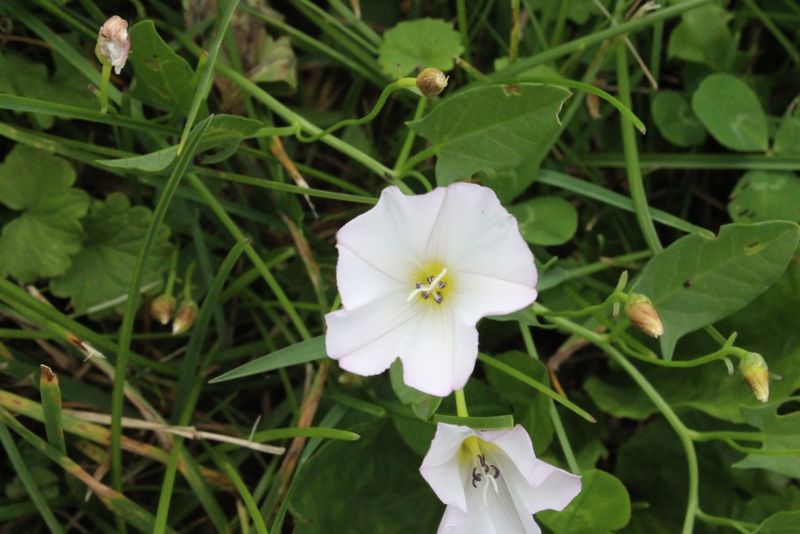
Warm Ohio summers create near-ideal conditions for fast-growing weeds, and field bindweed takes full advantage of every hot, sunny day.
Once it gets going in late spring, the vines can extend quickly across garden beds, creep along lawn edges, and climb fence lines before many homeowners even notice what is happening.
The stems twine around whatever they touch, which helps the plant move upward and outward at the same time.
Field bindweed is a perennial vine, meaning it returns year after year from the same underground root system. It does not behave like an annual weed that finishes its cycle and fades away at the end of the season.
The underground roots and rhizomes store energy that fuels regrowth even after the visible stems are removed. In disturbed soil, like freshly turned garden beds or areas near construction, the plant can establish itself especially quickly.
Ohio homeowners often first spot field bindweed threading through vegetable gardens, wrapping around tomato cages, or spreading along the base of ornamental shrubs.
Catching it early in the season, before it has time to root deeply and branch widely, gives you a much better chance of slowing it down before summer gets fully underway.
2. Arrow-Shaped Leaves Help Identify It
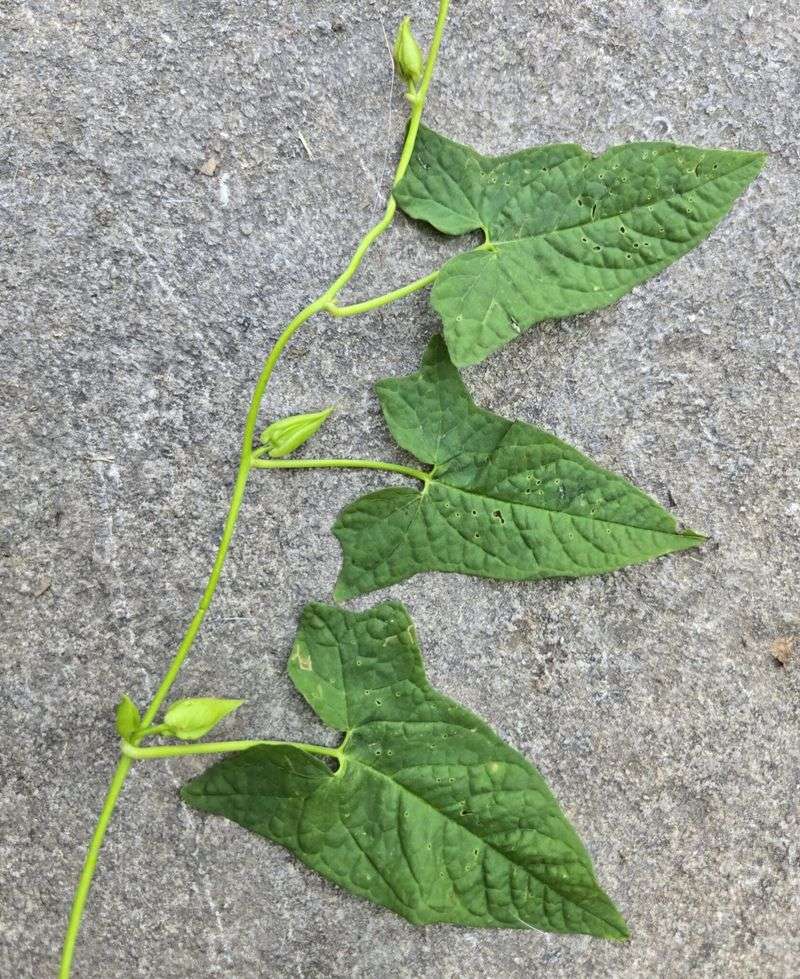
Tangled vines in a garden bed can be tricky to sort out, especially when several different plants are growing together. Field bindweed has a distinctive leaf shape that makes it easier to recognize once you know what to look for.
The leaves are shaped somewhat like arrowheads, with two pointed lobes at the base that angle slightly backward toward the stem. They are generally smooth, medium green, and arranged alternately along the twining stem.
Leaf size can vary depending on growing conditions, but most field bindweed leaves in Ohio yards tend to be modest in size, roughly one to two inches long.
The overall appearance is neat and tidy compared to some larger-leafed vines, which can make it blend in among garden plants if you are not looking carefully.
The stems are slender and wiry, and they wrap tightly around anything nearby, including other plant stems, wire fencing, and wooden stakes.
Your Ohio Garden Changes Every Week. Your Plan Should Too.
Gardening in Ohio changes quickly throughout the season. Every Friday you’ll receive a simple weekly plan showing exactly what to plant, prune, fertilize, harvest, and protect so you never miss the right timing.
One plant that sometimes gets confused with field bindweed is hedge bindweed, which has much larger leaves and flowers. Field bindweed stays smaller overall.
If you spot small arrow-shaped leaves on a twining vine threading through your Ohio garden beds or fence line, field bindweed is a reasonable first guess worth investigating more closely.
3. Funnel-Shaped Flowers Make It Noticeable
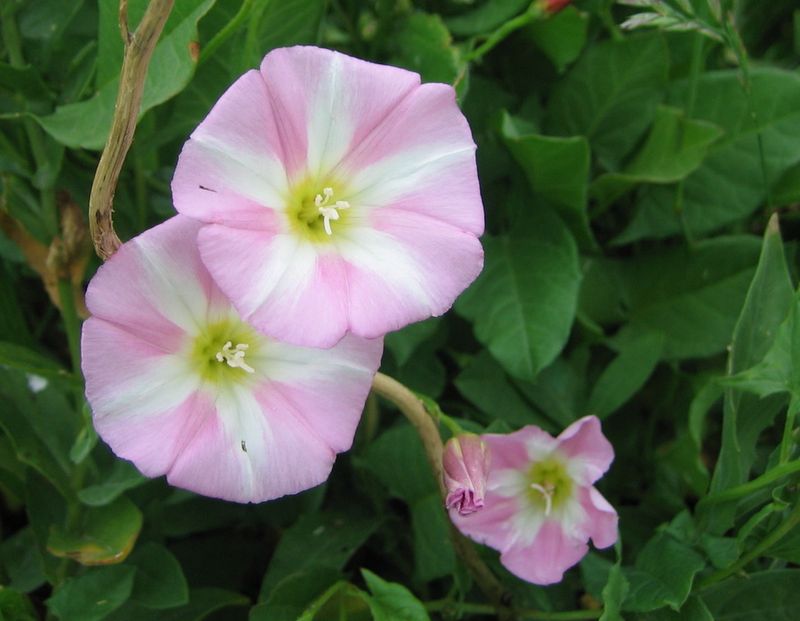
Pretty flowers are not always a welcome sight when they belong to a persistent weed, and field bindweed produces blooms that can actually look quite charming at first glance.
The flowers are small, funnel-shaped, and typically white or pale pink, sometimes with faint pink stripes radiating from the center.
They open in the morning and tend to close on cloudy days or in the afternoon, which gives them a delicate, almost morning-glory-like quality.
In fact, field bindweed belongs to the same plant family as morning glories, which explains the resemblance.
The flowers are considerably smaller than cultivated morning glories, usually less than an inch across, but they share that same soft, trumpet-like shape.
Blooming generally begins in late spring and can continue through summer and into fall in Ohio, which means the plant has a long window for producing seed if the flowers are left unmanaged.
Seed production adds another way that field bindweed can spread through Ohio yards and into neighboring garden spaces. While the underground root system is often the main driver of regrowth, seeds can remain viable in the soil for many years.
Removing flowers before they form seeds is a practical step that can help limit how widely the plant spreads beyond its current location in your yard.
4. Deep Roots Help It Return
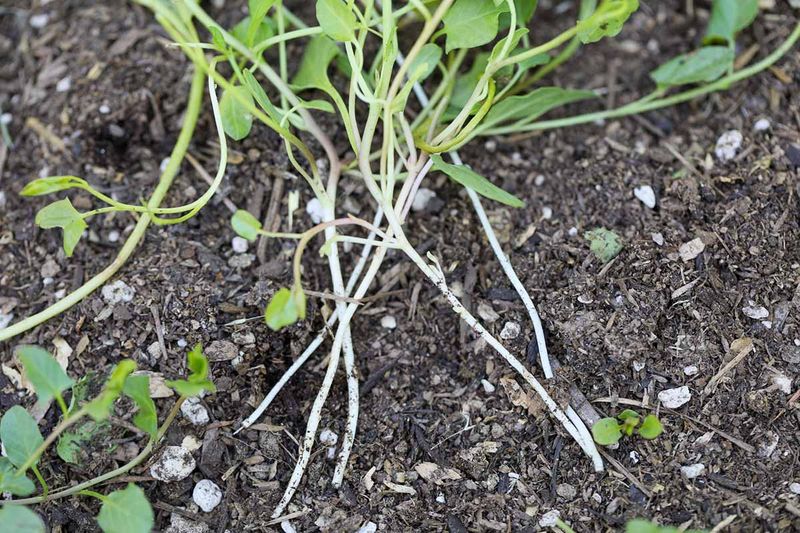
One of the most frustrating things about field bindweed is what you cannot see above ground. The root system of a mature plant can extend several feet deep into the soil, with lateral roots and rhizomes spreading outward in multiple directions.
This underground network is what allows the plant to keep coming back even after the visible stems have been pulled or cut down repeatedly throughout the season.
The deep roots also make field bindweed fairly tolerant of dry spells, which is not uncommon during Ohio summers.
While shallower-rooted plants may struggle during a stretch of hot, dry weather, field bindweed can tap into moisture stored deeper in the soil profile.
This gives it a competitive edge in garden beds and lawn edges where other plants may be stressed by summer heat.
Young plants that have been growing for only a season or two have shallower roots and are somewhat easier to manage than older, well-established plants.
Established plants with extensive root systems require consistent, repeated effort over multiple seasons to reduce their presence in Ohio yards.
Understanding that the roots are the real challenge helps set realistic expectations and encourages a long-term management approach rather than hoping for a single quick fix.
5. Root Fragments Can Start New Plants
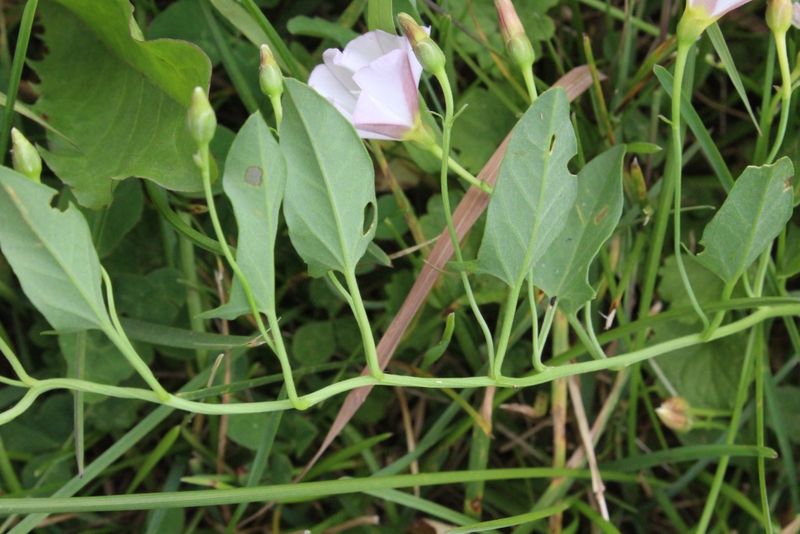
Pulling field bindweed by hand is a reasonable management step, but there is a catch that catches many Ohio gardeners off guard. Small root fragments left behind in the soil can regenerate and produce new plants.
This means that digging or tilling to remove vines can sometimes make the situation worse if root pieces get broken up and spread throughout the bed rather than being fully removed.
When using a garden fork or trowel to work out bindweed roots, the goal is to remove as much of the root system as possible in one piece rather than chopping through it.
Working carefully and methodically, following roots as far down as you can reach, gives you a better outcome than aggressive tilling.
Any root pieces brought to the surface should be removed from the garden entirely rather than left in the bed where they might re-root.
Composting pulled bindweed is generally not recommended unless your compost pile reliably reaches high internal temperatures, because root fragments may survive in cooler compost and end up being spread back into your Ohio garden beds.
Bagging the material and disposing of it with yard waste is a more reliable approach.
Taking extra care during removal helps reduce the chance of accidentally spreading the problem to new areas of your yard.
6. Pull Young Vines Before They Spread
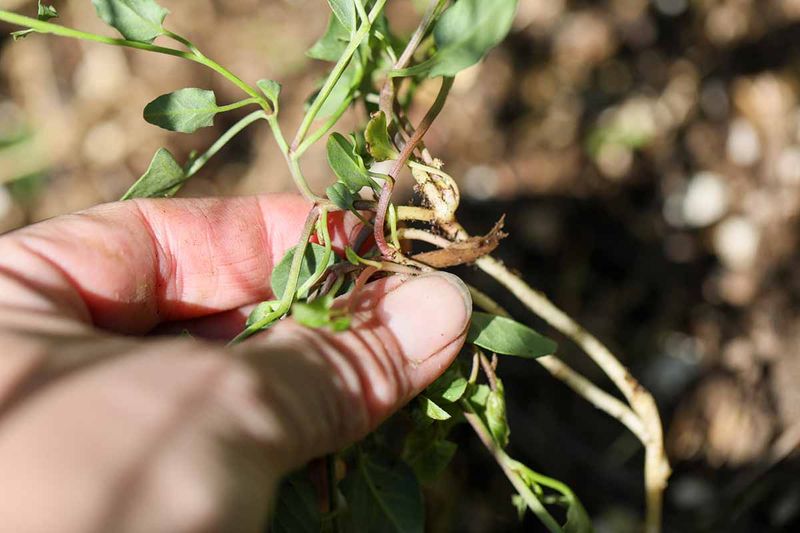
Catching field bindweed early in the season is one of the most practical advantages an Ohio homeowner can have.
Young plants that have been growing for only a few weeks have smaller, shallower root systems that are easier to remove than those of plants that have had an entire growing season or more to establish.
Checking garden beds, fence lines, and shrub borders regularly from late spring onward makes it easier to spot new growth before it gets out of hand.
When pulling young vines, grasping the stem close to the soil surface and pulling slowly and steadily gives you the best chance of bringing up a useful portion of the root along with the top growth.
Pulling too quickly tends to snap the stem at the soil line, leaving the root intact and ready to send up new growth within days.
Moist soil after rain or watering makes the task noticeably easier and improves root removal.
Focusing removal efforts on the same areas consistently throughout the season, rather than doing one large cleanup and walking away, tends to produce better results over time.
Each time the plant regrows and gets removed before it can photosynthesize and store energy, the root system becomes slightly weaker.
Patient, repeated pulling of young growth is a cornerstone of managing field bindweed in Ohio residential gardens.
7. Keep Removing Regrowth Over Time
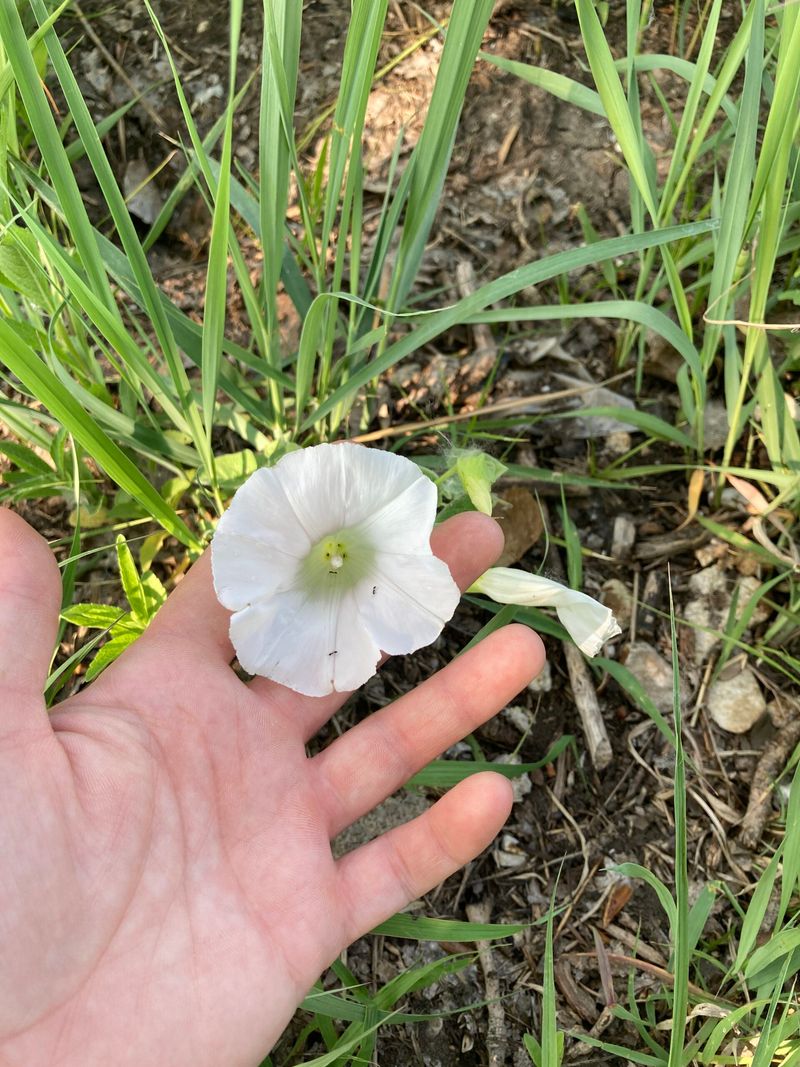
Expecting field bindweed to disappear after one round of removal is a setup for disappointment. Regrowth from the deep root system is almost certain, especially in established plants that have been in an Ohio yard for more than a season.
The key shift in thinking is moving from a one-time fix mindset to a long-term management approach where repeated removal over several seasons gradually reduces the plant’s strength and presence.
Each time field bindweed regrows and the new shoots are removed before they have a chance to mature and photosynthesize effectively, the underground root system loses a bit of the stored energy it relies on to fuel that regrowth.
Over time, with consistent effort, many Ohio gardeners find that regrowth becomes less vigorous and less frequent, though this process can take more than one growing season to show meaningful results.
Setting a routine of checking problem areas every week or two during summer makes the task feel more manageable than waiting until the vines have taken over again.
Keeping notes on where bindweed keeps returning can also help you focus your efforts on the most persistent spots in your yard.
Persistence and consistency, rather than intensity in a single session, tend to produce the most noticeable long-term improvement in Ohio backyard bindweed management.
8. Stop Vines From Climbing Shrubs
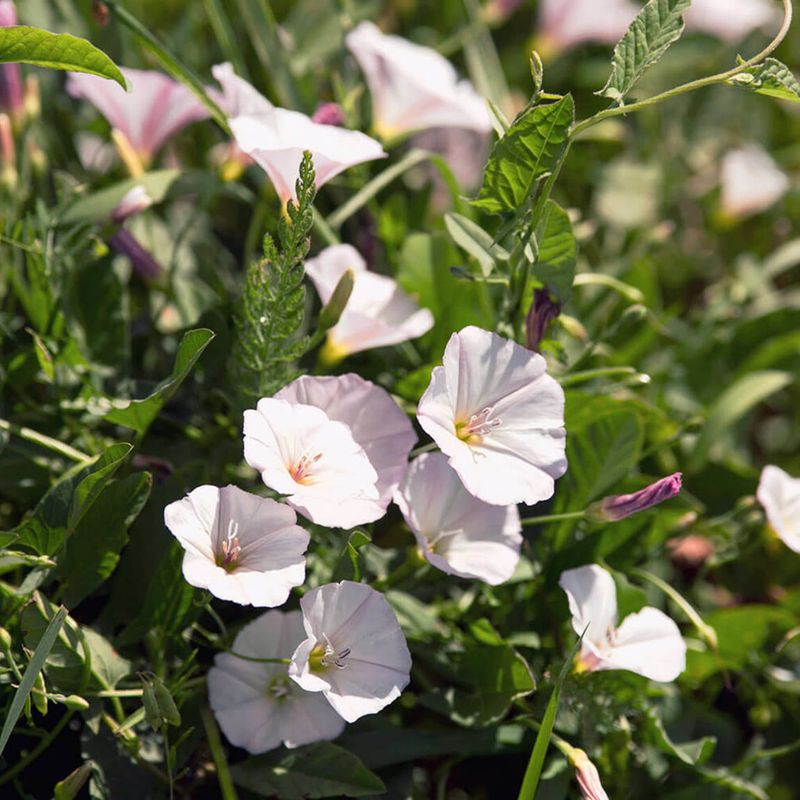
Shrub borders and foundation plantings in Ohio yards can become particularly tangled when field bindweed moves in.
The twining stems wrap around branches, work their way up through the interior of shrubs, and can eventually cover a good portion of the plant if left unmanaged for a full season.
Dense shrubs like junipers, spirea, and ornamental grasses are common targets because their structure gives the vine plenty of stems to grab onto.
Removing bindweed from established shrubs requires patience and a gentle hand to avoid damaging the host plant. Working slowly and unwinding stems rather than yanking them out is usually the safest approach.
In some cases, carefully tracing the vine back to where it enters the soil and cutting it there, then coming back to unwind the detached top growth, can be less disruptive to the shrub than trying to pull everything out at once.
Keeping the ground around shrub bases clear of bindweed growth, especially early in the season, reduces the chance of the vine getting a foothold in the first place.
Mulching shrub beds with a few inches of wood chip mulch can help suppress emerging bindweed seedlings, though established plants with deep roots can still push through mulch layers.
Combining mulch with regular hand removal near shrub bases gives Ohio gardeners a reasonable line of defense during the summer growing season.
9. Use Herbicides Carefully When Needed
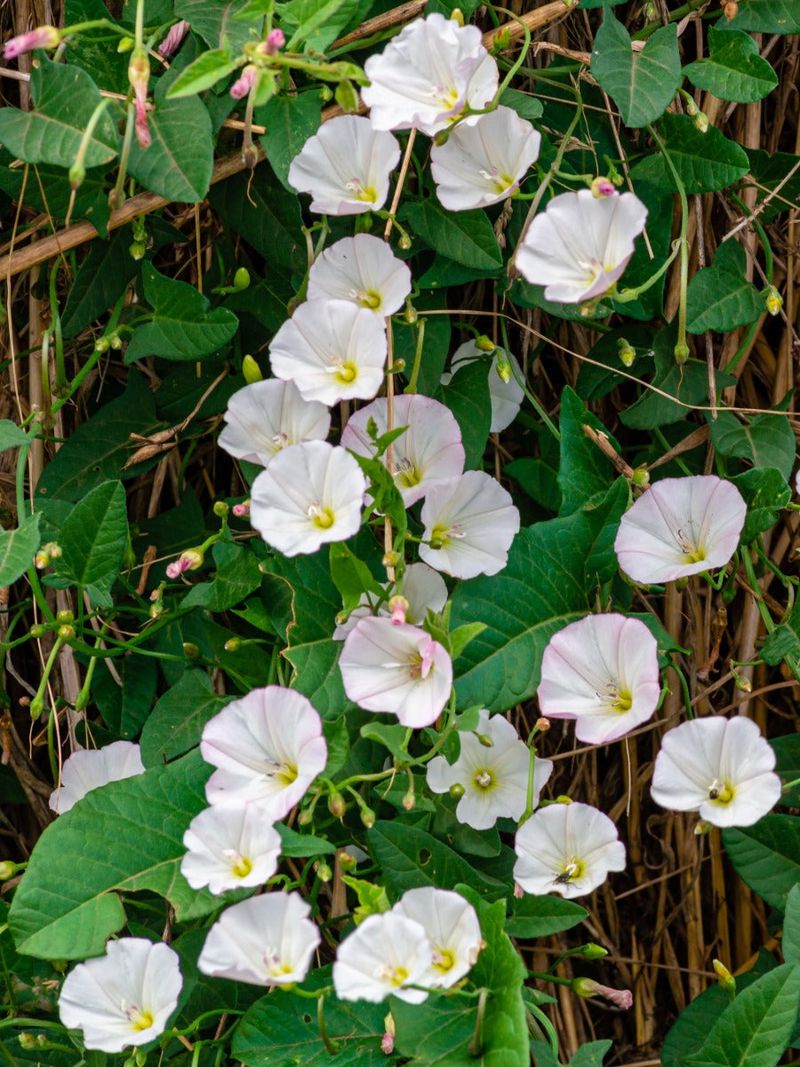
For Ohio homeowners dealing with a well-established field bindweed problem that has not responded adequately to hand removal alone, herbicide applications may be a consideration worth exploring.
Systemic herbicides that move through the plant and into the root system are generally more effective against deep-rooted perennial vines than contact herbicides that only affect the parts of the plant they touch directly.
Reading product labels carefully and following all directions is essential before using any herbicide in a residential yard.
Applying herbicide when bindweed is actively growing and has enough leaf surface to absorb the product tends to produce better results than treating stressed or very young plants.
Spot treatments that target only the bindweed rather than broadcast spraying over an entire bed help reduce the risk of affecting nearby desirable plants, lawn grass, or garden vegetables.
Repeating applications as regrowth appears is often necessary because a single treatment may not reach the entire root system.
In vegetable gardens or areas near edible plants, homeowners should be especially cautious and review label restrictions thoroughly before applying any herbicide product.
Some Ohio gardeners choose to avoid herbicides near food crops entirely and rely on consistent hand removal in those spaces instead.
Combining careful herbicide use in non-edible areas with regular mechanical removal in vegetable beds can be a balanced approach for managing field bindweed across different parts of an Ohio yard.