Plant These 8 Plants In Georgia Now And Hummingbirds May Find Your Yard Before Summer
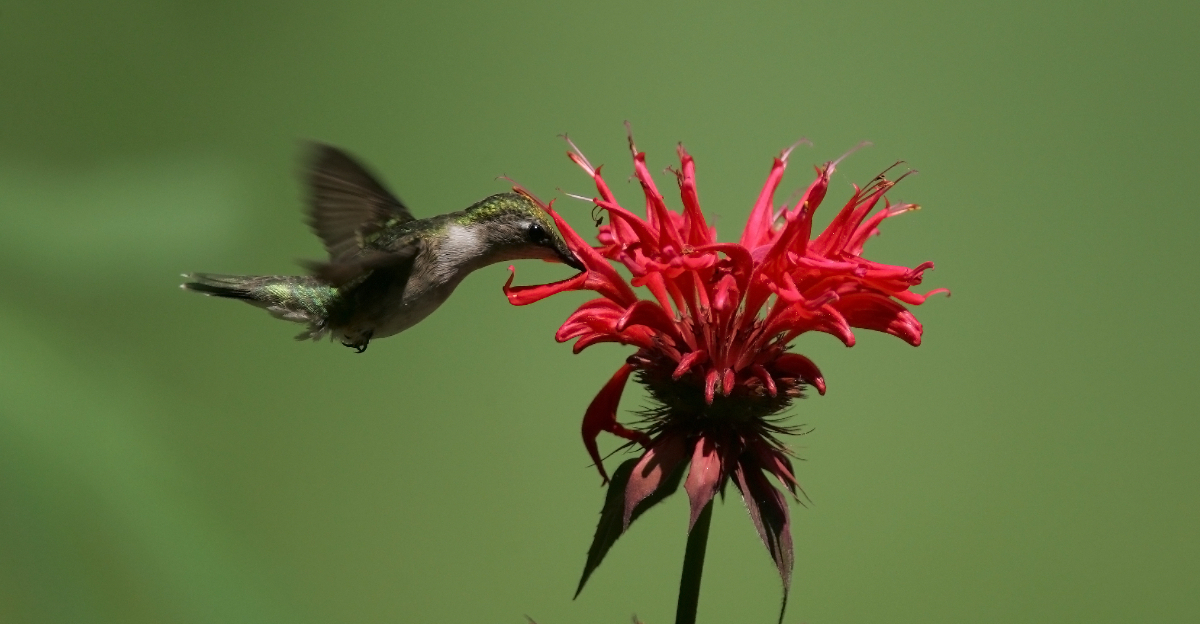
Ruby-throated hummingbirds start arriving in Georgia as early as late March. They come in fast, they scout quickly, and they build loyalty to the yards that feed them well.
The yards that get passed over are usually missing one thing. Not a feeder. Not a birdbath. Something that most gardeners do not think about until summer is already underway and the hummingbirds have already chosen someone else’s yard.
So, what makes a hummingbird decide your yard is worth a second visit?
It comes down to what is blooming, when it is blooming, and whether the nectar supply runs long enough to matter. A feeder gets attention, yes. But, the right plants earn a regular route.
Georgia’s spring window is generous, and the timing lines up almost perfectly with the first wave of arrivals if you move now.
Eight plants do this job better than almost anything else available for Georgia gardens. Some bloom early. Some carry the season late. Together they cover the whole migration window.
1. Coral Honeysuckle Opens The Nectar Door Early
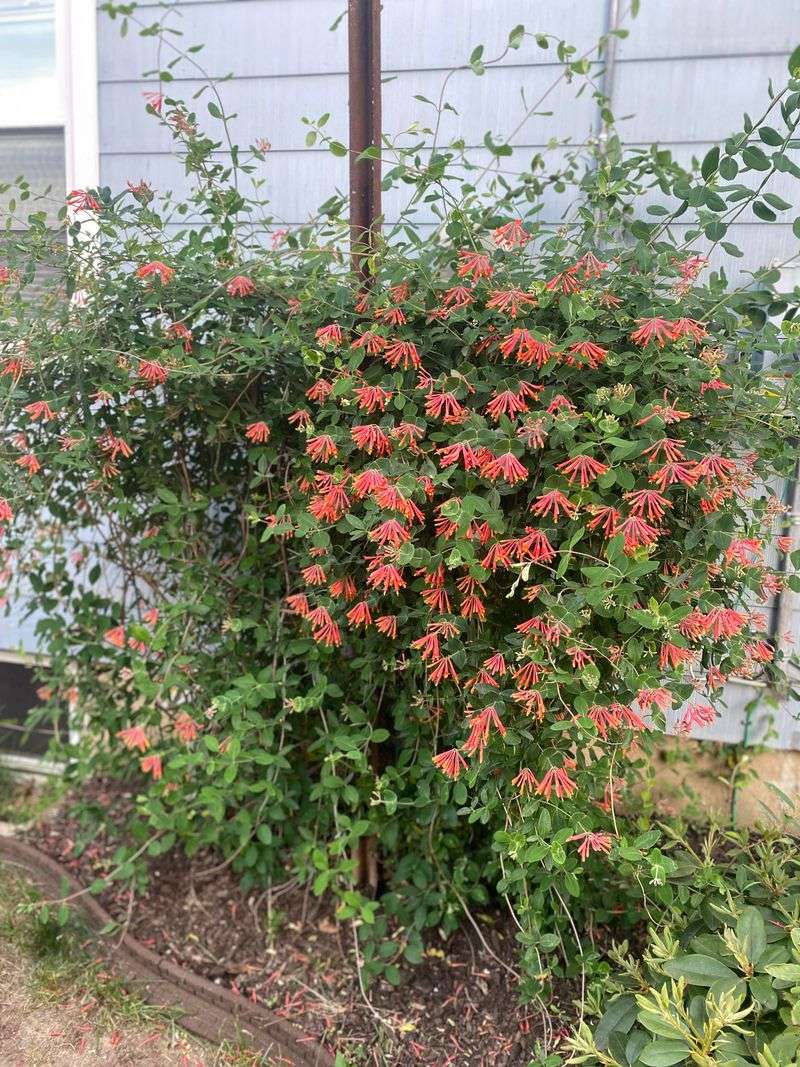
Coral honeysuckle is one of those plants that earns its place immediately and keeps earning it all season.
This native vine produces clusters of slender red-orange tubular flowers in early spring, right when food options for returning hummingbirds are still limited.
The timing is one of its greatest strengths. Ruby-throated hummingbirds arrive in Georgia as early as late March, and a coral honeysuckle in bloom is exactly the kind of reliable stop they build a route around.
The flower shape matters too. Those long tubes fit a hummingbird’s bill almost perfectly, and the plant produces nectar in quantities that keep birds returning rather than moving on after one visit.
Unlike its invasive Japanese relative, this vine is well-behaved on a structure. A fence, trellis, or arbor gives it something to climb and shows the blooms off effectively.
It handles Georgia’s heat and humidity without much complaint and becomes drought-tolerant once established. Soil type is not a major concern as long as drainage is reasonable.
Plant it near a window or porch where the visits are actually visible. The vines grow quickly in spring, so a sturdy support from the start saves trouble later.
A light trim after the main bloom flush encourages a second round of flowers later in the season.
Coral honeysuckle does not just attract hummingbirds. It makes them decide your yard is worth adding to the schedule. That is a harder thing to accomplish than many people realize.
2. Red Buckeye Sends A Spring Signal Hummingbirds Follow
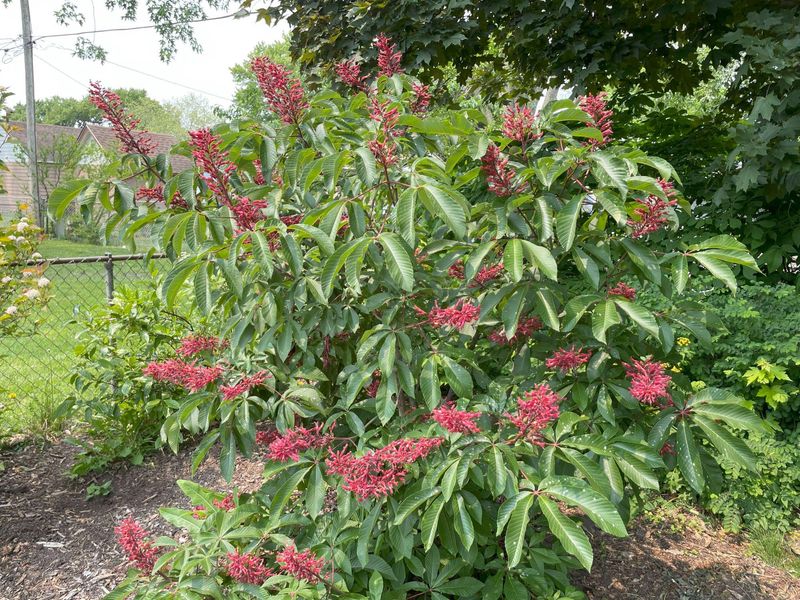
Red buckeye blooms before most other spring plants have made up their minds about the season.
This small native tree pushes up tall, upright spikes of deep red flowers in early to mid-spring, and the timing lines up almost precisely with the first arrival of ruby-throated hummingbirds in Georgia.
That alignment is not accidental. The plant and the bird developed alongside each other over a very long time, and the relationship holds.
Your Georgia Garden Changes Every Week. Your Plan Should Too.
Gardening in Georgia changes quickly throughout the season. Every Friday you’ll receive a simple weekly plan showing exactly what to plant, prune, fertilize, harvest, and protect so you never miss the right timing.
The nectar-packed clusters sit at a height that lets hummingbirds hover and feed comfortably. The bold red color is one of the strongest visual signals available to a bird scanning a landscape from a distance. Red buckeye earns attention fast.
This plant thrives in partial shade, which makes it a natural fit for woodland edges, shady borders, and spots under taller trees.
It prefers moist, well-drained soil and benefits from mulch at the base to hold moisture through dry stretches. The mature height of eight to fifteen feet keeps it manageable in most yard settings.
Morning sun with afternoon shade produces the best bloom performance. Placing it near a seating area or path means catching those first hummingbird visits of the season.
Red buckeye does not ask for much and delivers reliably every year. It is essentially the plant equivalent of a dependable friend who always shows up exactly when needed.
3. Cardinal Flower Brings Bright Red Fuel To Moist Spots
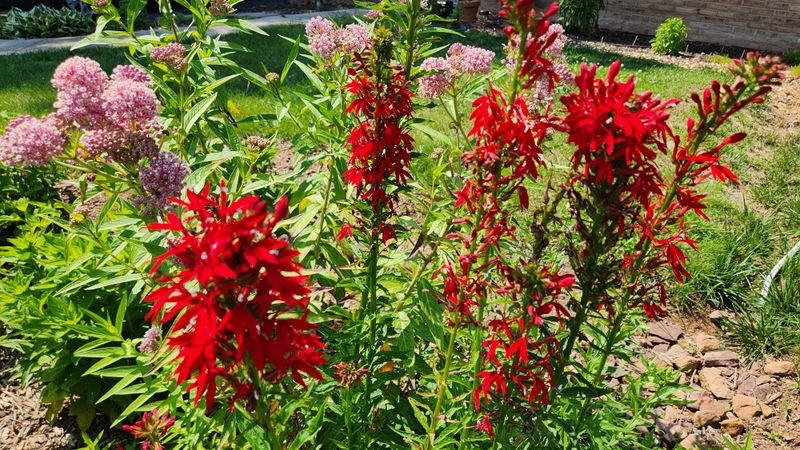
Cardinal flower can stop hummingbirds mid-flight. The blooms are an almost electric shade of red, stacked along tall spikes that reach up to four feet, and loaded with nectar.
Ruby-throated hummingbirds are among the primary pollinators of this native wildflower. The relationship between bird and bloom runs deep enough that some botanists describe cardinal flower as specifically shaped around hummingbird pollination.
The flower did not end up looking that way by coincidence.
Georgia gardeners with a wet corner, a rain garden, or a low-lying spot near a downspout have found the ideal location for this plant.
Cardinal flower loves consistently moist soil and performs better in slightly wet conditions than most garden plants handle.
Full sun to partial shade suits it well. Blooms appear from mid to late summer and can continue into early fall, which extends the hummingbird season well past the initial spring rush.
The plant self-seeds readily, with new plants appearing nearby each year and naturally expanding the patch over time.
Keep soil moist during dry spells, especially through Georgia’s hot summers. A thick layer of mulch at the base holds moisture between rain events effectively.
Cardinal flower is a short-lived perennial, but consistent self-seeding means a well-placed colony sustains itself for years without much intervention.
Plant it once in the right wet spot and it more or less handles the rest of the arrangement itself.
4. Scarlet Sage Turns Sunny Beds Into Feeding Stops
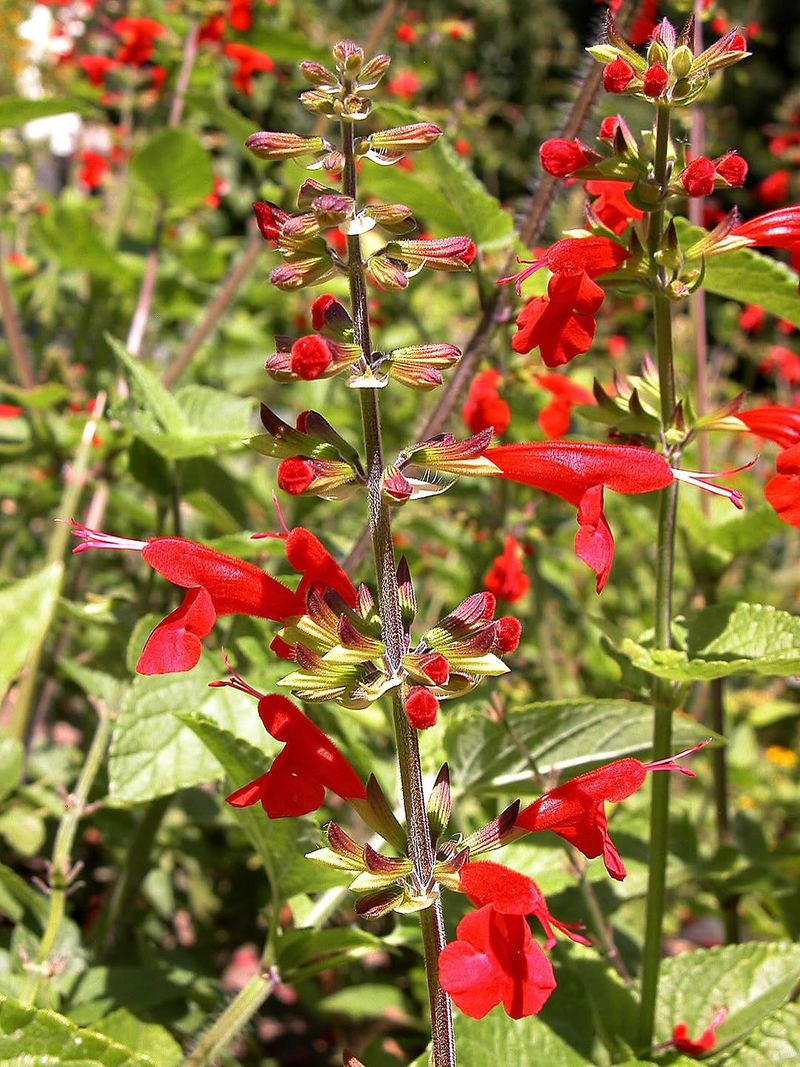
Walk past a sunny border full of scarlet sage during peak hummingbird season and you will likely hear the wings before you spot the bird.
Scarlet sage produces tall red flower spikes that hummingbirds find consistently compelling, and Georgia’s long warm season means these plants keep blooming from late spring through the first cool snap of fall.
Salvia coccinea, the native variety that thrives across the Southeast, is particularly well-suited to Georgia conditions.
It reseeds generously, handles heat without slowing down, and produces tubular flowers sized almost perfectly for a hummingbird’s bill.
The plant blooms more freely as temperatures rise, which makes it especially useful during the months when other flowers tend to slow down.
Full sun and well-drained soil are the basic requirements. Space plants twelve to eighteen inches apart to allow airflow, which keeps foliage healthy through Georgia’s humid summers.
Removing spent flower spikes regularly encourages fresh blooms to follow. Leaving a few spikes to go to seed at the end of the season means the plant returns from self-sown seeds the following spring without any replanting effort.
Scarlet sage also performs well in containers, which means even a small patio with a couple of pots can become a reliable hummingbird stop.
For a plant that reseeds itself, blooms for months, and attracts hummingbirds consistently, scarlet sage is putting in significantly more work than it gets credit for.
5. Bee Balm Keeps Tiny Wings Coming Back
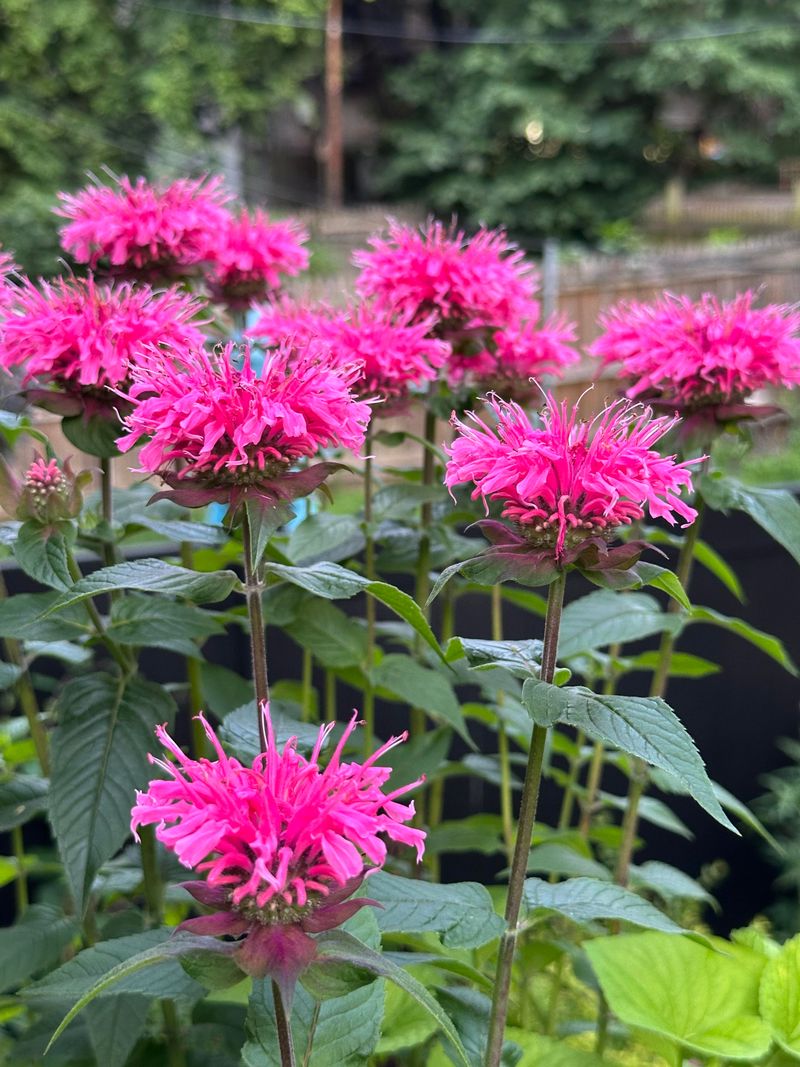
Bee balm in full bloom looks like it is actively celebrating something.
The shaggy, spiky flower heads in deep red or vivid pink carry an energy that feels almost wild, and hummingbirds show up reliably when the blooms open.
Bee balm produces waves of nectar-rich flowers from early to midsummer, which falls right in the middle of peak hummingbird activity in Georgia.
Beyond hummingbirds, it pulls in butterflies, native bees, and a wide range of other pollinators simultaneously.
The leaves carry a pleasant minty, oregano-like scent when brushed, which makes working near a bee balm bed genuinely enjoyable rather than just productive.
Full sun to light shade suits it well, along with consistently moist, well-drained soil. The main challenge in Georgia’s humid climate is powdery mildew on the foliage.
It is mostly cosmetic, but it spreads quickly in crowded conditions. Spacing plants eighteen to twenty-four inches apart and choosing mildew-resistant varieties like Jacob Cline or Raspberry Wine addresses that effectively.
Cutting plants back by about half after the first bloom flush encourages a second round of flowers later in summer.
Dividing clumps every two to three years keeps the plant vigorous and prevents it from crowding out its neighbors.
Bee balm is one of those plants that makes the whole garden feel more alive when it is performing well.
Plant it, step back, and count how long it takes a hummingbird to find it. The answer is usually faster than expected.
6. Crossvine Covers Fences With Trumpet Shaped Blooms
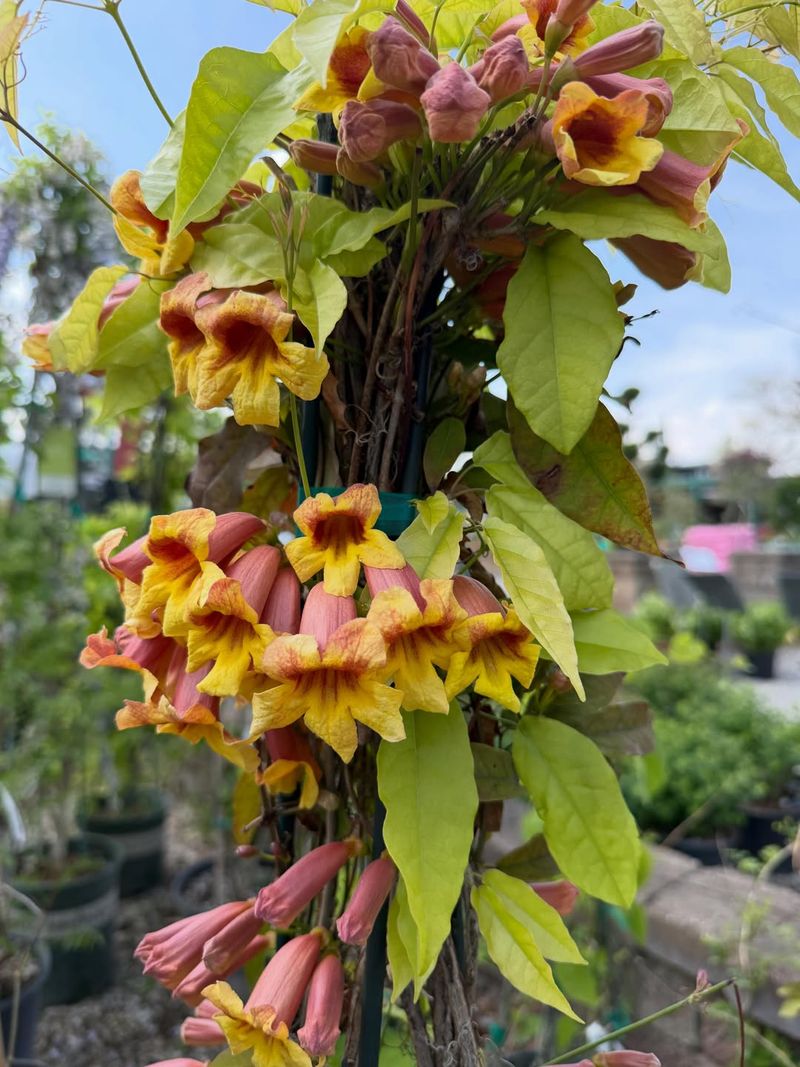
A bare fence, an uninspiring wall, a pergola without a purpose. Crossvine resolves all three of those situations simultaneously and adds hummingbird traffic as a bonus.
This vigorous native climber covers structures quickly and produces a flush of trumpet-shaped flowers in orange-red and yellow in early to mid-spring.
The bloom timing lines up well with the first wave of ruby-throated arrivals in Georgia, which is part of what makes it such an effective plant for early-season hummingbird activity.
Crossvine is semi-evergreen in Georgia. It holds foliage through most winters and leafs out early in spring, giving it a head start over other vines that are still deciding whether to wake up.
It climbs using tendrils with adhesive discs, so wood, brick, and wire all work without additional hardware.
Full sun to partial shade suits it well. It handles Georgia’s clay soils better than many ornamental vines and becomes quite drought-tolerant once established.
Four to six hours of direct sun daily produces the heaviest bloom. Light reblooming can occur through summer in favorable conditions.
One practical note: crossvine spreads with intention. A defined structure keeps it focused and manageable. Trimming after blooming maintains the shape and prevents it from expanding beyond its welcome.
On a fence line, crossvine creates a living privacy screen that doubles as a seasonal hummingbird corridor through the yard.
It solves a landscaping problem and attracts wildlife at the same time. That combination is harder to find than it sounds.
7. Columbine Adds Early Nectar Before Summer Heat Builds
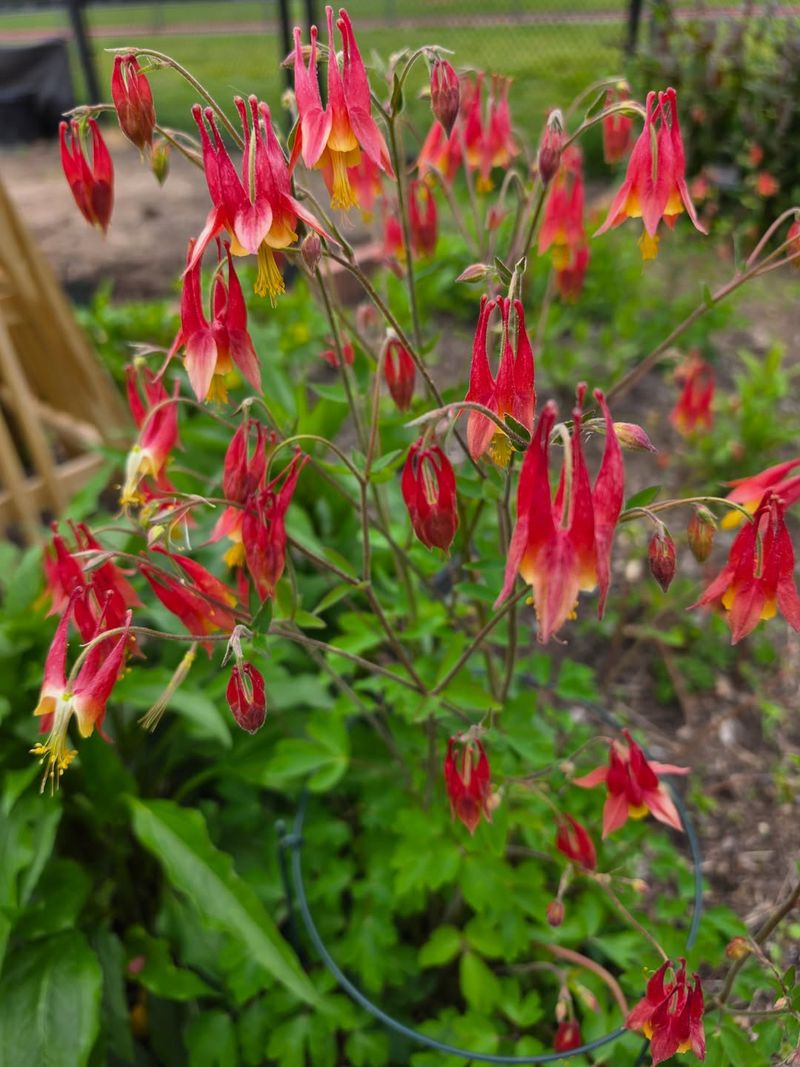
Wild columbine is already doing important work before most Georgia gardeners have finished their spring planting.
This native wildflower blooms in early to mid-spring with nodding red and yellow flowers that carry long curved nectar spurs.
Those spurs fit a hummingbird’s bill naturally, and ruby-throated hummingbirds returning from their winter grounds often visit columbine as one of their first nectar stops of the season. Getting a plant in the ground now means those early arrivals have somewhere to land.
The flowers have a delicate quality that suits naturalistic beds, woodland-style gardens, and shaded corners that need early color.
Partial to full shade is preferred in Georgia, particularly in central and southern parts of the state where afternoon sun can stress the foliage quickly.
Well-drained, slightly acidic soil with reasonable organic matter gives it the best start. Soggy low spots are not a good fit.
Once established, columbine self-seeds readily, creating natural drifts over time without any management from the gardener.
Columbine is a short-lived perennial, typically lasting two to three seasons, but the self-seeding habit renews the colony consistently. Letting a few spent flower heads remain at the end of spring keeps the cycle going naturally.
Early-season nectar sources are often the ones that matter most to newly arrived hummingbirds establishing territory.
Columbine fills that window quietly and reliably every spring, which is exactly the kind of plant a hummingbird garden is built around.
8. Firebush Keeps The Buffet Going Into Warm Weather
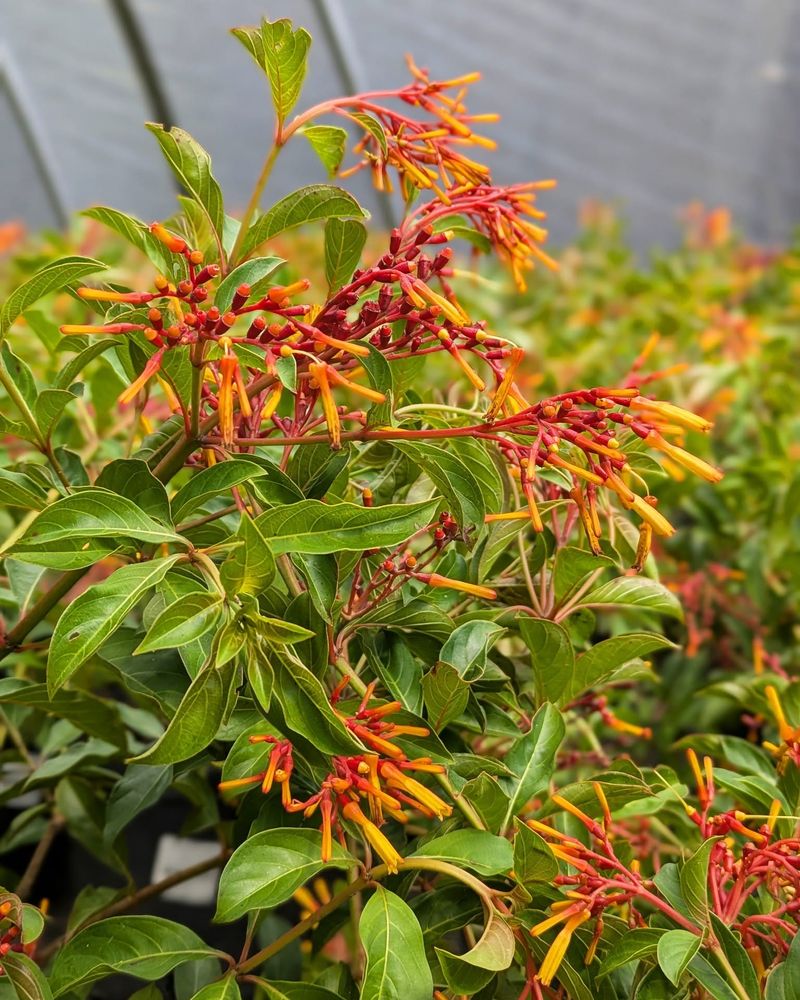
When the earlier hummingbird plants start winding down in midsummer, firebush is just getting started.
This tropical shrub produces a near-constant supply of small tubular orange-red flowers from late spring all the way to the first frost.
Hummingbirds, butterflies, and native bees all make regular visits, turning a mature firebush into one of the most active spots in the garden during the hottest months of the year.
The individual flowers are smaller than some other hummingbird favorites, but the volume compensates convincingly.
A mature plant can carry hundreds of blooms at once, creating a sustained nectar source that keeps birds returning throughout the day rather than moving on after a single pass.
Full sun and well-drained soil are the basic requirements. Firebush blooms more heavily as temperatures rise, which makes it genuinely useful during the weeks when other plants are struggling.
In north Georgia, treat it as an annual or mulch the roots heavily before winter. In central and south Georgia, established plants frequently return from the roots each spring without any intervention.
Either approach delivers the same long bloom season, which is one of the most practical qualities any hummingbird plant can offer.
Some plants attract hummingbirds for a few weeks. Firebush keeps them on your property’s regular rotation until the season closes entirely. That kind of reliability is worth a spot in any Georgia garden.