Native Georgia Shrubs That Outperform Arborvitae As Privacy Screens In Tough Spots
Arborvitae does not always handle the tougher spots in Georgia yards, especially where soil stays uneven, shade shifts through the day, or moisture never feels consistent.
Plants that look strong at first can thin out, lose their shape, or struggle to hold a full screen over time.
That becomes frustrating when the goal is simple coverage that actually lasts. Gaps start to show, growth looks uneven, and the space never feels as private as planned.
Native shrubs handle those conditions differently. They settle in with less stress, hold their structure, and stay reliable even in areas that challenge most common choices.
Once those shrubs take hold, the difference becomes clear, and the space starts to feel more complete without constant effort to keep it that way.
1. Yaupon Holly Creates Dense Evergreen Privacy
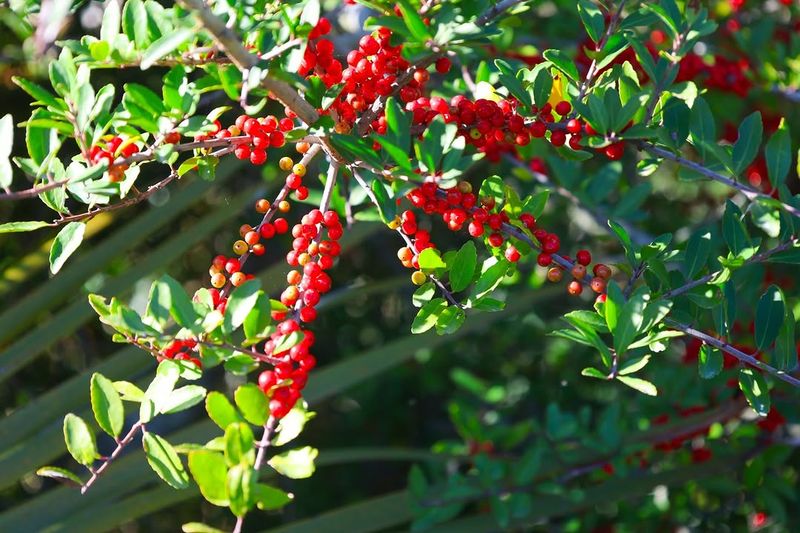
Yaupon Holly might just be the toughest native shrub growing in Georgia right now. It handles full sun, heavy shade, drought, flooding, and clay soil without skipping a beat.
That kind of flexibility is rare, and it makes Yaupon a serious candidate anywhere arborvitae has failed you.
Female plants produce clusters of small red berries that birds absolutely go after during winter months. Beyond the wildlife value, the dense branching habit means you get solid coverage year-round without waiting years for the plant to fill in properly.
Pruning is optional — left alone, it forms a naturally thick screen.
In Georgia’s warmer zones, Yaupon Holly can push 15 to 20 feet tall over time, though it responds well to shaping if you want a more controlled height. It works on fence lines, property borders, and awkward slopes where other plants refuse to cooperate.
Soil prep matters less with this shrub than with almost anything else you could plant.
Native pollinators use the small spring flowers, adding ecological value alongside the practical privacy benefit. If you have a spot in your Georgia yard that has beaten every other plant you have tried, Yaupon Holly is worth a serious look before you try anything else.
It also holds its shape well through seasonal shifts, so the structure stays consistent even when other shrubs thin out.
Once established, it asks for very little in return, making it one of the lowest-effort choices for reliable covera
2. Inkberry Holly Stays Full And Handles Wet Soil
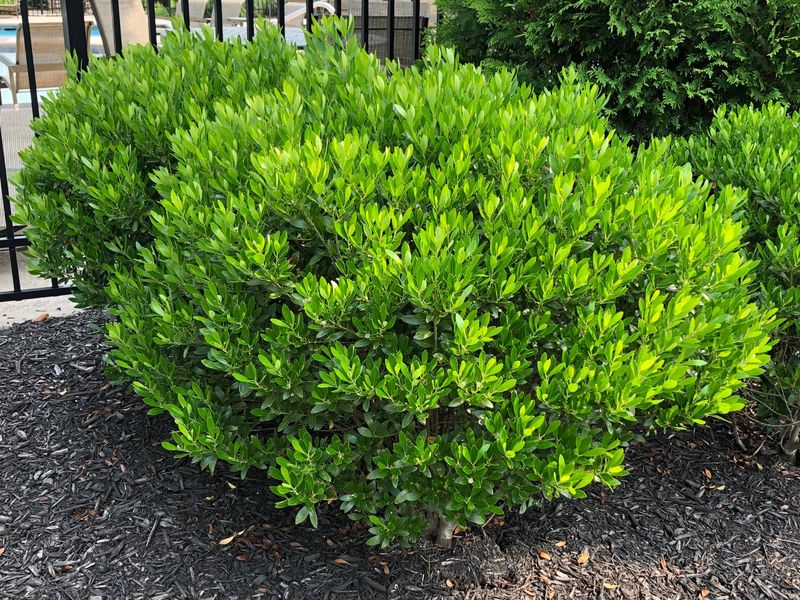
Wet, soggy ground stops most privacy shrubs cold — but Inkberry Holly barely notices. Native to Georgia’s coastal plains and piedmont, this evergreen shrub evolved in low-lying, waterlogged areas where standing water after heavy rain is just a normal Tuesday.
Inkberry grows in a naturally upright form, slowly filling out to six or eight feet tall with dense, glossy foliage that holds its dark green color through winter.
It spreads gradually by root suckers, which means a row of plants will eventually knit together into a solid wall of coverage without much help from you.
That spreading habit is actually a feature, not a problem, in tight spots where gaps would ruin the screen effect.
Your Georgia Garden Changes Every Week. Your Plan Should Too.
Gardening in Georgia changes quickly throughout the season. Every Friday you’ll receive a simple weekly plan showing exactly what to plant, prune, fertilize, harvest, and protect so you never miss the right timing.
Shade tolerance is another strong point. Arborvitae planted in heavy shade goes bare at the base and looks rough within a few seasons.
Inkberry stays full from the ground up, even under a tree canopy where light barely reaches. That makes it genuinely useful along shaded fence lines and north-facing property borders across Georgia.
Songbirds eat the small black berries that appear in late summer, and the plant requires no spraying or special soil amendments to perform well. If wet ground or shade has been your problem, Inkberry Holly solves both issues at once without drama.
3. Wax Myrtle Grows Fast And Screens Quickly
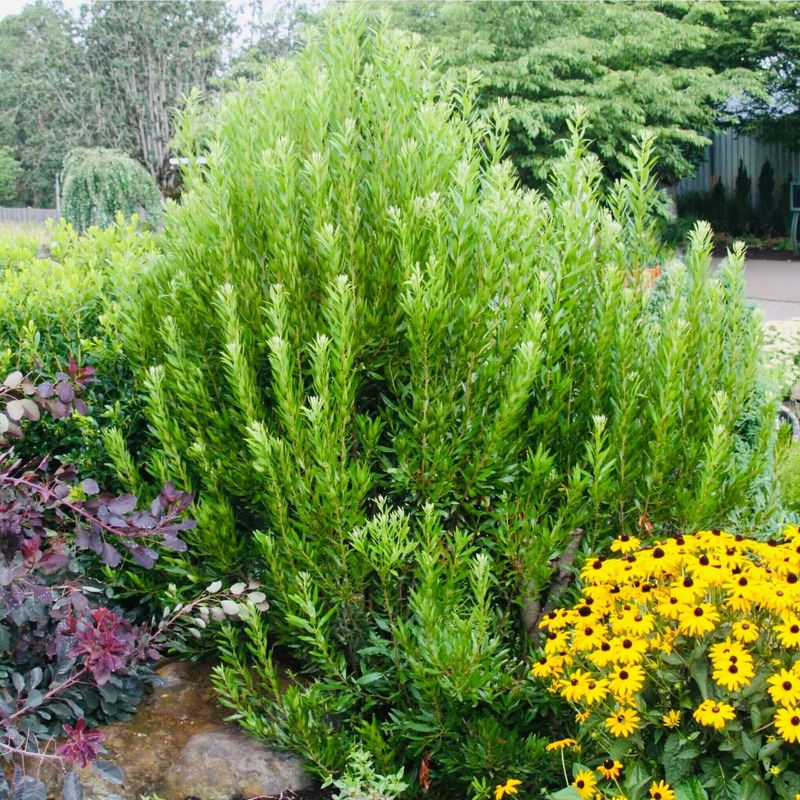
Speed matters when you want privacy, and Wax Myrtle delivers faster than almost any other native shrub in Georgia.
Under decent conditions, it can put on three to five feet of growth in a single season, turning a bare fence line into a real screen within two or three years.
Southern Wax Myrtle is semi-evergreen in most of Georgia, holding its aromatic gray-green foliage through mild winters and dropping some leaves only during hard freezes. Even after a rough winter, it bounces back quickly in spring.
The aromatic quality of the leaves is a nice bonus — brushing against the foliage releases a sharp, pleasant scent that most people find appealing.
Salt spray, sandy coastal soil, heavy clay, and periodic flooding are all conditions this shrub handles without complaint. Along Georgia’s coast and in the low-lying areas of the piedmont, Wax Myrtle is one of the most dependable large shrubs you can plant.
It reaches 10 to 15 feet without much effort, and birds flock to the small waxy berries clustered along the stems.
Cutting it back hard rejuvenates old plants, so if a screen gets leggy over time, a hard pruning in late winter brings it back thicker than before. Few native plants in Georgia combine this level of speed, toughness, and practical screening ability in one package.
4. Florida Anise Thrives In Deep Shade Areas
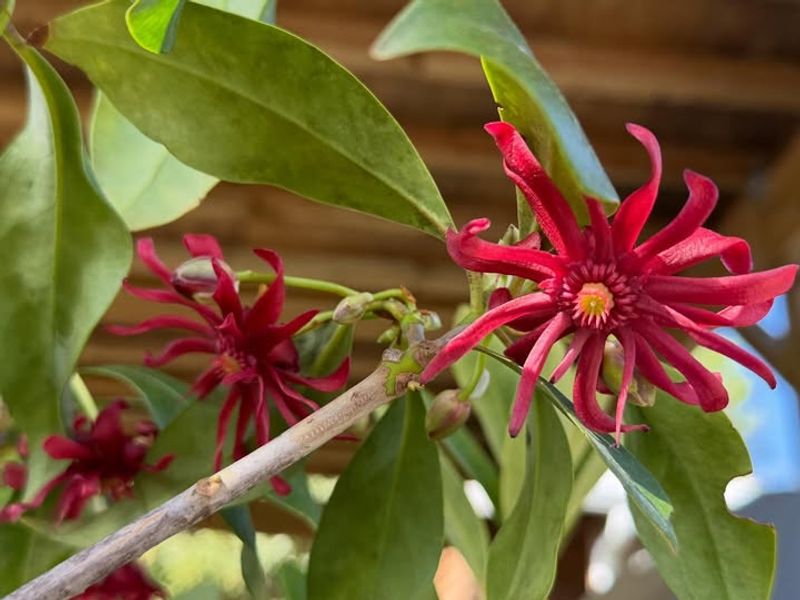
Deep shade is where most privacy plants give up, and Florida Anise steps in where others refuse to grow.
Planted under a heavy tree canopy, along north-facing walls, or in those dim corners of a Georgia yard that never see direct sun, this native evergreen shrub holds its dark glossy foliage without thinning out.
Florida Anise grows at a moderate pace, typically reaching six to ten feet tall with a naturally dense, rounded form. It does not need shaping to stay full — the branching habit fills in from the base upward, which is exactly what you want in a privacy screen.
The foliage releases a strong anise scent when crushed, which deer tend to avoid, making it a practical choice in Georgia neighborhoods where deer pressure is real.
Reddish-maroon flowers appear in early spring, adding brief seasonal interest before the plant settles back into its role as a quiet, dependable screen.
Soil moisture matters more with Florida Anise than with some other native shrubs — it prefers consistently moist, well-drained ground and struggles in dry, compacted clay without some organic matter worked in.
Pairing it with a good layer of mulch helps retain moisture and keeps roots cool through Georgia’s brutal summer heat.
In the right shaded spot with reasonable soil, Florida Anise delivers reliable year-round privacy that arborvitae simply cannot match in low-light conditions.
5. Bottlebrush Buckeye Fills In Shady Spots Well
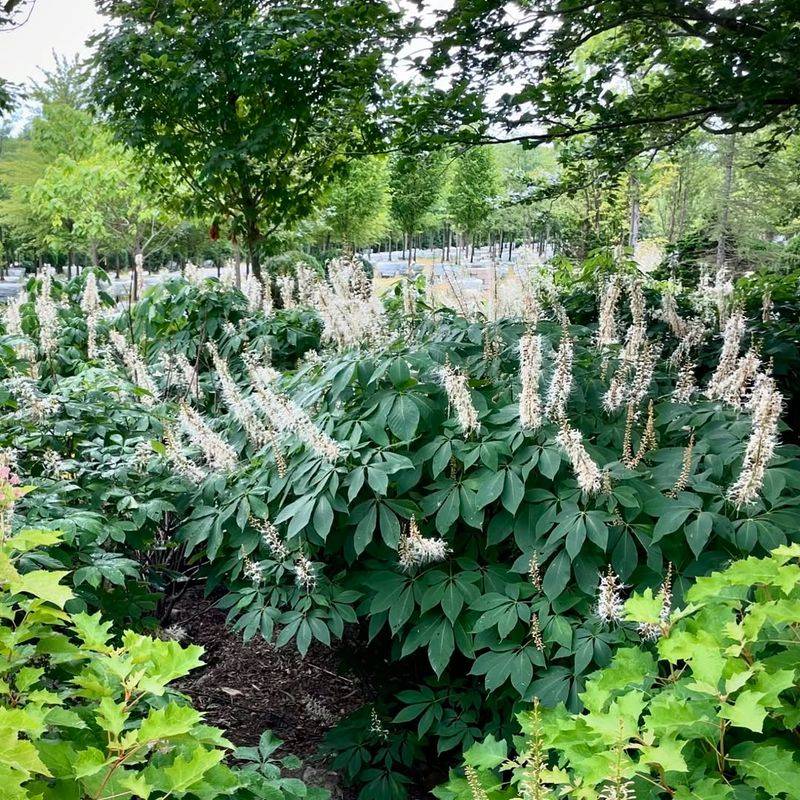
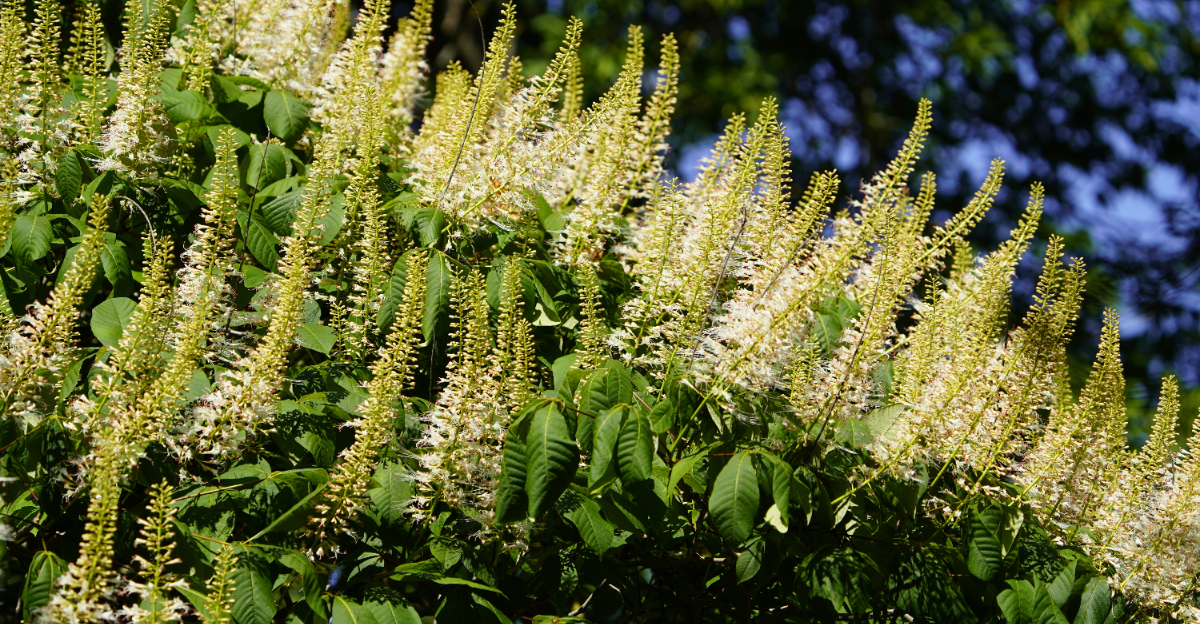
Walk past a Bottlebrush Buckeye in full bloom and it stops you cold. The long white flower spikes shoot upward like fireworks in midsummer, drawing in pollinators at a time when most other shrubs have finished flowering.
But beyond the summer show, this plant earns its place as a legitimate privacy screen in Georgia’s shadiest corners.
Bottlebrush Buckeye spreads wider than it grows tall, eventually reaching six to twelve feet in height with a spread that can push well past that.
Large, tropical-looking compound leaves create a lush, dense canopy effect that blocks sightlines effectively from late spring through fall.
It goes deciduous in winter, so it is not a year-round screen on its own, but combined with an evergreen understory planting, it fills in shaded zones that arborvitae cannot survive in.
Shade is where this shrub actually performs best. Full sun tends to stress it in Georgia’s hot summers, while dappled or full shade keeps the foliage looking healthy and full through the season.
It spreads gradually by root suckers, slowly widening a planting over several years.
Deer largely leave it alone, which is a real advantage in suburban Georgia areas. Native bees and butterflies work the flower spikes heavily during bloom, adding ecological value to a plant that is already doing practical work in difficult spots most shrubs avoid.
6. Oakleaf Hydrangea Adds Coverage In Partial Shade
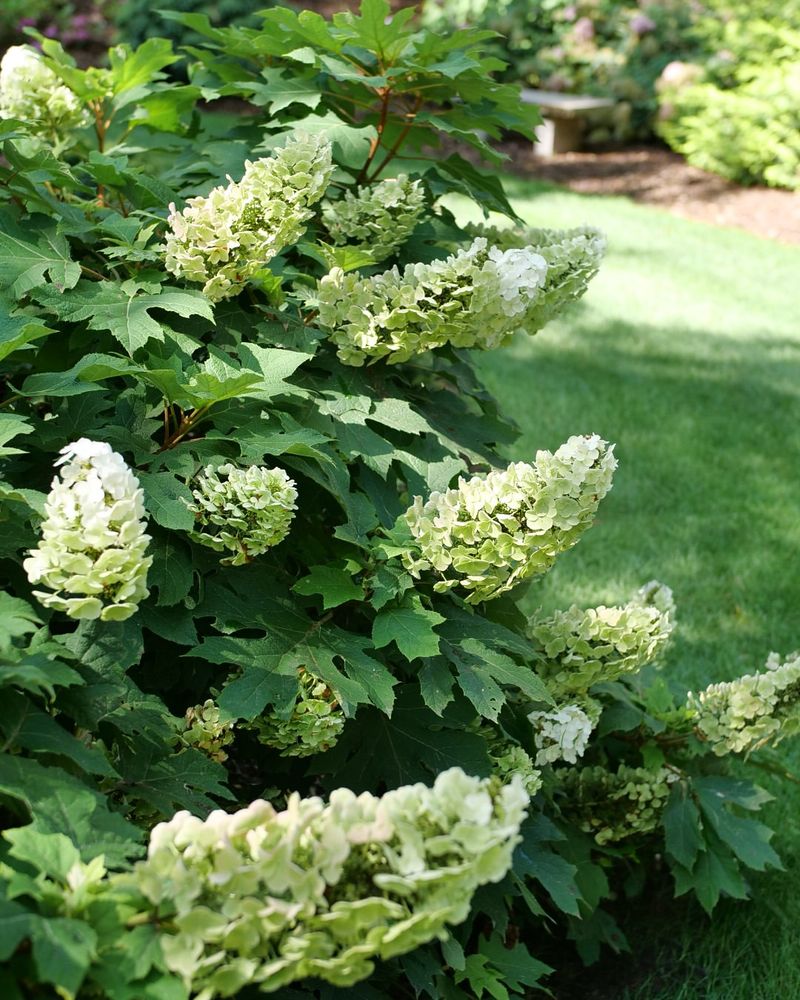
Bold leaves, big flowers, and peeling cinnamon-colored bark in winter — Oakleaf Hydrangea brings more visual interest than almost anything else you could plant for partial shade privacy in Georgia.
Most people think of it as a flowering accent plant, but a row of mature Oakleaf Hydrangeas creates surprisingly solid coverage through spring, summer, and fall.
Large white flower clusters appear in early summer and slowly age to parchment and tan, holding on through fall and into winter. The foliage itself is striking — deeply lobed leaves that turn rich burgundy and orange in autumn before dropping.
It is a deciduous shrub, so winter coverage is limited, but the branching structure remains dense enough to partially screen views even without leaves.
Partial shade is the sweet spot for this plant across most of Georgia. Too much direct afternoon sun in summer causes the large leaves to scorch and droop, while too much shade reduces flowering significantly.
A location with morning sun and afternoon shade tends to produce the fullest, healthiest plants.
Oakleaf Hydrangea tolerates Georgia’s clay soils better than many ornamental shrubs, especially with some organic mulch layered around the base.
It reaches six to eight feet tall with a similar spread, and older plants develop a multi-stemmed, shrubby form that fills a partial shade privacy gap more effectively than most gardeners expect before they try it.
7. American Beautyberry Fills Gaps With Thick Growth
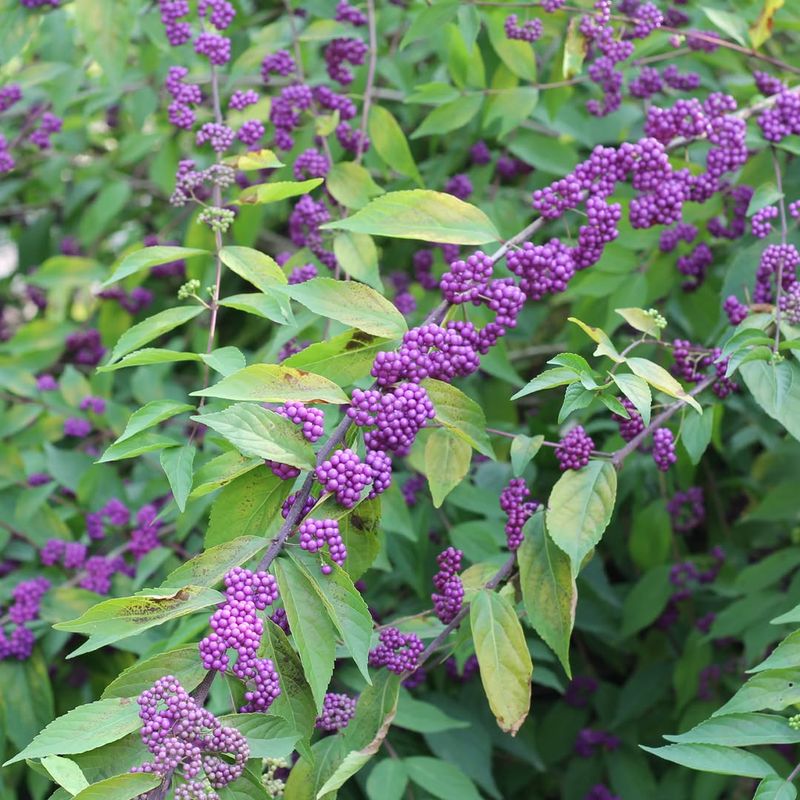
Nothing in Georgia’s native plant world stops a visitor in their tracks quite like American Beautyberry loaded with purple berries in late summer.
The clusters wrap tightly around each stem in a way that looks almost artificial, and the effect lasts well into fall before birds strip the branches clean.
That wildlife value alone makes it worth planting, but the screening ability is what surprises most people.
Beautyberry grows fast and arches outward in a loose, fountain-like form, reaching five to eight feet tall with a spread that often exceeds the height.
A row of plants spaced four to five feet apart fills in quickly and creates a layered, natural-looking screen that blends well into informal Georgia landscapes.
It is not a rigid, clipped hedge — it looks best left in its natural arching form.
Partial shade to full sun both work, though plants in full sun tend to berry more heavily.
Georgia’s clay and sandy soils both support it without significant amendment, and it handles summer heat without the wilting drama you see from non-native alternatives planted in similar spots.
Cutting plants back hard in late winter encourages vigorous new growth and heavier berry production the following season. Deer occasionally browse young stems, but established plants recover quickly.
For filling awkward gaps along property lines or naturalizing shaded edges, Beautyberry is hard to beat in a Georgia yard.
8. Possumhaw Viburnum Works Well In Tough Conditions
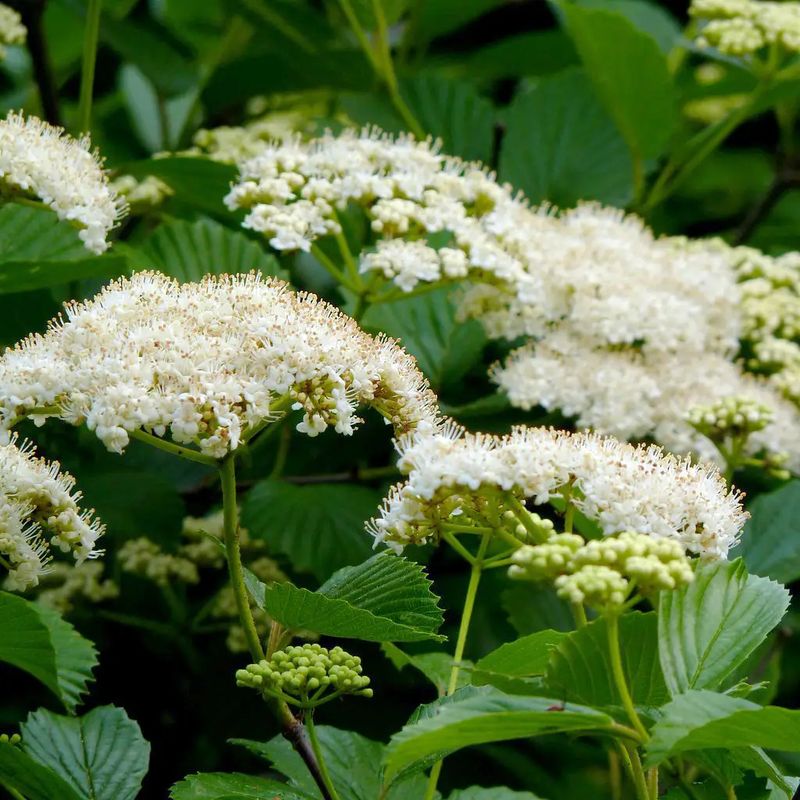
Tough ground, inconsistent moisture, and heavy shade are conditions that expose the weakness of a lot of popular privacy shrubs — but Possumhaw Viburnum handles all three without much fuss.
Native across Georgia from the mountains down through the coastal plain, this deciduous shrub is genuinely adaptable in a way that most plants are not.
Possumhaw reaches eight to twelve feet tall with a dense, multi-stemmed form that creates real screening during the growing season.
In fall, clusters of red, orange, and yellow berries cover the branches and persist well into winter after the leaves drop, giving birds a reliable food source during lean months.
The berry display is showy enough that many Georgia gardeners plant it purely for the fall color, not realizing how useful it is as a structural screen.
Wet soil is not a problem — Possumhaw actually grows naturally along stream banks and in low-lying areas that stay soggy after rain. That makes it one of the better options for Georgia properties with drainage issues that rule out most other shrubs.
It also handles dry spells once roots are settled into the ground.
White flower clusters in spring attract native bees before the berries develop. Spacing plants six to eight feet apart allows them to eventually merge into a connected thicket.
In genuinely difficult spots where arborvitae has struggled or failed entirely, Possumhaw Viburnum is a grounded, reliable choice for Georgia gardeners willing to try something native.