Native Georgia Shrubs With Spreading Canopies That Shade Weeds Out Of Large Landscape Beds
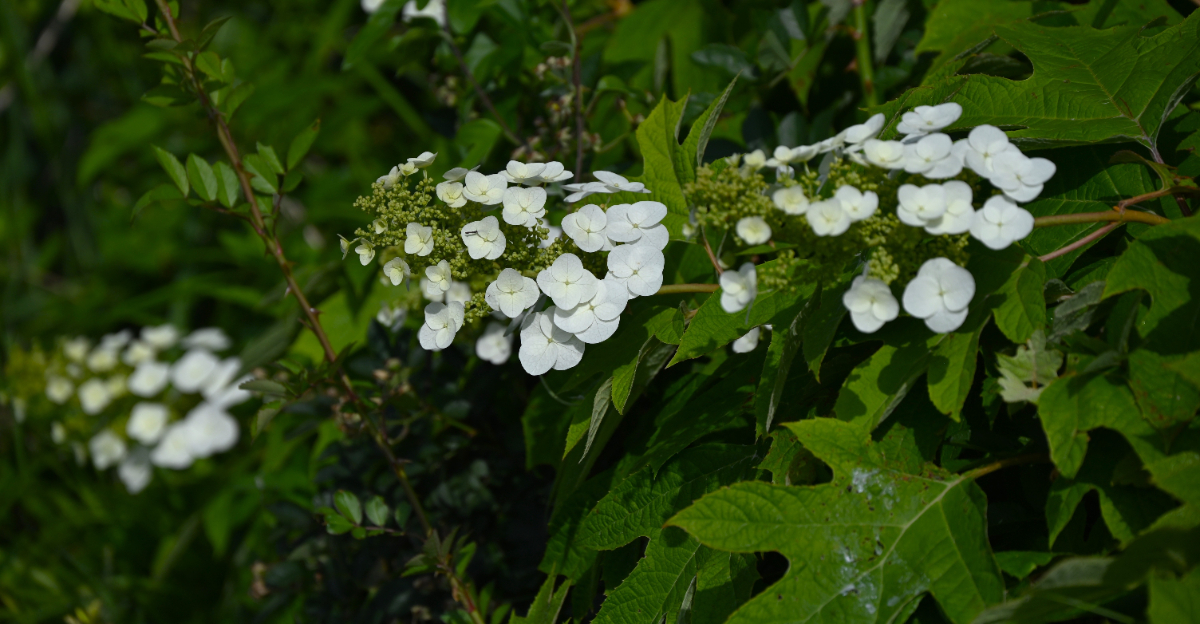
Large landscape beds can look beautiful in photos. In real life, they often come with a problem that shows up long before shrubs and perennials have a chance to fill in.
Bare soil sits exposed, weeds move in, and keeping everything tidy becomes an ongoing chore.
That challenge is familiar to anyone with a large planting area. A bed may look clean after weeding and fresh mulch, but it rarely stays that way for long.
Before long, new weeds begin appearing in the same spots and demand attention all over again.
Some landscapes handle this problem much better than others. The difference is often found in the shrubs growing there.
Certain native Georgia shrubs develop broad canopies that spread over time and cast increasing amounts of shade.
As those canopies expand, less sunlight reaches the soil, making it harder for weeds to gain a foothold and easier for beds to stay looking full.
1. Virginia Sweetspire Spreads Beyond Its Original Space
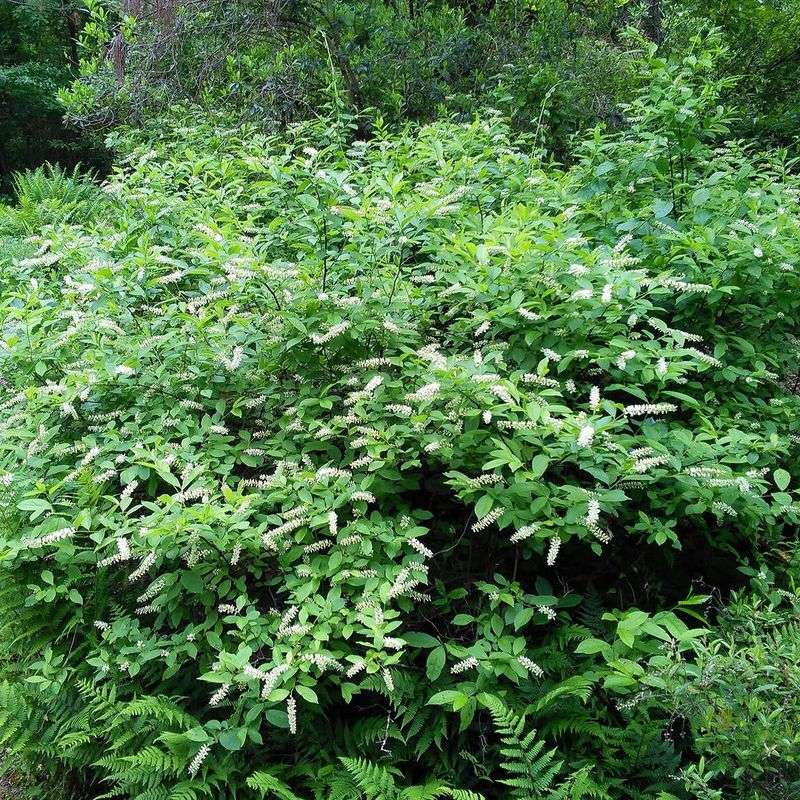
Virginia Sweetspire does not stay where you plant it, and that is actually a feature, not a flaw. Suckers spread outward from the base over time, gradually filling gaps between plants and smothering open soil where weeds want to take hold.
Left to spread naturally, a single planting can colonize a surprisingly wide area within a few seasons. Ground-level coverage builds steadily without any extra work on your part.
Arching branches carry dense, dark green leaves that overlap and layer across the bed floor.
Sunlight rarely penetrates far enough to trigger weed seed germination beneath a mature stand.
Fragrant white flower spikes appear in late spring to early summer. They attract native bees and other pollinators without requiring any deadheading or intervention.
Fall color on Virginia Sweetspire is genuinely impressive. Leaves turn shades of red, orange, and purple, often holding color longer than many other native shrubs in the region.
Wet or consistently moist soil suits it best, but it adapts to average garden conditions once roots settle in. It tolerates both full sun and fairly deep shade.
Planting along low spots, rain gardens, or shaded borders gives it ideal conditions to spread aggressively. Aggressive spreading means faster weed suppression across large beds.
Trim back outer suckers if spread becomes too ambitious. Otherwise, let it work and save yourself the weeding effort across a wide planting zone.
2. American Beautyberry Helps Close Gaps Between Shrubs
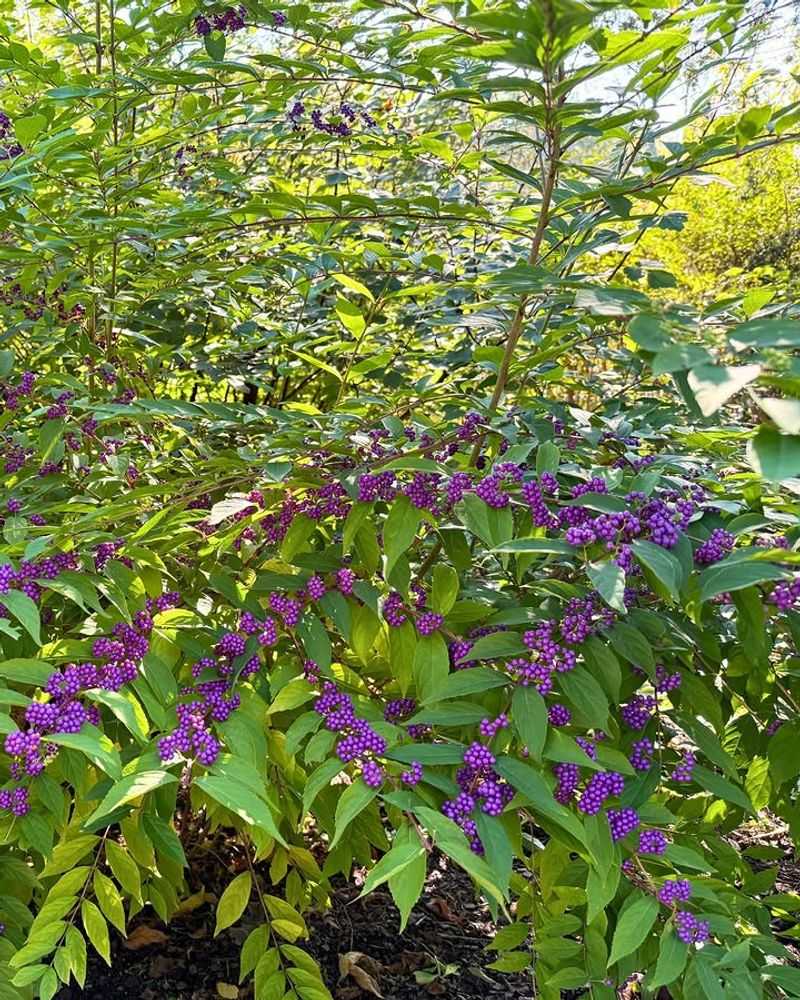
Bright purple berry clusters make American Beautyberry one of the most recognizable native shrubs in the Southeast. Beyond the visual drama, it brings something more practical to a large landscape bed: a wide, arching habit that fills empty space fast.
Branches arc outward and downward in a loose fountain shape. That spreading growth pattern pushes foliage close to the ground, shading the soil surface even along the outer edges of a bed.
Leaves are large and slightly rough textured. They overlap enough on mature plants to create a reasonably dense canopy layer, especially through the peak growing season from late spring through early fall.
Your Georgia Garden Changes Every Week. Your Plan Should Too.
Gardening in Georgia changes quickly throughout the season. Every Friday you’ll receive a simple weekly plan showing exactly what to plant, prune, fertilize, harvest, and protect so you never miss the right timing.
American Beautyberry grows quickly. A young plant can reach four to six feet tall and equally wide within just two or three seasons under decent conditions.
It performs well in partial shade and tolerates full sun with adequate moisture. Sandy or clay-heavy soils are both workable as long as drainage is reasonable.
Cutting plants back hard in late winter encourages vigorous new growth. Fresh, dense stems emerge quickly and rebuild the canopy before weed season really gets going in spring.
Wildlife value adds another reason to include it. Birds flock to the berries in fall, and the dense summer foliage provides nesting cover for several species common to Georgia landscapes.
Planting several in a staggered row closes gaps between larger shrubs and prevents the open patches where weeds typically move in first.
3. Fothergilla Develops A Broad Rounded Form
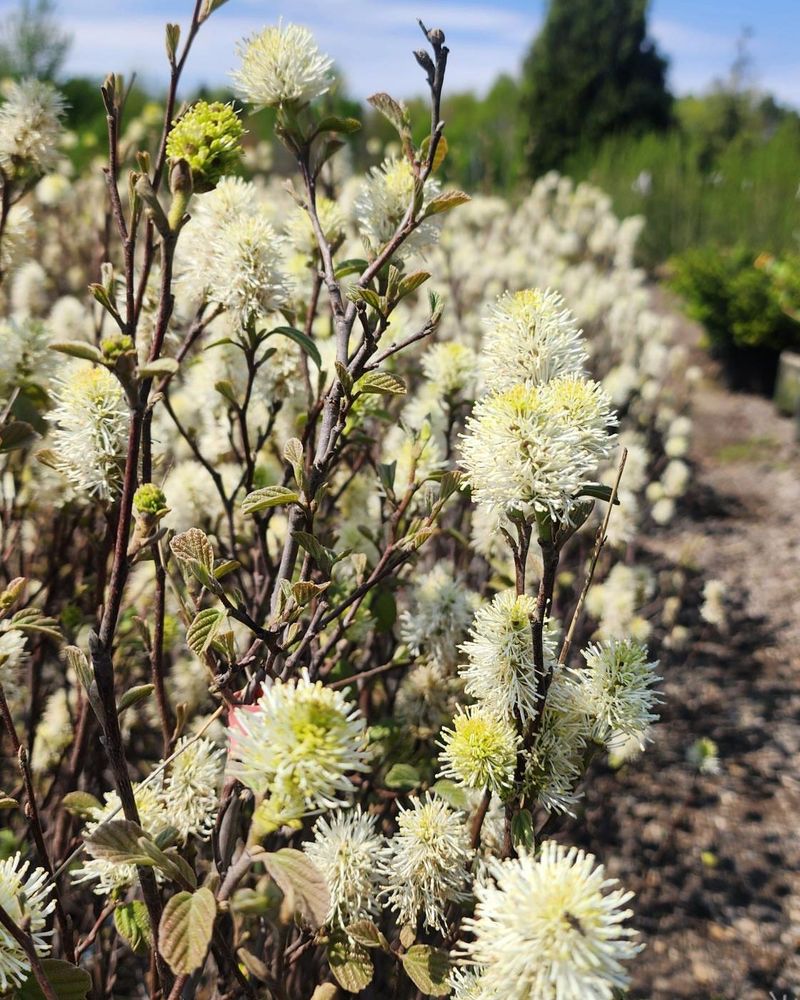
Slow and steady wins the race with Fothergilla. Growth is gradual, but the end result is a dense, rounded shrub with a canopy that sits low and wide over the bed surface, leaving little room for weeds to find sunlight.
Dwarf Fothergilla tops out around three feet tall but spreads three to four feet wide. Large Fothergilla can reach six feet in both directions, making it a better fit for wide, open beds.
Leaves are thick and leathery with a slightly blue-green cast.
They overlap densely enough that even in partial shade, the canopy blocks a solid portion of the light reaching the soil below.
Spring brings bottlebrush-shaped white flowers with a light honey fragrance. Pollinators arrive in numbers, and the flowers appear before most other shrubs have fully leafed out.
Fall color is one of Fothergilla’s strongest selling points. Leaves shift to orange, red, and yellow, often displaying multiple colors on a single leaf at the same time.
Acidic, well-drained soil suits it best.
Amending heavy clay with organic matter before planting gives roots a better start and speeds up canopy development over the first few seasons.
Pairing Fothergilla with taller background shrubs works well in layered bed designs. Its low, wide form fills the front and middle zones where weed pressure tends to be heaviest.
Once established, it needs very little care. Occasional shaping keeps the rounded form tidy without sacrificing the dense canopy coverage it provides.
4. Wax Myrtle Forms A Wide Screening Canopy
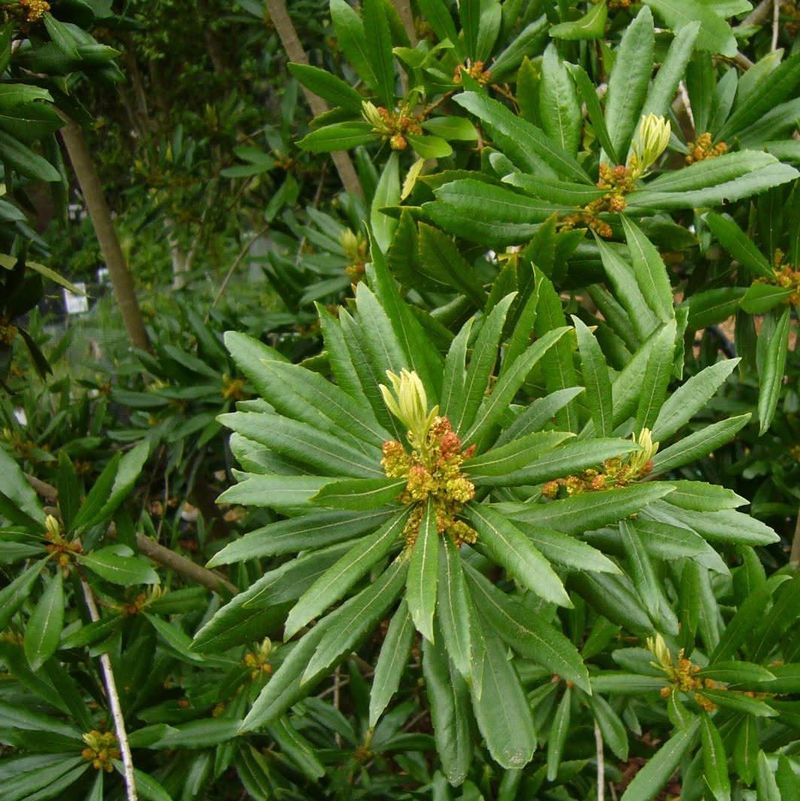
Wax Myrtle moves fast. Few native evergreen shrubs establish and spread as quickly, making it one of the most practical choices when you need canopy coverage over a large bed in a relatively short amount of time.
Plants can reach ten to fifteen feet tall and nearly as wide at full maturity. That canopy footprint covers a serious amount of ground, shading out weeds with consistent evergreen density throughout the entire year.
Aromatic foliage is a bonus. Leaves release a pleasant, spicy scent when brushed, and the fragrance may help deter some browsing insects and deer from spending too much time underneath.
Wax Myrtle handles wet soil, drought, salt spray, and poor fertility surprisingly well. It adapts to a wide range of conditions found across Georgia coastal plains and piedmont regions alike.
Berries appear in fall and winter, offering a reliable food source for yellow-rumped warblers and other migratory birds moving through the Southeast.
Nitrogen-fixing root associations allow it to grow in lean soils without much fertilizer input. Established plants mostly take care of themselves once the root system locks in.
Pruning can shape it into a multi-trunk small tree form, which raises the canopy and allows underplanting with shade-tolerant groundcovers. Left unpruned, the dense lower branching stays close to the ground and shades more aggressively.
Planting in groups three to five feet apart creates a solid screening hedge that closes quickly and holds weed pressure down across wide planting areas.
5. Arrowwood Viburnum Builds A Strong Shrub Border
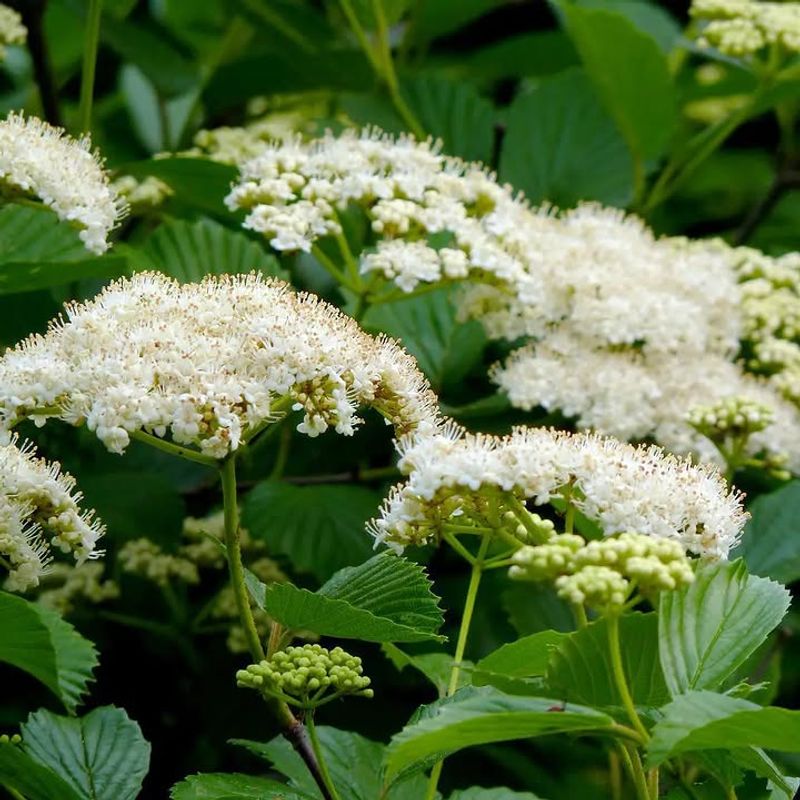
Arrowwood Viburnum earns its spot in a landscape border by showing up reliably season after season. Straight, upright stems fan out from the base into a broad, vase-shaped form that covers ground without becoming invasive or unpredictable.
Mature plants reach six to ten feet tall with a spread that often matches or exceeds their height. Wide canopy coverage at that scale makes a real dent in weed pressure across long, open beds.
Dense, opposite leaves cover the stems from top to bottom. Sunlight has a hard time filtering through to the soil surface beneath a fully leafed-out plant in peak summer growth.
Flat-topped clusters of white flowers open in late spring and attract a wide range of native pollinators. Blue-black berries follow in late summer and draw birds from across the surrounding area.
Arrowwood Viburnum tolerates a wide range of soil types. Clay, loam, or sandy conditions are all workable, and it handles both full sun and partial shade without major performance differences.
Suckering at the base gradually widens the plant’s footprint over time. Managed lightly, that spreading habit fills gaps between neighboring shrubs and tightens up the border against weed infiltration.
Fall color adds late-season interest. Leaves shift to shades of red and purple before dropping, giving the bed a final visual payoff before winter sets in.
Spacing plants six to eight feet apart in a staggered row creates a layered border that shades the bed floor thoroughly from multiple angles throughout the growing season.
6. Oakleaf Hydrangea Creates Dense Seasonal Shade
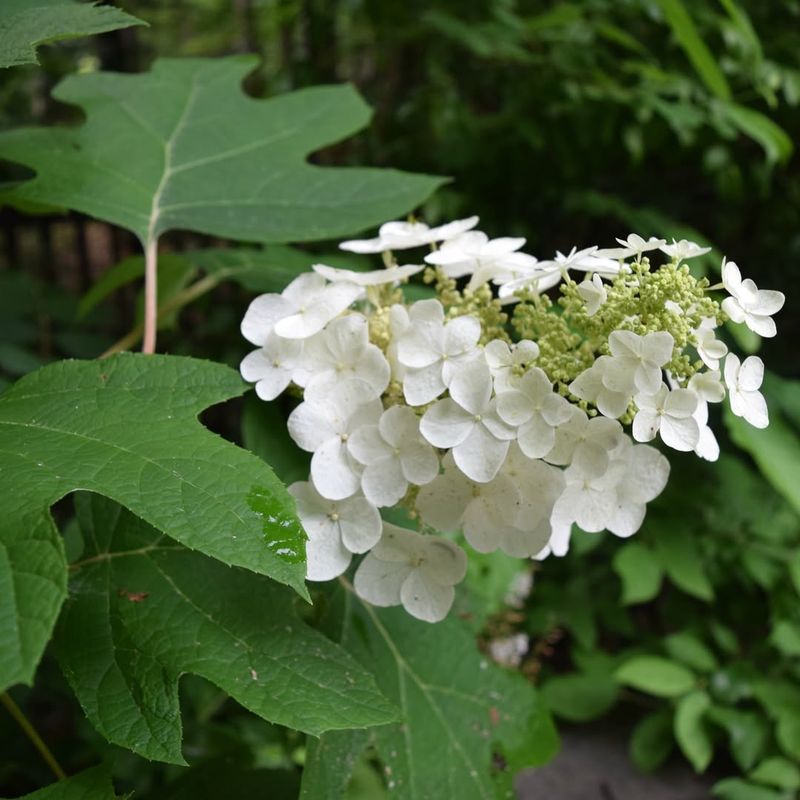
Few shrubs put on a show quite like Oakleaf Hydrangea. Bold, oversized leaves spread wide from a multi-stemmed base, creating a canopy that blocks serious sunlight from hitting the soil below.
Each leaf can grow six to eight inches across.
Packed together on arching branches, those leaves form a layered ceiling that keeps weeds struggling to germinate underneath.
Oakleaf Hydrangea performs best in partial shade but tolerates full sun with consistent moisture. It handles the humid summers of the Southeast without much complaint once established.
Mature plants typically reach six to eight feet tall and equally as wide. That spread covers a lot of ground in a large landscape bed without much effort from you.
Showy white flower clusters appear in early summer and age to a tan-brown color that persists into fall. Even after blooms fade, the foliage stays dense and useful for weed suppression.
Fall brings another bonus. Leaves shift to deep burgundy and orange before dropping, leaving behind attractive exfoliating bark through winter.
Pair it with a few inches of wood chip mulch underneath, and weed pressure drops significantly. Roots appreciate the cool, moist soil that good mulch creates too.
Planting in groups of two or three amplifies the shading effect across wider beds.
Space them about eight feet apart to allow full canopy development without crowding.
7. Chickasaw Plum Creates Dense Thickets Naturally
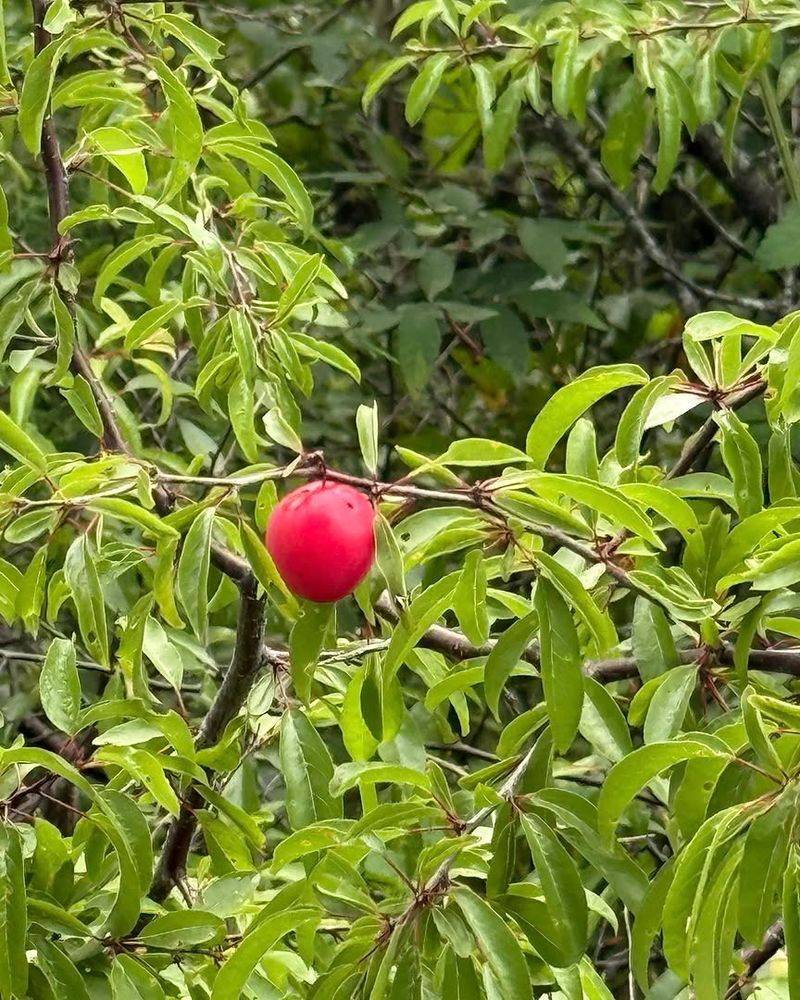
Chickasaw Plum does not need much encouragement to take over a space. It sends up root sprouts aggressively, spreading outward from the original planting and knitting together into a dense, impenetrable thicket that weeds simply cannot compete with.
Left to develop naturally, a single plant can colonize a wide area within several seasons. That colonizing habit is exactly what makes it so effective at suppressing weeds across large, open landscape beds.
Branches are twiggy and interlocking, which builds a physical barrier close to the soil surface. Even before the canopy fully closes overhead, the dense branching structure blocks light from reaching the ground.
Chickasaw Plum blooms early in spring, often before leaves fully emerge. Small white flowers appear in clusters and attract early-season native bees that are just beginning to forage.
Small yellow to red plums ripen in early summer. Birds and mammals consume them quickly, and the fruit also has a long history of use in traditional cooking across the Southeast.
Full sun suits it best. Sandy or well-drained soils support the fastest spread, though it adapts to average garden conditions without significant problems.
Containing spread requires occasional mowing or pruning around the edges. Inside those boundaries, the thicket manages itself and keeps weed pressure extremely low with no additional inputs.
Planting along the back of a large bed or along a fence line gives it room to spread without overwhelming smaller neighboring plants in the foreground of the design.
8. Yaupon Holly Holds Its Coverage Year-Round
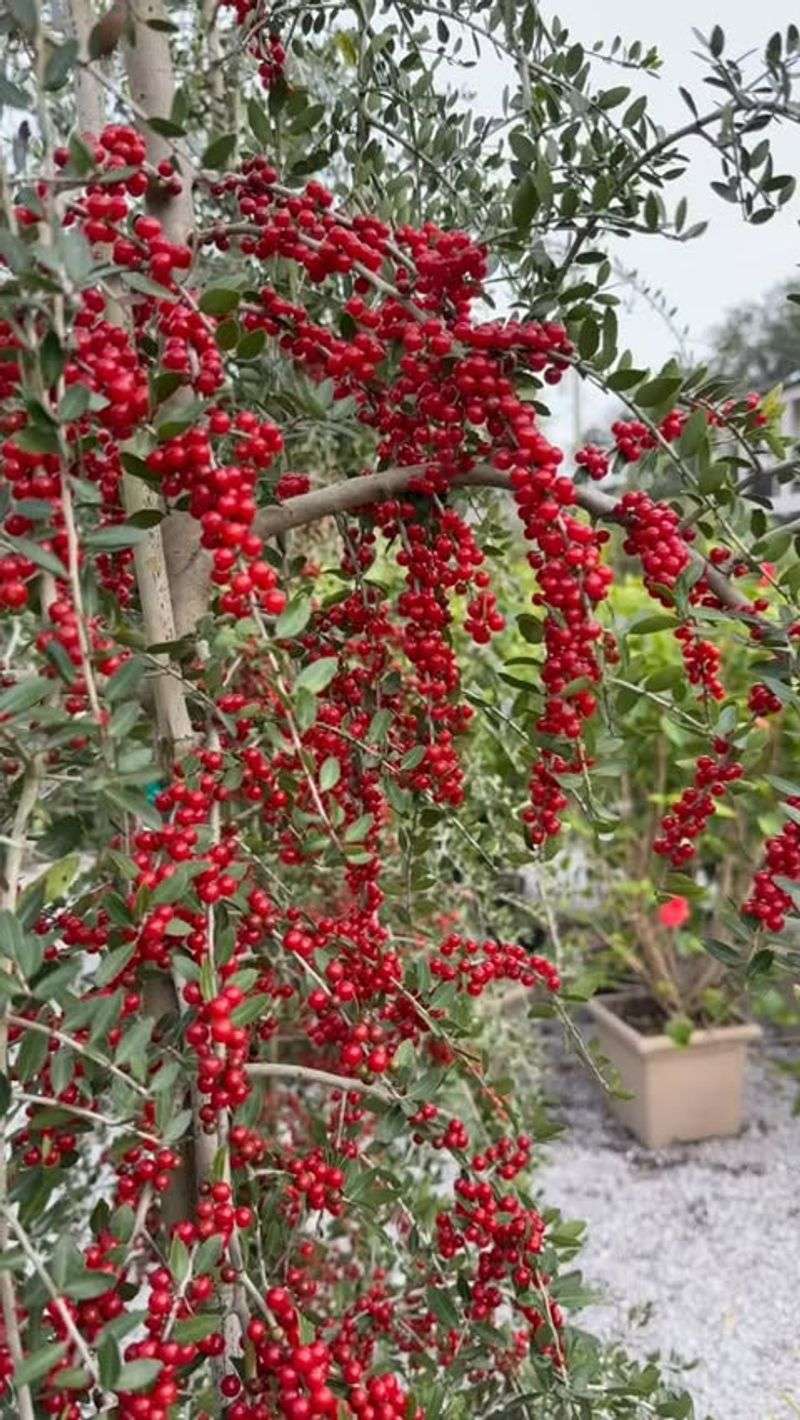
Yaupon Holly never takes a season off. While deciduous shrubs drop their leaves and leave beds exposed through winter, Yaupon keeps its dense evergreen canopy in place twelve months out of the year, blocking light from weed seeds consistently.
Native to Georgia and the broader Southeast, it grows in a wide range of conditions. Wet or dry soil, full sun or partial shade, coastal salt air or inland clay, Yaupon handles it without much fuss.
Spreading forms and weeping cultivars exist alongside the standard upright types. For large landscape beds, a spreading or horizontal variety provides the best ground-level canopy coverage without growing too tall.
Mature plants develop a dense branching structure that holds its shape through wind, rain, and ice without significant damage.
That structural toughness makes it a dependable long-term choice in a low-maintenance landscape design.
Small red or orange berries cover female plants in fall and winter. Cedar waxwings and mockingbirds are especially fond of them, often visiting in large, noisy flocks.
Pruning is optional. Yaupon tolerates heavy shearing into formal shapes or can be left completely natural with minimal maintenance required over the years.
Planting a mix of male and female plants ensures berry production on the females. One male plant can pollinate several nearby females within a reasonable distance.