These Are The Trees Arizona Homeowners Lose Every Monsoon Season And The Safer Alternatives Worth Planting
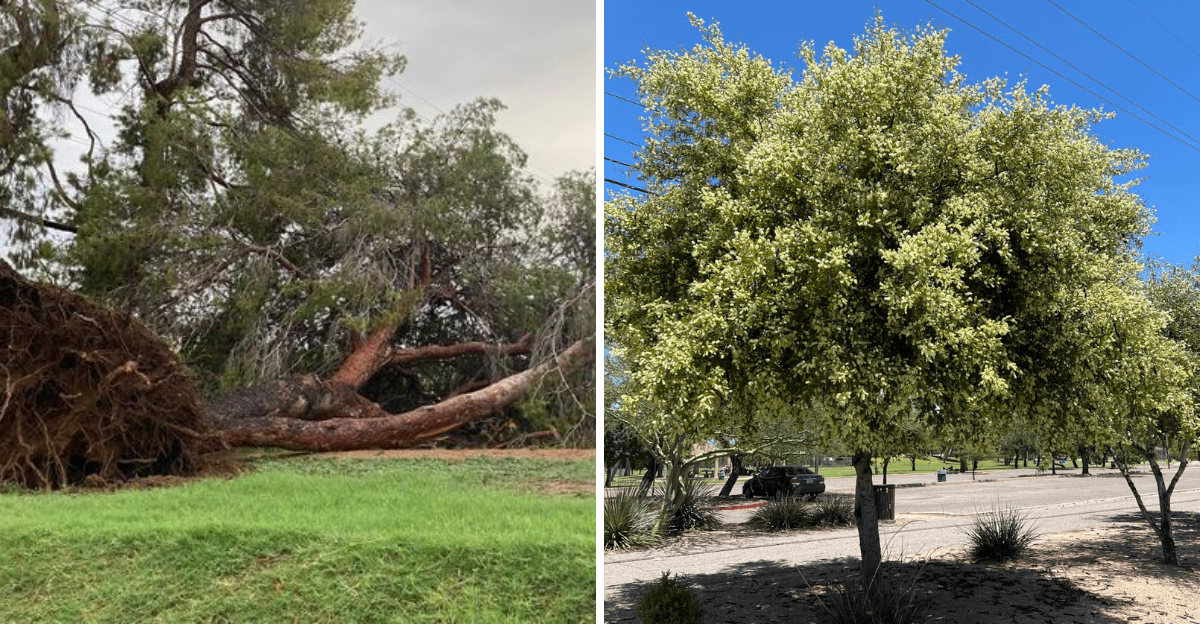
One strong monsoon storm is all it takes to change the look of a yard. A tree that provided shade for years can suddenly lose major branches or lean unexpectedly after strong winds.
That is why monsoon season makes many homeowners look at their trees a little differently. What seemed like a great choice when it was planted does not always age the way people expect.
Some grow too quickly, some develop hidden weaknesses, and some simply struggle when powerful summer storms arrive.
Arizona sees this happen every year, yet the same types of trees keep showing up in yards across the state.
At the same time, there are other options that handle the conditions far better while still providing the shade, beauty, and landscape value people want. Knowing the difference can prevent a lot of future headaches.
1. Skip Arizona Ash In Monsoon-Prone Yards
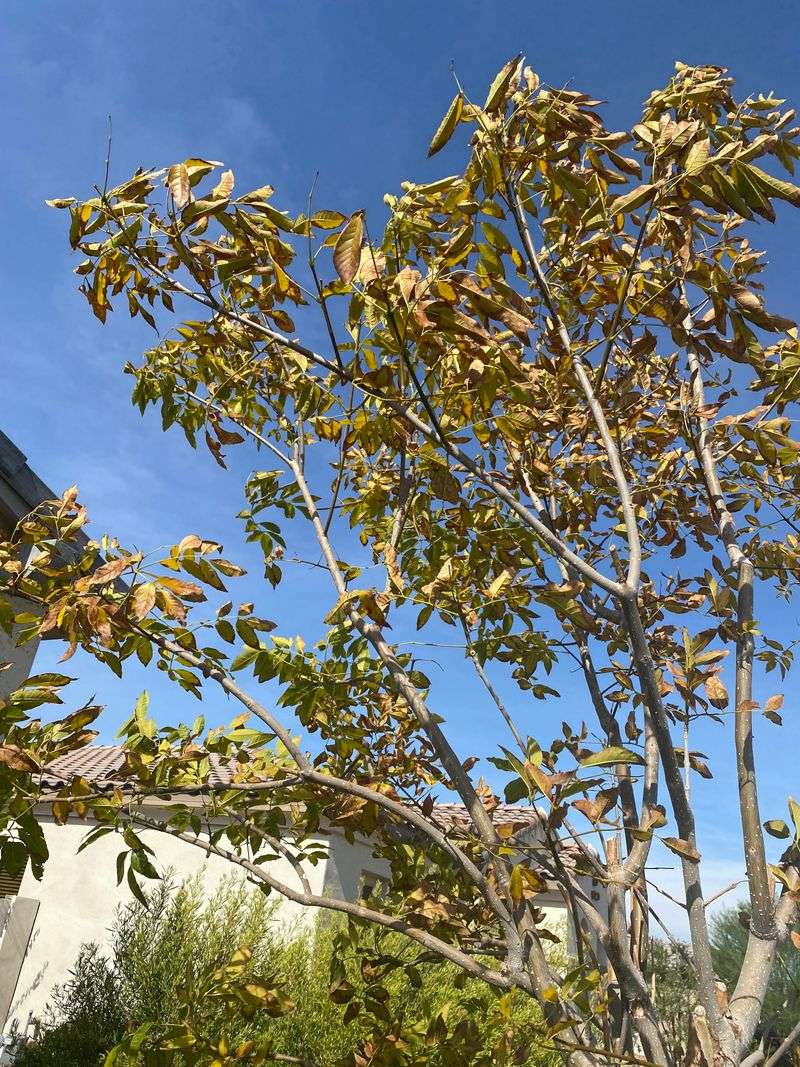
Arizona Ash looks great in spring, but it has a serious weakness nobody talks about enough. Its root system is shallow and wide, which sounds stable until a monsoon pushes 50 mph winds across saturated ground.
Whole trees tip over without much warning. Roots pull right out of the soil because wet ground offers almost no grip.
The wood itself is brittle, so even branches that stay attached can snap and swing into roofs, cars, and fences.
Ash trees also attract borers aggressively. A stressed or borer-damaged ash has even less structural integrity when a storm arrives.
Combine that with fast-draining desert soil that suddenly holds too much water, and you have a recipe for property damage.
Homeowners near washes or low-lying areas see this play out repeatedly. A yard that drains slowly turns into a liability during a heavy monsoon cell.
The ash just cannot anchor itself in those conditions.
Removing a mature ash before it falls costs far less than repairing what it lands on. If you already have one, get an arborist to check root health and canopy weight before June.
Catching problems early gives you options. Waiting until August does not.
Visible leaning, soil lifting near the base, or thinning growth can all be signs that an ash tree needs closer evaluation before storm season arrives.
2. Think Twice Before Planting Eucalyptus
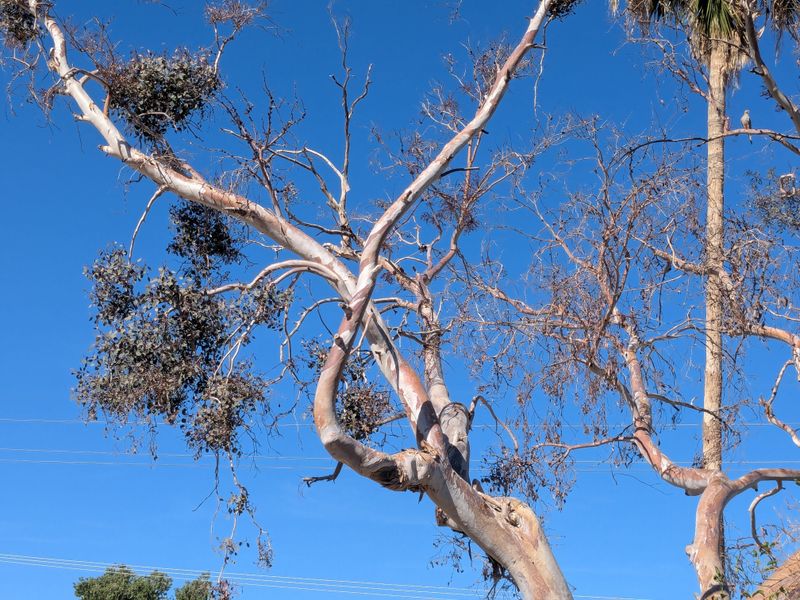
Eucalyptus drops limbs without any storm at all. Add monsoon-force winds and the risk jumps sharply.
These trees are sometimes called widow-makers in regions with high winds, and that reputation is earned.
Branches can be 30 feet long and weigh hundreds of pounds. When a fast-moving storm cell hits, those limbs come down hard.
They do not crack gradually. They fall suddenly, often onto structures nearby.
Eucalyptus also grows extremely fast, which sounds like a benefit. Faster growth usually means weaker wood density.
Soft, fast-grown wood breaks more easily under wind load than slower-growing native species.
Root systems on mature eucalyptus trees are aggressive and wide. They lift sidewalks, crack irrigation lines, and can heave pool decks.
Saturated soil during monsoon season loosens the grip these roots have, especially in sandy or loamy desert soils.
Your Arizona Garden Changes Every Week. Your Plan Should Too.
Gardening in Arizona changes quickly throughout the season. Every Friday you’ll receive a simple weekly plan showing exactly what to plant, prune, fertilize, harvest, and protect so you never miss the right timing.
Established eucalyptus trees are expensive to remove and require a licensed crew. Young trees are much easier to replace before they mature.
If you have a eucalyptus near a structure, a fence, or a vehicle parking area, get a professional assessment now rather than after the first big storm of the season.
There are far better shade options available that handle desert wind without becoming a hazard every summer.
Many desert-adapted shade trees are less prone to limb failure and storm-related damage during monsoon season.
3. Replace Bradford Pear Before It Splits
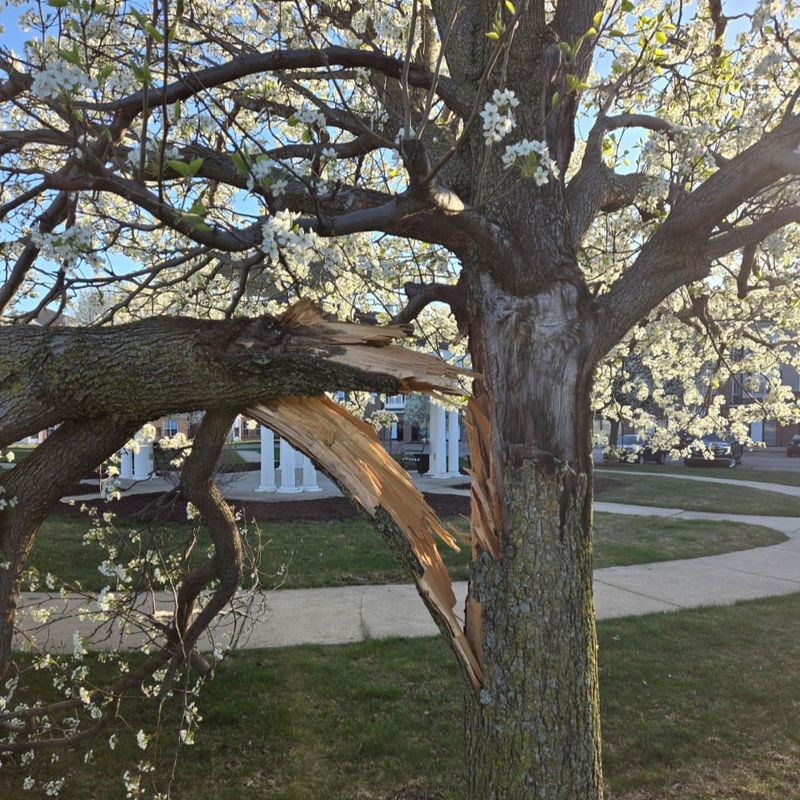
Bradford Pear splits almost on schedule. Arborists have been warning homeowners about this tree for decades, and monsoon season is exactly when the warning becomes reality.
Its branch structure is the core problem. Multiple major limbs grow upward from nearly the same point on the trunk.
That tight crotch angle creates a built-in weak point. Under wind load, the entire canopy can tear apart at once.
When Bradford Pear splits, it usually splits completely. Half the tree falls in one direction, the other half leans or falls the opposite way.
Cleanup is messy, the stump is awkward, and the damage radius is wide.
Beyond storm risk, Bradford Pear is invasive in many parts of the country. It spreads aggressively through bird-dispersed seeds and crowds out native vegetation.
Planting one creates problems beyond your own yard over time.
Removing a Bradford Pear before monsoon season is straightforward when the tree is still young. Mature trees with wide canopies require more equipment and cost more to take down safely.
Acting early is clearly the smarter move here.
Plenty of better ornamental trees thrive in desert yards without splitting apart every storm season. Choosing a structurally sound replacement now means you stop dealing with this same problem every summer.
Regular inspections can help identify developing cracks or weak branch unions before strong seasonal winds put additional stress on the tree.
4. Watch Aleppo Pine During Storm Season
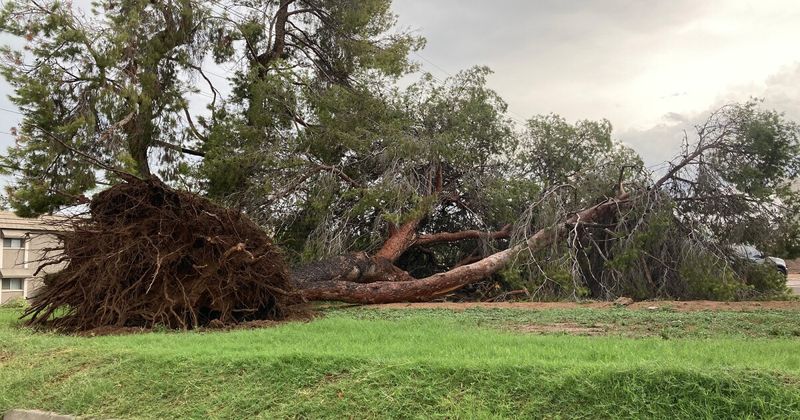
Aleppo Pine is everywhere in desert neighborhoods, and it handles drought well. Storm season is a different story.
Its combination of a heavy canopy and shallow roots makes it a frequent casualty when strong monsoon winds arrive.
Surface roots are easy to spot on mature Aleppo Pines. Those roots tell you exactly how deep the anchor goes.
When soil saturates quickly during a heavy monsoon cell, shallow roots lose their grip fast.
Older Aleppo Pines often develop a thick, top-heavy canopy. Wind resistance increases with canopy mass.
More resistance plus shallow anchoring equals a tree that tips more easily than you would expect.
Bark beetle infestations weaken Aleppo Pines significantly. An infested tree loses structural integrity in ways that are not always visible from the outside.
Stressed pines are far more vulnerable during storm events than healthy ones.
Regular canopy thinning helps reduce wind resistance. Removing crowded interior branches before storm season lowers the risk of large limb failures.
An arborist can assess whether thinning is enough or whether the tree poses too much risk to keep near structures.
Aleppo Pine does not have to be removed automatically. With proper care and monitoring, many trees remain stable for years.
But ignoring warning signs like heavy lean, surface root exposure, or beetle damage is a gamble not worth taking.
5. Choose Desert Willow For Better Flexibility
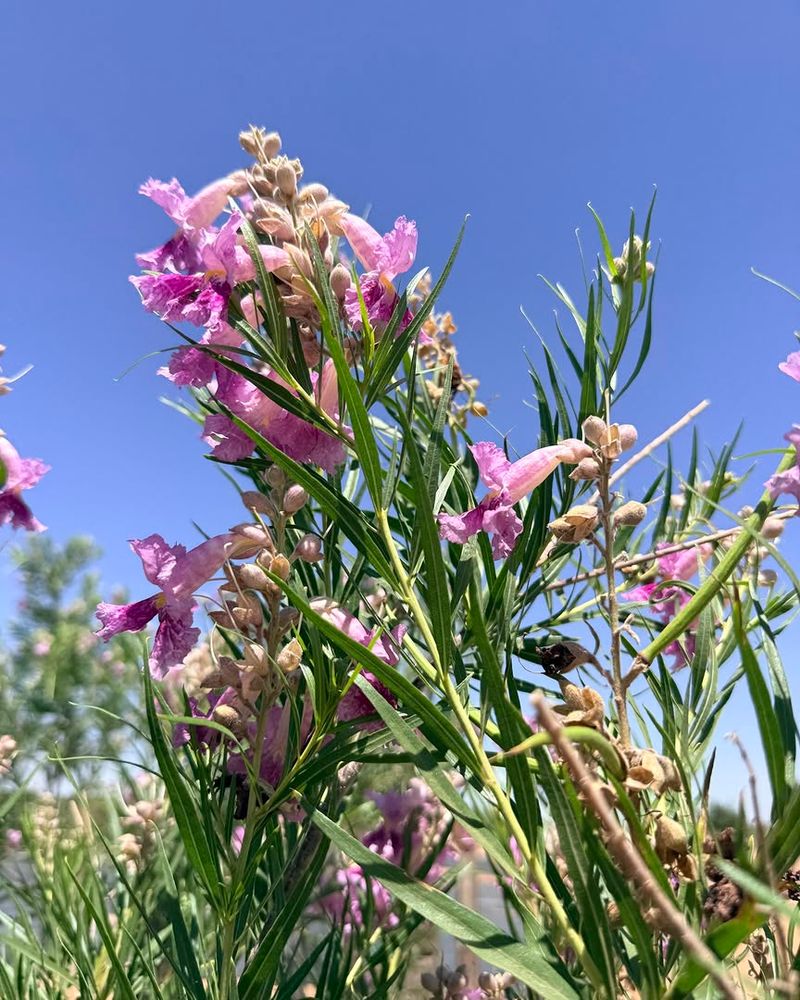
Desert Willow bends instead of breaking. That single characteristic makes it one of the most storm-resilient small trees available for desert yards.
Flexible branches absorb wind energy rather than resisting it until something snaps.
Watch a Desert Willow during a strong gust. Branches move dramatically but rarely fail.
The wood has enough give to handle repeated stress without cracking. That flexibility is exactly what desert yards need during monsoon season.
It is native to the Southwest, which means it evolved alongside the same conditions that damage non-native species. Deep tap roots develop over time and provide solid anchoring even in sandy soils.
Established trees handle wind and brief flooding without much trouble.
Blooms run from late spring through early fall in shades of pink, lavender, and white. Hummingbirds visit regularly.
The tree provides shade, color, and wildlife value without requiring heavy irrigation once established.
Growth is moderate, reaching roughly 15 to 25 feet at maturity depending on water availability. That size is manageable for most residential lots.
It fits near structures without becoming a long-term liability the way larger non-native trees often do.
Desert Willow drops its leaves in winter, which some homeowners prefer to avoid. For most yards, the seasonal leaf drop is a minor inconvenience compared to the reliability it offers throughout storm season.
Periodic pruning to maintain a balanced canopy can further improve wind resistance and help reduce the chance of branch failure during strong summer storms.
6. Count On Ironwood For Long-Term Strength
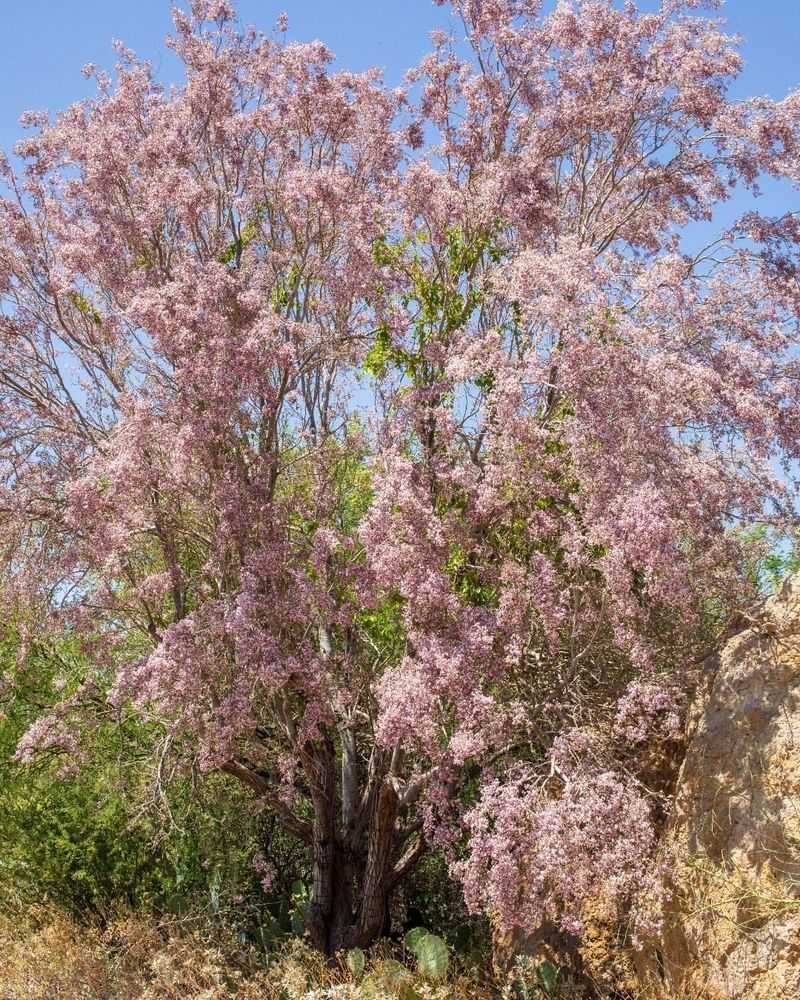
Ironwood earned its name honestly. Few native desert trees match its structural strength, and that strength holds up season after season through serious storm conditions.
It is not a fast grower, but patience with this tree pays off significantly.
Wood density in Desert Ironwood is among the highest of any North American tree. Dense wood resists breakage under wind load far better than softer-wooded species.
Branches that might snap on other trees simply flex and hold on ironwood.
Root systems develop deep and wide over decades. A mature ironwood is anchored in a way that most ornamental species never achieve.
Tipping risk during monsoon events is genuinely low compared to shallow-rooted alternatives.
Wildlife benefit heavily from ironwood presence. Birds nest in the canopy, shade from the dense foliage protects understory plants, and seed pods provide food for desert animals.
Planting one contributes to local ecology in a way few landscape trees can match.
Ironwood is frost sensitive when young. Cold snaps below 25 degrees Fahrenheit can damage immature trees.
Once established past the first few winters, cold hardiness improves considerably and the tree becomes much more self-sufficient.
Growth is slow, averaging a few inches per year. For homeowners wanting quick shade, that is a drawback.
For those thinking long-term about property value and storm resilience, ironwood is one of the most reliable investments available in desert landscaping.
7. Use Netleaf Hackberry Where Storms Hit Hard
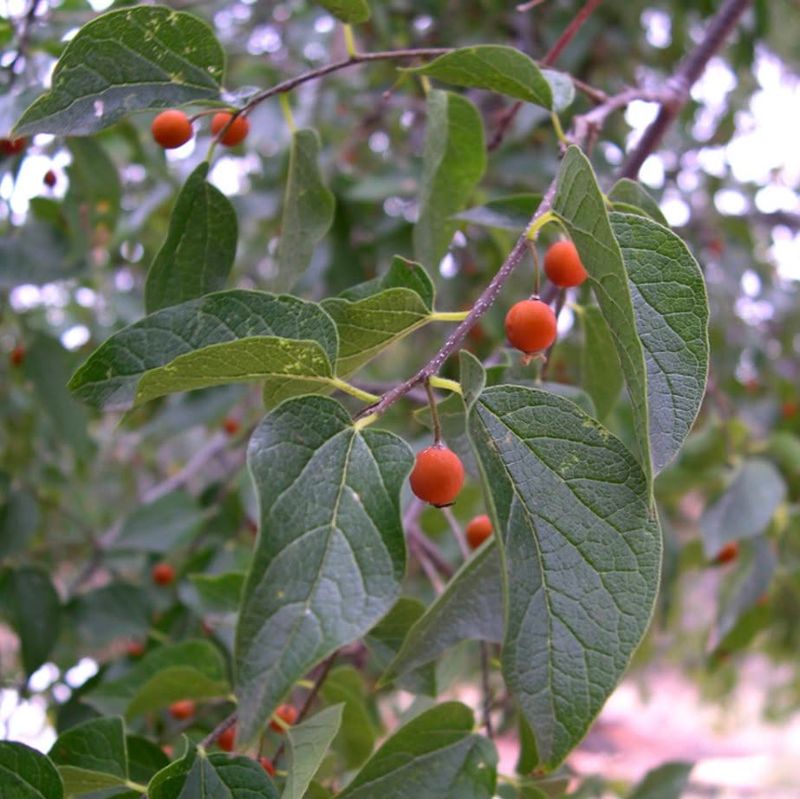
Netleaf Hackberry grows naturally along desert washes and canyon walls, which tells you something important about its storm tolerance. It evolved in exactly the kind of terrain where water rushes hard and wind funnels through narrow corridors.
Root systems on hackberry trees develop deep anchoring quickly. Even in rocky or compacted soils, roots find their way down and hold.
That anchoring ability makes a real difference when monsoon winds push hard across open desert terrain.
Canopy structure is naturally open and irregular. Wind passes through rather than pushing against a solid wall of foliage.
Open canopy architecture is one of the key reasons this tree survives conditions that topple denser-crowned species planted nearby.
Birds absolutely love netleaf hackberry. Small berries ripen in late summer and attract a wide variety of species.
Planting one near a patio or garden area creates consistent wildlife activity throughout the warmer months without any extra effort.
Water needs are low once the tree establishes its root system. Deep watering every two to three weeks during summer is usually enough.
Overwatering actually weakens root development by encouraging shallow surface roots rather than deep anchoring growth.
Mature height ranges from 20 to 30 feet depending on site conditions. That size fits comfortably in residential lots without overwhelming smaller spaces.
It provides meaningful shade and storm resilience in a compact, manageable package that suits most desert yard layouts.
8. Plant Texas Ebony For Better Storm Resistance
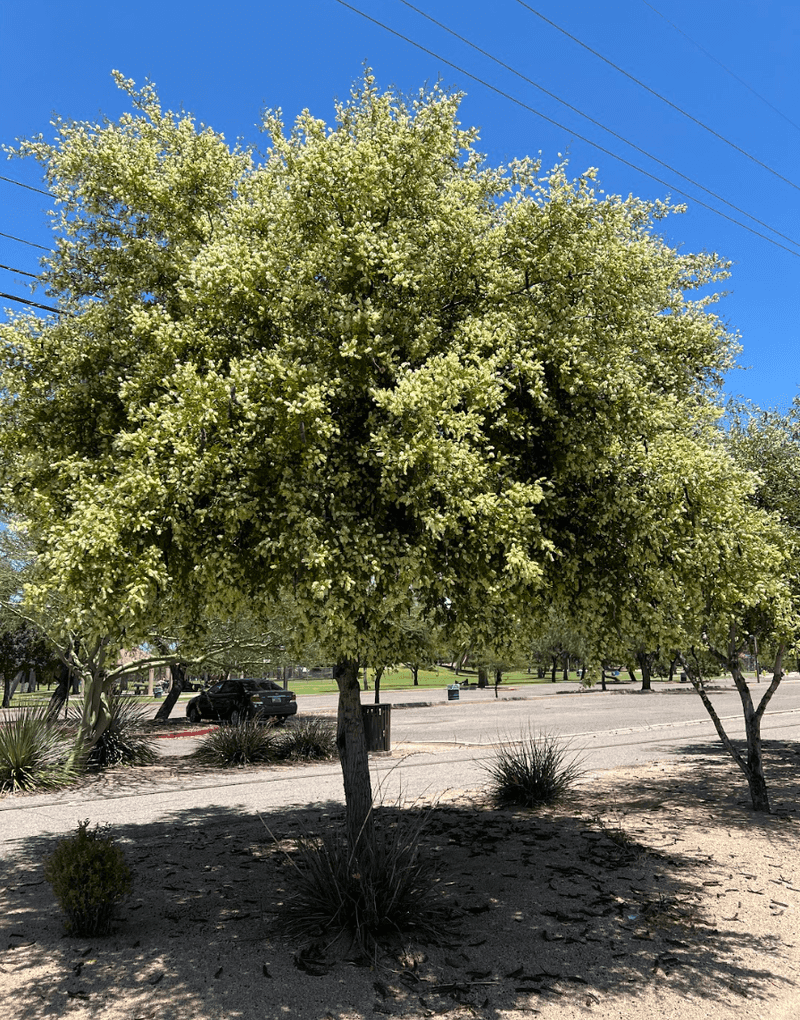
Texas Ebony brings serious toughness to desert landscapes. It holds its leaves year-round, handles extreme heat without complaint, and stays structurally sound when monsoon winds arrive.
Not many trees check all three boxes reliably.
Wood density is high, similar to ironwood in some respects. Dense wood resists cracking and splitting under storm stress.
Branches that take direct wind hits flex slightly but rarely fail outright, even during severe monsoon events.
Root development is deep and aggressive on established trees. Deep roots anchor the tree firmly and also allow it to tap into subsurface moisture during dry stretches.
That dual benefit makes it both storm-resistant and drought-tolerant without extra irrigation demands.
Thorny branches are a real consideration for placement. Avoid planting Texas Ebony directly beside high-traffic walkways or play areas.
In the right spot, those thorns actually provide a natural deterrent for foot traffic and offer dense nesting cover for birds.
Fragrant cream-colored flowers appear in spring and sporadically through summer. Seed pods follow and add visual interest through fall.
The overall appearance is tidy and compact, which suits formal desert landscaping as well as more naturalistic yard designs.
Mature height typically reaches 15 to 25 feet. Growth is moderate, faster than ironwood but slower than eucalyptus or ash.
That pace produces denser, stronger wood and a more reliable long-term structure for yards where storm damage has been a repeated problem.