Florida’s Brutal Summer Combination Of Rain, Heat, And Humidity Doesn’t Slow These 7 Plants Down
July in Florida shows no mercy. Hot, wet, and endlessly humid, it doesn’t care what you planned for the garden.
By mid-July, many plants make it obvious: they look tired, stop blooming, and develop that yellow-green shade that signals trouble a few weeks back.
However, a rare few do the opposite. They don’t just survive. They thrive. Blooming more, spreading wider, looking better in August than they did in May.
So, what’s the difference between a Florida garden that dazzles in summer and one that just hangs on?
It’s not how often you water, what fertilizer you use, or any tricky technique. It’s the plants themselves. The right varieties turn Florida’s relentless summer into a display you can enjoy rather than a struggle.
These plants belong in that elite group. They handle the rain, the heat, and the humidity that makes Florida July what it is… And they keep performing throughout the season.
1. Hibiscus Thrives Through Wet Heat
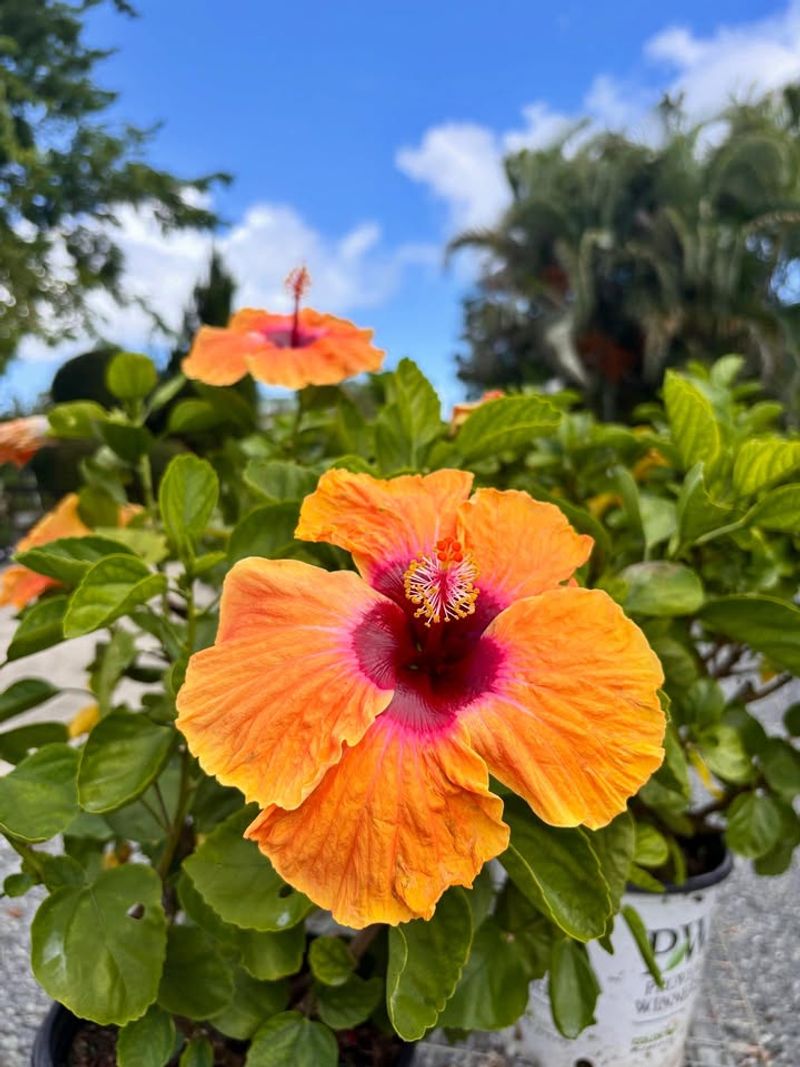
Hibiscus does not retreat when Florida summer peaks. The flowers keep opening, the colors stay bold, and the display gets more dramatic exactly when other plants in the yard are fading into a stressed, greenish quiet.
Tropical hibiscus, Hibiscus rosa-sinensis, is the right species for Florida landscapes. It wants full sun, at least six hours daily, and performs best with the consistent warmth that Florida delivers from April through October.
Summer rainfall actually benefits it, as long as the soil drains well enough that roots never sit in standing water for extended periods.
Fertilizing consistently is what keeps the blooms coming at the rate hibiscus is capable of. A fertilizer high in potassium and low in phosphorus produces the best flowering results.
Feed every few weeks through the growing season and the plant responds with near-constant color.
Have you noticed aphids or whiteflies on your hibiscus yet this summer? A strong blast from the hose knocks most populations back quickly.
Insecticidal soap handles more persistent pressure without causing collateral damage to the plant or surrounding beneficial insects.
Planting near a fence or patio gives hibiscus wind protection during afternoon storms while keeping it visible from the most-used outdoor spaces.
Hibiscus blooms in colors ranging from soft white and pale pink to deep red and neon orange. A single mature plant in full summer production is genuinely hard to look past.
Florida summer throws everything at it. Hibiscus treats that as an invitation.
2. Lantana Survives Humid Sun
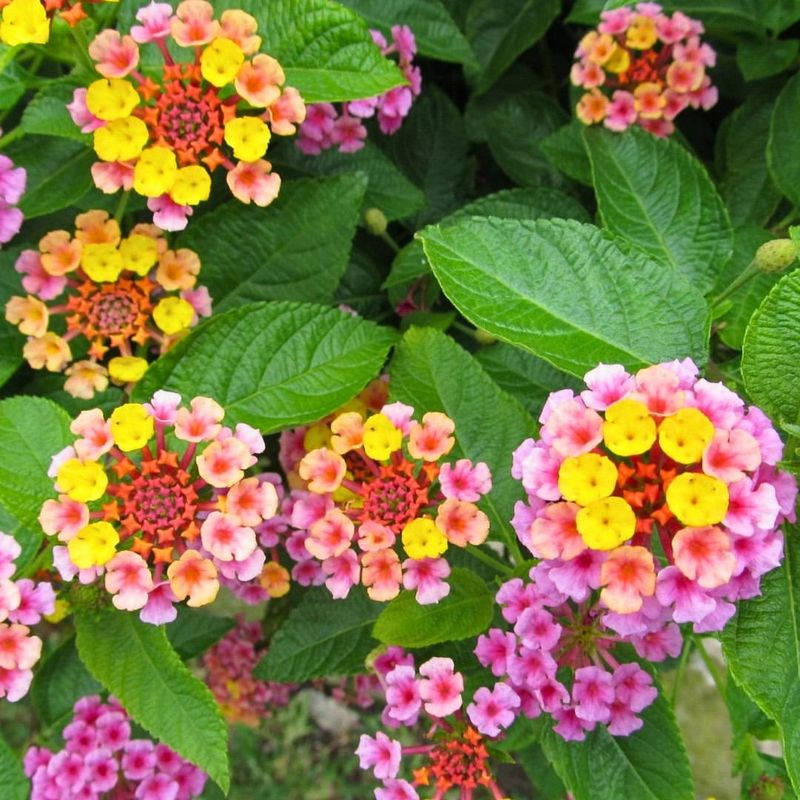
Lantana does not merely tolerate Florida summer. It uses the conditions as fuel.
More sun, more heat, more humidity, and lantana responds by producing more of those cheerful multicolored flower clusters that shift shades as they mature.
Yellow into orange. Pink into red. White alongside combinations of all of the above on a single flower head. The display is constant from spring through the hottest weeks of the year.
Butterflies treat lantana as a primary destination rather than an occasional stop. Hummingbirds visit it regularly.
A well-established lantana planting adds consistent movement and wildlife activity to the yard through a season when most other flowering plants have stopped providing those things.
Your Florida Garden Changes Every Week. Your Plan Should Too.
Gardening in Florida changes quickly throughout the season. Every Friday you’ll receive a simple weekly plan showing exactly what to plant, prune, fertilize, harvest, and protect so you never miss the right timing.
Plant in full sun with well-draining soil. Lantana handles both drought and periods of heavy rain with equal composure, which suits Florida’s unpredictable summer pattern precisely.
It also performs well in coastal locations where salt air and soil conditions challenge other plants.
Are you deadheading your lantana or letting it go? Occasional trimming keeps the plant tidy and encourages fresh blooms rather than seed production.
It does not require constant attention, just a periodic pass with pruning shears when the shape gets loose.
Choose sterile varieties to avoid self-seeding into natural areas. Landmark and Bandana series are reliable options widely available in Florida nurseries.
Lantana asks for very little and delivers color that outlasts almost everything else in the summer garden. That is an arrangement most Florida gardeners find very easy to accept.
3. Bougainvillea Blooms Through Rain
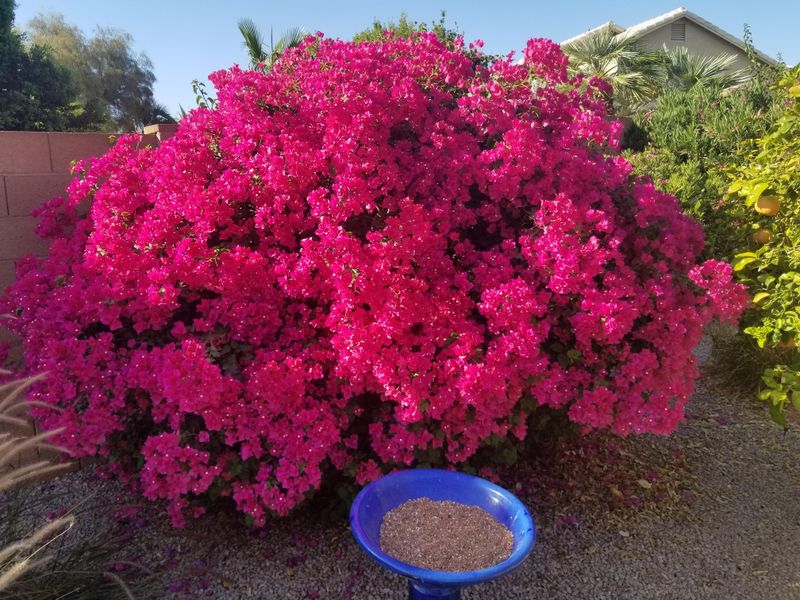
Bougainvillea has a reputation built on performance, and the Florida summer validates it completely.
Those electric papery bracts in deep magenta, purple, coral, orange, and white keep appearing through heat and daily rain in a way that looks almost defiant.
Here is something worth knowing about bougainvillea before planting. The bracts are not actually petals. They are modified leaves surrounding the tiny true flowers at the center.
The plant produces its most dramatic display when it experiences mild stress rather than consistent comfort.
Letting the soil dry slightly between waterings encourages more bract production. Florida’s well-draining sandy soils handle that naturally, which makes bougainvillea surprisingly well-suited to the state despite its association with drier climates.
Does your property have a fence, trellis, or pergola that needs covering? Bougainvillea is a vigorous climber that reaches impressive heights over time and transforms structural elements into the most visually striking feature of the landscape.
Full sun, at least six hours daily, is the non-negotiable requirement. Fertilize with a balanced slow-release product during the growing season. Spring planting gives the plant time to establish before summer storms arrive.
Wear gloves during pruning. The thorns are sharp and they are not apologetic about it. Prune after a bloom cycle to encourage the next flush of color.
Bougainvillea thrives on a little neglect and delivers drama in return. Florida gardeners and bougainvillea are, honestly, a very compatible match.
4. Ixora Keeps Flowering in Florida Heat
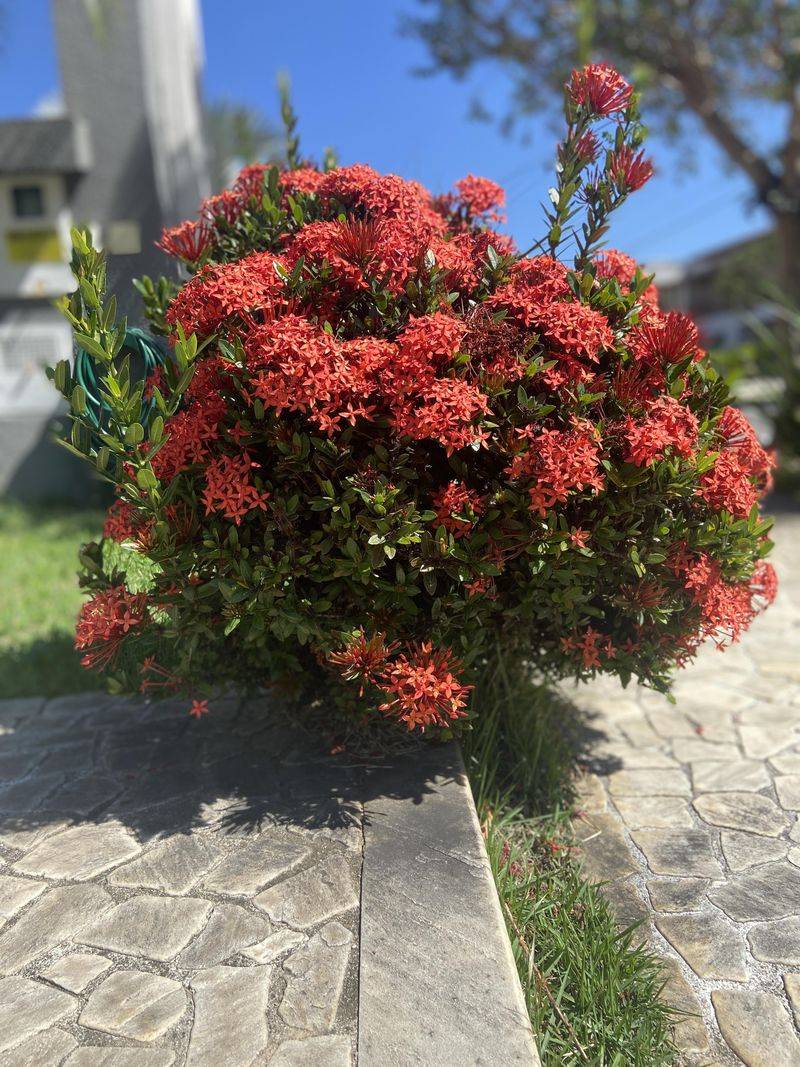
Walk through any South or Central Florida neighborhood during summer and ixora is already there, lining driveways and hedgerows with tight clusters of tubular flowers in red, orange, pink, and yellow.
It is one of the most recognizable landscape shrubs in the state for good reason. It blooms consistently through conditions that cause other flowering plants to slow or stop entirely.
Ixora performs best in full sun to partial shade with slightly acidic soil. Florida’s natural soil conditions suit it well in many areas.
In South Florida near limestone-rich ground, soil pH can trend more alkaline, which causes leaf yellowing and reduces flowering. Adding sulfur or using an acid-forming fertilizer brings the pH back into the range ixora prefers.
Have you been shearing your ixora into tight geometric shapes? That habit is one of the most common reasons the plant stops blooming.
Heavy pruning removes the flower buds along with the growth you were trimming. Let it grow naturally or prune lightly right after a bloom flush and the flowering returns to its natural pace.
A slow-release, acid-forming fertilizer applied a few times annually maintains healthy foliage and steady bloom production.
Scale insects occasionally appear on established plants but respond well to horticultural oil spray without requiring significant intervention.
Ixora is reliable, colorful, and requires less management than its consistent performance suggests it should.
A shrub that blooms through peak Florida summer with minimal attention from the gardener is either very tough or very well-placed. With ixora, it is both.
5. Firebush Attracts Pollinators Year-Round
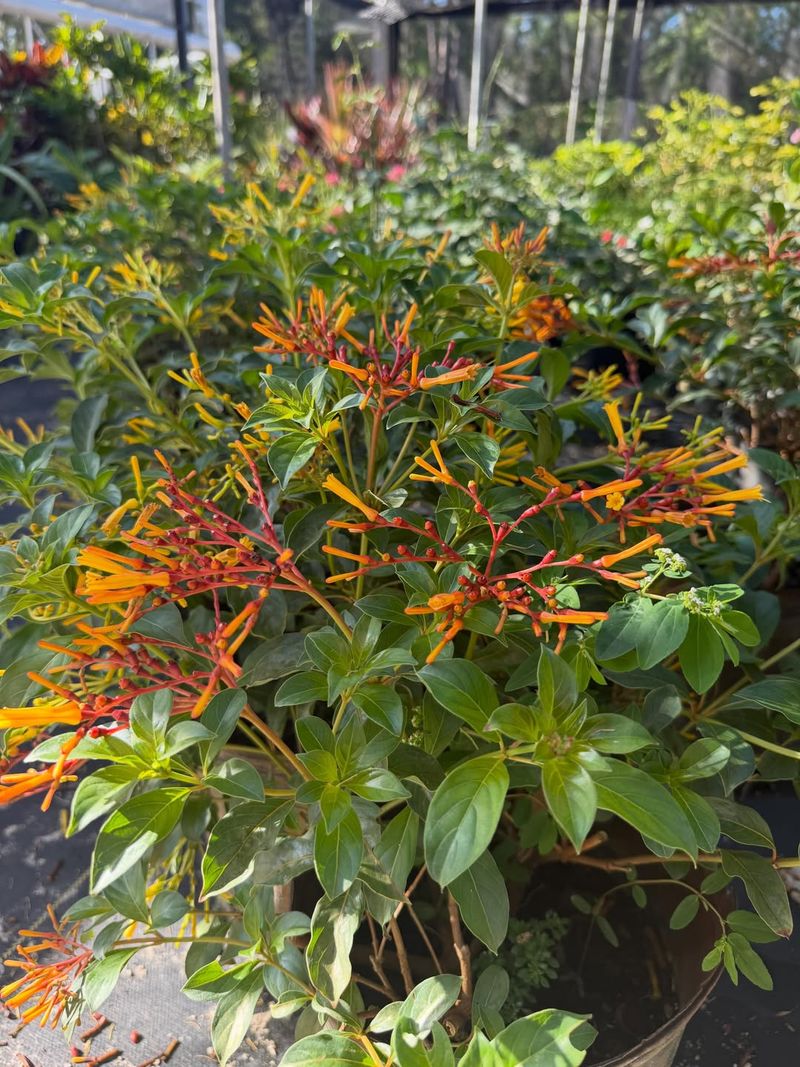
Firebush earns its name honestly. The clusters of fiery red-orange tubular flowers practically glow against the green foliage during Florida’s hottest months, and the wildlife response is immediate and consistent.
Hummingbirds, butterflies, and bees treat an established firebush like a reliable food source rather than an occasional destination.
As a Florida native, Hamelia patens is adapted to exactly the conditions that define summer here. Heat, humidity, and heavy daily rainfall are the environment it developed within.
Drought tolerance develops quickly once established, which gives it flexibility for gardeners who cannot always maintain a consistent watering schedule through a busy summer.
Plant in full sun to partial shade. In South and Central Florida, firebush produces color nearly year-round. In North Florida, it may retreat in winter but returns reliably each spring without prompting.
Do you have space for a background shrub or privacy screen that does ecological work while looking excellent? Firebush reaches six to ten feet tall without much encouragement.
Cutting it back by about a third in early spring produces bushier growth and more flowers through the season.
The berries it produces in late summer attract birds, which adds another layer of wildlife activity to the garden beyond the pollinators already visiting the flowers.
Firebush requires minimal fertilizer, minimal pesticides, and minimal ongoing attention to perform at a consistently high level.
A native plant that feeds hummingbirds, attracts butterflies, and produces year-round color in Florida summer.
What exactly is the argument against planting one?
6. Plumbago Spreads With Minimal Fuss
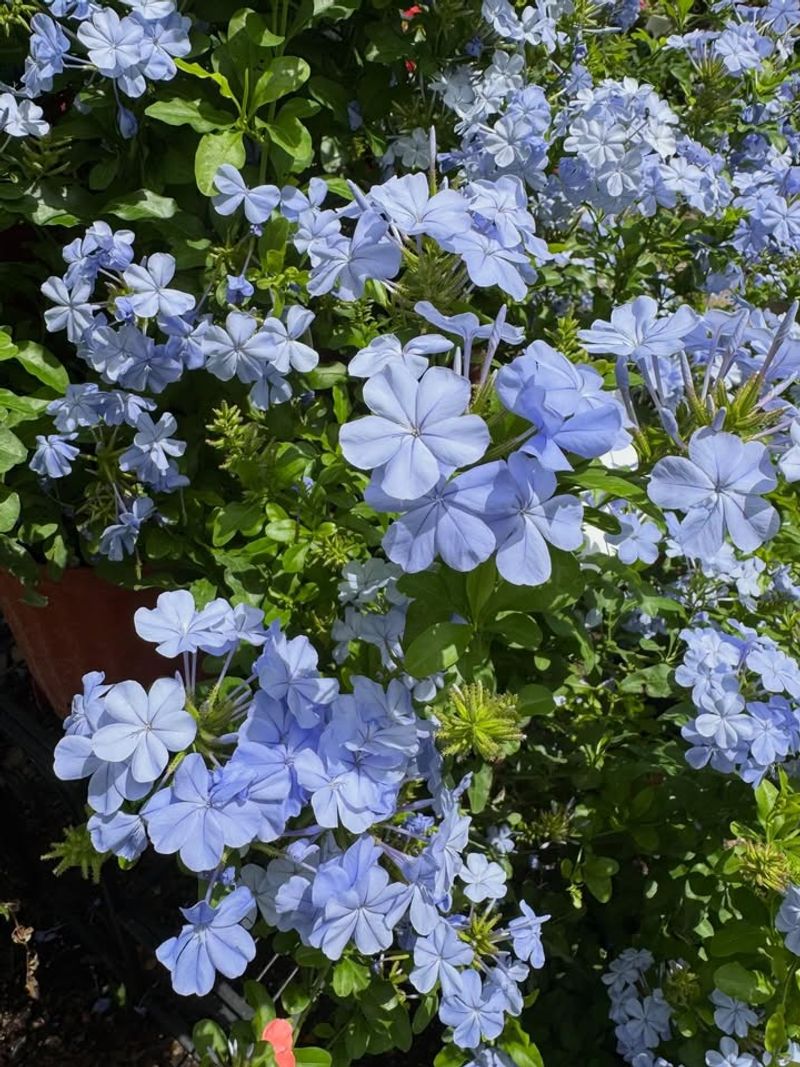
Florida summer needed a plant that looks like a cool breeze. Plumbago volunteered and was immediately accepted.
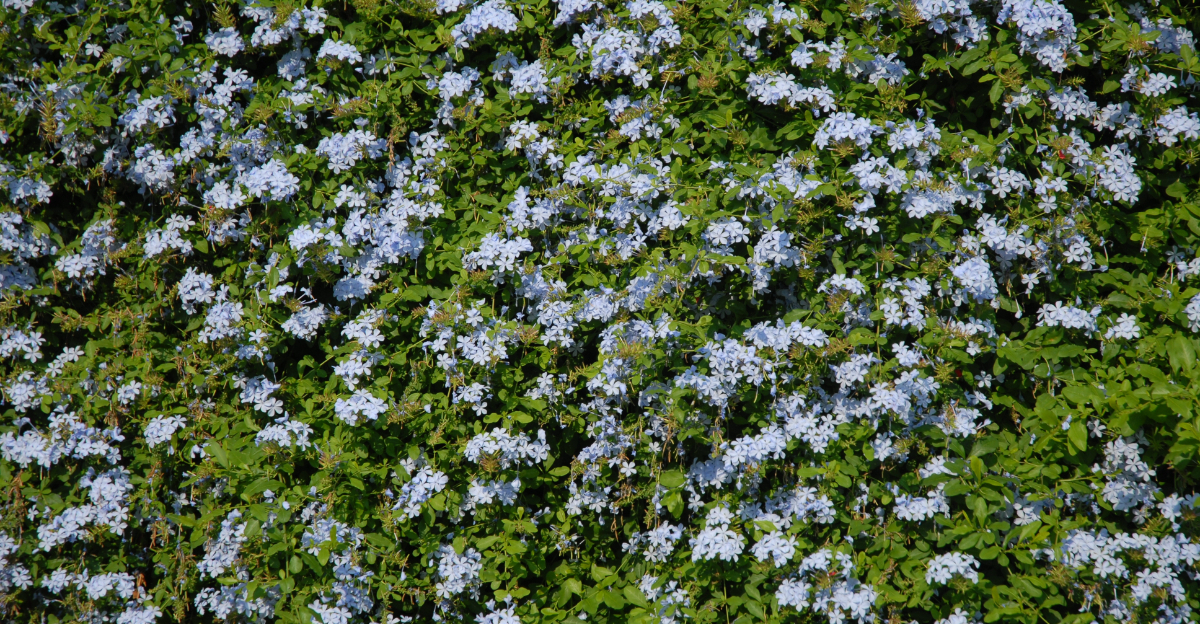
Those soft powder-blue flower clusters spread across the landscape with an ease that feels almost effortless during months when heat and humidity are at their most intense.
Plumbago auriculata is a fast-growing shrub that works as a groundcover, a sprawling border plant, or a backdrop in mixed beds, and it handles Florida’s summer conditions without visible effort.
Full sun suits it best, though it tolerates partial shade reasonably well. Once established, drought tolerance is solid.
It handles Florida’s frequent summer rains with equal composure as long as the soil drains well enough to prevent waterlogging after heavy storms.
Plumbago blooms most heavily on new growth. That means pruning it back by about one-third every few months during the growing season encourages a bigger, more consistent floral display rather than reducing it.
Have you noticed Cassius blue butterflies in your garden? Plumbago is one of their primary destinations, and a well-established planting draws them in with predictable regularity.
The combination of blue flowers and blue butterflies is a visual pairing that feels intentional even when it happens completely on its own.
White-flowered varieties are available for gardeners who prefer a softer palette. The classic blue is, however, genuinely difficult to improve upon in the context of a hot Florida summer afternoon.
Plumbago spreads, blooms, and attracts butterflies through conditions that challenge most other plants.
Not a bad summer resume.
7. Crotons Maintain Color And Texture
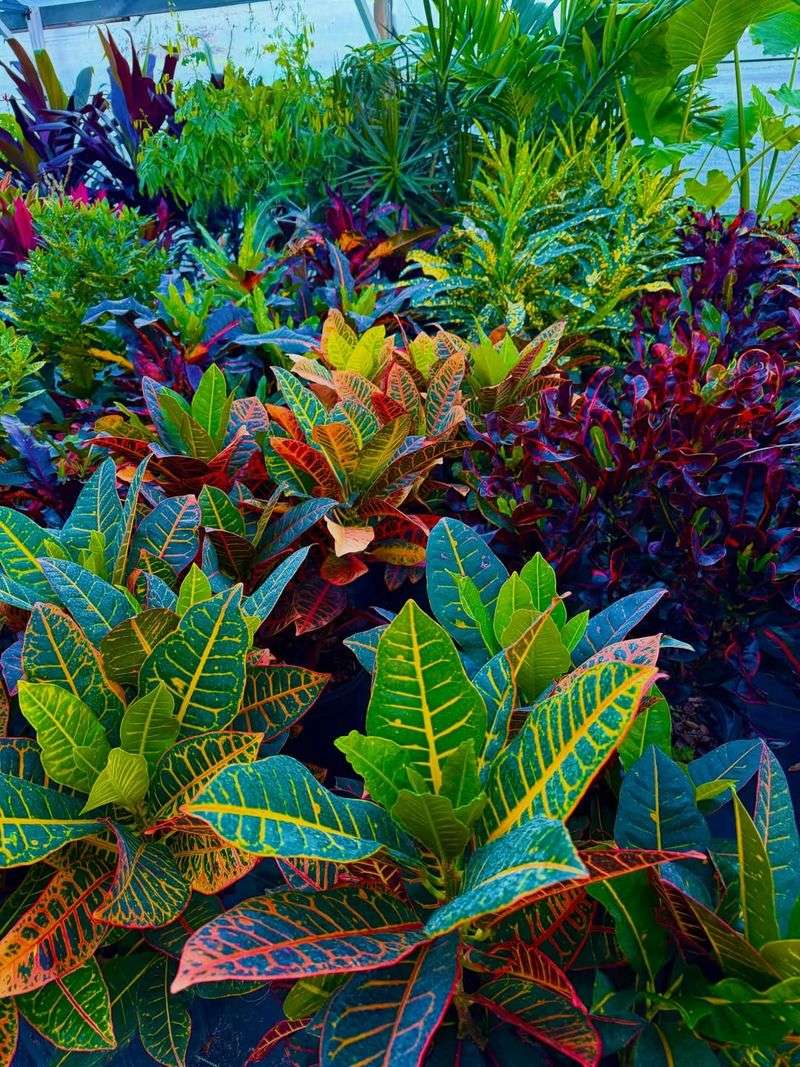
Crotons operate on a principle that most plants ignore entirely. More heat, more humidity, more intense sun, and the foliage gets bolder rather than stressed. Florida summers are not a challenge for crotons. They are the preferred operating conditions.
The leaves come in red, orange, yellow, green, purple, and combinations that seem like they should not coexist on a single plant but somehow produce something visually extraordinary rather than chaotic.
Codiaeum variegatum, the species most commonly grown in Florida, holds that color through the hottest and rainiest months without fading or wilting.
More direct sunlight intensifies the leaf color noticeably. A spot with at least four to six hours of daily sun produces significantly more vibrant foliage than a shadier position.
Full sun to partial shade suits the plant across different garden settings, but sun is where crotons genuinely commit to the performance.
Are you growing crotons in containers on a patio or porch? They adapt well to container culture and bring the same bold color to smaller spaces that they deliver at full landscape scale. Plants can reach six to ten feet tall in the ground when given room and time.
Fertilize with a balanced slow-release product two to three times annually for steady, healthy growth.
Spider mites can dull the leaf color during drier stretches. A rinse from the hose solves the problem before it becomes significant.
Crotons deliver maximum visual impact with minimum effort in Florida summer.
The leaves do not take the season off. They consider it their best opportunity.