Dry Shade Along Ohio Fences And Foundations Is Not A Problem When You Plant These 7 Natives
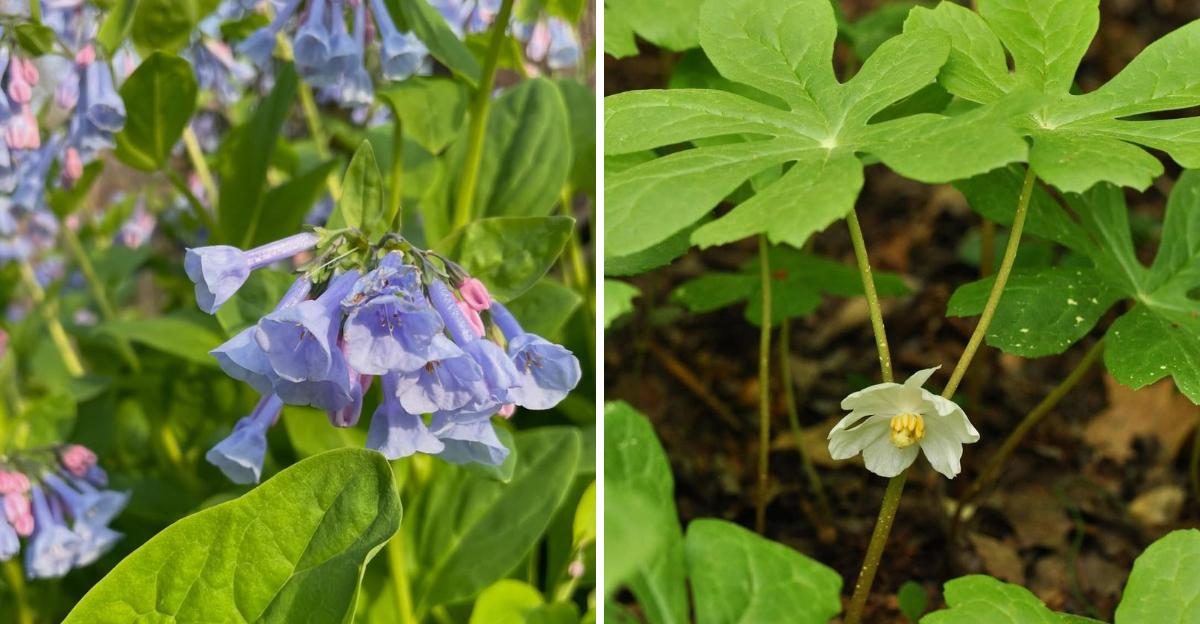
Almost every Ohio yard has at least one of these spots.
The narrow strip along the fence where nothing seems to take hold. The gap between the foundation and the first shrub bed where the soil stays dry. The corner under the overhang that looks like a gardening problem with no obvious solution.
Many gardeners either ignore these areas entirely or spend years rotating through plants that never quite perform the way the nursery tag suggested they would.
The issue is not effort. It is not soil amendment or watering frequency or any technique that needs refining. It is plant selection.
Do you know which plants actually evolved for exactly these conditions, in this climate, with this specific combination of dry soil, low light, and root competition?
Ohio’s native plant palette has answers for every difficult spot in the yard. Spots that feel like failure under conventional plants become genuinely productive and beautiful under the right natives.
These plants handle dry shade along Ohio fences and foundations better than anything else available.
1. Ostrich Fern
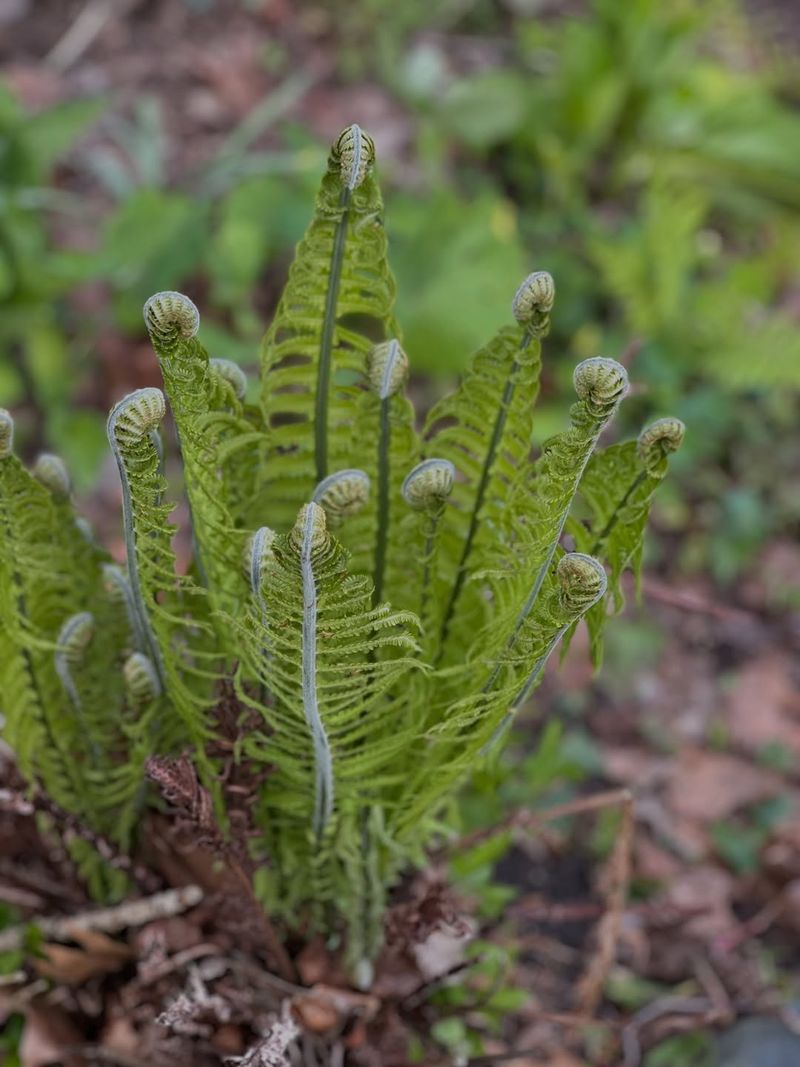
Ostrich fern does not ease into a space. It arrives.
Those tall, vase-shaped fronds reach four to six feet and create a presence along a fence line that stops people mid-conversation.
Matteuccia struthiopteris is an Ohio native that has been solving difficult shade problems for decades, and the dramatic visual impact comes included with the plant.
The spreading habit is one of its most practical qualities. Underground runners slowly fill bare spots beneath dense shade, building solid coverage without constant replanting or intervention.
Along fences and foundations where consistent ground coverage is the goal, that self-sufficient spreading is exactly what the situation calls for.
Plant in early spring or fall when soil temperatures are cooler and moisture is more reliable. Amending heavy clay soils with compost before planting improves drainage and gives roots a better start.
Space plants two to three feet apart and water consistently through the first growing season.
The fronds shift to a warm golden brown in October before fading back, adding a seasonal color change that most people do not expect from a fern.
That autumn transition adds one more reason to give it prominent placement rather than tucking it into a forgotten corner.
After establishment, rainfall handles most of the ongoing moisture requirements. New growth emerges each spring as tightly coiled fiddleheads that are genuinely one of the more satisfying early-season sights in any Ohio garden.
Four to six feet tall, self-spreading, and visually dramatic in a spot that previously looked like a problem. That is a fern with ambition.
2. Wild Ginger
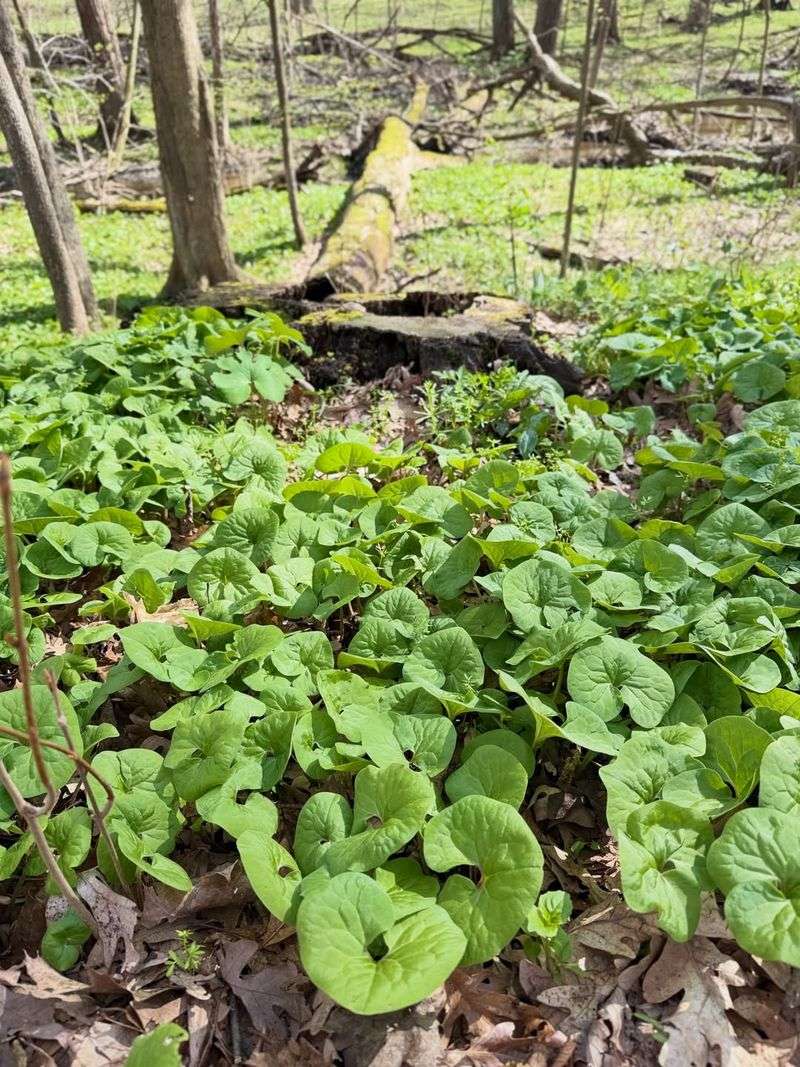
Wild ginger is the groundcover that makes other groundcovers look like they are not trying hard enough.
Asarum canadense stays low, typically six to eight inches tall, and spreads steadily to form a thick weed-suppressing mat that handles deep shade conditions challenging most ornamental plants.
The large heart-shaped leaves in rich dark green stay attractive through the entire growing season without requiring deadheading, fertilizing, or much attention of any kind.
Your Ohio Garden Changes Every Week. Your Plan Should Too.
Gardening in Ohio changes quickly throughout the season. Every Friday you’ll receive a simple weekly plan showing exactly what to plant, prune, fertilize, harvest, and protect so you never miss the right timing.
Hidden beneath those leaves in spring are small brownish-red flowers that go largely unnoticed by people but matter considerably to certain native insects that have been visiting them for thousands of years.
North-facing foundation strips where every other groundcover has underperformed are exactly where wild ginger was designed to work.
Amend the soil lightly with leaf compost to mimic the forest floor environment it prefers naturally, space transplants about twelve inches apart, and water regularly through the first summer.
After establishment, drought tolerance is solid and maintenance requirements drop to almost nothing. No fertilizer needed. Pest pressure is minimal.
The rhizomes carry a faint ginger scent when bruised, which is a detail worth discovering accidentally rather than being warned about.
One placement note worth taking seriously: the plant is mildly toxic if eaten, so thoughtful siting matters around young children and pets.
For shaded fence lines where coverage is the priority and intervention is not an option, wild ginger earns its place entirely on performance.
3. Solomon’s Seal
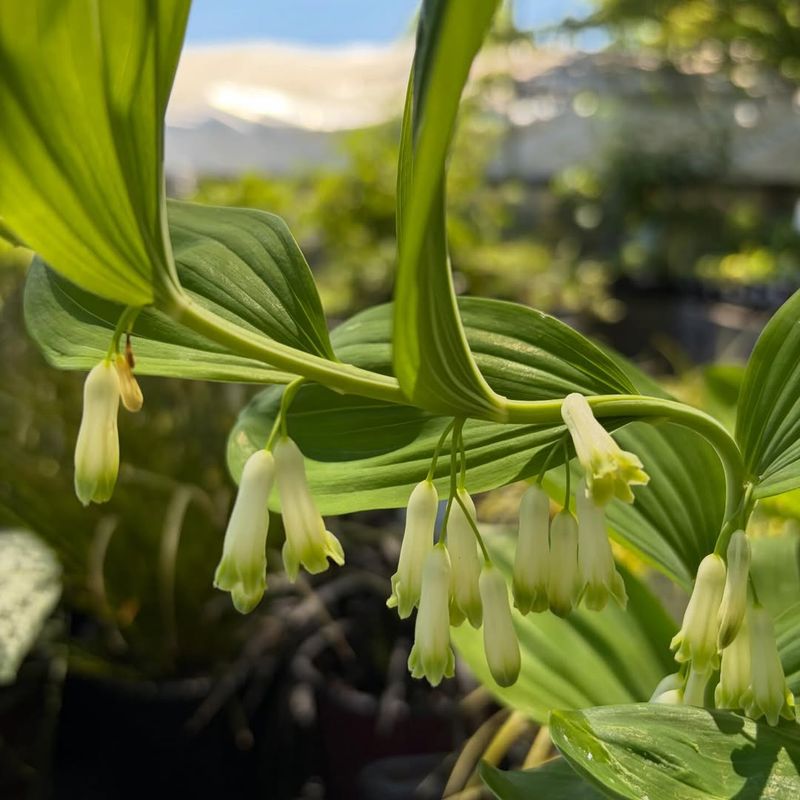
Solomon’s seal is the plant that makes a dry shade strip look like a design decision rather than an accident.
Polygonatum biflorum is a true Ohio native, found naturally in woodland edges and shaded ravines across the state.
The arching stems, neatly arranged leaves, and small white bell-shaped flowers dangling in rows beneath the foliage create a layered woodland quality that few other plants deliver in difficult conditions.
It grows one to three feet tall depending on soil richness, spreading gradually by rhizomes to form graceful colonies that fill space without overwhelming adjacent plantings.
The adaptability to dry shade is one of its strongest characteristics, making it useful for spots where running irrigation is not practical.
Fence strips with root competition from nearby trees suit Solomon’s seal particularly well. Plant in spring or fall with compost added to the planting area, then water consistently through the first season.
By midsummer, small blue-black berries replace the flowers. Native birds find them reliably, which adds activity to a part of the yard that previously offered nothing to wildlife.
One practical note worth passing along: mark where plants are in winter because the stems disappear entirely and early spring digging through the root zone is a frustrating discovery. A small stake or garden marker prevents that specific disappointment reliably.
Solomon’s seal rewards patience with increasingly lush growth every season. The fence strip was never going to look this intentional without it.
4. Foamflower
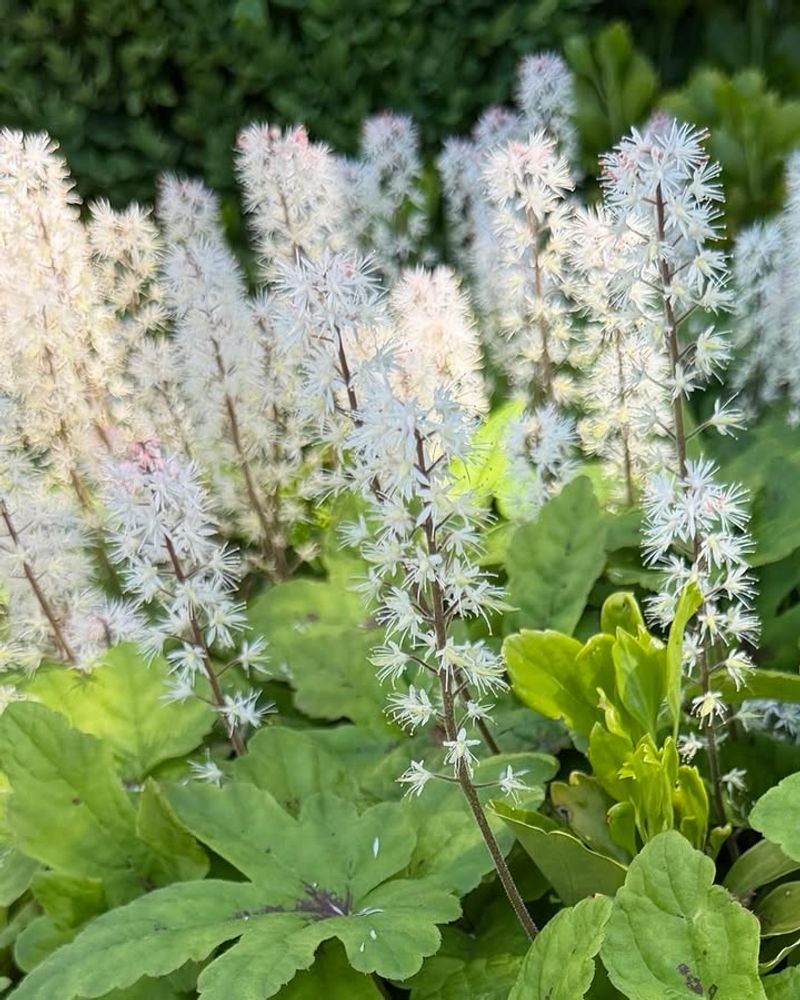
Foamflower earns the name every spring when frothy white flower spikes appear above the foliage.
The effect looks like something the garden produced accidentally rather than deliberately, which is arguably better than anything that looks too planned.
Tiarella cordifolia is a low-growing perennial reaching six to twelve inches in height. It spreads by stolons, sending out runners that root and fill gaps over time.
For dry shade areas along Ohio fences and foundations where consistent coverage is the goal, that gradual filling habit delivers exactly the outcome the space needs without requiring annual replanting.
The lobed maple-like leaves carry interesting markings that keep the plant visually attractive through the entire season, not only during the spring bloom window.
The foliage often develops bronze or reddish tones in fall and may persist through mild Ohio winters, which extends the visual contribution considerably.
Combining foamflower with wild ginger and Solomon’s seal in the same strip produces a layered groundcover combination that looks considerably more intentional than the individual plants suggest when seen separately at a nursery.
Plant in spring after the last frost or in early fall. Moist well-drained soil with organic matter gives the best start, though established plants handle drier conditions well.
Space twelve to eighteen inches apart and deadhead spent flower spikes to encourage a second bloom flush in some seasons.
A plant that works hard, covers ground, and still manages to look effortless about all of it. The dry shade strip never asked for this much.
5. Virginia Bluebells
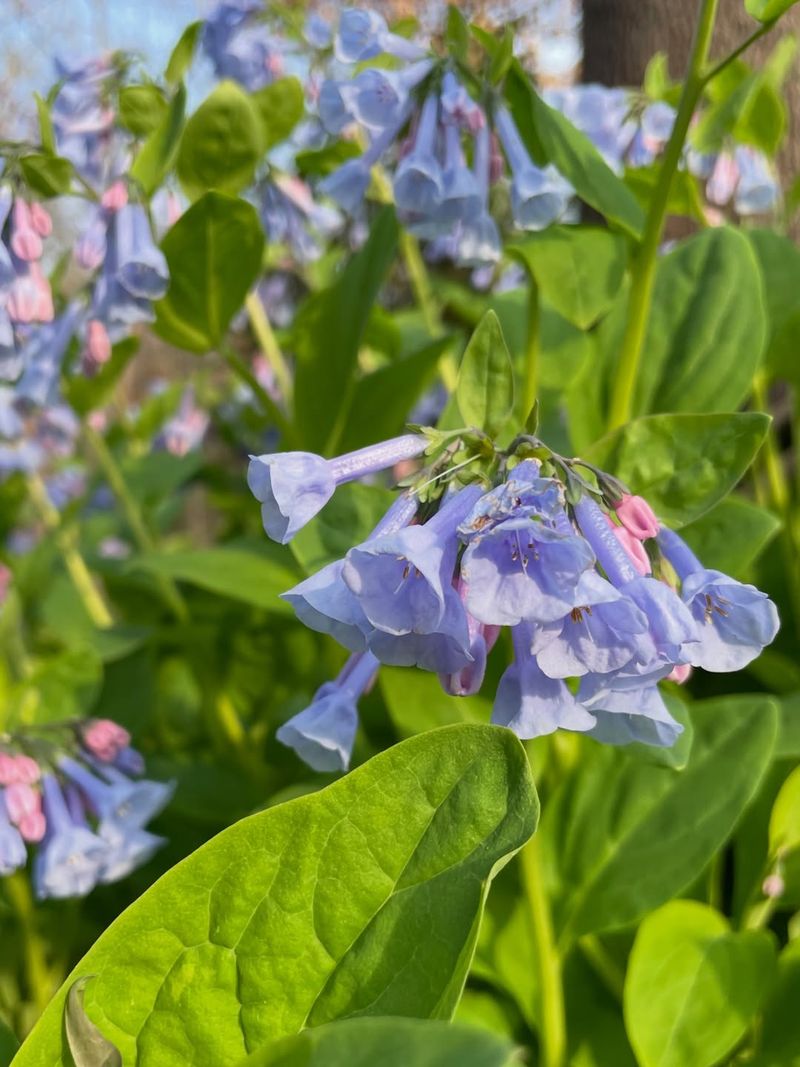
Nowhere else in the spring garden does blue show up with the intensity that Virginia bluebells deliver.
Those clusters of nodding sky-blue trumpet flowers blooming in early April along a fence that spent all winter looking bare and forgotten create a moment that catches people completely off guard.
Mertensia virginica is a classic Ohio native wildflower that grows twelve to twenty-four inches tall during its brief spring window, blooms for several weeks, and then goes completely dormant by early summer.
The above-ground presence is temporary. The underground roots remain intact and the plant returns reliably each spring without any intervention.
That dormancy requires planning. Planting Virginia bluebells alongside later-emerging perennials like ferns or hostas fills the gap left behind when the foliage fades. Without those companions, the area looks empty from June onward.
Spots that need spring interest more than summer coverage are exactly where this plant performs its best work. Fall planting from bare-root transplants works well since the plants need a cold period to establish properly.
Choose a spot with moist to moderately dry shade and reasonable drainage. Once established, the plants spread slowly by self-seeding, naturalizing into larger colonies over several years.
Avoid disturbing soil in established areas since the roots are fragile and seeds need undisturbed ground to germinate.
The annual blue display in April is genuinely worth every bit of planning it requires. And then it disappears for the summer like a polite houseguest who knew exactly when to leave.
6. Jack-In-The-Pulpit
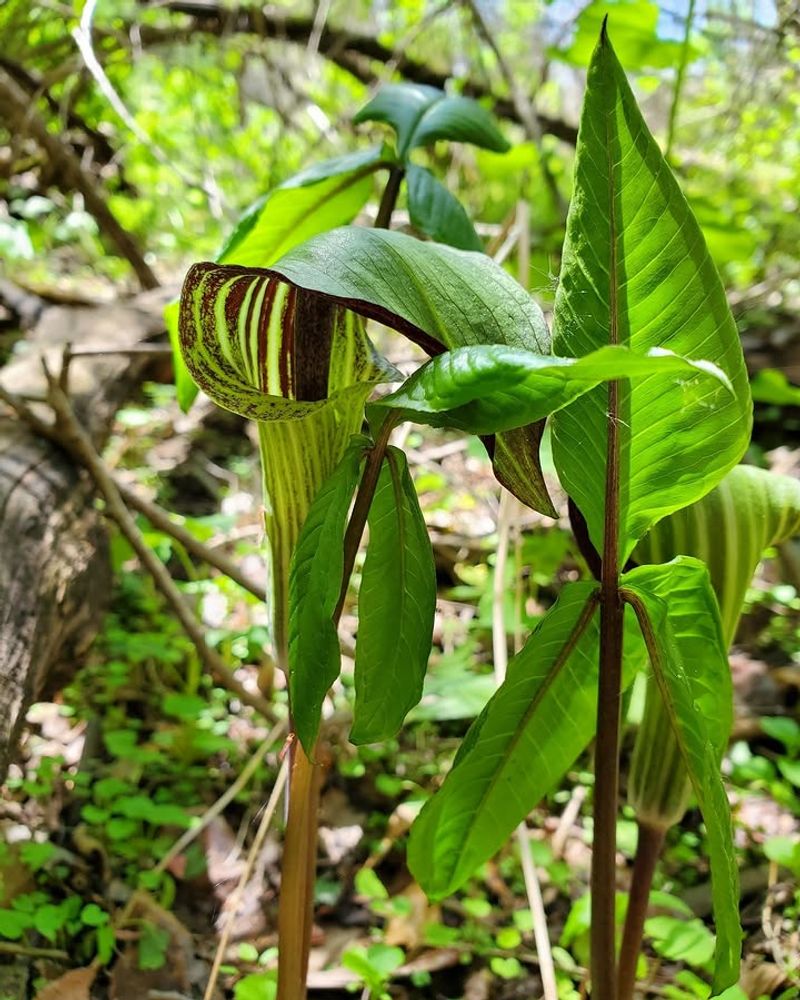
Jack-in-the-Pulpit stops visitors. The hooded spathe striped in shades of green and deep purple, curling protectively over the tiny flowers inside, looks like something that arrived from a different ecosystem entirely.
The fact that it is native to Ohio’s woodland understories makes that impression even more interesting.
Arisaema triphyllum grows naturally in spots that receive almost no direct sunlight, making it one of the few plants genuinely suited to the deepest, most difficult shade along north-facing foundations and heavily canopied fence lines.
It reaches one to two feet tall and produces one or two sets of three-leaflet leaves that frame the unusual flower structure with natural elegance.
Plant corms in fall, about two inches deep in soil amended with leaf mold or compost. The plants emerge in mid-spring and stay attractive through summer before fading back in late summer or fall.
By late summer the spathe peels back to reveal a cluster of bright red berries. Birds find them consistently and the late-season color contribution is something most people do not anticipate when they plant this in spring.
One genuinely interesting biological detail: Jack-in-the-Pulpit plants can change reproductive function from year to year depending on available nutrients. The biology is more dynamic than the garden typically reveals.
Keep children and pets away from any part of the plant since it contains calcium oxalate crystals that cause intense irritation.
As a conversation piece in the most difficult shade spot in the yard, nothing else available in Ohio quite compares.
7. Mayapple
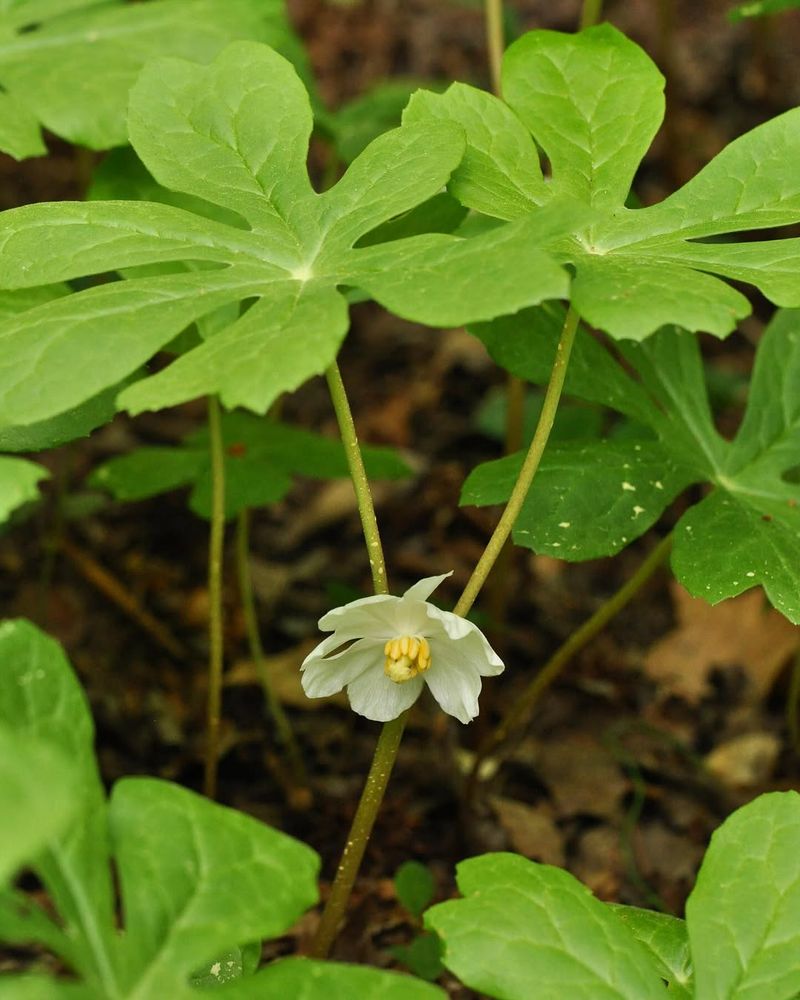
Discovering a colony of mayapples in an Ohio woodland in spring feels like stumbling onto a miniature forest canopy at knee height.
Those large umbrella-shaped leaves spread dramatically, covering the ground in rich green that is both genuinely functional and visually striking along fences and foundations.
Podophyllum peltatum spreads aggressively by underground rhizomes, forming dense weed-smothering colonies that handle dry to moist shade with equal composure.
Under mature trees where root competition and dry shade combine into conditions that most conventional plants find untenable, mayapple performs reliably.
Plants with two leaves produce a single waxy white flower tucked beneath the foliage in late spring, developing into a small yellow fruit by midsummer. That hidden flower is a detail worth getting down on one knee to look for.
Large shaded fence lines where mowing is difficult and planting conventional groundcover requires constant replacement are exactly where this plant belongs.
Mayapple rhizomes planted in fall, laid horizontally about two inches deep, fill that space within two to three growing seasons without ongoing intervention.
Summer dormancy in particularly dry years is normal. The rhizomes remain intact underground and the plant returns the following spring without any assistance from the gardener.
One important placement note: all parts except the fully ripe fruit are toxic. Areas where children play frequently require thoughtful consideration before planting.
For covering challenging shaded ground efficiently with a plant that genuinely thrives on minimal attention, mayapple belongs in the conversation every time.
It covers ground, suppresses weeds, and asks for almost nothing. A low-maintenance overachiever in the best sense.