Skip Oleander Along Your Texas Fence And Plant These Safer Native Alternatives Instead
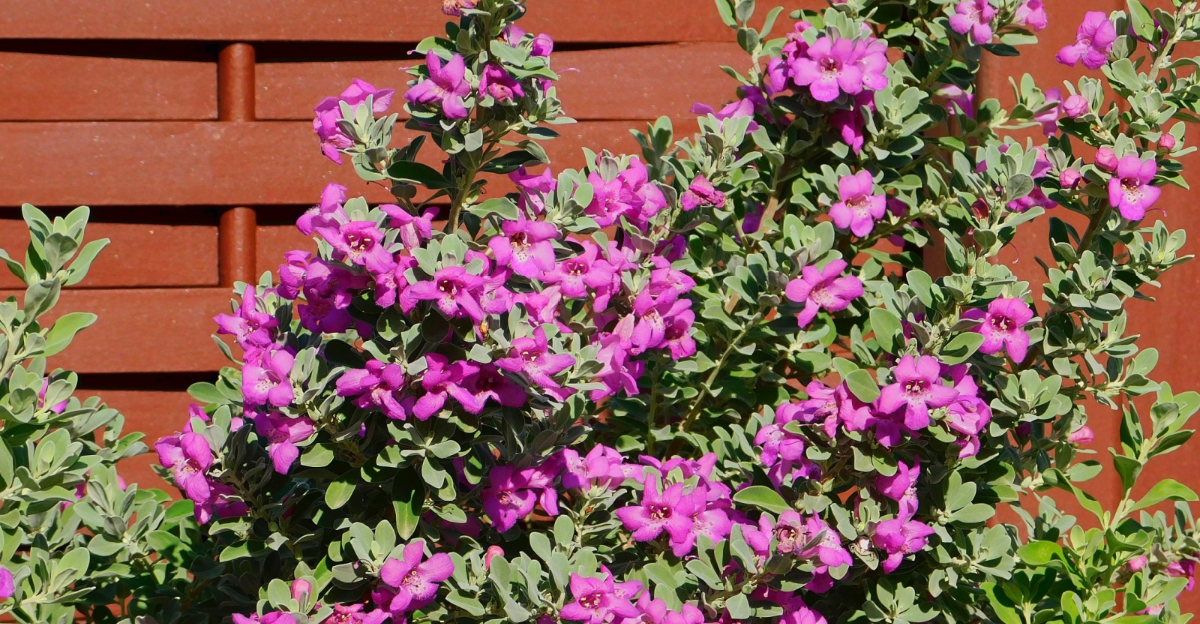
Oleander is basically everywhere along Texas fence lines, and look, it earned its spot. Fast growing, heat tolerant, and absolutely loaded with blooms when it gets going.
It looks great and it knows it. But here’s the conversation more Texas homeowners are starting to have: oleander is also one of the most toxic plants you can grow near pets, kids, and busy outdoor spaces, and that changes things pretty quickly.
The good news is that swapping it out does not mean giving up on privacy, color, or structure along your fence.
Not even close.
The state has a genuinely impressive lineup of native shrubs and flowering plants that can fill that same role beautifully, without any of the worry.
Sun-baked caliche soil, shaded backyard corners, dry stretches between rain: there are native options that handle all of it.
1. Yaupon Holly For Evergreen Fence Structure
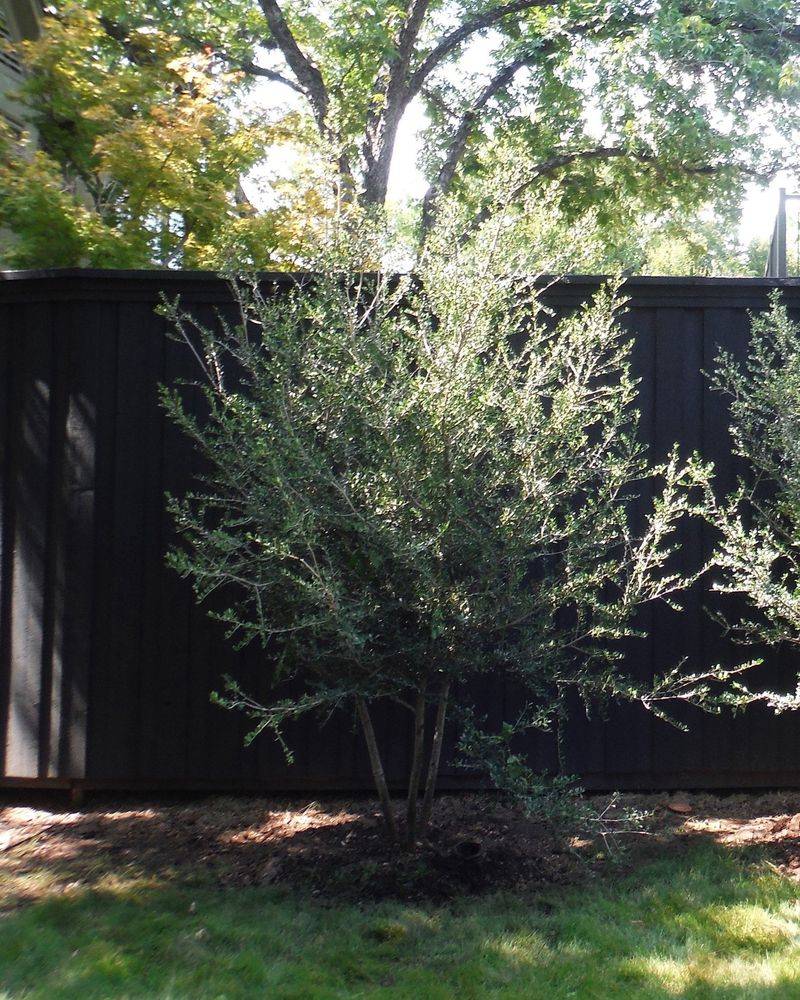
Few native Texas shrubs can match yaupon holly when it comes to reliable, year-round structure along a fence line. This tough evergreen holds its deep green leaves through cold snaps, summer heat, and dry spells that would stress many other plants.
For homeowners who want a dense, opaque screen along a side yard or back fence, yaupon holly is one of the strongest native options available in Texas.
Yaupon holly tolerates a wide range of soils, including heavy clay and sandy loam, which makes it useful across much of the state. It can handle full sun or part shade, so it works well on fence lines that shift between open sky and afternoon shadow.
Female plants produce small red berries in winter that attract birds, adding seasonal wildlife interest to the yard without extra effort.
Mature yaupon holly can reach eight to fifteen feet tall and wide depending on the variety, so spacing and pruning should be considered before planting along a narrow fence line. Dwarf selections stay smaller and may suit tighter spaces near gates or sidewalks.
Unlike oleander, yaupon holly is not considered toxic to people or pets, which makes it a much more comfortable choice for yards where children and animals spend time regularly.
It is also drought tolerant once established, requiring minimal irrigation in most Texas regions after the first growing season.
2. Wax Myrtle For A Softer Privacy Screen
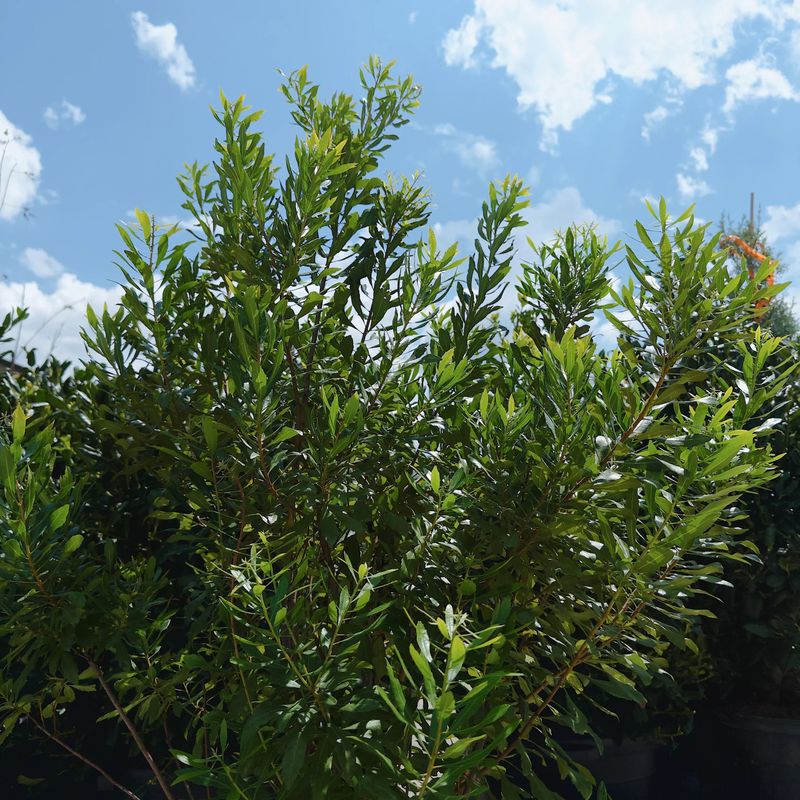
Wax myrtle has a looser, more natural look than a clipped hedge, and that relaxed quality is actually one of its biggest strengths along a fence line.
The soft gray-green foliage moves gently in a breeze and gives a yard a casual, layered feel rather than a rigid, formal appearance.
For homeowners who want to soften the look of a wood or metal fence while still gaining some privacy, wax myrtle offers a pleasant middle ground.
This native Texas shrub grows quickly and can reach ten to fifteen feet tall when left unpruned, making it a capable screening plant for back and side fences.
It tolerates wet soils and brief flooding better than many other native shrubs, which makes it a smart choice for low spots along a fence line that collect rain.
Your Texas Garden Changes Every Week. Your Plan Should Too.
Gardening in Texas changes quickly throughout the season. Every Friday you’ll receive a simple weekly plan showing exactly what to plant, prune, fertilize, harvest, and protect so you never miss the right timing.
It also handles part shade reasonably well, so it can work in yards where a large tree casts afternoon shadow near the fence.
Wax myrtle is semi-evergreen in most of Texas, meaning it may drop some leaves during an unusually cold winter but generally stays leafy through mild seasons. The small waxy berries attract birds, adding wildlife value to the yard.
Compared to oleander, wax myrtle is far less concerning around pets and children. It does spread through root sprouts over time, so homeowners should plan for occasional maintenance to keep it tidy along a fence edge.
3. Cenizo For Sunny Dry Fence Lines
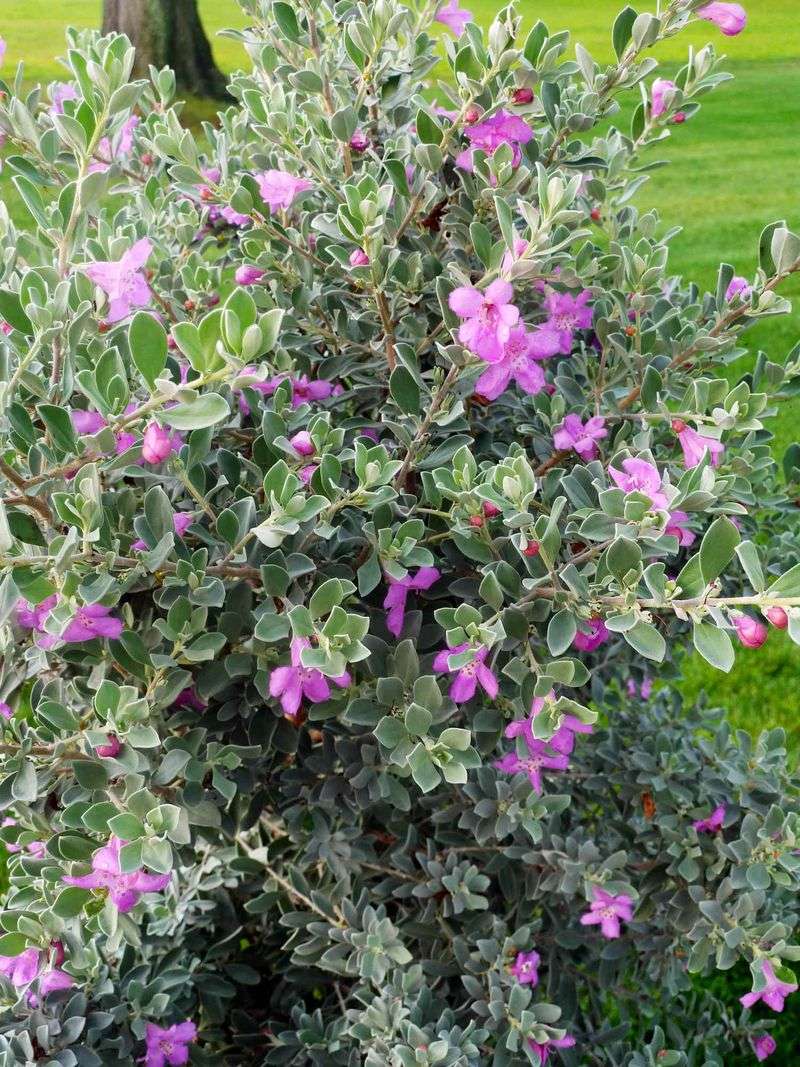
Walk along almost any dry, rocky fence line in late summer after a rain, and you may spot a cloud of purple blooms appearing almost overnight. That is cenizo doing what it does best.
Also called Texas sage or purple sage, cenizo is one of the most recognizable native shrubs in the state, and it earns its reputation with minimal fuss and maximum visual reward in the right setting.
Cenizo thrives in full sun and well-drained soils, including the rocky caliche and sandy ground common across Central, West, and South Texas.
It handles drought with ease once established and rarely needs supplemental watering in regions where it grows naturally.
The silvery foliage reflects heat and looks attractive even when the plant is not in bloom, which means it contributes texture and color to a fence line throughout the year.
Mature cenizo typically reaches four to eight feet tall and wide, making it a solid mid-size shrub for a sunny fence border. It works well as an informal screen or a flowering accent, though it is not dense enough to serve as a full privacy wall.
Homeowners replacing oleander on a hot, south-facing fence line in Texas will find cenizo a far more sensible choice for that type of exposure. It is not considered toxic, and its low water needs align well with water-wise landscaping goals.
Pruning lightly after bloom cycles helps keep the shape tidy.
4. American Beautyberry For Shady Fence Corners
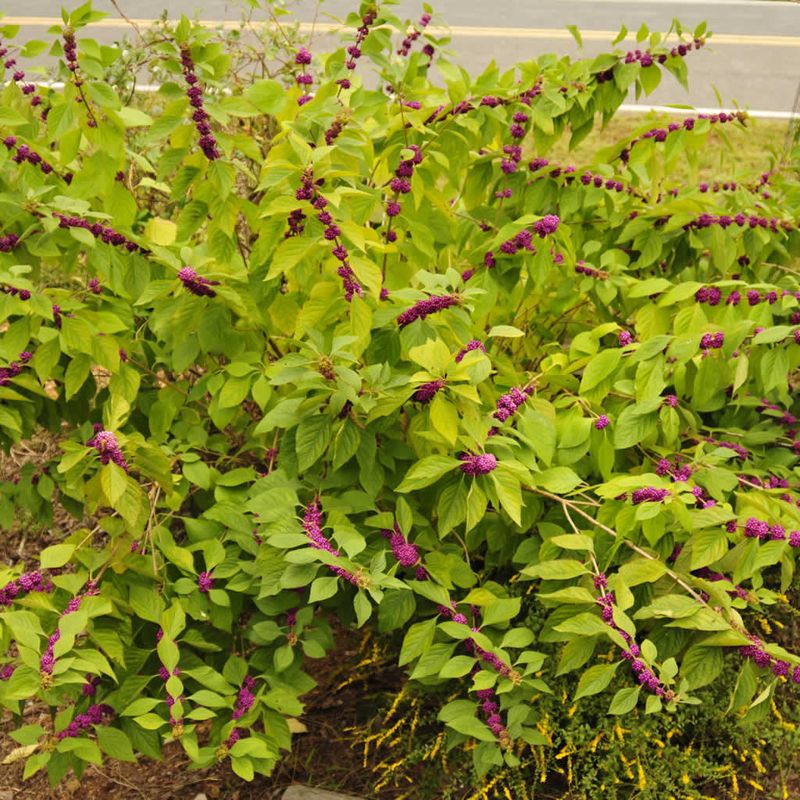
Shaded fence corners can be tricky spots to plant. Many shrubs sulk in low light, and flowering plants often refuse to bloom without adequate sun.
American beautyberry is one of the few native Texas shrubs that genuinely thrives in those shadier, more sheltered fence corners while still putting on a seasonal show that stops people in their tracks.
The plant produces clusters of vivid magenta-purple berries along its arching stems in late summer and fall, and the color is bold enough to catch attention from across the yard.
Birds are drawn to the berries, which makes this a great choice for homeowners who enjoy wildlife activity near the fence.
The large, tropical-looking leaves give the plant a lush, layered texture during the growing season, adding visual weight to spots that might otherwise look sparse.
American beautyberry typically reaches four to eight feet tall and wide in Texas landscapes, and it prefers moist, well-drained soil in partial to full shade. It is deciduous, so it loses its leaves in winter and re-emerges in spring.
That seasonal cycle is worth keeping in mind if year-round screening is the goal. For shaded corners where a flowering, wildlife-friendly plant is more appropriate than a dense screen, beautyberry fills the role with personality.
It is not considered toxic, and its relaxed, arching form adds a natural, woodland-edge quality to fence lines that feel closed in or overly structured.
5. Turk’s Cap For Flowering Shade Along Fences
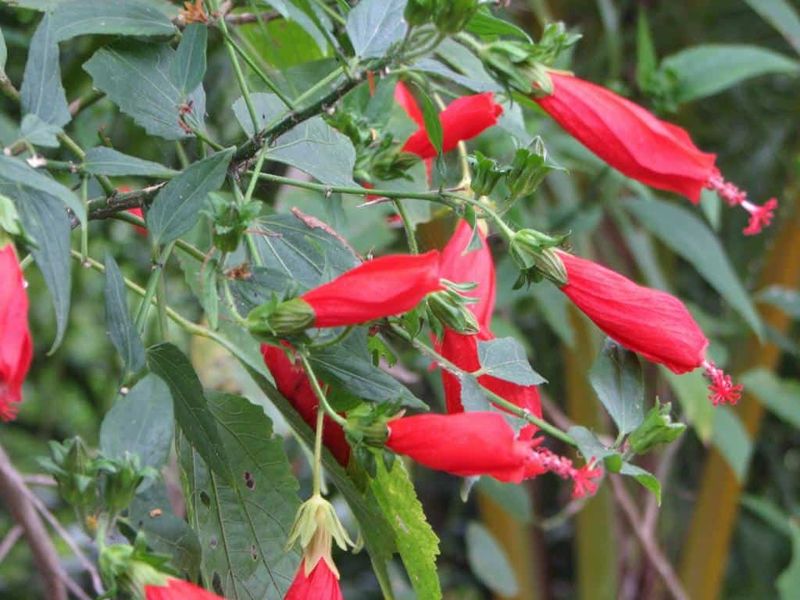
Hummingbirds find Turk’s cap before most gardeners even get the chance to point it out.
The twisted red blooms, shaped like a loosely furled cap, are practically a beacon for pollinators.
Watching hummingbirds work along a fence planted with this native Texas perennial is one of the more rewarding sights a backyard garden can offer during summer and fall.
Turk’s cap handles shade better than almost any other flowering plant used along Texas fences, and that quality sets it apart from most alternatives to oleander.
It grows well beneath large trees, along north-facing fences, and in spots where afternoon sun is blocked by a structure or canopy.
The plant can reach six feet tall and wide under good conditions, giving it enough presence to soften a fence line or fill a corner with color and texture.
In most regions, Turk’s cap goes dormant in winter and re-emerges in spring with fresh new growth. It is not a screening shrub, so homeowners looking for year-round privacy should pair it with a more structural plant like yaupon holly or wax myrtle.
Where it really shines is as a flowering, wildlife-friendly addition to a shaded fence border. It tolerates drought once established, spreads gradually over time, and requires very little maintenance beyond cutting back old stems in late winter.
It is not considered toxic, making it safe near children and pets.
6. Flame Acanthus For Heat-Loving Color
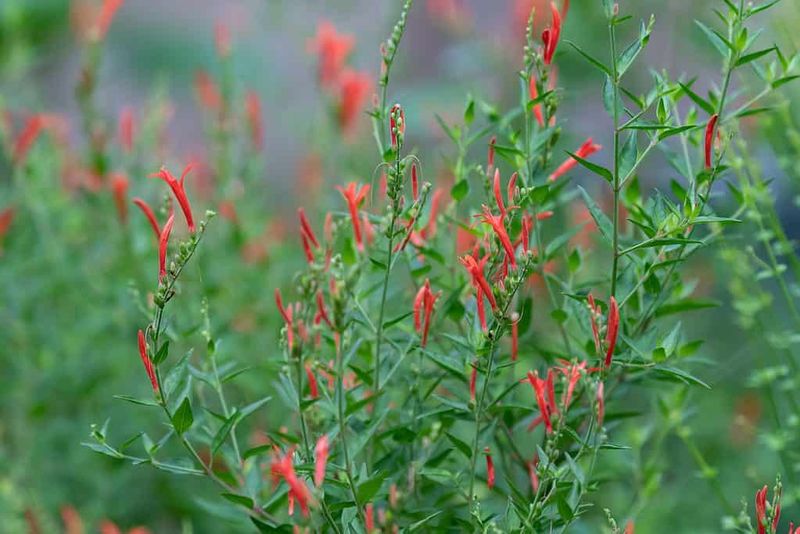
Some plants shrink under the pressure of a Texas summer, but flame acanthus leans into the heat and blooms harder for it.
The tubular orange-red flowers appear from summer through fall and attract hummingbirds, butterflies, and bees with enough regularity that a fence planted with flame acanthus can start to feel like a pollinator highway on a warm afternoon.
Flame acanthus is native to the Edwards Plateau and dry rocky regions of Central and West Texas, where it grows naturally in full sun and thin, well-drained soil.
It handles drought well once established and rarely needs supplemental water in regions where it is adapted.
The fine-textured foliage gives it a delicate, airy appearance between bloom cycles, which adds a lighter visual quality to a fence line compared to bulkier screening shrubs.
Mature flame acanthus typically reaches three to five feet tall and wide, making it a mid-size border plant rather than a privacy screen.
It works well planted in groups along a sunny fence where the goal is color and pollinator activity rather than dense coverage.
In colder parts of Texas, it may behave more like a perennial, cutting back in winter and re-sprouting from the roots in spring. Homeowners replacing oleander on a hot, exposed fence line will find flame acanthus a lively and far less concerning choice.
It is not considered toxic, and its seasonal color makes it a standout in water-wise landscapes.
7. Esperanza For Warm-Region Yellow Blooms
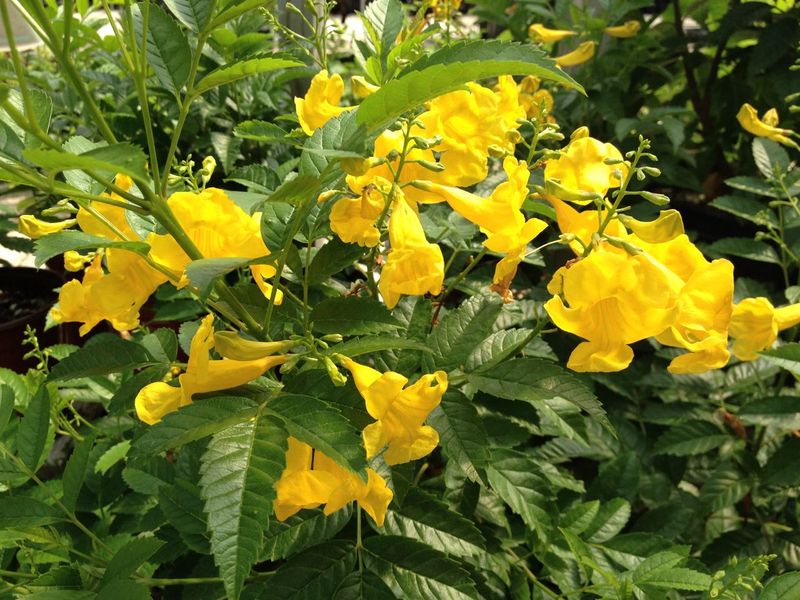
Bright yellow flowers on a sun-drenched Texas fence line have a way of lifting the mood of an entire yard, and esperanza delivers that kind of cheerful, high-impact color through some of the hottest months of the year.
The trumpet-shaped blooms appear in clusters from summer into fall and hold up well even when temperatures climb into the upper nineties.
Esperanza, also called yellow bells or Tecoma stans, is native to South and West Texas and thrives in the warm regions of the state where heat is intense and winters stay mild.
It prefers full sun and well-drained soil, and it performs best in areas with low humidity and minimal overhead irrigation once established.
In the warmer parts of Texas, esperanza can grow into a large shrub reaching six to eight feet tall, providing a bold, flowering presence along a fence line.
In cooler parts of the state, it may act more like a perennial, returning from the roots after a frost. Homeowners in Central or North Texas should check local hardiness before planting along a permanent fence.
Esperanza is not a dense screening shrub, but its size and full flowering habit make it a striking accent plant for sunny fence borders, gates, and corners. It is not considered toxic, and its water-wise nature fits well with Texas landscaping goals.
Replacing oleander with esperanza on a south-facing fence brings reliable seasonal color without unnecessary concern.
8. Texas Kidneywood For A Light Airy Border
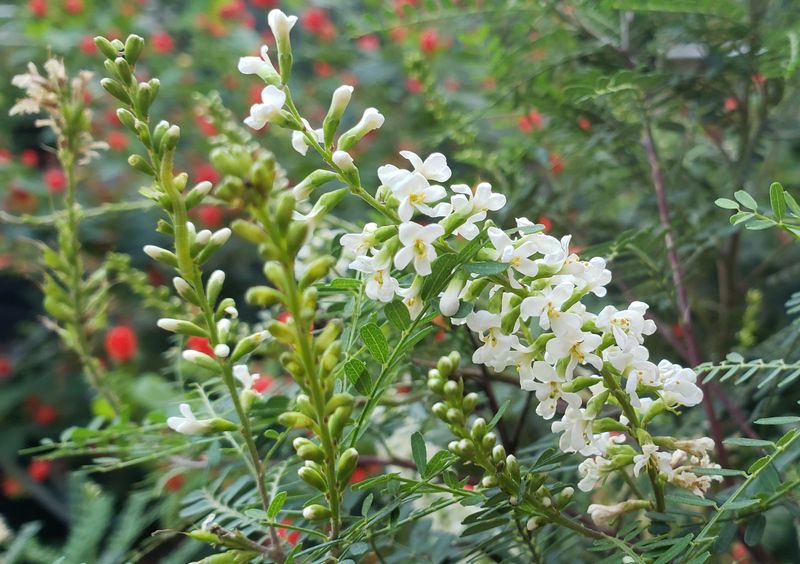
Not every fence-line plant needs to be a dense wall of foliage to earn its place in a Texas yard.
Texas kidneywood offers something different: a light, open structure with fragrant white flower clusters that drift across the plant in waves during spring and sometimes again in fall.
That sweet, honey-like scent fills the surrounding air and draws pollinators from a surprising distance.
Texas kidneywood is native to the limestone hills and dry rocky slopes of Central and West Texas, and it is well suited to the kind of thin, alkaline soil that challenges many other shrubs.
It grows in full sun and handles drought reliably once established, making it a sensible choice for exposed fence lines where water is limited and soil conditions are less than ideal.
The fine, feathery foliage gives the plant a delicate appearance that contrasts nicely with heavier-textured plants nearby.
Mature Texas kidneywood typically reaches six to twelve feet tall, though it often takes on a loose, multi-stemmed form rather than a tight, uniform shape. It works well as a flowering border plant or informal accent along a fence rather than a solid privacy screen.
Homeowners looking to replace oleander with something that adds fragrance, pollinator value, and a relaxed natural structure to a dry fence line will find kidneywood a genuinely interesting option.
It is not considered toxic, and its low maintenance needs suit busy households well.