The Most Underrated Native Michigan Tree That Feeds Wildlife And Asks For Nothing In Return
If serviceberry had better marketing, every Michigan yard would have one.
This small native tree, also known as Juneberry, is one of the most genuinely useful plants a Michigan homeowner can add to a landscape, and it almost never gets the attention it deserves.
Spring blossoms that arrive before almost anything else is blooming. Summer berries that pull in birds from across the neighborhood.
Fall color that rivals ornamental trees costing three times as much. And through all of it, serviceberry just gets on with things without demanding extra watering, heavy feeding, or complicated care.
For a smaller yard that needs a native tree with real four-season presence, this is the one that keeps delivering long after the novelty of flashier choices has worn off.
1. Serviceberry Brings Early Spring Flowers
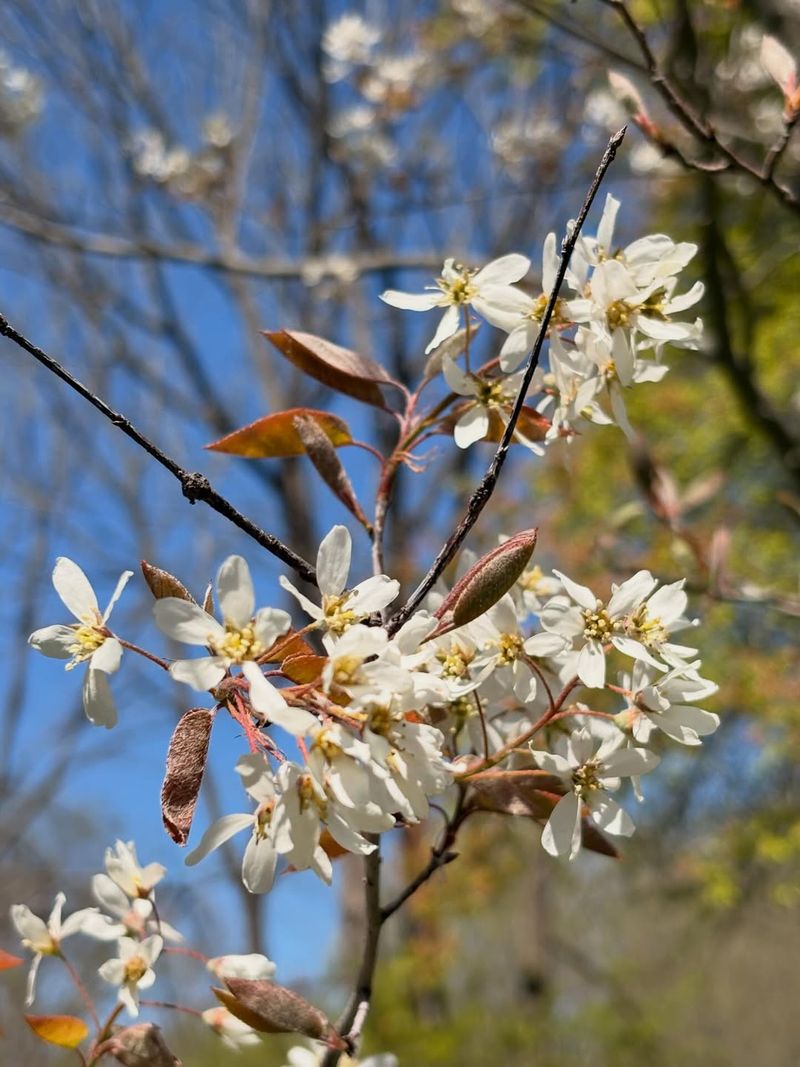
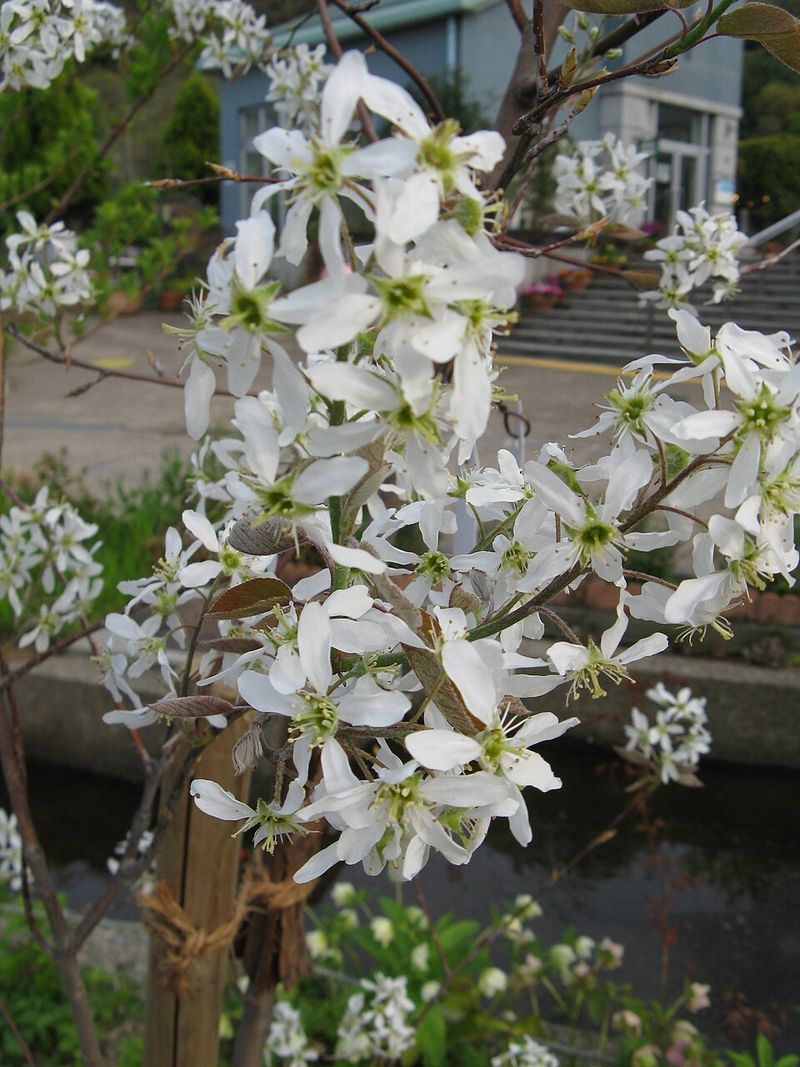
Before most Michigan trees have even thought about leafing out, serviceberry is already covered in soft white blossoms. Those early flowers appear in March or April, sometimes while patches of snow still linger on the ground.
For homeowners who spend all winter waiting for something to bloom, that early show feels like a genuine gift.
The flowers are small and delicate, with five white petals that flutter in the spring breeze. They appear before the leaves fully open, which means nothing blocks the display.
A mature serviceberry in full bloom can stop people in their tracks, even in a modest front yard or along a foundation bed.
Beyond the visual appeal, those early blossoms are genuinely useful for pollinators. Native bees, bumble bees, and other early-season insects rely on whatever blooms first after a long Michigan winter.
Serviceberry often provides one of the earliest reliable nectar sources available in residential landscapes.
The bloom period does not last for weeks, so do not expect a prolonged flower show. Most years, the flowers fade within one to two weeks depending on temperatures.
However, that brief burst of white against bare branches in early spring tends to leave a lasting impression. Planted near a window or along a walkway, a blooming serviceberry can genuinely brighten a Michigan yard when the rest of the landscape is still waking up.
2. June Berries Feed Birds And Wildlife
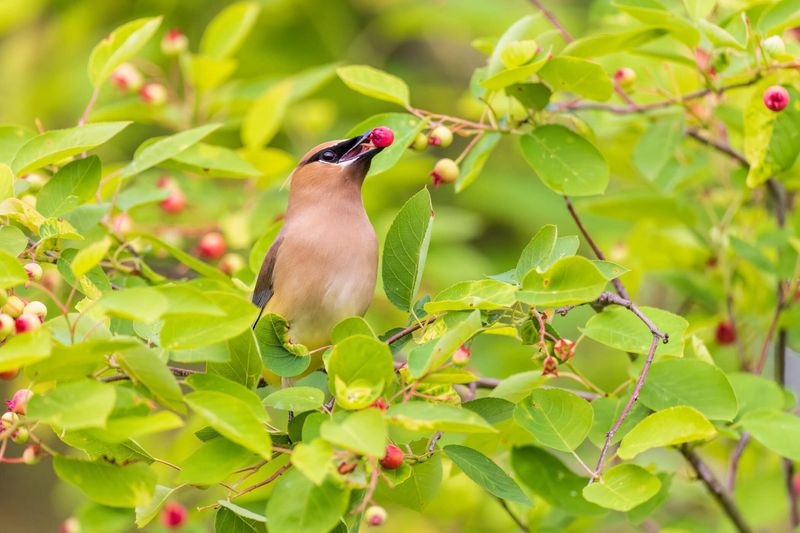
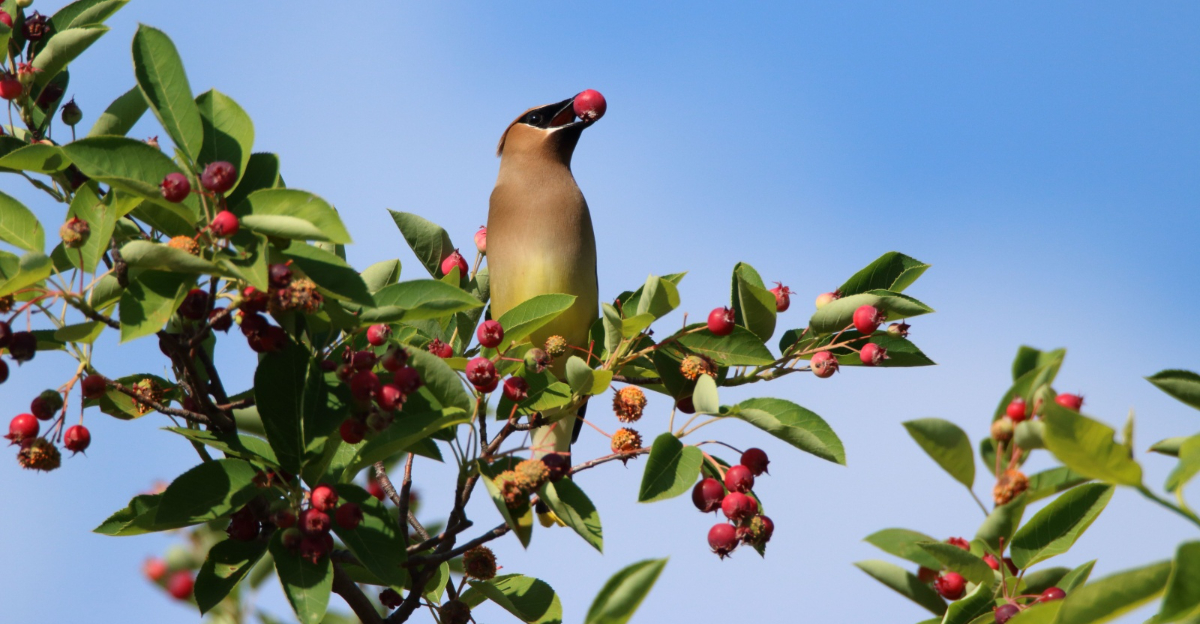
Walk past a serviceberry in late June or early July, and you might notice that the branches are suddenly alive with activity. Cedar waxwings, robins, catbirds, and several other bird species tend to find the ripe fruit before many homeowners even realize it is ready.
The berries ripen quickly and disappear almost as fast.
Serviceberry fruit looks a little like a small blueberry, turning from red to deep purple-blue when fully ripe. The flavor is sweet with a mild almond-like note, and birds seem to find it irresistible.
In some years, bird pressure is so heavy that very little fruit remains on the tree for more than a few days after ripening.
Beyond birds, small mammals including chipmunks and squirrels have also been observed eating fallen fruit. The timing of fruit production in early summer is part of what makes serviceberry particularly valuable.
Your Michigan Garden Changes Every Week. Your Plan Should Too.
Gardening in Michigan changes quickly throughout the season. Every Friday you’ll receive a simple weekly plan showing exactly what to plant, prune, fertilize, harvest, and protect so you never miss the right timing.
Many other berry-producing shrubs and trees ripen later in the season, so serviceberry fills a gap when other food sources are still weeks away.
Fruit production can vary from year to year depending on spring weather, pollination conditions, and how much late frost the flowers experience. Not every season will produce a heavy crop, and trees grown in shadier spots may produce less fruit than those in full sun.
Even in lighter fruit years, serviceberry still supports some wildlife activity in a Michigan yard.
3. A Small Tree Fits Many Michigan Yards
Finding a tree that actually fits a typical Michigan residential lot can be surprisingly tricky. Large shade trees are beautiful, but many homeowners simply do not have the room for a species that spreads forty or fifty feet wide.
Serviceberry offers a more manageable option without sacrificing the feeling of having a real tree in the yard.
Depending on the species and cultivar, serviceberry typically reaches somewhere between fifteen and twenty-five feet tall at maturity. Some forms stay closer to ten to fifteen feet, especially when grown as a large multi-stem shrub rather than a single-trunk tree.
That kind of flexibility makes it useful in spots where larger trees would quickly overwhelm the space.
It works well near patios, along property lines, beside driveways, and in foundation beds where scale really matters. Because it does not cast heavy shade, it can be planted closer to a home without creating the same concerns that come with large-canopy trees.
Smaller Michigan yards, townhouse landscapes, and even courtyard gardens can often accommodate a serviceberry without the space feeling cramped.
Homeowners should still think carefully about placement, since serviceberry does spread over time and benefits from room to grow naturally.
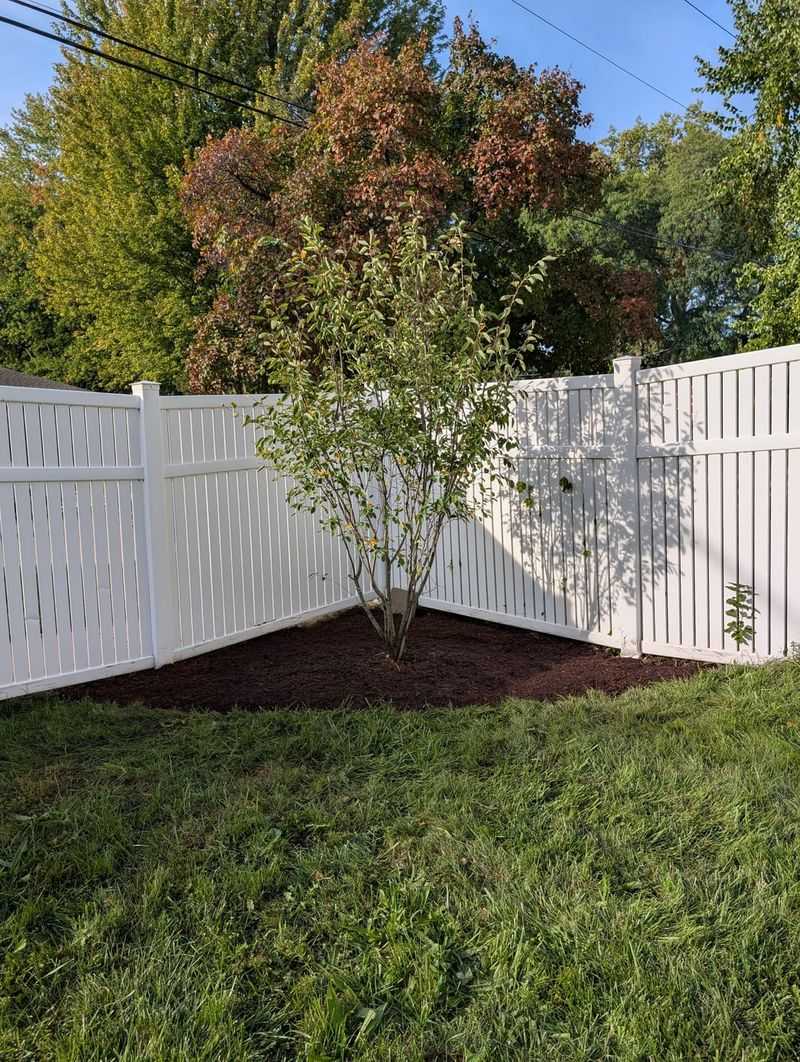
Crowding it against a fence or forcing it into a space that is too tight can lead to a less attractive form and more pruning work than most people want.
Giving it a little breathing room from the start tends to produce the best results.
4. Fall Color Adds One More Season Of Interest
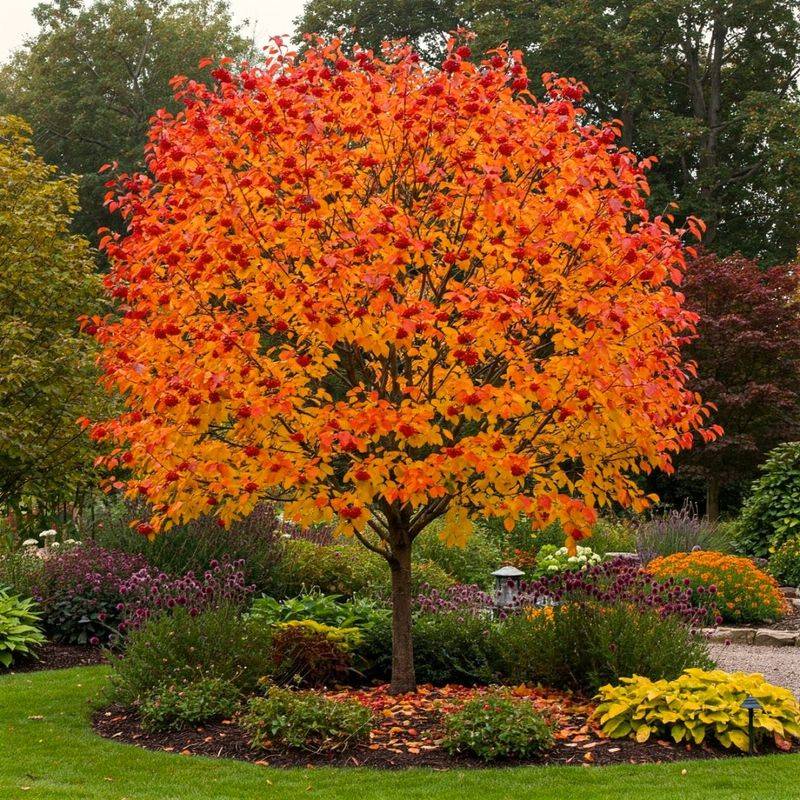
Most people who plant serviceberry do so for the spring flowers or the summer fruit, and then they are pleasantly surprised when October arrives.
Fall color on serviceberry can range from soft yellow to rich orange and even deep red-orange depending on the individual tree, the species, and the particular conditions of that season.
The color tends to develop gradually through September and reaches its peak in October across much of Michigan. On a clear autumn day, a serviceberry in good fall color can hold its own alongside some of the more celebrated fall-foliage trees in a residential landscape.
The smaller scale of the tree means the color is concentrated and visible even in a compact yard.
Not every serviceberry puts on a dramatic fall show every year. Color intensity can depend on soil moisture through the summer, temperature swings in early fall, and the health of the individual tree.
Some years are more spectacular than others, and some trees in shadier locations may show less vivid color than those in full sun.
Still, the fact that serviceberry delivers something worth noticing in autumn means it contributes to the landscape across at least three distinct seasons.
Spring flowers, summer fruit, and fall foliage together make a strong case for including this native Michigan tree in a yard where the goal is year-round visual interest rather than just a single seasonal highlight.
5. Full Sun Or Part Shade Gives It Flexibility
One of the practical reasons serviceberry works well in so many Michigan yards is that it tolerates a wider range of light conditions than many other small trees.
Full sun produces the best flowering and fruiting, but serviceberry also performs reasonably well in partial shade, making it useful in spots that other sun-loving trees simply would not thrive.
In a yard with mature trees casting afternoon shade, serviceberry can still grow, flower, and produce some fruit. The display may be less dramatic than a tree grown in full sun, and fruit production may be lighter, but the tree will generally remain healthy and attractive.
That kind of adaptability is genuinely useful in older Michigan neighborhoods where shade is already well established.
Serviceberry naturally grows along woodland edges, stream banks, and forest margins in Michigan, so it is accustomed to shifting light conditions.
That background means it can handle transitions between sunny and shadier areas in a landscape without showing obvious signs of stress.
Homeowners should keep in mind that very deep shade will limit both flowering and fruit production noticeably. A spot that receives at least four to six hours of direct sun per day tends to give serviceberry the best chance to perform well.
Planting it in a location that receives morning sun and afternoon shade is often a good middle ground in yards where full sun is not available throughout the entire day.
6. Edible Fruit Makes It Useful For People Too
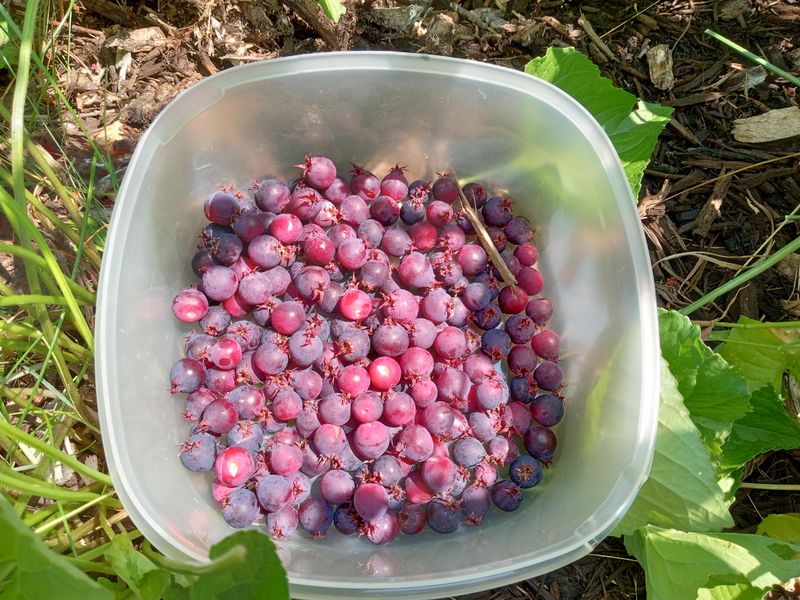
Not many ornamental trees also put food on the table, but serviceberry is one of the few that genuinely bridges that gap. The ripe berries are edible and have a pleasant sweet flavor that works well in pies, jams, muffins, and pancakes.
Indigenous peoples across the Great Lakes region used serviceberry fruit as a food source for generations, and the tradition of eating Juneberries still continues in parts of the Midwest today.
The challenge for homeowners is that birds tend to find the fruit at almost exactly the same time people do. Getting to the berries before the robins and waxwings arrive requires some attention and a little planning.
Some gardeners cover branches with netting as the fruit begins to ripen, while others simply accept that the birds will take the majority and enjoy whatever is left.
Fruit flavor and sweetness can vary between different serviceberry species and cultivars.
Some selections have been developed with larger or sweeter fruit in mind, so homeowners interested in eating the berries regularly may want to research specific cultivars before purchasing.
Not every serviceberry produces fruit that is equally appealing for fresh eating or cooking.
Even when the fruit harvest is modest, the experience of picking berries from a tree growing in a Michigan backyard has its own appeal.
For families with children, a serviceberry can create a simple connection to seasonal food production that larger or more demanding fruit trees cannot always offer in a typical residential setting.
7. Native Beauty Works In Naturalized Borders
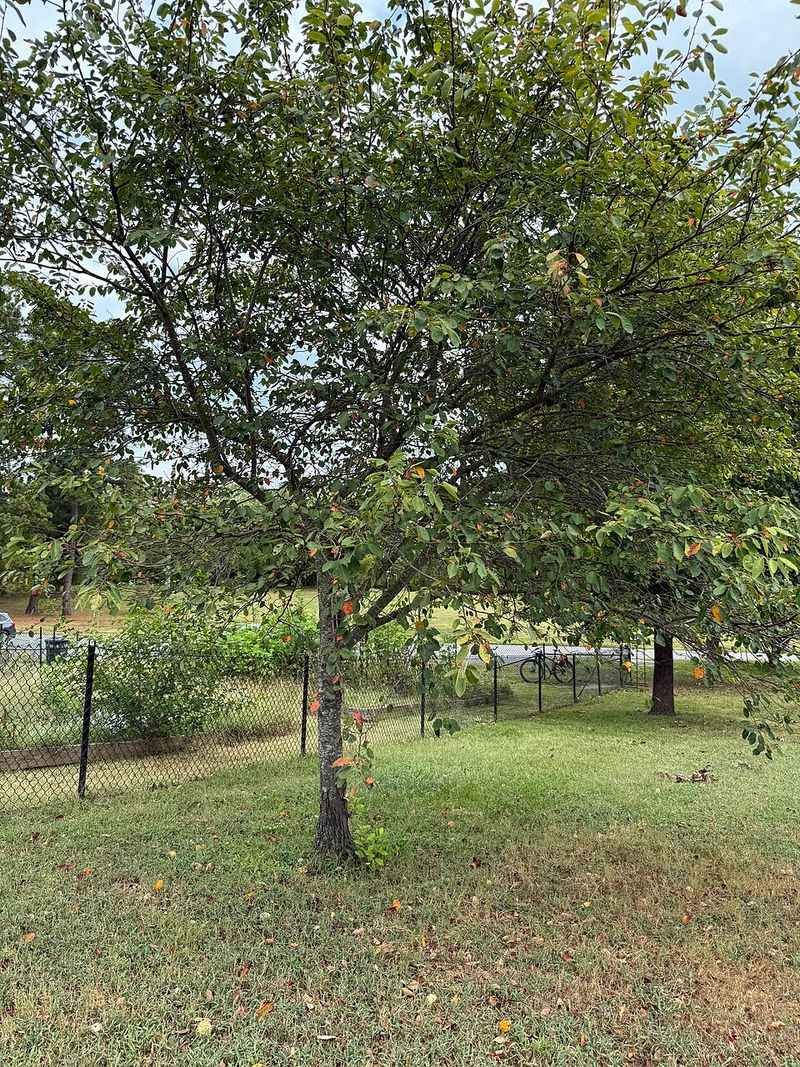
Formal, neatly trimmed landscapes are not the only setting where serviceberry shines.
Along property lines, at the back of a mixed border, or at the edge of a wooded section of a Michigan yard, serviceberry fits in naturally without requiring much shaping or intervention.
Its informal branching habit and layered canopy give it a relaxed character that suits naturalized planting designs well.
When planted alongside other Michigan native shrubs and trees such as native viburnums, dogwoods, or elderberry, serviceberry becomes part of a layered planting that supports a wider range of wildlife throughout the seasons.
Birds that feed on serviceberry berries in summer may also use nearby shrubs for nesting cover, creating a small but meaningful habitat patch even in a suburban yard.
The multi-stem form that serviceberry often takes on naturally works especially well in informal borders.
Rather than trying to train it into a single-trunk tree shape, many gardeners allow it to develop its natural form, which gives the planting a more relaxed and organic appearance.
That approach also reduces the need for ongoing pruning and shaping.
Naturalized borders in Michigan can also benefit from serviceberry’s tolerance for variable soil moisture.
It handles both moderately moist and moderately dry conditions once established, which gives it real versatility along borders where soil conditions are not always consistent.
It is not equally suited to every site, but it adapts to a reasonable range of conditions found in typical Michigan residential landscapes.
8. A Little Early Care Helps It Settle In
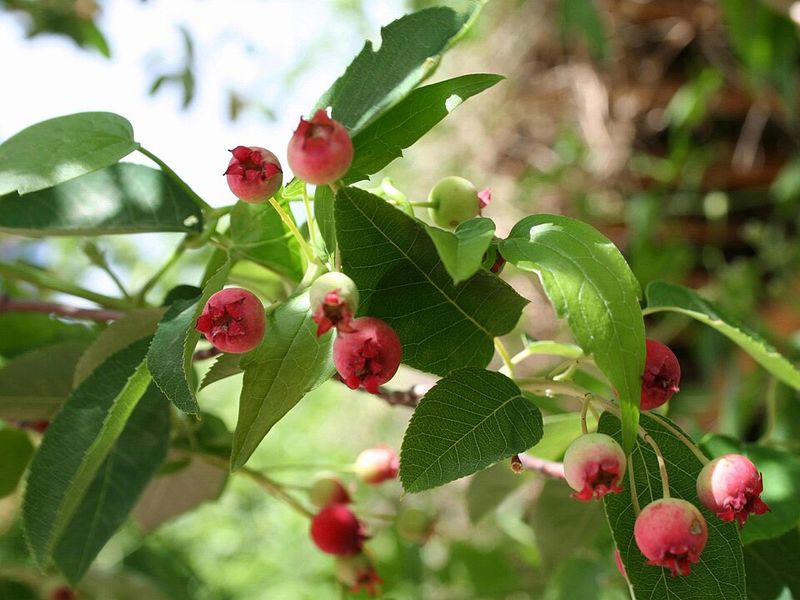
Calling serviceberry care-free would give the wrong impression.
Young trees do need attention during their first one to two growing seasons, and setting them up well from the start makes a real difference in how quickly they establish and how well they perform over time.
The good news is that the investment of effort is front-loaded, and once a serviceberry is settled in, it generally needs much less ongoing attention.
Watering consistently during the first summer is probably the most important thing a homeowner can do. Michigan summers can include dry stretches, and a newly planted tree does not yet have the root system to handle extended dry periods on its own.
Deep, infrequent watering encourages roots to grow downward rather than staying shallow near the surface.
Applying a layer of organic mulch around the base of the tree helps retain soil moisture, moderate soil temperature, and reduce competition from grass and weeds.
Keeping mulch a few inches away from the trunk itself is a good habit to maintain throughout the life of the tree.
Serviceberry can occasionally be affected by common issues such as cedar-apple rust, leaf spot, or fire blight, though serious problems are not typical in well-sited trees.
Choosing a planting location with good air circulation and avoiding overly wet or compacted soil can reduce the likelihood of these issues becoming a real concern.
Starting with a healthy, properly sited tree gives serviceberry its best chance in a Michigan yard.