The Indiana Wildflower Turning Tired Lawns Into Something Beautiful
Just dirt, the color of old cardboard, shrugging off every bag of grass seed thrown at it. Three attempts and three quiet failures.
Then something purple appeared, low to the ground and completely unannounced. No help from me, no watering schedule, no coaxing whatsoever.
It simply moved in and got to work, and that was the moment lawn care stopped feeling like a losing battle. Is your yard quietly telling you it wants something different too?
This wildflower does not negotiate terms. It finds the thin spots and forgotten corners, the patches where Indiana summers leave the soil tired and dry, and it settles in without a single complaint.
Free, unbothered, thriving on nothing. Homeowners keep spending money chasing perfect grass across Indiana.
Meanwhile, this small purple plant already solved the problem. Nature got there first. Go see how.
Blooms Purple-Blue Every Spring
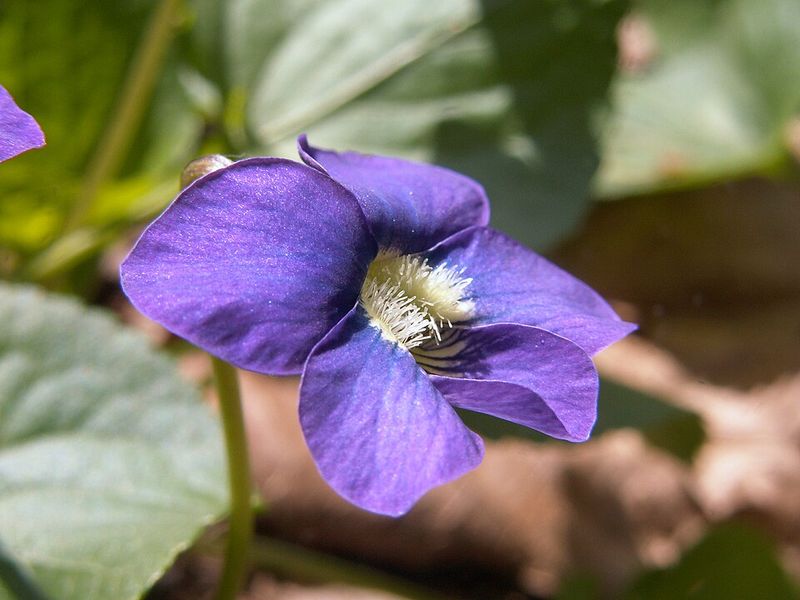
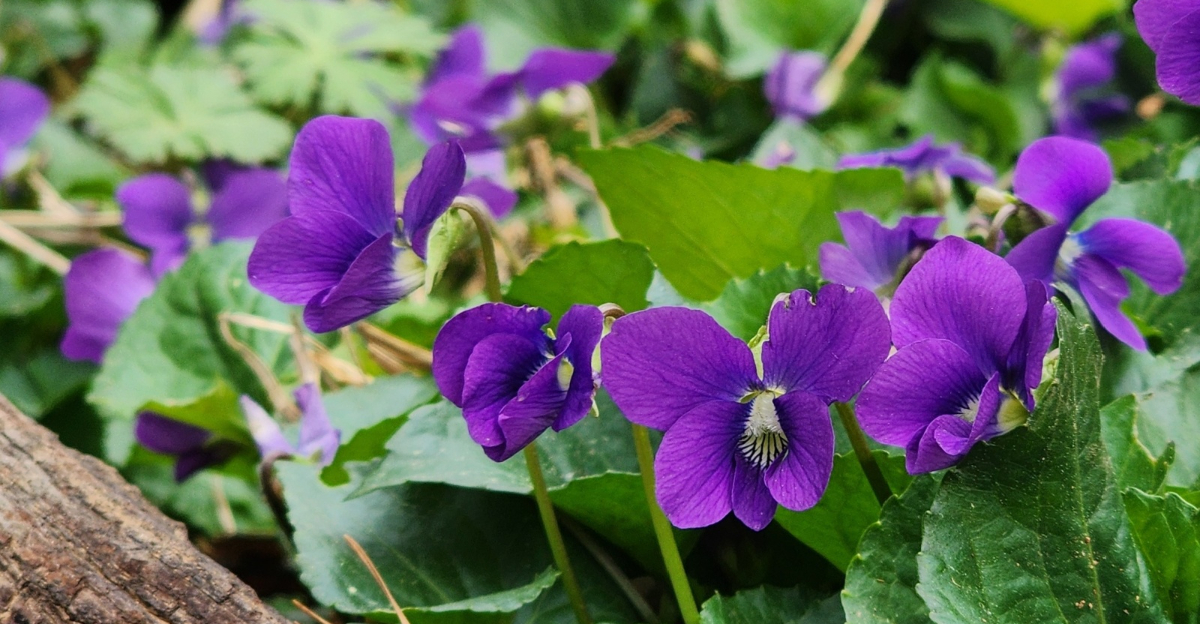
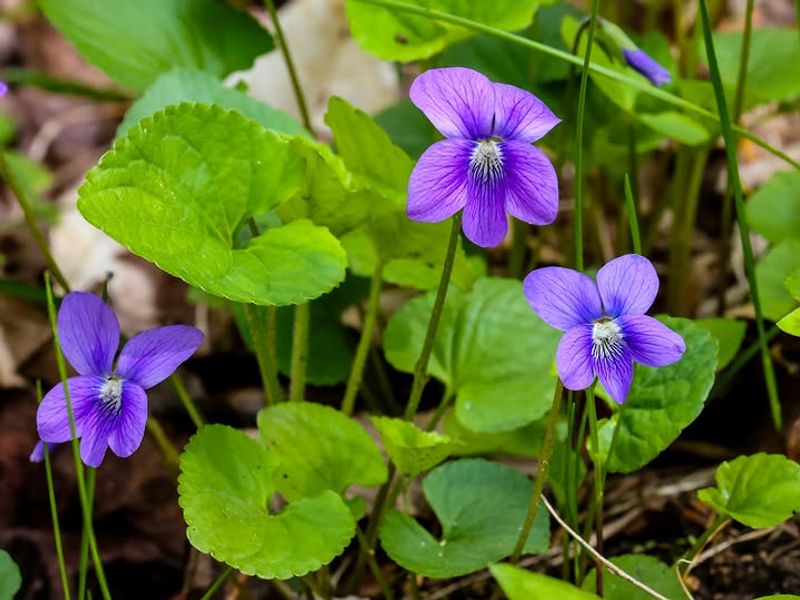
Every April, something quietly striking happens underfoot. Common Blue Violet bursts open in shades of deep purple and soft blue-violet that stop you mid-step.
Most lawn flowers are forgettable. This one is not. Its petals carry a velvety, rich color that looks completely deliberate, like someone made a careful choice to plant it there.
The blooms sit just above the leaf line, making them easy to spot from a distance. Neighbors will ask what you planted, and the answer will genuinely surprise them.
Each flower has five petals with delicate purple veining that runs toward the center. That detail alone makes it look like something rescued from a botanical garden and dropped into your yard.
Blooming season runs roughly from April through May across Indiana. That timing fills the gap before summer annuals even wake up, giving your yard early color when everything else is still getting started.
The Common Blue Violet does not bloom once and disappear. It produces a second round of hidden flowers later in the season that never open but still set seed.
Those hidden blooms are called cleistogamous flowers, and they produce seed without ever opening, quietly multiplying your patch.
Year after year, the purple display grows wider, denser, and more beautiful without a single thing asked of you.
Fills In Bare, Patchy Spots
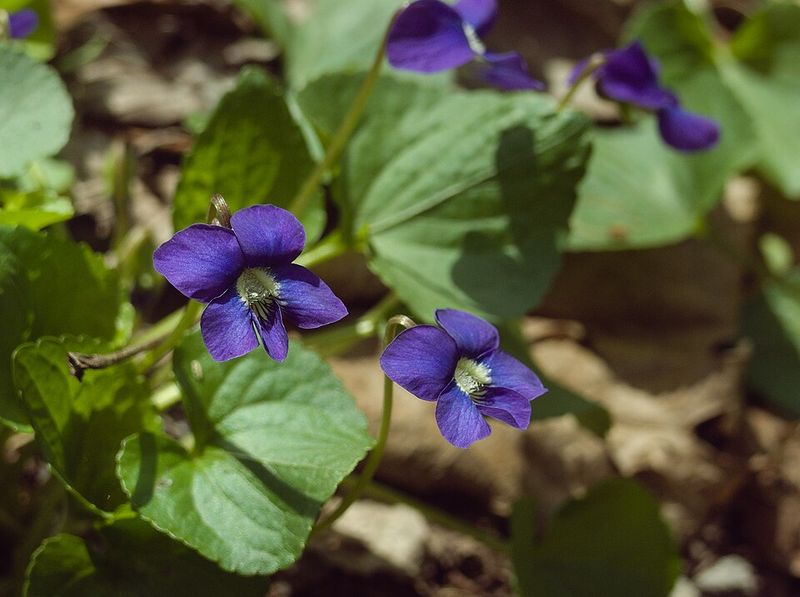
Bare lawn spots are stubborn and hard to fix. They collect weeds, look rough, and resist every fix you throw at them.
Common Blue Violet has a different approach. It spreads horizontally by underground stems called rhizomes. Those stems push outward and claim bare ground steadily.
The plant also self-seeds with impressive consistency. Wind, ants, and gravity carry seeds into gaps where grass gave up long ago.
Ants are especially helpful here. They carry violet seeds for the fatty coating on each seed, then discard them near their nest, leaving the seed intact to germinate.
That process, called myrmecochory, means your violet patch spreads in natural, organic patterns. No straight rows, no artificial look, just a soft carpet effect.
Shady corners under trees are notoriously hard to fill with turf grass. Violets handle low light surprisingly well and move right into those problem zones.
Your Indiana Garden Changes Every Week. Your Plan Should Too.
Gardening in Indiana changes quickly throughout the season. Every Friday you’ll receive a simple weekly plan showing exactly what to plant, prune, fertilize, harvest, and protect so you never miss the right timing.
Compacted soil near driveways or walkways is another tough spot for grass. Violets are more forgiving of poor soil structure and still establish themselves.
Over two or three seasons, a single plant becomes a cluster. That cluster becomes a colony, and suddenly your patchy lawn looks intentional and lush.
Stays Green When Grass Turns Yellow
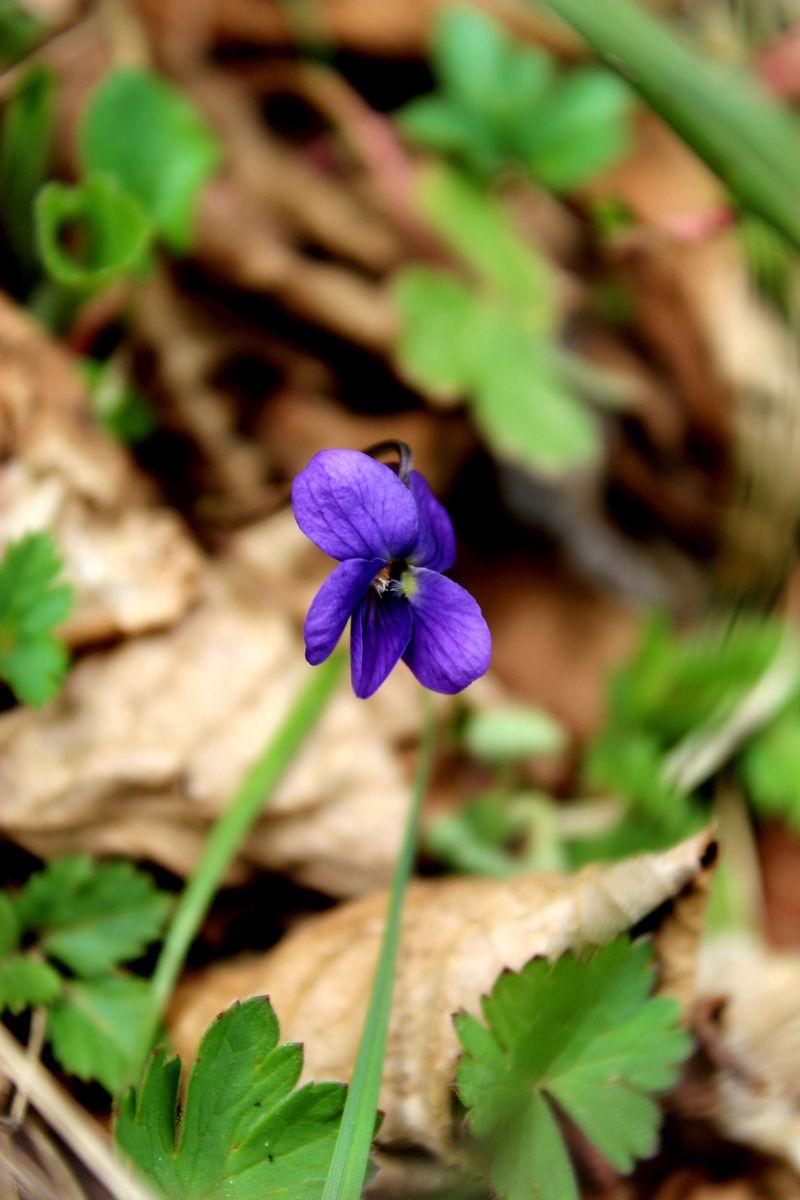
Summer heat hits Indiana hard. Turf grass curls, browns, and goes dormant by July if you skip the sprinkler.
Common Blue Violet stays green through most of that heat without a drop of extra water. Its thick, waxy leaves hold moisture longer than grass blades do.
The heart-shaped foliage creates a dense, low mat that shades the soil beneath it. That shade keeps roots cooler and slows evaporation from the ground.
Lawns with violet patches often look greener overall during dry spells. The contrast between yellow grass and lush violet leaves actually highlights how tough this plant is.
Late summer is when most homeowners give up on a perfect lawn. Violets hold their color while everything else fades.
Fall brings another advantage. Violet leaves often stay green well into October before finally fading, giving your yard weeks of extra color.
Grass needs consistent moisture, fertilizer, and favorable temperatures to stay green. Violets need almost none of that and still outperform in the toughest months.
If your lawn looks rough every August, adding violets to the mix changes the visual story. Green patches hold the whole yard together when the grass goes dormant.
Grows Low Enough To Survive Mowing
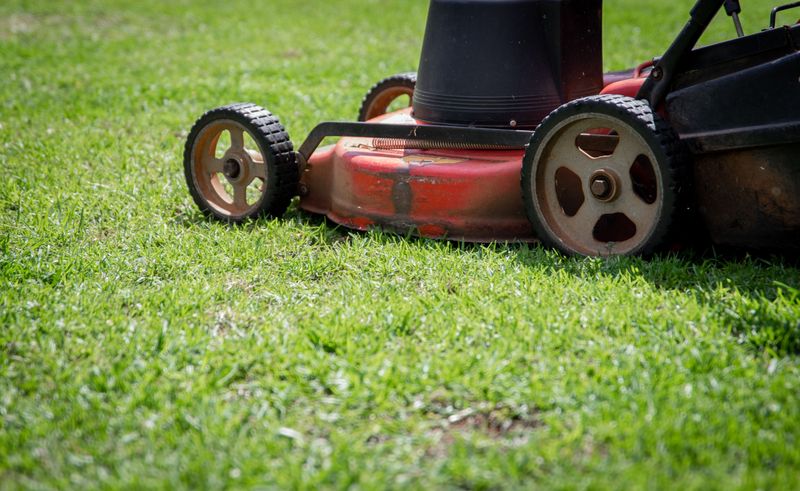
Mowing a wildflower sounds like a contradiction. Most flowering plants get destroyed the moment a mower passes over them.
Common Blue Violet grows close to the ground on purpose. Its leaves and stems hug the soil at a height that most mower blades clear entirely.
A standard mower set at three inches will pass right over mature, established violet clumps. The plants barely notice, and they bounce back within days.
Even if the mower clips the tops, violets regrow from their root system quickly. That underground network is where the real strength lives.
Grass needs to be cut regularly to stay tidy. Violets need far less frequent mowing and still maintain a neat, low profile between cuts.
The blooms appear in spring before most people start mowing aggressively. That timing lets the flowers complete their cycle before the blades come out.
After the bloom period ends, the foliage drops even lower and blends with surrounding grass. From a distance, you cannot tell where the grass ends and the violet begins.
Lawn care does not have to change dramatically to accommodate this plant. Just raise your mower deck slightly, and violets will handle the rest on their own.
Attracts Bees And Butterflies Naturally
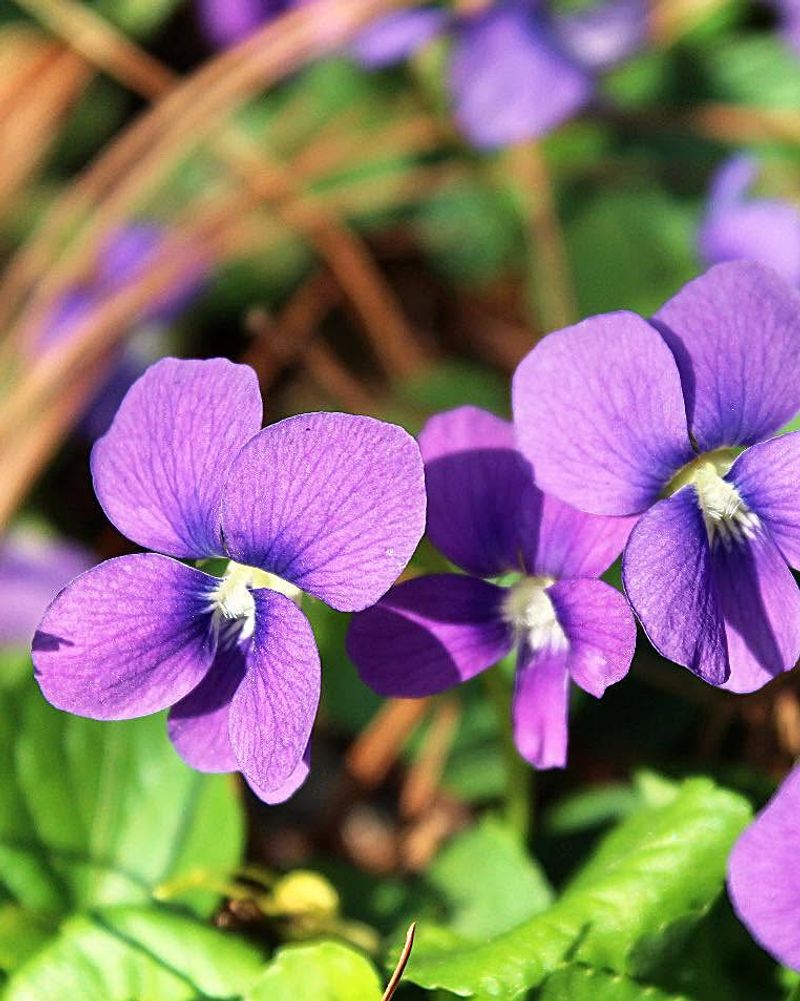
Pollinators are struggling across North America. Habitat loss and monoculture lawns have removed food sources that bees and butterflies depend on.
Common Blue Violet steps in as an early-season food source when few other plants are blooming. Bees emerging from winter need nectar fast, and violets provide it.
Mining bees and bumblebees visit violet flowers specifically. Some native bee species rely on violets so heavily they are called violet specialist bees.
Butterflies use violets differently. Several fritillary species, including the Great Spangled Fritillary, lay eggs on or near violet plants, the only food source their caterpillars will eat.
Those caterpillars feed on the foliage all summer. Without violets in the landscape, those butterfly populations simply cannot reproduce.
Watching a fritillary land on your lawn is a reward most gardeners chase for years. Violets make it happen without any extra effort or expense.
Honeybees also visit regularly, especially in the morning hours when nectar production peaks. A violet patch in full bloom hums with quiet activity.
Letting violets spread through your lawn adds meaningful early-season support for local bees, often more than a single ornamental bed.
Needs No Watering, Feeding, Or Planting
Low-maintenance plants get talked about constantly. Most still need something, a little fertilizer, occasional watering, a specific soil type.
Common Blue Violet needs none of that. It establishes itself, feeds itself, and spreads without any help from the homeowner.
Once violets are present in your yard, they handle their own reproduction through seeds and rhizomes. No replanting, no thinning, no babying required.
Rainfall in Indiana is usually enough to keep them healthy through the growing season. Even in drier years, established plants pull through on their own reserves.
Fertilizer can actually work against violets. Too many nutrients push leafy growth at the expense of flowers, so skipping the lawn feed benefits them.
They grow in average to poor soil without complaint. Rocky spots, clay-heavy corners, and shaded edges are all fair game for this adaptable plant.
No special tools are needed to get started. If violets are already nearby in a neighbor’s yard or a local park, seeds will find your lawn naturally.
The Common Blue Violet is the rare plant that rewards neglect. The less you interfere, the more it thrives, and the better your lawn looks for it.
A Wildflower Worth Welcoming Home
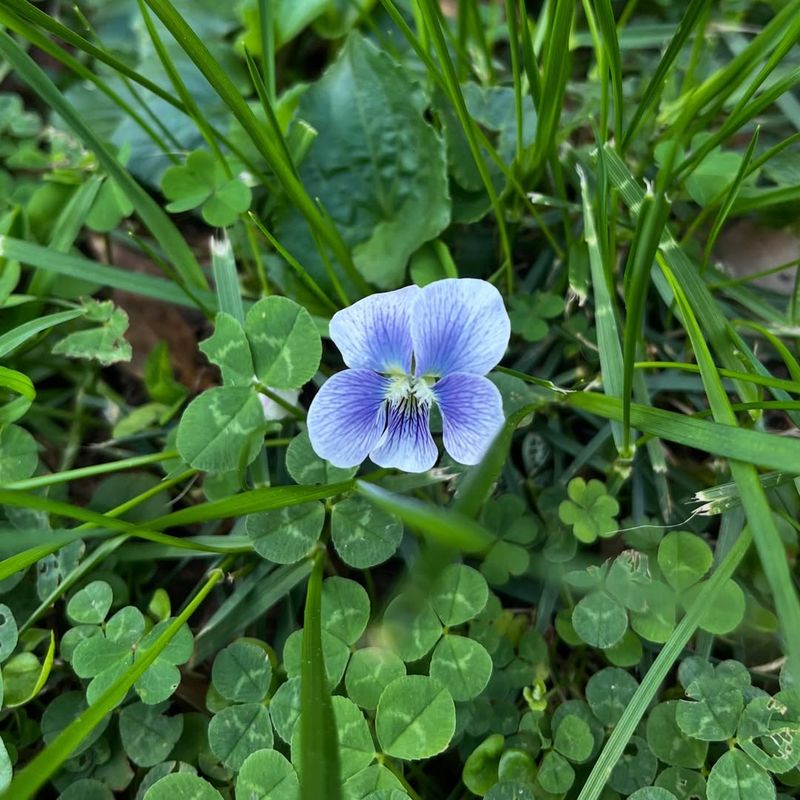
Some of the best lawn transformations cost nothing at all. The Common Blue Violet proves that point every single spring across Indiana.
Homeowners keep spending money chasing a perfect green lawn. Meanwhile, this wildflower fixes bare spots, feeds pollinators, and looks stunning for free.
Changing your perspective on what a lawn should look like is the first step. A few purple blooms scattered through the grass signal health, not neglect.
Wildlife organizations actively encourage violet-friendly lawns. They recognize that a monoculture of turf grass supports almost no local ecosystem.
Violets connect your yard to a larger natural network. Bees, butterflies, and birds all benefit when this plant is allowed to spread freely.
Sharing this approach with neighbors creates a ripple effect. One violet-friendly yard becomes two, and suddenly a whole block supports pollinators through the season.
The Common Blue Violet does not ask for much in return. A little tolerance and a slightly raised mower deck are all it needs to flourish.
Your patchy lawn is not a problem to solve with chemicals or sod. It is an invitation for something genuinely beautiful to move right in.