Cleaner Shade Trees Arizona Landscapers Recommend Over Mulberry Trees
Choosing a shade tree is usually a decision that lasts for many years. A tree may start out as a small addition to the landscape, but over time it becomes one of the most noticeable features on the property.
The right choice can provide welcome shade, improve curb appeal, and make outdoor spaces more comfortable during the hottest months of the year.
Not every tree delivers the experience people expect, though. A tree that looks appealing at the nursery can create unexpected challenges once it matures.
Maintenance needs, fallen debris, and overall performance often become much more important after a tree has been growing for several years.
Arizona homeowners are paying closer attention to those long term factors when selecting shade trees. As a result, certain alternatives are gaining popularity while mulberry trees are losing favor.
Several cleaner options are now being recommended for landscapes where shade remains a top priority.
1. Palo Verde Adds Light Shade And Seasonal Color
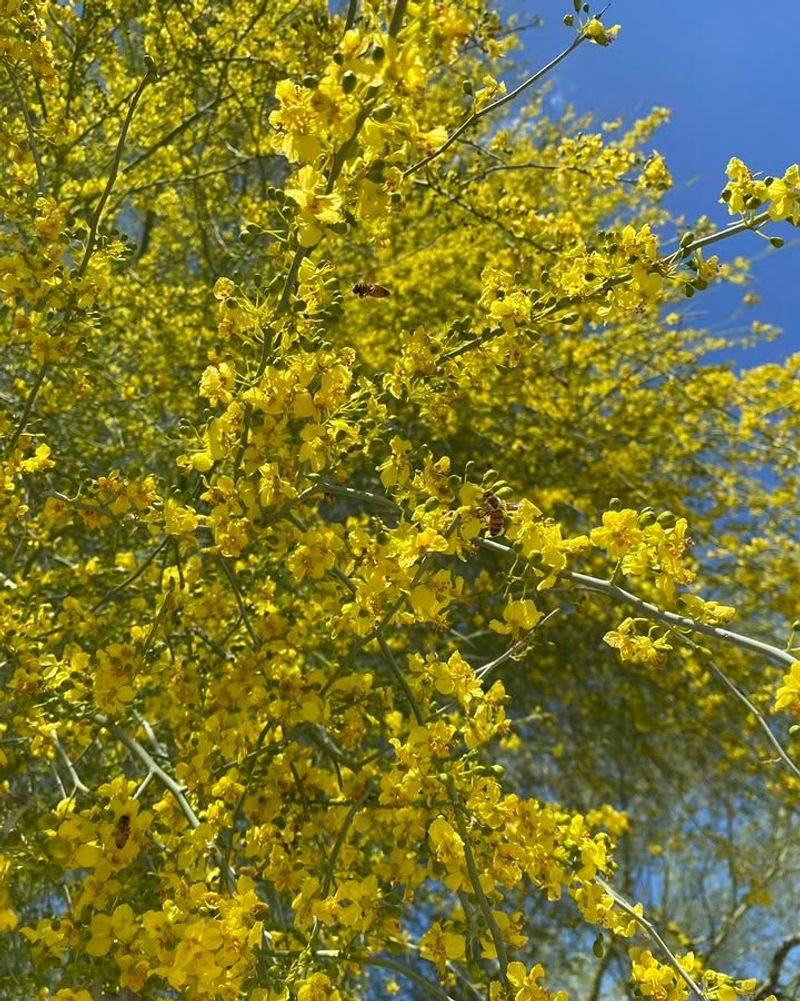
When a Palo Verde explodes into yellow bloom in spring, it stops traffic. Entire neighborhoods shift color for a few weeks when these trees peak, and that visual payoff alone makes them worth planting.
Beyond the flowers, Palo Verde is one of the toughest, most drought-adapted trees available in the Southwest.
Shade from Palo Verde is light and dappled rather than dense. That works well for patios where you want some sun filtering through, or for protecting other plants without blocking all light.
The canopy is open enough that grass or ground covers can still grow underneath.
Cleanup is genuinely minimal. Small seed pods drop in summer, but they are dry and lightweight.
No sticky residue, no stained concrete, nothing close to what a mulberry produces. A quick blow with a leaf blower handles most of it.
Blue Palo Verde grows faster than Foothills Palo Verde. Both handle heat and drought well, but Blue Palo Verde reaches twenty to thirty feet and provides more noticeable shade as it matures.
Either variety works well in gravel or native-style landscapes.
Established trees need very little supplemental water. During extreme summer heat, occasional deep watering helps, but these trees are built for dry conditions.
Landscapers in the Tucson and Phoenix areas consistently rank Palo Verde among their top recommendations for low-fuss, clean yards.
2. Chinese Pistache Creates Dense Shade With Minimal Mess
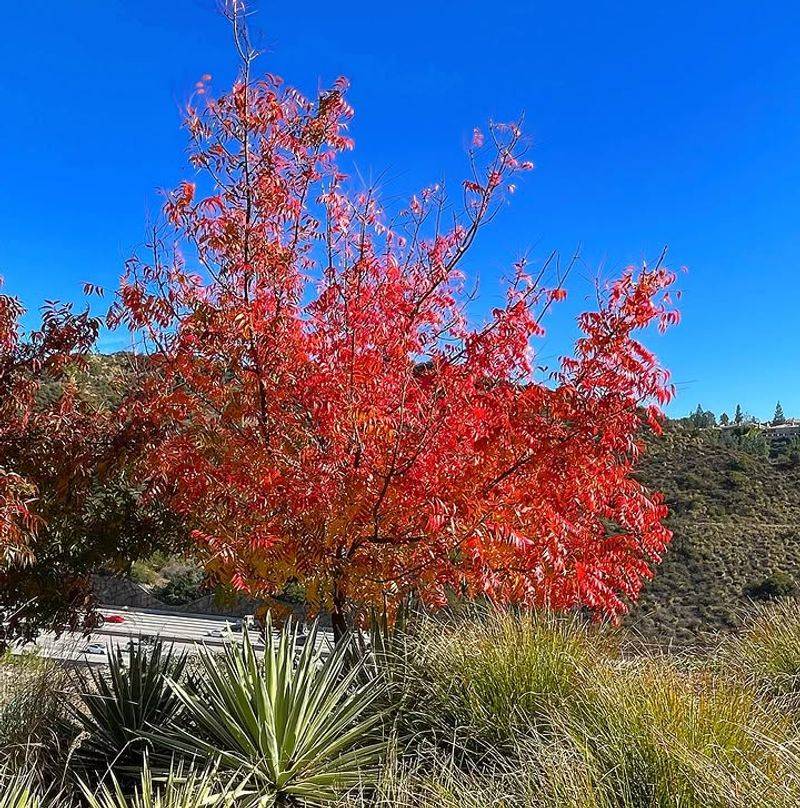
Want actual shade, not just filtered light? Chinese Pistache delivers a thick, full canopy that genuinely cools down a patio.
On a 110-degree afternoon, sitting under a mature Chinese Pistache feels noticeably different than standing in the open sun. That level of shade is hard to match with most desert-adapted species.
Fall color is a real bonus here. Chinese Pistache turns brilliant red and orange in autumn, which is a rare treat in hot desert climates.
Most trees in the Southwest just drop their leaves without much fanfare, so the color show this tree puts on stands out.
Fruiting is minimal on male trees. Most nurseries sell male specimens specifically to avoid berry production.
Your Arizona Garden Changes Every Week. Your Plan Should Too.
Gardening in Arizona changes quickly throughout the season. Every Friday you’ll receive a simple weekly plan showing exactly what to plant, prune, fertilize, harvest, and protect so you never miss the right timing.
Even female trees produce small berries that birds eat quickly, so ground mess is rarely a problem. Compare that to mulberry, and the difference is dramatic.
Growth is steady rather than fast. Expect a well-shaped canopy within five to seven years with regular watering.
Once established, water needs drop considerably, though deep watering during summer keeps the canopy full and healthy.
Roots are not invasive. Planting near driveways or sidewalks is generally safe, which is a major advantage over some other large shade trees.
Landscapers recommend Chinese Pistache for yards where a dense, clean, long-lived shade tree is the priority. It performs reliably across a wide range of desert soil conditions.
3. Southern Live Oak Offers Reliable Year-Round Shade
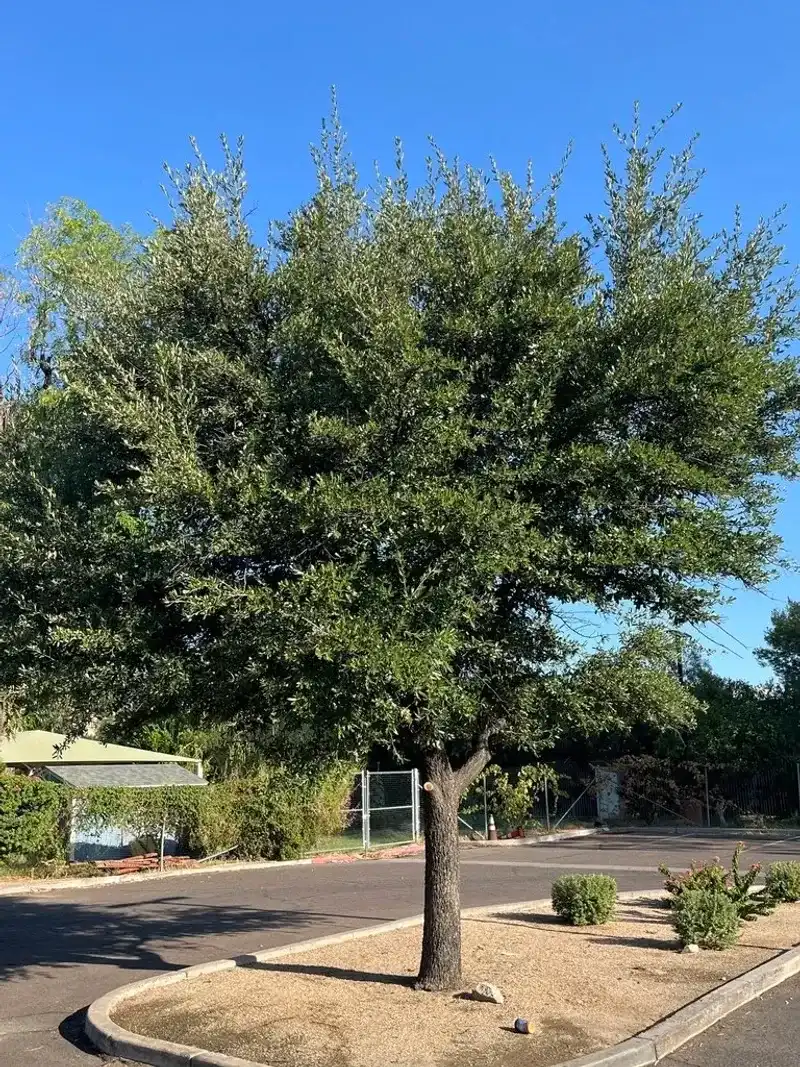
Not many trees stay green all year in the desert, but Southern Live Oak pulls it off. It holds its leaves through winter, dropping and replacing them gradually in spring rather than all at once.
That means consistent shade even in the cooler months when you might still want a shaded patio or covered outdoor space.
Canopy spread is impressive. Mature Southern Live Oaks can stretch forty feet wide or more, creating enormous patches of cool shade.
For large yards with space to accommodate a big tree, few options compete with the sheer coverage this species provides.
Acorn drop is modest and manageable. Small acorns fall in autumn, but they are easy to rake or blow away.
Wildlife, especially birds and squirrels, often clean them up before you even notice. Nothing like the purple-stained sidewalks a mulberry tree leaves behind.
Water needs are moderate. Regular deep watering during the establishment period, typically the first two to three years, sets the tree up for long-term drought tolerance.
Once rooted in, supplemental watering can be reduced significantly.
Trunk and branch structure becomes genuinely beautiful with age. The low, spreading form develops character over time, and older specimens become real focal points in a landscape.
Southern Live Oak is a long-term investment, but the shade, cleanliness, and structural beauty it provides make it one of the most rewarding choices available for larger desert lots.
4. Netleaf Hackberry Handles Heat And Dry Conditions
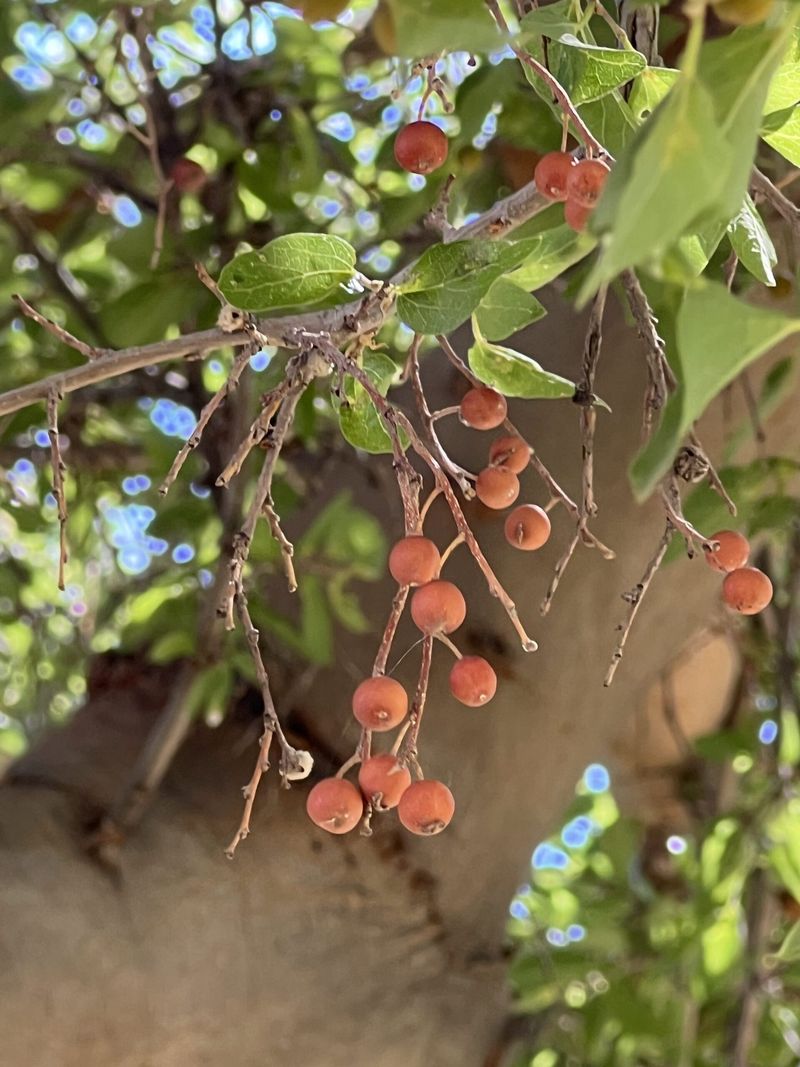
Netleaf Hackberry does not need your attention to thrive. It grows naturally across rocky desert slopes and canyon edges, which means it is genuinely adapted to the brutal conditions that stress most landscape trees.
Plant it, water it through the first summer, and step back.
Shade quality improves steadily as the tree matures. Young trees start compact, but older specimens develop a broad, rounded canopy that blocks serious heat.
Growth is slow to moderate, so patience is required, but the result is a tough, long-lived shade tree that rarely causes problems.
Small berries appear in fall and attract birds enthusiastically. The berries are tiny and dry, not the pulpy, staining type that mulberry produces.
Any that drop to the ground shrivel quickly and do not create the sticky mess that makes mulberry trees so frustrating.
Root systems are deep and non-invasive under most conditions. Planting near walkways or patios carries less risk than with more aggressive-rooted species.
Soil flexibility is another advantage, since Netleaf Hackberry tolerates rocky, alkaline, and clay-heavy soils without complaint.
Wind resistance is strong. In areas prone to summer monsoon gusts, this tree holds up well compared to more brittle species.
Landscapers who work in exposed desert lots or hillside properties often recommend it specifically for that reason. Netleaf Hackberry is not the flashiest tree on this list, but reliability and toughness count for a lot in a hot, dry climate.
5. Arizona Sycamore Casts Broad Shade In Large Yards
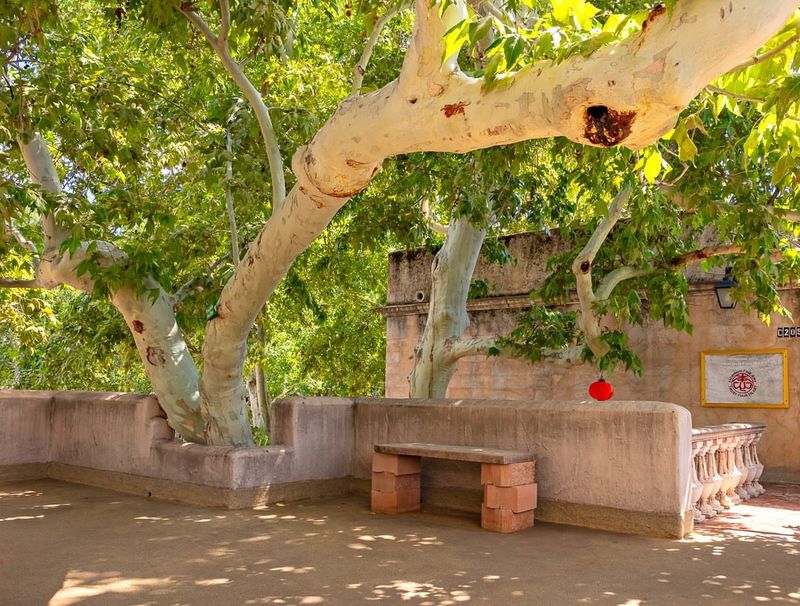
Big yards need big trees, and Arizona Sycamore delivers on scale. Native to canyon riparian zones across the state, this tree grows fast and wide when given enough water.
Mature specimens can hit fifty feet tall with a canopy spread to match, making it one of the most impressive shade providers available for spacious properties.
Bark is genuinely striking. The patchy white, cream, and gray mottled pattern on the trunk and upper branches gives Arizona Sycamore a distinctive look that sets it apart from most other landscape trees.
Even in winter without leaves, the structure and bark color make it a visual anchor in any yard.
Leaf drop happens in fall and is significant. Large leaves do require raking, which is worth acknowledging honestly.
That said, leaves are dry and break down quickly, nothing like the sticky, staining fruit mess that mulberry creates. One seasonal cleanup is manageable for most homeowners.
Water needs are higher than most desert-adapted trees. A location near a natural drainage area, seasonal wash, or supplemental drip irrigation works best.
Without enough moisture, growth slows and the canopy thins out noticeably.
Placement matters. Root systems can be aggressive near water sources, so keep it away from foundations and underground pipes.
Given appropriate space and moisture, Arizona Sycamore rewards you with some of the best natural shade available in any hot-climate landscape. Landscapers love it for large, open lots where scale is an asset rather than a problem.
6. Chaste Tree Delivers Shade And Summer Flowers
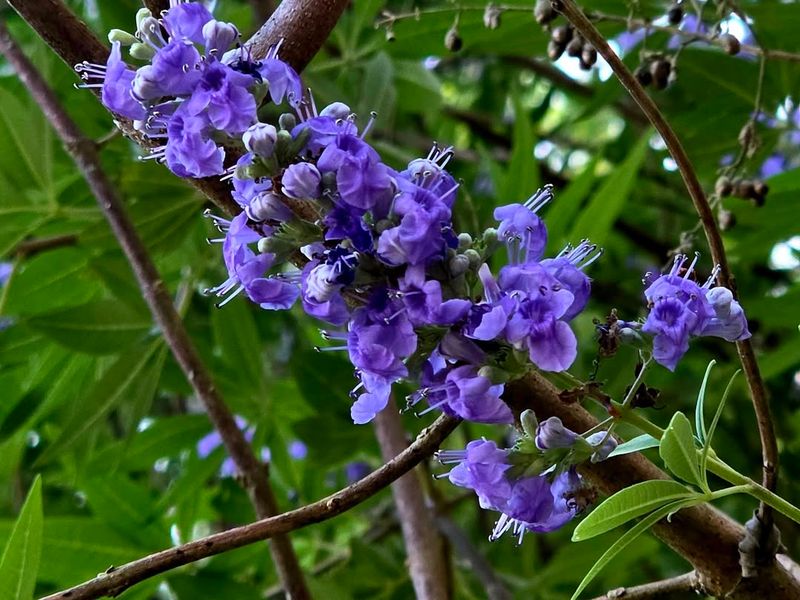
Purple flower spikes shooting up through the summer heat make Chaste Tree one of the most eye-catching options on this list. It blooms heavily from late spring through fall, often reblooming multiple times if spent flower clusters are trimmed.
Very few trees pull off that kind of sustained color in peak summer heat.
Size is manageable. Chaste Tree typically reaches fifteen to twenty feet, making it a practical choice for medium-sized yards where a massive shade tree would feel out of scale.
Canopy density is moderate, providing filtered shade rather than the deep, heavy cover of an oak or pistache.
Cleanup is genuinely easy. Spent flower spikes drop, but they are light and dry.
No sticky fruit, no staining residue, no thick seed pods creating a mess across the patio. Regular light pruning keeps the shape tidy and encourages additional blooming.
Pollinators go wild for the flowers. Bees, butterflies, and hummingbirds visit consistently throughout the bloom season.
For anyone trying to support pollinators in a desert garden, Chaste Tree is one of the best options available at this size.
Water needs are low to moderate once established. Deep watering every one to two weeks during summer keeps it blooming well.
Chaste Tree handles alkaline desert soils without major issues, which removes one of the common headaches of gardening in the Southwest. Landscapers often recommend it as a flowering shade option that earns its spot without demanding constant care.
7. Southern Hackberry Provides Shade With Less Mess
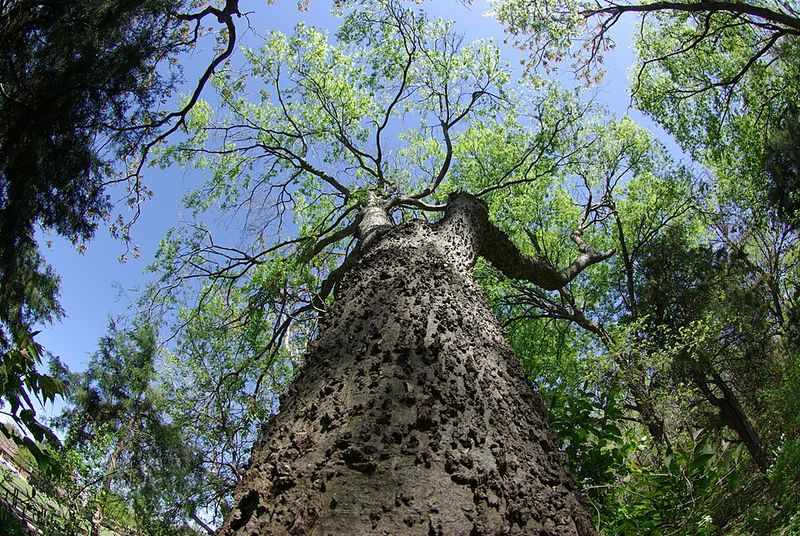
Underrated is the right word for Southern Hackberry. Most homeowners have never heard of it, but landscapers who work in hot, dry climates know it well.
It grows reliably, handles tough soil conditions, and produces a solid, rounded canopy that blocks real heat without demanding constant maintenance.
Berry production does occur in fall, but the berries are small and birds consume them quickly. What lands on the ground is minimal and dries out fast.
No purple stains, no sticky sidewalks, no fruit rotting in the heat. The contrast with mulberry is stark.
Growth rate is moderate to fast under good conditions. With regular deep watering during the first couple of years, Southern Hackberry establishes quickly and starts building canopy within a reasonable timeframe.
Mature trees reach thirty to fifty feet, so give it adequate space from the start.
Soil tolerance is broad. Rocky, sandy, clay-heavy, alkaline soil types that challenge other trees rarely slow down Southern Hackberry.
That flexibility makes it a practical choice across a wide range of yard conditions found throughout desert communities in the region.
Fall color is modest but present. Leaves turn yellow before dropping, adding a brief seasonal change to the landscape.
Nothing dramatic, but a nice touch in a climate where fall color is rare. For homeowners who want a reliable, low-fuss, clean shade tree that performs year after year without much fuss, Southern Hackberry consistently earns strong marks from experienced desert landscapers.
8. Desert Willow Provides Shade Without Heavy Fruit Drop
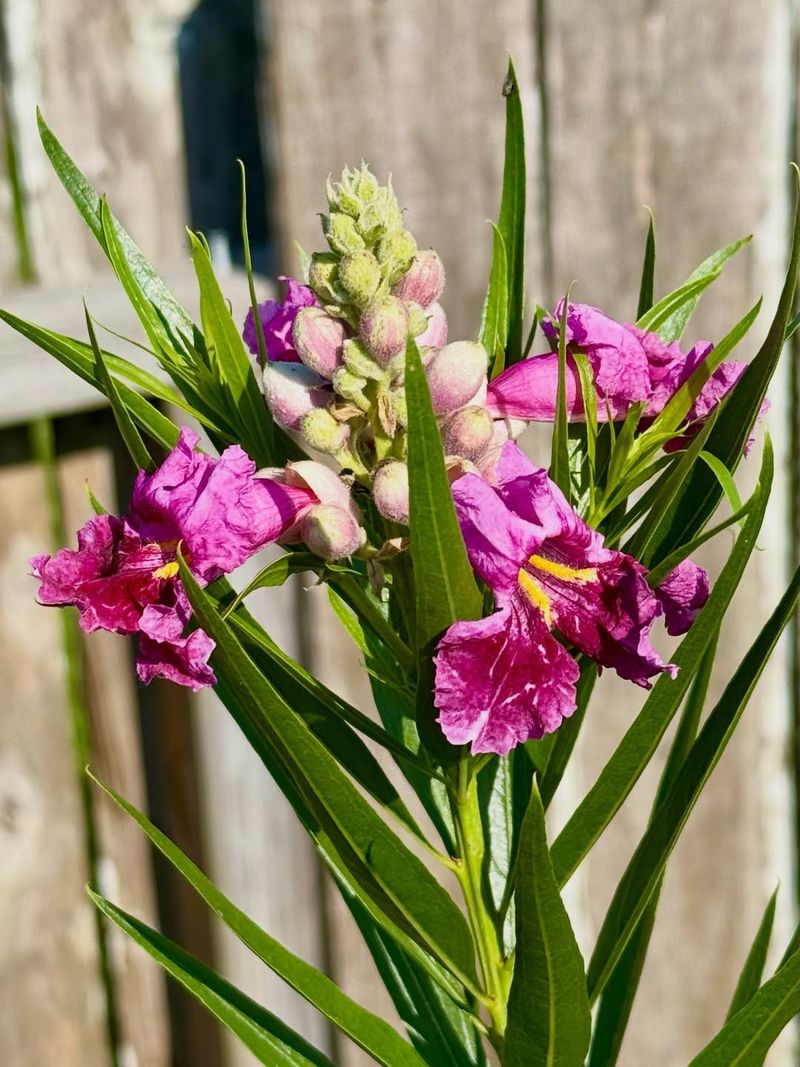
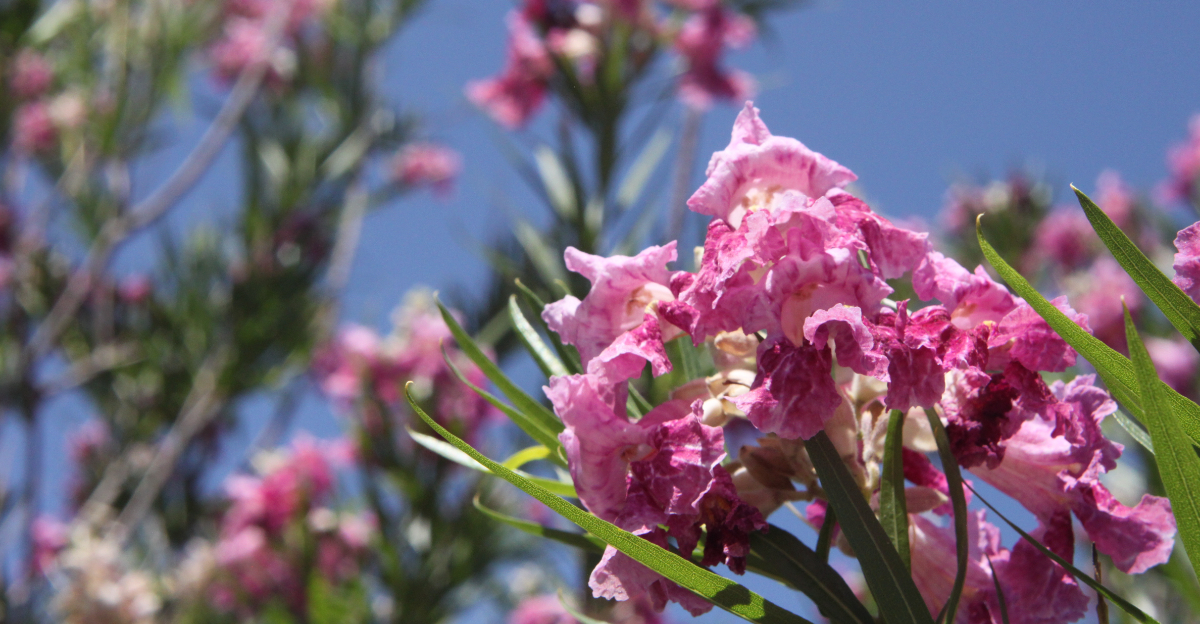
Few trees look this good while asking for almost nothing in return. Desert Willow brings soft, feathery shade and a burst of pink, purple, or white trumpet flowers that bloom from late spring straight through fall.
That long bloom window makes it one of the most visually rewarding trees you can plant in a hot, dry yard.
Unlike mulberry, it drops very little. Seed pods do appear in late summer, but they are thin and dry, nothing like the sticky fruit mess that mulberry creates.
Cleanup is minimal, and the pods are easy to rake if they bother you.
Water needs drop significantly once the tree is established, usually after the first two years. Deep watering every couple of weeks during summer keeps it healthy.
Overwatering is actually a bigger risk than underwatering with this species.
Growth rate is moderate. Expect eight to twelve feet of height over several years, with some specimens reaching twenty-five feet under good conditions.
It works well in smaller yards because the canopy stays relatively open and airy.
Birds love the flowers. Hummingbirds visit regularly during the blooming season, which adds a nice bonus for anyone who enjoys backyard wildlife.
Desert Willow earns its reputation as one of the cleanest and most rewarding shade trees available for hot, low-water landscapes.