Why A Red-Tailed Hawk Keeps Appearing In Your Wisconsin Yard
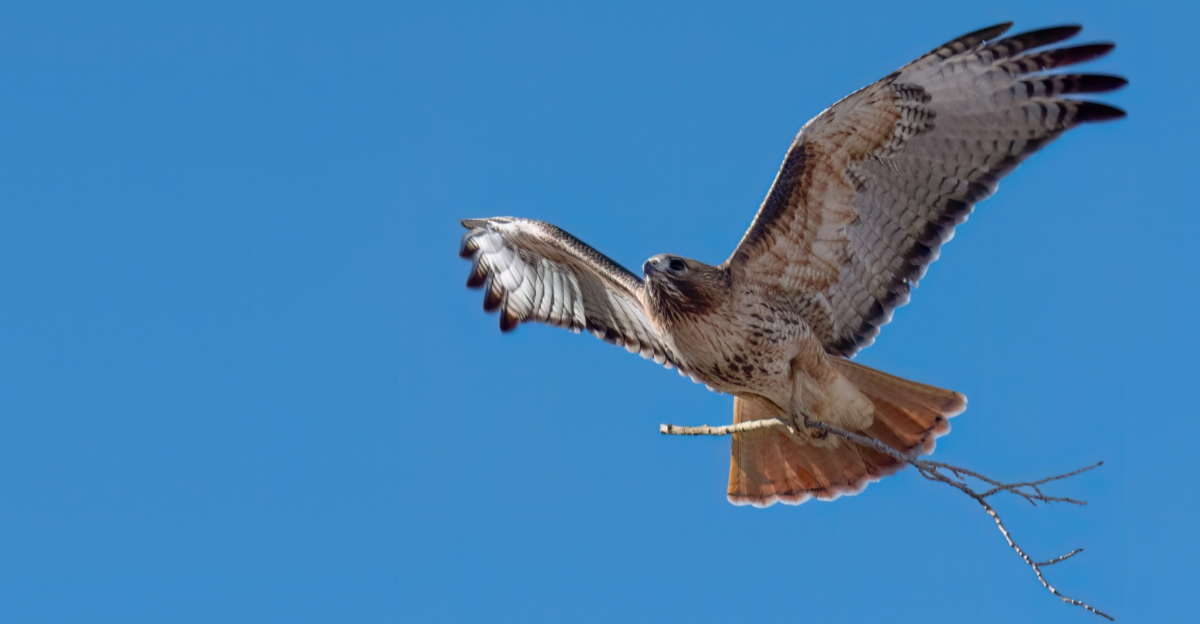
A shadow slid across the frost-stiffened grass before I even heard the wings. The visitor landed on my fence post with quiet authority.
It tilted its head once and fixed its amber eyes on the garden bed like it was reading a map. The yard went completely still.
In Wisconsin, these striking hunters are appearing in residential yards with surprising regularity. Plenty of people are left standing on their porches with more questions than answers.
What is it about your specific yard that keeps pulling that creature back? These birds are not casual visitors.
They are precise, calculating hunters, and every perch they choose reflects a deliberate read of the landscape below.
The good news is that Wisconsin yards often attract them for reasons that are easy to identify once you know what to look for. Your yard has been sending signals all along.
Prey Is Abundant Below
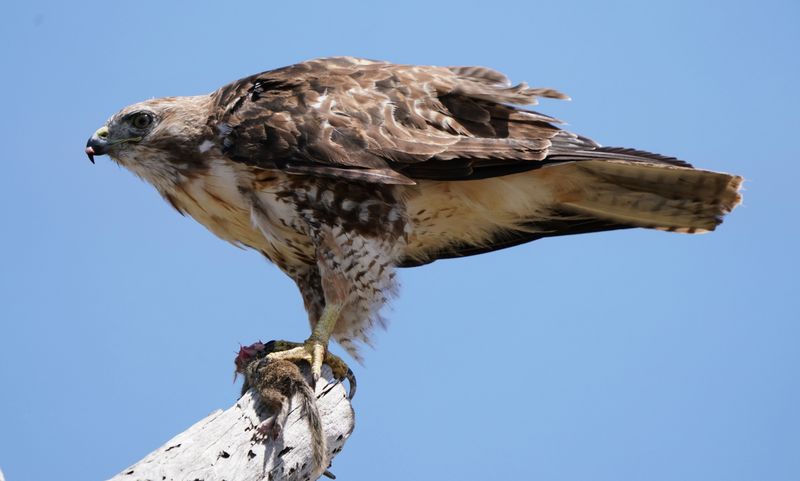
Your lawn may be offering more than you realize. Red-tailed hawks are built to hunt small mammals, and a yard full of mice, voles, moles, or chipmunks is impossible for them to overlook.
These birds have eyesight far more acute than a human’s, letting them spot a mouse moving through grass from 100 feet in the air.
If your yard has any of these creatures, the hawk already knows. Voles are especially common in Wisconsin lawns, traveling in shallow tunnels just beneath the soil surface.
A red-tailed hawk can detect the slight movement of grass caused by a vole pushing through its tunnel. That is not luck. That is precision hunting at its finest.
Compost piles, wood stacks, and overgrown garden borders all attract rodents, which in turn attract hawks.
If you have noticed the hawk circling the same corner of your yard repeatedly, there is almost certainly a prey hotspot underneath it.
The bird is not being dramatic. It is being efficient.Squirrels also land on the menu, especially younger or slower ones.
A red-tailed hawk will not turn down an easy meal just because it is larger than a mouse. If your yard has mature nut trees or a comfortable squirrel population, that hawk overhead is factoring all of it in.
Your yard is not just a yard to this bird. It is a well-stocked hunting ground worth coming back to again and again.
Tall Perch Trees Or Structures Are Nearby
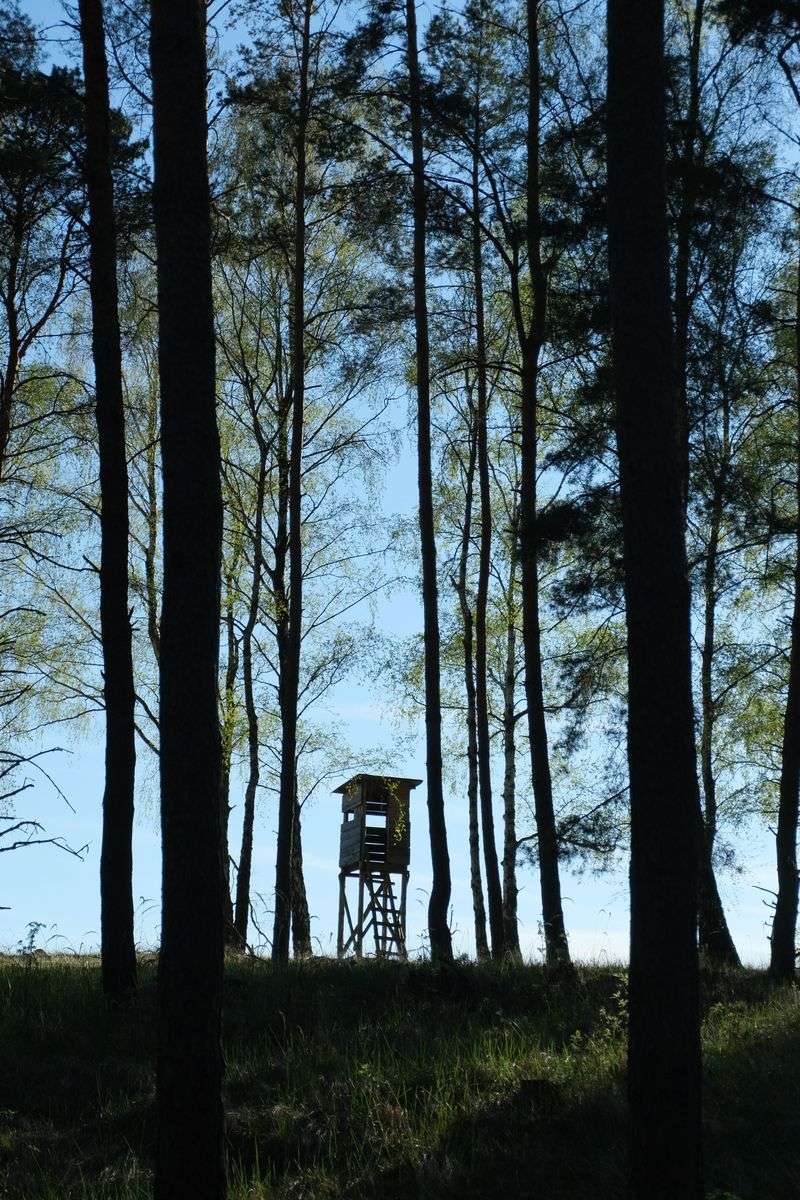
Hawks do not hunt from the ground up. They hunt from the top down. A red-tailed hawk needs a high, clear vantage point to survey its territory before making a move.
Tall trees, utility poles, rooftop peaks, and fence lines all serve this purpose beautifully. If your property has any of these, you have essentially installed a hawk observation deck without realizing it.
In Wisconsin, mature oaks, cottonwoods, and elms are favorite perch spots. Hawks prefer branches that are bare or lightly leafed, giving them an unobstructed 360-degree view of the area below.
A hawk sitting motionless on a high branch is not resting. It is actively scanning every inch of the ground beneath it.
Your Wisconsin Garden Changes Every Week. Your Plan Should Too.
Gardening in Wisconsin changes quickly throughout the season. Every Friday you’ll receive a simple weekly plan showing exactly what to plant, prune, fertilize, harvest, and protect so you never miss the right timing.
Utility poles are also prime real estate, and neighborhoods with open power lines along the yard edge often see these birds perching regularly.
The poles are tall, exposed, and perfectly positioned above open ground where prey is likely to move. For the hawk, it is the ideal combination of height and sightlines.
Homeowners sometimes wonder why the bird keeps returning to the exact same branch or pole. The answer is simple: that spot works.
It has the right height, the right angle, and proven results. Once a red-tailed hawk finds a successful perch, it returns to it across multiple hunting sessions.
If you have a favorite chair at your kitchen table, you already understand the logic. The hawk just has better reasons for sticking to its spot.
Your Yard Sits On An Open Habitat Edge
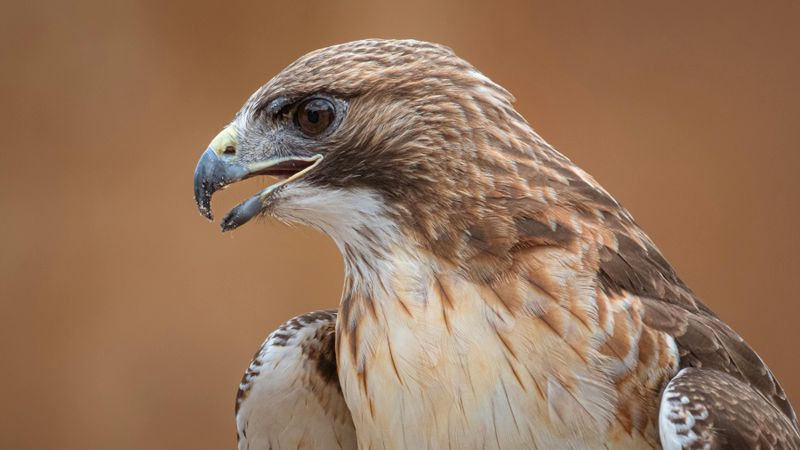
Location matters more than most people realize. Red-tailed hawks are edge hunters, thriving in areas where two different habitat types meet.
A yard that borders a field, a meadow, a brushy fence line, or even a park creates exactly the kind of transition zone these birds prefer.
Prey tends to concentrate at these edges, and the hawk knows it. Wisconsin naturally produces a lot of these edge environments.
Farm fields meeting wooded lots and suburban lawns bordering open green space create layered habitat that red-tailed hawks target.
Drainage ditches running alongside residential properties have the same effect. If your yard sits at one of these transitions, you are living inside a hawk’s preferred hunting zone.
The edge effect is a well-documented ecological pattern where biodiversity spikes at habitat boundaries.
More species of small mammals and birds cluster at these zones than in the middle of any single habitat type.
For a generalist predator like a red-tailed hawk, that concentration of prey is extremely appealing.
You might notice the hawk flying low along a fence line or tree row before circling up and scanning the open lawn.
That flight pattern is deliberate. The bird is working the edge, flushing prey from cover and catching it in the open.
Its position in the landscape made it a hawk destination, and no amount of landscaping changes the geography that puts you right in the middle of prime red-tailed hawk territory.
A Nesting Territory Is Close By
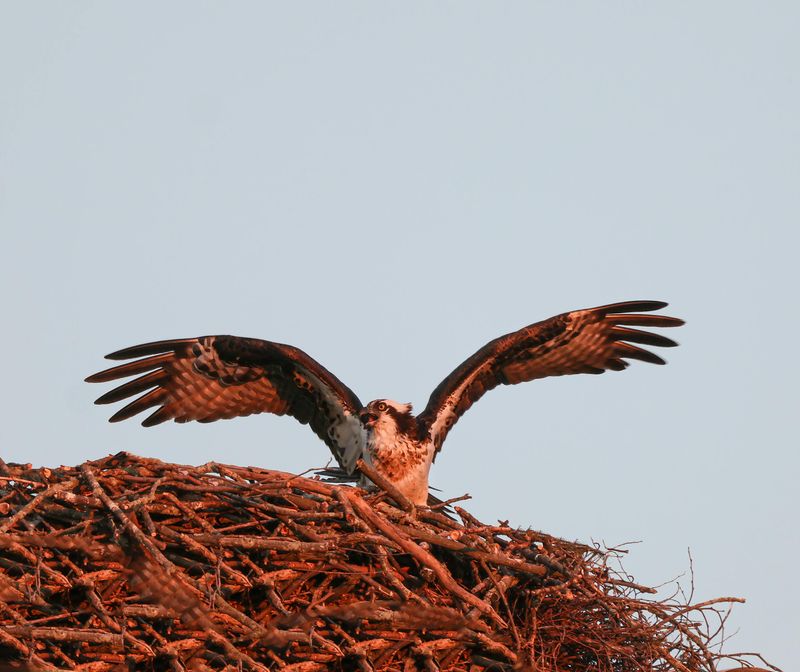
Spring in Wisconsin means one thing for red-tailed hawks: nesting season. These birds are highly territorial, typically claiming a home range of roughly one to three square miles.
If a pair has built a nest in a tall tree within a half mile of your house, your yard almost certainly falls inside their defended territory.
That means regular patrols, frequent perching, and a lot of overhead circles. Red-tailed hawk nests are large stick structures, often two and a half to three feet wide, usually placed high in a dominant tree.
In Wisconsin, mature oaks and elms are popular nesting sites, though the birds will also use cottonwoods near open fields.
Once a pair claims a nest site, they often return to the same tree for many consecutive years, sometimes expanding the nest each season.
During nesting season, both the male and female become noticeably more active around the territory. The male hunts constantly to feed the female during incubation.
Later, both parents hunt to feed growing chicks. More hunting pressure means more frequent visits to productive spots, including your yard.
If you hear a piercing, descending cry that sounds like it belongs in a movie soundtrack, that is almost certainly a red-tailed hawk announcing its presence. Hollywood uses that call for nearly every eagle scene you have ever watched.
Your backyard visitor has one of the most recognizable calls in North American wildlife. It chose your property as part of its home base.
Bird Feeders Concentrate Secondary Prey
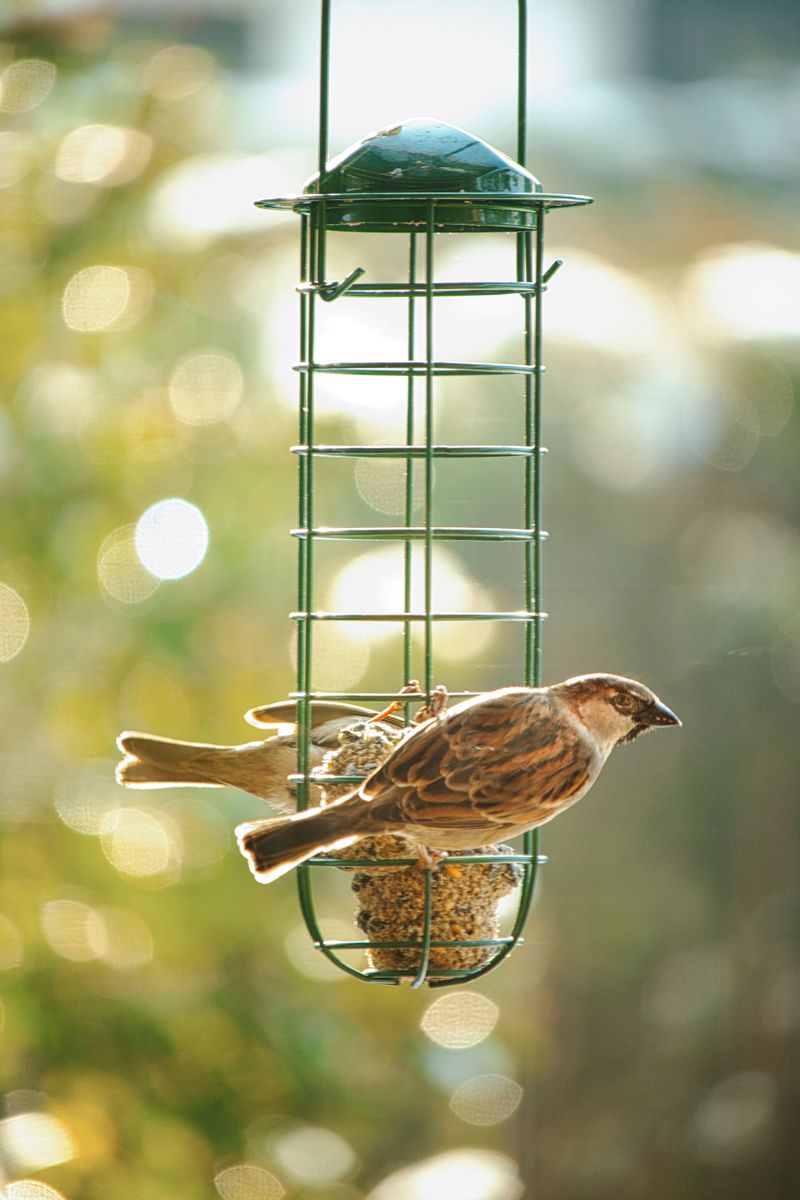
Your bird feeder is not just feeding birds. When you fill a feeder with sunflower seeds or suet, you attract sparrows, juncos, finches, and mourning doves in large numbers.
Those small birds cluster together in the open, often on the ground below the feeder where spilled seed collects. A red-tailed hawk sees that cluster from far away, and it is not coming for the seeds.
This is called secondary predation, and it is one of the most common reasons hawks visit suburban yards.
The feeder does not attract the hawk directly, but it creates a concentration of prey that is impossible to ignore.
Sparrows and doves feeding on the ground are easy targets for a fast, low strike from a hunting hawk.
You might feel conflicted about this if you set up your feeder specifically to enjoy songbirds.
Knowing that your setup might also draw in a predator is a tough pill to swallow. The good news is that most healthy songbirds are quick enough to escape, and the hawk rarely succeeds on every pass.
Placing feeders closer to dense shrubs gives small birds a fast escape route when a hawk appears. A dense shrub right next to the feeder can be a genuine lifesaver for your songbirds.
The hawk will still visit, but the odds shift a little more in the sparrows’ favor. Your yard can support both, as long as there is enough cover to give the little ones a fighting chance.
Winter Drives Prey Into Yards
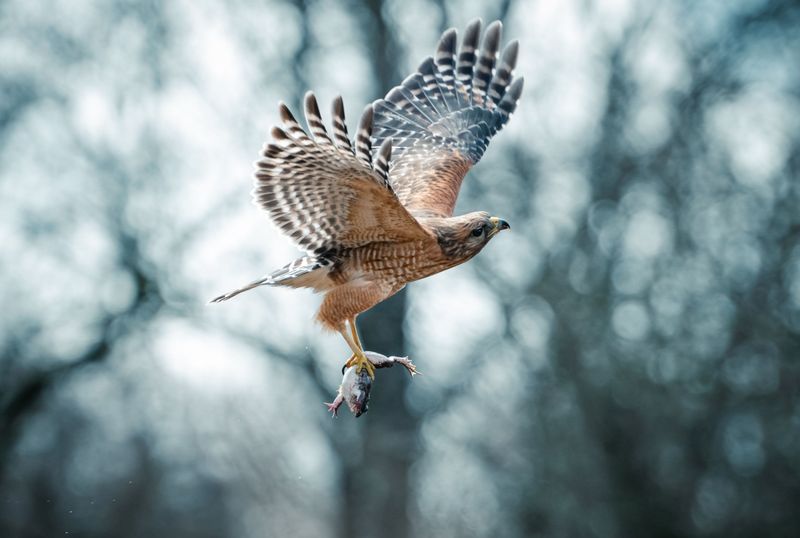
Wisconsin winters push everything toward survival mode. When fields freeze and snow blankets the ground, small mammals concentrate in areas where food and shelter are still available.
Residential yards with compost bins, garden debris, wood piles, and unfrozen soil patches become prime winter habitat for these creatures. Where the prey clusters, the hawk follows.
Red-tailed hawks are partial migrants. Many stay in Wisconsin through winter, especially in the southern part of the state, while some birds from the northern regions move further south when conditions get harsh.
Either way, the ones that remain need to keep hunting through the coldest months. A frozen cornfield offers almost nothing, but a suburban yard with a bird feeder, a brush pile, and a few warm outbuildings nearby is a reliable winter food source.
Snow cover actually helps the hawk in a surprising way. Dark movement against white snow is extremely easy to spot from above.
A mouse running across a snowy yard is practically impossible to miss from hundreds of feet overhead. Hawk visits often increase sharply in December and January, and this is exactly why.
The birds are under more pressure during the cold season, burning more calories to stay warm while prey becomes harder to find in natural settings.
Your yard becomes a winter hotspot not because you did anything different, but because the surrounding landscape got harder.
If you see a hawk sitting low and patient in your yard on a gray January morning, it is not lost. It is working harder than ever just to make it through the season.
Ground Cover Is Too Low To Hide In
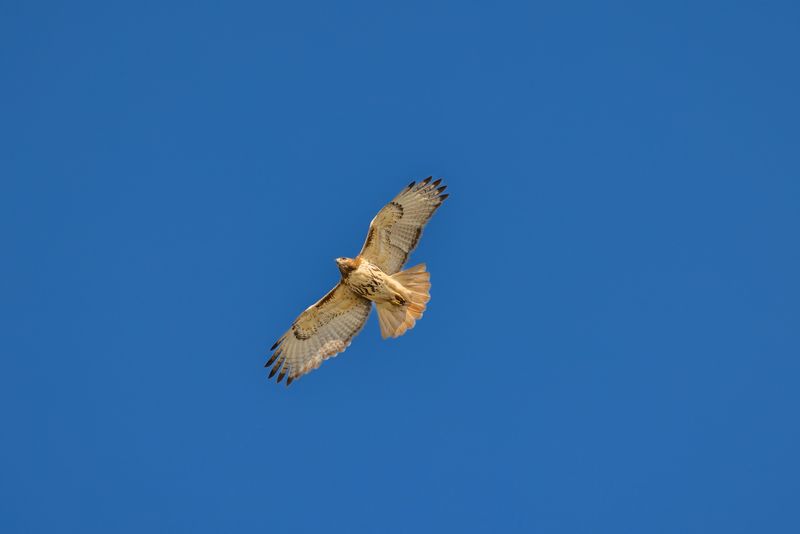
A short, open lawn creates ideal hunting conditions for a red-tailed hawk. Short grass gives hawks an unobstructed view of everything moving across the ground below.
Mice, voles, and other small mammals have almost no cover to hide under, making them far more exposed and easier to catch.
The cleaner and more open your yard looks from above, the more attractive it becomes to a hunting hawk.
Many Wisconsin homeowners take pride in a well-trimmed lawn, which is completely understandable.
From an ecological standpoint, however, that low uniform turf creates a hunting environment that strongly favors the predator over the prey.
There is nowhere to duck under, no tall stems to weave through, and no leaf litter to disappear into when a shadow passes overhead.
If you want to reduce hawk visits while supporting local wildlife, adding sections of taller native grasses or dense ground-level plantings can shift the balance.
Areas of little bluestem grass or native wildflower patches give small mammals and ground-feeding birds a better chance of escaping. It also makes your yard more interesting to look at, which is a bonus worth considering.
If you enjoy watching the hawk hunt and do not mind the occasional chase across your lawn, keeping things open is the way to go.
There is something genuinely thrilling about watching a red-tailed hawk drop out of the sky with precision and purpose.
Your lawn’s neat appearance may have turned your yard into one of the most exciting wildlife viewing spots on your street.
There Is A Reliable Water Source Nearby
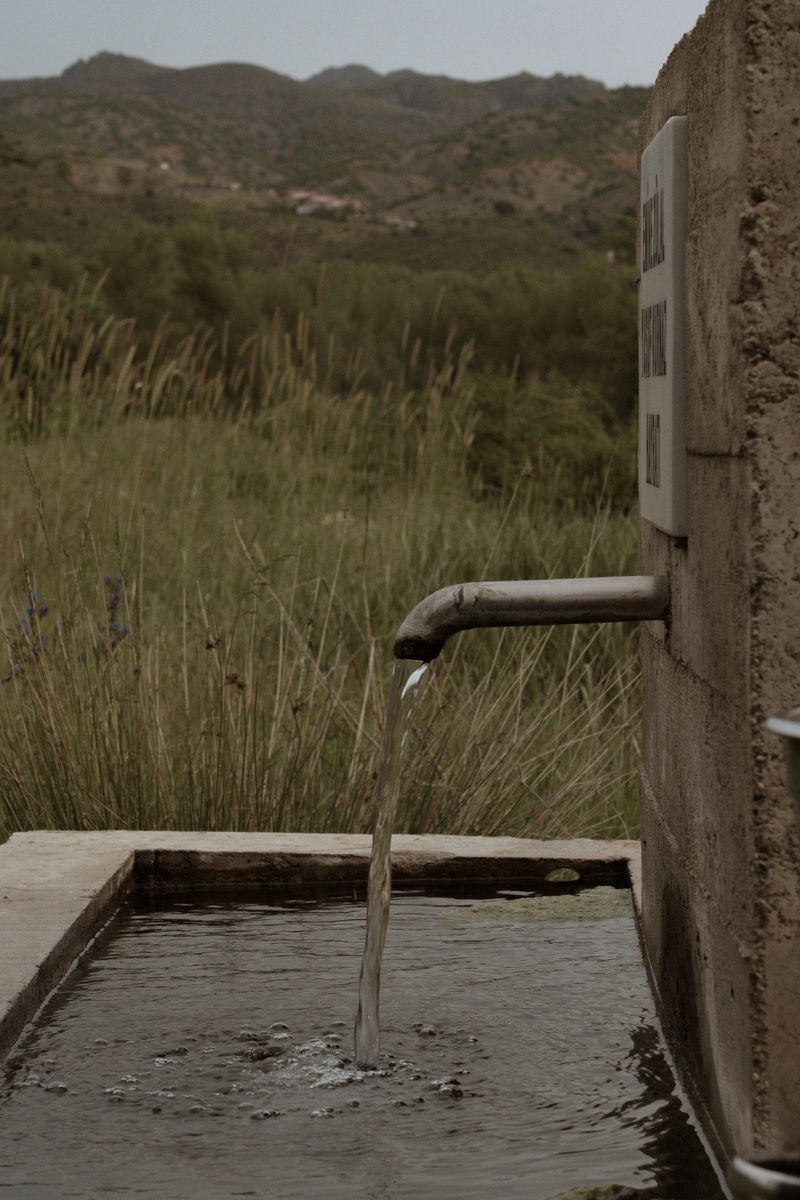
Water pulls wildlife in from every direction. A pond, a creek, a rain garden, or even a large birdbath creates a focal point for all kinds of animals.
Frogs, small fish, water insects, and the mammals that come to drink all gather near a water source on a regular schedule.
For a red-tailed hawk, a reliable water source in your yard means a consistent reason to return.
In Wisconsin, many properties back up to small streams, retention ponds, or wetland edges. These features dramatically increase the variety and number of animals moving through the area.
Cottontail rabbits often come to drink at dawn and dusk, and a hunting hawk that has learned their schedule will show up right on time.
Water also attracts larger concentrations of songbirds, especially during migration in spring and fall.
Birds that would not normally stop in your yard will land near a water feature to drink and bathe.
That temporary increase in small bird activity is another signal that draws hawks cruising overhead.
Even a simple garden pond or a deep birdbath can become the anchor feature that makes your yard worth visiting repeatedly.
Combine that water source with an open lawn, a tall perch nearby, and a steady rodent population, and you have created a near-perfect hawk habitat without intending to.
The next time that hawk lands near your pond and stares at the water’s edge, it is not admiring the landscaping. It is waiting for something to move, and it has all the patience in the world.