Shrubs That Handle California Heat Without Constant Watering
California heat can turn a pretty shrub into a constant watering project if the plant is a poor fit. Dry afternoons, reflected heat, and warm soil can wear plants down faster than many homeowners expect.
The right shrubs make the job feel easier. They settle in, handle tough sun, and keep the yard looking cared for without needing daily attention.
That does not mean they can be ignored completely. Even heat-tough shrubs need a strong start and deep watering while they establish.
After that, the best choices can carry more of the load on their own. They can frame a walkway or soften a fence without becoming needy.
Choose shrubs that match your climate and space, and your garden can stay full through summer without turning every week into a watering marathon.
1. Westringia Handles Heat With Clean Evergreen Shape
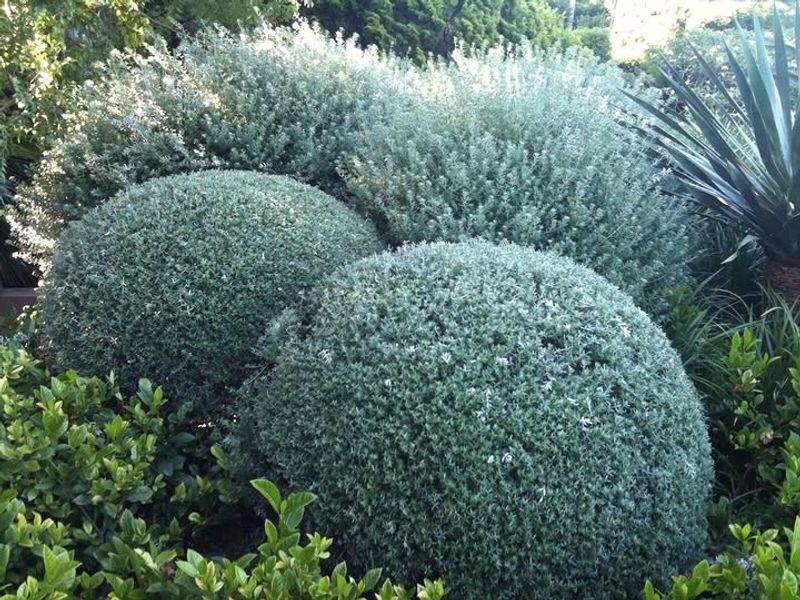
Not every shrub can look polished in the middle of a baking summer, but Westringia pulls it off without breaking a sweat.
Native to coastal Australia, this evergreen shrub has adapted beautifully to the dry, sunny conditions found across much of our state.
Its fine-textured, gray-green leaves stay tidy all year long, giving borders and pathways a clean, structured look even when rainfall is scarce.
Most varieties grow three to five feet tall and wide, making them easy to fit into a range of spaces. You can use them as a low hedge, a foundation planting, or a filler along a sunny fence line.
Small white or pale lavender flowers appear for much of the year, attracting bees and other pollinators without any extra effort on your part.
Westringia is one of those plants that rewards neglect. Once established after its first season, it rarely needs supplemental water outside of an occasional deep soak during extended dry spells.
It handles poor, well-drained soil without complaint and does not need rich amendments to thrive. Pruning is simple and optional since the plant naturally keeps a rounded, compact form.
If you want a low-maintenance evergreen that looks sharp through every season, this shrub deserves a serious look. It is tough, attractive, and surprisingly underused in home landscapes across the region.
2. Germander Makes A Low-Water Border Shrub
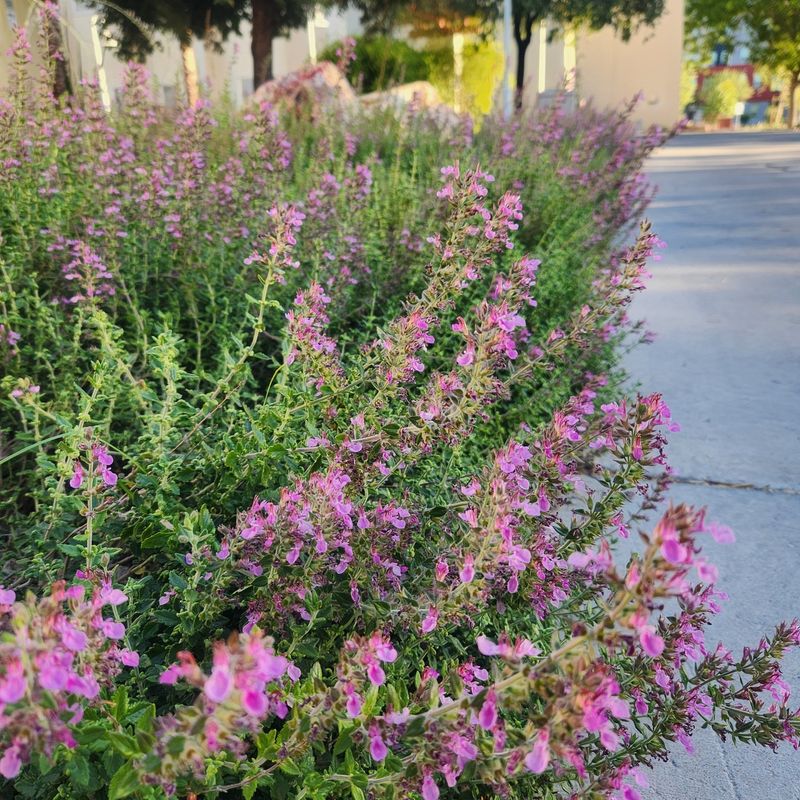
Few shrubs offer the combination of neat appearance, tough roots, and reliable blooms that Germander brings to a dry garden.
This compact Mediterranean native has been used in formal and informal gardens for centuries, and it is easy to see why.
The dark, glossy leaves hold their color through heat waves, and the small purple or pink flowers appear in spring and summer without any fuss.
Germander typically stays under three feet tall, which makes it a natural choice for edging pathways, framing entry gardens, or creating low borders along patios and driveways.
It responds well to light shearing, so you can keep it as a tidy formal hedge or let it grow in a looser, more relaxed shape.
Either way, it holds up beautifully under full sun and minimal water.
After the first growing season, established plants need very little irrigation. A deep soak every two to three weeks during summer is usually enough to keep them looking their best.
Your California Garden Changes Every Week. Your Plan Should Too.
Gardening in California changes quickly throughout the season. Every Friday you’ll receive a simple weekly plan showing exactly what to plant, prune, fertilize, harvest, and protect so you never miss the right timing.
They prefer well-drained soil and do not do well sitting in soggy ground, so raised beds or sloped areas work perfectly. Germander also resists deer browsing, which is a real bonus in areas where wildlife pressure is high.
For a reliable, low-effort border shrub that looks refined without demanding constant attention, Germander is a top-tier pick for any water-wise garden.
3. Rockrose Blooms Hard In Dry California Sun
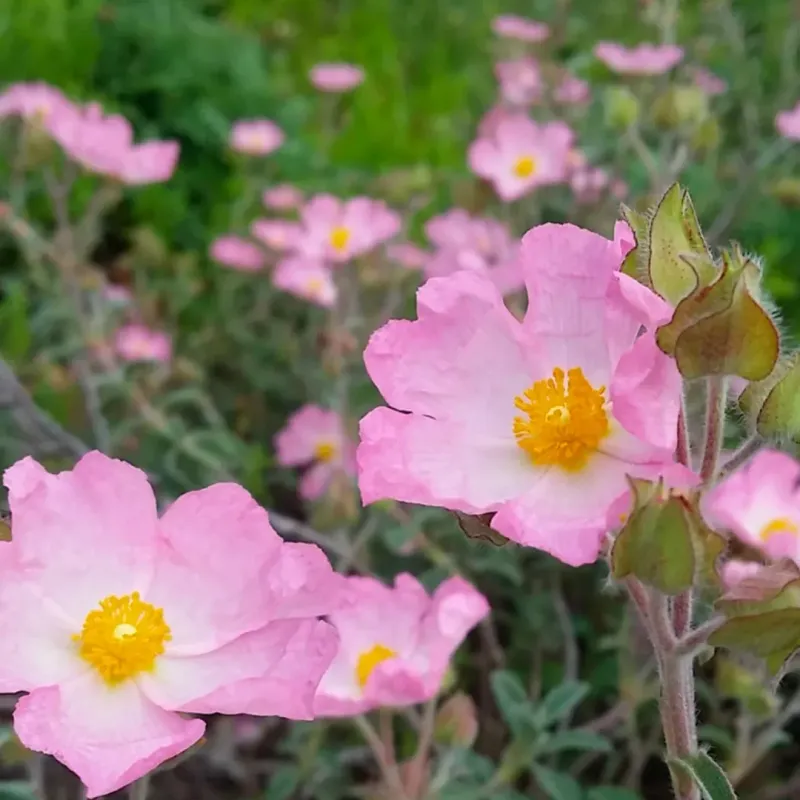
There is something almost defiant about the way Rockrose blooms. While other plants wilt and fade under intense summer sun, this tough Mediterranean shrub bursts into color with large, crepe-paper-like flowers in shades of pink, white, and magenta.
It is one of those rare plants that actually seems to enjoy baking heat and bone-dry soil.
Rockrose, or Cistus, grows quickly into a rounded mound that can reach three to five feet in height and spread. The slightly sticky, aromatic leaves give off a pleasant resinous scent, especially on warm afternoons.
Flowers bloom heavily in late spring and early summer, and even after the main flush, the plant keeps producing scattered blooms well into the season.
One of the best things about Rockrose is how little water it needs once established. In fact, overwatering is one of the few things that can actually set it back.
It prefers lean, fast-draining soil and thrives on slopes, hillsides, and areas where other plants struggle to get a foothold.
It is also highly fire-resistant compared to many other shrubs, which makes it a smart choice for areas near wildland zones.
Deer tend to avoid it as well. For a fast-growing, sun-loving shrub that rewards dry conditions with impressive seasonal color, Rockrose is genuinely hard to beat in any low-water planting plan.
4. Grevillea Brings Color Without Constant Irrigation
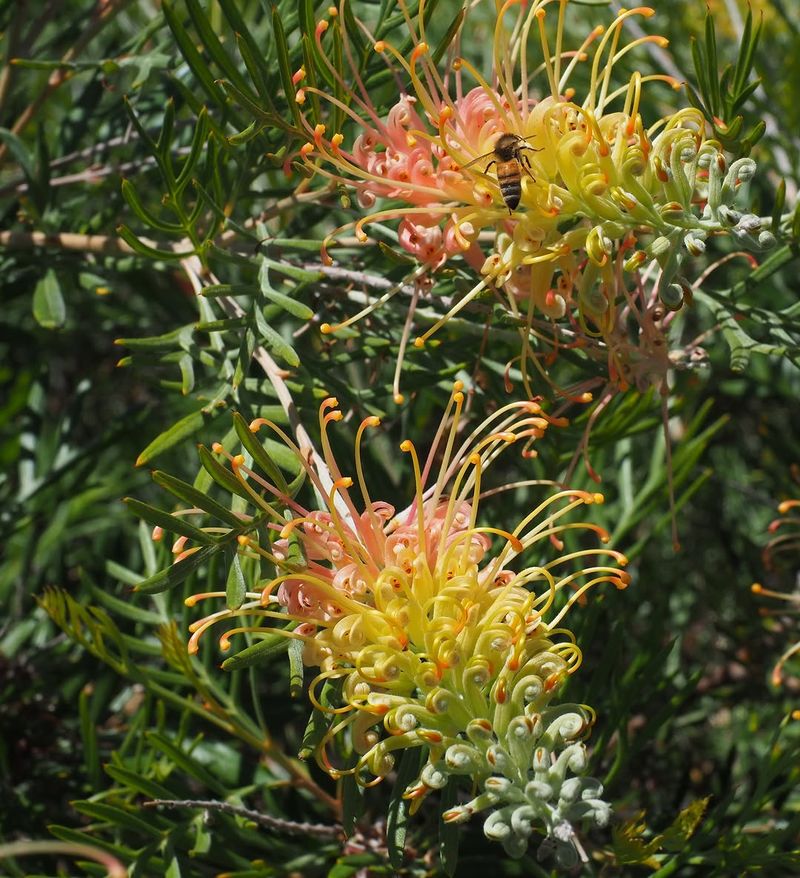
Bold, spidery flowers in shades of red, orange, pink, and yellow make Grevillea one of the most eye-catching shrubs you can plant in a dry garden.
Originally from Australia, this plant has found a welcome home in our state’s warm, dry climate.
Hummingbirds are especially drawn to the nectar-rich blooms, so having one in the yard practically guarantees regular wildlife visits.
Grevillea comes in a wide range of sizes, from compact two-foot groundcover types to large shrubs that reach eight feet or more.
The fine, needle-like or deeply lobed leaves give the plant a texture that stands out against more typical broad-leafed shrubs.
Many varieties bloom for most of the year, offering color even in the cooler months when other plants have gone quiet.
Water needs are very low once the plant is established, usually after the first full growing season. It does best in well-drained soil and full sun, and it actually prefers not to be fertilized with high-phosphorus products, which can stress the roots.
A little pruning after the main bloom period helps keep the shape tidy and encourages fresh growth. Grevillea is also resistant to oak root fungus, which is a common soil issue in many parts of the state.
For a shrub that delivers year-round interest, wildlife value, and drought toughness all at once, Grevillea is hard to overlook.
5. Texas Ranger Shrugs Off Heat And Lean Soil
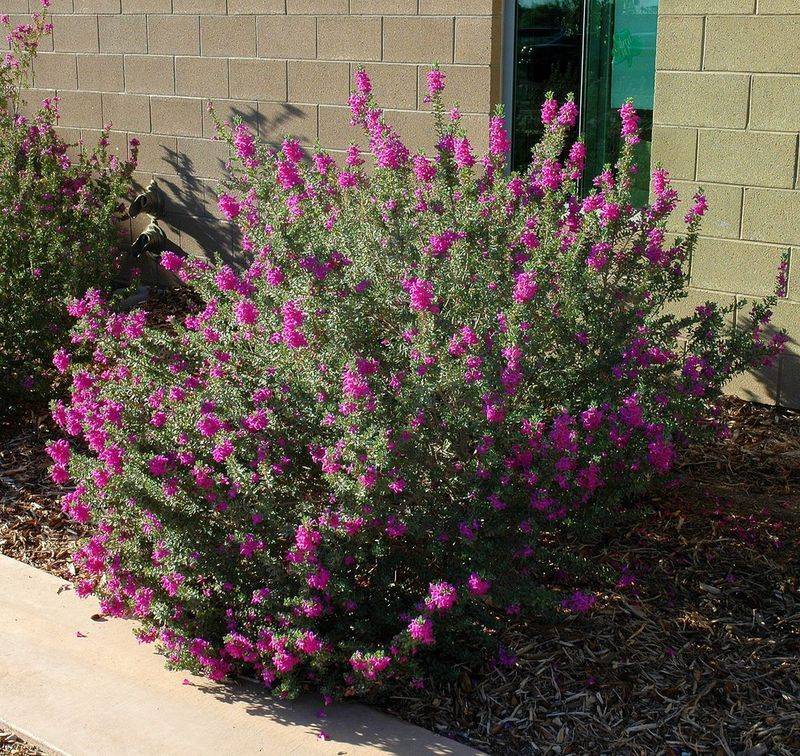
Sometimes called the barometer bush because it blooms in response to humidity and rain, Texas Ranger is a shrub that seems almost magical in dry landscapes.
After a summer storm or a stretch of humid weather, the silvery-gray plant suddenly erupts in a burst of purple, pink, or white flowers that can stop you in your tracks.
It is one of the most dramatic seasonal displays any low-water shrub can offer.
Texas Ranger, or Leucophyllum, grows into a rounded, dense mound that can reach four to eight feet depending on the variety.
The soft, silvery leaves are beautiful even when the plant is not in bloom, reflecting sunlight and giving the landscape a cool, airy feel.
It works well as a hedge, a specimen plant, or a backdrop for lower-growing perennials and grasses.
This shrub truly earns its reputation as a heat and drought champion. It thrives in lean, alkaline soils where many other plants struggle, and it needs no supplemental fertilizer once established.
Overwatering is actually the biggest risk with Texas Ranger, as it can cause root problems in poorly drained ground. Full sun and good drainage are the two key ingredients for success.
Pruning should be done lightly and only to shape, since heavy cutting can reduce blooming. For a low-effort shrub with high visual payoff, this one consistently delivers.
6. Bluebeard Adds Late Color With Little Water
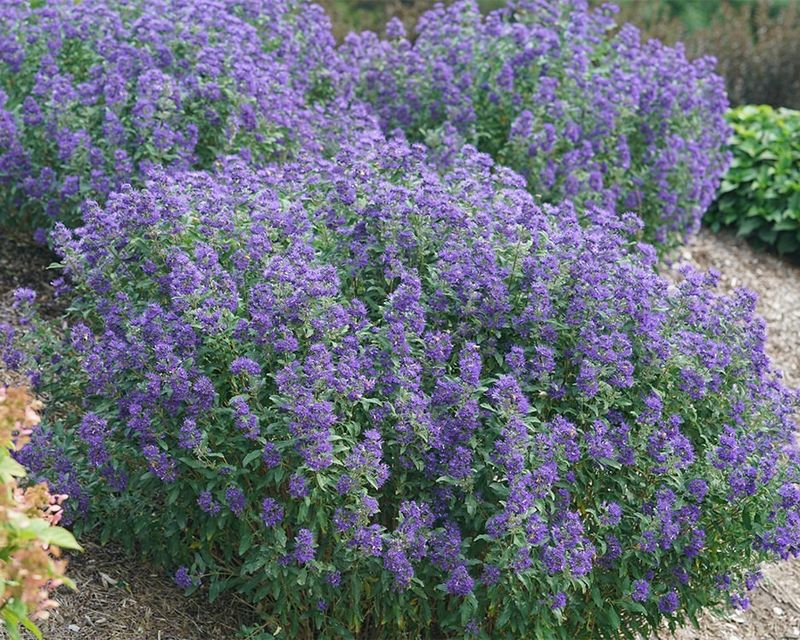
Late summer is when many gardens start to look tired and faded, but Bluebeard steps in right on cue with a fresh burst of vivid blue flowers.
Also known as Caryopteris, this compact, deciduous shrub blooms from late summer into fall, filling a gap that few other drought-tolerant plants cover.
The timing alone makes it worth planting, but the plant offers plenty more beyond its seasonal charm.
Bluebeard grows two to four feet tall with arching stems covered in gray-green, aromatic leaves.
The flower clusters appear in shades of bright blue to violet and attract bees and butterflies in large numbers.
It is one of the best late-season pollinator plants available for dry gardens, and it looks great paired with ornamental grasses, lavender, or Russian sage.
Once established, Bluebeard handles summer heat and drought with ease. It prefers full sun and well-drained soil, and it actually blooms better when the soil is on the lean side rather than rich and amended.
Hard pruning in late winter or early spring encourages the best flowering on new wood, so do not be afraid to cut it back fairly low before new growth begins. It bounces back quickly and comes in looking better than ever.
For a shrub that brings genuine excitement to the end of the gardening season without demanding much water, Bluebeard is a smart and satisfying choice.
7. Dwarf Myrtle Keeps Hot Borders Looking Tidy
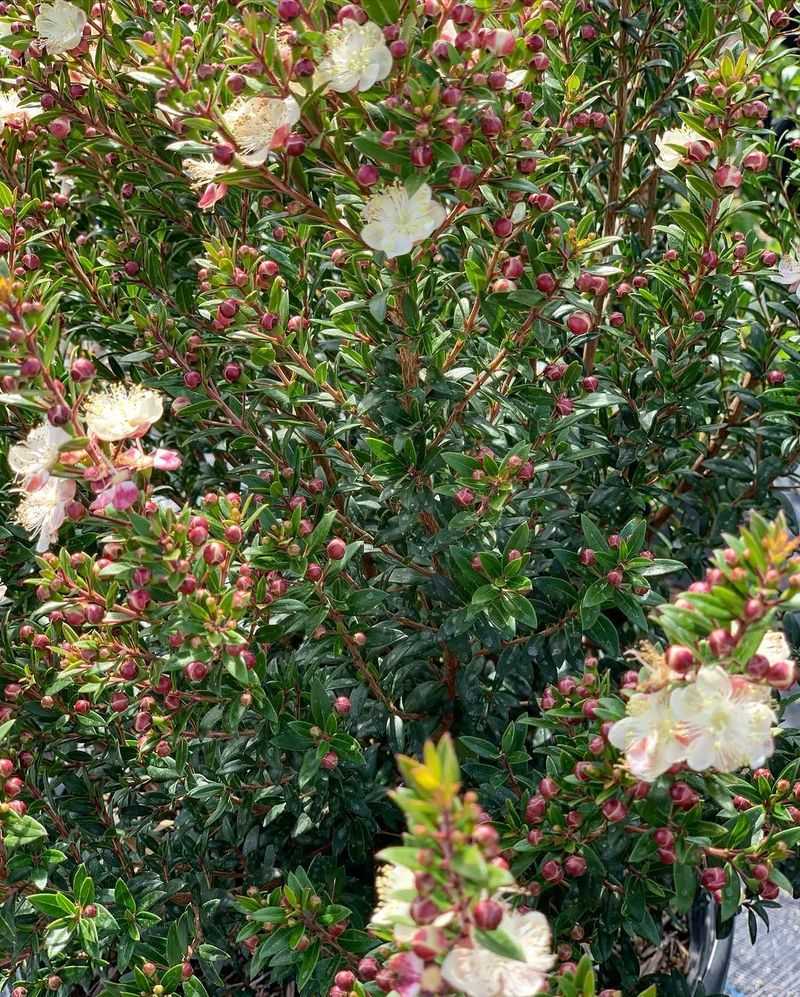
Compact, fragrant, and quietly elegant, Dwarf Myrtle has been a garden staple in Mediterranean regions for thousands of years.
The ancient Greeks and Romans used it in ceremonial garlands, which gives this little shrub a history as rich as its glossy foliage.
In a modern low-water garden, it earns its place through sheer reliability and good looks.
Dwarf Myrtle typically grows two to three feet tall and wide, making it ideal for low borders, container plantings, and edging along paths or patios. The small, dark green leaves are aromatic when brushed, releasing a pleasant herbal scent.
Tiny white flowers appear in summer and are followed by small dark berries that birds find irresistible. The plant stays naturally compact and does not require constant trimming to look neat.
In terms of water needs, Dwarf Myrtle is impressively tough once it gets through its first growing season. It tolerates heat, reflected light from walls and pavement, and extended dry periods without losing its luster.
Full sun is preferred, though it can handle light afternoon shade in the hottest inland areas. Well-drained soil is important, as the roots do not like to sit in wet ground for long.
A light trim after flowering keeps it looking sharp without much effort. For tidy, fragrant borders that require minimal upkeep, Dwarf Myrtle is a genuinely satisfying choice that never goes out of style.
8. Lavender Cotton Loves Dry, Sunny Spots
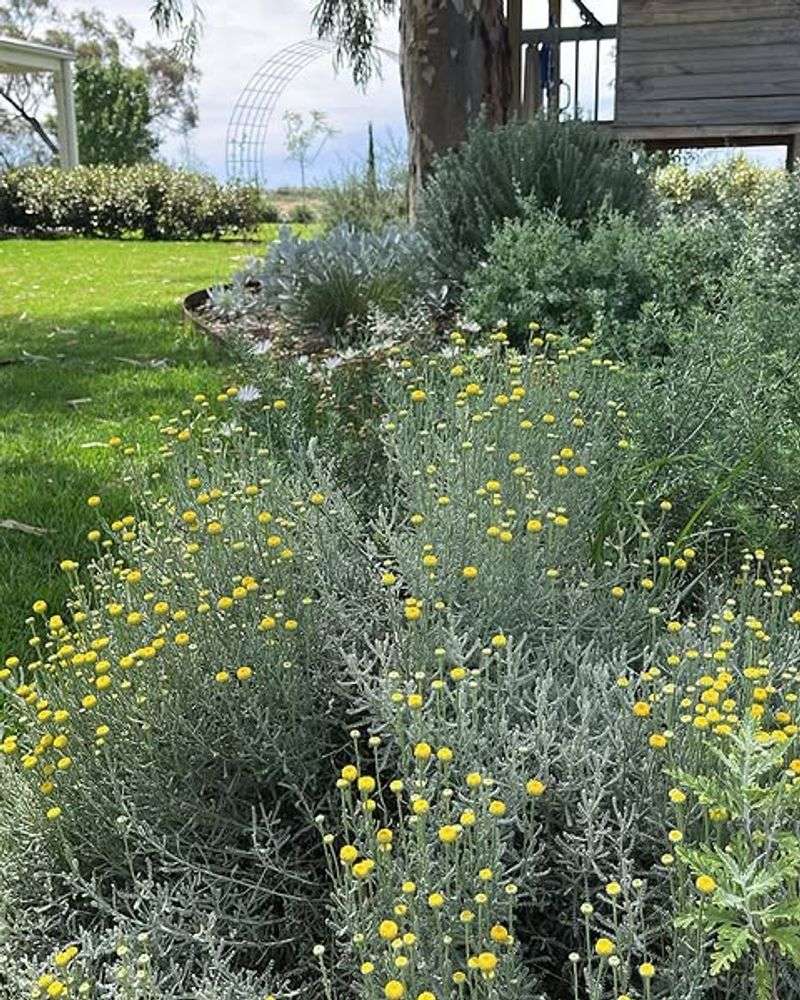
With its mounded silver foliage and cheerful yellow button flowers, Lavender Cotton looks like something straight out of a Mediterranean hillside.
Also known as Santolina, this tough little shrub thrives in exactly the conditions that challenge most garden plants: full sun, poor soil, and very little water.
It is one of those rare plants that looks better the drier things get.
Lavender Cotton grows one to two feet tall and spreads about twice as wide, forming a soft, billowing mound of finely textured, aromatic foliage.
The silver-gray color is striking on its own, but the bright yellow flowers that appear in late spring and early summer add a cheerful pop of contrast.
The plant works beautifully as a low border, a groundcover on slopes, or a companion to other drought-tolerant perennials and shrubs.
Once established, Santolina is about as close to maintenance-free as a garden plant can get. It needs no fertilizer, very little water, and only occasional pruning to keep its shape from getting too open and woody.
A hard cut in early spring every couple of years helps rejuvenate the plant and keeps it looking fresh. It handles heat, reflected light, and lean soil without any signs of stress.
The aromatic foliage also deters deer and many insect pests. For dry, sunny spots where other plants struggle to survive, Lavender Cotton is a dependable and visually appealing solution.
9. Jerusalem Sage Brings Structure To Dry Beds
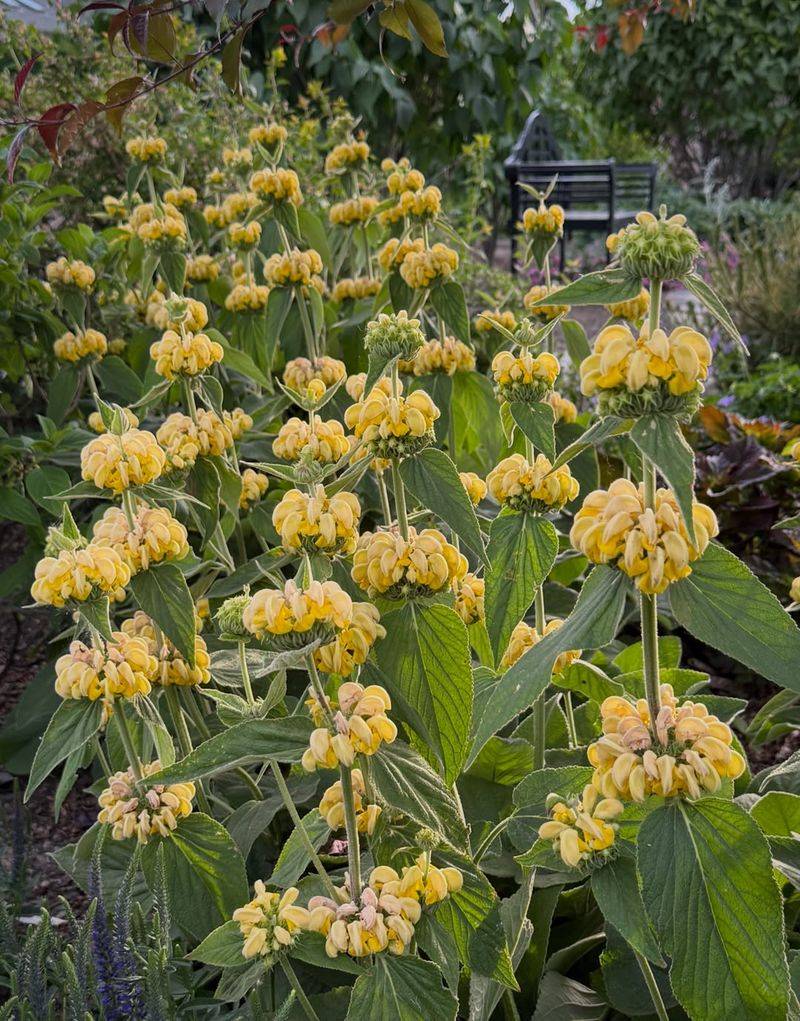
Few plants combine bold structure with tough drought tolerance the way Jerusalem Sage does.
The large, woolly gray-green leaves give this shrub a commanding presence in the garden, and the whorls of bright yellow flowers stacked along upright stems in late spring create a display that is genuinely striking.
Even after the flowers fade, the dried seed heads add interesting texture through summer and fall.
Jerusalem Sage, or Phlomis fruticosa, grows three to four feet tall with a slightly wider spread.
The thick, textured leaves are not just attractive but also functional, as the woolly coating helps the plant reduce water loss in hot, dry conditions.
This is a shrub that was literally built for heat and drought, and it shows in how effortlessly it performs during long dry stretches.
Full sun and excellent drainage are the main requirements for success. It actually prefers lean soil over rich, amended ground and does not need regular fertilizing to look its best.
Once established, deep watering every two to three weeks during summer is typically sufficient. Light pruning after flowering encourages a second flush of blooms and keeps the plant from getting too leggy.
Deer rarely bother it, and it pairs beautifully with other drought-tolerant plants like Rockrose, Lavender, and ornamental grasses. For bold structure and reliable performance in dry beds, Jerusalem Sage earns a top spot in any water-wise planting scheme.
10. Mexican Bush Sage Handles Heat Once Established
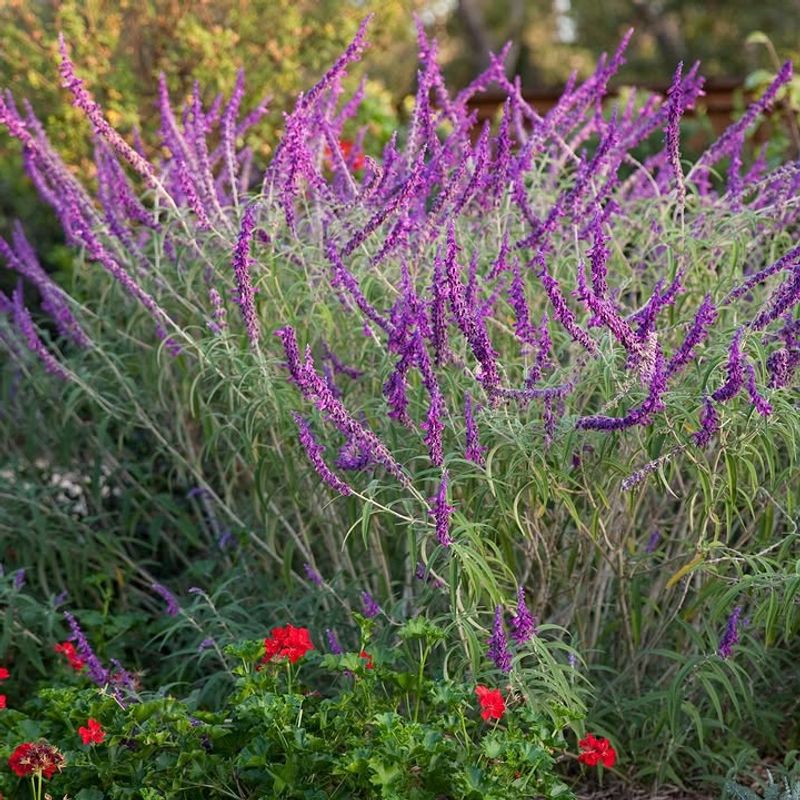
Velvet-soft purple flower spikes on graceful arching stems make Mexican Bush Sage one of the most visually appealing shrubs in any dry garden.
Also known as Salvia leucantha, this plant blooms heavily from late summer through fall, right when the rest of the garden is winding down.
The contrast between the soft, fuzzy purple blooms and the gray-green foliage is genuinely beautiful and hard to replicate with any other plant.
Mexican Bush Sage grows three to four feet tall and can spread just as wide, forming a full, arching mound that fills space quickly.
Hummingbirds and butterflies flock to the flowers throughout the bloom season, making it one of the best wildlife plants for late-season gardens.
The stems and leaves have a pleasant herbal fragrance when brushed, adding another layer of sensory appeal to the planting.
Getting through the first summer with regular watering is the main challenge, but once the roots are established, this plant becomes remarkably self-sufficient. It handles intense heat, reflected light, and extended dry periods without losing its vigor.
Full sun and well-drained soil are essential, and cutting the plant back hard in late winter encourages the best bloom on fresh new growth. It also works well in containers on hot patios where other plants tend to struggle.
For late-season color, wildlife value, and drought resilience, Mexican Bush Sage is a standout performer that rewards patience with a spectacular show.