What To Do With Your Arizona Citrus Trees Right Now And What To Avoid Until Fall
June is when a lot of citrus trees seem to be doing exactly what they should. The canopy is full, fruit is developing, and there is finally a sense that the hard work of spring is paying off.
That is often when people stop paying close attention. If a tree looks healthy, there does not seem to be much reason to think about anything beyond regular watering.
The problem is that appearances can be deceiving. Citrus trees enter one of the most challenging parts of the year long before obvious signs of stress appear.
A tree can look perfectly fine while dealing with conditions that become increasingly demanding as summer progresses.
That is why June is such an important month. Some actions can help trees handle the season ahead, while others are better postponed until cooler weather returns.
Arizona citrus trees often benefit more from patience than extra attention, and knowing the difference can have a lasting impact well beyond summer.
1. Deep Watering Becomes More Important In June
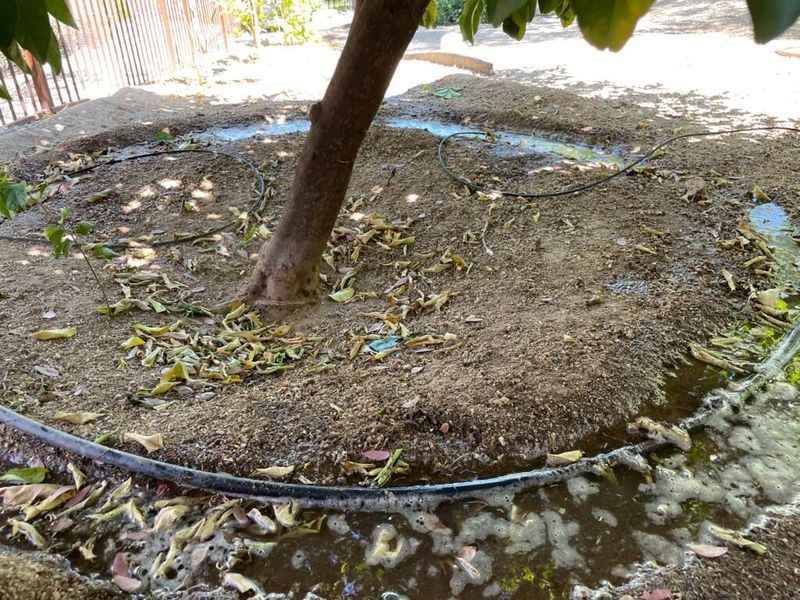
Shallow watering in June is a setup for struggling trees. When only the top inch of soil gets wet, roots chase moisture upward instead of growing deep where temperatures stay cooler.
Deep watering pushes moisture down 18 to 24 inches into the soil. Roots follow that moisture down, which gives the tree better stability and a stronger buffer against summer heat.
Water slowly and for longer periods rather than short, frequent bursts. A slow trickle from a hose left near the drip line for 45 minutes to an hour works well.
Drip irrigation systems set to longer run times also do the job effectively.
Mature citrus trees in hot desert climates generally need deep watering every 7 to 14 days during peak summer. Younger trees may need water more frequently since their root systems are still developing.
Check soil moisture before watering by pushing a wooden dowel or long screwdriver about 12 inches into the ground. If it comes out dry, it is time to water.
If it still feels damp, wait another day or two before watering again.
2. Mulch Helps Protect Shallow Roots
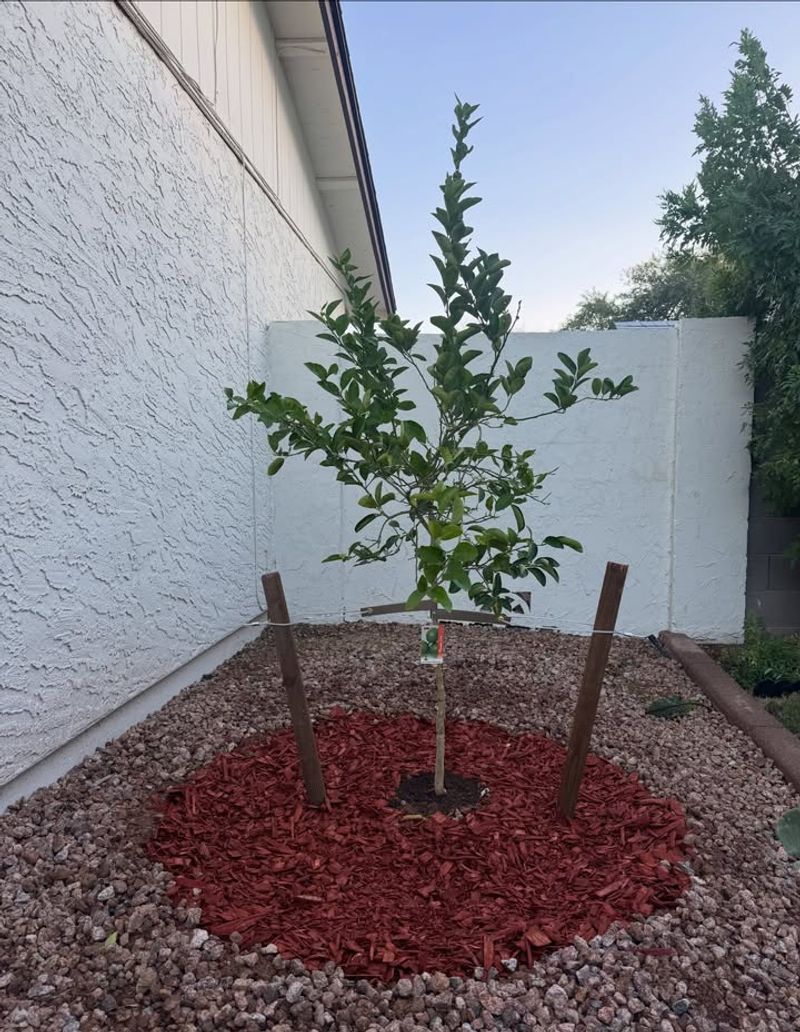
Bare soil in summer acts like a skillet. Ground temperatures under direct sun can climb well above air temperature, and citrus roots sitting close to the surface take the full brunt of that heat.
A layer of organic mulch spread around the base of your tree creates a buffer between the sun and the soil. It keeps moisture in longer and helps regulate soil temperature on the hottest days of the year.
Wood chips work especially well. Spread them about 3 to 4 inches thick in a wide ring around the tree, extending out toward the drip line where most of the feeder roots are located.
Keep mulch pulled back a few inches from the trunk itself. Piling mulch directly against bark can trap moisture against the wood and create conditions that invite rot or pest problems over time.
Organic mulches like shredded bark or wood chips break down slowly and add small amounts of organic matter back into the soil as they decompose.
Your Arizona Garden Changes Every Week. Your Plan Should Too.
Gardening in Arizona changes quickly throughout the season. Every Friday you’ll receive a simple weekly plan showing exactly what to plant, prune, fertilize, harvest, and protect so you never miss the right timing.
That is a bonus for desert soils that tend to be low in organic content.
3. Sunburn Protection Deserves Immediate Attention
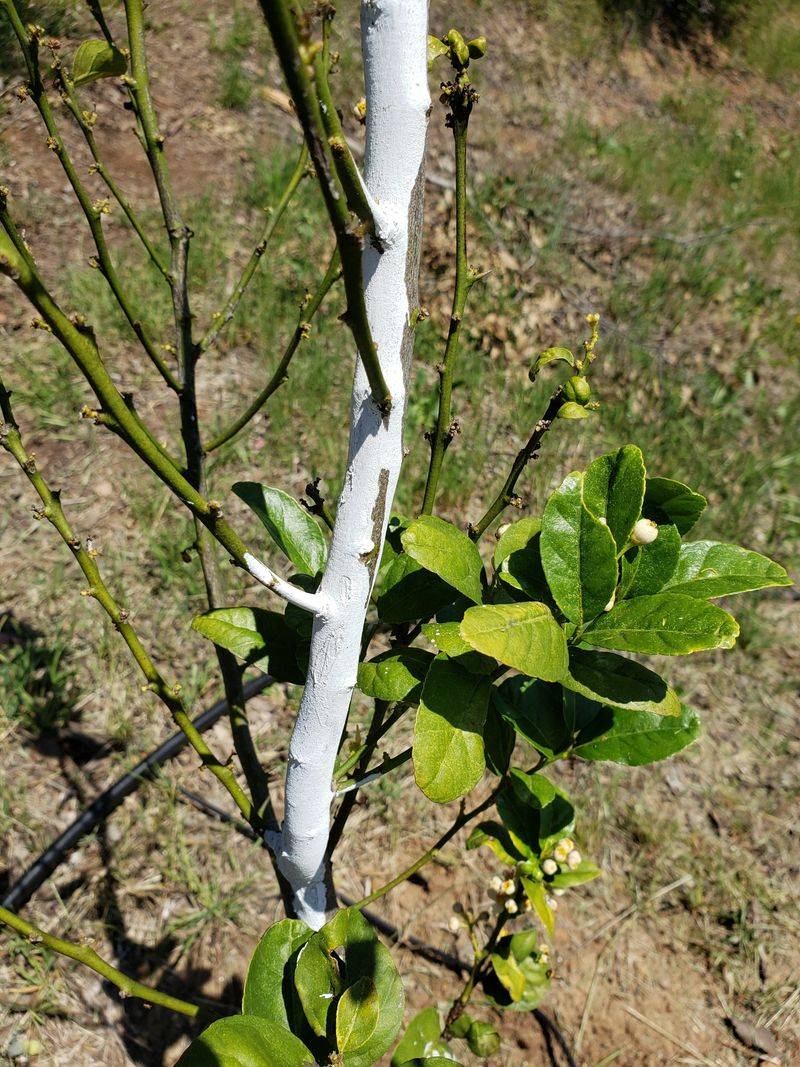
Citrus bark is surprisingly vulnerable to direct sun exposure. When branches are bare or trunks face the west or southwest, intense afternoon rays can scorch the bark and cause lasting damage beneath the surface.
Sunburned bark shows up as bleached, cracked, or sunken patches on the trunk and branches. Once that damage sets in, it weakens the tree and opens the door to secondary problems like pests and disease.
White interior latex paint diluted with water is a common and effective solution. Mix one part paint with one part water and brush it onto exposed trunks and lower branches.
It reflects sunlight without harming the bark.
Pay extra attention to the west and southwest-facing sides of the trunk. Those sides catch the most intense afternoon sun and are most likely to show heat-related bark damage if left unprotected.
If you recently pruned your tree and removed shade-producing branches, newly exposed bark needs protection right away. Even a few days of intense desert sun can cause visible damage on bark that was previously shaded.
4. Fallen Fruit Should Be Removed Promptly
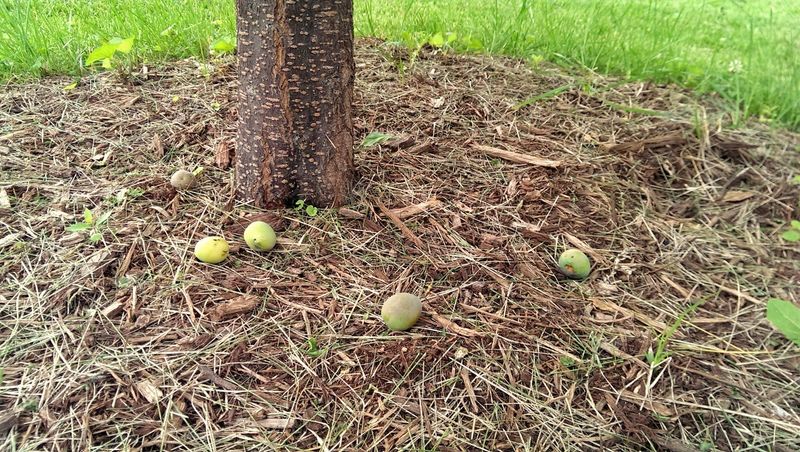
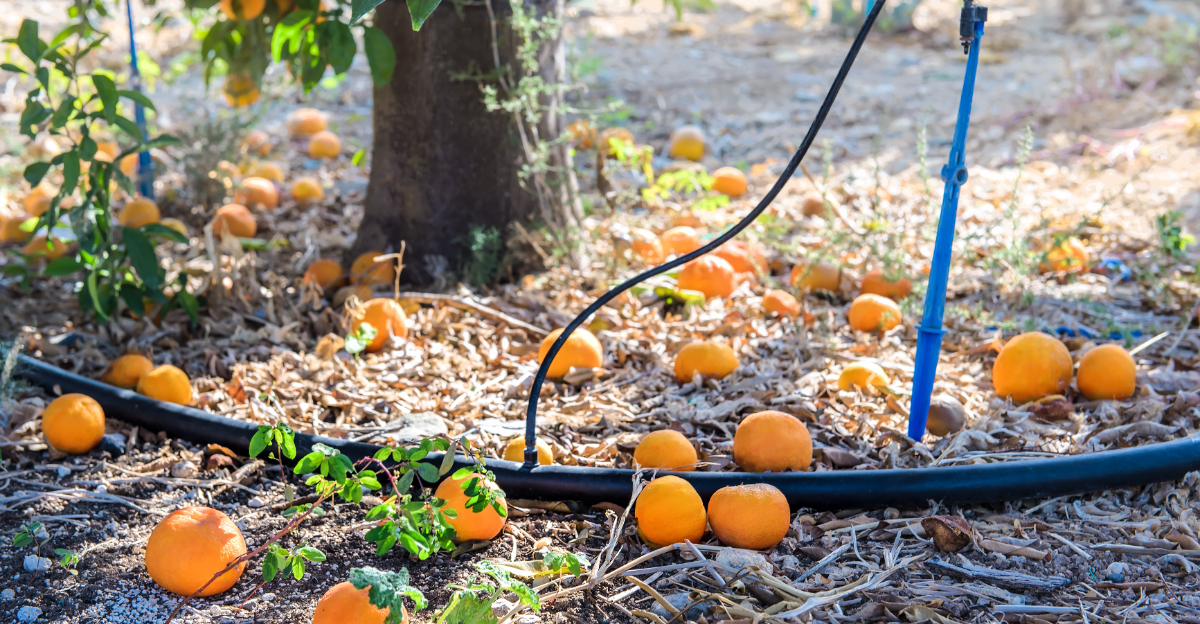
Rotting fruit on the ground is an open invitation for pests. Fruit flies, ants, and other insects move in fast once citrus starts breaking down in summer heat, and they rarely stay contained to just the fallen fruit.
Brown rot fungus is another concern. It can spread from decomposing fruit on the ground upward onto healthy fruit still hanging on the tree, especially when monsoon humidity arrives in July and August.
Pick up fallen fruit every few days throughout June. Do not let it sit for a week or more.
In triple-digit temperatures, fruit breaks down quickly and the smell alone attracts unwanted visitors to your yard.
Dispose of fallen fruit in a sealed trash bag rather than tossing it into an open compost pile. Composting citrus is possible but works best in a properly managed bin where temperatures get high enough to break things down safely.
Check underneath dense canopies where fruit can drop and go unnoticed. Low-hanging branches sometimes hide fallen fruit for days before anyone spots it sitting there fermenting in the heat.
Keeping the ground under your trees clean is one of the simplest things you can do all summer.
5. Heavy Pruning Can Wait Until Fall
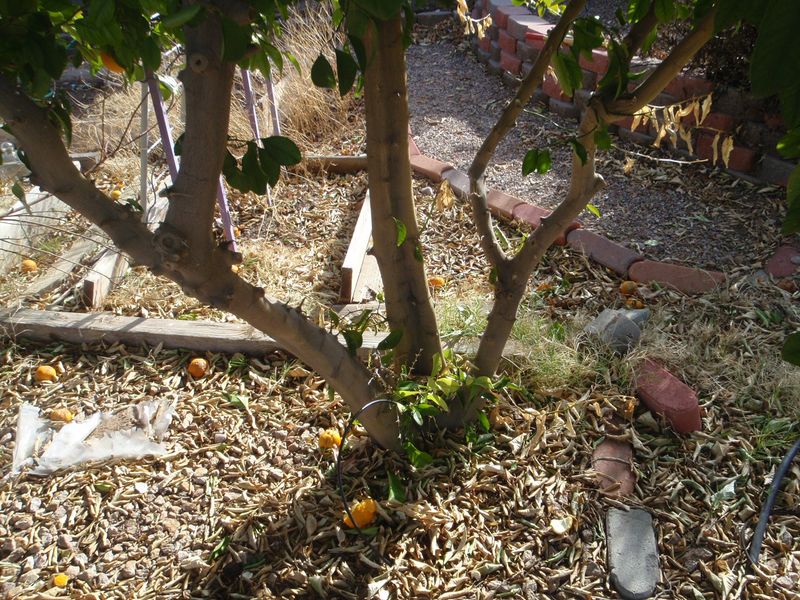
Grabbing the pruning shears in June feels productive, but heavy cuts right now can seriously set back your tree. Removing large amounts of foliage strips away the natural shade the canopy provides to the trunk and inner branches.
Exposed bark after aggressive summer pruning can sunburn within days. Desert sun in June and July is intense enough to damage freshly exposed wood quickly, and that damage can linger for years if it goes deep enough.
Pruning also triggers new growth. Tender new shoots pushing out in triple-digit heat have a rough time establishing themselves.
They often scorch at the tips or drop off before they can harden into mature growth.
Light cleanup is acceptable. Removing clearly damaged, crossing, or broken branches during summer is fine and does not create major problems.
The issue is large-scale shaping or canopy reduction during peak heat months.
Fall is the right window for heavier work. Once temperatures consistently drop below 100 degrees and nighttime lows cool down, the tree handles pruning stress much better and new growth has time to harden before winter arrives.
Late September through November is generally the preferred pruning period for desert citrus.
6. Exposed Trunks Need Extra Sun Protection
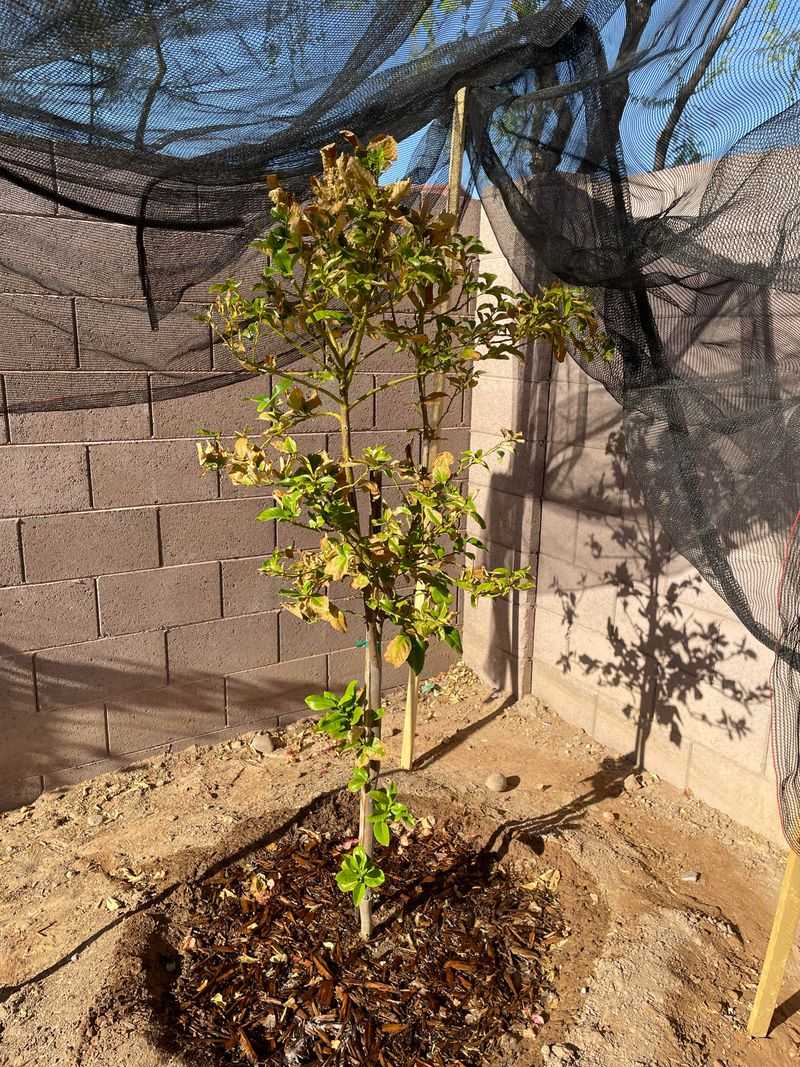
Young citrus trees are especially at risk when their trunks have little to no canopy cover above them.
Thin bark on a newly planted or recently pruned tree offers almost no natural insulation against intense summer sun.
Southwest-facing trunks take the hardest hit each afternoon.
The sun angle in summer sends direct rays straight into the lower trunk area, and temperatures at the bark surface can get high enough to cause real structural damage.
White latex paint diluted with water is the go-to solution most desert gardeners rely on. It reflects solar radiation without clogging the bark and can be applied quickly with a brush or small roller.
Shade cloth is another option for very young trees.
Propping a section of 30 to 40 percent shade cloth on the west side of the trunk during the hottest afternoon hours gives the bark a break without blocking air circulation entirely.
Cardboard, burlap, or tree wrap can also work temporarily. These materials are not as long-lasting as paint but they do provide quick protection if you notice bark starting to look bleached or cracked before you have paint on hand.
Check protected trunks every few weeks. Paint can wear off, wraps can shift, and shade cloth can fall down.
7. Major Planting Projects Should Be Postponed
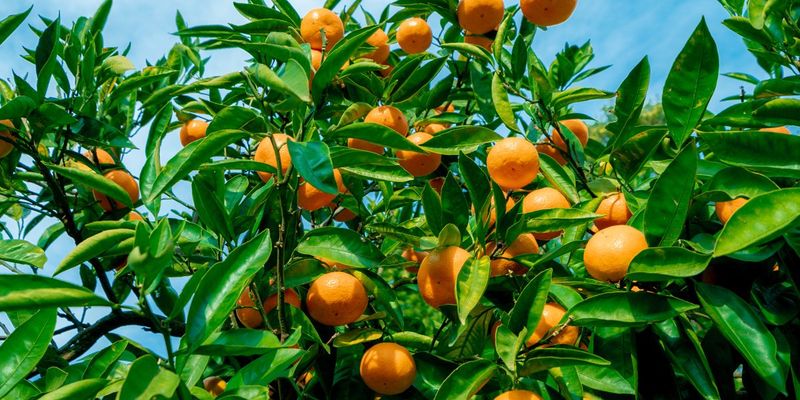
Planting a new citrus tree in June sounds like a great idea right up until the first week of triple-digit heat hits. Newly transplanted trees have not had time to establish roots, and that makes them extremely vulnerable to heat stress during summer.
Root systems need weeks to anchor into new soil and begin pulling up moisture efficiently. During that adjustment period, the tree depends heavily on what moisture is available right at the root ball.
Summer heat pulls moisture out of soil faster than stressed roots can absorb it.
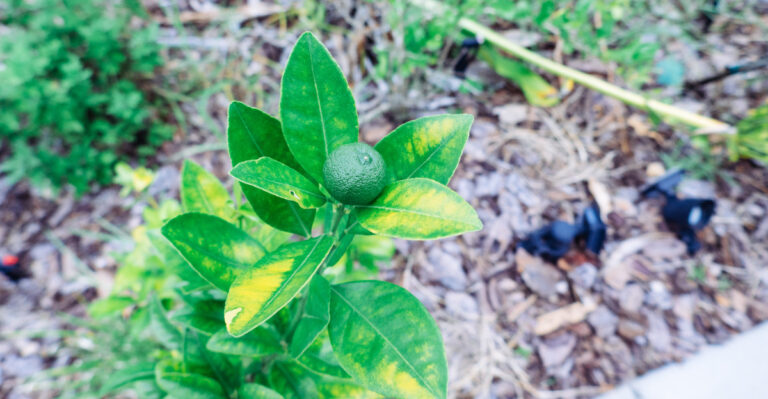
Transplant shock combined with extreme heat is a tough combination for any new tree to push through. Leaves may yellow, drop, or curl.
The tree spends all its energy just surviving rather than putting out new roots or growth.
Nurseries in hot desert regions often see lower citrus survival rates for trees planted between June and August.
Fall planting, typically between late September and early November, gives new trees warm soil for root growth without the punishing heat overhead.
If you already have a citrus tree sitting in a nursery container, keep it watered and shaded until fall arrives. Container trees handle summer better than freshly planted ones because the root ball stays intact and the tree stays in a controlled environment.
8. Root Disturbance Creates Extra Summer Stress
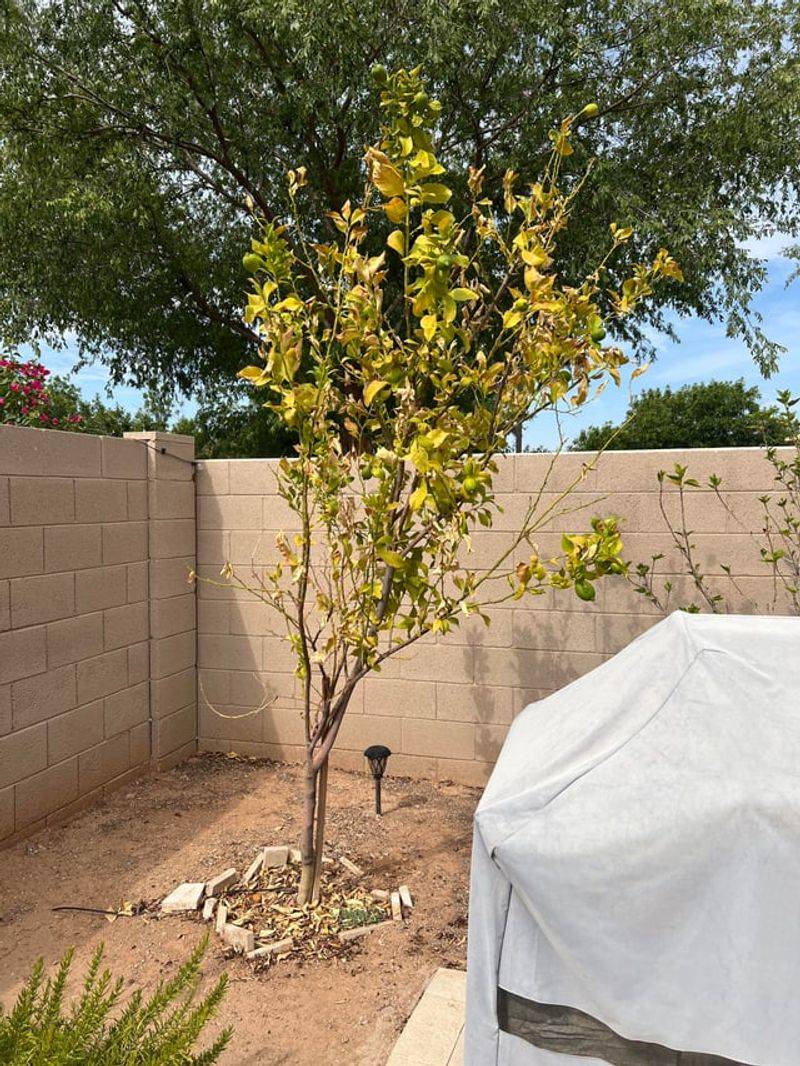
Roots working hard in summer heat are doing a critical job.
They are pulling water and nutrients up through the tree constantly, and any disruption to that system at the wrong time can push a tree into serious stress quickly.
Digging near the base of a citrus tree during summer is risky. Feeder roots spread out wide and sit relatively close to the surface.
Cutting through them while the tree is already dealing with extreme heat removes part of its ability to absorb the water it desperately needs.
Rototilling, edging aggressively, or installing irrigation lines near established trees during June through August should be pushed back to fall if at all possible.
The timing matters more than most people realize.
Even foot traffic compacting the soil around the root zone creates problems.
Compacted soil reduces the space roots need to breathe and slows water infiltration right when the tree needs moisture to move freely through the soil profile.
If you need to do any work near the root zone, keep it as minimal as possible. Hand tools cause less damage than power equipment, and working in the early morning when temperatures are lower reduces the compounding stress on the tree.