Where Ohio Gardeners Should Never Plant Coneflowers (And Where They Thrive Instead)
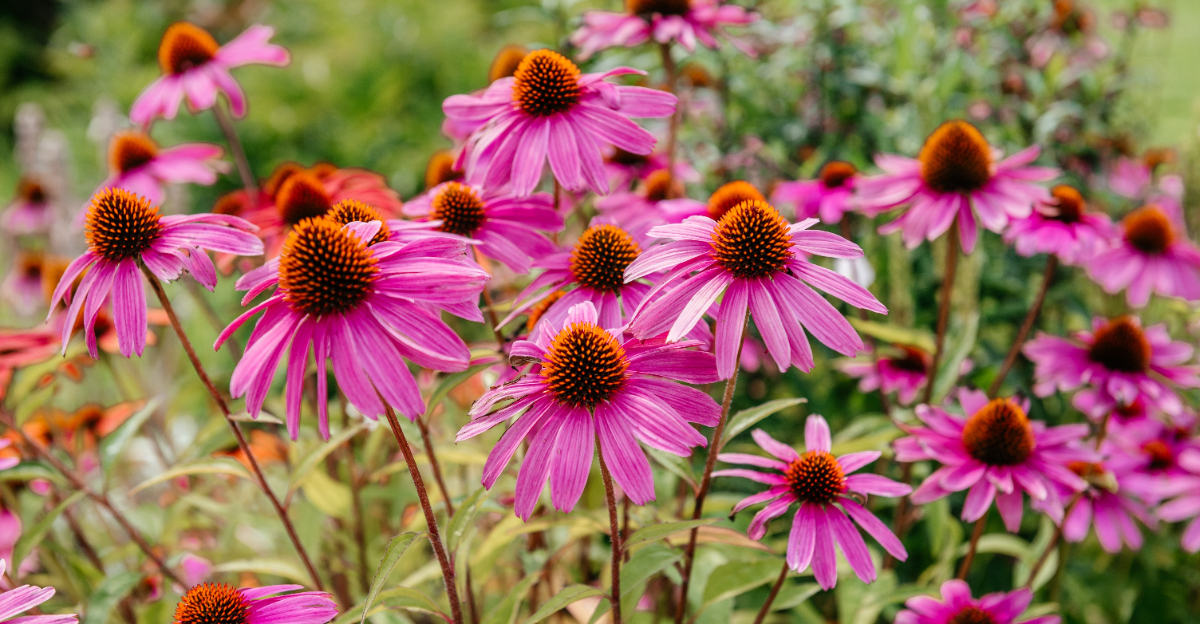
These Ohio natives handle summer heat, drought, and neglect better than most perennials in the garden.
Pollinators adore them. They seed themselves. They come back stronger every year without asking for much.
And yet Ohio gardens are full of coneflowers that never quite deliver the display they were supposed to.
Pale stems that flop over by July. Sparse flowers on plants that looked promising in spring. Entire patches that survive without ever really performing.
The problem is almost never the plant. It is the location.
Coneflowers evolved in specific conditions, and when the planting spot does not match those conditions, even a tough native prairie plant starts showing its dissatisfaction in very visible ways.
Some spots in an Ohio garden set coneflowers up to thrive. Others work against them from the moment they go in the ground.
Have you been blaming the variety or the weather when the real issue was always the spot you chose?
Four places in Ohio gardens consistently produce struggling coneflowers. Four others produce the kind of display worth photographing.
Soggy Clay Corners Produce Root Problems
That low corner of the yard where puddles linger for two days after a rainstorm is not a coneflower spot. It is a trap that looks like a planting opportunity.
Coneflowers evolved in well-drained prairies and open meadows where roots have constant access to oxygen.
When soil stays saturated, that oxygen disappears and roots begin breaking down from the outside in. The plant above ground keeps trying to function while the root system below gradually loses the ability to deliver water and nutrients upward.
Ohio clay compounds this problem considerably. It holds moisture like a sponge, compacts under foot traffic, and leaves roots with almost no room to move through the soil profile.
A coneflower planted in heavy, wet clay might survive the first season on sheer stubbornness, but the following year’s performance reveals the truth.
The fix does not require major landscaping work.
Raised beds solve the drainage problem immediately. Amending existing soil with coarse sand and organic compost before planting improves drainage significantly in most Ohio yards.
A naturally sloped area where water moves away quickly after rain works just as well without any amendment.
Soggy clay corners have better uses. Rain gardens filled with swamp milkweed or blue flag iris actually prefer those wet conditions.
Give those plants the corner and move the coneflowers somewhere the ground dries out within a day or two after rain.
The puddle is a clue. The coneflower has asked you to read it.
Deep Shade Under Mature Trees Creates Two Separate Problems
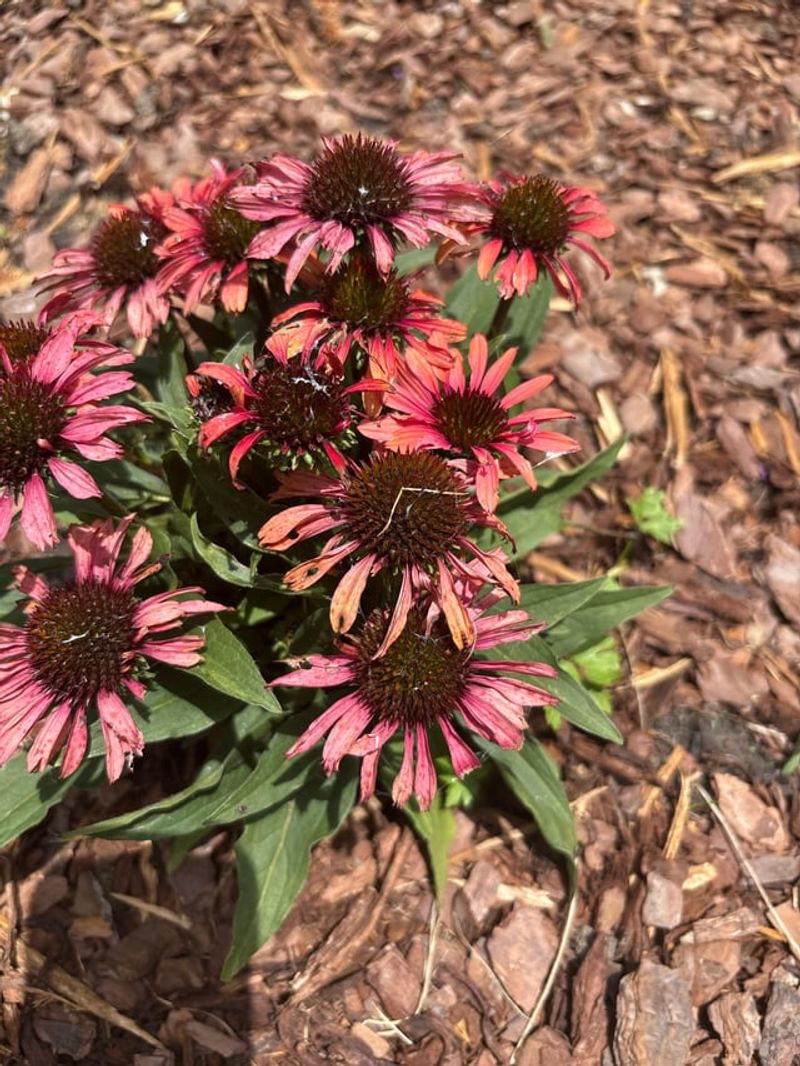
A coneflower planted beneath a large silver maple stretching toward a small patch of sky it cannot quite reach is not a garden success story.
It is a demonstration of what happens when a prairie plant gets assigned to a woodland situation.
Coneflowers evolved in open, exposed conditions where sunlight arrived hard and direct for most of the day. Six hours of full sun daily is the minimum for strong performance.
Your Ohio Garden Changes Every Week. Your Plan Should Too.
Gardening in Ohio changes quickly throughout the season. Every Friday you’ll receive a simple weekly plan showing exactly what to plant, prune, fertilize, harvest, and protect so you never miss the right timing.
Anything less reduces photosynthesis, which reduces energy available for flowering, which produces exactly the pale, sparse, disappointing results that make gardeners blame the plant.
Deep shade under mature trees creates two separate problems that work against coneflowers at the same time.
First, insufficient light prevents the energy production that drives strong stem growth and abundant blooming.
Second, established tree roots compete aggressively for soil moisture and nutrients throughout the root zone, leaving neighboring plants with noticeably less of both.
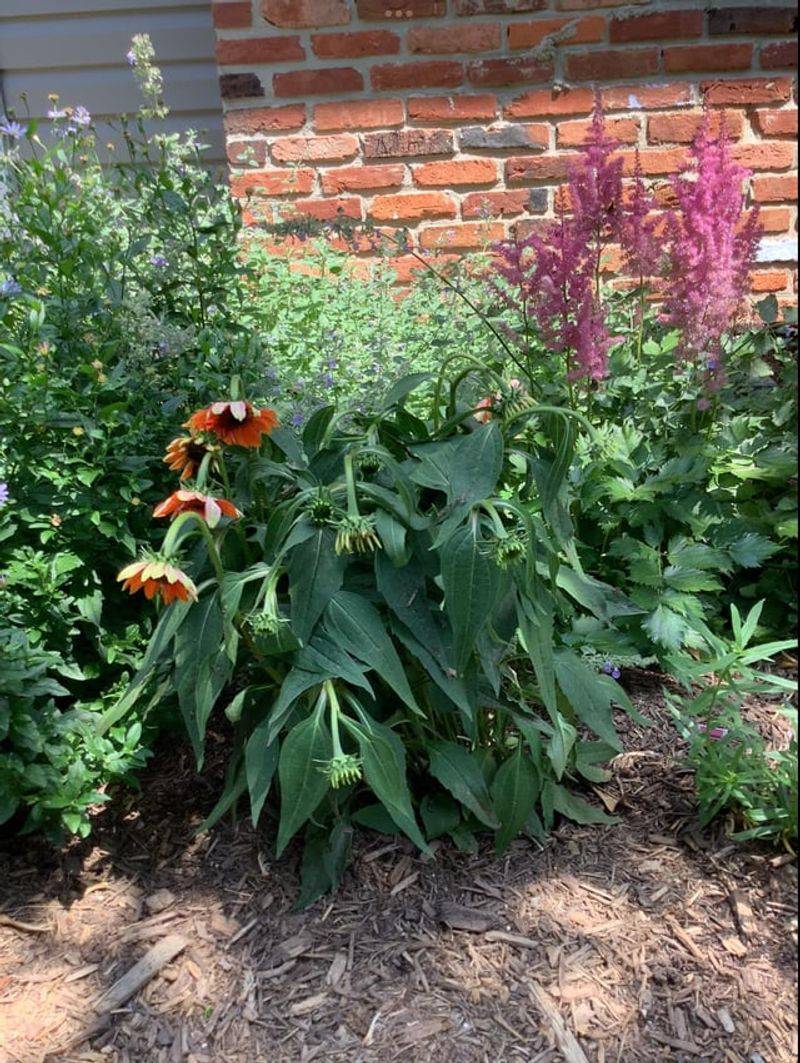
Coneflowers planted in this situation grow tall and leggy as they reach for light, then flop under their own weight because the stems never developed properly. The flowers that do appear are small and underwhelming.
Partial afternoon shade in Ohio’s hottest summers is sometimes manageable and can even reduce heat stress on the most brutal days. Full shade under a dense canopy is a different situation entirely.
Ohio has excellent native alternatives for shaded spots. Wild ginger and woodland phlox genuinely prefer low light and perform beautifully in those conditions.
Matching the plant to the actual environment produces better results than convincing a prairie native to make do with woodland conditions.
Overfed Garden Beds Produce Tall Floppy Stems
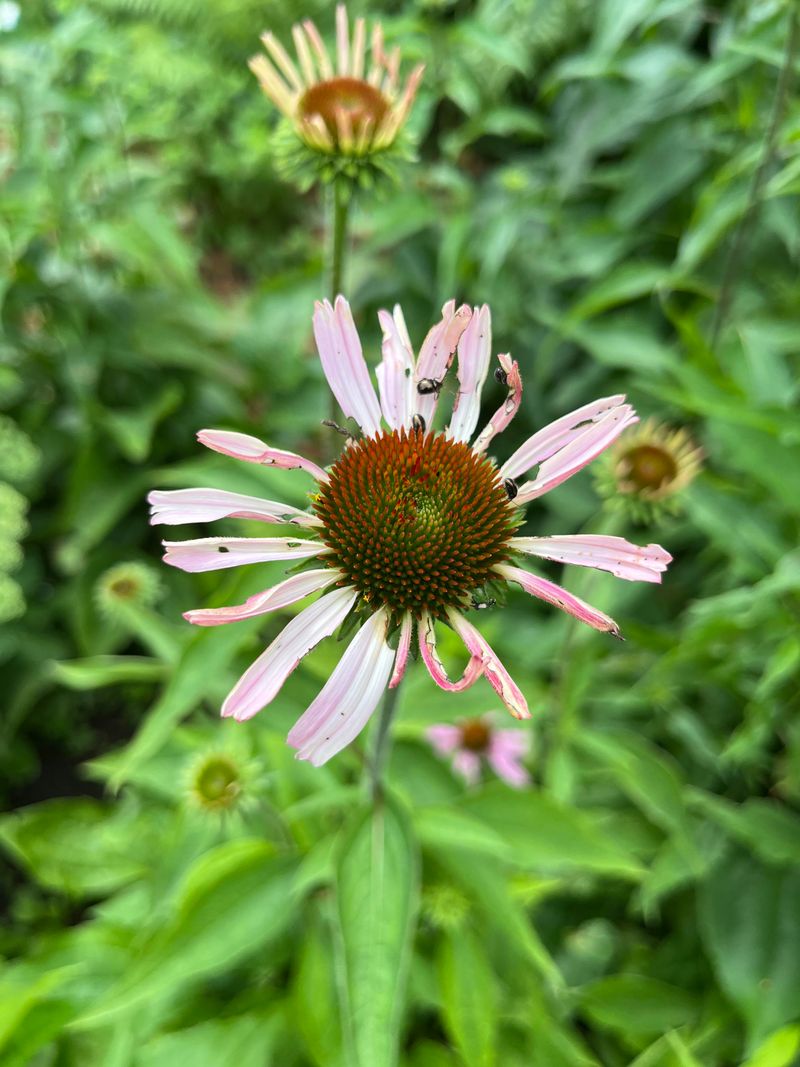
Yes, more fertilizer sounds like generosity. But in a coneflower bed, it produces a specific kind of disappointment that arrives looking impressive and then falls over.
Coneflowers are native to lean, low-fertility prairie soil. Their entire evolutionary history involves thriving in conditions where nutrients were limited rather than abundant.
When high-nitrogen fertilizer enters that equation, the plant responds the only way it knows how. It pushes out an enormous amount of lush green growth on stems that were never designed to support it.
The result is a plant that looks tremendous in June and collapses across the garden path by July. Stems tall enough to block the view but too weak to stay upright.
Foliage so thick and green that flower production drops because the plant is already fully occupied building leaves.
Ohio gardeners who routinely topdress their beds with rich compost or apply balanced granular fertilizer across the whole garden regularly encounter this pattern with coneflowers.
The beds look healthy. The coneflowers look enormous. The blooms are missing or minimal.
Established coneflowers in decent soil need no supplemental fertilizer at all. A light layer of compost at initial planting is genuinely sufficient. After that, leaving them alone produces better flowers than any feeding program will.
Coneflowers are not roses. They are not hostas. They are prairie survivors that perform better with a little hunger than with a lot of nutrition.
Back off the fertilizer and watch what happens to the bloom count by the end of the season.
Crowded Humid Borders Invite Fungal Problems
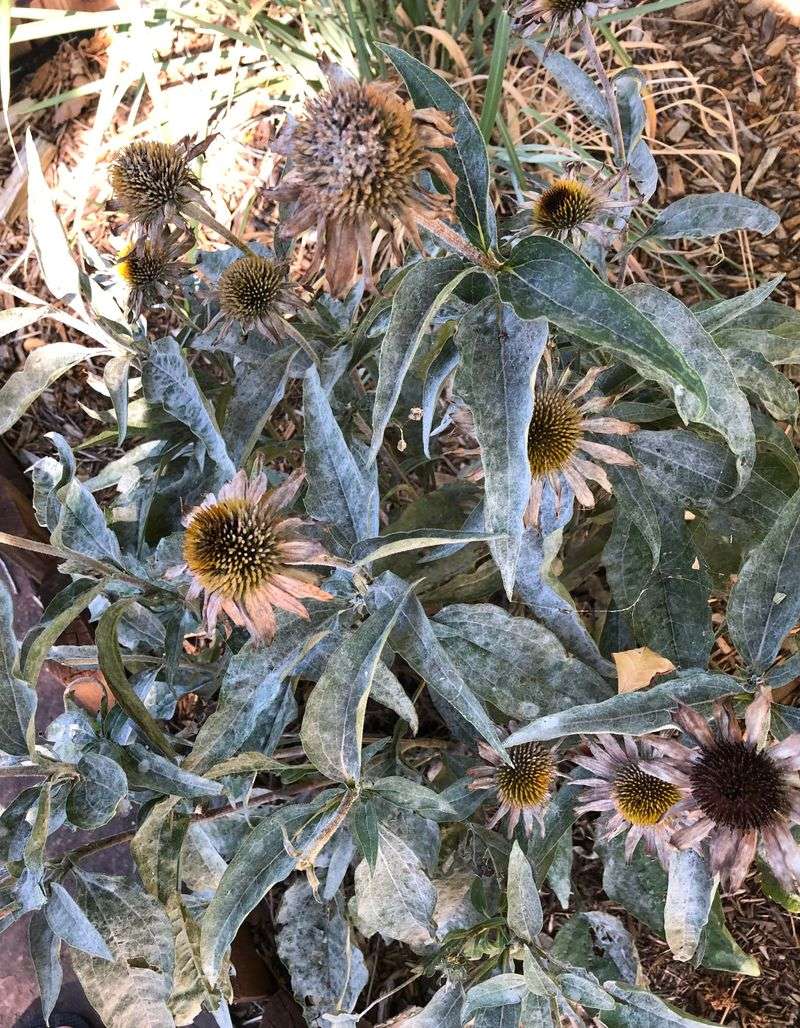
Ohio summers deliver heat, humidity, and the kind of sticky air that clings to everything. Coneflowers handle the heat without complaint.
What they cannot handle is being packed so tightly into a border that the humid air has nowhere to move between the plants.
Poor airflow is one of the most consistent triggers for fungal disease in Ohio coneflower plantings. Powdery mildew appears as a white chalky coating across the leaf surface and spreads quickly when plants are touching and air cannot circulate freely.
Septoria leaf spot follows similar conditions. Both turn a coneflower planting from something beautiful into something that requires explanation to visitors.
Echinacea purpurea needs at least eighteen to twenty-four inches between plants to allow adequate airflow during Ohio’s notorious July and August humidity.
That spacing gives each plant room to breathe and lets air move around the foliage rather than sitting stagnant between crowded stems.
Crowded borders also trap moisture against plant crowns, which creates the damp, still conditions that fungal pathogens require to establish and spread.
The counterintuitive reality is that coneflowers look more dramatic with proper spacing than without it.
When each plant has room to develop fully, stems stand upright, flower heads grow large, and the border looks genuinely impressive rather than densely tangled.
Thinning feels like giving up space. What it actually produces is healthier plants, better flowers, and a border that stays attractive through the entire season.
Plant Them In Full Sun
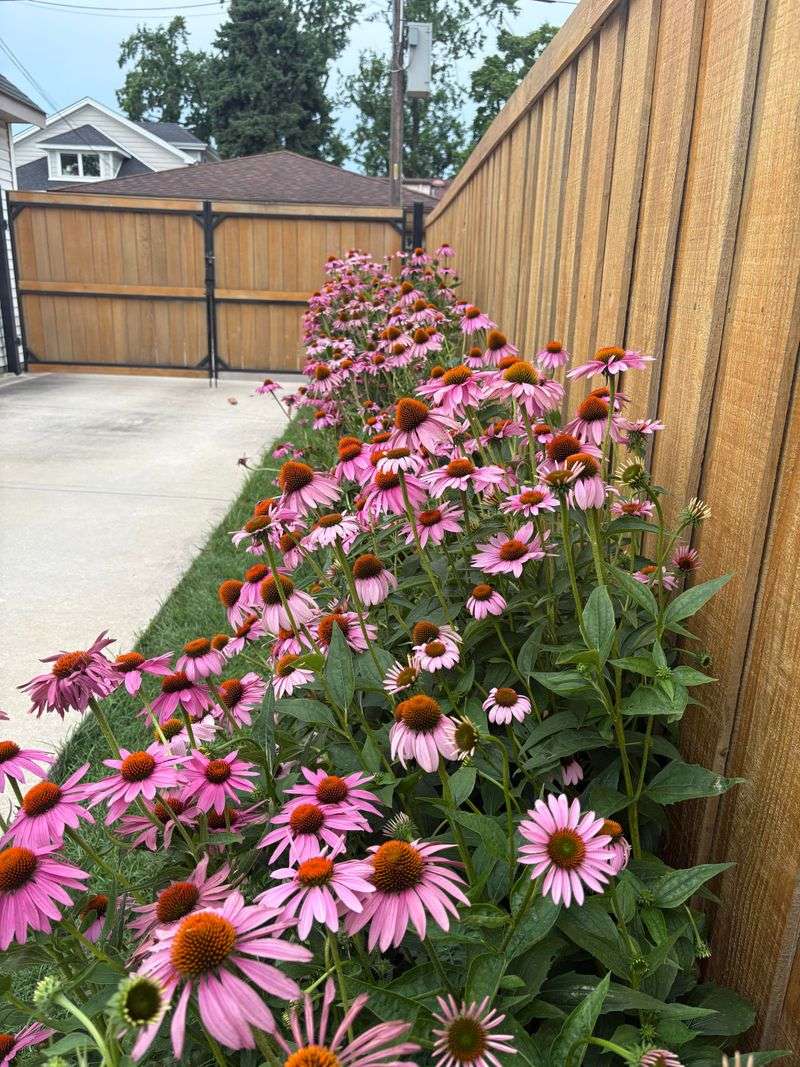
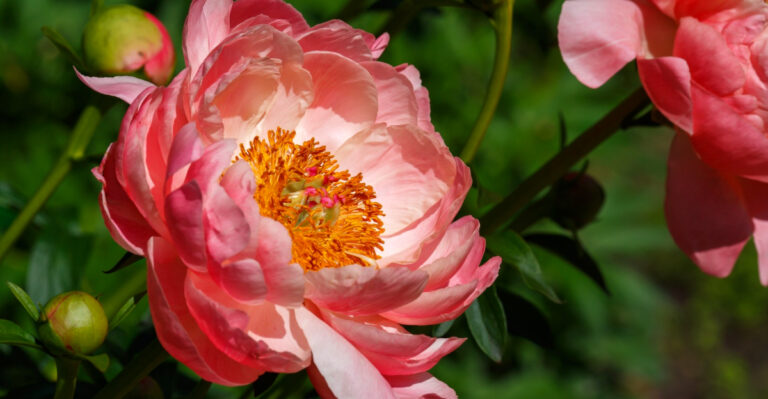
Give coneflowers six or more hours of direct daily sunlight and the difference between a surviving plant and a thriving one becomes immediately obvious.
Stems stand upright and strong. Flower heads develop large and vivid. The whole planting looks like it was grown specifically for display rather than just keeping up.
Ohio’s long summer days work directly in favor of anyone planting coneflowers in open, sunny beds.
From late June through September, coneflowers in full sun bloom continuously and attract a consistent parade of pollinators.
Bees, butterflies, and goldfinches all find them irresistible, which turns a well-sited coneflower bed into one of the most active spots in the garden throughout summer.
The biology behind sun exposure is direct. More sunlight means more photosynthesis, which means more energy available for flower production.
Coneflowers evolved in open prairies where shade was rare and sunlight arrived consistently and intensely. Replicating those conditions in an Ohio yard gives them exactly what their growth patterns were built around.
South-facing and west-facing garden beds receive the longest and most intense daily sun exposure across most Ohio properties.
East-facing spots work when afternoon shade stays minimal. North-facing beds rarely provide enough light for strong performance regardless of other conditions.
One practical placement note worth keeping: avoid positioning coneflowers close to a fence or wall that blocks afternoon light.
Even partial shadow from a nearby structure reduces bloom output noticeably across a full growing season.
Sun access is the foundation everything else builds on.
Choose Well Drained Soil
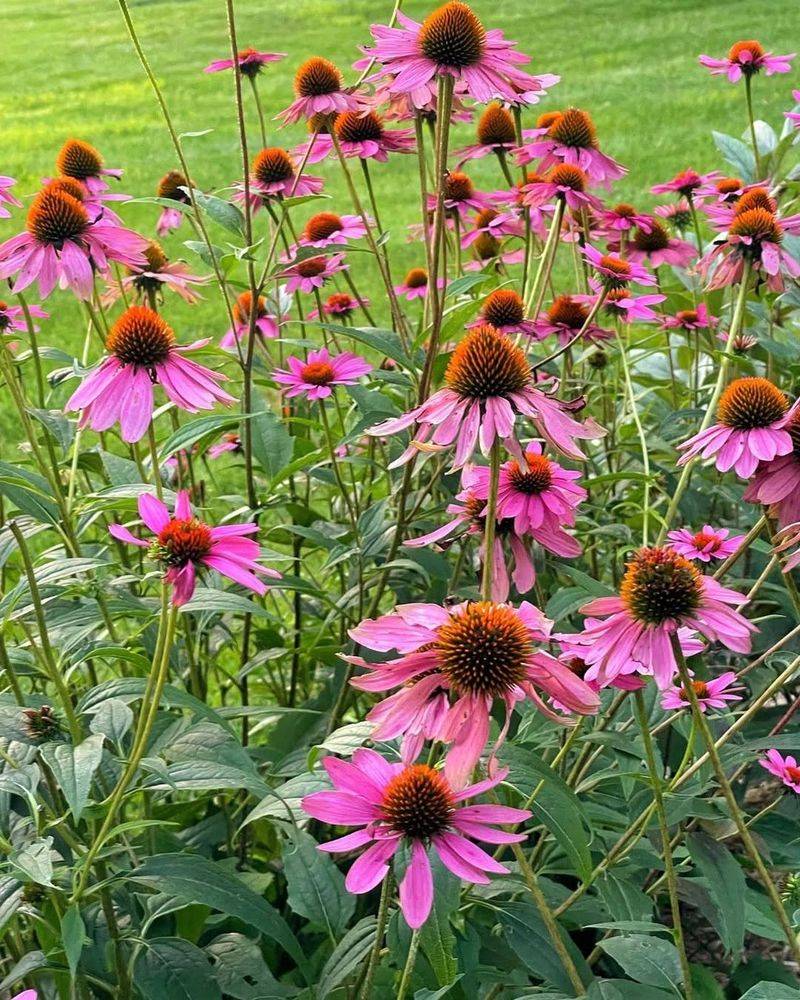
Soil drainage might be the single most important placement factor for coneflowers in Ohio, and it is the one most gardeners overlook when choosing a spot.
Correct drainage allows excess moisture to move through quickly while still holding enough water to keep roots hydrated between rains.
Loamy soil with a slightly gritty texture is the ideal starting point. Coneflowers are genuinely drought-tolerant once established, but that drought tolerance depends entirely on healthy root systems that only develop in soil that stays oxygenated rather than waterlogged.
Ohio soils vary considerably across the state. Heavy clay is common across central and western Ohio, while sandier soils appear more frequently near the Appalachian foothills in eastern Ohio.
Regardless of the starting condition, improving drainage before planting is worth the effort.
Raised beds provide a reliable solution almost anywhere in Ohio. Elevating the planting area by eight to twelve inches improves drainage noticeably and warms the soil faster in spring.
Mixing native topsoil with coarse compost and a small amount of pea gravel creates an excellent growing medium for coneflowers without extensive preparation.
A quick drainage test takes about fifteen minutes and saves considerable frustration later. Dig a hole about twelve inches deep, fill it with water, and observe how long it takes to drain.
Water still sitting there an hour later indicates a spot that needs serious amendment before coneflowers will perform well.
Fix the drainage first, then plant. That sequence matters more than the variety selection or the planting technique that follows.
Use Open Pollinator Borders
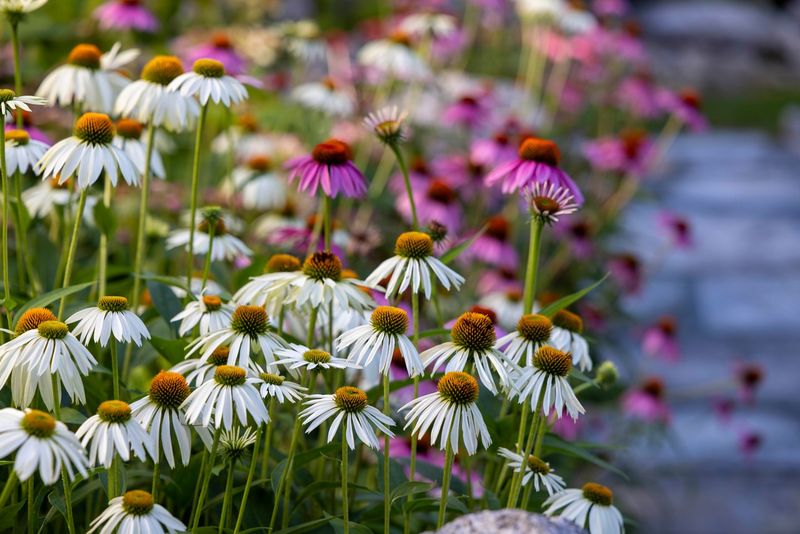
Few garden setups showcase coneflowers as effectively as a wide, open pollinator border positioned where the activity it generates is actually visible.
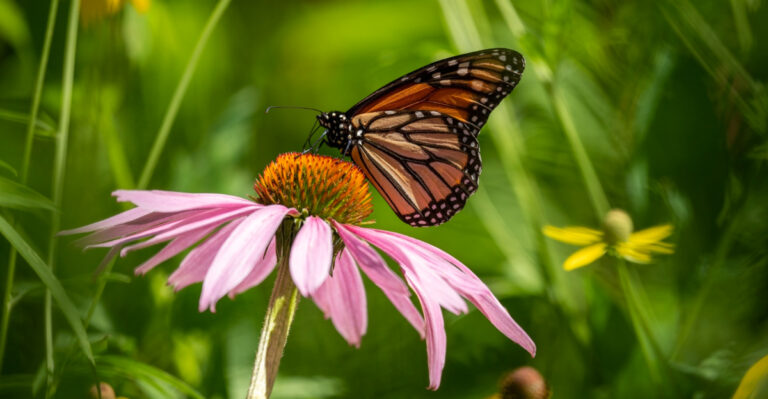
Watching a monarch butterfly land on a purple coneflower head in full sun is one of those small moments that makes the whole garden feel completely worth the effort.
Open pollinator borders work well for a simple reason. They prioritize both visibility and airflow simultaneously.
Plants are spaced generously, sunlight reaches every stem from multiple angles, and pollinators approach from any direction without structures or crowded plantings blocking their flight path.
Coneflowers in this kind of setting bloom longer and more abundantly than in enclosed mixed borders because each plant receives the light and air circulation it actually needs throughout the season.
Placement along sunny fence lines, driveway edges, or the front of a property gives pollinators a clear, unobstructed flight path.
Open, sunny plantings consistently attract greater pollinator diversity than shaded or enclosed garden spaces, which turns a coneflower border into genuine wildlife habitat rather than just a decorative planting.
Pairing coneflowers with Ohio natives like black-eyed Susans, wild bergamot, and butterfly weed creates a layered bloom sequence that feeds pollinators from late spring through fall.
The coneflowers anchor the middle of the border with height while shorter natives fill in around them.
Leaving spent flower heads through winter adds a final bonus. Goldfinches treat coneflower seed heads as a reliable food source through the cold months, which extends the border’s wildlife value well past the last bloom of the season.
A pollinator border that runs from June through February without extra work is not a small thing.
Try Prairie Style Garden Beds
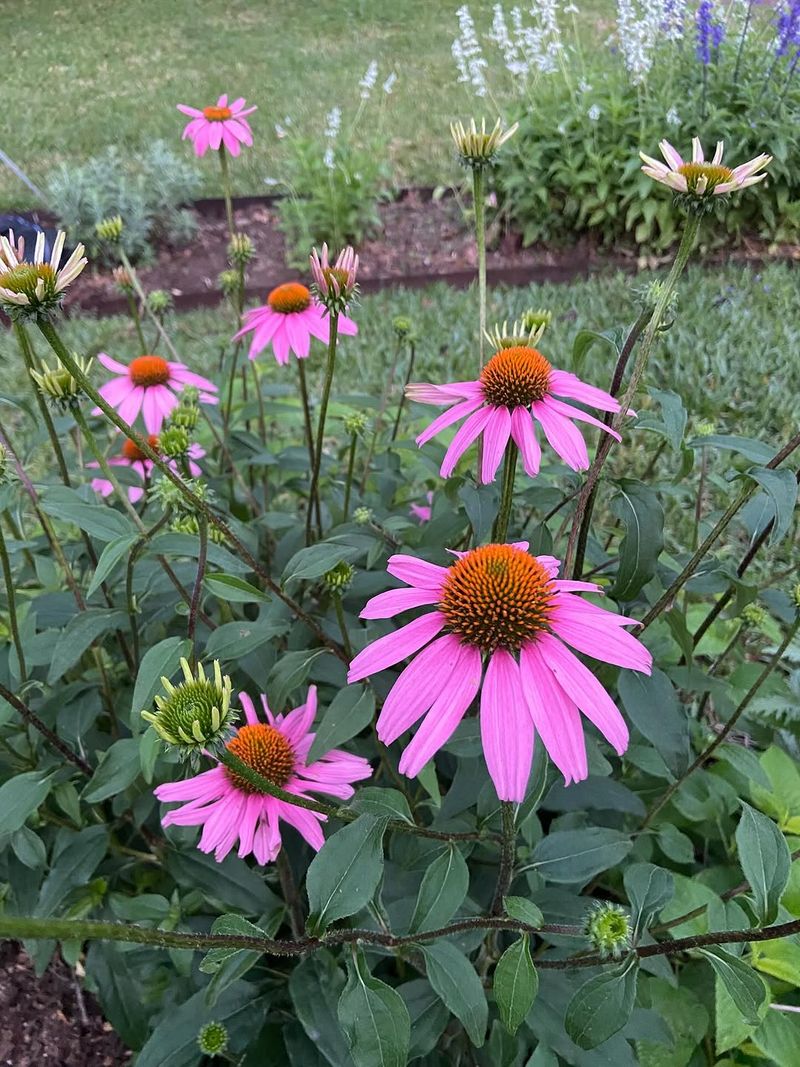
There is something genuinely cinematic about a prairie-style bed in full summer bloom, right?
Tall grasses move in the breeze. Coneflowers bob in waves across the planting. The whole scene looks completely intentional and completely natural at the same time.
This planting style suits coneflowers precisely because it reproduces the conditions where they developed over thousands of years.
Full sun, well-drained soil, low fertility, and compatible plant neighbors that share the same basic needs without competing aggressively.
Prairie-style beds combine coneflowers with native grasses like little bluestem, prairie dropseed, and switchgrass.
These companions require the same conditions and create a layered texture that looks attractive from late spring through winter, including the brown structural phase that most perennial borders completely lack.
Ohio sits within the historical eastern edge of the North American tallgrass prairie.
Many Ohio soils and climate conditions still support prairie-adapted plants naturally, which gives this planting style a practical advantage over garden styles that require plants adapted to different regions entirely.
Planting coneflowers in loose drifts of five to seven rather than as isolated specimens creates the visual impact and the pollinator landing zone that make prairie borders so effective.
Ornamental grass clumps scattered between drifts add movement and winter structure without competing for resources.
Maintenance across a well-established prairie bed is minimal once the first season settles in. Cut everything back in late winter. Skip the fertilizer. Add a thin compost layer every other year if the soil seems to need it.
The prairie has been managing itself without help for a very long time. The garden version requires almost as little.