The Reason Carpenter Bees Are Drawn To Mississippi Porches
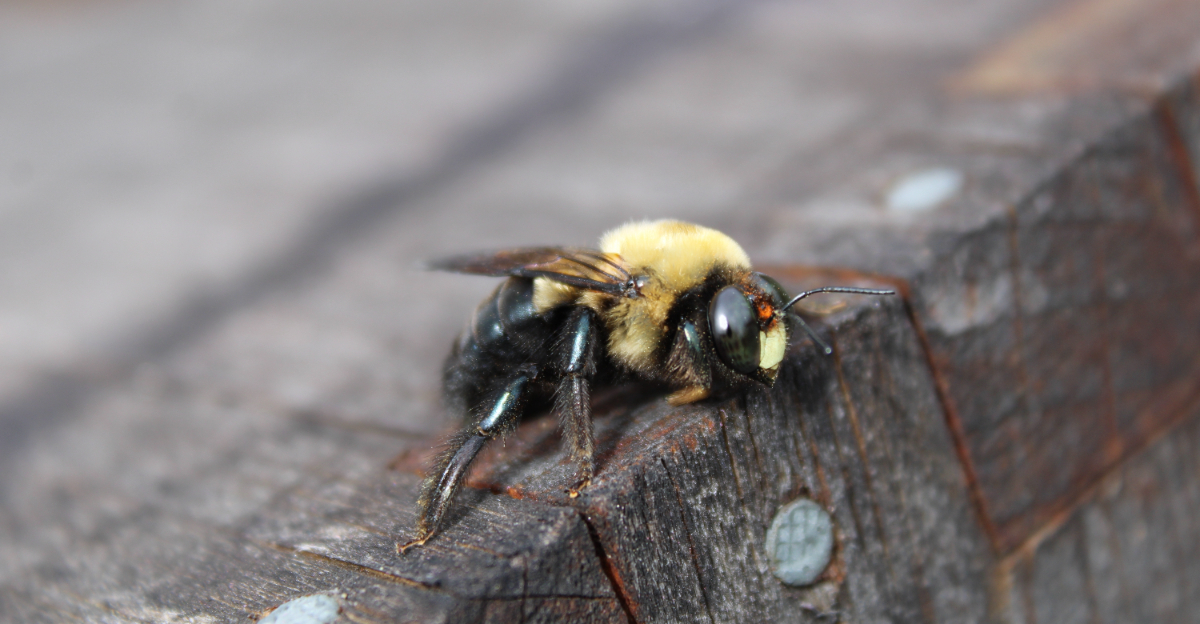
If you have spent any time on your porch in late spring, you have probably heard it before you saw it. That low, persistent buzz coming from somewhere just above your head.
Carpenter bees are not subtle, and they are not lost. When they show up around your rafters and porch rails, they are doing exactly what they came to do.
Mississippi’s long warm season and the abundance of older wooden structures across the state make it one of the most hospitable places in the country for carpenter bees to set up and stay.
The more you understand about what pulls them in, the better your chances of doing something about it before the tunneling starts and the repair bills follow.
Untreated Wood Draws Carpenter Bees In
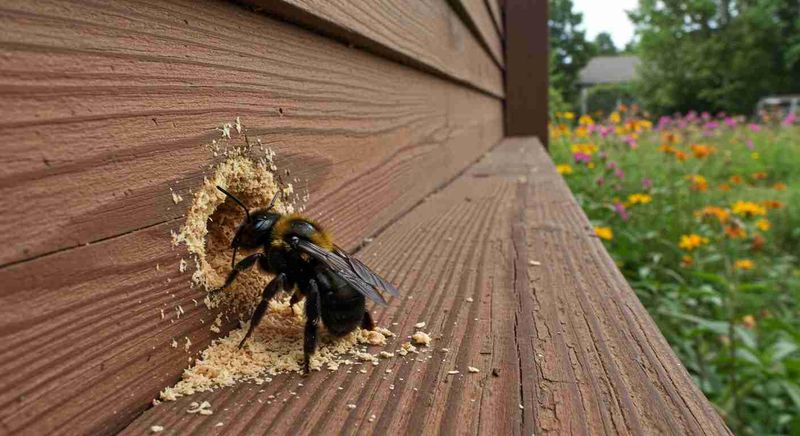
Walk up to almost any old porch in the South and you will spot the telltale sign. A perfectly round hole, about the size of a dime, drilled straight into bare wood.
Carpenter bees are strongly drawn to untreated wood, and bare surfaces are almost always their first choice. They do not eat it, but they chew through it to build their nesting tunnels.
Soft, unfinished wood is the easiest material for them to bore into. Pine, cedar, and cypress, all common in Southern porch construction, are their top choices.
Paint and sealant act as a deterrent because the bees prefer raw surfaces. A porch that has never been stained or sealed is basically an open invitation.
Older homes across the state tend to have more exposed wood simply due to age and wear. Peeling paint or weathered boards signal easy access to any scouting bee nearby.
Fascia boards, porch ceilings, and deck rails are the most targeted spots. These areas often go years without a fresh coat of protective finish.
A simple application of paint or exterior wood sealant goes a long way. Covering every exposed surface closes off the entry points these bees are searching for.
Treating your wood is one of the most affordable and effective steps a homeowner can take. Do not wait until you hear buzzing to grab a brush.
Mississippi’s Climate Keeps Them Active Longer
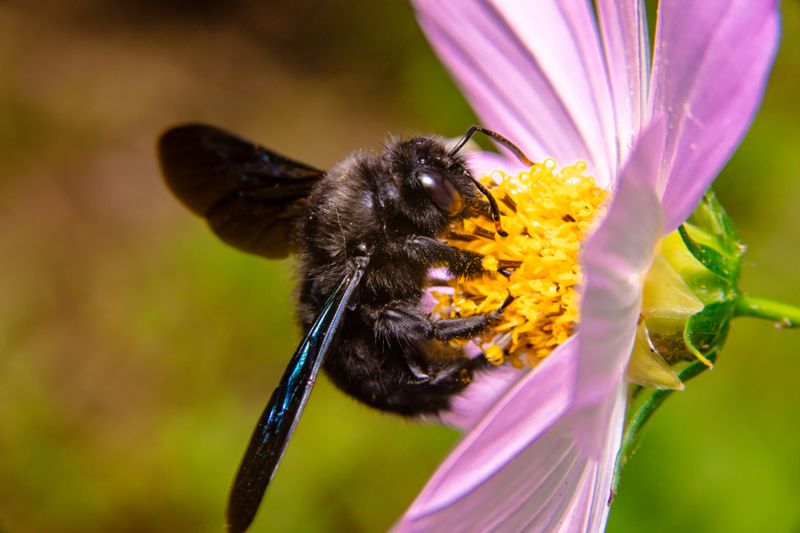
Mississippi does not get long, brutal winters, and that is great news for carpenter bees. The mild climate means they wake up earlier in spring and stay active much later into fall.
Many parts of the country see these bees for just a few months. Down here, the season can stretch across nearly half the year.
Warmer soil and air temperatures signal bees to emerge from their tunnels sooner. A mild February can trigger activity that northern states would not see until late April.
That extended window gives carpenter bees more time to scout locations, bore tunnels, and lay eggs. More active time means more potential damage to porch wood.
Humidity also plays a role in this equation. High moisture levels can soften wood faster, making it even simpler for bees to chew through boards.
Your Mississippi Garden Changes Every Week. Your Plan Should Too.
Gardening in Mississippi changes quickly throughout the season. Every Friday you’ll receive a simple weekly plan showing exactly what to plant, prune, fertilize, harvest, and protect so you never miss the right timing.
The Gulf Coast influence keeps temperatures from dropping sharply, even in December. During an unusually mild stretch, it is not unheard of to spot a carpenter bee out on a warm winter afternoon.
This is not a problem you can ignore until next season and hope it goes away. An active colony in October can expand significantly before the first real cold snap arrives.
Staying ahead of the season matters more here than in colder regions. Starting your inspection and wood treatment in late winter gives you the best shot at prevention.
Carpenter Bees Often Nest Near Where They First Hatched
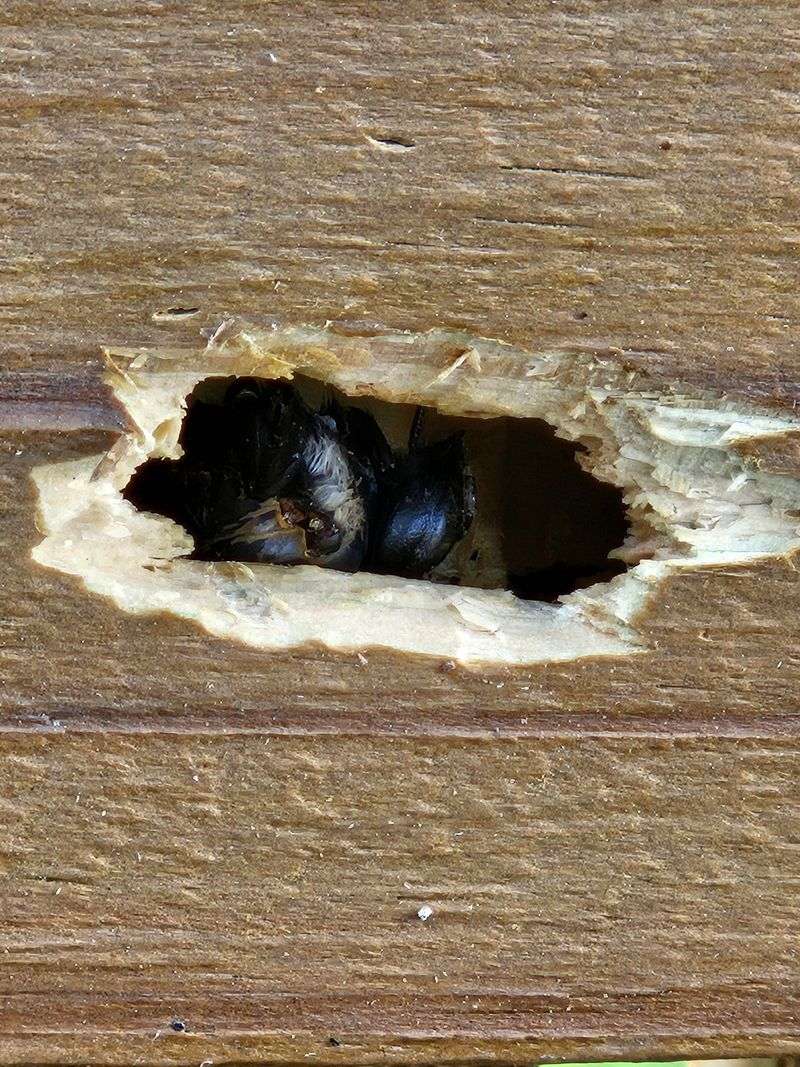
Loyalty is a trait most people do not associate with insects, but carpenter bees are surprisingly attached to their birthplace. Females often return to the exact same porch where they hatched.
This behavior is called natal philopatry, and it makes infestations grow worse each year. One tunnel from last spring may grow into several by the following summer.
When a young bee emerges for the first time, it imprints on the surrounding environment. That wooden porch beam remains a familiar reference point the bee will seek out again.
Returning to a familiar spot saves energy and reduces risk. The bee already knows the wood is soft, the location is safe, and the flowers are nearby.
Existing tunnels also get expanded rather than abandoned. A bee might deepen an old gallery by several inches to add new egg chambers.
Neighbors of the original bee often settle close by as well. Over time, a single porch can host a small community of nesting females all working in the same structure.
This generational pattern is why some homeowners feel like they fight the same battle every single year. Without treating the wood or sealing old holes, the cycle repeats itself reliably.
Plugging old tunnels with wood putty after the bees have left in fall is a smart move. It removes the built-in welcome sign that draws them back each spring.
Porches Offer Everything A Nesting Bee Needs
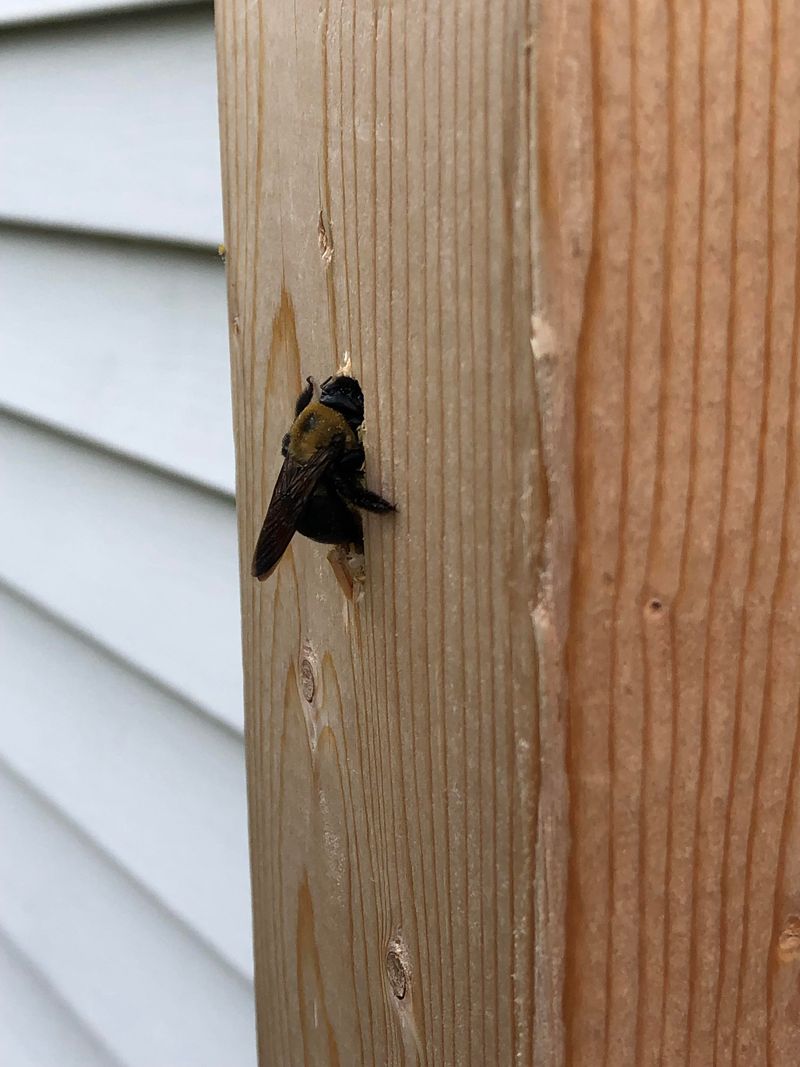
Think about what a porch actually provides from a bee’s perspective. Shelter from rain, shade from direct sun, and easy access to open air all in one spot.
Carpenter bees are not randomly choosing your home. They are making a calculated decision based on what the structure offers.
Overhanging eaves protect nesting tunnels from getting waterlogged during heavy rains. That coverage keeps eggs and larvae dry through stormy Southern summers.
The underside of a porch rail or ceiling board stays relatively cool even on the hottest days. Temperature stability is important for larvae to develop properly inside the tunnel.
Exposed horizontal and vertical surfaces give bees multiple drilling angles to choose from. A porch with thick wooden beams is especially attractive because there is more material to work with.
Porches also tend to have low human foot traffic compared to main living areas. Bees can come and go without constant disturbance, which makes nesting feel secure.
The structural variety of a porch, beams, railings, ceilings, steps, gives bees options. If one spot gets disturbed, another is always within a few feet.
Recognizing your porch as prime real estate for these insects is the first step to protecting it. Once you see it through their eyes, the solution becomes much clearer.
Nearby Flowers Give Them A Reason To Stay
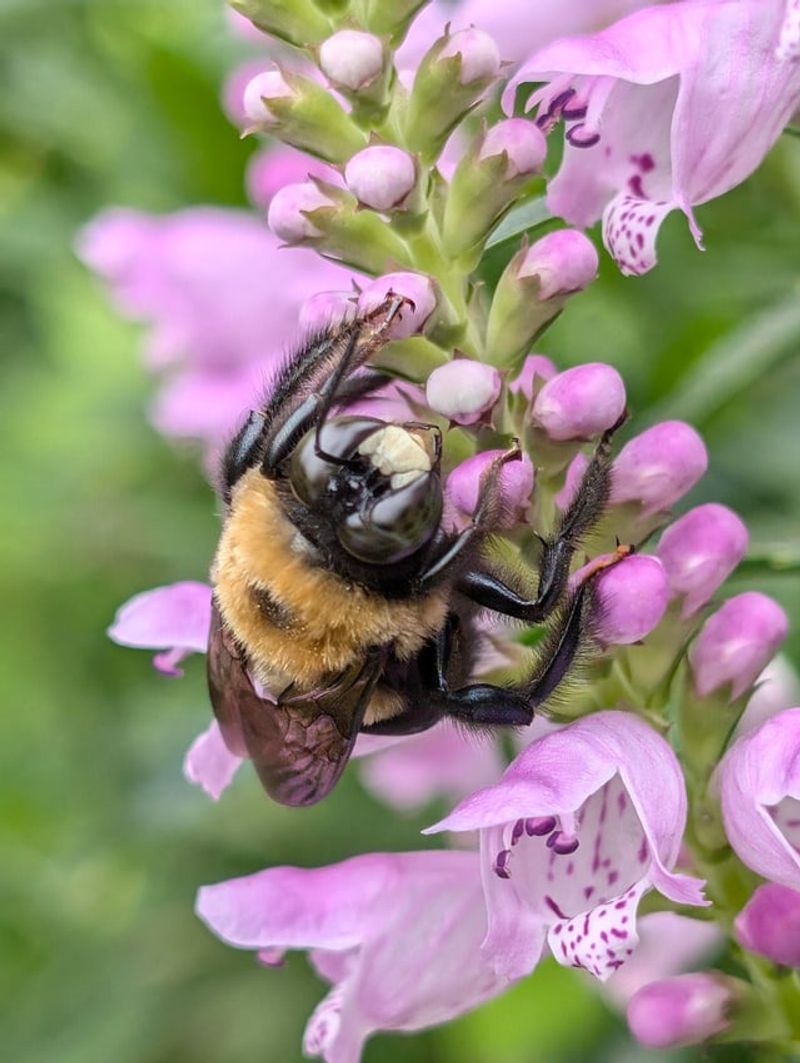
Carpenter bees are pollinators, and they need a steady food source close to their nest. A porch surrounded by flowering plants is basically a bee’s dream setup.
Many classic Southern garden plants are exactly what these bees crave. Wisteria, trumpet vine, and azaleas are all common in Mississippi yards and all beloved by carpenter bees.
Having food within a short flight of the nest reduces the energy a bee spends foraging. Less travel time means more time drilling and expanding the tunnel.
Carpenter bees are actually impressive pollinators for open-faced flowers. Their large bodies carry significant amounts of pollen, making them valuable to the local garden ecosystem.
The closer the flowers are to the porch, the stronger the pull becomes. A rose bush planted right next to the steps gives a bee little reason to look elsewhere.
Some homeowners unknowingly create the perfect combination without realizing it. Beautiful flower beds paired with an untreated wooden porch sends a powerful signal to any passing bee.
Moving flowering plants a bit farther from the structure can reduce nesting pressure slightly. It will not stop a determined bee, but it removes one layer of attraction.
Understanding this food-shelter connection helps you think about your yard as a whole system. Adjusting both the plants and the wood treatment together gives you the strongest chance of keeping carpenter bees away from Mississippi porches.
How To Discourage Nesting On Your Porch
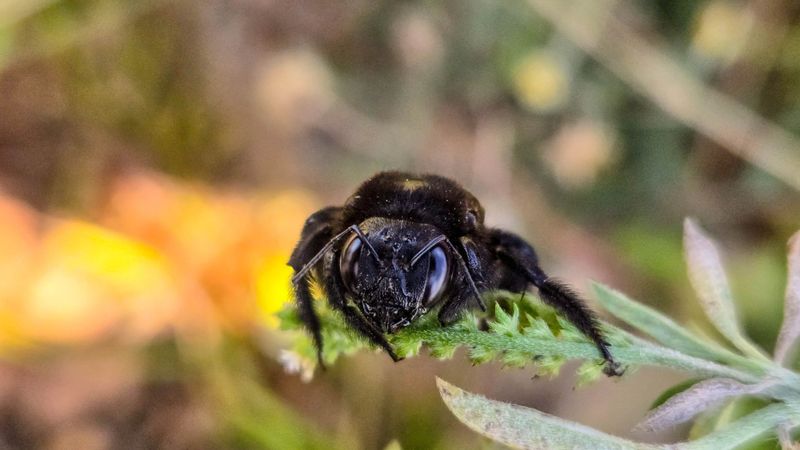
You do not need a pest control contract to make your porch less appealing to carpenter bees. A few targeted steps taken at the right time can make a real difference.
Start by sanding and painting every exposed wood surface before spring arrives. Fresh paint removes the raw wood scent that signals easy drilling to a scouting bee.
Hardwoods are naturally more resistant than softwoods. If you are replacing boards, choosing pressure-treated lumber or composite materials adds a long-term layer of protection.
Filling old tunnels is just as important as treating new wood. Use wood putty or a wooden dowel to plug any existing holes in late fall after bees have vacated.
Citrus-based sprays applied to wood surfaces can act as a mild repellent. Carpenter bees dislike citrus oils, and reapplying every few weeks during peak season adds another barrier.
Some homeowners report success hanging decoy wasp nests near the porch, though results can vary. Carpenter bees prefer to avoid areas where other stinging insects appear to be present.
Some homeowners apply almond oil to wooden surfaces as a natural deterrent, though evidence for this remains largely anecdotal. A light coating on railings and beams can slow a bee’s interest in that particular spot.
Staying consistent with maintenance is the real key to keeping carpenter bees off Mississippi porches for good. One treated season followed by neglect will undo all your hard work fast.