7 Shrubs Georgia Gardeners Plant When They Want Color That Does Not Quit In The Summer
July in Georgia sorts the garden into two categories: plants that look genuinely fine, and plants that look like they made a terrible decision by being here.
Most shrubs land in the second group by midsummer. The heat is relentless. The humidity is suffocating.
Blooms that looked beautiful in May have long since given up, and the yard starts developing that tired, sun-scorched look that no amount of watering fully corrects.
A specific group of shrubs operates on a completely different schedule. Georgia summer is not the enemy for these plants.
It is the season they were designed for. Some bloom harder in July than they did in May. Some hold their color straight through August and into September without losing a step.
The difference between a Georgia yard that looks great all summer and one that peaks in April usually comes down to shrub selection. Not effort. Not irrigation schedules. Plant selection.
Have you been replanting the same struggling shrubs every few years without knowing there are better options that actually belong in this climate?
Seven shrubs have earned the right to stay in every Georgia garden.
1. Glossy Abelia
Not every great garden shrub announces itself with a dramatic first impression. Glossy abelia works differently, and Georgia gardeners who discover it tend to wonder why it took them so long.
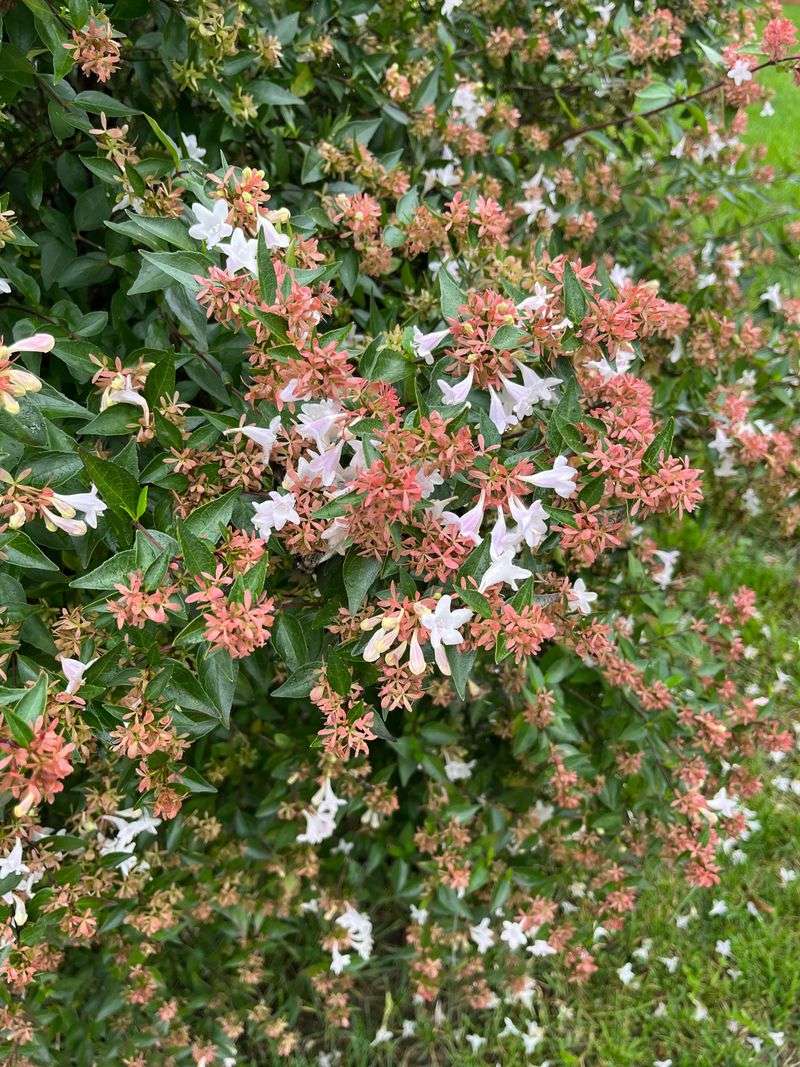
The flowers are small, tubular, and white with a soft pink blush. Individually they are modest.
Collectively, on a full-grown abelia covered in hundreds of tiny blooms from May through October, the effect is genuinely beautiful in a way that sneaks up on you.
Pollinators respond to it immediately. Butterflies, bees, and hummingbirds visit abelia consistently throughout summer, which adds constant movement and life to a planting that already looks good on its own terms.
Glossy abelia handles Georgia summers without any special treatment. It tolerates heat, humidity, and a range of soil conditions.
Full sun to part shade both work, which makes it flexible enough to fill spots that more demanding shrubs would refuse.
The shiny dark green leaves look sharp even when nothing is blooming, and they shift to a bronzy-reddish tone in fall without any additional effort required.
Mature plants reach four to six feet tall and wide. That scale suits them as hedging, foundation planting, or a casual border shrub depending on what the yard needs.
Pruning is minimal. Remove crossing branches in late winter and let the plant manage the rest.
A shrub that blooms for six solid months in Georgia heat without demanding attention is either a miracle or a very well-adapted plant. Glossy abelia is both, and it does not need to announce it.
2. Oakleaf Hydrangea
Walk through a Georgia garden center in May and the oakleaf hydrangeas are usually gone before most other shrubs get a second look.
There is a reason they sell out fast every spring. Nothing else combines that level of texture, flower drama, and real shade tolerance in a single plant that actually belongs in Georgia’s climate.
Your Georgia Garden Changes Every Week. Your Plan Should Too.
Gardening in Georgia changes quickly throughout the season. Every Friday you’ll receive a simple weekly plan showing exactly what to plant, prune, fertilize, harvest, and protect so you never miss the right timing.
Oakleaf hydrangea is native to the southeastern United States. Georgia conditions are not a challenge for it. They are its home address.
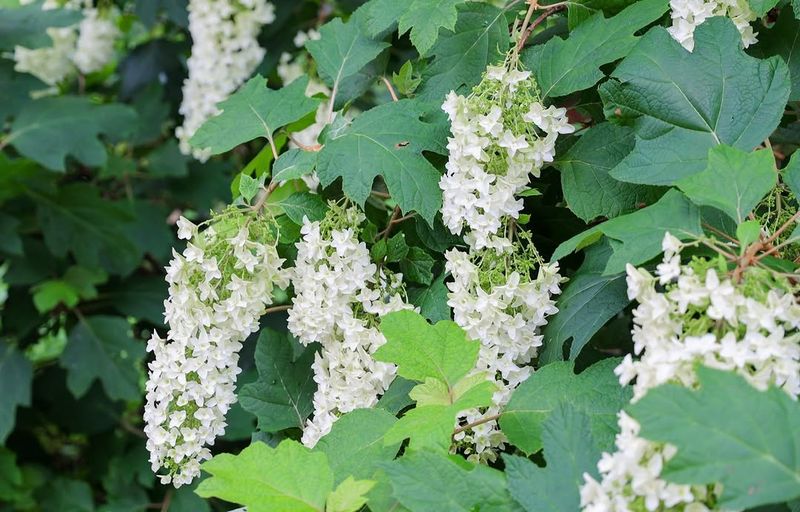
Heat and humidity do not stress it. Afternoon shade does not compromise it. The large, deeply lobed leaves look striking even before the first flower opens.
The cone-shaped flower panicles can reach a foot long or more. They open white in early summer and slowly age toward a soft parchment-pink as the season progresses.
Even after the petals fade, the dried flower heads add texture through fall and into winter. One bloom cycle produces months of visual interest without any additional intervention.
Fall color is a bonus most gardeners are not expecting when they plant it. Those large leaves shift to burgundy and orange before dropping, delivering one final display just when the rest of the garden has gone quiet.
Oakleaf hydrangea grows best in moist, well-drained soil with organic matter worked in at planting time. Plants reach six to eight feet tall and equally wide, so adequate space at planting matters.
Prune right after flowering to maintain shape, since next year’s blooms form on old wood.
Plant it for the flowers. Stay for the fall color. Come back next spring for the whole show again.
3. American Beautyberry
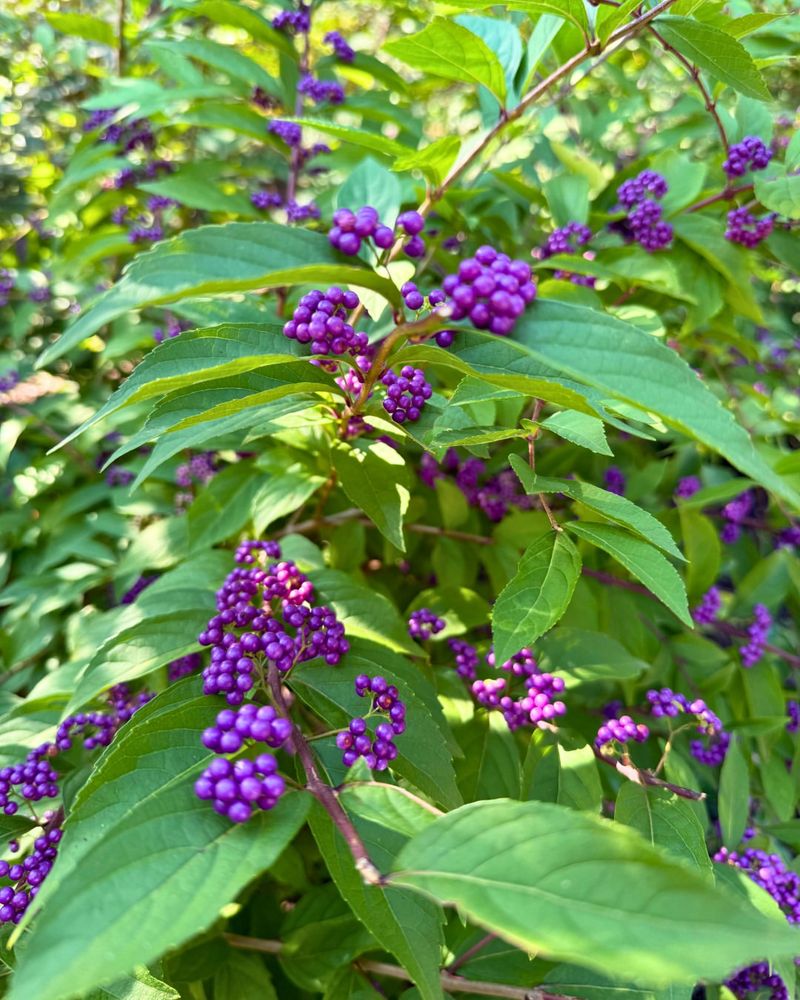
Most shrubs make conservative color choices. American beautyberry did not get that memo and has no intention of requesting it.
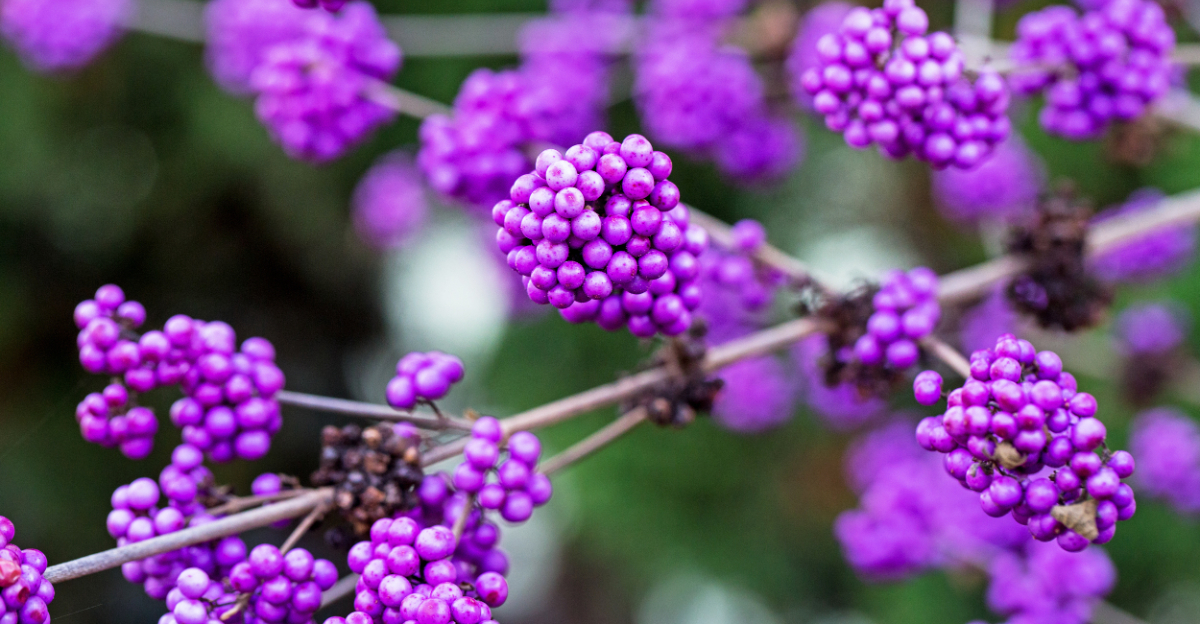
This native plant produces clusters of berries so intensely magenta-purple they look artificial at first glance.
Visitors to a garden with established beautyberry regularly walk up and touch the berries to confirm they are not painted. The color is genuinely shocking in exactly the way a late-summer garden needs.
The summer show starts with small lavender-pink flowers along the stems in June and July. The flowers are modest but pollinators find them consistently useful.
Then, as summer moves toward fall, the real performance begins. Tight clusters of vivid purple-magenta berries emerge along every stem in a display that has no competition in the Georgia landscape.
American beautyberry is native to the Southeast, so it handles Georgia conditions without any drama. It grows naturally along woodland edges and stream banks, which means it tolerates both heat and occasional wet soil without complaint.
Full sun to part shade both work, though more sun typically produces heavier berry production.
Mature plants reach four to eight feet tall with an arching, fountain-like shape that looks relaxed rather than rigid. Pruning hard in late winter encourages the most vigorous new growth, which produces the best berry display by fall.
Birds find the berries immediately once they ripen, so the planting becomes a wildlife destination without requiring any additional effort.
American beautyberry is the plant that makes people stop their cars. Plant accordingly.
4. Rose Of Sharon
By the time August arrives in Georgia, the flowering shrub situation across most yards is not encouraging. Blooms that looked great in June have long since faded. The garden has that late-summer exhausted look that no amount of optimism fully addresses.
Well, Rose of Sharon reads that situation as an opportunity.
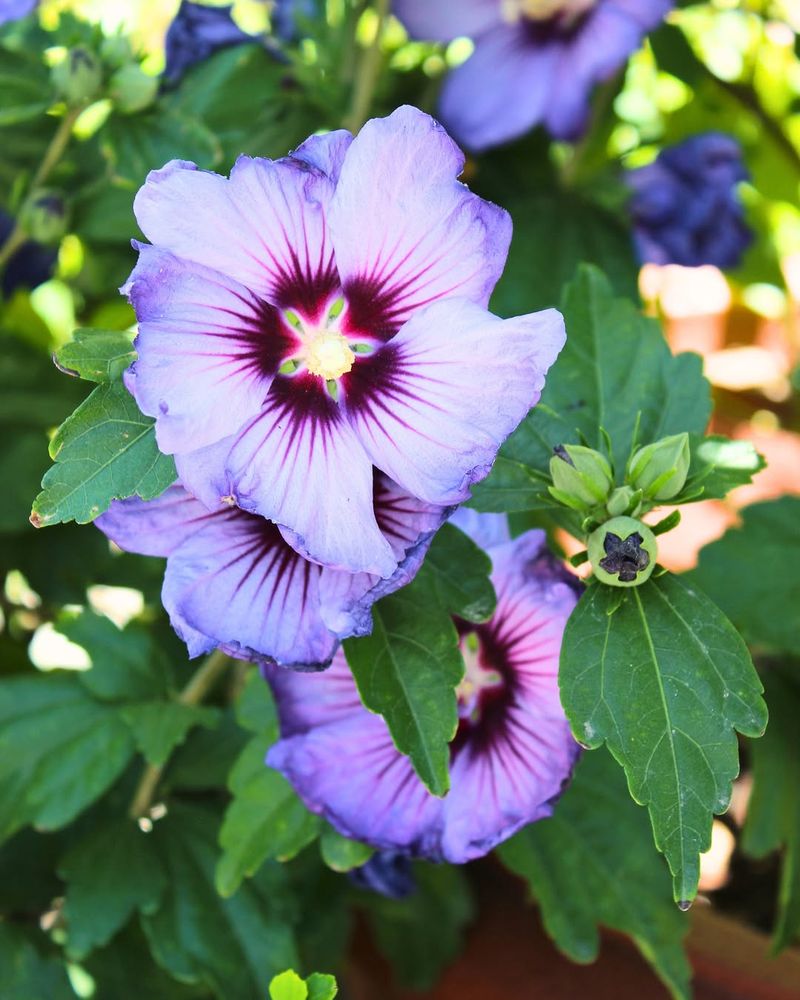
This late-blooming shrub opens its large, hibiscus-like flowers right when the color gap is most noticeable, making it one of the most strategically useful plants a Georgia gardener can own.
The flowers come in white, pink, red, purple, lavender, and bicolor combinations. Each bloom reaches three to four inches across with the distinctive central column that marks its tropical hibiscus relatives.
Individual flowers last one day, but the plant produces so many buds in succession that the blooming window stretches from midsummer straight to the first frost. That is a remarkable performance for a shrub that asks very little in return.
Rose of Sharon handles Georgia heat and humidity without complaint. Full sun to light shade both work. Established plants develop reasonable drought tolerance, though a deep watering once a week during the hottest stretches maintains stronger bloom production.
One practical note worth keeping in mind: older varieties self-seed freely and can spread well beyond the intended planting area. Newer sterile cultivars like Azurri Blue Satin or Lil Kim eliminate that entirely.
Plants grow eight to twelve feet tall in an upright, vase-shaped form that works well as a tall privacy screen or a back-of-border focal point.
August in Georgia needs this shrub. The shrub is entirely unbothered by August in Georgia.
5. Chastetree
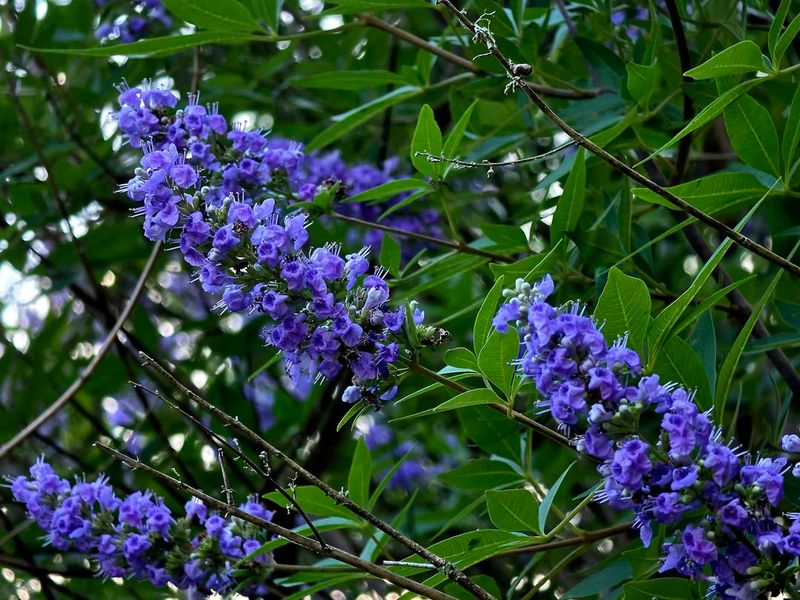
Early July brings a specific moment in Georgia gardens where the chastetree suddenly transforms.
Long, upright spikes of lavender-blue flowers appear across the entire plant, and the whole thing shifts from attractive background shrub to something that makes people slow down and point.
Chastetree, Vitex agnus-castus, is a large multi-stemmed shrub that reaches ten to fifteen feet tall in Georgia’s favorable growing conditions.
The palmate leaves carry a pleasant herbal scent when brushed. The flower spikes reach a foot long or more during peak bloom in June through August, with the potential for a second flush if spent spikes are cut back after the first round fades.
Full sun is essential. Chastetree loves heat and performs at its absolute best in the hottest, most exposed spots in the yard.
Poor soil does not slow it down. Overly rich soil actually works against it by encouraging leafy growth at the expense of flowers. Lean soil and strong sun are the combination that produces the most dramatic bloom display.
Pollinators respond enthusiastically. Bees, butterflies, and hummingbirds visit throughout the bloom season, which adds constant activity to whatever area of the yard gets this plant.
Prune chastetree hard in late winter to keep it at a manageable size and to stimulate the vigorous new growth that carries the best flower spikes. The new wood is what blooms.
A shrub that looks like it belongs in a Mediterranean garden, performs in Georgia humidity, and makes neighbors ask questions is exactly the kind of plant worth making room for.
6. Gardenia
Some plants earn their garden spot through visual impact. Gardenia earns its spot through every sense simultaneously.
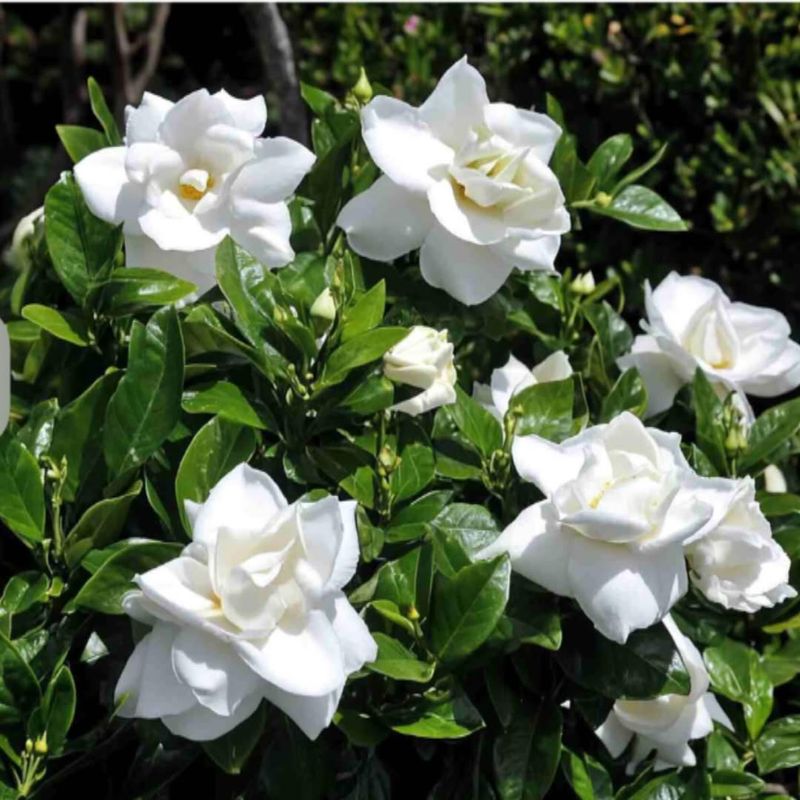
The moment those creamy white flowers open in late spring and early summer, the fragrance reaches across the yard before the blooms are even visible.
Rich, sweet, unmistakably Southern, the kind of scent that stops people mid-conversation and makes them look around for the source.
Beyond the fragrance, gardenias bring visual appeal that holds up all season. The flowers are large, waxy, and white. The foliage behind them is some of the glossiest, darkest green available in the shrub world.
That foliage stays attractive twelve months a year since gardenia is evergreen. Even during a mild Georgia winter, the plant adds structure and deep green color when everything else has gone quiet.
Gardenias grow best in acidic, well-drained soil. Georgia’s naturally acidic soil across much of the state makes this a reasonably comfortable fit.
Morning sun with some afternoon shade protection suits them best, particularly in the hottest parts of the state where harsh afternoon sun can stress the leaves.
Soil pH between 5.0 and 6.0 produces the best performance. Yellowing leaves on an otherwise healthy plant usually indicate iron deficiency from elevated soil pH. A soil test followed by a soil acidifier application corrects this quickly and reliably.
Common cultivars like August Beauty and Radicans perform consistently across Georgia gardens. Feed with an acid-forming fertilizer in spring and again in midsummer for the strongest blooming and deepest foliage color.
Gardenia is the shrub that makes visitors lean toward the fence. Plant it somewhere they can actually reach it.
7. Bottlebrush
Shady spots in the Georgia garden present a specific frustration, I know.
Most colorful shrubs want full sun. The shade-tolerant options often look dull, uninspiring, or like they are simply making the best of a bad situation.
Bottlebrush buckeye has a completely different energy about that problem.
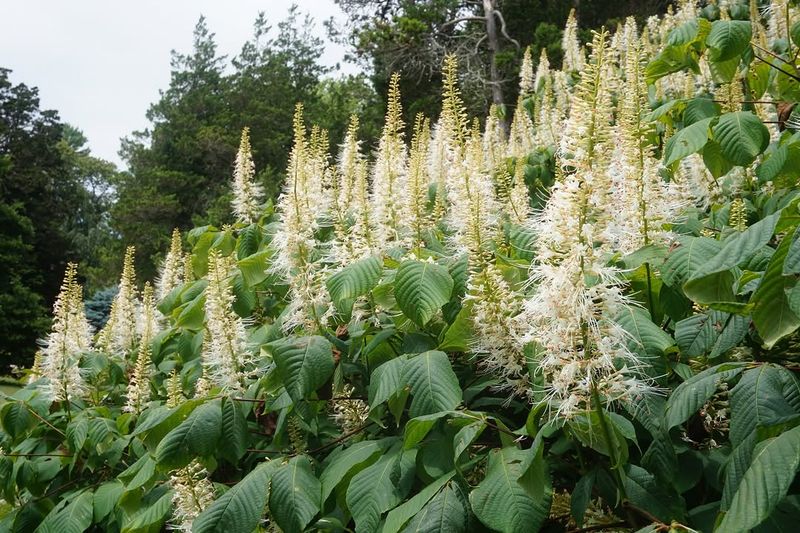
This native shrub produces long white flower spikes in midsummer that rise two to three feet above the foliage.
The visual effect is unlike anything else commonly available for Georgia landscapes. Visitors who encounter it for the first time consistently have the same reaction, which is stopping and staring.
The flowers appear in June and July and carry heavy nectar that bumblebees and swallowtail butterflies find immediately.
A shaded corner of the yard with an established bottlebrush buckeye in full bloom becomes one of the most actively visited spots in the garden during its flowering window, which is not a small thing for a plant in a shaded location.
Bottlebrush buckeye is native to the Southeast and genuinely prefers part shade to full shade conditions. That preference makes it one of the most genuinely useful summer-blooming shrubs for Georgia gardens with heavy tree canopy.
It grows best in moist, well-drained soil with organic matter worked in, and it spreads slowly by suckering to form broad multi-stemmed colonies over time.
Mature plants reach eight to twelve feet tall and spread even wider, so adequate space at planting is important.
The large compound leaves bring a bold tropical quality between bloom cycles. Fall adds a brief yellow color display before dormancy.
For shaded yards that have been waiting for a plant that actually performs, bottlebrush buckeye is the answer that was native to this region the entire time.