What Monsoon Season Means For Your Agave And What To Watch For
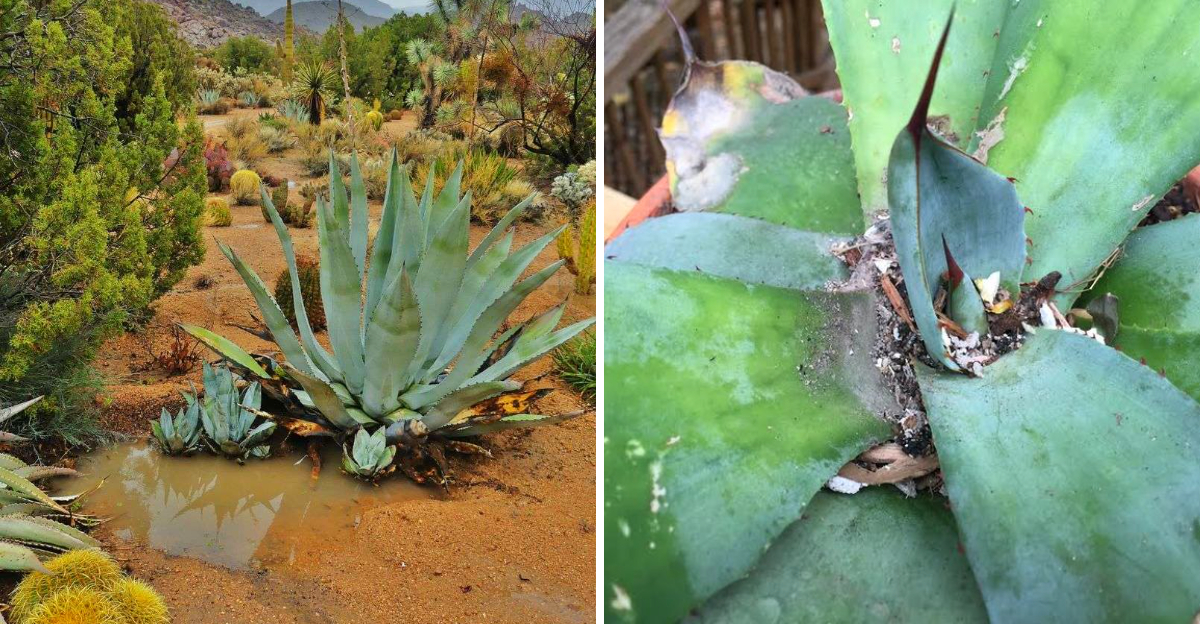
Arizona monsoon season has a very dramatic personality. One minute the sky is clear and blazing, and the next you’ve got fast-moving storms, sudden downpours, and more moisture hitting your yard in a single afternoon than some months see combined.
For most of your landscape, that’s genuinely welcome news. For your agaves, it’s a little more complicated.
These plants are built for dry, lean desert conditions, and while they certainly appreciate a good drink, they are not exactly fans of frequent rain, lingering humidity, and soil that stays wet longer than usual.
When monsoon season settles in and those conditions stick around for weeks at a time, certain problems can develop surprisingly fast.
Knowing what to watch for after storms roll through your Arizona yard is one of the easiest ways to keep your agaves looking their best all season long.
1. Standing Water Around The Crown
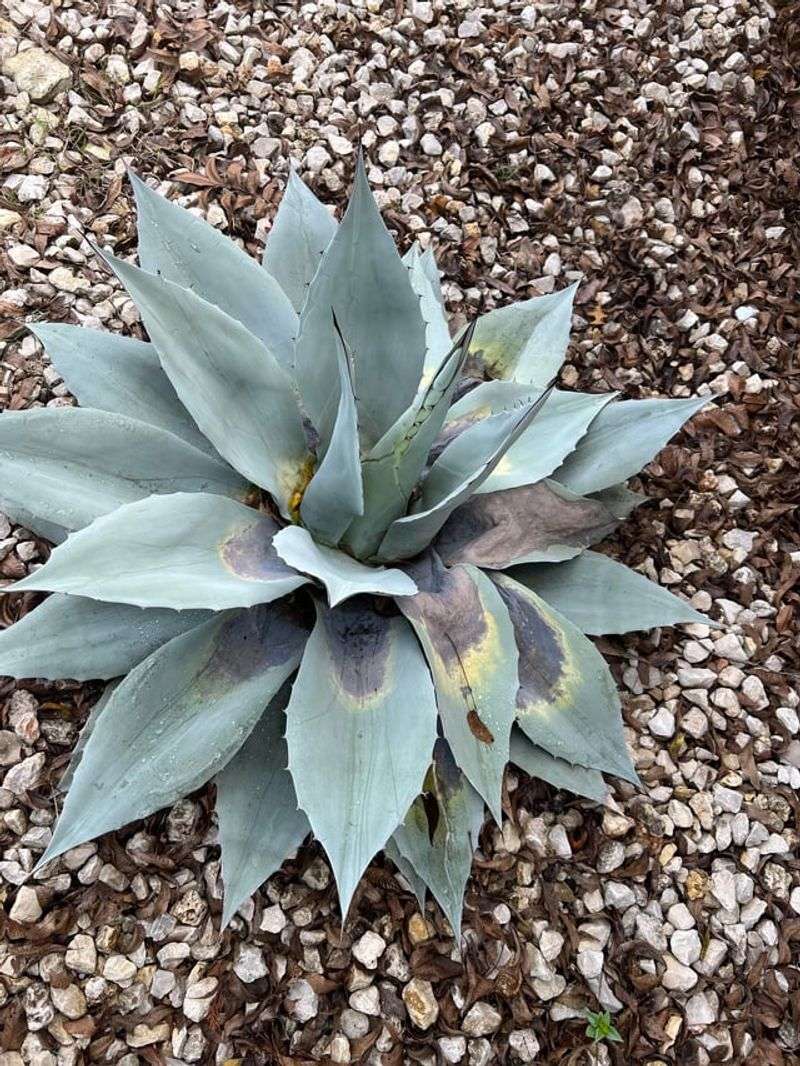
Water pooling near the center of an agave after a monsoon storm is one of the more immediate concerns Arizona homeowners may notice when walking their yard.
The crown, which is the tight cluster of leaves growing from the center of the plant, sits low enough that rainwater can collect there and stay for longer than most people expect.
Agaves are built to move water away from their core, but when rainfall is heavy and drainage is slow, that design has its limits.
Gravel beds common in Arizona desert landscapes can sometimes trap water in low spots rather than letting it run off freely.
If your agave sits in a slight depression or near a hardscape edge where runoff collects, standing water around the crown becomes a more frequent issue during monsoon season.
Even a few hours of moisture sitting in the crown can begin to soften tissue that normally stays firm and dry.
Checking your agaves within a day or two after a significant storm is a reasonable habit during monsoon season. Gently tip any collected water out of the crown if you can reach it safely.
If the same spot floods repeatedly, adjusting the surrounding grade or improving nearby drainage can help reduce how often water settles around your plant.
2. Soft Or Collapsing Center Growth
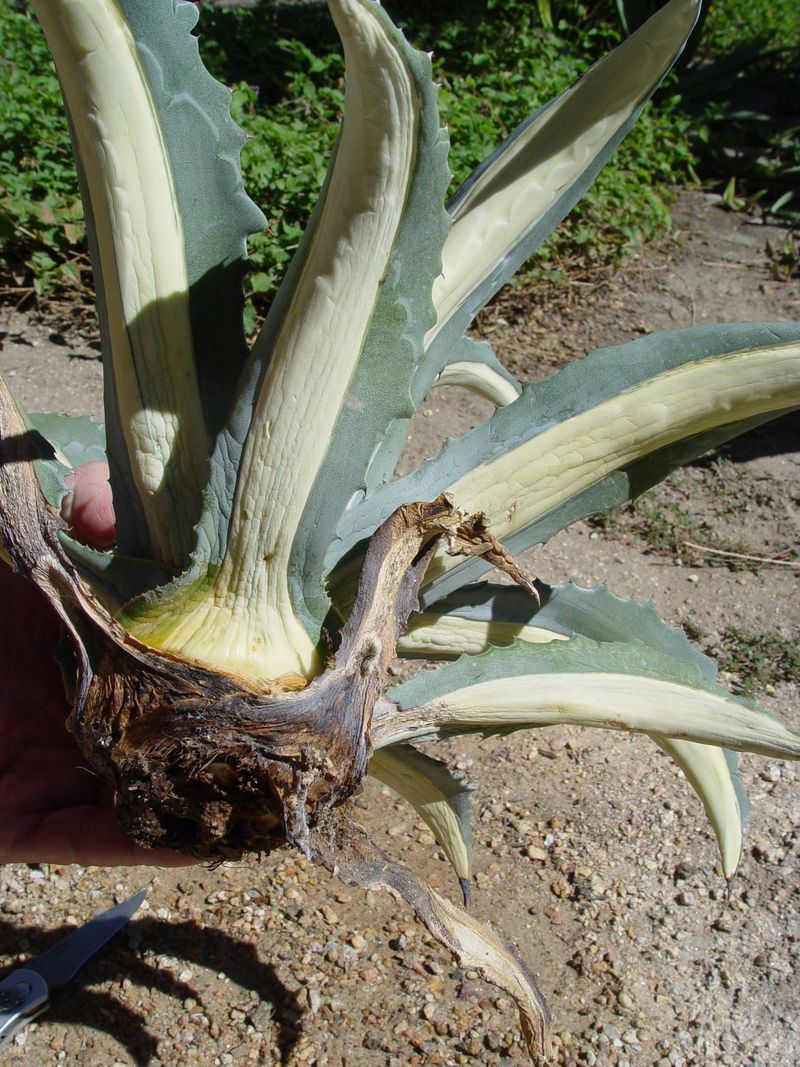
Reaching down to press gently on the center leaves of your agave and finding them soft or mushy is a sign that something has gone wrong with moisture around the crown. Healthy agave leaves feel firm and rigid.
When tissue near the center begins to feel spongy or gives way under light pressure, excess moisture has likely been sitting in that area long enough to cause internal breakdown.
This can happen more quickly than most homeowners expect during a wet monsoon stretch.
Soft center growth sometimes appears alongside discoloration, with leaves turning yellow, pale tan, or translucent near their base.
The damage often starts low where leaves meet the central stem, which means the outer leaves may still look fine while the problem has already developed deeper inside the rosette.
Your Arizona Garden Changes Every Week. Your Plan Should Too.
Gardening in Arizona changes quickly throughout the season. Every Friday you’ll receive a simple weekly plan showing exactly what to plant, prune, fertilize, harvest, and protect so you never miss the right timing.
That is part of what makes this issue easy to miss until it has progressed.
If you notice soft tissue in the center, removing the affected leaves carefully and allowing the area to dry out may help the plant stabilize if the damage is limited.
However, if the softness extends deep into the stem or the entire center feels compromised, the situation may be beyond simple fixes.
Catching this early during monsoon season in Arizona gives the plant a better chance of recovering.
3. Agave Snout Weevil Activity
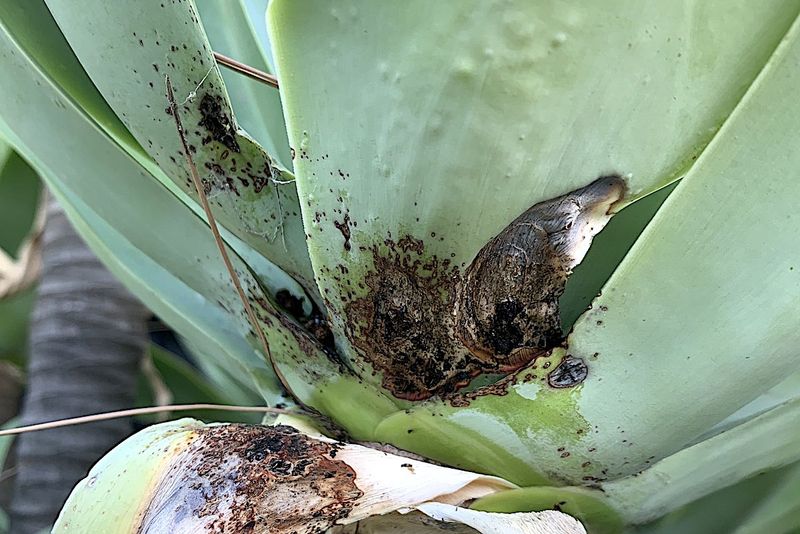
Warm, humid monsoon evenings in Arizona create conditions that tend to increase activity for one of the most damaging pests agave growers deal with: the agave snout weevil.
This small black beetle burrows into the base of the agave near the crown, where it lays eggs.
The larvae that hatch feed on the plant from the inside, and because the damage happens out of sight, many homeowners do not realize there is a problem until the plant begins to lean or collapse.
Monsoon season overlaps with peak weevil activity in many parts of Arizona, making summer a good time to do a closer inspection around the base of your agaves.
Look for small entry holes, soft or discolored tissue near the soil line, or a slight wobble when you gently press the plant.
A foul smell near the base can also be a clue that something is wrong beneath the surface.
Preventive treatment options do exist, including soil-applied insecticides labeled for this pest, and some Arizona homeowners apply these before peak season begins.
If you suspect weevil damage is already present, reaching out to a local extension office or licensed pest professional for guidance specific to your situation is a reasonable step rather than guessing on treatment timing or product choice.
4. Poorly Draining Soil After Heavy Rain
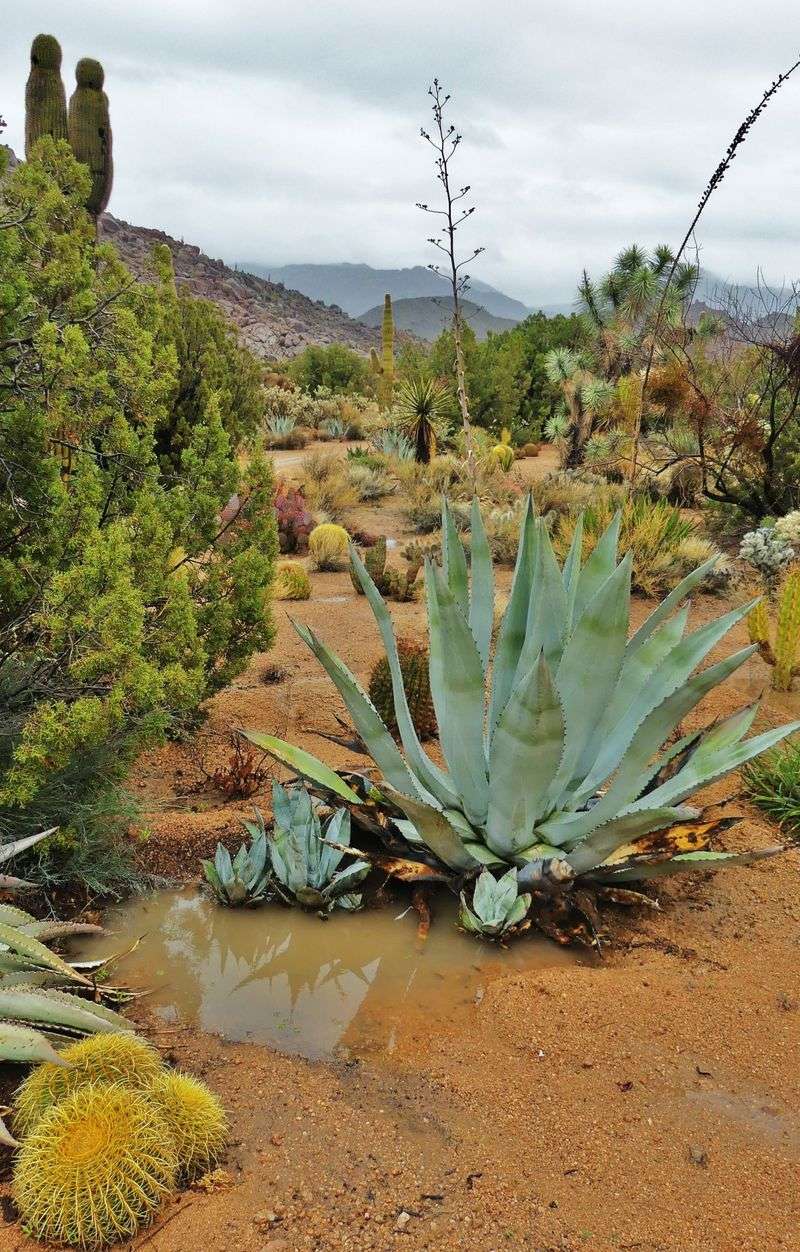
Not every Arizona yard drains the same way, and monsoon season has a way of exposing drainage problems that go unnoticed during dry months.
Caliche layers, compacted soil, clay-heavy areas, or low spots near walls and fences can all cause water to linger long after a storm has passed.
Agaves planted in these areas may sit in saturated ground for hours or even days, which puts stress on the root system that these plants are not designed to handle for extended periods.
One way to check drainage after a storm is to observe how quickly the soil surface dries out. If you are still seeing wet, muddy conditions around your agave two days after rain, that is a signal worth paying attention to.
Compacted gravel or decomposed granite that has become dense over time can also slow surface drainage more than homeowners expect.
Improving drainage around existing plants can involve loosening the soil around the planting area, adding coarse gravel amendments, or slightly raising the planting mound so water moves away from the root zone more efficiently.
For agaves in Arizona that are planted near structures or in low-lying areas, evaluating drainage before monsoon season arrives tends to be more effective than trying to fix saturated soil mid-storm.
5. Too Much Irrigation Between Storms
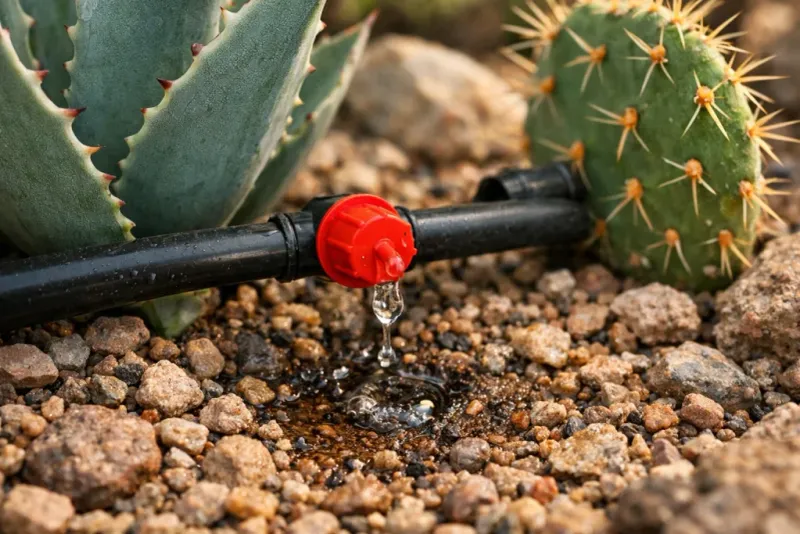
One of the more common oversights during Arizona monsoon season is forgetting to adjust automatic irrigation when storms are rolling through regularly.
Agaves that receive drip irrigation on a fixed schedule may end up getting watered on top of recent rainfall, pushing the soil past what these plants can comfortably handle.
The combination of monsoon rain and scheduled irrigation can keep the root zone consistently wet in a way that dry-season watering alone would not.
Checking your irrigation controller at the start of monsoon season and adjusting run times or temporarily suspending watering cycles during active storm periods is a practical step many Arizona homeowners find worthwhile.
Smart irrigation controllers with weather sensors can help automate this, but even a manual adjustment when you know a storm is coming makes a difference.
Agaves generally need far less supplemental water during the monsoon months than they do in spring or early summer.
Signs that your agave may be getting too much water include soft or pale outer leaves, a slightly swollen appearance at the base, or soil that never seems to fully dry between waterings.
Backing off irrigation during monsoon season does not stress most established agaves in Arizona.
In fact, giving the plant time to dry out between moisture events tends to support healthier root conditions through the summer.
6. Container Agaves Staying Wet Too Long
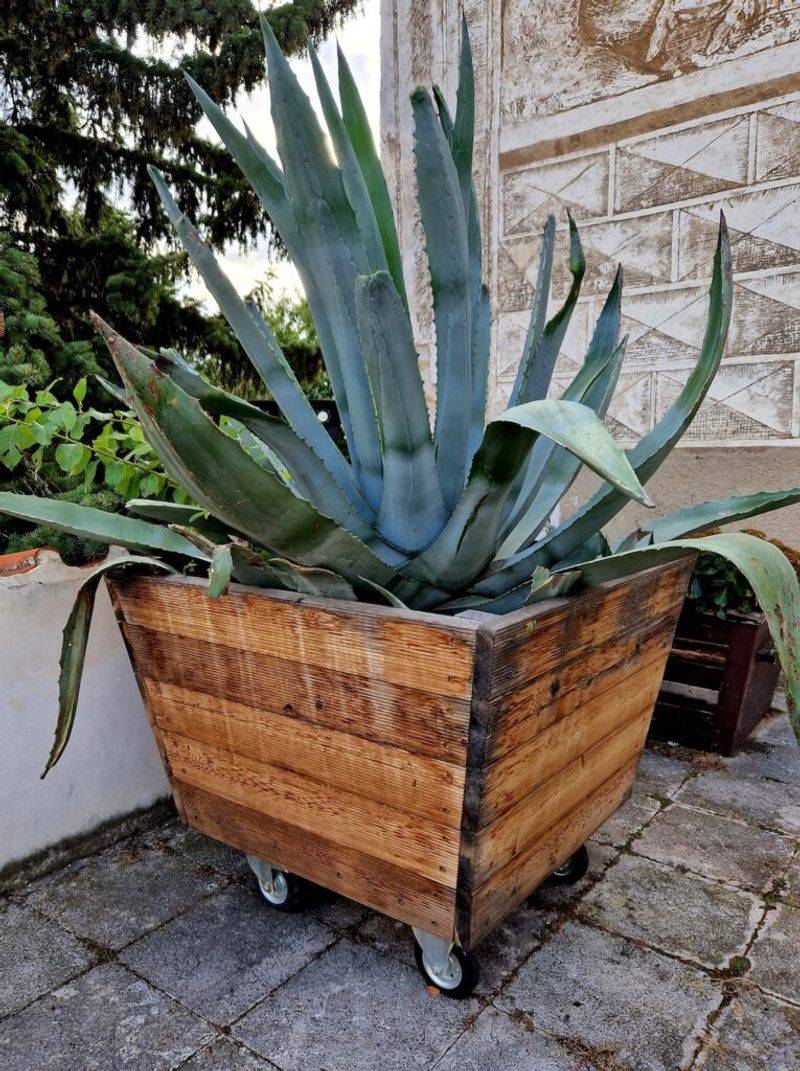
Patio containers and decorative pots are popular ways to grow agaves in Arizona, but they come with a specific challenge during monsoon season: drainage.
A container that does not have adequate drainage holes, or one where the drainage hole is blocked by a saucer or tight-fitting stand, can hold water at the bottom of the root zone long after a rainstorm has passed.
Agaves in containers are more vulnerable to wet soil conditions than those planted in the ground because there is less volume of soil to absorb and buffer excess moisture.
After a heavy monsoon rain, it is worth tipping or tilting containers slightly to check whether water is draining freely. If water streams out when you tilt the pot, drainage was blocked.
Saucers that collect water under containers should be emptied promptly rather than left to slowly evaporate, especially during stretches of humid monsoon weather when evaporation slows down.
Choosing a well-draining potting mix formulated for cacti and succulents, combined with a container that has generous drainage holes, goes a long way toward reducing moisture stress on container agaves during Arizona monsoon season.
Moving containers under a covered patio or overhang during extended rainy stretches is also a reasonable option for smaller or more delicate agave varieties that are less tolerant of prolonged wet conditions.
7. Debris Caught In The Rosette
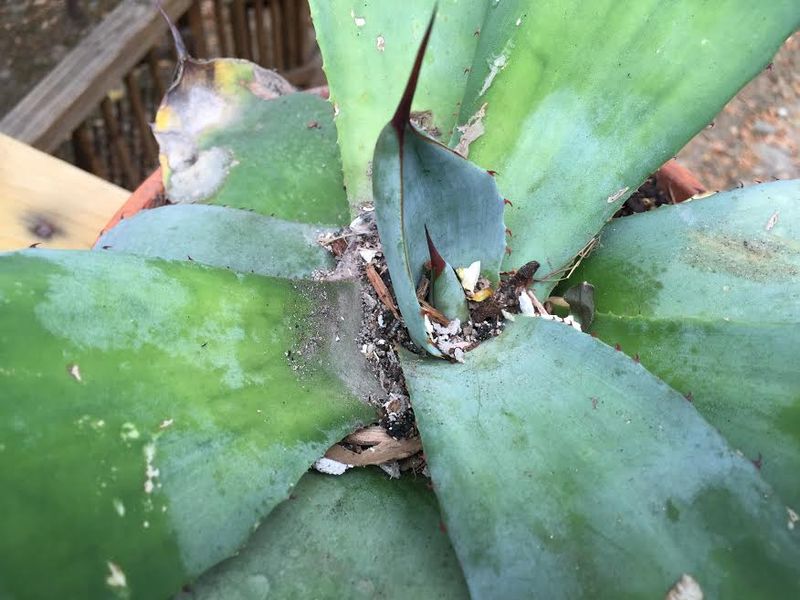
Monsoon storms in Arizona rarely arrive quietly. High winds, blowing dust, dry leaves, small branches, and other yard debris often get pushed across the landscape and settle right into the tight spaces between agave leaves.
The rosette shape of an agave, with its overlapping and closely packed leaves, is almost designed to catch and hold lightweight debris that blows through during a storm.
Most of the time this looks like a minor nuisance, but debris that stays trapped in the rosette can create problems worth addressing.
Wet debris sitting against agave leaf tissue holds moisture against surfaces that are better off staying dry. Over time, trapped organic material can also create a microenvironment where fungal issues or small pests find shelter.
Leaves, seed pods, and bits of dried plant matter from nearby trees are especially common culprits in Arizona yards where desert trees like palo verde and mesquite drop debris regularly during summer storms.
Clearing debris from the rosette after a storm is a straightforward task that takes only a few minutes.
Using a gloved hand or a long-handled brush to sweep material out from between the leaves reduces moisture retention and keeps the plant looking clean.
This kind of routine post-storm check is one of the simpler ways Arizona homeowners can stay ahead of small issues before they develop into larger concerns during monsoon season.
8. New Leaning Or Looseness After Storms
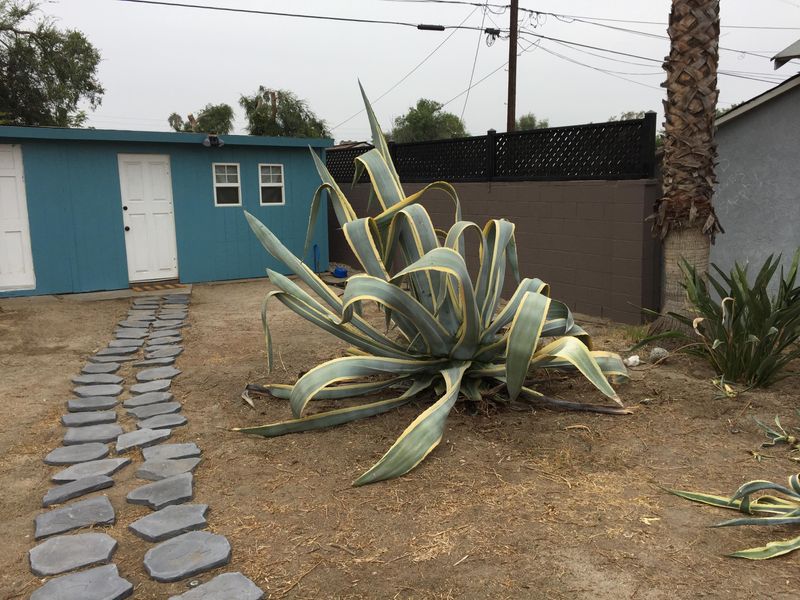
Walking your yard after a strong Arizona monsoon storm and noticing that an agave has developed a new lean or feels loose when you press gently against it is something worth investigating right away.
Heavy rain can saturate the soil around an agave’s root zone enough to temporarily reduce the grip the roots have on surrounding soil, especially in sandy or gravelly ground that drains quickly on top but stays soft underneath.
Wind gusts that often accompany monsoon storms add another force that can shift a plant that was previously sitting firmly in place.
A slight lean does not automatically mean serious damage has occurred, but it is a sign that the root system may need time and support to re-anchor. Checking whether the base of the plant feels stable or wobbly helps gauge how significant the movement has been.
If the plant has shifted enough that the crown is now tilted, gently repositioning it and pressing soil or gravel firmly back around the base can help it resettle as the ground dries.
Agaves with shallow root systems, those recently transplanted, or those planted in very loose soil may be more prone to shifting after storms.
Monsoon season in Arizona tends to bring multiple storm events in close succession, so checking your agaves after each significant rain rather than waiting until the end of the season helps catch instability before it becomes more difficult to address.
9. Crowded Pups Holding Moisture Around The Base
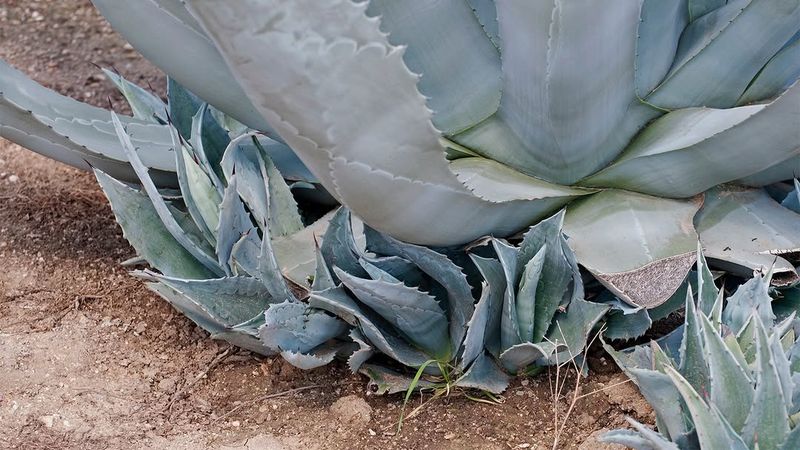
Mature agaves in Arizona landscapes frequently produce offsets, often called pups, that sprout from the base of the parent plant. A few pups spread out naturally around a large agave can look attractive and fill in a desert garden bed nicely.
However, when pups become crowded and dense around the base, they create a situation where airflow is reduced and moisture tends to collect in the tight spaces between plants.
During monsoon season, when the ground is already receiving more water than usual, this crowding can become a concern.
Water that collects in the compressed spaces between tightly packed pups and the parent plant has fewer places to go and less air movement to help it evaporate.
This creates prolonged wet conditions right at the base of the main plant, near the area where the crown meets the soil.
Soil that stays moist in this zone during an active monsoon stretch provides conditions that can stress root tissue over time.
Thinning out crowded pups before or during monsoon season helps open up airflow and reduces how much moisture lingers around the base. Removing pups can also be a good opportunity to propagate new plants for other areas of your Arizona yard.
Using a clean, sharp tool and allowing cut surfaces to dry before replanting reduces the chance of introducing additional moisture-related issues during the process.
10. Agave Mites Or Other Small Pest Issues
Humid monsoon evenings and warm overnight temperatures in Arizona create conditions that some small pests find quite favorable.
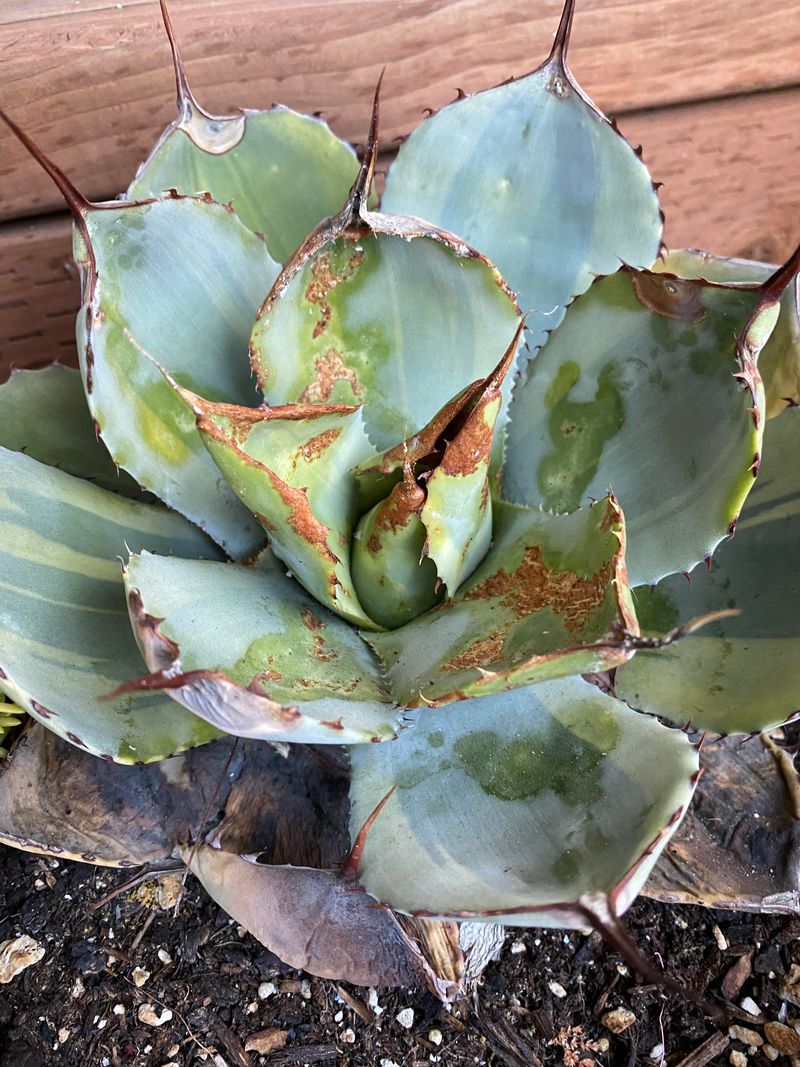
Agave mites, which are tiny spider mite relatives that feed specifically on agave tissue, can become more active or noticeable during summer months when humidity increases.
Damage from mites often appears as faint stippling, silvery streaking, or a rough, dull texture on the leaf surface rather than the smooth, waxy appearance healthy agave leaves typically have.
Checking the surface of agave leaves during your post-storm inspections takes only a moment and can help you catch small pest issues before they spread across the plant.
Running a gloved finger along a leaf surface and looking for fine webbing, tiny moving specks, or unusual texture changes are practical ways to get a closer look.
Mite activity tends to be more concentrated on newer growth or in areas of the plant that receive less direct airflow.
For light infestations, a strong spray of water to dislodge mites from leaf surfaces can reduce populations without introducing chemicals to your desert garden.
For more persistent issues, products labeled for mite control on succulents and approved for residential use in Arizona are available.
Reading labels carefully and applying them during cooler parts of the day tends to produce better results and reduces the chance of leaf damage from spray applications.