Florida Container Garden Plants That May Help Repel Ticks Near Patios
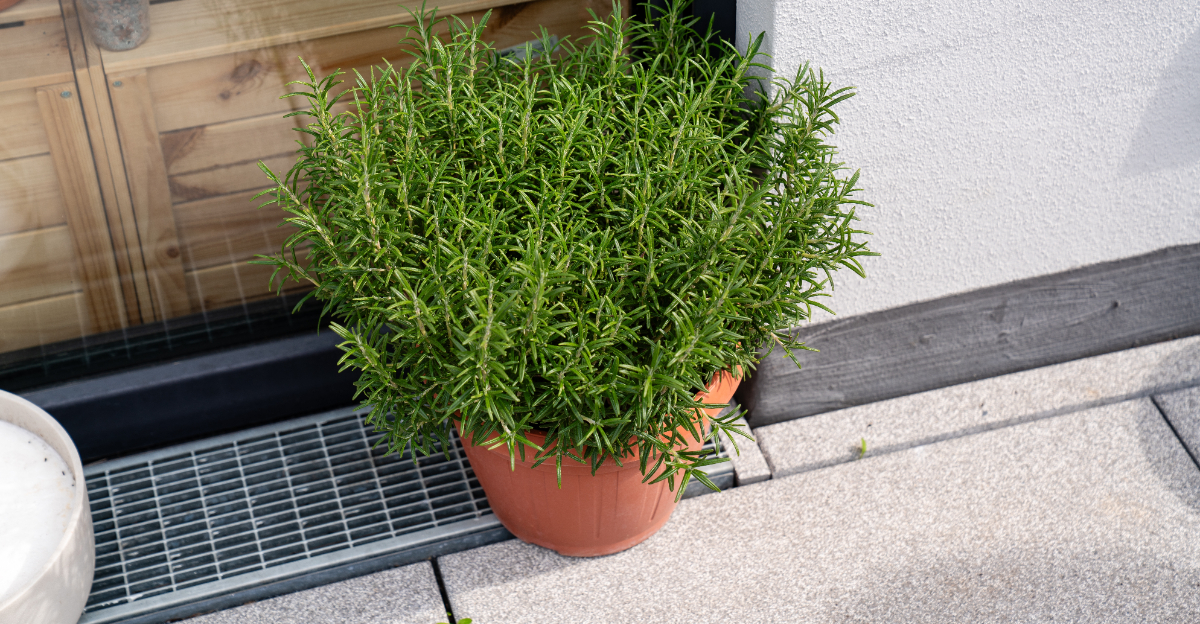
A Florida patio should feel like an extension of the home, not a place where you do a full body check before sitting down.
Ticks near outdoor living spaces are a real concern in Florida, where the climate keeps them active well beyond the months most people associate with tick season.
Container plants near a patio are not a silver bullet. Nothing is when it comes to ticks.
But certain plants have compounds and scents that ticks find off-putting. A few well-placed containers add one more layer of discouragement to a space that deserves to be enjoyed without that particular worry.
Florida’s climate supports a solid range of options here. Some are herbs, some are ornamentals, and several do both jobs at once without demanding much attention through the season.
A patio that smells good and looks good while quietly making ticks less comfortable is worth building.
1. Rosemary Keeps Sunny Patio Pots Aromatic And Tidy
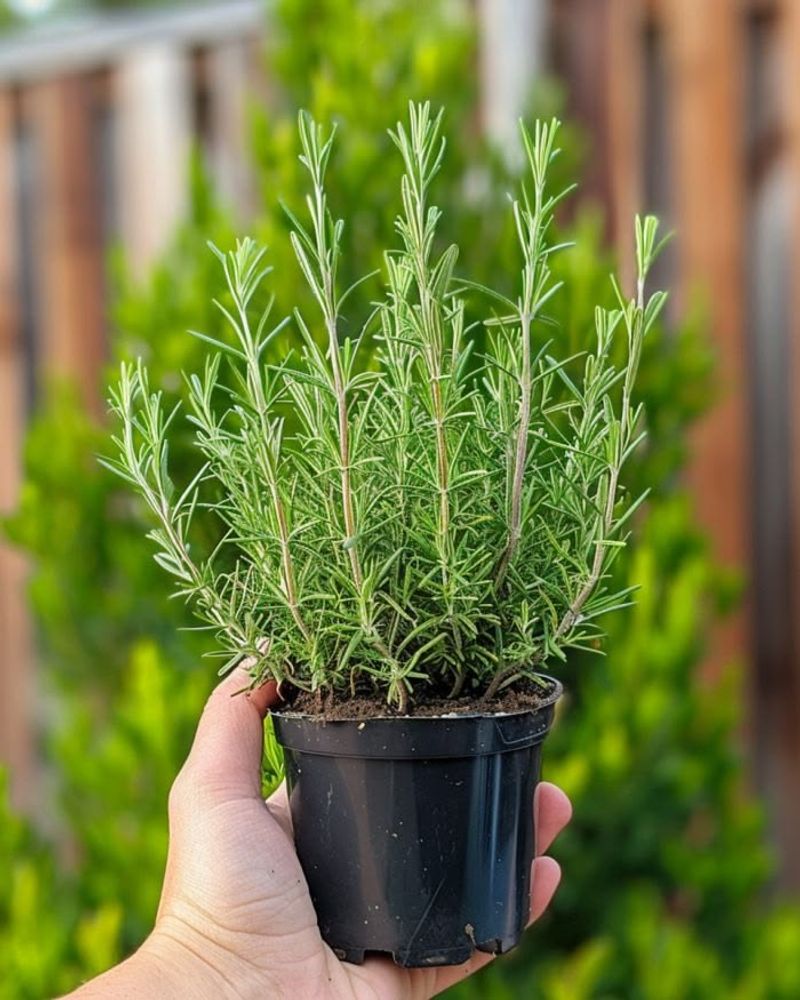
A sunny patio corner smells noticeably better when a pot of rosemary is nearby. Rosemary (Salvia rosmarinus) is a Mediterranean herb that thrives in warm, dry conditions, making it a natural fit for sunny container gardens near outdoor seating areas.
Its upright, evergreen structure stays tidy without much fussing, and the needle-like foliage holds its fragrance through heat and humidity.
Aromatic compounds in rosemary are frequently discussed in pest-repellent contexts, but no reliable source confirms it controls or repels ticks on its own.
What it does offer is a fragrant, clean-looking pot that keeps patio edges open and visible rather than dense and brushy.
Open, tidy edges are less attractive to ticks than overgrown, shaded spots with leaf litter.
For best results in containers, choose a pot at least 12 inches wide with drainage holes at the bottom. Rosemary needs full sun, at least six hours daily, and sharp drainage to avoid root rot in humid conditions.
Use a well-draining potting mix and avoid overwatering, especially during the rainy season. Good airflow around the pot matters too.
Larger containers hold moisture longer, so check the soil before watering. Harvest stems often to encourage bushy growth and keep the plant looking neat.
Rosemary is non-native but widely grown as a culinary herb across warm regions without invasive concerns.
2. Lemongrass Brings Citrus Scent To Large Containers
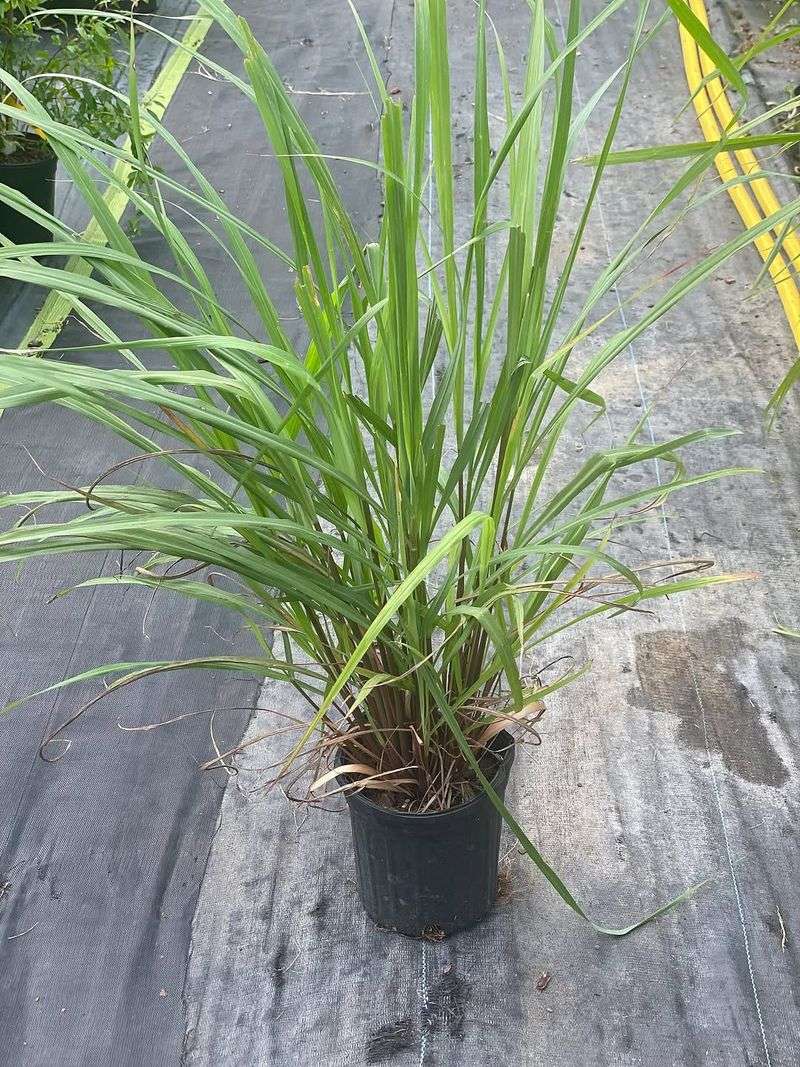
Few patio plants make as bold a statement as a well-grown clump of lemongrass standing tall in a big container. Lemongrass (Cymbopogon citratus) is a tropical grass with a bright citrus scent that carries nicely near outdoor seating areas.
Its upright form adds visual structure while the culinary value, fresh stalks for soups, teas, and marinades, makes it doubly useful on a patio or balcony.
Citronella-related grasses are often linked to repellent scents in gardening conversations. But no container plant has been shown to reliably control ticks in outdoor spaces.
Lemongrass fits the tick-discouraging container theme in a limited, aromatic way. Its tall open form does not create dense hiding spots, which is a small practical advantage near seating edges.
Your Florida Garden Changes Every Week. Your Plan Should Too.
Gardening in Florida changes quickly throughout the season. Every Friday you’ll receive a simple weekly plan showing exactly what to plant, prune, fertilize, harvest, and protect so you never miss the right timing.
Lemongrass needs a large container, at least 15 to 18 inches wide, to give the clump enough space to spread without becoming root-bound. Full sun and consistent moisture are both important.
The soil should stay evenly moist but never waterlogged, so drainage holes are essential. Trim outer blades regularly to keep the clump tidy and prevent old material from piling up at the base.
Overgrown clumps can harbor debris, so divide and refresh every year or two. Lemongrass is non-native and can spread in warm regions, so keeping it in containers is the smartest approach for most patios.
3. Mint Works Best Where Pots Keep It Contained
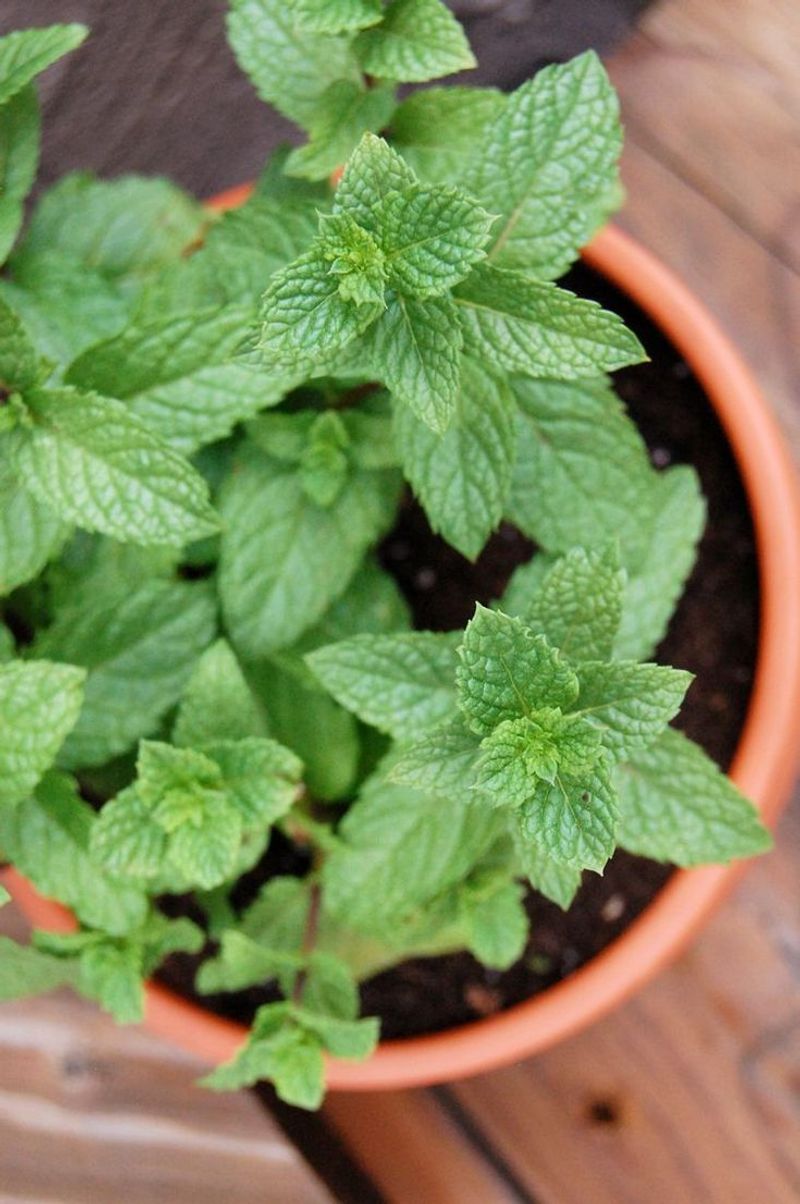
Mint has a reputation for being both delightful and a little relentless. Drop it into a garden bed and it will spread across the space before the season ends.
That aggressive spreading habit is exactly why containers are the right home for mint (Mentha species) near a patio or seating area. Kept in a pot, it stays manageable, fragrant, and genuinely useful for drinks, teas, and cooking.
Strong mint scent fits the aromatic theme of a tick-discouraging container garden in a very limited, local way. No evidence supports using mint as a reliable tick-control method, so treat it as a pleasant bonus rather than a pest solution.
Regular harvesting keeps the plant bushy, prevents legginess, and gives you fresh leaves whenever you want them.
Choose a container with solid drainage and position it where spilling stems cannot root into nearby garden beds. Mint prefers partial to full sun and consistent moisture, but soggy roots cause problems quickly in warm, humid conditions.
Water when the top inch of soil feels dry. Pinch flower buds as they appear to keep the plant focused on leafy growth rather than going to seed.
Messy, overgrown mint pots can collect leaf debris at the base, so clean those up regularly. A tidy, well-maintained pot looks better, drains better, and keeps the patio edge cleaner overall.
4. Lavender Needs Sharp Drainage To Handle Patio Heat
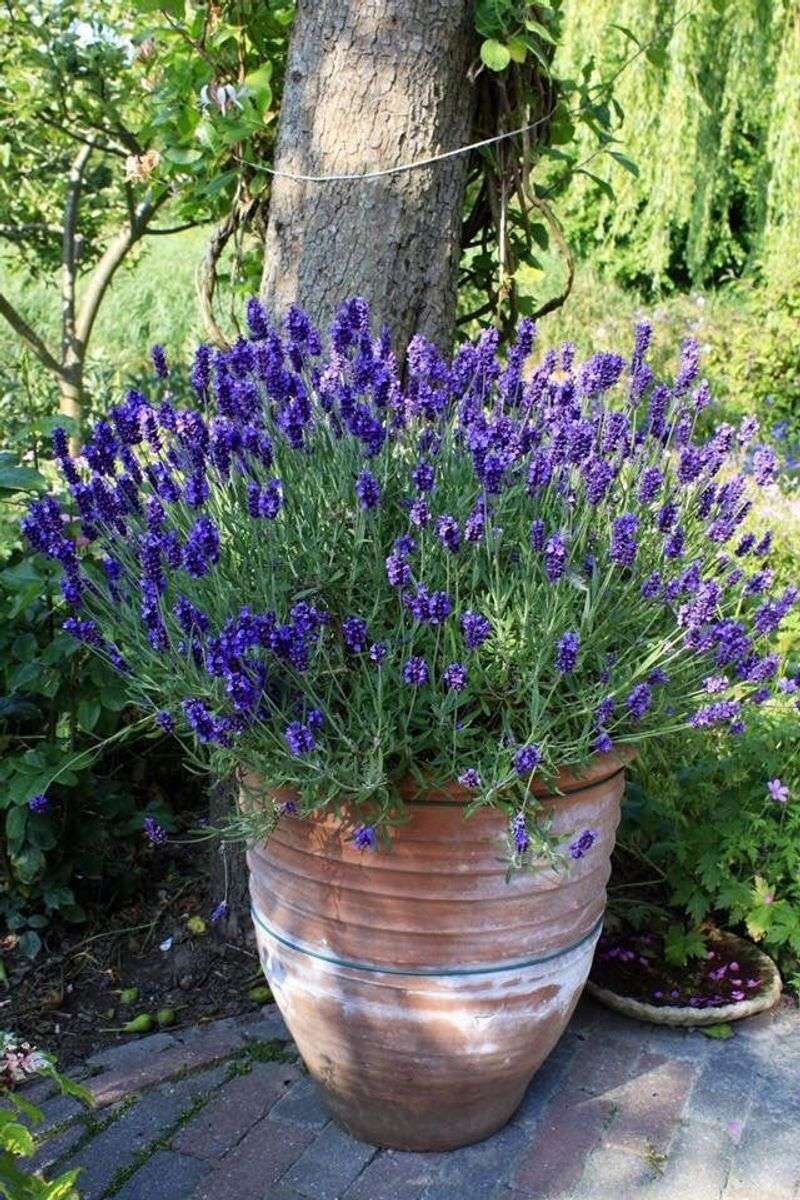
Lavender in a sunny patio pot is a classic pairing for good reason. The silver-green foliage, upright purple flower spikes, and calming fragrance make it one of the most recognizable aromatic plants in container gardening.
Lavender (Lavandula species) is frequently associated with pest-repelling fragrance in garden writing, but no source confirms it controls or repels ticks near patios.
What lavender does offer is a tidy, fragrant pot that stays compact, blooms reliably in full sun, and keeps patio edges clean and open.
That open, low-growing structure is a practical advantage since ticks prefer dense, shaded, moist cover rather than sunny, airy container gardens.
Drainage is the most critical factor for growing lavender successfully in warm, humid conditions. Use a terracotta pot with drainage holes, fill it with a gritty, fast-draining potting mix, and never let water sit at the base.
Soggy soil causes root rot quickly, especially during the rainy season. Position pots where they receive full sun for most of the day and good air circulation around the foliage.
Lavender can struggle with heavy humidity if air movement is poor, so avoid crowding it between other dense plants. Trim spent flower stalks after blooming to keep the plant looking neat.
Lavender is non-native but widely grown ornamentally and does not pose invasive concerns in container settings.
5. Sage Adds Strong Aroma Without Taking Over
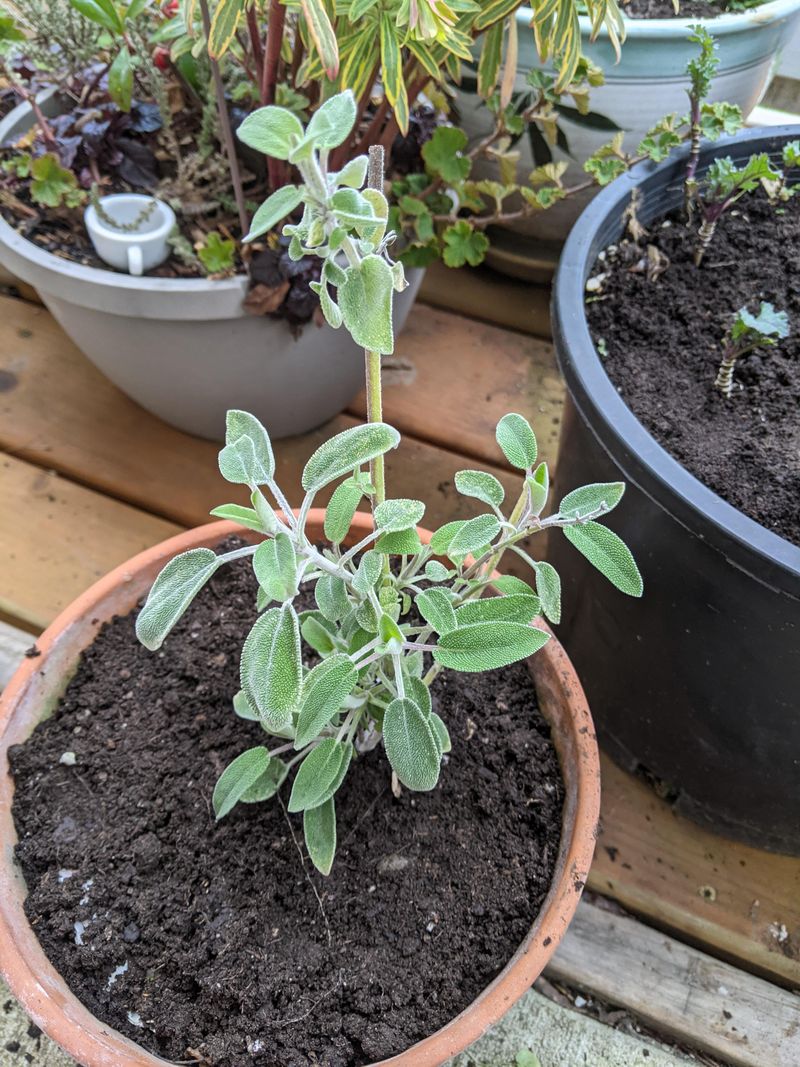
Rubbing a single sage leaf between your fingers releases one of the most distinct aromas in any herb garden. Culinary sage (Salvia officinalis) brings that bold, savory fragrance to patio containers without spreading aggressively or taking over nearby beds.
Its soft, gray-green leaves have a velvety texture that looks attractive in pots near outdoor seating areas.
Aromatic foliage is part of the tick-discouraging container garden theme discussed throughout this article, but sage does not create a protective barrier around a patio. No plant in a container can do that.
What sage offers is a fragrant, compact pot with culinary value, tidy structure, and an open form that does not create dense hiding spots near seating edges.
Sage needs full sun and excellent drainage to stay healthy in warm, humid conditions. Use a pot with good drainage holes and a well-draining potting mix that dries slightly between waterings.
Wet, heavy soil encourages fungal problems, especially during the rainy season when air moisture is high. Avoid overhead watering when possible and keep good airflow around the pot.
Prune woody stems back in late winter or early spring to encourage fresh, bushy growth. Sage is a compact grower, so a 10 to 12 inch pot is usually enough for one plant.
It is non-native but widely grown as a culinary herb without invasive concerns in container gardens.
6. Garlic Chives Bring Allium Scent To Small Pots
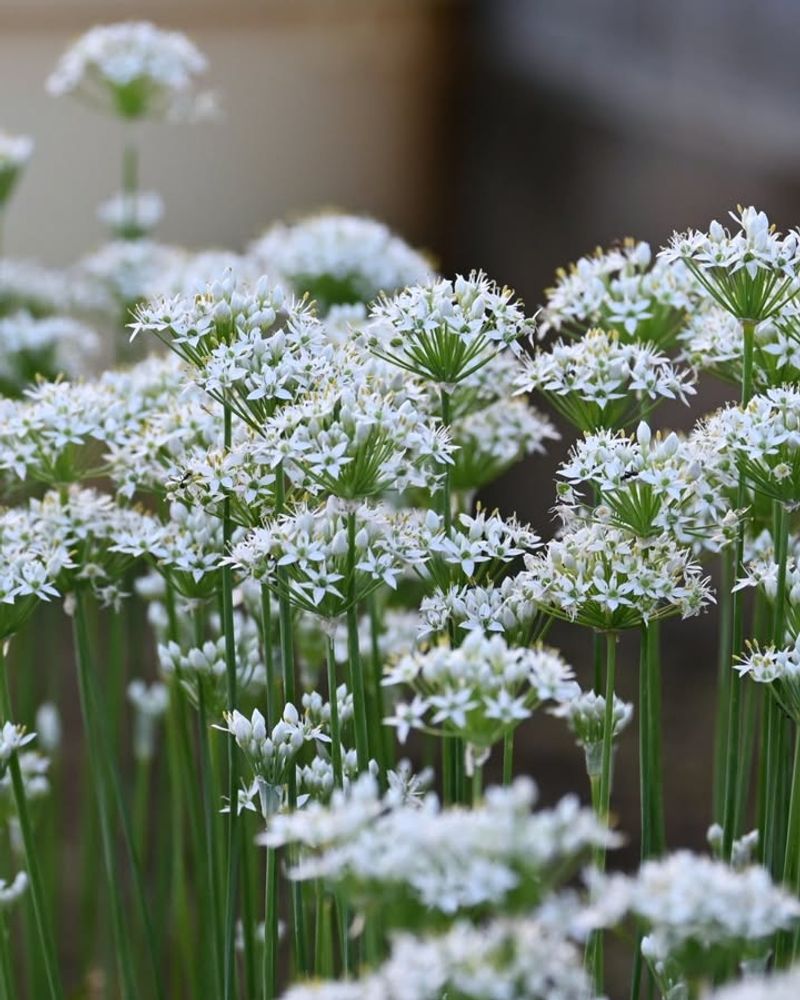
Not every patio herb needs a large container or dramatic height to earn its spot. Garlic chives (Allium tuberosum) are a compact, easygoing option that punches above its weight.
It offers flat, onion-scented leaves, delicate white flowers, and serious pollinator interest during bloom season. The star-shaped white flower clusters are genuinely pretty near outdoor seating areas.
Allium scent fits the aromatic theme of a tick-discouraging container garden in a modest way. No credible source confirms that garlic chives repel ticks near patios, so think of the scent as a pleasant bonus rather than a pest solution.
The real value here is a tidy, low-growing pot with edible leaves, attractive flowers, and easy care.
Full sun and well-draining containers are the main requirements for healthy garlic chives. Water consistently but avoid waterlogged soil, which causes bulb rot in humid conditions.
Harvest leaves regularly by cutting them about an inch above the soil, which encourages fresh regrowth and keeps the clump tidy. Trim spent flowers before seeds drop, because garlic chives can reseed freely and become weedy if left unchecked.
This is an important step in warm regions where mild winters allow seeds to germinate year-round. Divide crowded clumps every two to three years to keep growth vigorous.
Garlic chives are non-native and should stay in containers to prevent unwanted spreading into nearby beds or lawn areas.
7. Society Garlic Keeps Patio Edges Neat And Fragrant
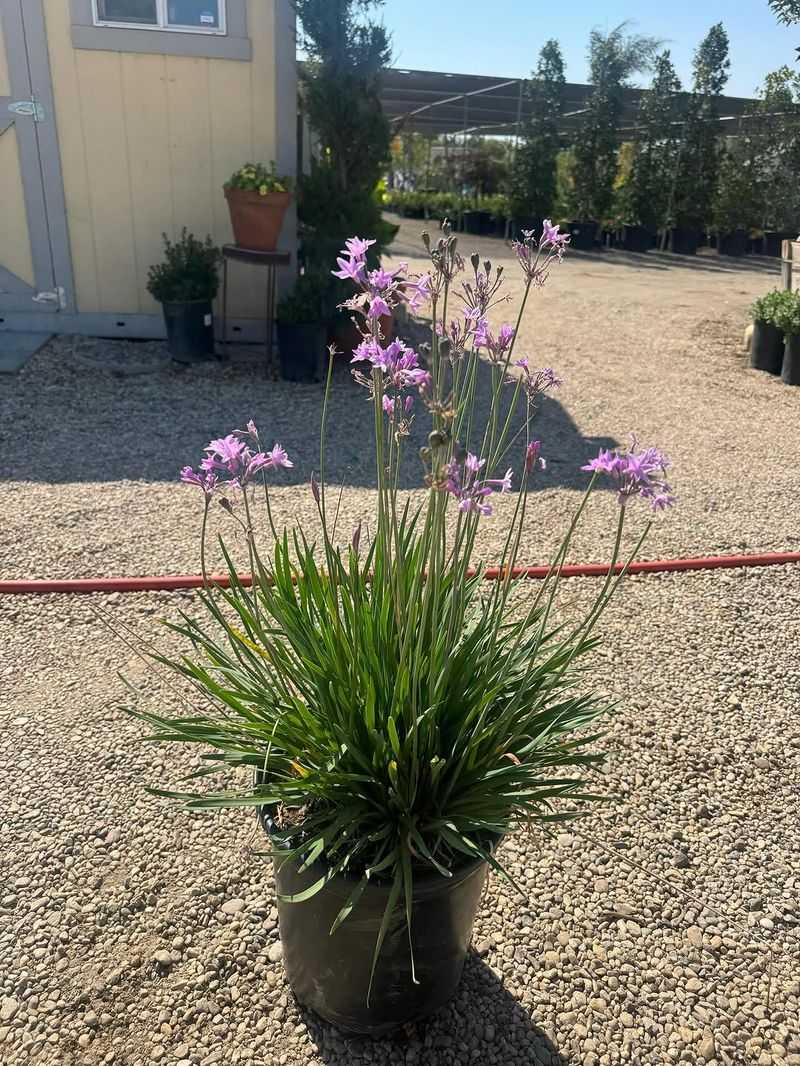
Purple flowers and a sharp garlic scent make society garlic (Tulbaghia violacea) a memorable addition to a sunny patio container cluster.
Narrow, strap-like foliage stays upright and tidy without much intervention, and the lavender-purple blooms appear repeatedly throughout warm months.
It is a non-native plant from South Africa, widely grown ornamentally in warm regions, but not a Florida native.
Its garlic-like scent fits the aromatic, tick-discouraging container theme in a limited way. No reliable source supports using society garlic as a tick-control method near patios.
What it does offer is fragrant, compact foliage, reliable flowers for pollinators, and a clean patio edge that stays visible and open rather than dense and brushy.
Society garlic thrives in full sun with sharp drainage. Choose a container with good drainage holes and use a well-draining potting mix to prevent waterlogged roots during the rainy season.
Space plants with enough room for airflow, since crowded pots in high humidity can develop fungal issues at the base. Remove spent flower stalks regularly to keep the pot looking neat and to encourage continued blooming.
Clumps can be divided every few years when they become overcrowded. Society garlic is generally well-behaved in containers and does not appear on Florida invasive plant lists.
Still, keeping it contained is a sensible approach for any non-native plant near garden beds.
8. Marigolds Add Bright Color Without Dense Hiding Spots
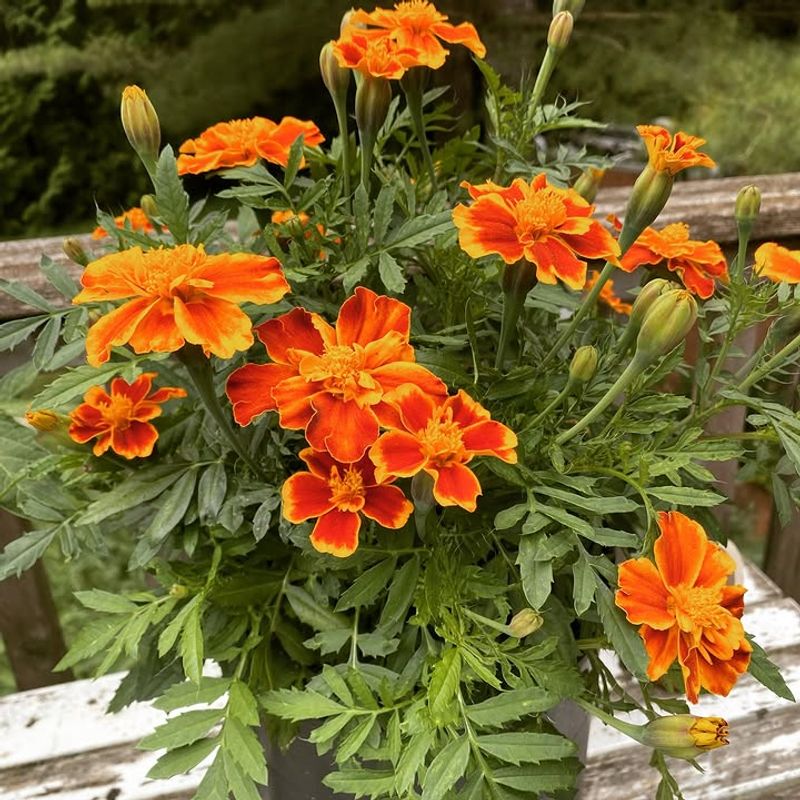
A row of marigold pots along a sunny patio step is one of the cheeriest sights in container gardening. Marigolds (Tagetes species) bring bold orange, yellow, and gold blooms to outdoor seating areas without forming the dense, brushy cover that ticks prefer.
Their low, compact form keeps patio edges open and easy to inspect, which is a quiet practical advantage worth mentioning.
Marigolds are frequently discussed in pest-repellent gardening circles, but no evidence supports the claim that they repel ticks near patios.
They are non-native annuals, not Florida natives, and should be treated as seasonal color plants rather than pest-control tools.
Their real value near patios is visual brightness, easy visibility around containers, and a tidy low profile.
Full sun is essential for strong blooming. Place pots where they receive at least six hours of direct sunlight daily and where air can circulate freely around the foliage.
Use containers with drainage holes and a quality potting mix that does not stay soggy after rain. Trim spent blooms regularly to encourage continuous flowering and prevent the plant from looking tired or messy.
Remove fallen petals from the pot surface, since decaying debris at the base can attract moisture and reduce airflow. Marigolds are cool-season to warm-season annuals in this state, so plan on replacing them as heat intensifies or plants finish their bloom cycle.