These Texas Plants Look Gorgeous In The Nursery, But Can Turn Into A Problem In Small Yards Before You Know It
Texas nurseries can be risky places for small-yard owners.
Everything looks reasonable in a pot. The plant is compact. The tag has a cheerful photo. The person at the register says it handles Texas heat beautifully.
All of that may be true.
What does not fit on the tag is what happens two or three seasons later, after the plant settles in and starts making its own decisions about space.
Some popular plants sold across Texas spread underground. Some climb structures they were never invited onto. Some drop enough fruit to make a patio messy.
Others simply grow far larger than the original buyer imagined when the plant was still sitting politely in a nursery container.
Now, none of these plants are automatically bad. Several are beautiful and worth growing. They just need the right yard, the right placement, and an honest look at their mature size before they go in the ground.
A small Texas yard can still be lush, colorful, and full of personality. It just needs plants that know how to share the space.
1. Bamboo
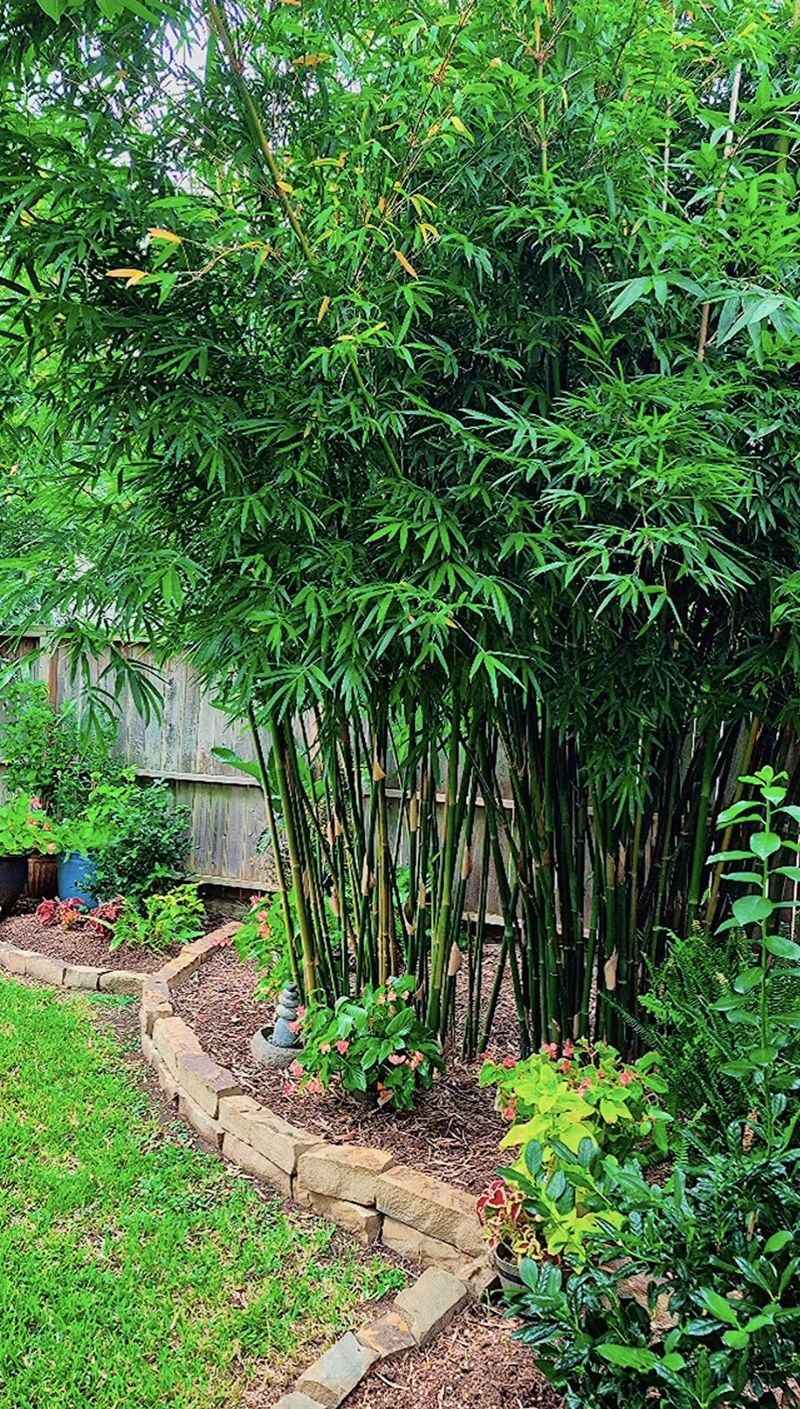
One small bamboo clump near the back fence seems like a reasonable privacy solution on a Saturday afternoon at the nursery.
Two years later, it is coming up through the neighbor’s flower bed, cracking the edge of the patio, and appearing in locations that require a moment of genuine confusion to explain.
Running bamboo spreads through underground stems called rhizomes that can travel six to ten feet or more in a single growing season.
They do not recognize fences, sidewalks, or property lines as meaningful boundaries.
Once running bamboo establishes itself, removal becomes a multi-season project involving physical barriers, repeated cutting at the soil level, and the kind of patience that most homeowners did not sign up for when they bought a privacy plant.
Clumping bamboo is a significantly smarter choice for small yards. It stays in a tight, manageable mound that grows outward slowly rather than sprinting across the neighborhood underground.
Bambusa multiplex, sold as hedge bamboo, performs well in Texas heat without the aggressive spread that makes running varieties a recurring problem in residential settings.
For anyone who already has running bamboo in place, installing a rhizome barrier at least twenty-four to thirty inches deep around the planting area is the most effective containment strategy available.
Checking barrier edges every spring matters as much as the installation itself. Small yards simply do not have the buffer space to absorb a plant that has decided the whole neighborhood is a reasonable growing area.
Running bamboo is not a bad plant. It is a plant that requires either a large yard or a very serious conversation before it goes in the ground.
2. Pampas Grass
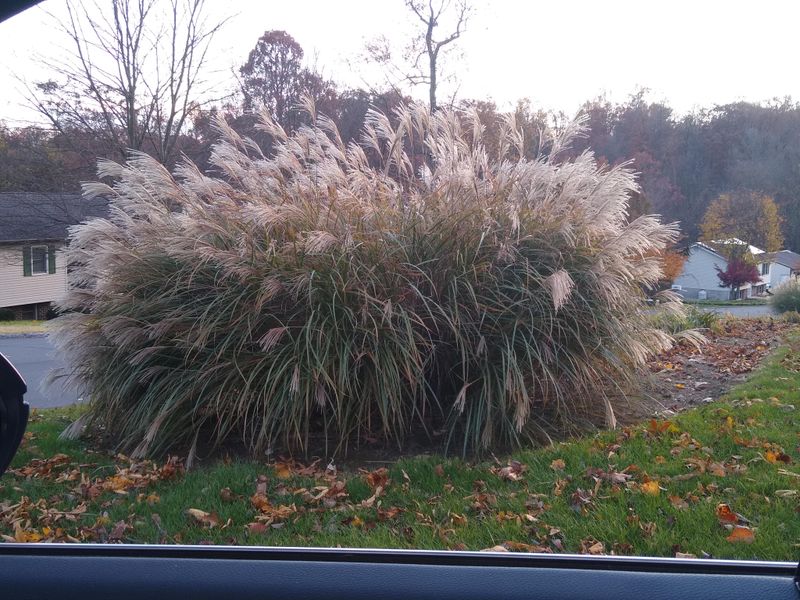
The feathery white plumes wave beautifully at the nursery, and the whole plant fits neatly into a one-gallon container.
Nothing about that presentation suggests what pampas grass actually becomes once it settles into Texas soil and starts growing on its own terms.
Cortaderia selloana reaches eight to twelve feet tall with an equal spread at maturity. In a small yard, that is a single plant claiming a significant percentage of the available square footage.
Your Texas Garden Changes Every Week. Your Plan Should Too.
Gardening in Texas changes quickly throughout the season. Every Friday you’ll receive a simple weekly plan showing exactly what to plant, prune, fertilize, harvest, and protect so you never miss the right timing.
The long, arching leaves have razor-sharp edges that will cut skin easily during any pruning session. Thick gloves and long sleeves are not suggestions when working around this grass.
The dried foliage is highly flammable, which is a relevant detail in drought-prone Texas landscapes where fire risk during dry months is a genuine seasonal concern.
The plant also produces large quantities of seed that drift into neighboring areas and establish new plants in locations nobody planned.
Dwarf varieties like Cortaderia selloana Pumila stay closer to four to six feet tall and handle Texas heat well.
That size difference sounds modest until you are standing next to the full-size version wondering how it got so large so quickly.
Choosing the right size variety before purchase is the decision that determines how the relationship with this plant goes for the next several decades.
The standard variety planted in the wrong space does not stay small out of courtesy to the homeowner.
3. Wisteria
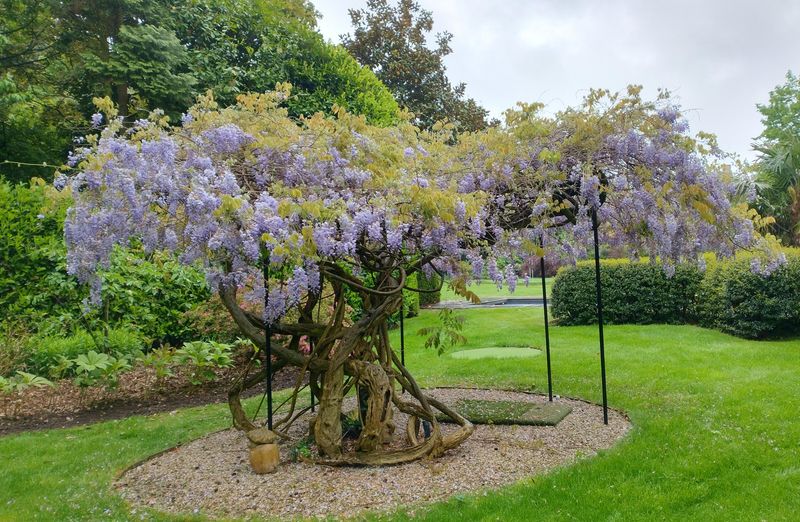
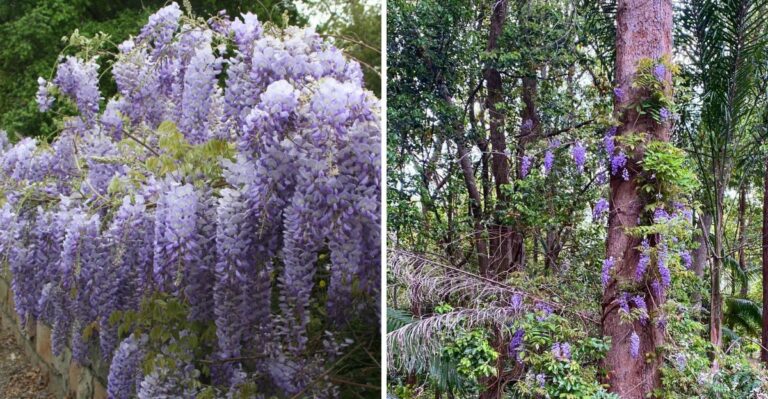
Few sights in a Texas spring garden are as genuinely breathtaking as wisteria in full bloom.
The cascading flower clusters smell remarkable. They stop people on the sidewalk. They generate the kind of garden photographs that make neighbors ask what is growing on the fence.
Then summer arrives and the vine’s other personality shows up.
Chinese wisteria and Japanese wisteria, the two most commonly sold species at Texas nurseries, are both listed as invasive by Texas Invasives.
They can grow up to ten feet in a single season and will wrap their woody, twisting vines around anything within reach.
Gutters, window frames, tree branches, and utility lines are all acceptable targets from the plant’s perspective. The weight of a mature wisteria vine can collapse a lightweight pergola or damage tree limbs over time.
In a small yard, the maintenance requirement alone becomes significant. Keeping wisteria from overtaking structures it was never intended to contact requires aggressive pruning two to three times per year without exception.
American wisteria and Kentucky wisteria are native alternatives that bloom beautifully with considerably less invasive behavior.
The variety Blue Moon is widely recommended for residential gardens in Texas.
If the classic wisteria look is non-negotiable, plan the support structure to handle serious weight over many years, and understand that one missed season of pruning can make the following season considerably more difficult.
The flowers are worth the effort. The effort is larger than the nursery visit suggests.
4. Mexican Petunia
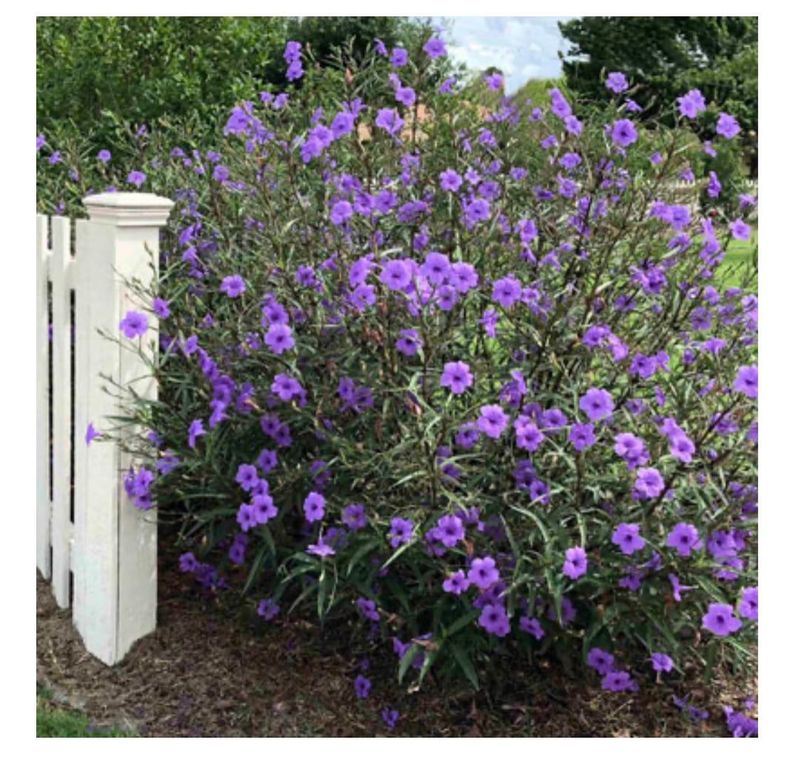
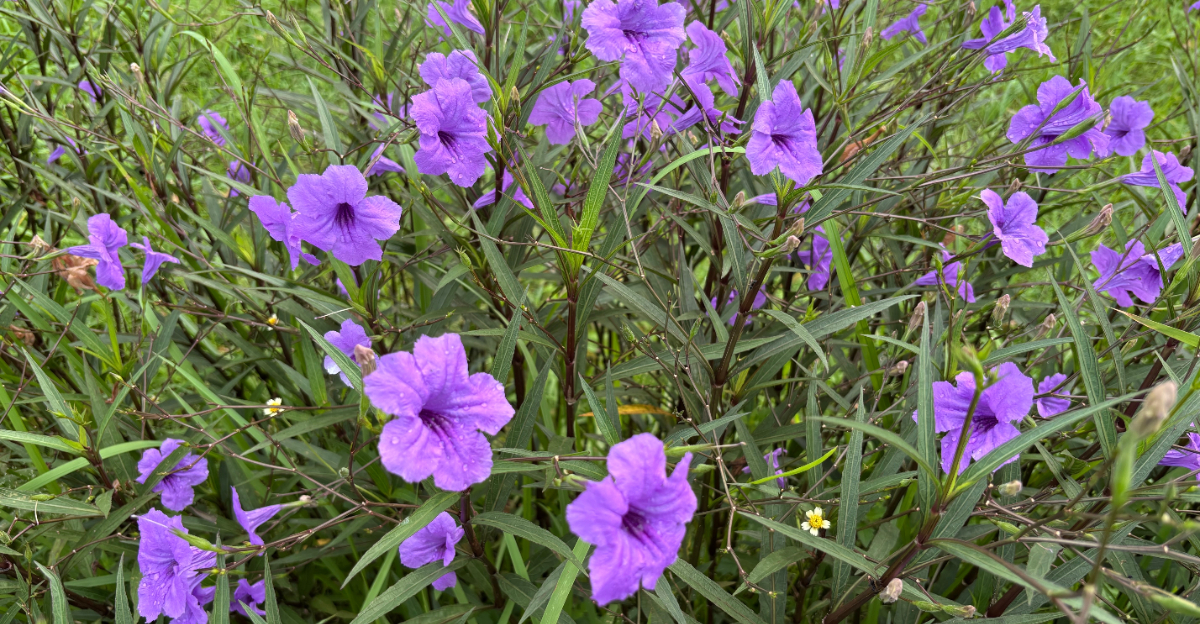
Ruellia simplex earns its popularity at Texas nurseries without much argument.
It blooms in purple, pink, or white from spring through fall, handles Texas heat without visible stress, tolerates drought, and asks very little in return. For most yard situations, that combination is exactly what a gardener wants.
The part the nursery display does not show is the spread strategy this plant uses to establish itself across a bed.
Mexican petunia spreads two ways simultaneously. Underground rhizomes push outward from the parent plant.
Explosive seed pods fling seeds several feet from the source. Texas Invasives lists it as an invasive species in some parts of the state, and the spread behavior is the direct reason.
One plant can become a dozen within a single growing season in a warm Texas bed.
The sterile dwarf variety, Ruellia simplex Katie, is a considerably better choice for small yards with defined borders.
It stays under twelve inches tall, spreads much more slowly, and produces far fewer viable seeds. Regular removal of seed pods before they mature also helps manage the spread in beds where the standard variety is already established.
Mexican petunia is not a plant to remove from consideration entirely. The blooms are genuinely useful for pollinators and the heat tolerance is real.
In a small yard with tidy borders, though, the standard variety will volunteer itself into the lawn, the sidewalk cracks, and the neighboring beds with the same cheerful enthusiasm it applies to flowering.
That enthusiasm is the whole problem.
5. Nandina
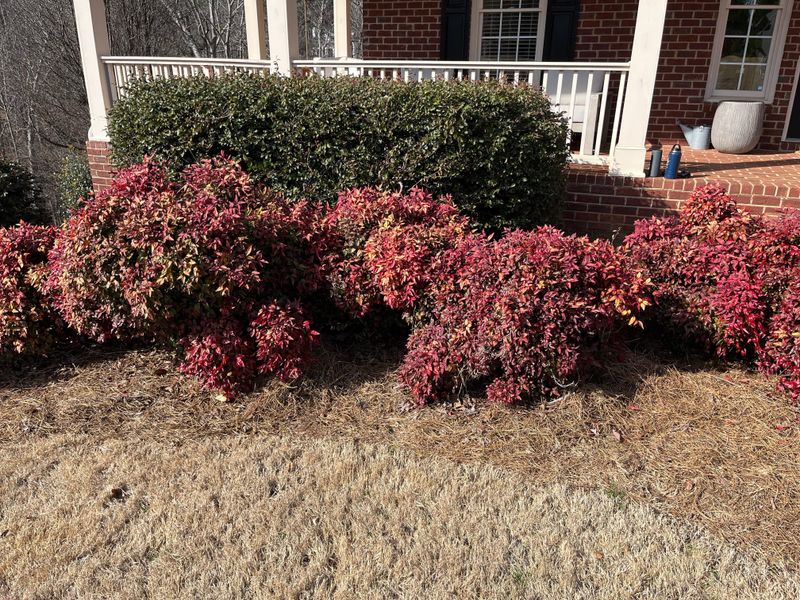
Nandina shows up in front-yard foundation plantings, along fences, and in commercial landscapes all across Texas for straightforward reasons.
The colorful foliage, compact shape, and genuine low-maintenance performance make it one of the most reliably popular shrubs available at nurseries throughout the state.
The part that does not appear on most plant tags is what happens to the red berries after birds eat them.
Birds consume nandina berries readily and then fly off, depositing seeds in natural areas, creek beds, and open spaces at significant distances from the original plant.
Texas Invasives and the Lady Bird Johnson Wildflower Center both flag nandina as a plant with invasive potential in Texas because of this dispersal pattern.
Once nandina establishes in a natural area, it can crowd out native understory plants that local wildlife depends on.
The berries also contain compounds linked to harm in birds when consumed in large quantities. Documented cases in cedar waxwing populations have made this a specific concern among native plant advocates.
Within the yard itself, nandina is reasonably manageable. It does not spread aggressively underground or overwhelm nearby beds the way some other plants on this list will. The concern is the ecological effect beyond the fence.
Non-fruiting cultivars like Nandina domestica Firepower and Gulf Stream reduce berry production significantly without sacrificing the colorful foliage that made nandina popular in the first place.
That one variety swap changes the plant’s impact on the surrounding landscape considerably.
6. Crape Myrtle
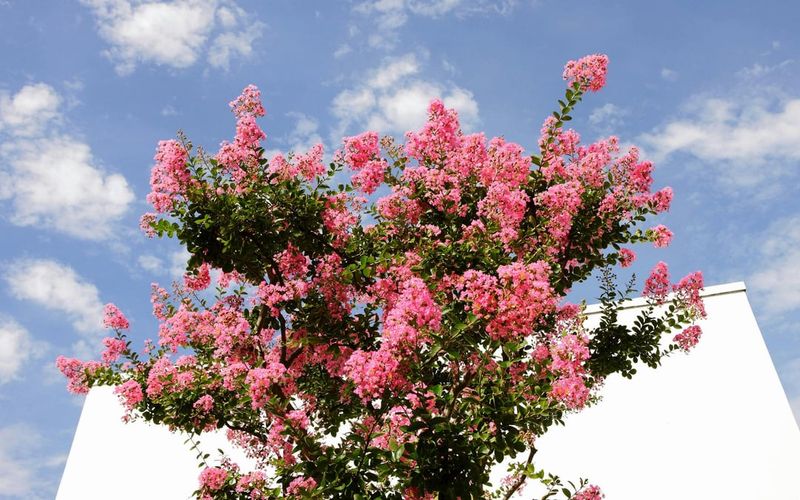
Crape myrtles are the unofficial tree of Texas summer and they have earned that status honestly.
They bloom from June through September in shades of pink, red, white, lavender, and coral. They handle brutal Texas heat better than almost anything else available in a residential landscape.
Nurseries sell them in every size from dwarf shrubs to full-sized trees, and that range of options is exactly where small-yard buyers run into trouble.
A standard crape myrtle reaches twenty to thirty feet tall with a canopy spread of fifteen to twenty-five feet.
In a small yard, that is a tree that can quickly push against the roofline, block windows, lift sidewalks with surface roots, and require the kind of annual pruning effort that the person who planted it did not anticipate.
The widespread practice of severe crape myrtle topping, which horticulturalists in Texas consistently discourage, exists almost entirely because the wrong size variety was planted in the wrong space to begin with.
The tree did not fail. The size selection did.
Dwarf varieties like Pocomoke and Chickasaw stay under four feet. Mid-size varieties like Acoma and Hopi top out around ten feet. Large varieties like Natchez and Tuscarora need genuine room to develop properly.
Reading the mature size listed on the tag before purchasing rather than after the tree is in the ground for three years is the entire solution to this problem.
The crape myrtle will perform beautifully in Texas. The question is always which one fits the actual available space.
7. Loquat
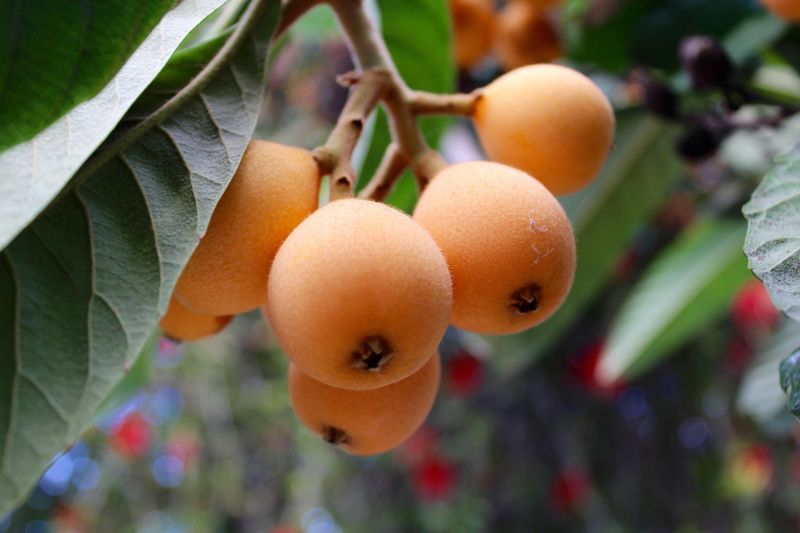
Walk past a loquat tree in a Texas neighborhood in late winter and the clusters of small golden-orange fruit genuinely stop people.
The broad, dark green leaves give the tree a bold architectural presence that reads as intentional and distinctive. At the nursery, a young loquat is easy to fall for.
The experience of standing on a patio in February surrounded by fallen, fermenting fruit is a different relationship with the same tree.
Loquat trees can reach twenty-five feet tall and fifteen to twenty feet wide at maturity, though they often stay somewhat smaller in Texas yards.
The real challenge in small spaces is not the size. It is the fruit production. A mature loquat produces an enormous crop each season.
Any fruit that goes unharvested falls to the ground where it ferments, attracts insects, stains concrete, and creates a slippery surface on any hardscape within range of the canopy.
For homeowners who plan to harvest and eat the fruit, the loquat is an excellent choice that rewards the effort with genuinely good produce.
For homeowners who are not actively harvesting, the cleanup becomes a recurring seasonal commitment that the original nursery visit did not fully communicate.
Siting the tree at least fifteen feet from patios, driveways, and walkways reduces the mess problem considerably. Loquats also self-seed readily, and seedlings appear in beds and lawn areas around the parent tree each spring.
The tree is beautiful. The full picture just requires a plan for the fruit before planting day.