Japanese Beetles Are Already Destroying North Carolina Roses, These Are The Signs You Are Missing
The roses looked perfect on Monday morning.
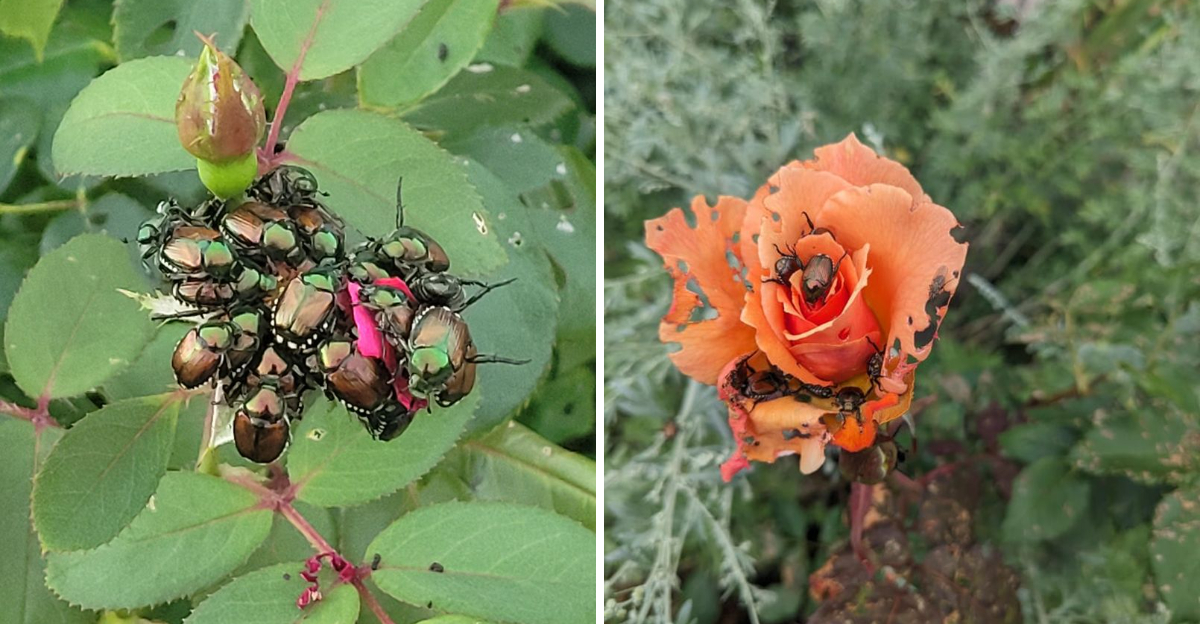
By Wednesday afternoon, something had changed. Petals were ragged. Leaves looked lacy and thin. A bloom that had been full and fragrant the day before looked chewed, limp, and completely wrong.
Japanese beetles work fast. That is the part many North Carolina gardeners are not ready for.
The damage that looks like it happened overnight often started days earlier, in places nobody thought to check. A few chewed leaf edges. A flower that opened unevenly. A shiny green beetle tucked inside a bloom.
However, they do not arrive quietly for long. Feeding beetles release signals that draw more beetles to the same plant. One visitor becomes several. Several become a crowd.
By then, a rose that looked fine at breakfast can look roughed up by dinner.
In North Carolina, beetle pressure often builds from late June into August, with July bringing the hardest test for rose growers.
The signs are specific. The timeline is short. The response window is narrow.
Eight early clues can help gardeners spot the problem before the damage gets ahead of them.
1. Watch Skeletonized Rose Leaves
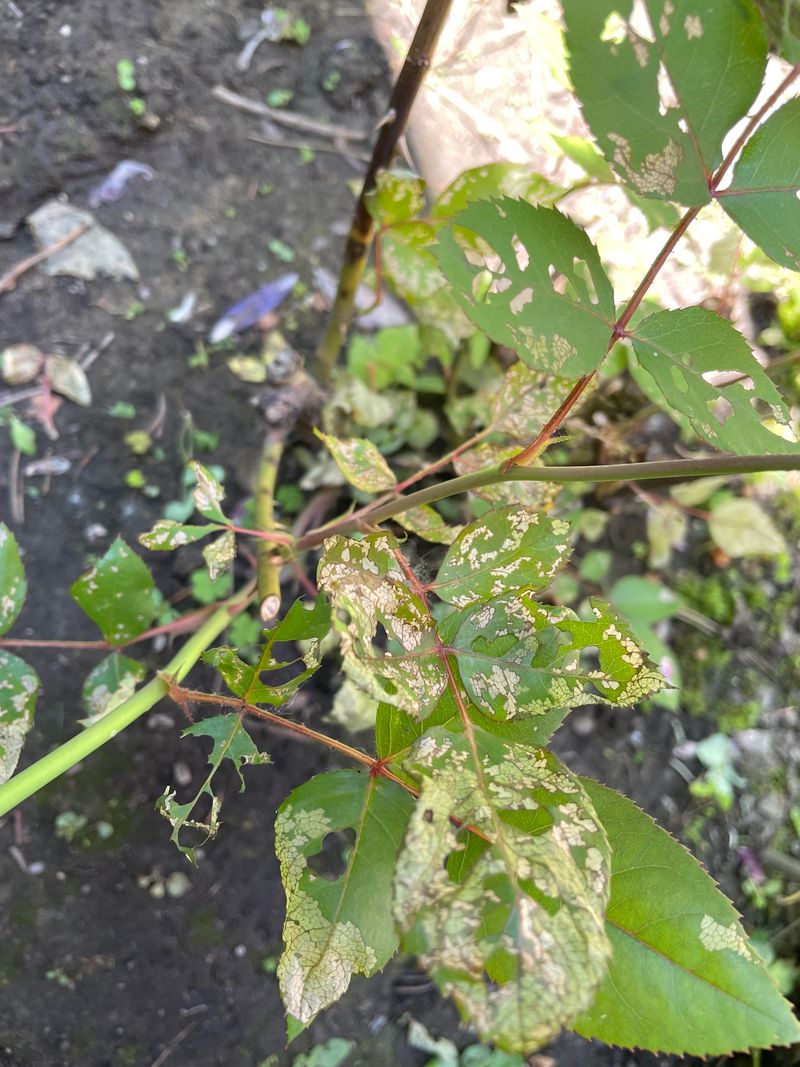
A rose leaf that looks like delicate green lace is not a design feature.
It is documentation of a Japanese beetle feeding event, and by the time a leaf looks that way, the beetles have been working the plant for longer than most gardeners realize.
Skeletonization happens when beetles consume the soft tissue between the leaf veins while leaving the structural framework intact.
The result is a leaf that appears almost transparent, papery, and hollow. From a few feet away, it catches the light differently than healthy foliage and draws the eye immediately once you know what to look for.
The damage typically starts at the top of the plant and moves downward. Beetles prefer the uppermost leaves because they receive the most direct sunlight.
In the early stages, only a few small patches of eaten tissue may be visible. That is the moment to act.
Within two or three days, a small group of beetles can skeletonize multiple leaves on the same plant as more beetles arrive in response to the feeding pheromones the group is releasing.
Once you spot the lacy leaf pattern, check the entire plant immediately. Tap branches gently over a bucket of soapy water to knock off any beetles hiding on the undersides of leaves.
Early action interrupts the social feeding cycle before the signal goes out to every beetle within range of the plant.
A skeletonized leaf is not a mystery. It is the beetle’s receipt, and it is worth reading carefully.
2. Notice Ragged Petals Overnight
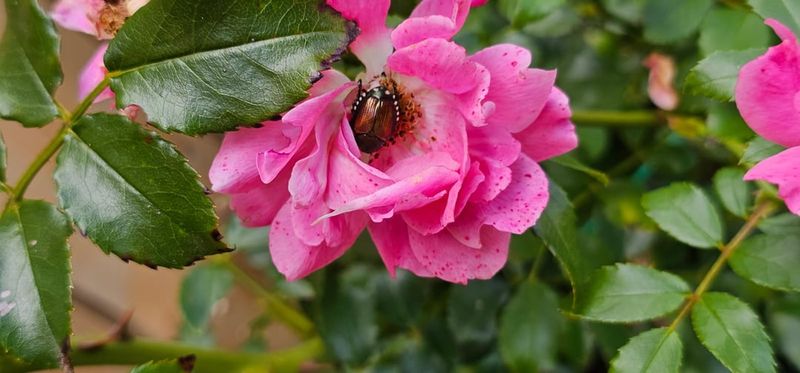
Roses that looked flawless on Tuesday evening and appear torn, brown at the edges, and partially eaten by Wednesday morning are communicating a specific piece of information.
Japanese beetles fed on them during the warmest part of the previous day, and the damage held overnight.
These insects are aggressive feeders that do not limit themselves to foliage. Open rose blooms are preferred targets because the petals are soft, fragrant, and accessible.
Your North Carolina Garden Changes Every Week. Your Plan Should Too.
Gardening in North Carolina changes quickly throughout the season. Every Friday you’ll receive a simple weekly plan showing exactly what to plant, prune, fertilize, harvest, and protect so you never miss the right timing.
A cluster of beetles can ruin a fully open bloom within hours, chewing through petals from the center outward and leaving behind jagged, discolored remnants that look nothing like the velvety blooms that opened that morning.
Light-colored roses in white, pink, and yellow tend to attract beetles more readily than darker varieties, though no color offers complete protection.
Fragrance is an equally powerful attractant, which means the most beautiful-smelling roses in the garden often take the earliest and heaviest damage.
Checking blooms at two points during the day, early morning and again in late afternoon, reveals the pattern faster than a single daily inspection.
Beetles are most active during warm, sunny hours. If ragged petals appear in the morning that were not present the evening before, the next step is looking inside the bloom cup and at the base of the petals for beetles still feeding.
Removing damaged blooms promptly reduces the scent signal that draws additional beetles to the same plant.
Fresh, healthy blooms are a stronger attractant than damaged ones, so consistent removal of spent and damaged flowers is working double duty during beetle season.
3. Check Beetles Clustered On Blooms
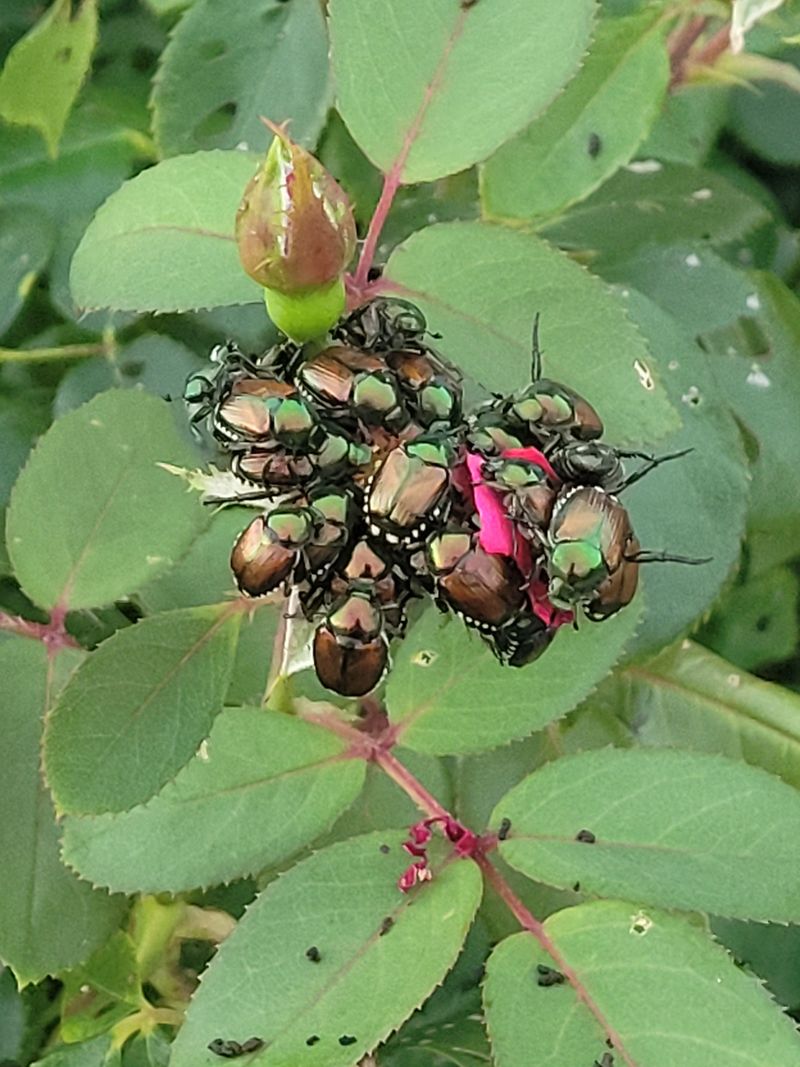
Finding one beetle on a rose bloom warrants attention. Finding ten to fifteen packed tightly onto a single flower is a different situation requiring immediate response.
Japanese beetles are highly social feeders. While eating, they release aggregation pheromones that signal nearby beetles to join the same plant.
One feeding beetle becomes several. Several becomes a cluster. A single bloom that hosted two beetles in the morning can be hosting a dozen by afternoon as the chemical signal spreads outward.
Clusters form preferentially on the most open, most fragrant blooms because those offer easy access to soft petals and warm shelter inside the flower cup.
A heavily loaded bloom may droop slightly from the combined weight of multiple insects feeding simultaneously. The bloom center is worth examining closely on warm, sunny days when beetles are most active.
The response when a cluster is found matters considerably. Spraying the group directly can cause beetles to drop and scatter to nearby plants, spreading the feeding activity rather than ending it.
Instead, position a container of soapy water directly beneath the bloom and tap or shake the branch firmly. Beetles fall into the water and cannot escape.
This method is most effective in early morning when cooler temperatures make beetles slower and less likely to fly before hitting the water.
Repeating this process daily during peak season keeps the beetle population on any individual plant from building to the level where pheromone signals start attracting insects from the broader neighborhood.
4. Spot Shiny Green And Copper Adults
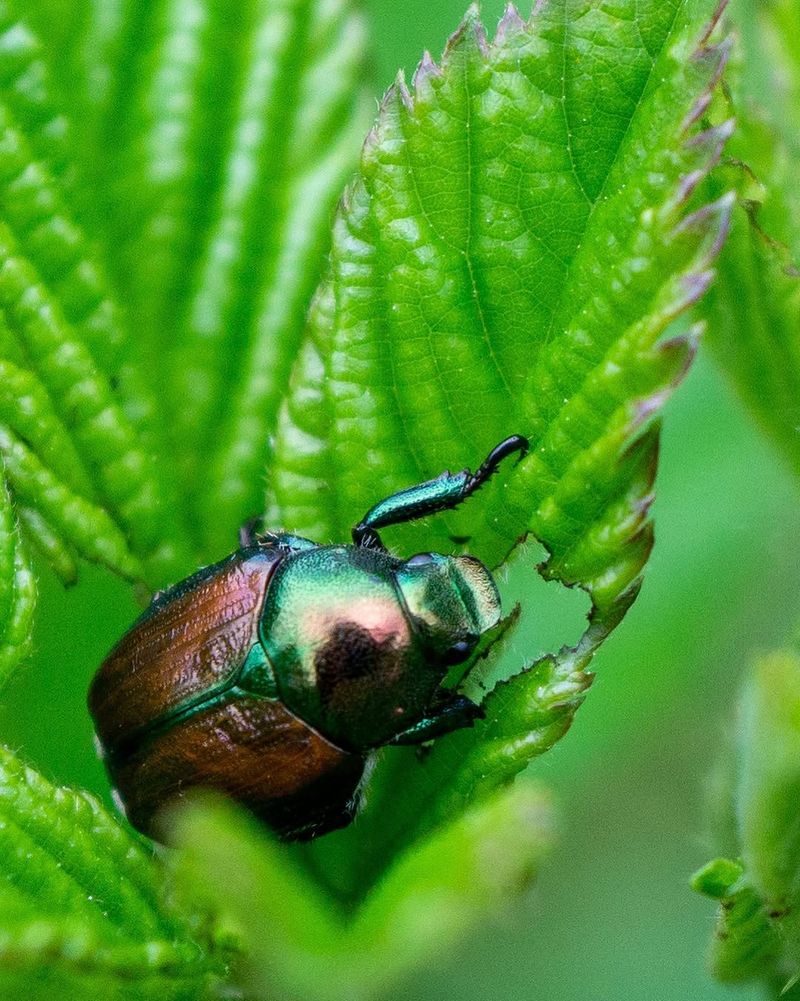
Not every insect damaging roses is a Japanese beetle, and accurate identification matters before any management response gets applied.
The adult Japanese beetle has a specific appearance that is unusual enough in North Carolina gardens that misidentification is less common than missing the insect entirely on a rushed inspection.
The adult is approximately half an inch long, roughly the size of a large blueberry. The head and thorax are vivid metallic green that catches sunlight in a distinctive way.
The wing covers are warm copper-brown with a polished quality that makes the insect look almost manufactured. Along the sides of the abdomen, a row of small white tufts of hair provides the most reliable identification detail.
Those white tufts separate Japanese beetles from similar-looking species like green June beetles, which are larger and lack the white markings entirely.
The combination of metallic green head, copper wing covers, and white abdominal tufts is specific enough that a confident identification can usually be made without additional resources once the pattern is familiar.
When an insect matches this description on a rose plant during summer, the identification is almost certainly correct.
The color and marking combination is not common among other garden beetles active in North Carolina during the same season.
For any situation where confirmation is genuinely needed, photograph the insect and submit it to a local plant diagnostic resource.
Getting the identification right before responding saves time, money, and the disruption to beneficial insects that incorrect pesticide applications create.
5. Look For Chewed Leaf Edges
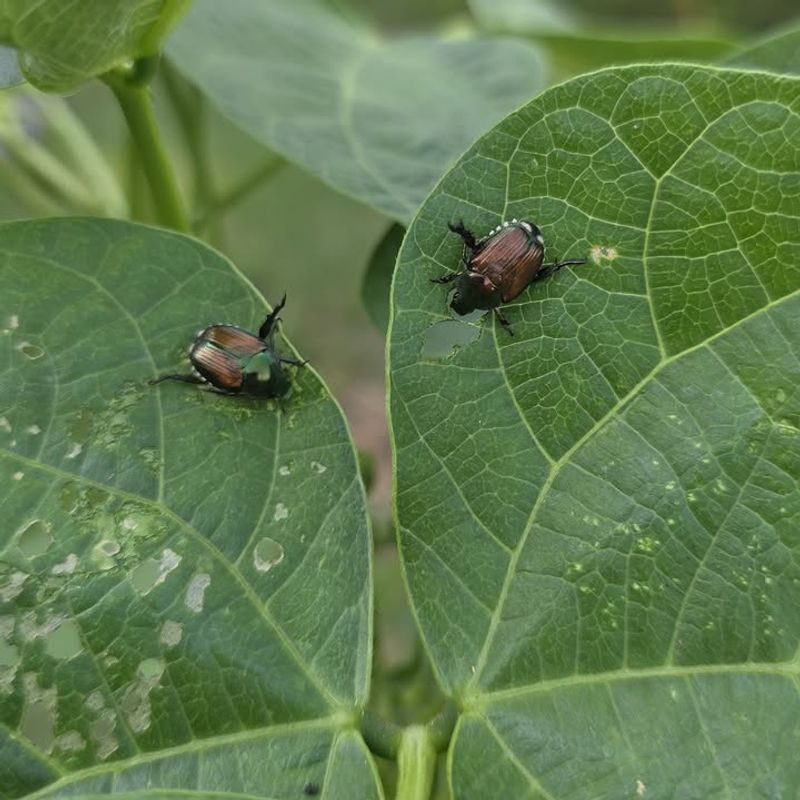
Before a leaf becomes fully skeletonized, it passes through an earlier stage that most gardeners miss because it looks minor enough to dismiss on a busy morning.
The first sign of beetle feeding is often small, irregular notches or scalloped bite marks along the outer margin of the leaf.
The damage resembles what a small caterpillar might leave, and at this point the leaf still looks mostly healthy.
This is the stage where intervention produces the most benefit. Edge chewing indicates beetles are just beginning to feed and have not yet moved into the interior tissue between the veins.
Acting at this point reduces the number of beetles before aggregation pheromones have drawn significant reinforcements to the plant.
Holding a suspect leaf up to the light reveals translucent patches near the edges where tissue is thin or partially consumed.
That shimmer is a reliable early indicator worth following up on even when the damage looks minimal from above.
Scouting both the upper and lower surfaces of leaves matters at every stage, but especially early in a feeding cycle.
Beetles frequently feed on upper leaf surfaces and move to the undersides when disturbed.
Working through several canes across the whole plant rather than examining just one area produces a more accurate picture of how widespread the feeding actually is.
Chewed edges caught early mean fewer beetles, less follow-on skeletonization, and considerably better blooms for the rest of the season.
The window is short. The early morning walk that used to be optional becomes the most valuable ten minutes in July.
6. Watch Buds Open With Damage
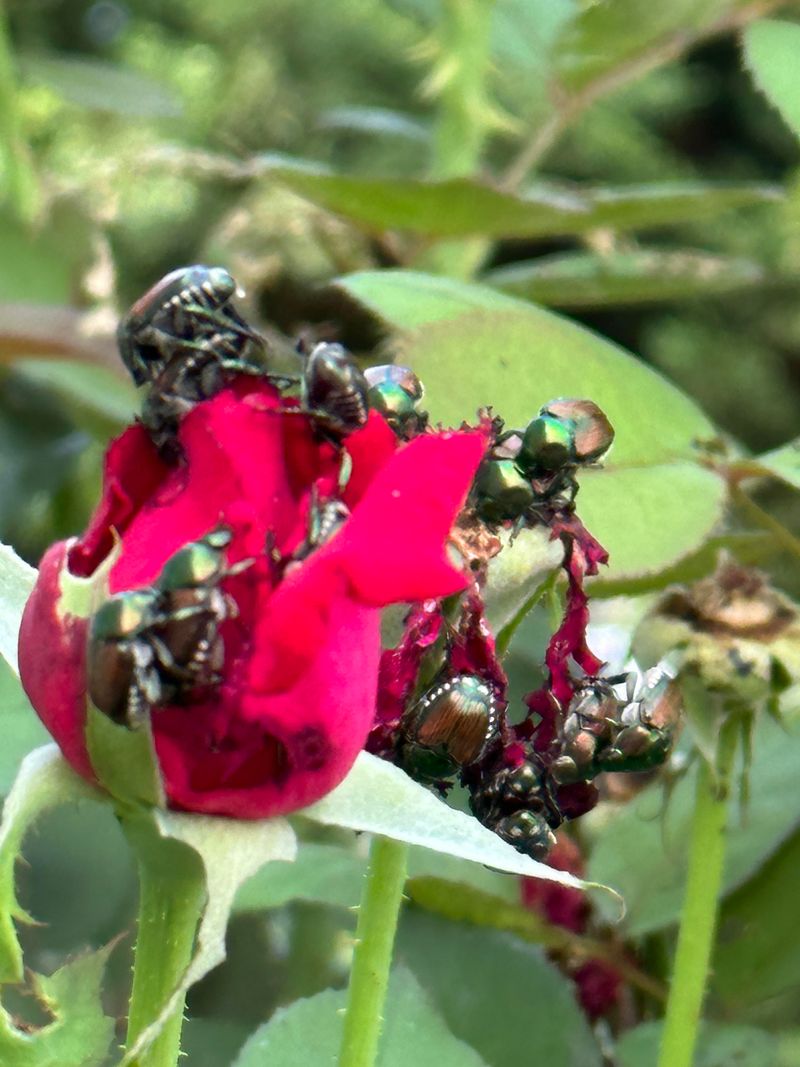
A tightly closed rose bud presents as a promise of something beautiful.
When that bud finally opens and the inner petals are already brown, torn, or partially consumed, the damage happened before the flower became visible from the outside.
Japanese beetles do not always wait for a bloom to fully open. They will enter partially opened buds and feed on the soft petals tucked inside, causing damage that only becomes apparent when the bud unfurls.
This is among the more frustrating patterns because the bud looks intact through the entire feeding process.
Walking past a closed bud every day with no indication of a problem, then finding the interior ruined at opening, creates genuine confusion about what happened and when.
Gently peeling back the outermost petals of a bud that appears slightly discolored, misshapen, or softer than expected at the tip may reveal a beetle still inside, or the feeding marks left by one that has moved on.
A tight cluster of small brown spots or irregular chewing marks on inner petals confirms this pattern.
Buds in the half-open stage during warm afternoons in peak beetle season deserve close attention. That partially open stage is when the soft inner petals become accessible without the beetle needing to force entry into a fully closed bud.
Removing affected buds before they complete their opening cycle prevents beetles still inside from moving to neighboring flowers on the same cane and beginning the aggregation cycle again on a fresh target.
7. Check Sunny Rose Tops First
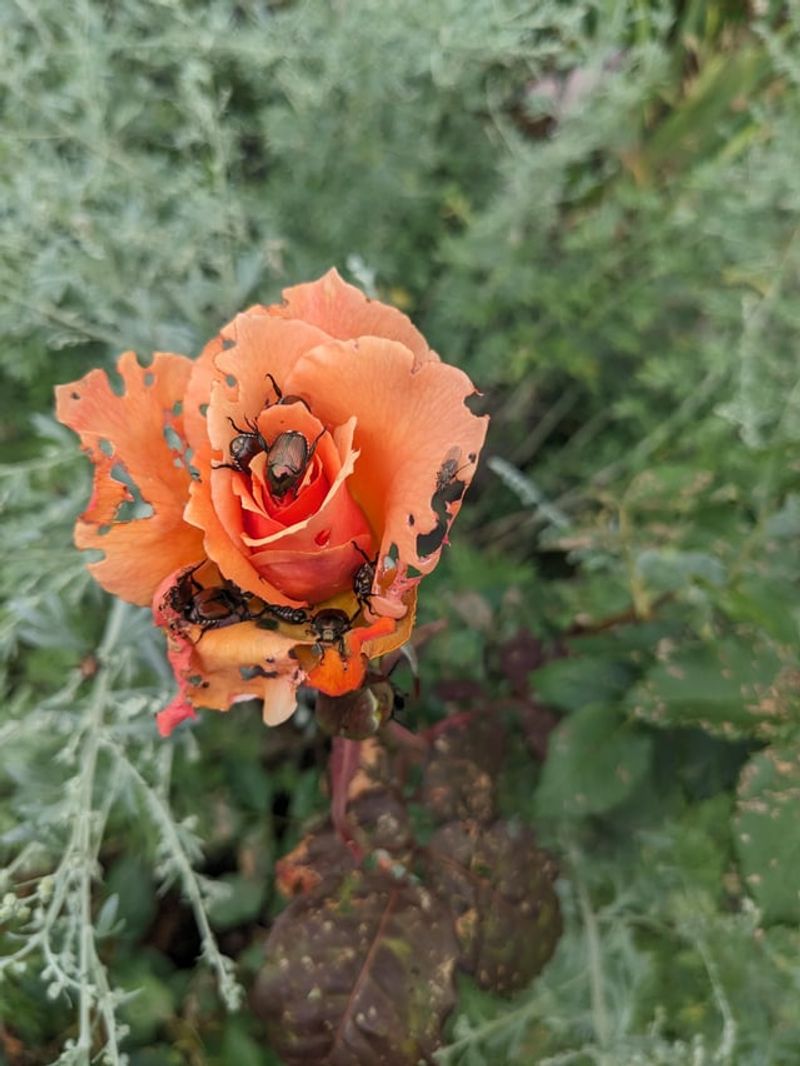
Every effective scouting session for Japanese beetles begins in the same location. The top of the plant. Starting at the base or the middle is starting in the wrong direction.
Japanese beetles are sun-oriented feeders.
They prefer the portions of a plant receiving the most direct sunlight, which is almost always the uppermost canes and the blooms positioned at the highest points of the bush.
The top of the plant is where the most active feeding happens first, where clusters form initially, and where the skeletonization and bloom damage is most advanced at any point during the season.
On a warm, sunny July day in North Carolina, beetles are most active and most visible from approximately nine in the morning through early afternoon.
They bask while they feed, which makes them slower and easier to spot than on overcast days when they are less inclined to be on exposed surfaces.
Beginning each inspection at the highest point of the plant provides a realistic picture of how much feeding activity is underway.
Daily scouting during peak season accomplishes more than any single chemical application because it interrupts the aggregation cycle before it reaches full scale.
A five-minute inspection with a container of soapy water catches beetles before the pheromone signal has time to recruit the wider neighborhood to the same plant.
The bucket, the early morning, and the top of the plant. That is the entire system. Simple, free, and considerably more effective than discovering the damage on a Thursday after it started on Monday.