What It Means When Blue Jays Keep Mobbing Trees In Your North Carolina Yard
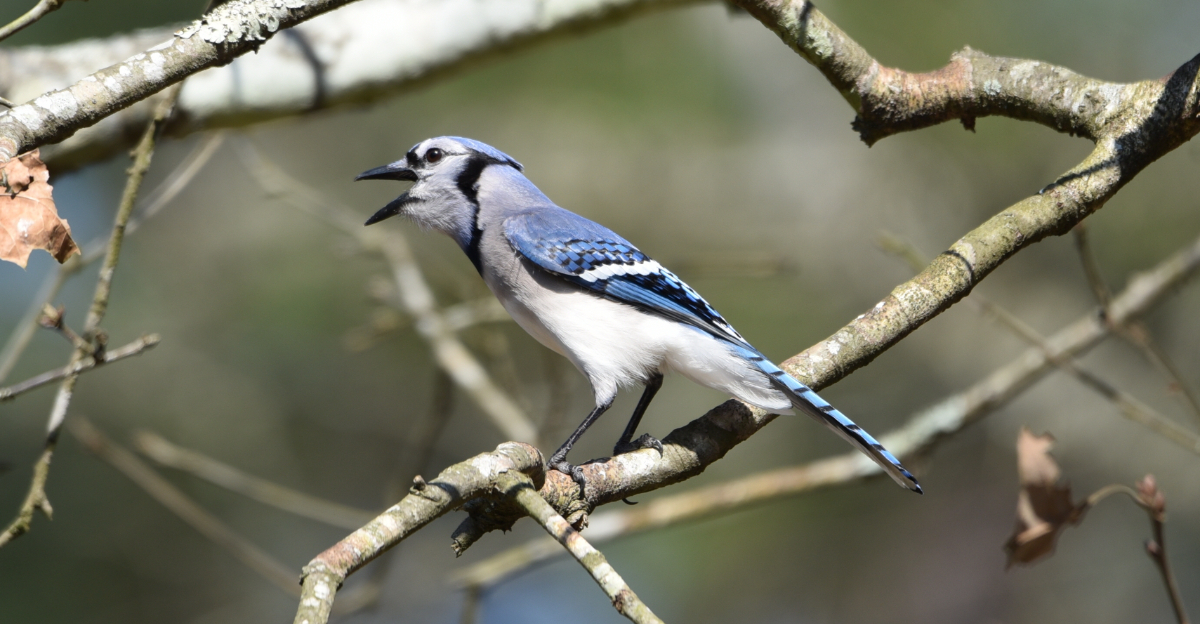
Blue jays are loud, bold, and impossible to ignore when they decide a particular tree needs their full collective attention.
Most North Carolina homeowners write off mobbing behavior as general jay aggression without realizing it is actually one of the most information-rich signals a backyard can produce.
Jays do not mob randomly. They mob in direct response to something specific and threatening in or around that tree.
The target is almost always a predator, and the species of predator they are responding to changes depending on the season, the time of day, and the exact nature of their calls.
Learning to read what a mobbing event is actually pointing to turns a noisy disturbance into a genuinely useful window into what is living in and around your North Carolina yard.
1. They Have Spotted A Hawk Or Owl
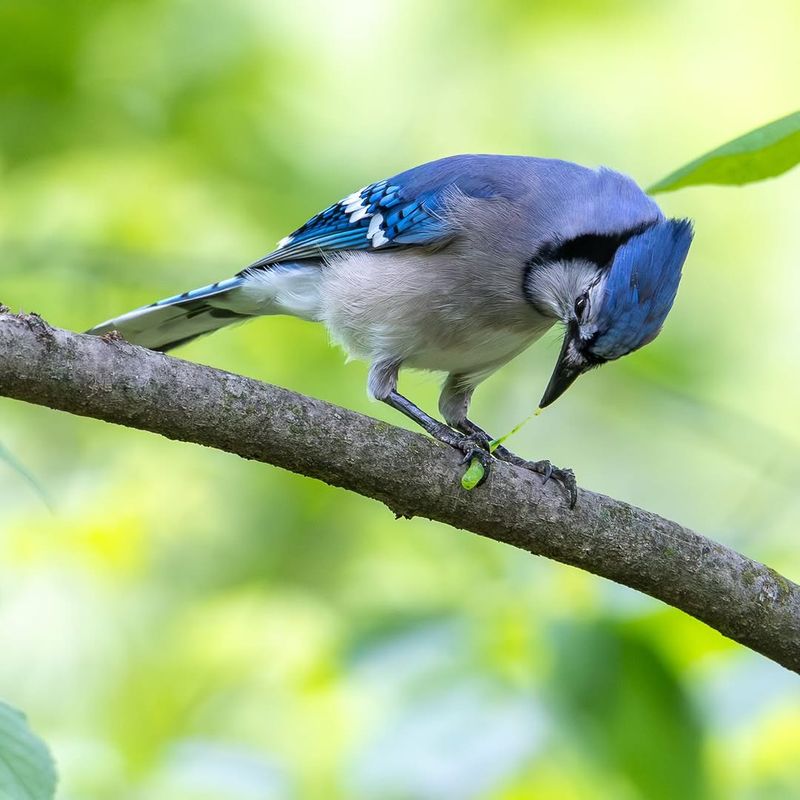
Few things in a backyard will set off Blue Jays faster than a hawk or owl sitting quietly in a nearby tree.
These large birds of prey are a real threat to smaller birds, and jays seem to know it instinctively.
The moment one jay spots the intruder, the scolding starts, and it does not stop until the threat moves on.
Blue Jays are remarkably bold when it comes to confronting raptors. They will swoop, hover, and call repeatedly near the perching bird, making it impossible to ignore.
This behavior is called mobbing, and it serves a real purpose by alerting every bird in the area that something dangerous is nearby.
Red-tailed Hawks, Barred Owls, and Cooper’s Hawks are all common visitors to North Carolina yards and are frequently targeted this way.
If you notice a cluster of jays screaming at one particular branch, take a slow look from a comfortable distance. Binoculars work great here.
Walking directly under the tree can disturb the situation and cause the hawk or owl to flush before you get a good look.
Staying back lets the jays do their job while you enjoy a rare wildlife moment right in your own yard.
2. They May Be Pointing Out A Snake
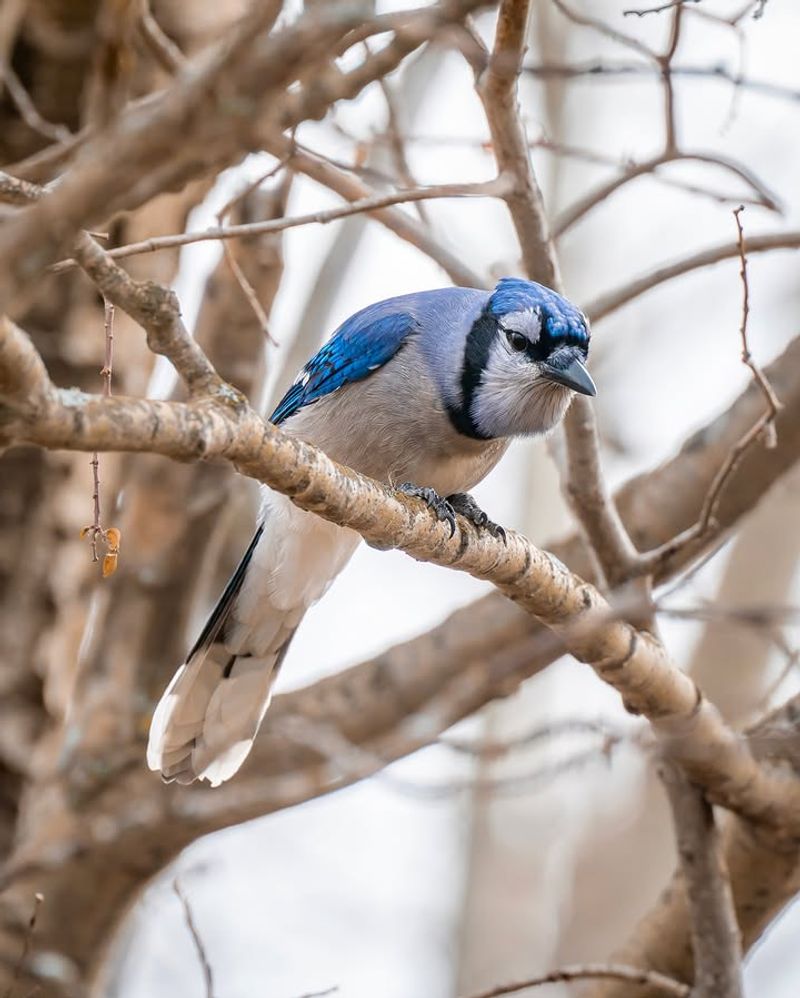
Snakes are expert hiders, and most people walk right past them without ever knowing. Blue Jays, however, are not fooled so easily.
When a snake moves through branches, vines, or dense shrubs, jays will often zero in on that exact spot and raise a serious alarm that is hard to miss.
In North Carolina, warm months from spring through early fall bring the most snake activity.
Species like Black Rat Snakes and Copperheads are known to climb into shrubs and low tree branches while searching for eggs or small prey.
If your jays seem focused on one particular shrub or tangle of vines, it is worth taking a careful look before reaching in.
The safest approach is to observe from a step or two back and use a long stick or garden tool to gently move foliage rather than your bare hands.
Keep pets away from the area until you know what is there. Most snakes in North Carolina are harmless and actually benefit the garden by controlling rodent populations.
Your North Carolina Garden Changes Every Week. Your Plan Should Too.
Gardening in North Carolina changes quickly throughout the season. Every Friday you’ll receive a simple weekly plan showing exactly what to plant, prune, fertilize, harvest, and protect so you never miss the right timing.
Letting the jays guide your attention to these hidden visitors can genuinely make your yard a safer, smarter place to work.
Their instincts are sharp, and their alarm calls are surprisingly reliable when it comes to spotting wildlife that blends into the background.
3. They Are Defending A Nesting Area
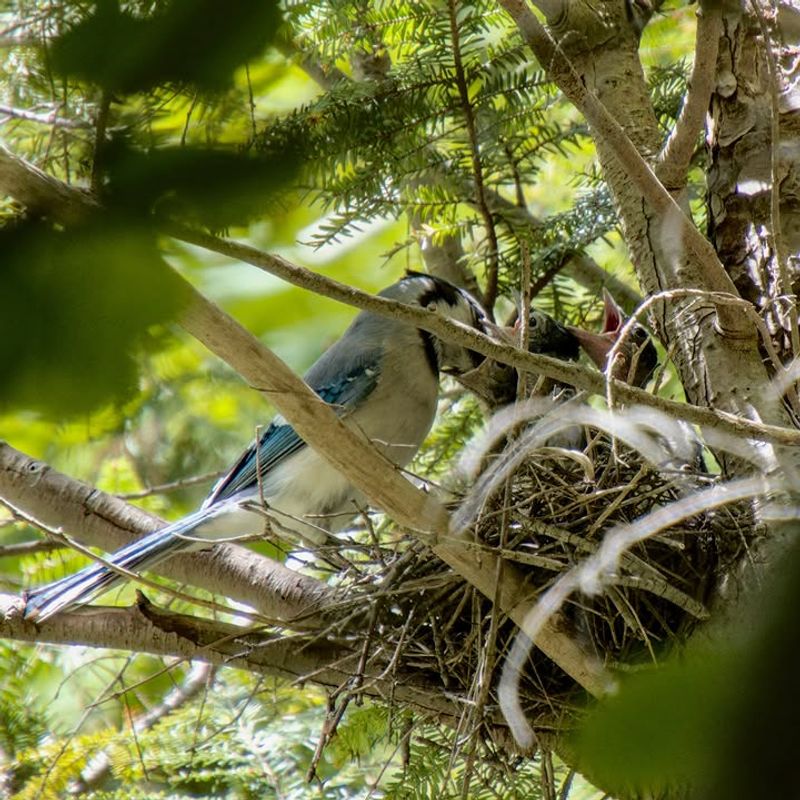
Spring and early summer in North Carolina bring one of the most active periods for Blue Jays, and much of that energy goes straight into protecting their nests.
If you notice the same tree getting noisy attention day after day, there is a strong chance a nest or recently hatched young birds are tucked somewhere in the branches nearby.
Blue Jays build their nests in the forks of trees, often using twigs, bark strips, and plant material to create a sturdy cup shape.
Both parents take an active role in guarding the nest, and they are not shy about confronting anything that wanders too close, including people, squirrels, and other birds.
Their scolding during this time is intense and very persistent. Gardeners who notice this pattern should try to delay any noisy yard work near that tree for a few weeks if at all possible.
Running a chainsaw or trimmer close to an active nest can cause the adult birds to abandon it out of stress.
Avoid trimming branches or pruning near suspected nesting areas until the young birds have had time to grow and leave on their own.
Giving the family a little space goes a long way and lets you watch one of nature’s most rewarding backyard events unfold right outside your window.
4. They Are Calling Other Birds Into The Scene
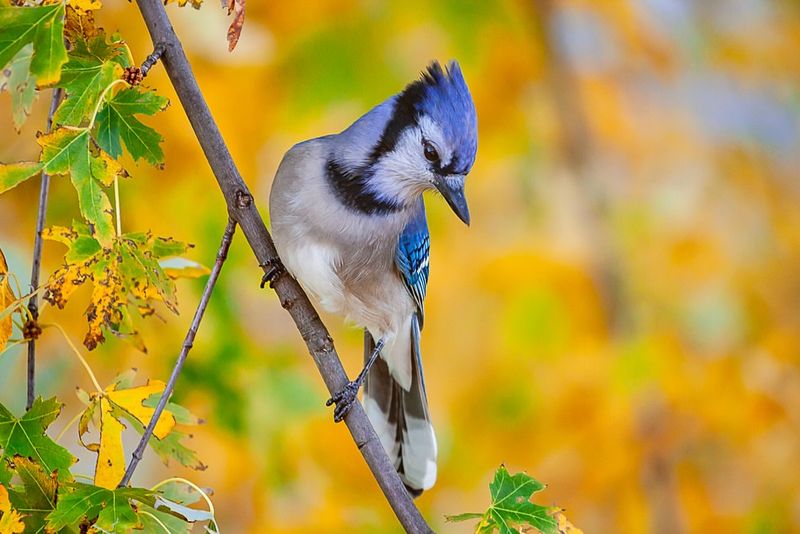
One noisy Blue Jay can quickly become a whole chorus of outraged birds. Mobbing is rarely a solo act.
When a jay spots something worth sounding the alarm about, it calls out persistently until other birds in the area begin to respond, and the scene can grow fast.
Cardinals, Carolina Wrens, Black-capped Chickadees, and even Tufted Titmice will often join in once the jays get going.
Each species adds its own voice to the mix, creating a layered, multi-species alert system that covers the yard from multiple angles.
It is a genuinely cooperative wildlife moment happening right outside your back door. For gardeners, this noisy gathering is actually a useful clue.
When multiple bird species suddenly converge on one tree or corner of the yard, something in that spot has clearly caught their attention.
Instead of shooing the birds away or ignoring the ruckus, take a moment to scan the area slowly and carefully.
You might spot a roosting owl, a climbing snake, or a prowling cat that you would have completely missed otherwise.
Blue Jays essentially act as the neighborhood watch, and the other birds trust their signal enough to respond.
Paying attention to these moments can reveal a surprising amount about the wildlife moving through your yard every single day without you even realizing it.
5. They Are Reacting To A Cat Near Cover
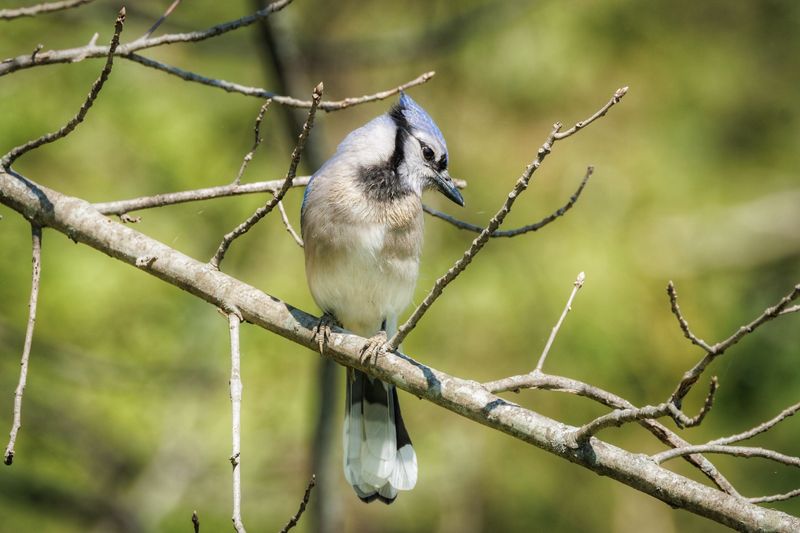
Cats are quiet, patient hunters, and birds know it.
Even when a cat is simply lounging beneath a feeder or sitting perfectly still near a shrub, Blue Jays will often pick up on the presence and start scolding from above.
Their reaction to cats can be just as intense as their reaction to hawks, and for good reason. Outdoor and feral cats are one of the leading threats to backyard bird populations across North Carolina and the rest of the country.
Blue Jays seem to have a sharp sense for identifying predators at ground level, and they will call persistently from tree branches until the cat moves on or the birds feel the area is safe again.
If your jays are regularly focused on a specific corner of the yard, it is worth checking whether a neighborhood cat has found a favorite resting spot near your feeders or nesting shrubs.
Keeping pet cats indoors or providing them with a secure outdoor enclosure, sometimes called a catio, makes a real difference for backyard bird safety.
Placing feeders higher up and away from dense ground cover also helps reduce the risk.
Blue Jays scolding from above are essentially flagging a problem that is easy to address once you know what to look for, and the birds in your yard will be noticeably calmer once the situation improves.
6. They Are Using Trees As Watch Posts
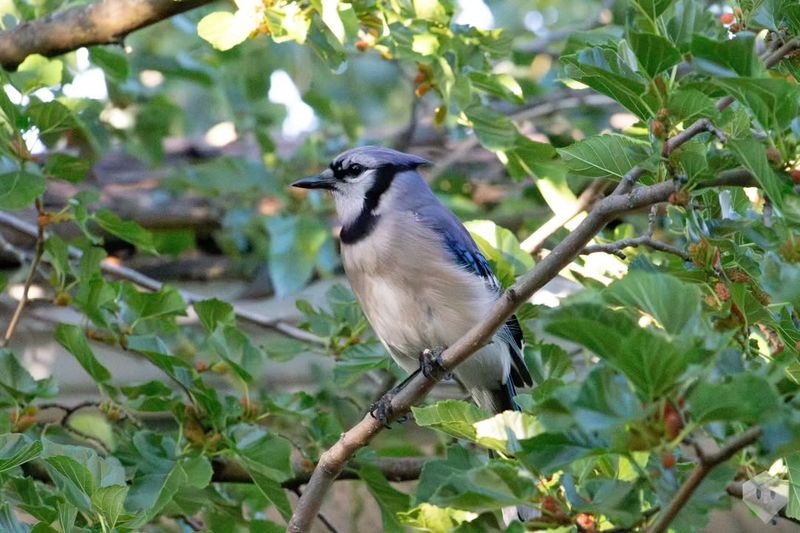
Not every noisy Blue Jay is reacting to an immediate threat. Sometimes a jay calling from the same branch over and over is simply using that spot as a lookout.
Tall oaks, loblolly pines, and trees along wooded edges are favorite watch posts for Blue Jays in North Carolina yards, giving them a clear view of everything happening below.
From these elevated spots, jays monitor movement across the yard with impressive focus. They notice feeders being visited, animals crossing the lawn, and people moving through the garden.
A single jay calling repeatedly from one branch is often scanning and reporting rather than reacting to an immediate threat.
Paying attention to what sits beneath that favorite tree can tell you a lot about your yard’s activity patterns.
Brush piles, compost bins, dense ground cover, bird feeders, and water features all attract wildlife traffic, and jays positioned above these spots are essentially keeping tabs on the action.
Gardeners can use this information to their advantage by noticing which areas of the yard consistently draw bird attention and adjusting plant placement or feeder locations accordingly.
If a jay keeps returning to the same perch morning after morning, that tree is sitting at the center of something interesting.
Watch that spot carefully for a few days and you might be genuinely surprised by how much wildlife moves through it.
7. They Are Protecting Food Sources Around Oaks And Feeders
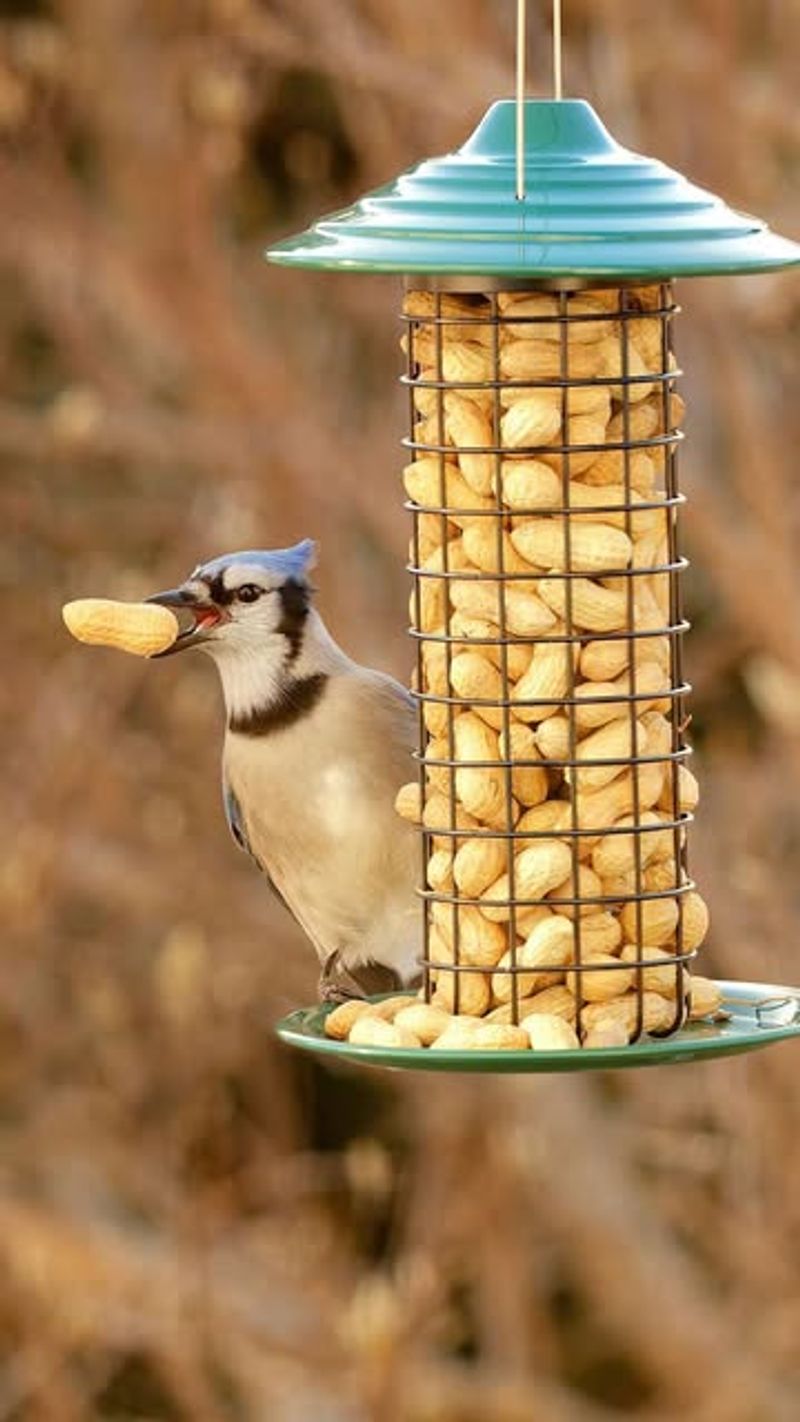
Blue Jays have a well-earned reputation for being serious about food. Acorns are a cornerstone of their diet, and they are known to cache hundreds of them each fall across yards and woodland edges throughout North Carolina.
When another animal moves into an area near a food source, jays will push back with noise and persistence.
Squirrels are frequent targets near feeders and oak trees, but raccoons, crows, and even larger jays from outside the local group can trigger a mobbing response.
The scolding around feeders is often shorter and more focused than the kind used against predators, but it is still loud and easy to notice if you are paying attention.
Gardeners who want to support Blue Jays and reduce feeder conflict can take a few practical steps.
Keeping feeders clean and stocked with sunflower seeds, peanuts, and cracked corn gives jays a reliable food source without creating overcrowding.
Planting native oaks, hickories, or berry-producing shrubs nearby adds natural food that benefits the whole yard ecosystem.
Spreading feeders across different areas of the yard can also reduce competition and keep things calmer overall.
Blue Jays are a genuinely valuable part of a healthy North Carolina garden, and giving them what they need keeps the whole backyard bird community more balanced, active, and enjoyable to watch throughout the seasons.
8. They May Be Mimicking Hawk Calls
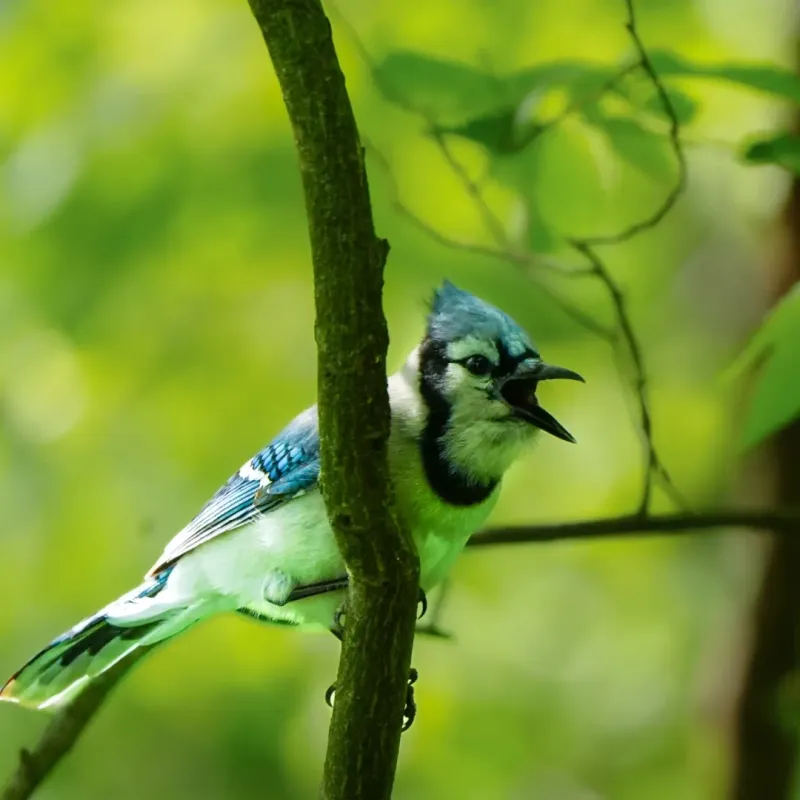
Here is something that surprises a lot of people: Blue Jays are talented mimics, and one of their favorite sounds to copy is the call of a Red-shouldered Hawk.
The imitation can be shockingly accurate, accurate enough to fool other birds in the yard and occasionally even experienced birdwatchers.
Researchers believe jays may use hawk calls to scatter other birds away from a food source or simply as a way to test the reactions of other animals nearby.
Whatever the reason, hearing what sounds like a hawk overhead does not always mean one is actually there.
If the call keeps coming from the same perch and you can see a blue and white bird making it, you are almost certainly listening to a jay doing an impression.
Before assuming a hawk has moved into your yard based on sound alone, take a moment to locate the bird that is actually calling. Binoculars help a lot here.
Watch for the distinctive blue, white, and black markings of a jay and notice whether the call matches the bird you are seeing.
This kind of careful observation turns a potentially alarming moment into a fascinating one.
Blue Jays are far more complex and clever than most people give them credit for, and discovering their mimicry habit firsthand is one of those backyard wildlife moments that genuinely sticks with you long after it happens.
9. They Are Showing Gardeners Where Yard Edges Are Busy
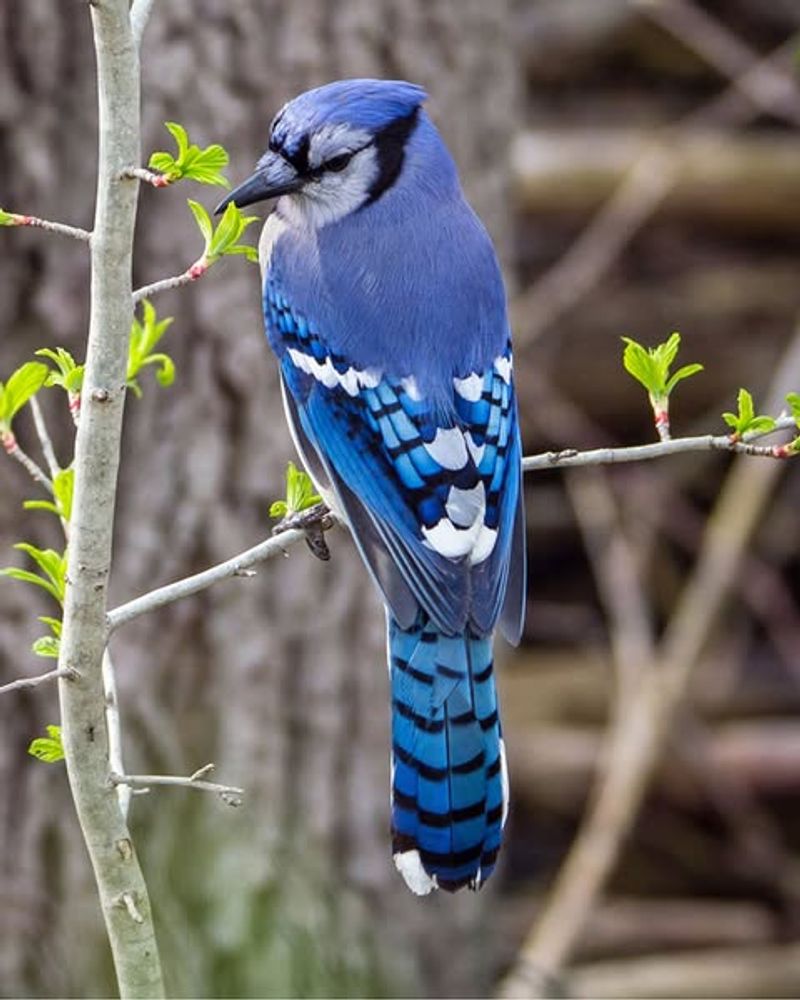
Repeated Blue Jay activity in the same general area of your yard is rarely a coincidence.
These birds tend to focus their energy where the action is, and that usually means fence lines, wooded edges, creek banks, brushy corners, or spots where fruiting shrubs and tall trees come together.
These are the wildlife corridors of your yard. A wildlife corridor is essentially a natural pathway that animals use to move through the landscape.
Rabbits, foxes, snakes, songbirds, and insects all follow these routes, and Blue Jays are often perched right along them, watching the traffic.
If your jays keep circling the same section of the property, that area is almost certainly a hotspot for animal movement.
Smart gardeners can use this information when planning new plantings or adjusting where they spend time working.
Placing native berry-producing shrubs like beautyberry, elderberry, or native viburnums along active edges gives birds more food and cover exactly where they already want to be.
Keeping work noise and foot traffic lower near these active corridors during early morning hours protects the wildlife that depends on them.
Blue Jays are essentially drawing you a map of where your yard is most alive, and following their lead can make your garden more bird-friendly, more beautiful, and far more interesting to spend time in throughout every season of the year.