The Native New Hampshire Wildflower That Spreads Through Your Lawn And Earns Its Place
Something small and blue is turning up in New Hampshire lawns, and most homeowners have no idea what it is. Bluets are one of the state’s quietest native wildflowers.
Tiny, four-petaled, and barely an inch tall, they move through grass like they own the place. And in a way, they do.
These aren’t weeds in the way your neighbor means when he says weeds. Bluets have been growing across New Hampshire long before anyone was mowing lawns or pulling anything up.
From the seacoast to the White Mountains, they show up each spring in the same patches, year after year, steady and unbothered.
A lawn with bluets in it looks like something happened there on purpose. Your grass didn’t fail. It just got more interesting.
The Tiny Blue Wildflower That Quietly Appears In New Hampshire Lawns
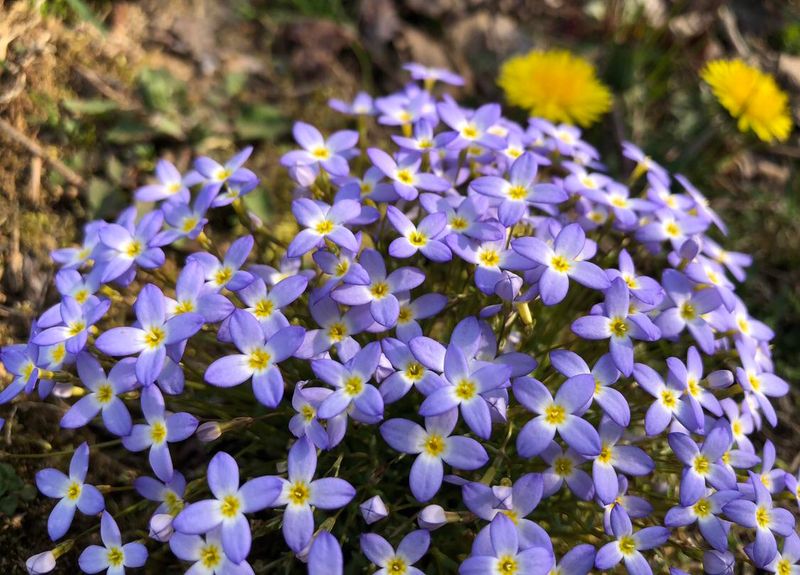
One morning you look down, and your lawn has tiny blue stars in it.
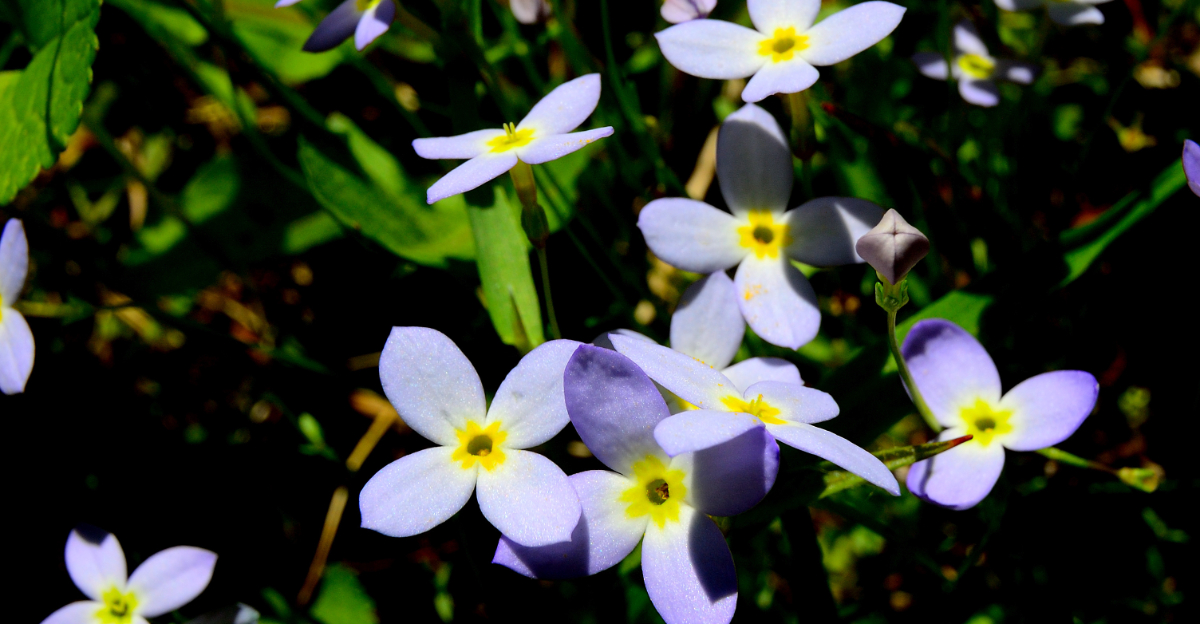
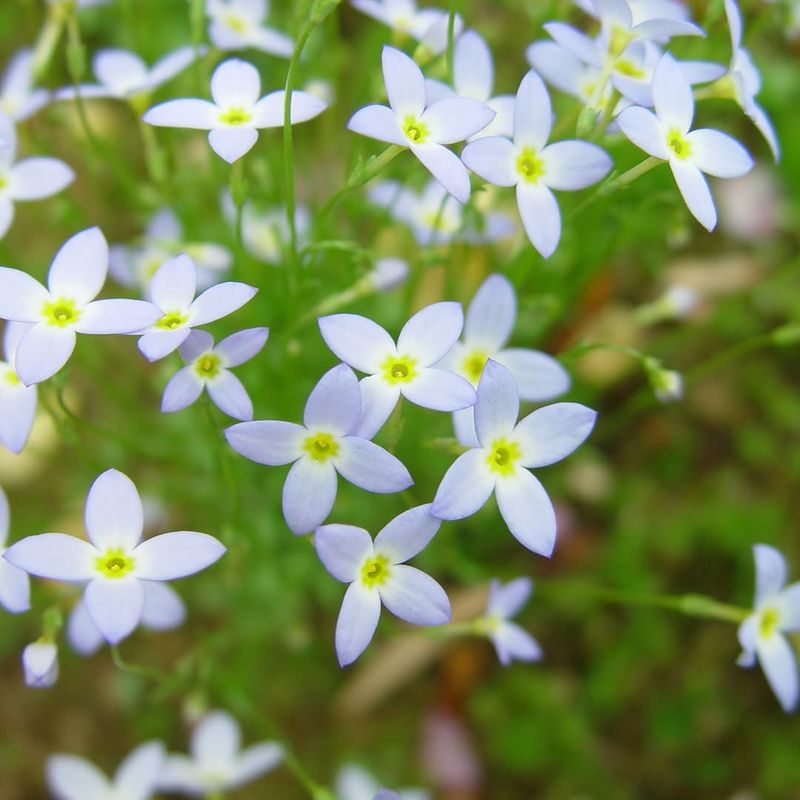
Bluets, known scientifically as Houstonia caerulea, are one of the most charming surprises a lawn can offer. Each flower is barely half an inch wide, with four pale blue petals surrounding a bright yellow center.
They bloom in early spring, often before you have even thought about mowing. Whole patches can seem to appear between one week and the next, carpeting low areas with soft color.
Most people mistake them for weeds at first glance. That reaction is completely understandable, since they do spread on their own without any invitation.
But bluets are fully native to the northeastern United States, including New Hampshire. They have been growing here long before anyone planted a lawn.
The flowers prefer sunny, low-nutrient soil, which is exactly what many lawns provide. Thin grass, sandy patches, and slightly acidic ground are their sweet spots.
Bluets grow in clusters called colonies, spreading slowly through underground stems called rhizomes. Each colony can expand a little more each season without becoming aggressive.
Unlike invasive plants, bluets coexist with grass rather than smothering it. They fill in gaps without taking over the whole yard.
Spotting them is actually a sign your lawn has decent ecological health. If bluets have moved in, the soil conditions are working in their favor.
This native wildflower earns its place quietly, one tiny bloom at a time.
How Bluets Claim New Ground Without Any Help
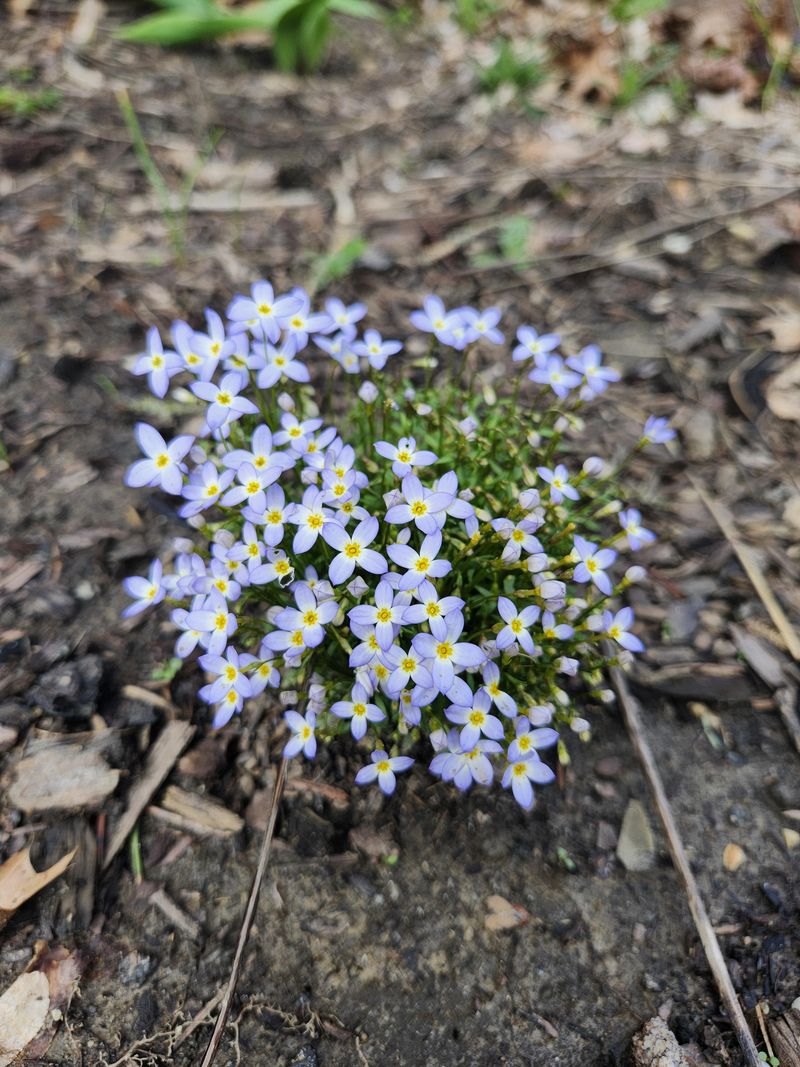
Bluets do not need your help, and that is exactly their superpower.
These flowers spread through two reliable methods: rhizomes underground and seeds above ground. Both strategies work at the same time, which explains how a small patch doubles in size each spring.
Rhizomes are horizontal underground stems that send up new shoots nearby. This means each colony expands outward from the center, slowly and steadily.
Seeds are equally efficient, carried by wind and the occasional foot traffic across your lawn. A single plant can produce dozens of seeds in one season.
New Hampshire lawns often have the exact conditions bluets love most. Low soil fertility, slightly acidic pH, and areas with thin grass coverage are all green lights for these plants.
Your New Hampshire Garden Changes Every Week. Your Plan Should Too.
Gardening in New Hampshire changes quickly throughout the season. Every Friday you’ll receive a simple weekly plan showing exactly what to plant, prune, fertilize, harvest, and protect so you never miss the right timing.
Sandy or gravelly soil near roadsides and yard edges is prime territory. Rocky outcrops and open meadow edges also welcome them without hesitation.
Regular mowing is generally tolerable for bluets, though cutting before seed set can limit their spread. They have adapted to short grass environments over thousands of years.
Heavy fertilizer and thick turf can slow their spread, but most home lawns are not that dense. Average lawn conditions are basically a welcome mat for bluets.
Once established, a colony is resilient and hard to fully remove. Pulling individual plants often leaves rhizome fragments that simply regrow the next season.
Understanding why they spread so well helps you decide how much space you want to give them.
Bluets Are Doing More For Your Lawn Than You Might Expect
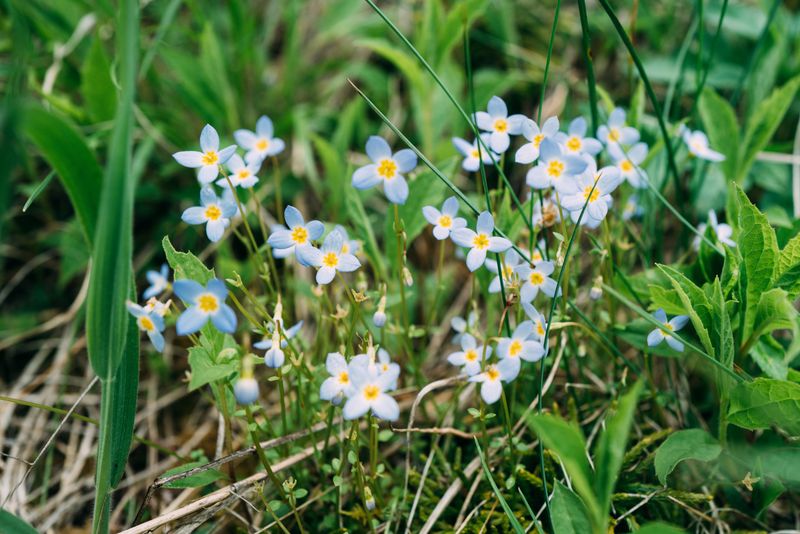
Small flowers punch above their weight when it comes to ecological value.
Bluets are one of the earliest blooming wildflowers in New Hampshire, opening just as native bees emerge from winter dormancy. That timing is not a coincidence; it is a relationship millions of years in the making.
Small native bees, including small carpenter bees and sweat bees, depend on early nectar sources. Bluets provide exactly that when almost nothing else is blooming yet.
Larger bees like bumblebees also visit the flowers, collecting both nectar and pollen. Even butterflies stop by when temperatures are warm enough in early spring.
Below the surface, bluets contribute to soil health in subtle ways. Their shallow root systems help hold topsoil in place, reducing erosion in thin lawn areas.
Because bluets thrive in low-nutrient soil, they do not compete aggressively with surrounding plants. They actually signal areas where soil might benefit from reduced chemical input.
Allowing bluets to bloom before the first mow gives pollinators a critical early food source. That small window of a few weeks makes a real difference for bee populations.
Gardeners who care about supporting local wildlife often see bluets as a low-effort win. No planting, no watering, no maintenance required.
The flowers also add visual texture to a lawn that might otherwise look flat and uniform. A lawn with bluets in it looks alive in a way that a chemically treated lawn simply does not.
Letting nature do the work is sometimes the smartest gardening choice you can make.
How To Tell If Bluets Have Already Moved Into Your Yard
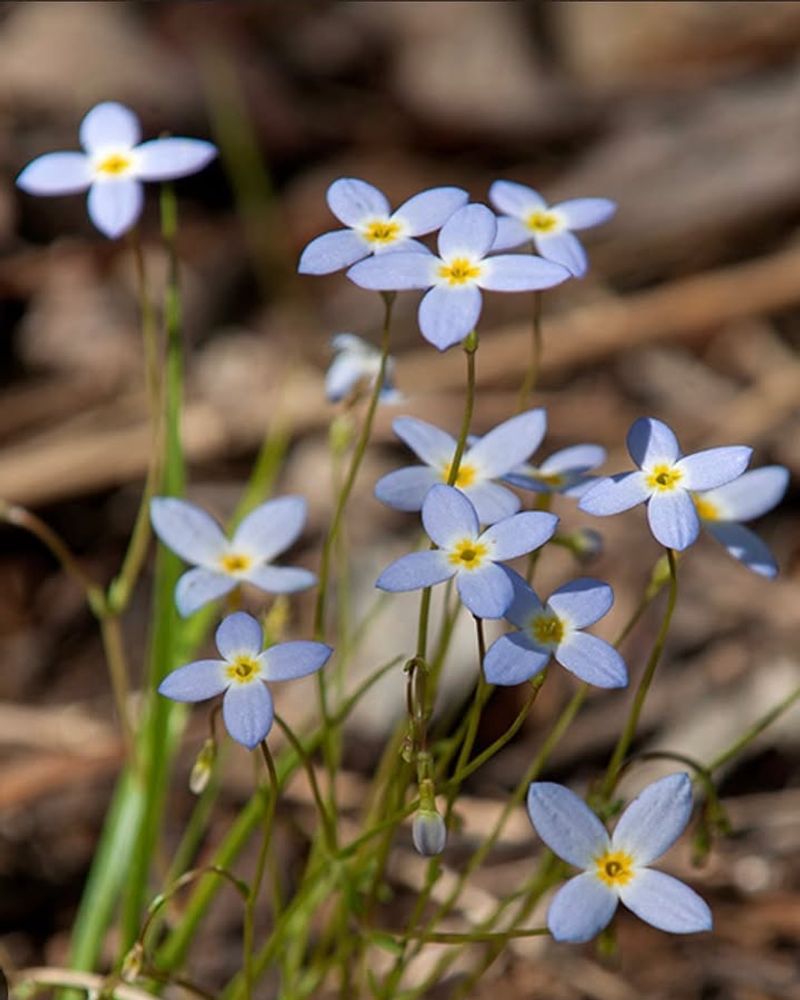
You might already have bluets and not even know it yet.
The easiest time to spot them is in April and May, when they burst into bloom across low areas of the lawn. Before they flower, the tiny leaves can be easy to miss entirely.
Look for small rosettes of oval leaves growing close to the ground. The leaves are dark green, smooth, and paired opposite each other on thin stems.
When flowers appear, identification becomes simple and satisfying. Each bloom has four petals, usually pale blue or lavender, with a distinct yellow center called an eye.
Some plants produce white flowers instead of blue, which is a natural color variation within the species. Both colors appear in the same colony sometimes, which makes the patch look even more charming.
Bluets tend to cluster in groups rather than grow as isolated plants. If you see one, look around and you will likely find twenty more nearby.
They favor south-facing slopes, edges of paths, and areas where grass is thinner than usual. Shaded spots under dense trees are usually too dark for them to thrive.
A quick way to confirm your find is to count the petals. Four petals with a yellow center on a plant under six inches tall is almost certainly a bluet.
Take a photo and compare it to a field guide or a reliable plant identification app. Native plant groups in New Hampshire are also happy to help with confirmation.
Once you know what you are looking for, you will start seeing them everywhere.
When To Let Bluets Spread And When To Pull Them Back
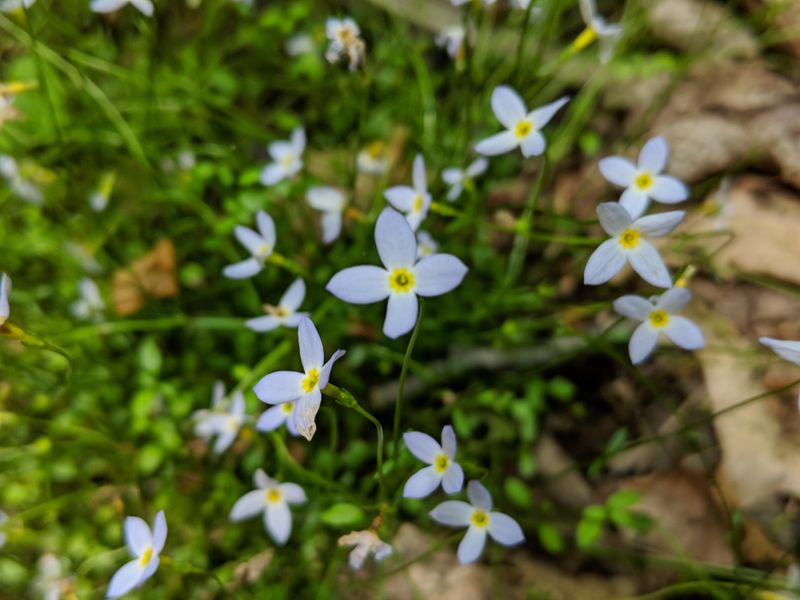
Not every wildflower gets to do whatever it wants in your yard.
Bluets are well-behaved compared to many spreading plants, but they still deserve some thoughtful management. Knowing when to let them go and when to redirect them keeps your yard looking intentional rather than neglected.
If bluets are spreading through a low-traffic area or a naturalized edge of your property, there is almost no reason to stop them. They add beauty, support pollinators, and require no maintenance from you.
Problems can arise if they start creeping into vegetable beds or formal garden borders. In those spaces, hand-pulling before seed set is the most effective control method.
Pulling works best when the soil is moist after rain. The shallow roots come out cleanly, and you avoid leaving rhizome fragments behind.
Mowing before seed heads form also limits their spread into areas you want to keep clear. Timing your first spring mow around mid-May can help manage their expansion.
If you want to encourage a natural meadow patch, simply stop mowing a section of your lawn. Bluets will fill in that space eagerly and create a low-maintenance flowering area.
Mixing them with other native ground covers like wild violets creates a layered, ecological lawn alternative. That combination can actually reduce mowing frequency over time.
The key is deciding what role you want bluets to play before they make that decision for you. A little intention goes a long way with this wildflower.
New Hampshire Gardeners Are Giving Bluets A Pass
The lawn perfection ideal is losing its grip, and bluets are part of the reason why.
Across New Hampshire, more gardeners are stepping back from the all-green, chemically maintained lawn model. They are choosing instead to work with what nature sends them, and bluets are one of the most welcome arrivals.
The native plant movement has gained steady ground in recent years. Organizations like the Native Plant Trust have helped shift how homeowners think about their outdoor spaces.
Bluets fit perfectly into this new mindset because they ask for nothing and give back plenty.
Social media has also played a role in changing perceptions. Photos of bluet-covered lawns regularly earn admiration online, especially from people exhausted by high-maintenance landscaping.
Younger homeowners in particular are drawn to the idea of a lawn that supports wildlife. A yard full of bluets signals ecological awareness without requiring a complete landscape overhaul.
Local nurseries have noticed the shift too, with more customers asking about native ground covers. Bluets come up in those conversations often, even though they rarely need to be planted at all.
Letting a native wildflower spread through your lawn is a quiet form of environmental stewardship. It costs nothing, looks beautiful, and benefits the ecosystem you live in.
This native New Hampshire wildflower earns its place not by being loud, but by being exactly right for where it grows.