These Are The Native Pennsylvania Shrubs To Grow Instead Of Arborvitae Along Fence Lines
Arborvitae has been the default fence line solution in Pennsylvania for so long that choosing something different almost requires a deliberate decision to break with habit.
It grows tall, stays evergreen, and creates the kind of dense screen that makes a fence line feel finished and private.
The problems tend to show up a few years in, when deer browse strips the lower branches bare, bagworm damage takes hold, or the trees simply grow far wider than the space was planned for and start demanding management that was never part of the original vision.
Pennsylvania native shrubs offer a more resilient and ecologically honest alternative for fence lines, bringing privacy, seasonal interest, and wildlife value without the ongoing vulnerabilities that make arborvitae such a frustrating long-term commitment in this state.
The native options available for this purpose are considerably more interesting than most gardeners expect when they first start looking.
1. American Holly
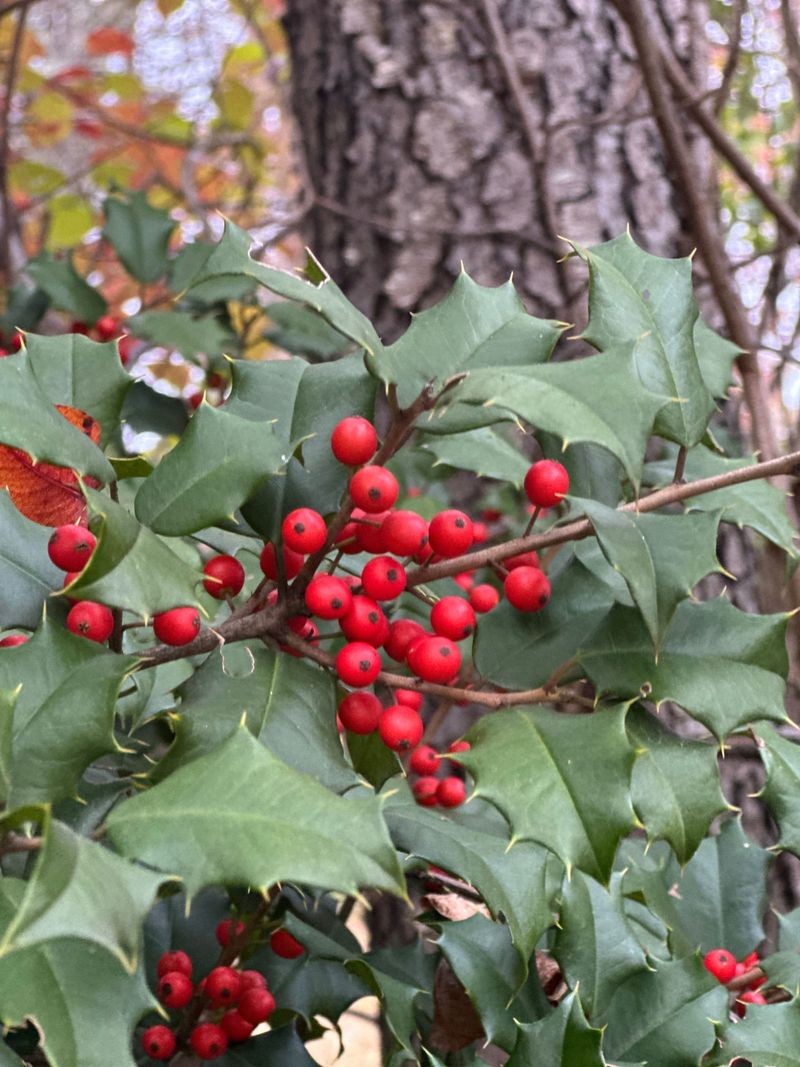
Picture a shrub that stays green all winter long, dotted with bright red berries while everything else looks bare and brown. That is exactly what American Holly brings to your fence line.
It is one of the most striking native shrubs in Pennsylvania, and it earns its spot with zero apologies.
American Holly grows slowly but steadily into a dense, full shrub or small tree that can reach anywhere from 15 to 30 feet tall if left unpruned. Along a fence line, you can keep it trimmed to your preferred height, and it responds well to pruning.
Its thick, spiny leaves make it nearly deer-resistant, which is a huge bonus in Pennsylvania where deer pressure is no joke.
The red berries appear in late fall and stick around through winter, giving birds like cedar waxwings and American robins a reliable food source when other plants have nothing to offer.
You will need both a male and female plant nearby for berry production, so plan accordingly when purchasing. Plant them about six to eight feet apart for a full, connected privacy screen.
American Holly thrives in well-drained, slightly acidic soil, which is common throughout much of Pennsylvania. It handles partial shade well, making it a flexible choice even if your fence line does not get full sun all day.
Once established, it is surprisingly drought-tolerant and low-maintenance. For a fence line that looks polished and purposeful in every single month of the year, American Holly is a top-tier native pick that outperforms arborvitae in both toughness and visual appeal.
2. Eastern Red Cedar
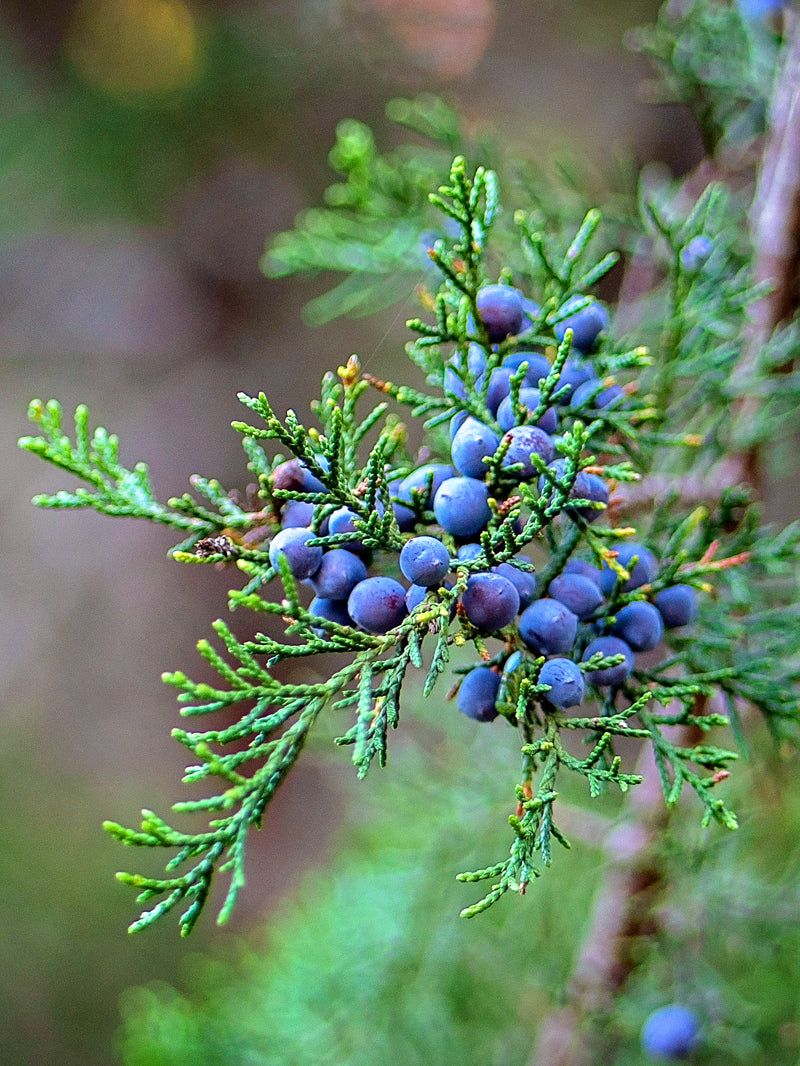
Tough as nails and native to Pennsylvania, Eastern Red Cedar is the kind of shrub that just handles whatever comes its way. Poor soil? No problem. Dry summer? It barely notices.
This evergreen conifer has been anchoring fence lines and field edges across the Mid-Atlantic for centuries, long before arborvitae ever entered the picture.
Eastern Red Cedar grows in a naturally dense, columnar shape that makes it perfect for creating a tight privacy screen along a fence. It can reach 30 to 40 feet at full maturity, but regular trimming keeps it at a manageable height.
Your Pennsylvania Garden Changes Every Week. Your Plan Should Too.
Gardening in Pennsylvania changes quickly throughout the season. Every Friday you’ll receive a simple weekly plan showing exactly what to plant, prune, fertilize, harvest, and protect so you never miss the right timing.
Its scale-like blue-green foliage stays rich and full year-round, giving you solid visual coverage in every season without any extra effort on your part.
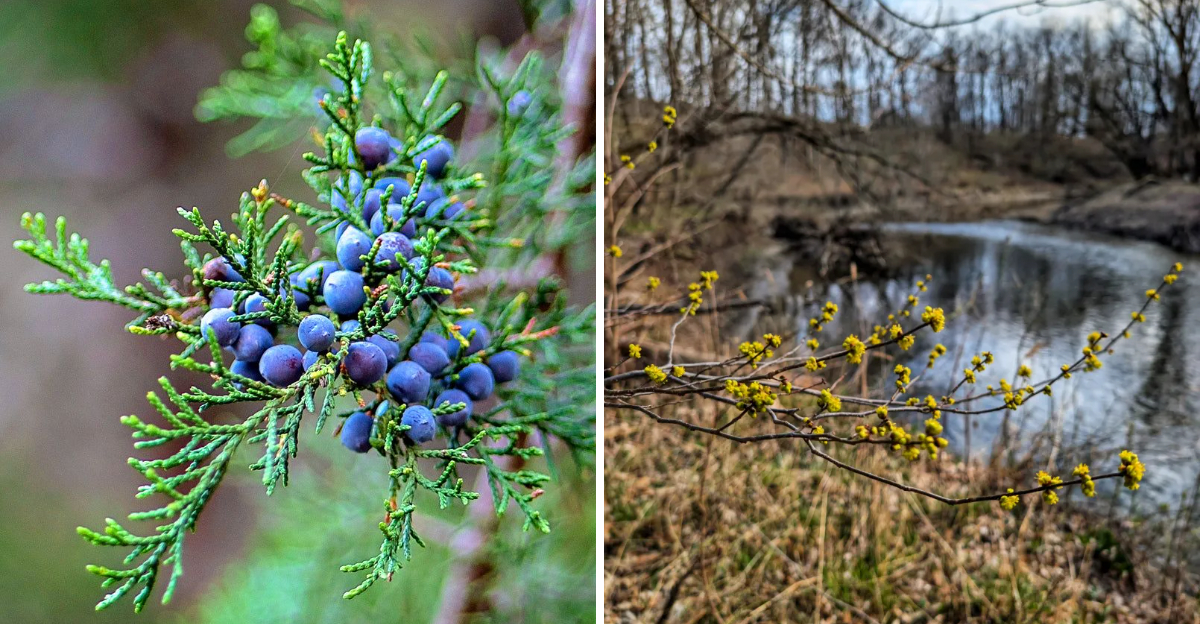
Wildlife absolutely loves this plant. The small, waxy blue berries, which are actually modified cones, are a critical winter food source for cedar waxwings, bluebirds, and mockingbirds.
The dense branching also provides excellent nesting habitat for songbirds. Planting a row of Eastern Red Cedar along your fence is like setting up a wildlife corridor right in your backyard.
This shrub thrives in a wide range of soil types, from rocky hillsides to clay-heavy yards, and it is one of the most drought-tolerant native plants in the region. Full sun brings out its best growth and densest foliage.
Space plants about six to ten feet apart depending on how quickly you want coverage. For a no-fuss, wildlife-friendly, year-round privacy hedge that handles Pennsylvania weather without complaints, Eastern Red Cedar is an outstanding and underappreciated choice.
3. Winterberry
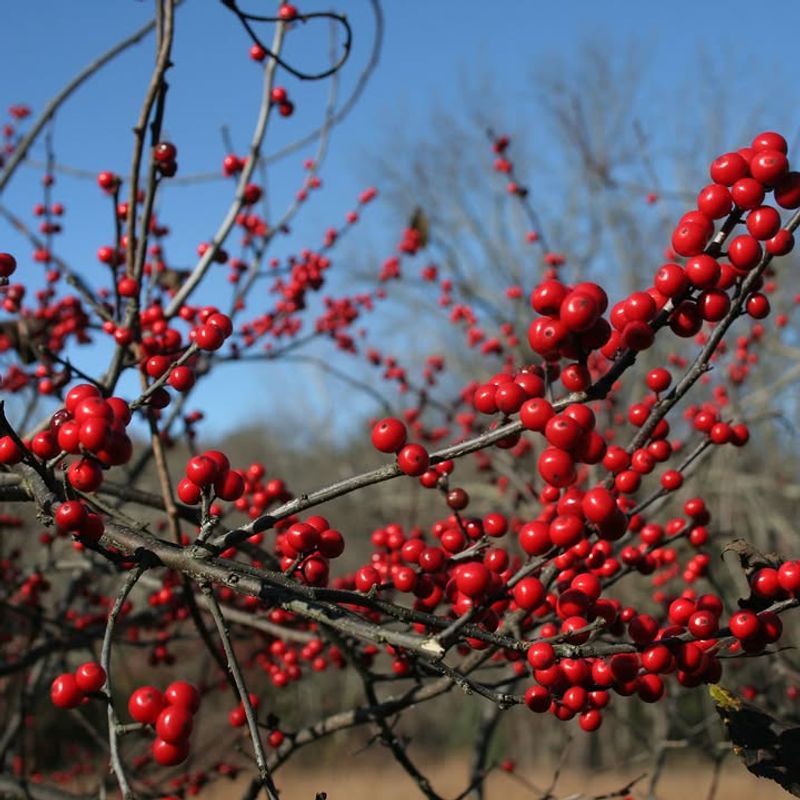
Nothing quite stops you in your tracks like a Winterberry shrub in full berry mode. When its leaves drop in autumn, the branches suddenly explode with hundreds of glossy red berries that look almost too perfect to be real.
It is one of the most visually dramatic native shrubs Pennsylvania has to offer, and it earns every bit of that reputation.
Winterberry is a deciduous holly, which means it loses its leaves in fall, but that is actually when the show begins. The berries emerge in late summer and intensify through fall and winter, lasting well into February if the birds do not clean them out first.
Robins, bluebirds, cedar waxwings, and hermit thrushes all depend on these berries as a critical late-season food source.
Along a fence line, Winterberry grows in a naturally upright, multi-stemmed form that reaches six to ten feet tall. Plant it in groups or in a staggered row for the most visual impact and the best privacy coverage.
Like American Holly, you need at least one male plant for every five to seven female plants to get berry production. The male does not produce berries itself but is essential for pollination.
Winterberry thrives in moist to wet soils, making it an excellent choice for low-lying fence lines or areas where drainage is poor. It handles both full sun and partial shade with ease.
This is one of those plants that actually gets better in challenging spots where other shrubs struggle. For a fence line that doubles as a winter wildlife buffet, Winterberry is a native gem worth growing.
4. Spicebush
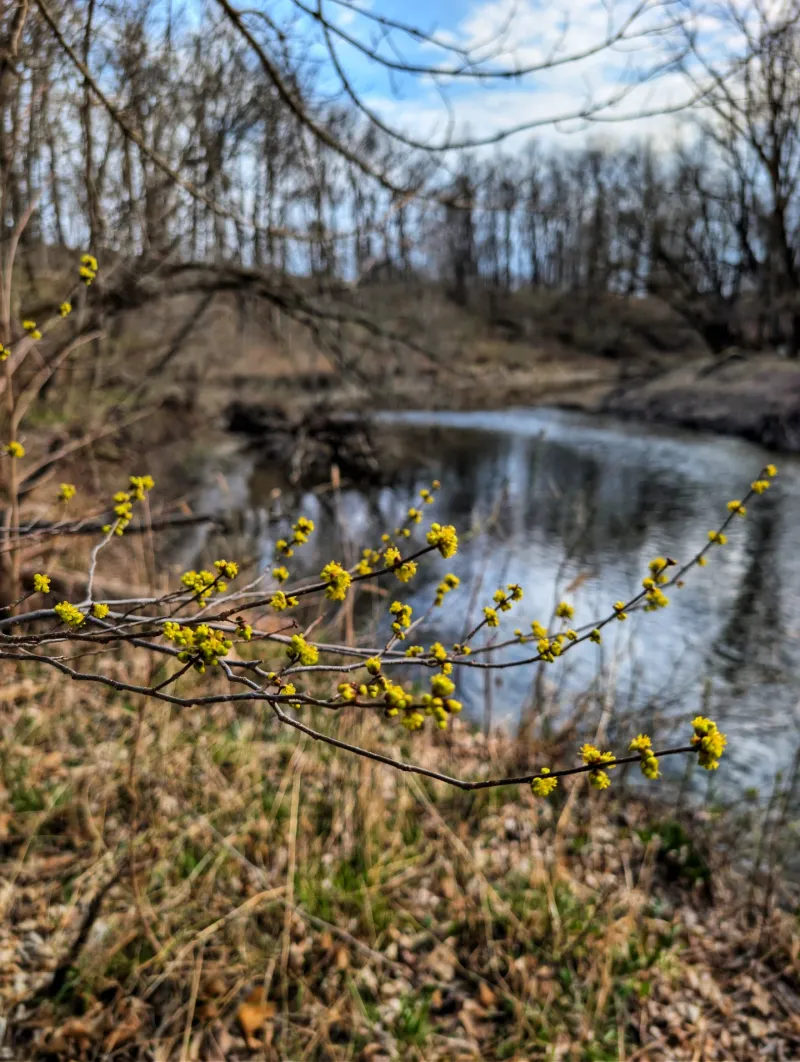
Crush a leaf of Spicebush between your fingers and you will instantly understand how it got its name. The spicy, citrusy fragrance is unforgettable, and it is just one of the many reasons this native Pennsylvania shrub deserves a place along your fence line.
Long before grocery stores stocked exotic spices, colonial settlers used Spicebush berries as a substitute for allspice in their cooking.
Spicebush is one of the earliest bloomers in the Pennsylvania native plant world. Tiny clusters of bright yellow flowers appear directly on the bare branches in early March, sometimes while snow is still on the ground.
That early bloom is a critical food source for native bees and early-emerging butterflies that are hungry after a long winter. The show continues in fall when the glossy red berries ripen and the leaves turn a warm, buttery yellow.
Growing six to twelve feet tall with a naturally rounded, dense form, Spicebush creates excellent privacy coverage along a fence line.
It spreads gradually through root suckers, which means over time it fills in gaps and becomes even more effective as a screen. Deer tend to avoid it, which is a significant advantage in areas with heavy deer populations.
Spicebush thrives in partial to full shade, making it one of the few native shrubs that genuinely excels in shaded fence lines where other plants struggle to fill in. It prefers moist, rich soil but adapts to average garden conditions with no fuss.
For a fence line that smells amazing, blooms early, and supports wildlife from spring through winter, Spicebush is a standout native choice.
5. Inkberry Holly
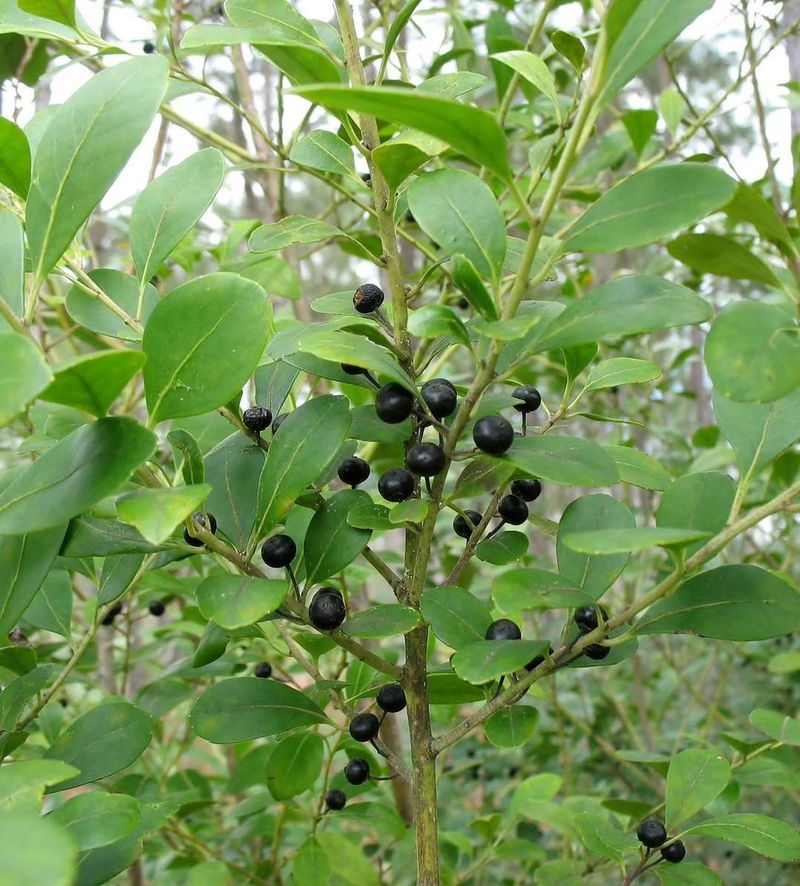
Inkberry Holly is the quiet overachiever of the native shrub world. It does not shout for attention with flashy flowers or dramatic fall color, but it delivers consistent, glossy, evergreen coverage that holds up beautifully through every Pennsylvania season.
If you want a fence line that always looks tidy and full without a lot of fussing, this is your plant.
The leaves are small, smooth, and a rich dark green that stays vibrant even through cold winters.
Small black berries appear in late summer and persist through winter, providing an important food source for over 15 species of birds, including brown thrashers, catbirds, and tree swallows.
The berries are not showy like Winterberry, but they are reliable and ecologically valuable.
Inkberry Holly grows in a naturally rounded, upright form reaching five to eight feet tall. It spreads slowly through root suckers, gradually thickening into a dense mass that creates solid privacy coverage along a fence.
Plant them three to four feet apart for a tight hedge effect, or six feet apart if you prefer a more natural, layered look. Like other hollies, you will get better berry production with both male and female plants present.
One of the biggest advantages of Inkberry Holly is its adaptability to wet, poorly drained soils. It is one of the best native shrubs for fence lines near low spots, rain gardens, or areas that flood occasionally.
It also handles full sun to full shade, which makes it incredibly versatile. Compared to arborvitae, which hates wet feet, Inkberry Holly thrives where others simply cannot. That adaptability alone makes it worth planting.
6. Sweetspire
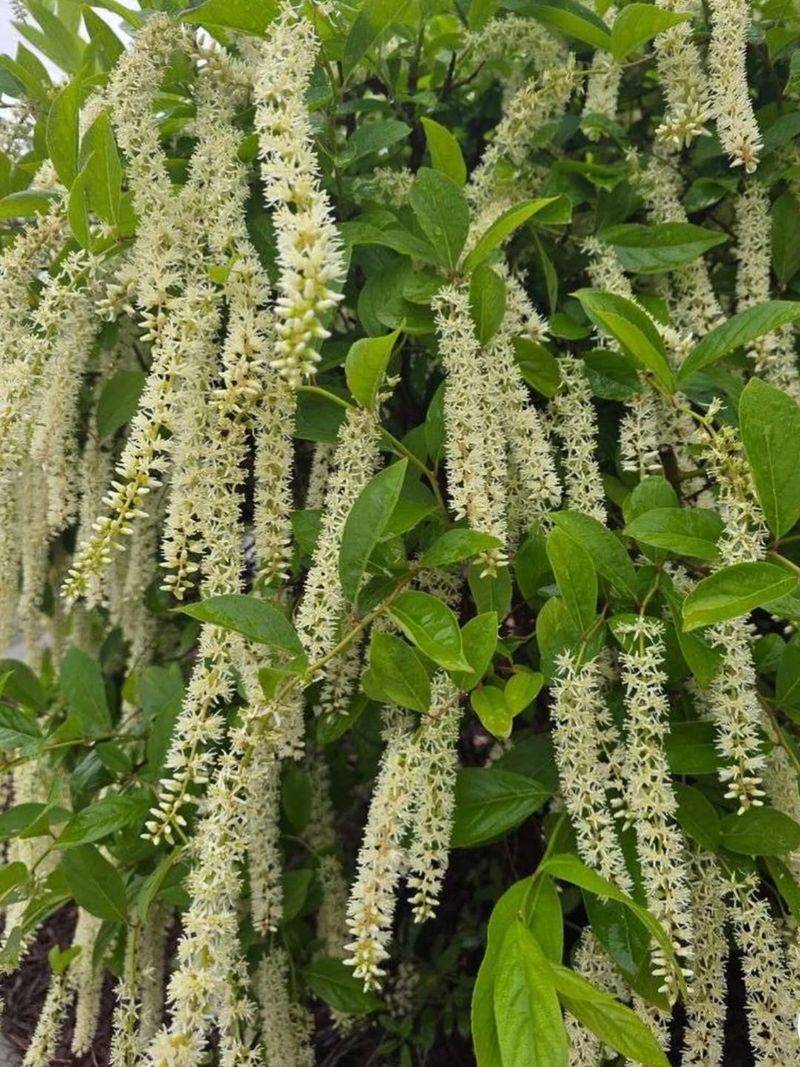
Some shrubs earn their place in the garden with one great feature. Sweetspire earns it with three.
In late spring, it bursts into long, arching clusters of fragrant white flowers that attract butterflies and bees by the dozens.
In fall, the leaves shift through a stunning range of orange, red, and burgundy that rivals anything you will find at a nursery. Then in winter, its graceful arching stems hold the fence line together with quiet elegance.
Sweetspire grows three to five feet tall and spreads gradually through root suckers to form a dense, layered thicket along a fence. That spreading habit is actually a feature, not a flaw.
Over time, it creates a thick, natural-looking screen that fills in gaps without any replanting. Regular pruning keeps it tidy if you prefer a more structured hedge appearance.
One of the things that sets Sweetspire apart is its ability to thrive in both wet and dry conditions once established.
It grows equally well in full sun or deep shade, which makes it one of the most flexible native shrubs available to Pennsylvania gardeners. Few plants can match that kind of adaptability across different fence line conditions.
Deer typically leave Sweetspire alone, and it has no serious pest or disease problems to worry about. It is a genuinely low-maintenance plant that rewards you generously for minimal effort.
Native bees and pollinators are especially drawn to the fragrant white flower spikes, making your fence line an active hub of pollinator activity each spring.
For beauty, flexibility, and ecological value all in one package, Sweetspire is a native shrub that rarely gets the credit it deserves.
7. Red Chokeberry
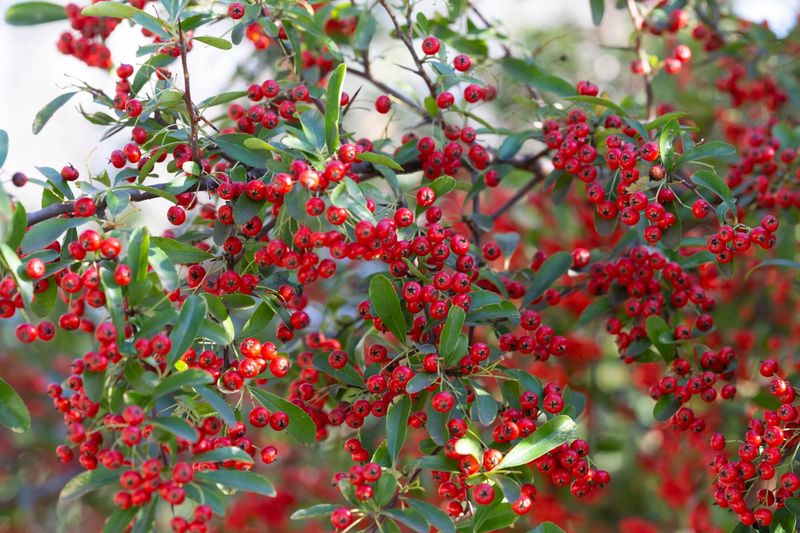
Red Chokeberry puts on a full four-season performance that most ornamental shrubs simply cannot match.
White flower clusters in spring, glossy green leaves in summer, fiery red and orange fall foliage, and then vivid red berries that cling to the branches well into winter.
Every single season, this native Pennsylvania shrub gives you something worth looking at along your fence line.
Growing five to eight feet tall in a tight, upright form, Red Chokeberry naturally creates a dense, columnar shape that works perfectly as a privacy screen.
It spreads gradually through root suckers, slowly thickening the hedge over time without becoming invasive or unmanageable.
Plant them three to five feet apart for a solid screen, and you will have strong coverage within two to three growing seasons.
The bright red berries are technically edible but extremely tart, which is where the name chokeberry comes from. Birds, however, have no complaints.
Robins, cedar waxwings, and bluebirds eagerly consume the berries during winter when food is scarce. That makes your fence line an important local wildlife resource during the toughest months of the year.
Red Chokeberry is incredibly tough and adaptable. It handles wet soils, dry soils, clay, and sandy conditions with equal ease.
Full sun produces the best berry crops and the most vivid fall color, but it tolerates partial shade without complaint. Unlike arborvitae, which can look ragged and sparse after a few hard winters, Red Chokeberry only seems to get better with age.
For a fence line that works hard, looks beautiful, and supports local wildlife all year long, Red Chokeberry is a native shrub that truly delivers.