Do These 5 Things The Moment Your Michigan Squash Leaves Start Yellowing In Summer
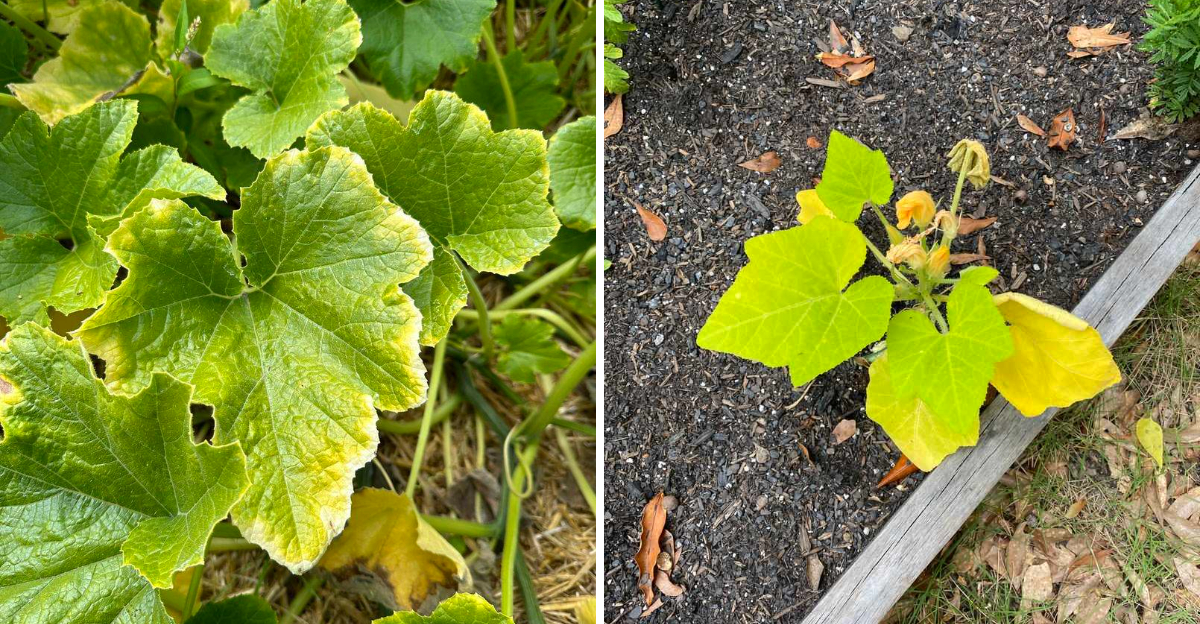
Yellow squash leaves are one of the most misleading sights in a Michigan vegetable garden, and the urge to immediately water, fertilize, or spray something is exactly the wrong instinct. Yellowing can mean overwatering just as easily as underwatering.
It can point to squash vine borer damage, powdery mildew, a nutrient deficiency, or simply natural leaf aging at the base of a healthy plant.
Michigan’s warm, humid summers create conditions where several of these problems show up at once and look nearly identical from a distance.
Getting the diagnosis right before doing anything is the move that saves the plant, the season, and a fair amount of unnecessary effort.
A close look at the stem, the soil, and the leaf pattern tells most of the story.
1. Check Soil Moisture First
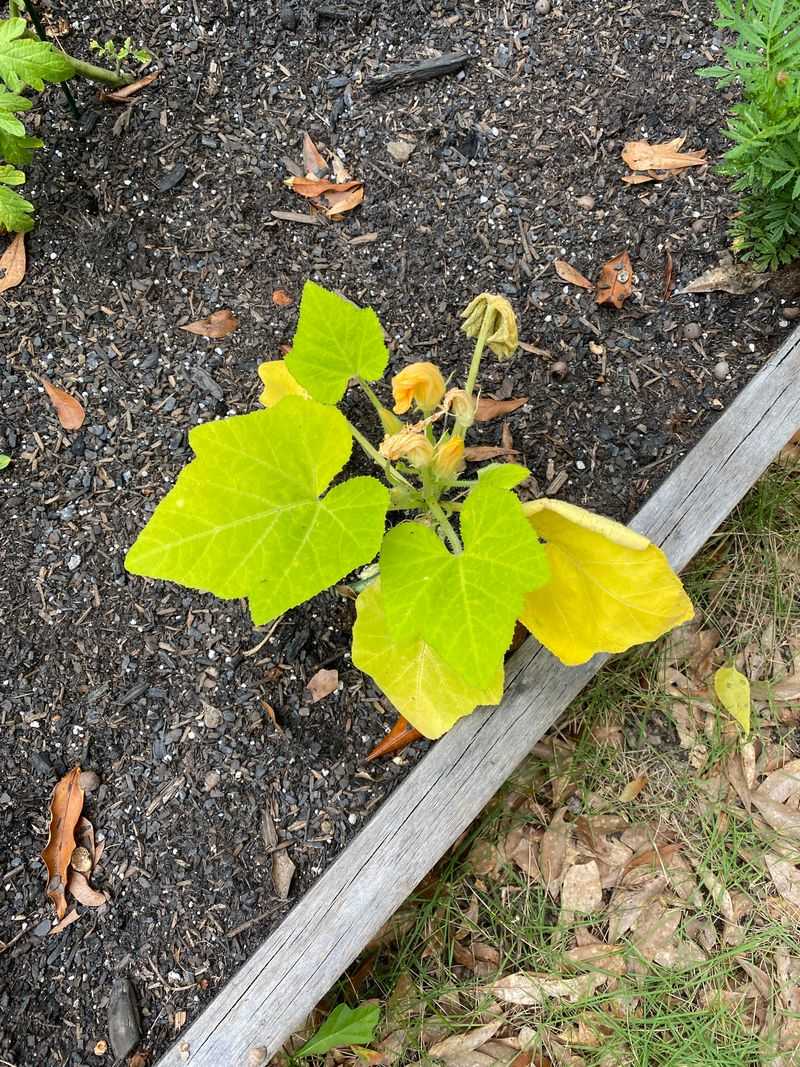
Soil moisture is one of the first things worth checking when squash leaves start to yellow, because both too little and too much water can cause the same faded, limp appearance.
Sticking your finger two inches into the soil near the base of the plant gives you more useful information than looking at the surface alone.
Dry soil at that depth usually means the plant needs water, while soil that feels soggy or smells musty may point to overwatering or poor drainage.
Michigan summers can swing between dry stretches and heavy rain events within the same week, which makes consistent moisture levels hard to maintain without checking regularly.
Raised beds and squash hills drain faster than flat garden rows, so plants growing in those setups may dry out sooner than you expect.
Sandy soils common in parts of Michigan can lose moisture quickly, while heavy clay holds water longer and can stay wet after a rainstorm.
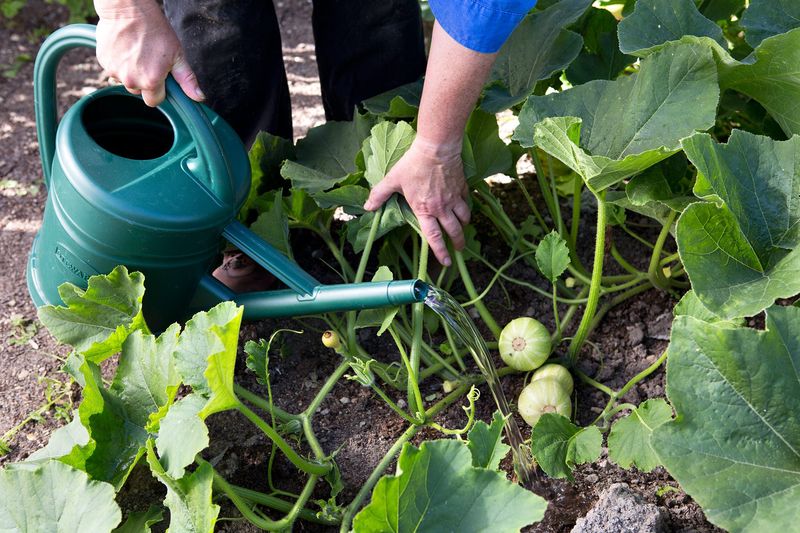
Squash plants generally prefer about one inch of water per week, applied steadily at the soil level rather than overhead. Watering in the morning helps the soil absorb moisture before afternoon heat increases evaporation.
Before adding more water, always feel the soil, because reacting without checking can make the underlying issue harder to sort out later.
2. Inspect The Stem Base
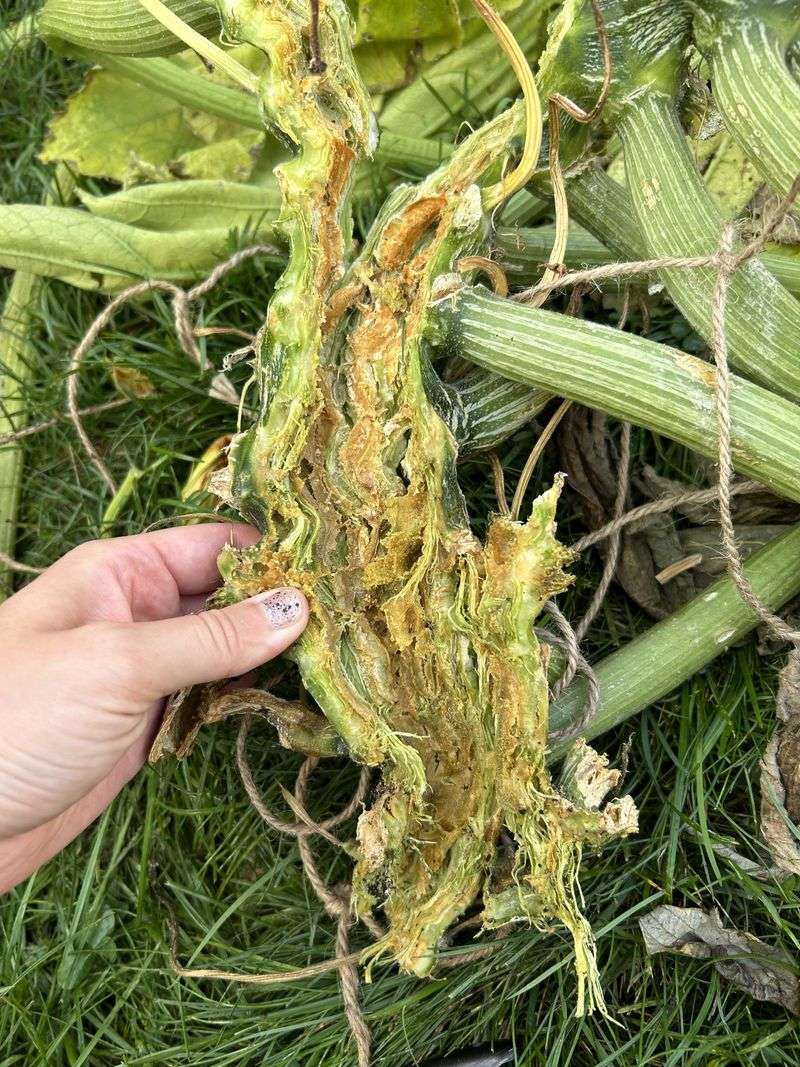
Pulling back a little soil or mulch around the base of the squash stem can reveal problems that never show up when you look only at the leaves. A healthy squash stem should feel firm and look clean at the point where it enters the ground.
If the base feels soft, looks discolored, or shows small holes or sawdust-like frass, there is a good chance something has damaged the tissue that moves water and nutrients up through the plant.
Squash vine borers are one of the more common culprits in Michigan gardens, and they tend to cause sudden, widespread wilting that can look a lot like drought stress.
The adult moth lays eggs near the base of the stem, and the larvae burrow inside, feeding on the interior tissue before the damage becomes obvious on the outside.
By the time leaves start yellowing and wilting, the borer may already be well inside the stem.
Your Michigan Garden Changes Every Week. Your Plan Should Too.
Gardening in Michigan changes quickly throughout the season. Every Friday you’ll receive a simple weekly plan showing exactly what to plant, prune, fertilize, harvest, and protect so you never miss the right timing.
Squash bugs and cucumber beetles can also gather near the stem base and cause feeding damage that weakens the plant from the ground up. Checking this area carefully, even using a flashlight if needed, gives you a clearer picture of what is actually happening.
Finding the cause at the stem level helps you respond in a more targeted way rather than guessing based on leaf color alone.
3. Look Under The Leaves
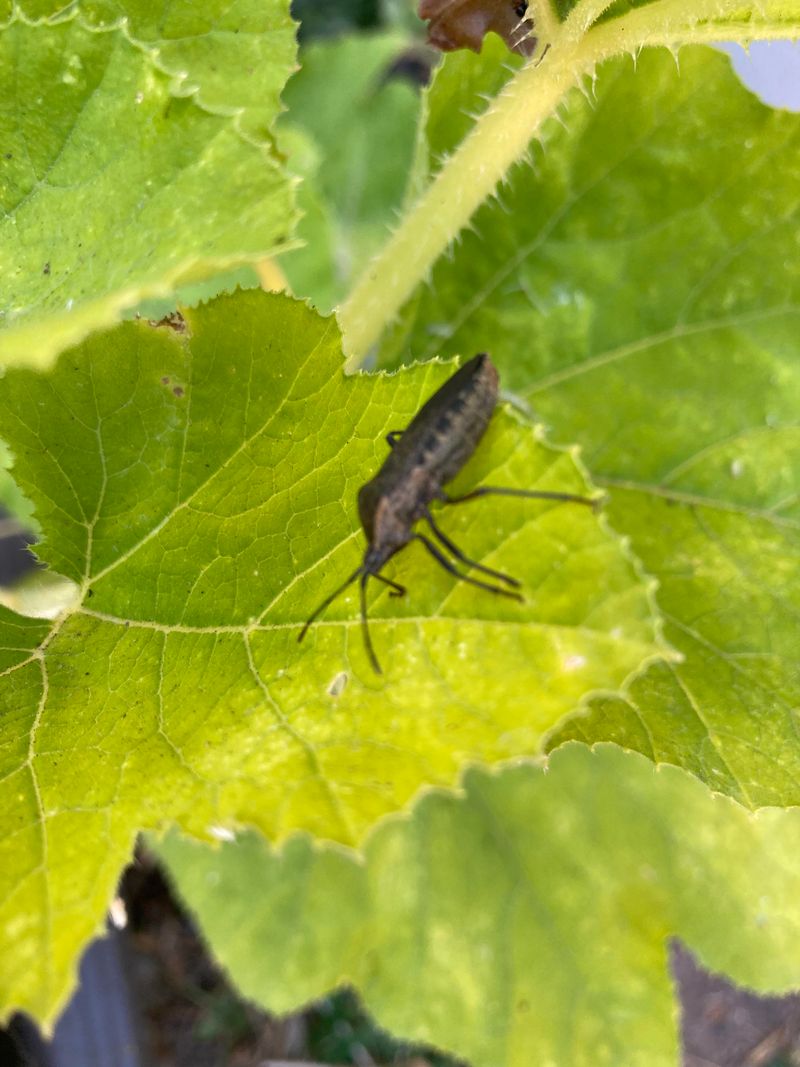
Flipping squash leaves over to check the undersides is a step that many home gardeners skip, but it often reveals exactly what is causing the yellowing.
This is especially useful because several common squash pests hide where they are easy to miss during a quick garden walk.
A closer look can show whether the yellowing is coming from active feeding, egg clusters, or a pattern that points to something other than insects.
Squash bugs tend to cluster on the underside of leaves, laying neat rows of bronze-colored eggs along the veins and feeding on plant tissue in groups.
Their feeding removes plant fluids and causes yellow patches that spread outward from where the insects were gathered.
Spider mites are another pest that favors the leaf underside, especially during hot, dry stretches in Michigan summers. They are tiny and hard to spot individually, but a fine, dusty webbing on the underside of the leaf is a reliable sign of their presence.
Mite feeding causes a stippled or speckled yellowing pattern that looks different from the larger, more blotchy discoloration caused by squash bugs or nutrient problems.
Cucumber beetles sometimes shelter under leaves as well, and while they are more commonly associated with feeding on flowers and roots, their presence on leaves is worth noting.
Checking the undersides of both yellowing leaves and nearby healthy-looking leaves gives you a fuller picture of insect pressure across the plant.
Writing down or photographing what you find helps you compare patterns over several days, which makes identifying the actual problem more straightforward than reacting to a single observation.
4. Watch For Mildew Signs
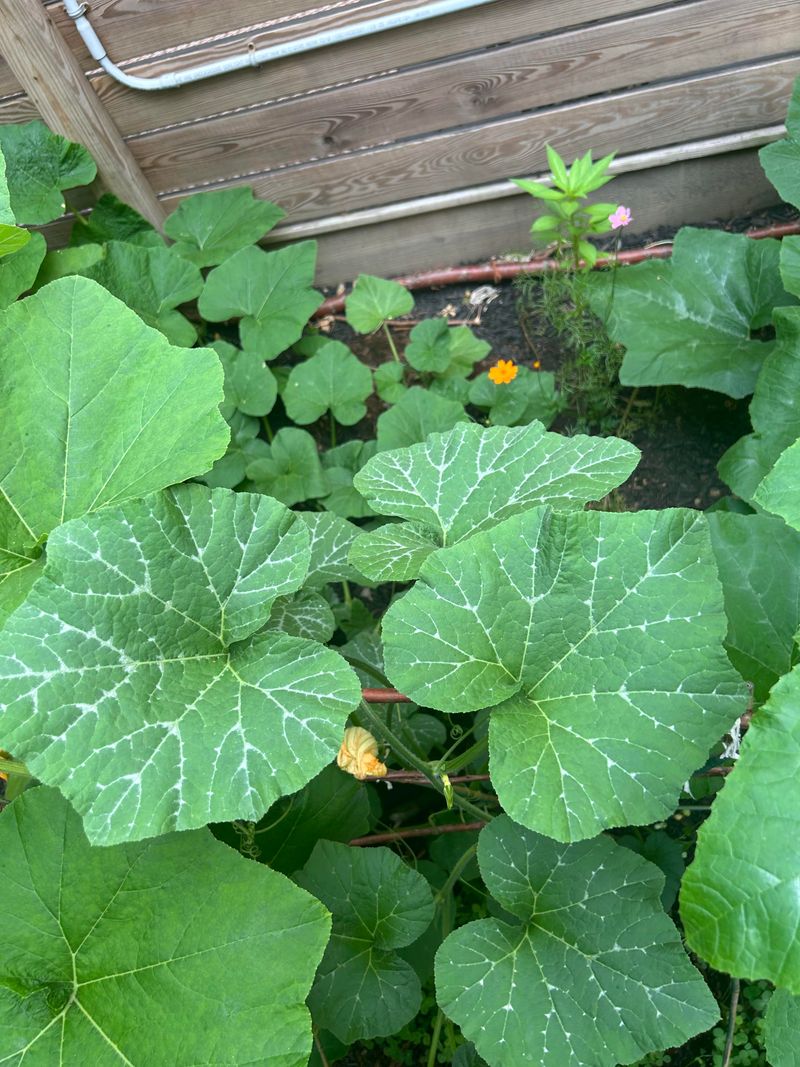
Powdery mildew is one of the most recognizable squash problems in Michigan, and it tends to show up reliably once warm days and cooler nights create the humid conditions the fungus favors.
The first signs usually appear as small white or grayish patches on the upper surface of older leaves, spreading outward into a dusty coating that can eventually cover much of the leaf.
As the mildew progresses, the affected leaves often begin to yellow and dry out from the edges inward.
What makes powdery mildew worth watching carefully is that it can look similar to other issues at first glance, especially if the white coating is light and the yellowing has already started.
Checking the upper and lower leaf surfaces for that distinctive powdery texture helps separate mildew from nutrient deficiency or simple water stress.
Mildew-affected leaves tend to show the white coating before or alongside the yellowing, rather than yellowing alone.
Michigan summers create conditions where mildew pressure can build quickly, particularly in gardens with limited air circulation or dense plantings where leaves overlap.
Removing heavily affected leaves and improving spacing around plants can slow the spread without immediately reaching for a spray.
Keeping foliage dry by watering at the base rather than overhead also reduces the surface moisture that encourages mildew to establish and spread across neighboring leaves.
5. Feed Only After Reading The Pattern
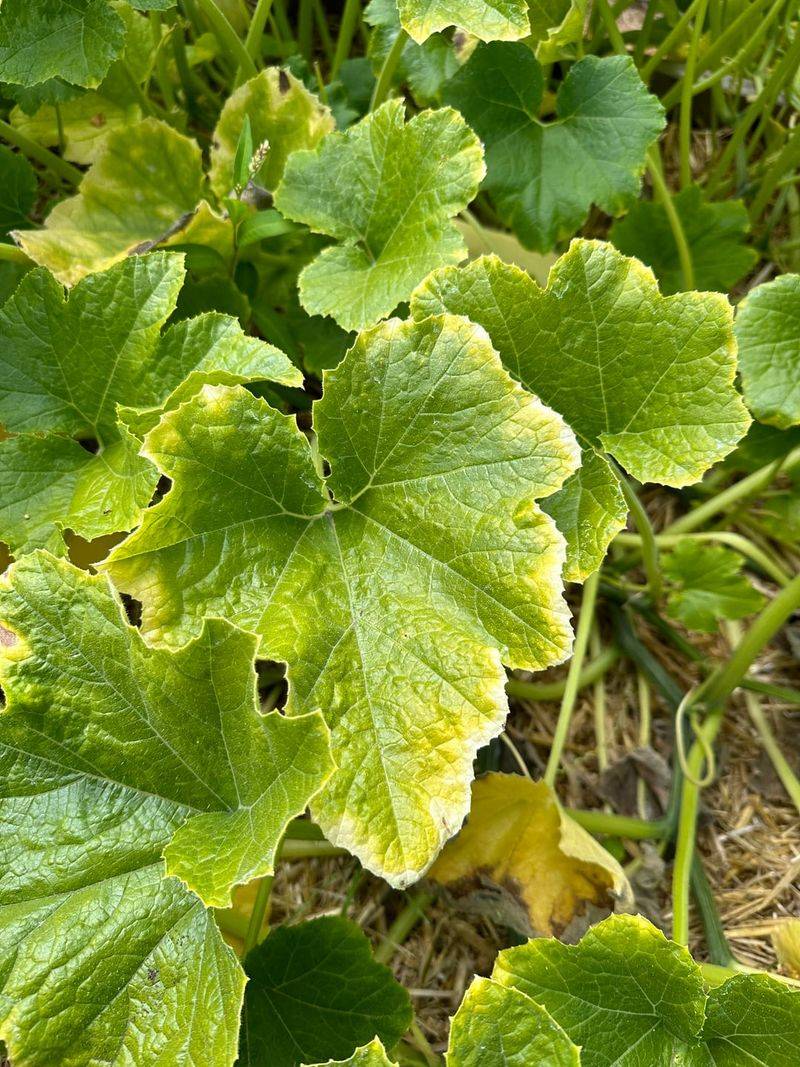
Reaching for fertilizer the moment squash leaves start yellowing is a common instinct, but it can complicate the situation if the real cause is something other than a nutrient shortage.
Nitrogen deficiency does cause yellowing, typically starting with older lower leaves and moving upward gradually, but that same pattern can also appear when root damage, waterlogged soil, or stem injury limits how well the plant absorbs nutrients already present in the soil.
Adding fertilizer before identifying the actual cause can push the plant in the wrong direction.
Magnesium deficiency shows a different pattern, with yellowing appearing between the leaf veins while the veins themselves stay green, a sign called interveinal chlorosis.
Iron deficiency tends to show the same interveinal pattern but usually starts on younger, newer leaves near the top of the plant rather than the older base leaves.
Noticing which leaves are yellowing and where on the leaf the color change begins helps narrow down whether a nutrient issue is actually involved.
If the pattern does suggest a nutrient problem after checking moisture, pests, and disease, a balanced vegetable fertilizer applied according to label directions is a reasonable starting point.
Soil testing through a Michigan cooperative extension office can also give you accurate information about what the soil actually needs rather than guessing.
Responding to what the plant is genuinely showing keeps the garden easier to manage over the rest of the summer season.
6. Yellow Leaves Can Point To Several Problems
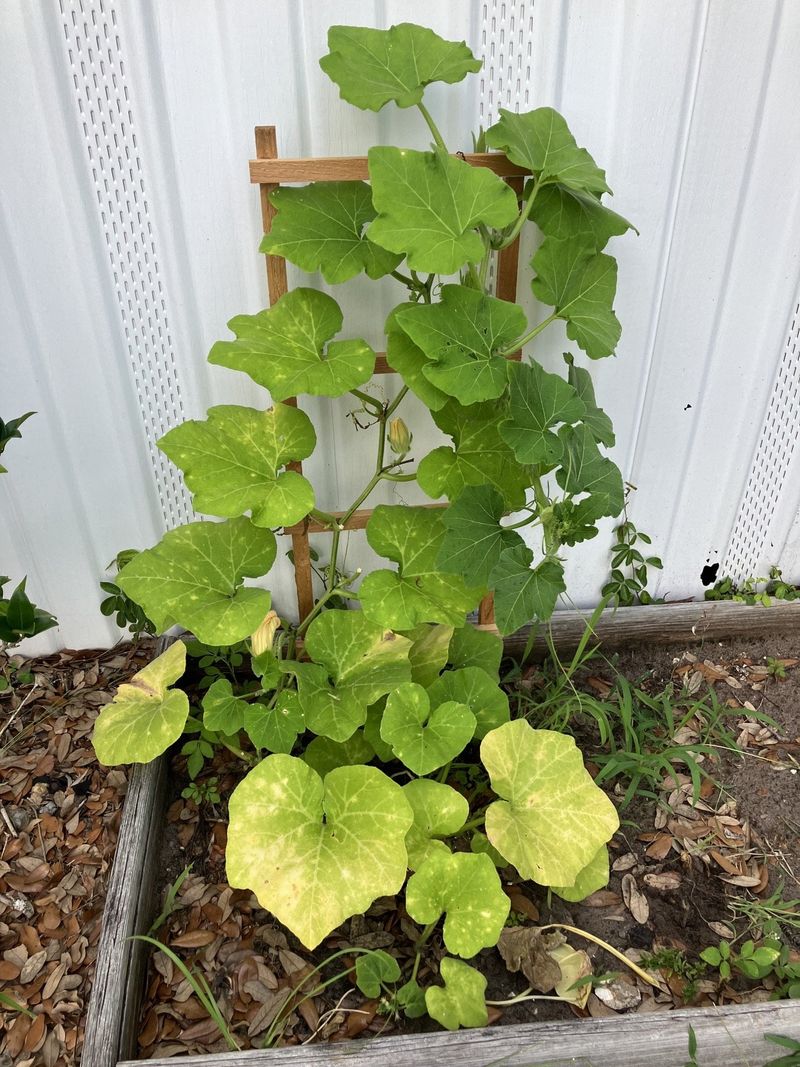
A few yellow squash leaves can make a Michigan gardener worry fast, but the color change does not point to one single answer.
Squash leaves can yellow because the plant is getting too much water, not enough water, uneven moisture, limited nutrients, insect feeding, stem injury, or disease pressure.
Older leaves near the base of the plant may also fade before newer growth, especially as the plant puts energy into vines, flowers, and fruit. The pattern matters.
Reading that pattern before reacting gives you a better chance of separating normal older-leaf changes from a problem that needs attention.
Yellowing that starts on lower leaves can suggest something different from yellowing that appears suddenly across the whole plant.
A plant that yellows and wilts during the heat of the day may need a closer look at soil moisture and the stem base. Leaves with spots, powdery patches, or damaged areas may point toward a disease or insect issue instead.
In Michigan gardens, squash can grow quickly once summer warmth settles in, so small changes may seem dramatic from one week to the next. Before reaching for fertilizer or cutting off leaves, it helps to slow down and read the plant.
Look at where the yellowing starts, whether the leaves are dry or soft, whether new growth looks healthy, and whether pests are hiding under the leaves. That careful first look can save a lot of frustration.
7. Summer Weather Can Stress Michigan Squash
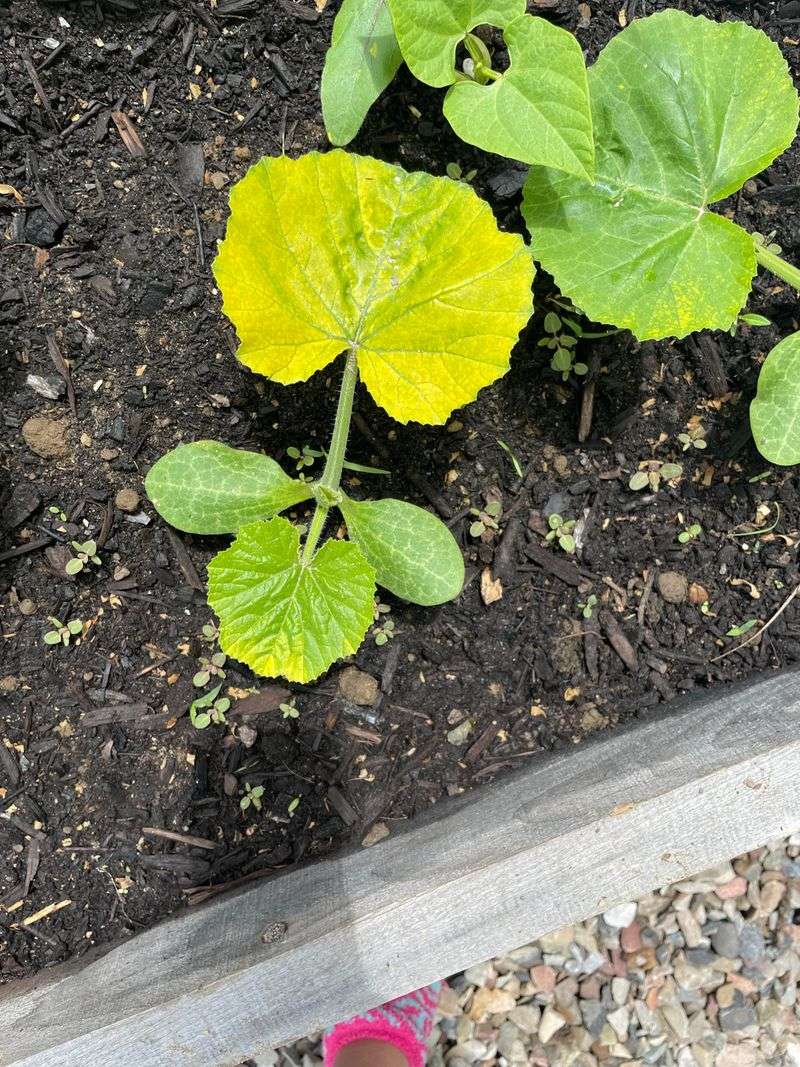
Michigan summer weather can be a little tough on squash, especially when the season swings from cool nights to hot afternoons, heavy rain, humid stretches, and dry spells.
Squash plants like steady growth, but summer conditions do not usually stay steady for long.
A few days of soaking rain can leave soil wetter than the roots prefer, while a dry week can make large squash leaves lose moisture quickly. Raised beds may dry faster than in-ground gardens, while heavier soils may hold moisture longer after storms.
Humidity can also make leaf diseases easier to notice, especially when vines are crowded and air does not move well through the planting.
At the same time, insects such as squash bugs, cucumber beetles, and squash vine borer can become part of the summer picture for cucurbit crops in Michigan.
That combination means yellowing leaves may reflect more than one stress at once. A plant might be dealing with uneven watering while also showing early pest damage or mildew signs.
This is why good garden habits matter so much in summer. Water near the soil instead of soaking the leaves when possible, give plants enough spacing, check them often, and avoid letting weeds crowd the vines.
Squash can be productive in Michigan gardens, but it responds best when gardeners pay attention to small changes before they turn into bigger setbacks.
8. Quick Fixes Can Make Diagnosis Harder
It is tempting to fix yellow squash leaves right away, especially when the plant was green and full just a few days earlier. The problem is that quick fixes can sometimes make the real cause harder to understand.
Adding fertilizer before checking the soil, watering heavily without testing moisture, or removing too many leaves at once can change the plant’s condition before you know what started the yellowing.
A Michigan gardener might think the plant needs nitrogen, when the real issue is soggy soil, stem damage, or insect feeding.
Another gardener might assume the plant is thirsty, then water again and keep the root zone wetter than it needs to be. A better approach is to take a few minutes and gather clues.
Feel the soil a couple of inches down. Look at the stem base.
Turn over several leaves and check for insects or eggs. Notice whether the yellowing is mostly on older leaves, newer leaves, one side of the plant, or across the whole vine.
If there are white powdery patches, spots, or chewed areas, that information matters too. Once the pattern is clearer, the response can be more thoughtful.
You may only need to adjust watering, improve airflow, remove a badly affected leaf, or watch the plant for a few more days. Careful observation is often the most useful first move.