The Most Underrated Georgia Native Vine That Covers Fences Fast Without Becoming Invasive
Not every fence needs to be hidden, but a plain stretch of wood or wire can make a yard feel unfinished.
Many homeowners start searching for a fast-growing vine the moment they notice empty fence lines standing out more than the plants around them.
The challenge is finding one that does not create new problems. Plenty of popular vines grow quickly, but some demand constant pruning.
Others spread far beyond where they were planted. A plant that seems manageable at first can become a source of frustration a few seasons later.
That is why more gardeners are paying closer attention to native plants. They often fit naturally into the landscape and require less intervention once established.
Georgia has one native vine that deserves far more attention than it gets. It covers fences surprisingly fast, adds seasonal beauty, and stays well behaved while doing it.
1. Coral Honeysuckle Covers Fences Quickly Without Taking Over
Some vines are bullies. They spread into your neighbor’s yard, climb trees uninvited, and refuse to stay put no matter how often you cut them back.
Coral honeysuckle is nothing like that.
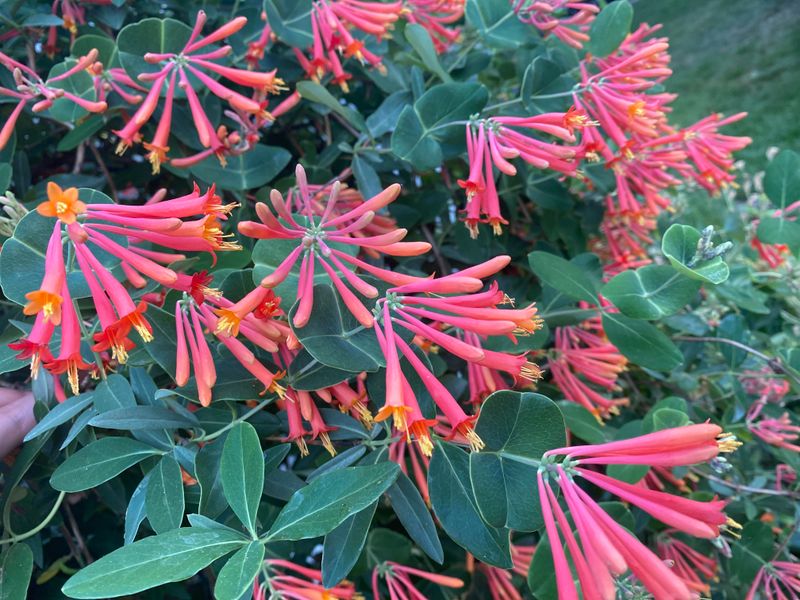
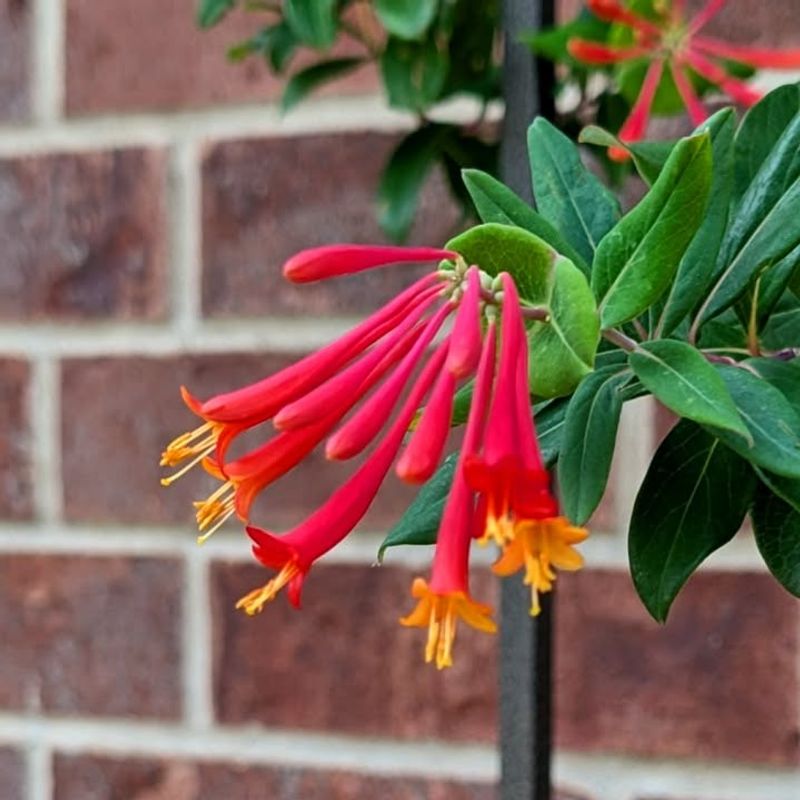
Lonicera sempervirens grows at a solid pace, typically reaching six to fifteen feet depending on conditions and support available. It climbs by twining, meaning it wraps around structures rather than clinging with sticky pads or aerial roots that can damage surfaces.
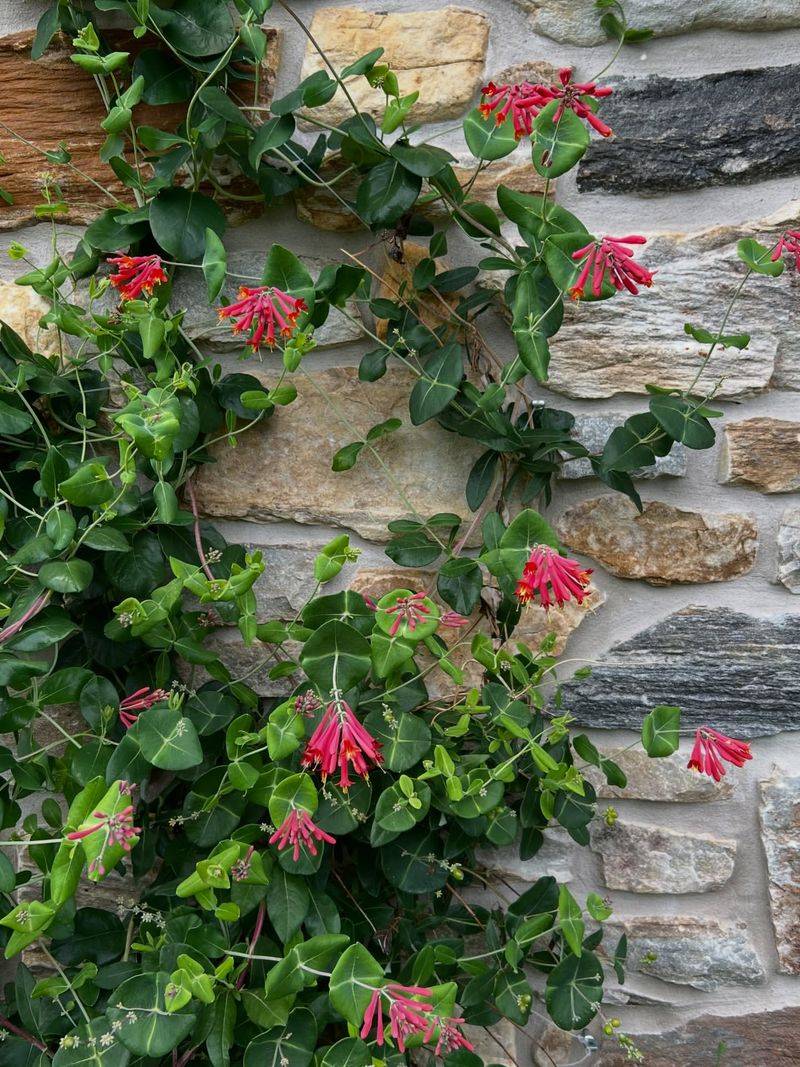
Fences benefit from this vine in a practical way. Within one to two growing seasons, a healthy plant can cover a substantial stretch of fence without pushing beyond its boundaries.
Growth slows down naturally at the tips rather than exploding outward the way invasive species tend to do.
Gardeners across the Southeast appreciate this predictability. You do not need to constantly chase it back or worry about it escaping into a natural area nearby.
It simply grows, blooms, and stays where it belongs.
Planting along a fence line works best when you space plants about six to eight feet apart. That spacing allows each plant room to spread without crowding.
Within a full season, gaps between plants begin to fill in nicely.
2. Bright Red Flowers Draw Hummingbirds Throughout The Growing Season
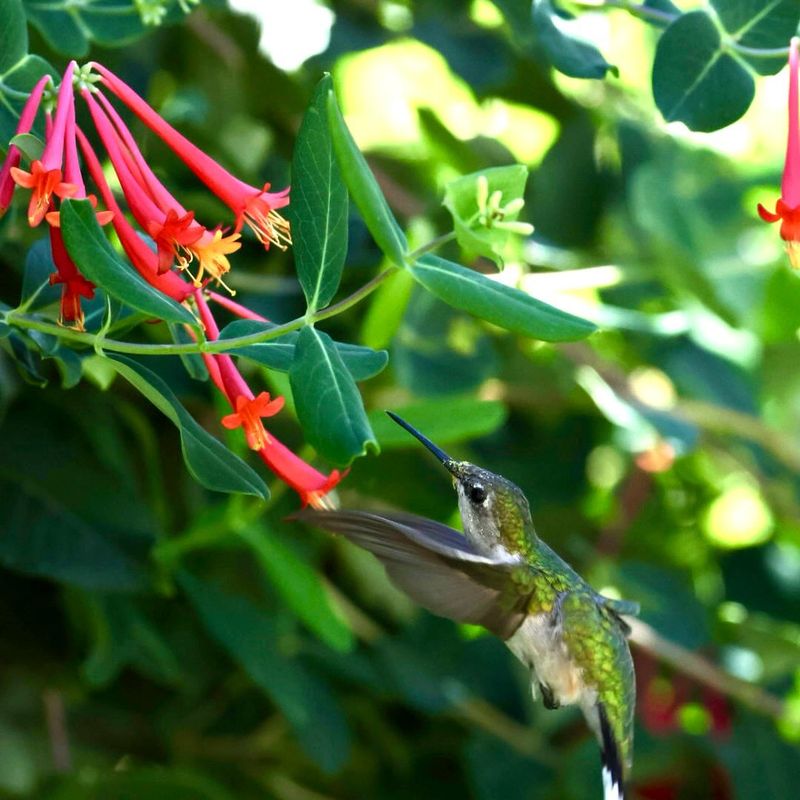
Ruby-throated hummingbirds lock onto coral honeysuckle like it was designed specifically for them. Honestly, it kind of was.
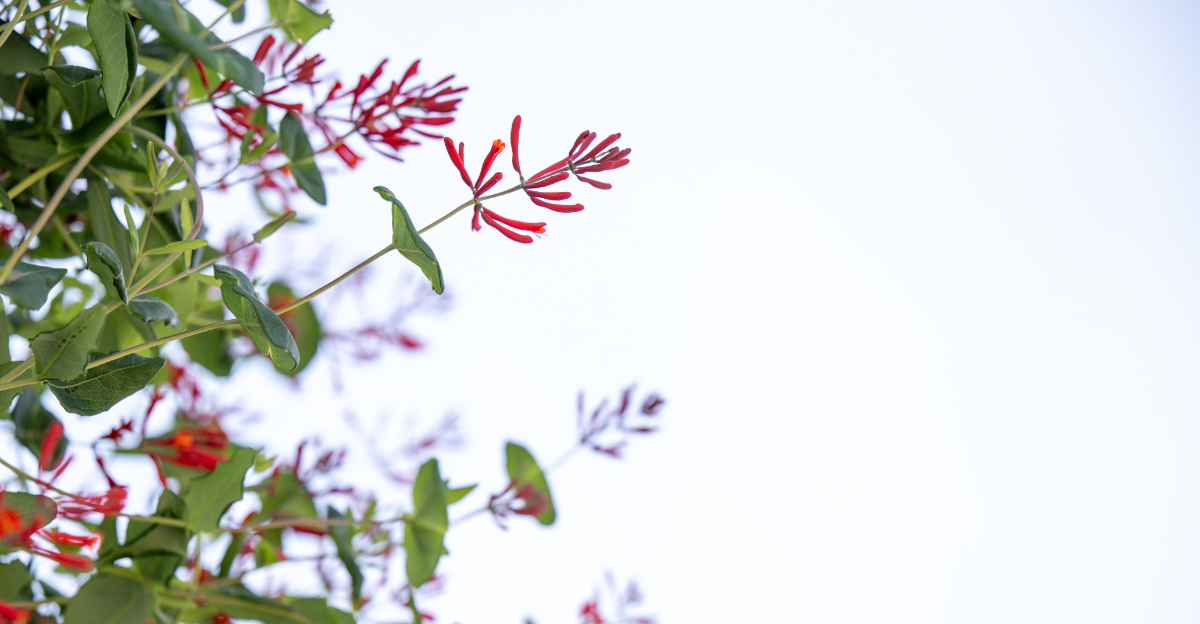
Those long, narrow red tubes match the shape of a hummingbird’s bill almost perfectly.
Blooming typically begins in spring and continues well into fall with consistent care and decent sun. Unlike many flowering plants that peak once and fade, coral honeysuckle produces new flower clusters repeatedly throughout the warm months.
Red coloration plays a big role in attracting hummingbirds. Birds that feed on nectar strongly prefer red and orange tubular flowers.
Coral honeysuckle checks both boxes with its deep scarlet blooms and trumpet shape.
After the flowers fade, small red berries form along the vine. Those berries attract songbirds like thrushes and warblers during fall migration.
So even after bloom season ends, the plant keeps earning its spot in your garden.
Bees also visit the flowers, though they struggle a bit with the tube length. Butterflies occasionally stop by as well.
Your Georgia Garden Changes Every Week. Your Plan Should Too.
Gardening in Georgia changes quickly throughout the season. Every Friday you’ll receive a simple weekly plan showing exactly what to plant, prune, fertilize, harvest, and protect so you never miss the right timing.
The pollinator activity around a mature plant in full bloom can be genuinely impressive on a warm morning.
Flower production tends to peak in plants that receive at least six hours of direct sun daily.
Shadier spots still produce blooms but typically fewer of them.
3. Twining Vines Climb Fences, Trellises, And Arbors With Ease
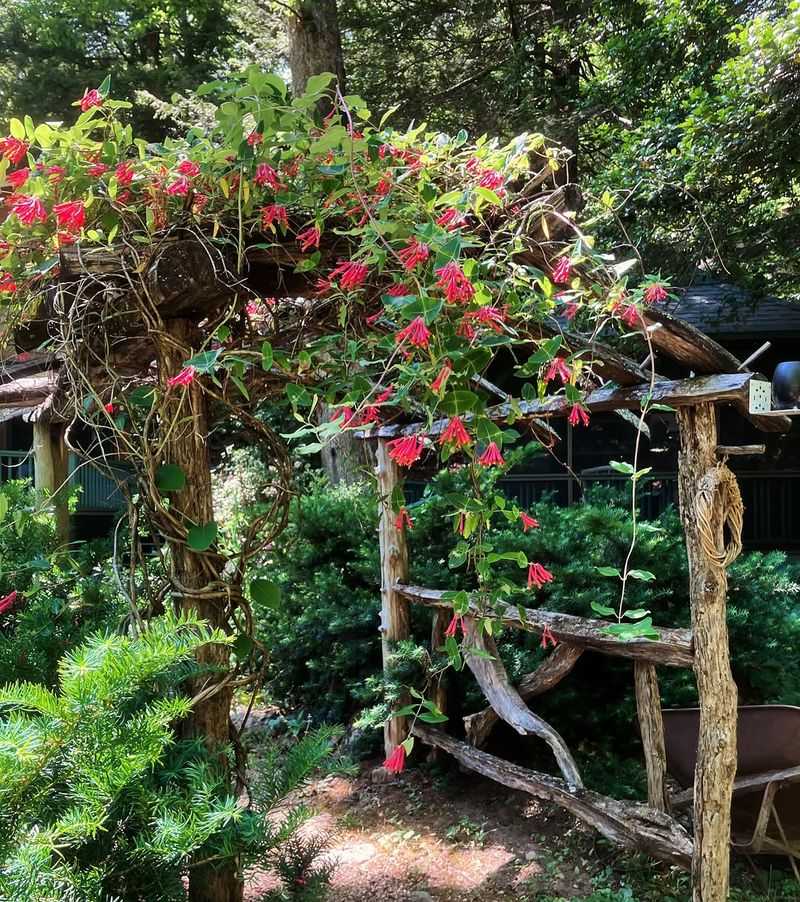
Watch a young coral honeysuckle stem for a few days and you will notice something interesting. It circles slowly, searching for something to grip.
Once it finds a support, it wraps around it tightly and keeps climbing upward.
Twining is a clean climbing method. No sticky residue, no aerial roots digging into painted wood or brick.
When you eventually want to remove the vine or redirect it, the process is straightforward compared to clinging vines that bond to surfaces permanently.
Chain-link fences work especially well because the vine weaves right through the openings. Wood fences with horizontal rails give the stems plenty of places to wrap.
Trellises with narrow slats or wire grids are also excellent choices.
Arbors over garden gates look stunning when covered with coral honeysuckle. The vine drapes naturally over curved structures and fills in over two to three seasons.
Guests walking under a blooming arbor in late spring notice immediately.
For the first season, giving young plants a little guidance helps. Gently wrap new stems around the support structure in the direction they are already growing.
Avoid forcing them the opposite way since stems can snap when young.
Once the vine establishes a grip, it handles the climbing on its own. Minimal intervention needed after year one.
4. Full Sun Encourages Heavier Blooming And Stronger Growth
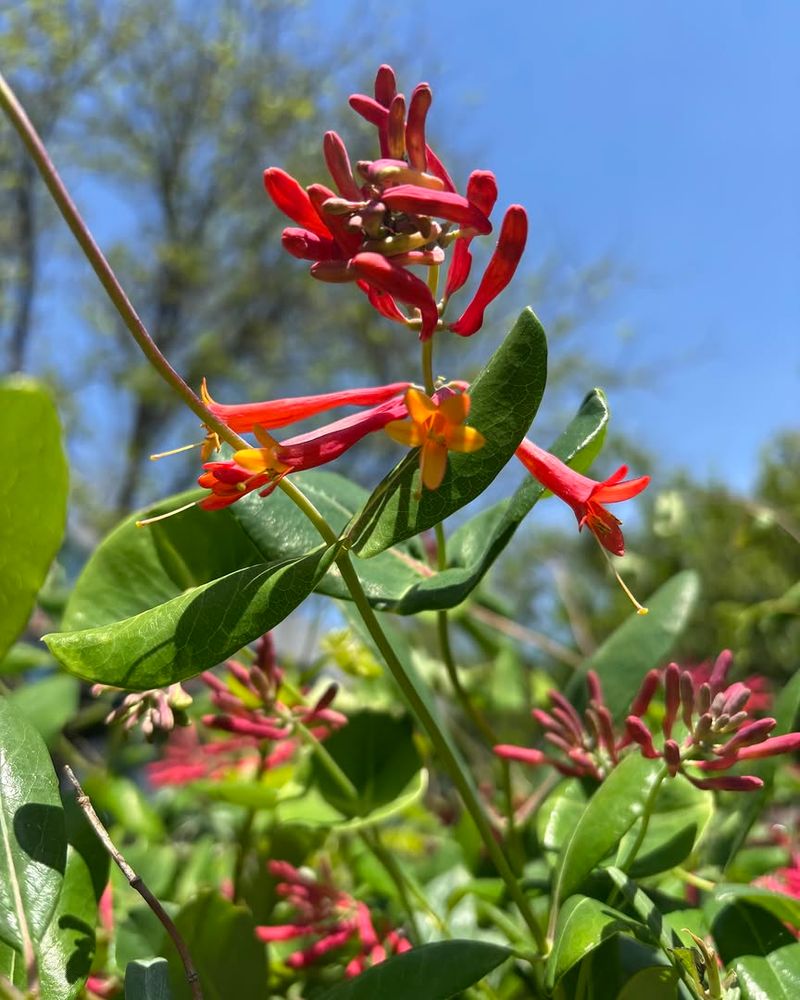
Sun is the single biggest factor separating a blooming coral honeysuckle from a leafy one that barely flowers. Six hours of direct sun per day is the baseline.
More is better.
Plants grown in full sun develop thicker stems, denser foliage, and far more flower clusters than those in partial shade. The difference between a sun-grown plant and a shaded one can be dramatic even when everything else remains the same.
Afternoon sun in summer is intense in the Southeast, but coral honeysuckle handles it well once established. Young plants benefit from consistent watering during their first summer to help them handle heat stress.
After that first season, they adapt and manage heat much better on their own.
Morning sun with some afternoon shade is an acceptable compromise when full sun is not available. Expect flower production to drop by roughly half compared to a fully sunny location.
The plant will still look healthy and grow reasonably well.
North-facing walls and deeply shaded spots under large trees are not ideal. Growth becomes sparse and leggy.
Flower production drops significantly, and the vine loses much of its appeal in those conditions.
Choosing the right planting spot from the start saves a lot of frustration later. Moving an established vine is possible but disruptive.
5. Light Pruning Maintains Shape Without Reducing Flower Production
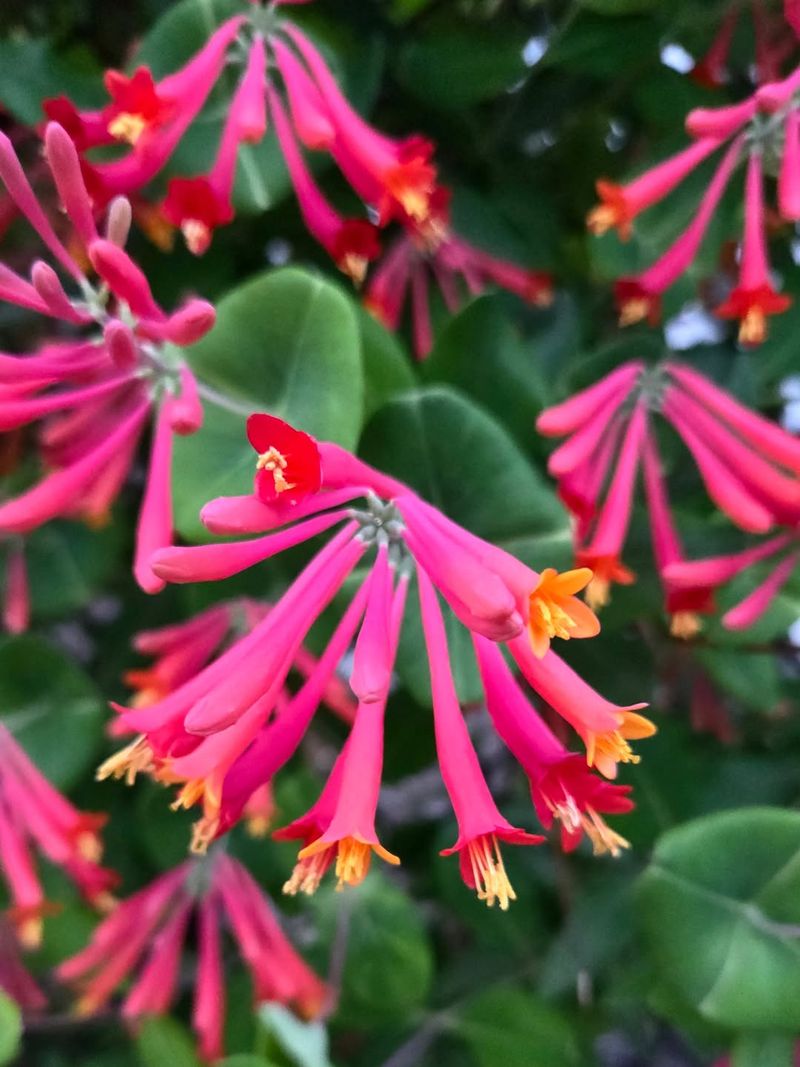
Grab your pruners once a year and coral honeysuckle stays tidy without losing its bloom potential. Heavy cutting is rarely necessary.
Light shaping is almost always enough.
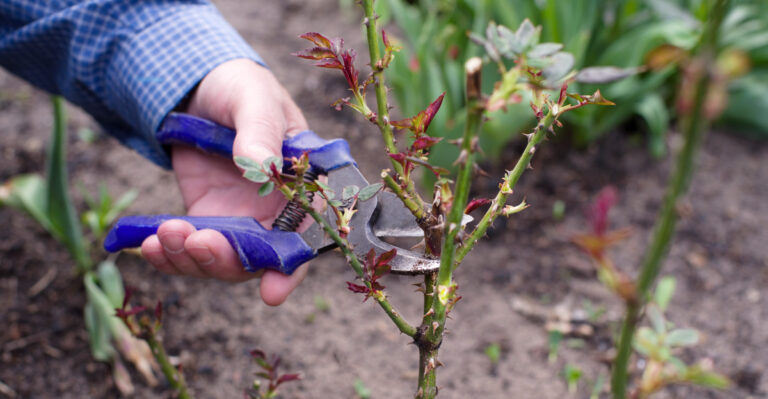
Best pruning time falls right after the main spring bloom finishes. Removing spent flower clusters and trimming back any stems that have grown beyond the space you want them to occupy keeps the plant looking intentional rather than wild.
Avoid cutting back into old woody stems unless you have a specific reason. New flowers form on current-season growth, so aggressive pruning into older wood can reduce blooming noticeably the following year.
Stick to trimming fresh green growth at the tips.
Broken or damaged stems should be removed whenever you spot them, regardless of season. Clean cuts with sharp pruners heal faster and reduce the chance of problems developing later.
Dull blades crush rather than cut cleanly.
If the vine gets away from you over several seasons and becomes a tangled mass, a harder rejuvenation cut in late winter can reset it. Cut the whole plant back to about twelve to eighteen inches from the ground.
New growth emerges quickly in spring and the plant rebounds within a single season.
Light annual maintenance takes maybe fifteen to twenty minutes per plant.
6. Established Plants Tolerate Brief Dry Spells Between Waterings
Newly planted coral honeysuckle needs consistent moisture during its first summer. Roots are still shallow and the plant has not yet developed the reserves to handle prolonged dry stretches.
Water regularly that first season.
Year two changes things considerably. Roots reach deeper into the soil and the plant builds real drought tolerance.
Brief dry periods between rain events stop being a concern. The vine holds up without irrigation during typical summer dry spells.
Extended drought is a different situation. Several weeks without rainfall during peak summer heat can stress even established plants.
Leaves may curl slightly or drop prematurely. Watering during those extreme stretches helps the plant recover faster and keeps flower production going.
Mulching around the base of the plant makes a noticeable difference in moisture retention. A two to three inch layer of wood chip mulch keeps the root zone cooler and reduces how quickly soil dries out between rain events.
Keep mulch pulled slightly away from the stem itself.
Watering deeply and less frequently encourages roots to grow downward rather than staying near the surface. Shallow watering produces shallow roots, which means less drought tolerance over time.
Slow, deep watering once or twice a week during dry periods works better than light daily sprinkles.
Georgia summers test every plant in the garden.
7. Native Growth Provides Food And Shelter For Local Wildlife
A single coral honeysuckle vine does more ecological work than most people realize. It feeds hummingbirds, shelters nesting birds, and produces berries that migrating songbirds depend on during fall journeys.
Native plants and native wildlife evolved together over thousands of years. Insects that feed on coral honeysuckle are specialized to handle its chemistry.
Exotic vines often lack those relationships entirely, offering little actual food value to local insect populations.
Small birds use dense vine growth as protective cover. Sparrows, wrens, and warblers tuck into leafy tangles along fences to hide from predators and escape harsh weather.
A vine-covered fence becomes functional habitat rather than just a boundary line.
Caterpillars of certain sphinx moths feed on coral honeysuckle foliage. Those caterpillars become food for nesting birds feeding their young.
Planting one vine sets off a whole chain of ecological connections that ripple through your yard quietly.
Pollinators benefit too. Native bees visit the flowers even if they cannot reach all the nectar.
Pollen collection still happens, supporting bee populations that gardens across the Southeast rely on for fruit and vegetable production.
Choosing native plants over exotic alternatives is one of the most practical decisions a home gardener can make. Results show up fast.
More birds, more insects, more activity in the yard.