Do These Things Before July If You Want Your Texas Clematis To Explode With Blooms
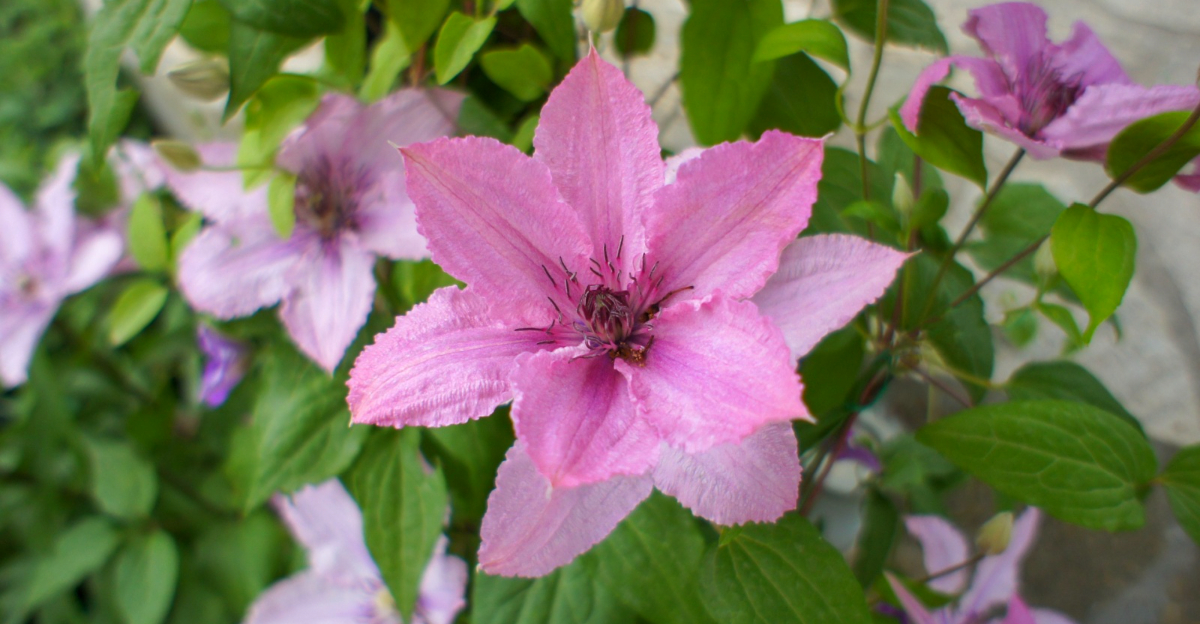
Clematis is one of those vines that makes Texas gardeners feel like absolute geniuses when it works and completely stumped when it doesn’t.
The potential is genuinely exciting: cascading blooms, stunning color, a vine that turns a plain fence or trellis into something worth stopping to look at.
But Texas heat has other ideas, and as June winds down and July starts flexing, conditions can get tough for even the most determined flowering plant.
Here’s the good news: clematis can absolutely hold its own in a Texas garden with the right setup.
Sun exposure, cool roots, smart watering during dry stretches, and pruning at the right time for your specific variety are the pieces that actually move the needle.
Get those right and your clematis has a real shot at putting on a show worth bragging about.
1. Give The Vine At Least Six Hours Of Sun
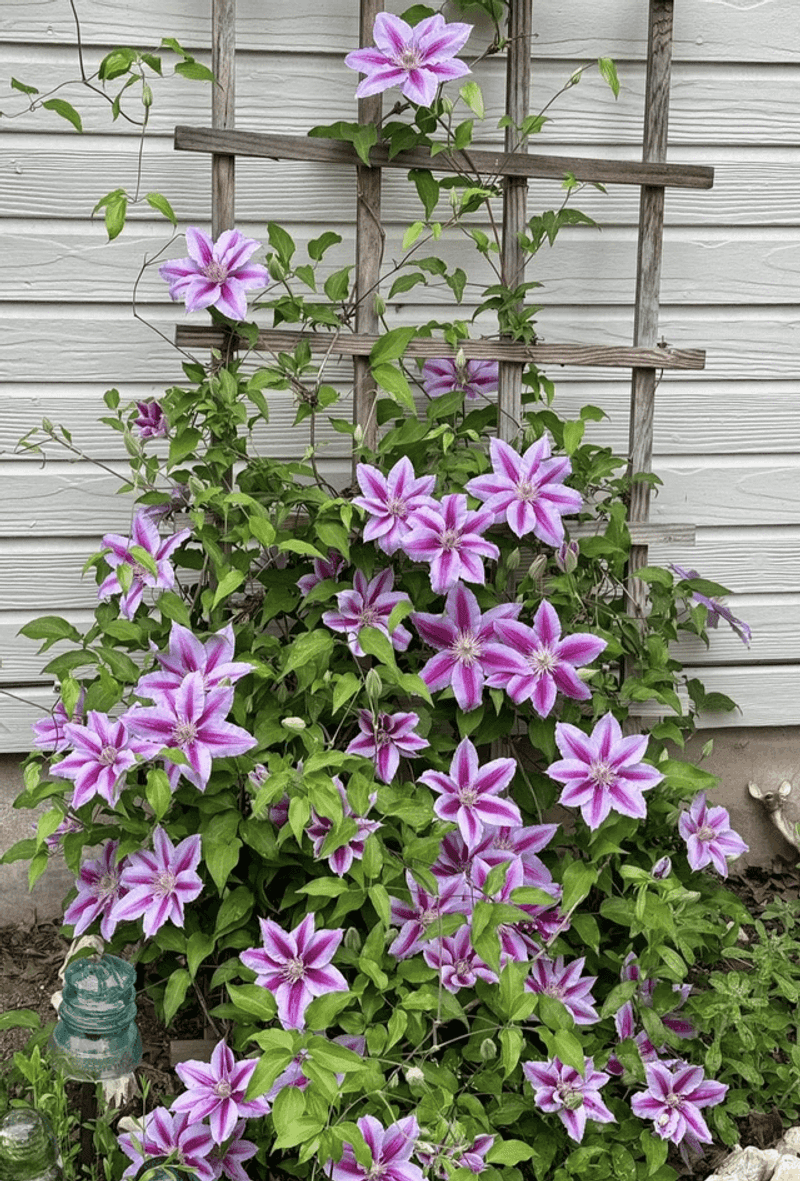
Sunny trellises draped with clematis blooms are one of the most satisfying sights in a Texas garden, but getting there requires the right light conditions from the start.
Clematis generally needs at least six hours of direct sunlight each day to produce strong, healthy blooms.
Without enough light, the vine may grow but produce little to no flowers before July rolls in.
In Texas, morning sun is often gentler and easier on the vine than the harsh afternoon rays that can scorch leaves and stress stems. A spot that catches eastern or southeastern sun tends to work well for many clematis varieties.
If your vine is planted against a west-facing fence with no afternoon shade buffer, you may notice the foliage looking tired by midsummer.
Before June ends, take a few minutes to observe how sunlight moves across your planting area throughout the day. Count the hours of direct light the vine actually receives rather than guessing.
If the spot is getting fewer than five hours, consider whether you can remove nearby overgrowth or reposition a container-grown vine to a sunnier area while conditions still allow for adjustment before peak summer heat arrives.
2. Keep The Roots Cool And Shaded
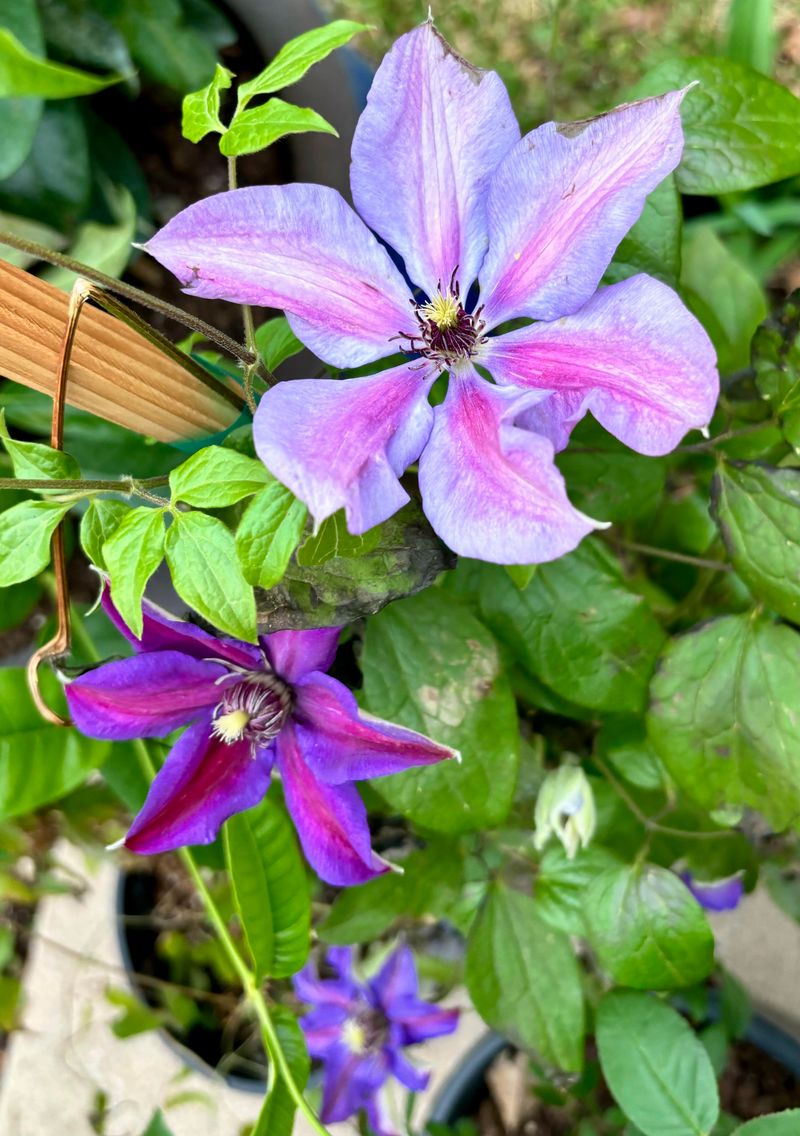
One of the most well-known principles in clematis care is keeping the vine’s roots cool while letting the top growth reach for the sun. In Texas, where summer soil temperatures can climb quickly, this balance becomes especially important as June moves toward July.
Shading the root zone does not have to be complicated. Low-growing perennials, ornamental grasses, or even a few flat stones placed around the base of the plant can help keep soil temperatures from spiking during the hottest parts of the day.
The goal is to reduce direct sun on the soil surface around the crown of the plant without blocking airflow or trapping excess moisture.
Some gardeners plant clematis near the base of a fence or wall where the structure itself casts a shadow on the root area during afternoon hours.
Others pair clematis with shallow-rooted companion plants that cover the ground without competing heavily for water.
Your Texas Garden Changes Every Week. Your Plan Should Too.
Gardening in Texas changes quickly throughout the season. Every Friday you’ll receive a simple weekly plan showing exactly what to plant, prune, fertilize, harvest, and protect so you never miss the right timing.
Before July arrives, check whether the soil around your clematis base feels noticeably warm or dry to the touch.
If it does, adding shade coverage now can help the vine stay more stable as temperatures continue to climb across Texas through the summer months.
3. Water Deeply During Dry Texas Stretches
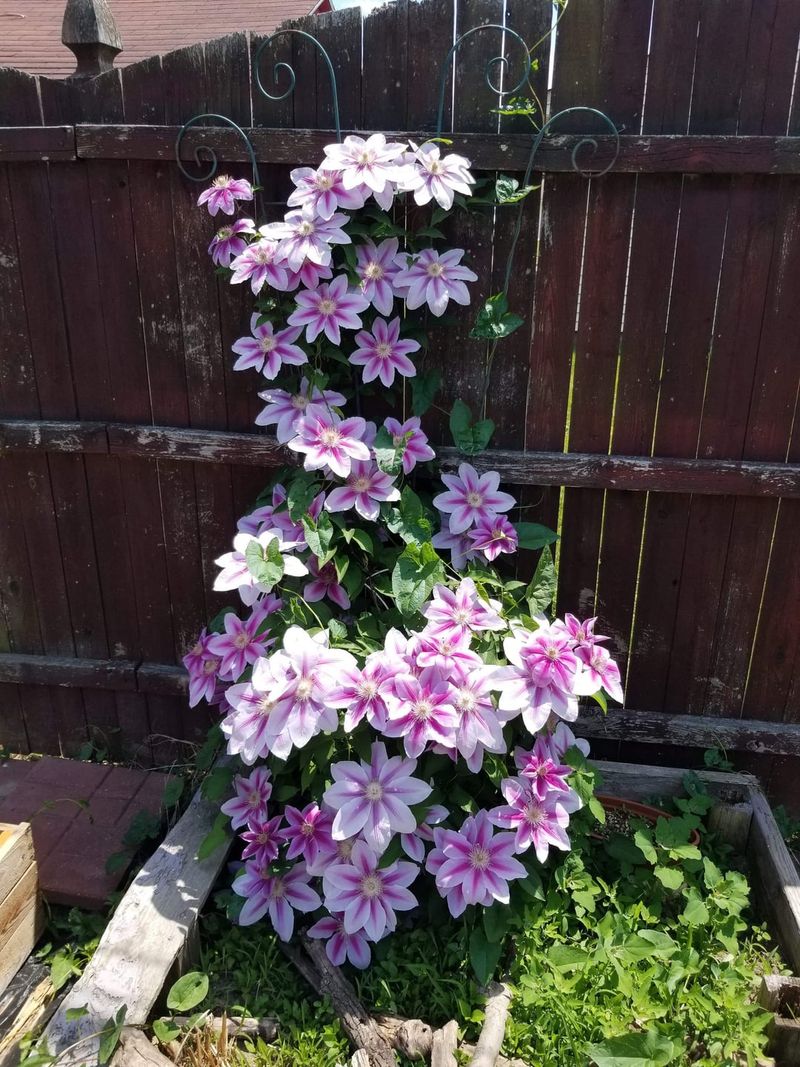
Dry June soil is something most gardeners know well, and clematis is not a vine that handles extended drought without some stress. Deep, infrequent watering tends to serve clematis better than light, daily sprinkles that only wet the top inch or two of soil.
When you water deeply, moisture reaches further down into the root zone where the plant can access it even as the surface dries out between sessions.
In Texas, a good deep watering once or twice a week during dry stretches is often more useful than watering every day with a quick pass from a hose.
The exact frequency will depend on your soil type, drainage, and how much rain your area has received.
Sandy soils drain fast and may need more frequent attention, while clay-heavy soils hold moisture longer but can also become waterlogged if overwatered.
Before July, check the soil around your clematis by pressing a finger two to three inches into the ground.
If it feels dry at that depth, it is time to water. Consistent moisture during active growth periods in late spring and early summer can make a real difference in how well your Texas clematis sets flower buds before peak heat arrives.
4. Add Mulch Without Covering The Stems
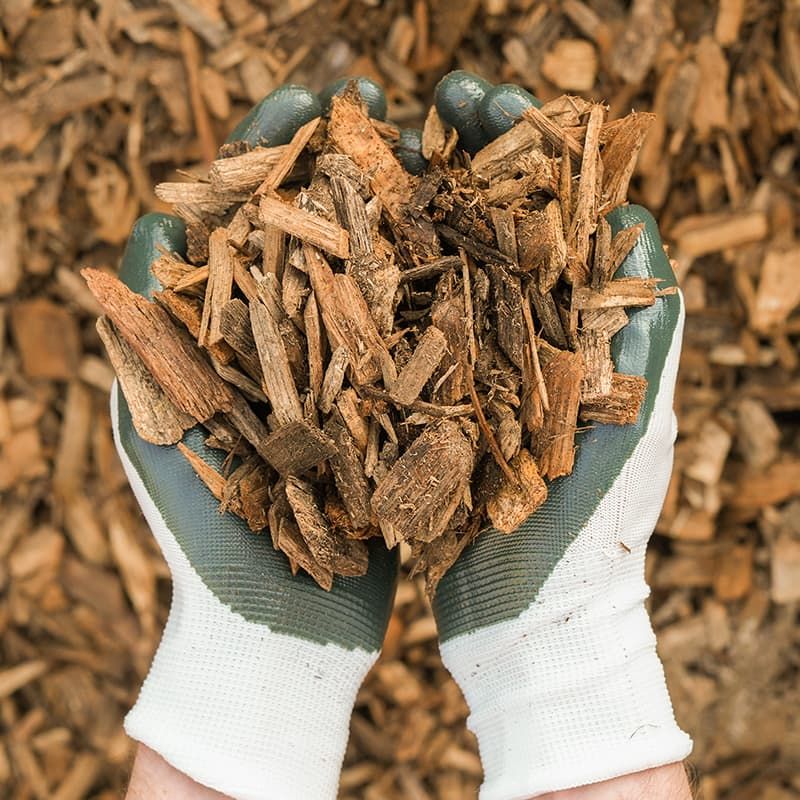
Mulch is one of the most practical tools a gardener has when it comes to protecting plants from summer heat and moisture loss.
Laying a two-to-three-inch layer of organic mulch around the base of your clematis can help regulate soil temperature and slow evaporation during dry stretches between waterings.
The key detail that trips up many gardeners is placement. Mulch should be spread around the plant, not piled directly against the stem.
When mulch contacts the stem at the base of the vine, it can hold excess moisture against the crown and create conditions that invite rot or fungal issues. Keeping a small gap of a few inches between the mulch ring and the actual stem helps avoid this problem.
Wood chips, shredded bark, and pine straw are all commonly used options in Texas gardens.
Each breaks down at a different rate and offers slightly different benefits, but any of them can help your clematis root zone stay cooler and more stable as temperatures rise.
Before July arrives, check whether your existing mulch layer has thinned out from decomposition or washed away from rain. Refreshing it now gives your vine better protection heading into the hottest weeks of the Texas growing season.
5. Feed In June If The Vine Is Actively Growing
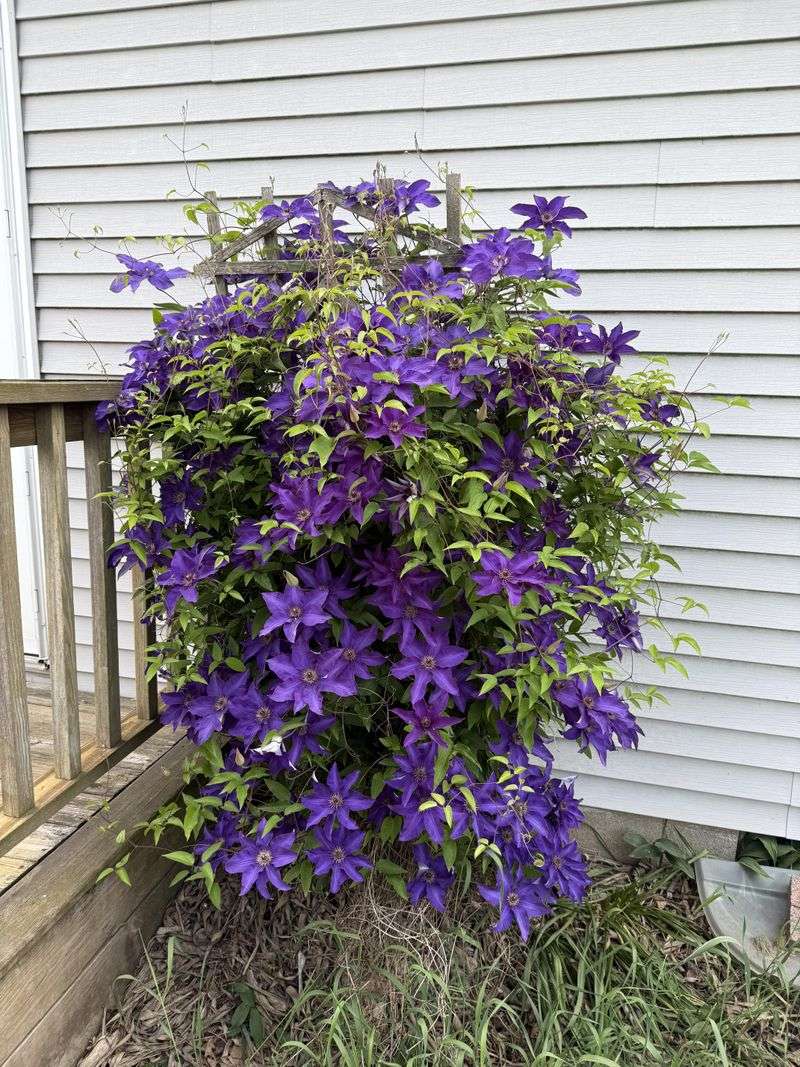
Active growth is the signal that feeding makes sense. If your clematis is pushing out new stems and leaves in June, a balanced fertilizer can help support continued development and flower bud formation before July heat settles in for good.
A fertilizer with a moderate phosphorus content is often recommended for flowering vines because phosphorus plays a role in root development and bloom production. Too much nitrogen, on the other hand, can push lush leafy growth at the expense of flowers.
Reading the label and following recommended rates matters more than applying extra product in hopes of faster results.
Granular slow-release fertilizers are a popular choice for gardeners because they provide nutrients steadily over several weeks rather than all at once. Liquid fertilizers work more quickly but may need more frequent reapplication.
Whichever type you use, water the plant well before and after feeding to help nutrients reach the roots without risking any stem or root sensitivity.
If your vine looks stressed, pale, or has been struggling through a dry period, hold off on feeding until it has recovered with consistent watering.
Feeding a stressed vine is unlikely to help and may add unnecessary pressure during an already challenging stretch of Texas summer weather.
6. Train New Stems Onto A Trellis Or Fence
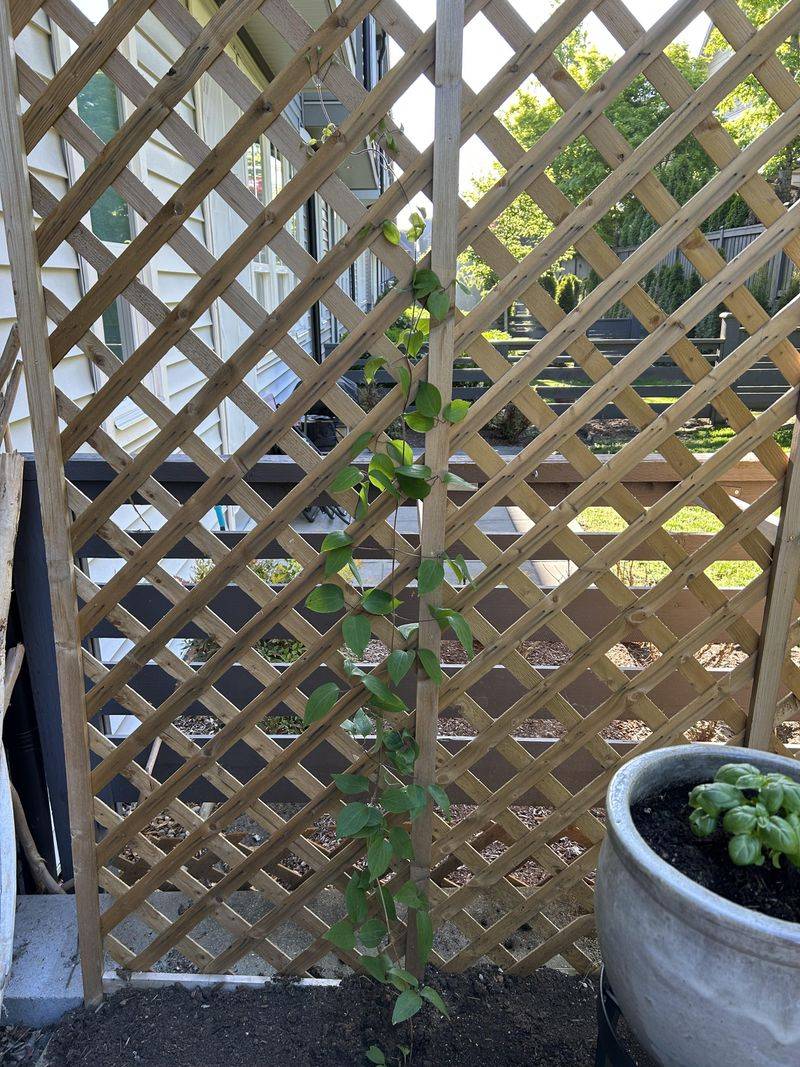
Warm fence lines in Texas can become the perfect backdrop for clematis when new stems are guided carefully onto a support structure before they tangle or snap.
Clematis stems are slender and flexible when young, which makes early training much easier than trying to redirect older, woodier growth later in the season.
The vine attaches itself to supports using leaf petioles, the small stalks that connect leaves to the stem, rather than tendrils or suckers like some other climbing plants use. This means the support structure needs to be narrow enough for the petioles to wrap around.
Thin wire, wooden lattice, netting, or bamboo canes all tend to work better than wide flat boards that the vine cannot grip.
Before July, walk along your trellis or fence and look for new stems that have begun to flop or grow in an unintended direction. Gently redirect them toward open sections of the structure and use soft garden ties or strips of fabric to loosely secure them.
Avoid tying stems too tightly since that can restrict growth and cause damage.
Spreading stems out across the support also helps improve airflow around the foliage, which is beneficial during the humid stretches that gardeners sometimes experience even during hot summer months.
7. Prune According To The Clematis Group
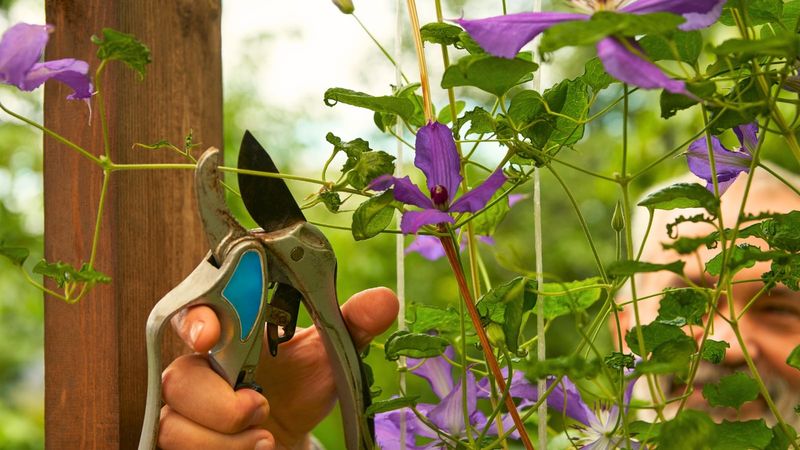
Pruning confusion is one of the most common reasons clematis owners end up disappointed with their bloom season.
Clematis varieties are generally grouped into three pruning categories based on when they bloom and how they produce flowers, and cutting without knowing which group your vine belongs to can set back flowering for an entire season.
Group one clematis bloom on old wood from the previous season and need little to no pruning beyond light tidying after they flower. Group two varieties bloom on both old and new wood and benefit from light pruning in late winter or early spring.
Group three clematis bloom on new growth from the current season and can be cut back more significantly in early spring without losing that year’s flowers.
In Texas, where the growing season shifts quickly and June signals the approach of intense summer heat, knowing your pruning group before July matters.
If you are unsure which group your vine belongs to, check the plant tag, contact the nursery where you purchased it, or look up the variety name through a reliable gardening reference.
Acting on the wrong pruning schedule can remove flower buds that were already forming, leaving you with a healthy-looking vine that produces little reward during what should be a peak bloom period for your Texas garden.
8. Avoid Hard Pruning The Wrong Type
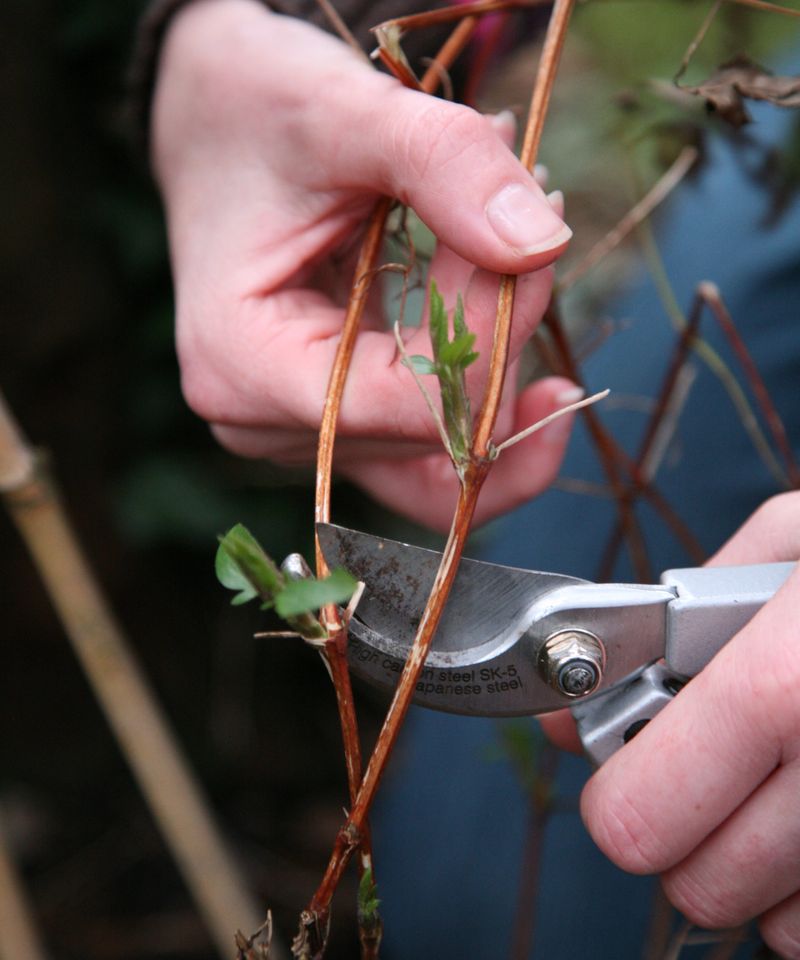
Few gardening mistakes sting quite like cutting back a clematis vine in late spring, only to realize later that you just removed all the buds that were about to open.
Hard pruning the wrong clematis type at the wrong time is a common experience, especially for newer gardeners who assume that cutting back any vine will encourage more blooms.
For group one and many group two clematis varieties, hard pruning in late spring or early summer removes the old wood where flower buds have already been set. Once those buds are gone, the vine will not rebloom on that same wood during the current season.
The plant may push new growth, but flowering may be significantly reduced until the following year when old wood has had a chance to develop again.
Before June ends, resist the urge to cut back a clematis that has not yet bloomed unless you are confident it belongs to group three.
If you inherited a vine from a previous homeowner or received one as a gift without clear variety information, observe it through spring and early summer before making any major pruning decisions.
Taking a cautious approach and waiting to see where and how the plant blooms gives you the information you need to prune correctly and protect next season’s flowers in your Texas landscape.
9. Protect Fragile Stems From Breakage
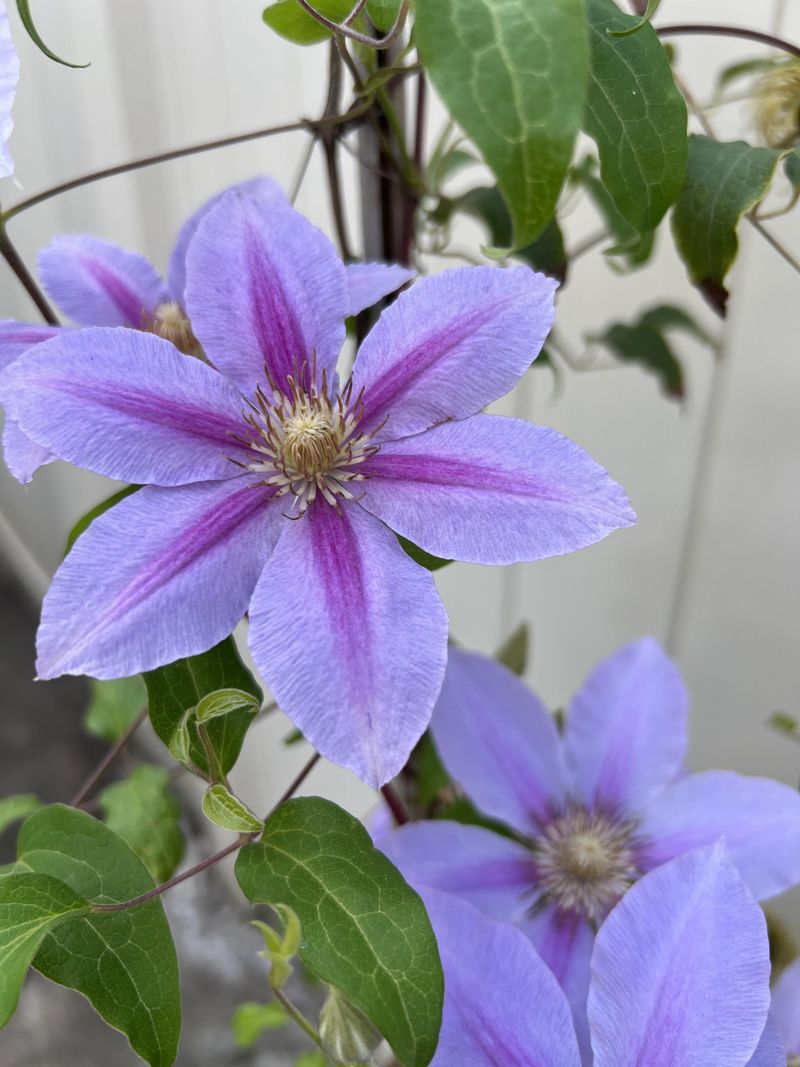
Fragile stems are one of the defining characteristics of clematis, and Texas gardeners who have brushed past a vine or let a garden tool swing too close know exactly how easily those stems can snap.
New growth is especially vulnerable during the active growing period of late spring and early June, when stems are elongating quickly but have not yet developed much structural strength.
Wind is a real concern in many parts of Texas, particularly in open landscapes where gusts can whip through a garden and tangle or break unsupported stems.
Making sure your trellis, fence, or arbor is stable and that new growth is loosely secured before storms or strong winds move through can prevent a lot of accidental damage during the weeks leading up to July.
When working around clematis, move deliberately and give the stems a wide berth. If you are weeding, staking nearby plants, or adjusting mulch near the base of the vine, slow down and stay aware of where the stems are growing.
A snapped stem at the base can set back the entire vine significantly.
Carrying a few soft garden ties in your pocket while working in the garden makes it easy to secure any stems you notice flopping or at risk before the damage has a chance to happen.
10. Keep Bloom Expectations Realistic In Texas Heat
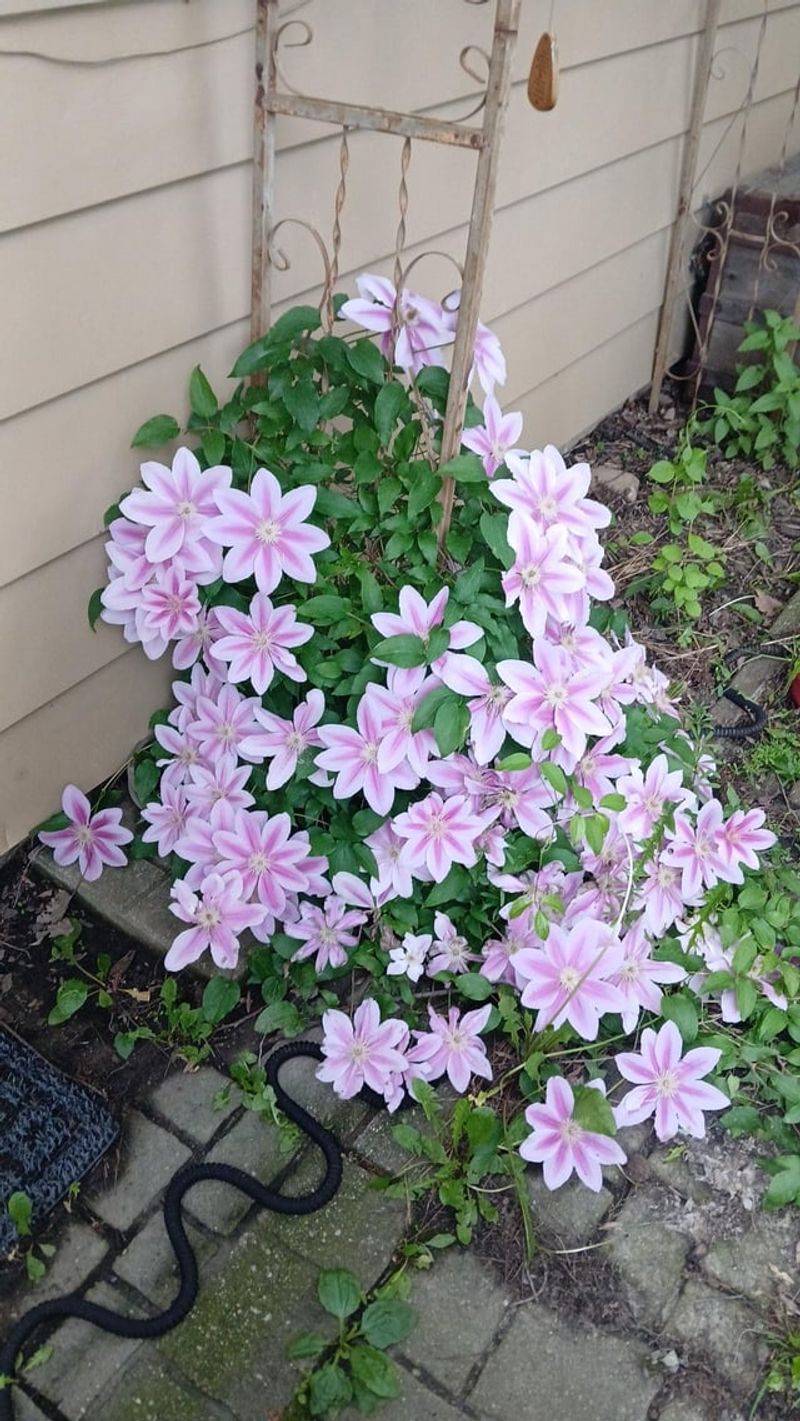
Common experiences people have when growing clematis in Texas often include a mix of excitement and surprise.
The vine looks promising in spring, blooms begin to open, and then July arrives with full-force heat that can cause some varieties to pause, pull back, or produce fewer flowers than expected.
Understanding this pattern ahead of time helps gardeners feel prepared rather than discouraged.
Not every clematis variety is equally suited to Texas conditions. Some perform beautifully in the Hill Country or in shaded cottage garden settings, while others struggle in the intense sun and dry heat of central or west Texas.
Variety selection matters, and even the best-matched plant may rest during peak summer heat before potentially reblooming in fall when temperatures ease.
Heading into July with realistic expectations means appreciating the blooms you do get, noting what your vine seems to enjoy or resist, and using that information to make better decisions next season.
Adjusting watering habits, improving root shade, or trying a different variety in a new spot are all reasonable responses to a season that did not go as hoped.
Texas gardening rarely follows a neat script, and clematis is no exception. Patience, observation, and a willingness to adapt tend to serve gardeners far better than chasing a guarantee that no plant can actually deliver.