The Most Underrated Ohio Patio Plant That Deters Both Ticks And Mosquitoes
Most Ohio patio plants pull one job. They look good, or they smell nice, or they attract pollinators.
The plant most people overlook completely manages to do several things at once. Two of them involve pests that make outdoor living in Ohio genuinely unpleasant from June straight through September.
Ticks and mosquitoes respond to certain plant compounds in ways that work in a gardener’s favor. Not every claim about pest-deterring plants holds up to scrutiny, but this one has real science and real gardener experience behind it.
It is not exotic or hard to find. Most Ohio gardeners have walked past it at the nursery without a second look, drawn instead to something flashier and far less useful.
It thrives in a container, asks for very little, and smells remarkable on a warm evening. Your patio is missing something.
Once you know what it is, the oversight is hard to overlook.
1. Potted Lemon Balm Is The Patio Ally Worth Trying
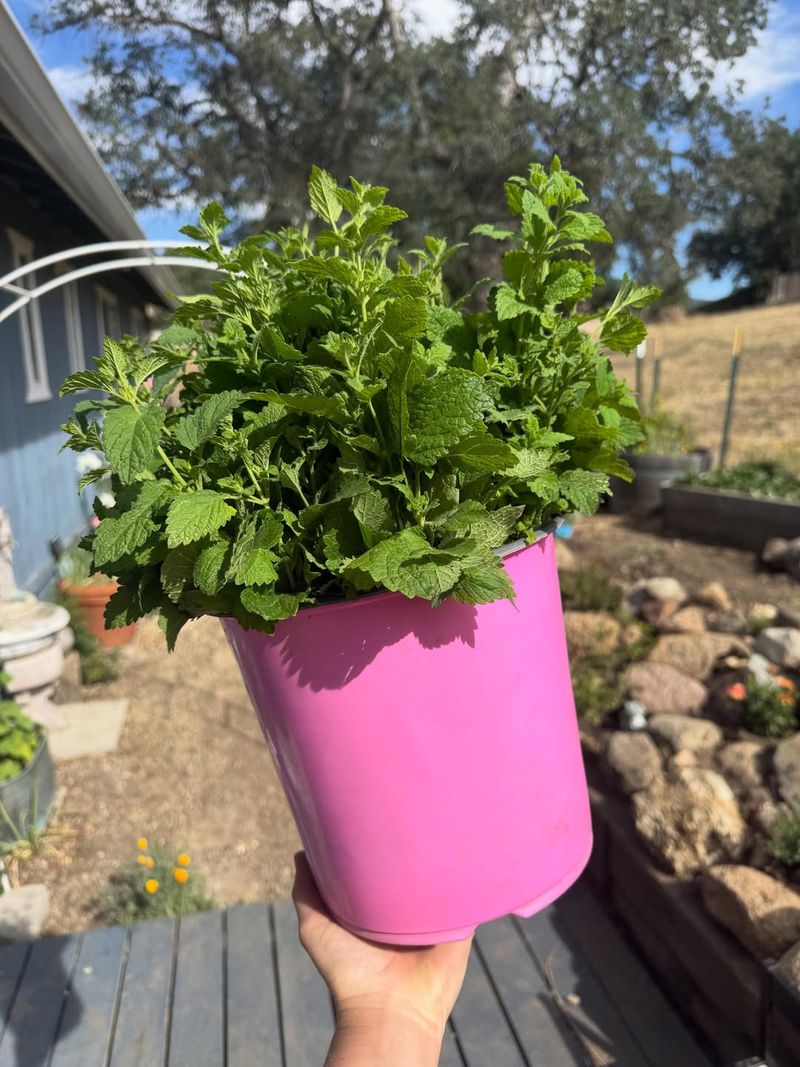
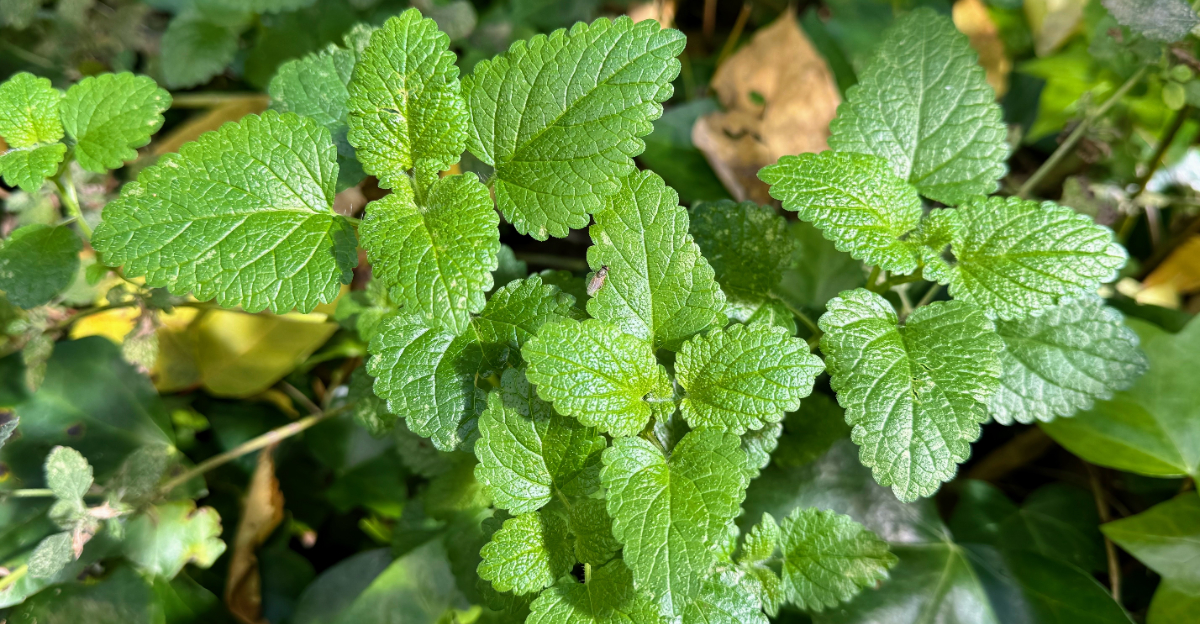
A single herb pot can earn its place when it smells good, stays close to the chairs, and does not take over the beds. Lemon balm is exactly that kind of plant.
It grows into a full, leafy mound, stays tidy in a container, and gives off a fresh citrus scent whenever someone brushes past it.
Melissa officinalis is a nonnative herb that originally comes from Europe and western Asia. It has naturalized in many parts of North America, including this state.
Growing it in a pot on your patio or deck is the smartest approach for home landscapes. Loose planting in garden beds can lead to aggressive self-seeding over time.
A container keeps the roots in one spot and makes the plant easier to monitor and harvest. You can tuck it near a seating area, a doorway, or a deck corner where foot traffic is highest.
The plant does not need to be large to be useful. Even a modest pot with healthy foliage adds fragrance and function to a summer patio setup without demanding much in return.
2. Lemon Balm Brings A Strong Citrus Scent To Summer Seating Areas
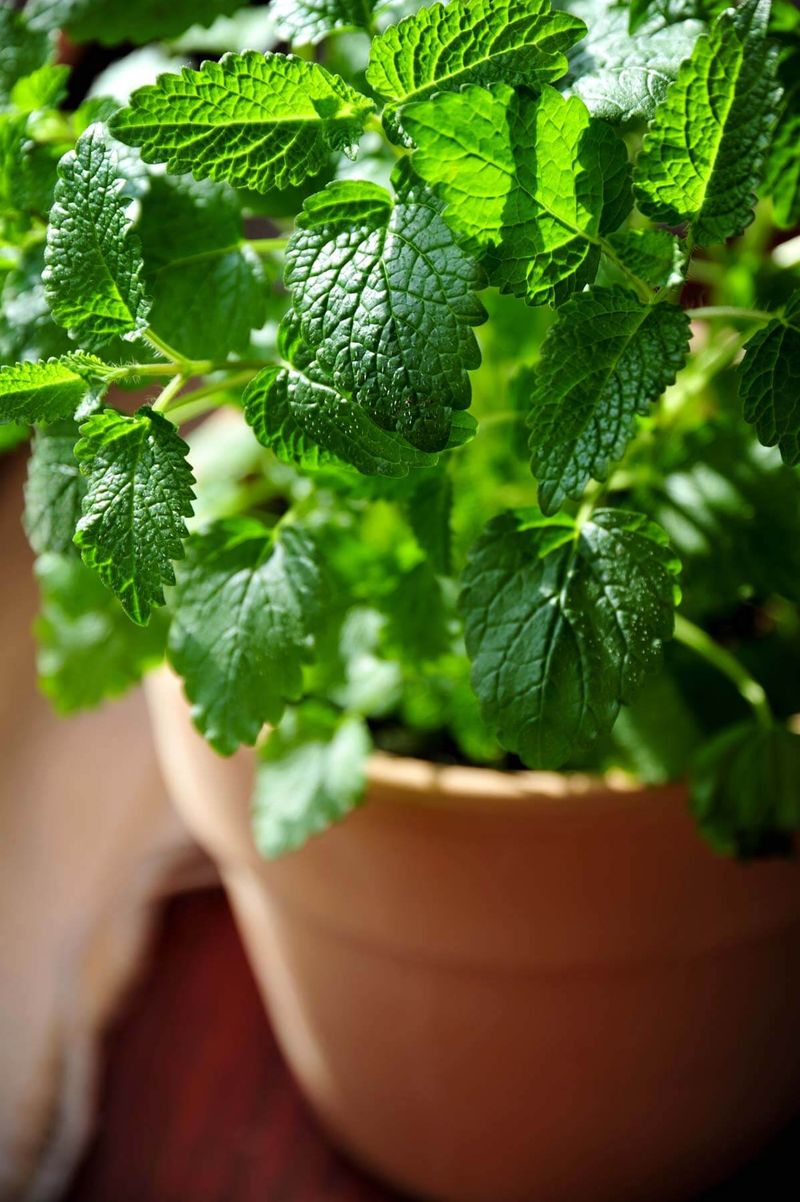
Brushing a lemon balm leaf between your fingers is one of those small summer moments that actually makes you stop and notice. The scent is fresh, citrusy, and clean.
It is not overpowering, but it is distinct enough to make any patio corner smell noticeably better on a warm afternoon.
The fragrance comes from compounds in the leaves, including citronellal, which is also found in citronella grass.
According to research reviewed by university extension sources, lemon balm contains volatile oils that have shown some mosquito-deterring activity in lab settings.
That does not mean one pot clears your yard of bugs. The effect is localized and mild in real outdoor conditions.
Still, a fragrant herb sitting near your chairs is more useful than an empty corner. Trimming or lightly crushing a few leaves before you sit outside can release more of that citrus scent into the air around you.
Your Ohio Garden Changes Every Week. Your Plan Should Too.
Gardening in Ohio changes quickly throughout the season. Every Friday you’ll receive a simple weekly plan showing exactly what to plant, prune, fertilize, harvest, and protect so you never miss the right timing.
Keeping the plant pruned and healthy also encourages fresh leaf growth, which is where the strongest fragrance tends to concentrate. Think of the scent as a small perk, not a pest solution on its own.
3. A Container Keeps Lemon Balm From Seeding Through The Garden
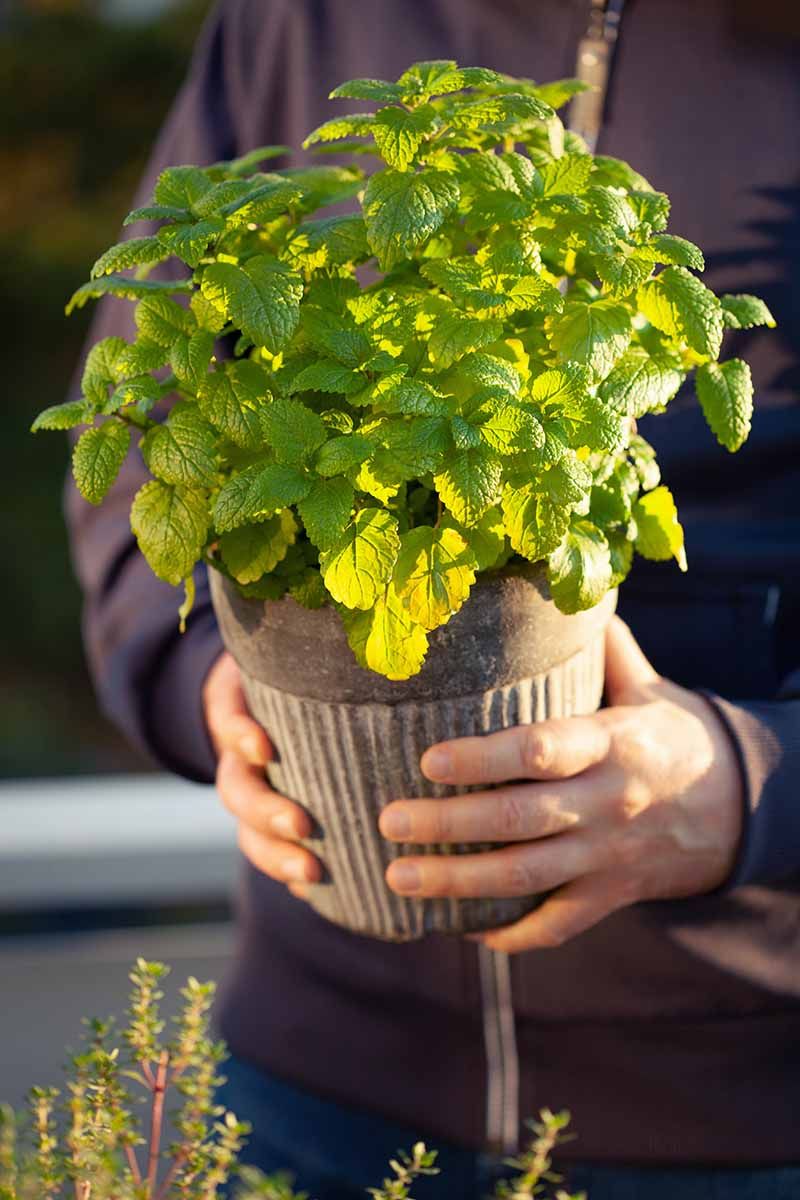
Seedlings showing up where you did not plant anything are one of those garden surprises nobody enjoys. Lemon balm can cause exactly that problem when it is grown loosely in a bed and allowed to flower freely.
It belongs to the mint family, and like many of its relatives, it has a talent for spreading when conditions are right.
The plant spreads mainly by seed rather than by underground runners the way common mint does. Once the small white flowers mature and drop seed, you may find new plants popping up in nearby beds, gravel paths, or lawn edges the following season.
Ohio State University Extension and other university sources note that lemon balm can become weedy if not managed.
Growing it in a container is the most reliable way to keep that spread in check. A pot sitting on a patio, deck, or concrete surface gives the seeds nowhere to land and germinate easily.
Pair container growing with regular flower removal and you reduce the seeding risk significantly. Keep the pot away from bare soil edges where dropped seeds could still find a foothold.
A little attention early in the season prevents a much bigger management headache later.
4. Snipping Flowers Early Helps Keep This Herb In Bounds
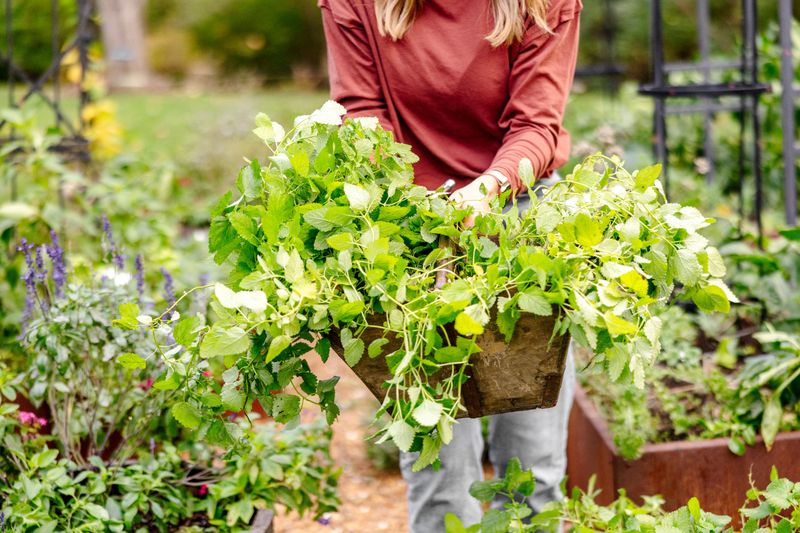
The moment lemon balm starts sending up flower stalks, it is signaling a shift in priorities. The plant wants to set seed and move on.
Your job as the patio gardener is to redirect that energy back into the leaves, which are the most useful part of the plant for fragrance and harvest.
Cutting flower buds off before they fully open is called trimming or pinching back. It is a simple task that takes only a few minutes during a regular patio check.
Removing the flowers does two things at once. It slows down seed production, which reduces the chance of unwanted seedlings.
It also encourages the plant to push out fresh leafy growth instead of putting energy into reproduction.
Regular harvesting works the same way. Snipping stems back by about a third keeps the plant bushy and dense rather than leggy and thin.
A fuller plant has more leaf surface area, which means more of that citrus fragrance when you brush past it. This is not a guarantee that every seed will be stopped.
Some will still drop before you get to them. But consistent pruning throughout the growing season makes lemon balm much easier to manage in a container setting.
5. Sunny Patio Placement Makes The Plant Stronger And More Useful
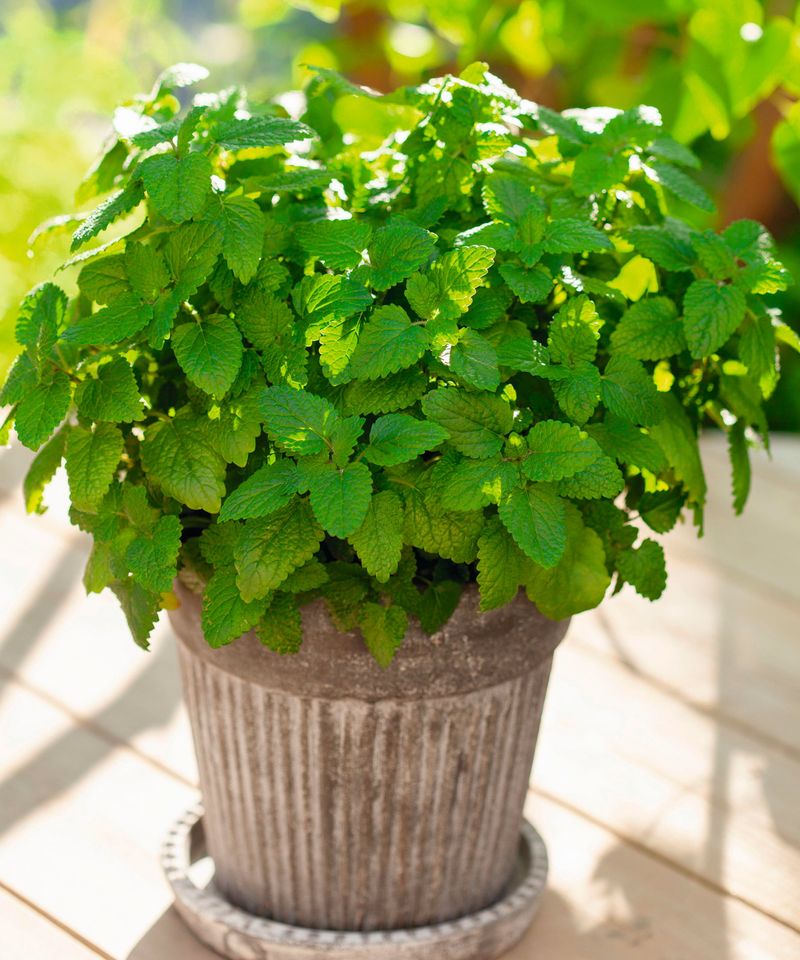
Placement matters more than most container gardeners realize. A pot tucked in a dim corner might survive, but a pot sitting in a spot with good light and air movement will produce a noticeably healthier plant.
Lemon balm grows best in full sun to partial shade, which makes most patios and decks in this state a solid fit for most of the growing season.
According to university extension guidance, lemon balm prefers at least four to six hours of direct sun daily. More sun generally means stronger growth, more aromatic oils in the leaves, and a plant that bounces back faster after harvesting.
In the hottest parts of summer, especially in southern regions of the state, some afternoon shade can keep the leaves from scorching.
Good air circulation around the pot also helps reduce the humidity that can encourage fungal issues on the foliage. Spacing the pot slightly away from walls or fences allows airflow on multiple sides.
Placing it near your main seating area keeps it accessible for quick harvests and lets the fragrance work in the space where you actually spend time. A well-placed pot is simply a more useful pot.
6. Good Drainage Keeps Lemon Balm From Sitting In Damp Soil
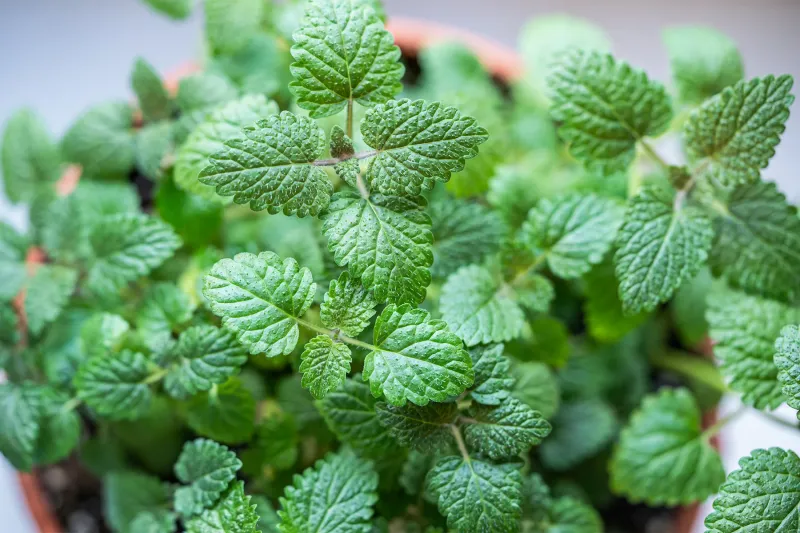
Soggy roots are one of the fastest ways to weaken a container herb. Lemon balm prefers consistently moist soil, but it does not want to sit in water.
A pot with at least one drainage hole at the bottom is not optional. It is the minimum requirement for keeping this plant healthy through a full summer season.
Choose a well-draining potting mix rather than dense garden soil, which can compact in containers and hold too much moisture. A mix designed for containers or herbs will allow water to move through more freely.
Water the plant when the top inch of soil feels dry to the touch, then let it drain fully before the next watering.
There is another reason drainage matters beyond plant health. Standing water in saucers, low spots near pots, or waterlogged containers creates exactly the kind of breeding environment that mosquitoes need.
The CDC and Ohio Department of Health both list removing standing water as one of the most effective steps for reducing mosquito activity around homes.
Empty saucers after rain, tip out any collected water near the pot, and keep the area around your container tidy.
Good drainage habits help the plant and your pest-management routine at the same time.
7. Pair Lemon Balm With Other Patio Herbs For A Stronger Scent Layer
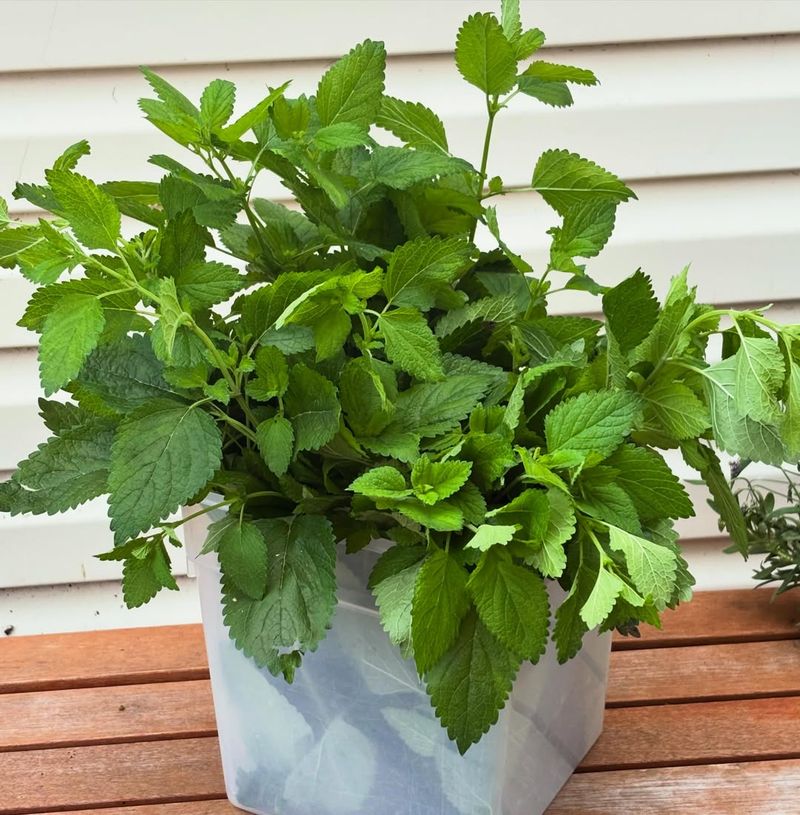
One fragrant pot is a start. A small cluster of aromatic herb containers turns a plain patio corner into a genuinely pleasant outdoor space.
Lemon balm pairs well with several other container herbs that also bring strong scents and practical value to a summer seating area.
Rosemary, thyme, basil, and lavender are all commonly grown in pots and do well in the same sunny conditions that lemon balm enjoys.
Each of these herbs has its own aromatic profile, and grouping them together creates a layered fragrance that makes the seating area smell fresh and interesting.
Research from various university extension programs has noted that several aromatic herbs contain volatile compounds.
Those compounds may have some pest-deterring properties in close proximity, though no single plant creates a reliable barrier on its own.
Mint is another option, but it needs its own separate pot. Like lemon balm, mint spreads aggressively and should never be planted directly in a bed or combined in the same container with other herbs.
Keep each mint variety in its own pot to prevent it from crowding out neighbors. Arranging a few well-chosen herb containers near your chairs creates a functional, fragrant patio setup that feels intentional without requiring a large garden footprint.
8. Mosquito And Tick Control Works Best With More Than One Habit
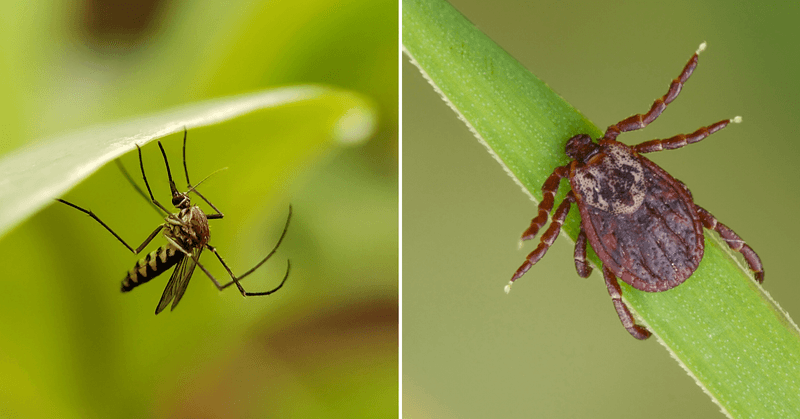
Expecting one herb pot to handle your entire mosquito and tick situation is a bit like expecting one ceiling fan to cool a whole house. The pot can contribute something real to your outdoor comfort.
It just cannot do the whole job alone. A smarter approach layers several habits together.
For mosquitoes, the most effective steps start with removing standing water anywhere on your property. Gutters, plant saucers, low spots in the yard, and unused containers are all common breeding sites.
The CDC recommends emptying, covering, or treating standing water as a primary prevention step. Using fans on a covered patio can also help, since mosquitoes are weak fliers and struggle in moving air.
For ticks, the Ohio Department of Health and ODNR both recommend keeping grass trimmed short near seating areas. They also recommend clearing leaf litter away from patios and play spaces, and checking yourself and pets after time outdoors.
Keeping brushy edges and tall vegetation away from high-use areas reduces tick habitat near your home. When spending time in wooded or grassy areas, use an EPA-registered repellent as directed.
Lemon balm fits into this routine as a fragrant, manageable patio herb. It works best when the rest of your prevention habits are already in place.