Why Ohio Maple Leaves Scorch At The Edges Every August (And When To Actually Worry)
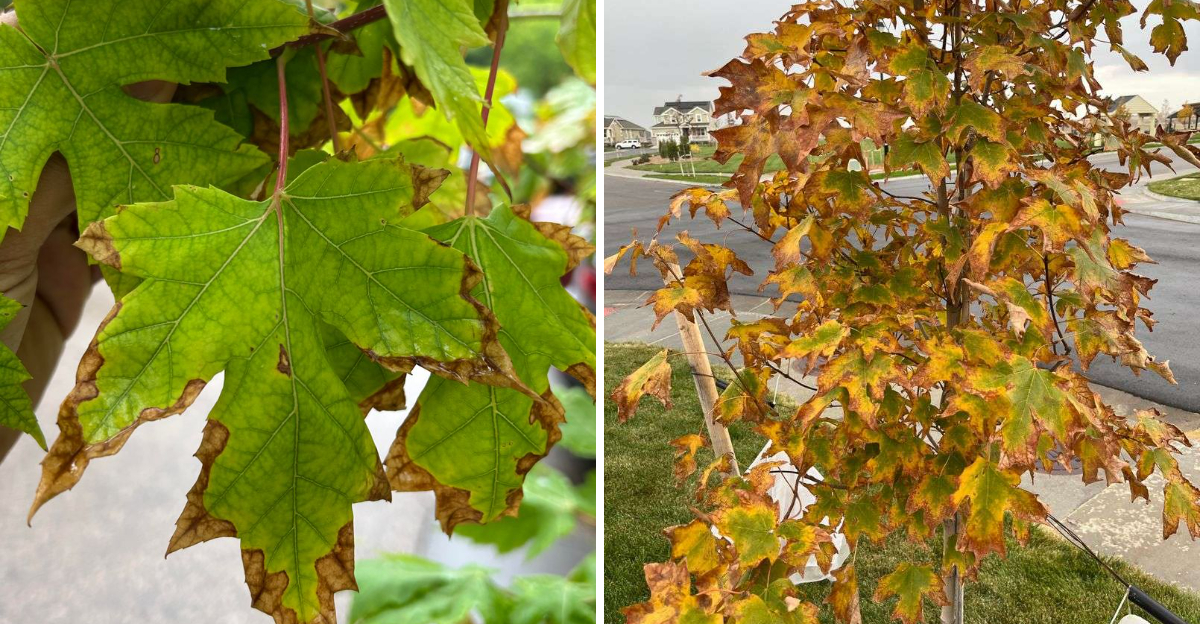
An Ohio maple can look healthy through most of summer, then suddenly develop a brown outline around leaves that were green only days earlier.
The change usually starts at the tips and outer margins. From the lawn, the canopy may still look full, yet a closer view shows crisp tissue creeping inward while the center of each leaf stays normal.
That pattern can seem dramatic enough to suggest disease, insects, or a tree in serious decline.
Sometimes it is. Often, the story is much less alarming.
The challenge is that several different problems can produce leaves that look almost identical from twenty feet away.
August heat can expose weaknesses that have been building underground for months, while one damaged branch can point in a completely different direction from an evenly browned canopy.
So which clues actually matter?
The answer comes from pattern, timing, soil moisture, branch behavior, and the tree’s recent history. Read those together, and the brown edges become far easier to interpret before panic turns into unnecessary treatment.
1. Read Brown Margins As Leaf Scorch
The pattern matters more than the color.
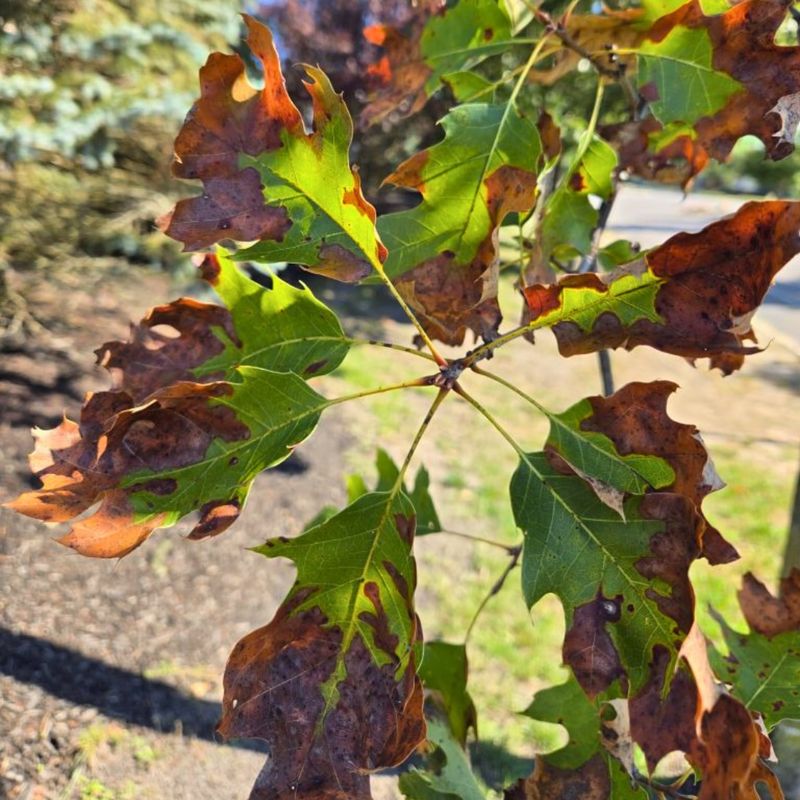
Physiological leaf scorch usually shows up as tan or brown tissue along leaf tips and outer margins, sometimes extending inward between major veins.
The center of the leaf can stay green while the edges turn crisp and papery. Scorch also tends to become more noticeable during the latter half of summer and on foliage exposed to strong sun and wind.
The outermost tissue is especially vulnerable during that imbalance.
Hot weather, dry soil, damaged roots, compacted ground, and other stresses can all reduce the tree’s ability to keep leaves supplied.
The visible scorch is therefore a symptom, not a complete diagnosis. Environmental stress commonly produces browning first at leaf tips and margins.
Look across the whole canopy before doing anything.
An even pattern on many leaves, especially on the sunniest outer portions of the crown, fits environmental stress better than one isolated branch suddenly turning brown.
Small spots, distinct lesions, holes, unusual growths, or sharply localized symptoms point toward a different investigation.
Do not spray a fungicide simply because the leaves look toasted.
Leaf scorch caused by heat or water imbalance is not corrected with disease treatment. The first useful move is reading the pattern, checking the root zone, and finding out what changed around the tree.
Brown edges are the clue. The detective work starts below them.
2. Check Drought Before Blaming Disease
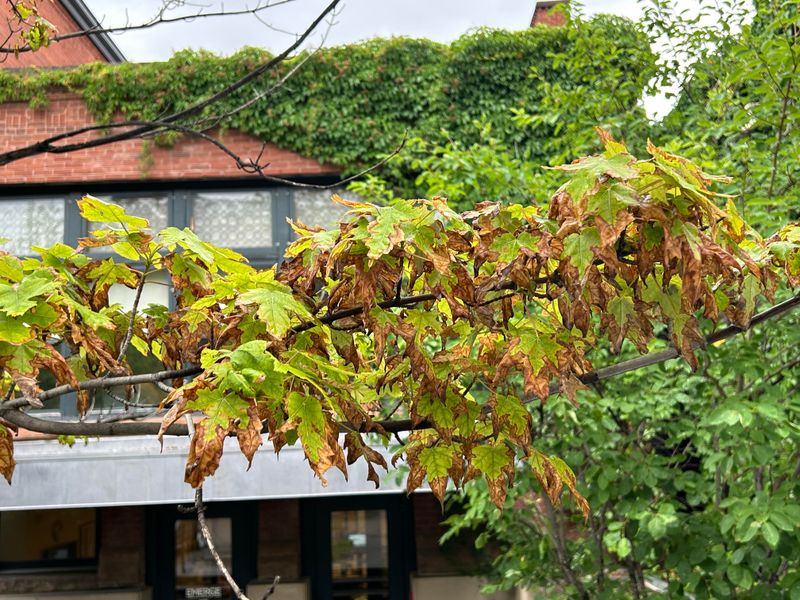
August can expose a moisture shortage that started weeks before the first brown margin appeared.
A mature maple draws water from a broad root system, and summer demand rises as heat, sunlight, and wind pull moisture from the canopy.
Dry conditions can produce uniform browning or wilting across a tree, with margins and branch extremities showing symptoms first. Premature leaf drop can follow under stronger drought stress.
Check moisture rather than assuming the tree needs a fixed weekly amount.
Probe the soil several inches deep beneath the canopy and beyond it. Dry, resistant soil across several locations supports a drought explanation.
Your Ohio Garden Changes Every Week. Your Plan Should Too.
Gardening in Ohio changes quickly throughout the season. Every Friday you’ll receive a simple weekly plan showing exactly what to plant, prune, fertilize, harvest, and protect so you never miss the right timing.
Moist soil changes the diagnosis and makes another round of irrigation less useful. Soil sampling several inches deep is also a practical way to judge moisture around drought-stressed woody plants.
Water slowly across a broad area when the root zone is genuinely dry.
A sprinkler, soaker hose, or slow-moving hose can wet more of the absorbing-root zone than a stream aimed at the trunk. The goal is moisture that penetrates several inches, followed by time for the soil to drain and breathe.
Mulch can make the next dry stretch easier.
Spread a broad layer of wood chips or another coarse organic mulch over the root zone, generally a few inches deep, and keep it away from direct trunk contact. That reduces evaporation and removes some turf competition.
One August scorch event after a dry spell is often a stress response, not a disease signal. The hose helps most after the soil has testified first.
3. Look At Heat And Afternoon Exposure
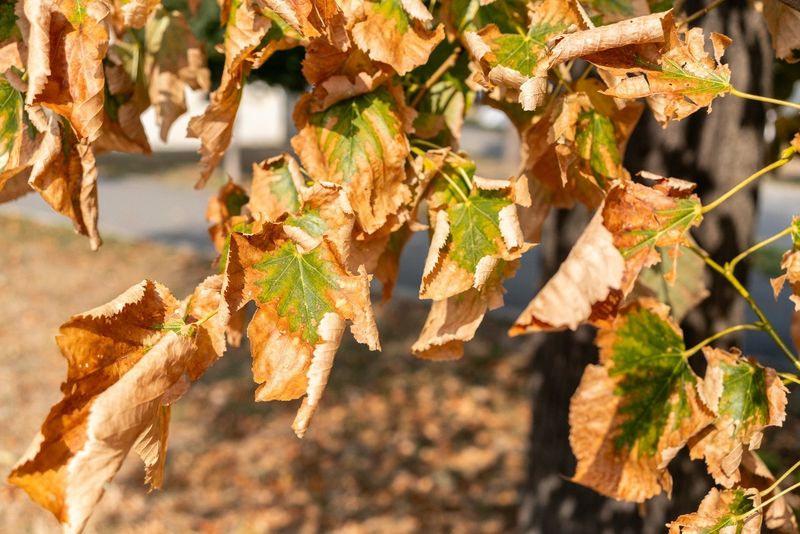
Two maples in the same neighborhood can experience different August afternoons.
A tree beside a west-facing wall, driveway, parking area, or broad sidewalk receives direct sun plus heat stored and released by nearby hard surfaces.
Wind can add another layer of water loss. Leaf scorch commonly appears more strongly on foliage exposed to sun and wind than on protected leaves.
Recent changes around the tree deserve attention too.
Removal of a neighboring tree can suddenly expose leaves and branches that developed under partial shade. Construction can remove surrounding vegetation, change drainage, compact soil, or restrict the rooting environment.
Poor site conditions and root problems are both recognized causes of maple canopy stress.
Compare the damaged sides of the canopy.
Scorch that is strongest on the south or west side, especially beside pavement or masonry, supports a heat-exposure explanation.
Even browning across the entire crown points more toward widespread moisture stress or a root-zone limitation.
Extra water can help during genuinely dry conditions, but flooding the soil does not cancel reflected heat.
Mulch over exposed soil can moderate root-zone temperature and moisture loss. Avoid piling it against the trunk, and keep vehicles or repeated foot traffic away from the rooting area where practical.
The tree cannot move three feet away from the driveway like a patio pot.
That makes site history important. When the hottest side consistently browns first, August may be exposing the microclimate rather than introducing a new disease.
4. Check Soil Moisture Around The Roots
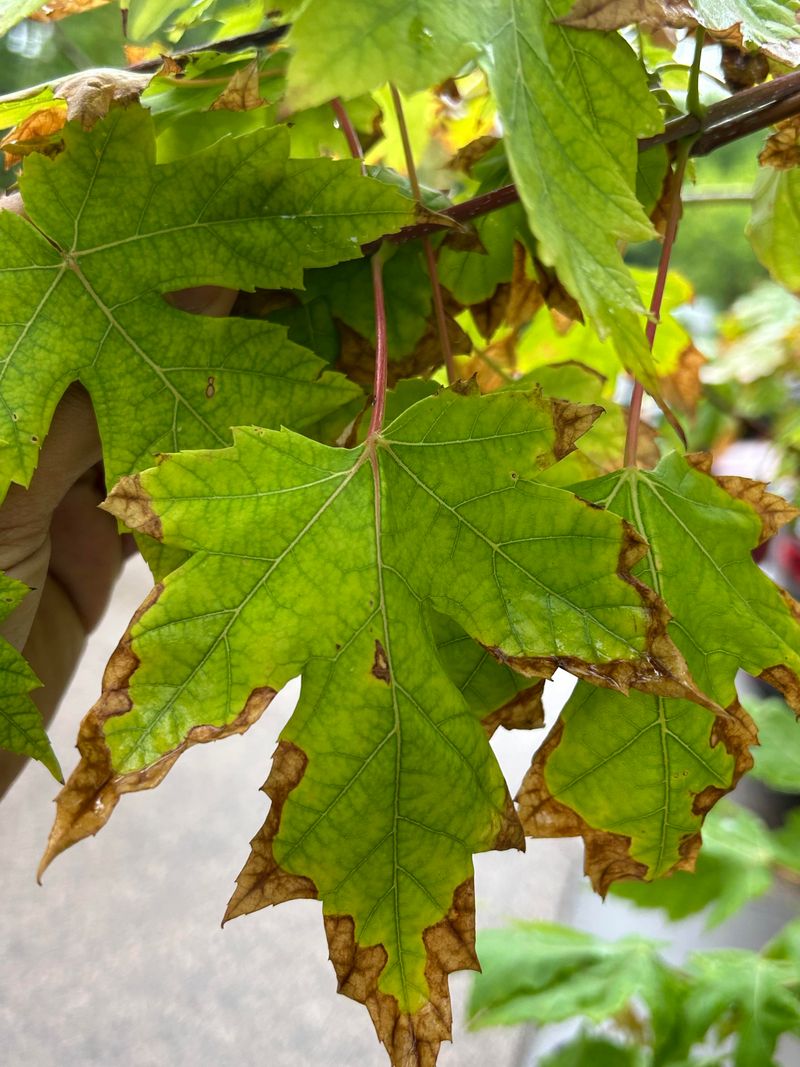
The lawn can look dry while the maple’s root zone still holds water.
That is why probing beats guessing. Push a soil probe, screwdriver, or narrow trowel several inches into the ground beneath and beyond the canopy.
Compare a scorched area with a healthier section of the yard. Sampling soil six to eight inches deep can help distinguish genuinely dry ground from a surface that merely looks dry.
Soil texture changes what that reading means.
Sandy ground loses water quickly and may need checking sooner after irrigation. Clay holds moisture longer but can become poorly aerated after repeated soaking.
Environmental stress from both drought and overly wet soil can produce wilt, marginal browning, and canopy decline because both conditions interfere with normal root function.
Do not concentrate irrigation beside the trunk.
Most water-absorbing roots occupy soil outward from the trunk, so a broad watering pattern serves the tree better than a small puddle at the base.
Newly installed trees need special attention around the original root ball, but established maples depend on a much wider area.
Check drainage after storms too.
A low spot that stays saturated for days tells a different story from a dry, hard slope. Both conditions can interfere with water uptake for opposite reasons.
August makes overwatering and underwatering look annoyingly similar from the street.
The soil settles the argument. Before adding more water, find out what the roots are already sitting in. A five-minute check can save a week of watering the wrong problem.
5. Watch Newly Planted Maples More Closely
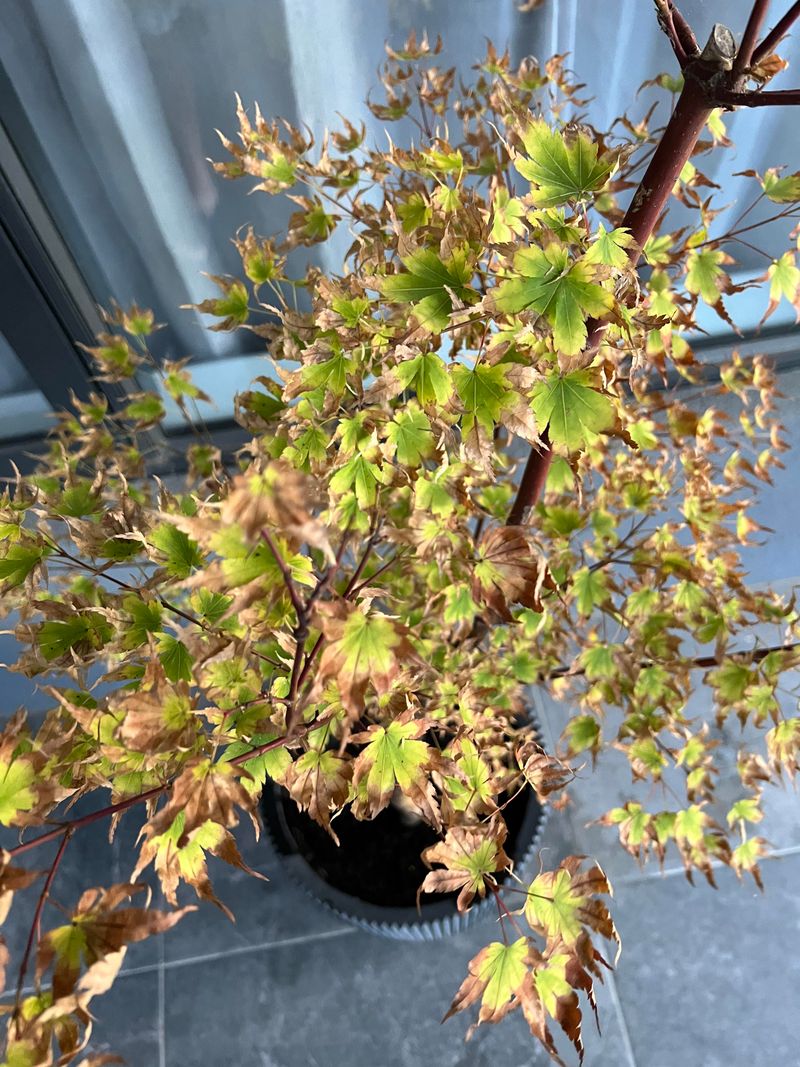
A new maple enters August with far less effective rooting volume than an established tree.
Roots need time to grow beyond the original root ball. Until that happens, the tree can run short of water quickly during hot weather even while nearby established trees remain comfortable.
Recently planted trees and shrubs need closer soil-moisture monitoring during dry, hot conditions because their root systems are still limited.
Check both the root ball and the soil beside it.
They can dry at different rates. A dense nursery root ball may stay dry while water moves through looser surrounding soil, or the reverse can happen after repeated irrigation. Slow watering over the root ball and adjacent soil helps bridge that difference.
Keep mulch broad and shallow.
A few inches of organic mulch reduces evaporation and turf competition, but the trunk flare should stay visible. Mulch piled against bark can also hide a tree that was installed too deeply, another source of long-term root stress.
Skip automatic fertilizer rescue.
A tree struggling to supply its existing leaves with water does not need pressure to produce more top growth during an August hot spell. Stabilize moisture and reduce stress first.
New trees also deserve a planting-depth check.
The trunk should widen naturally where it meets the main roots rather than disappearing straight into soil like a telephone pole.
A missing root flare can accompany stem-girdling roots and water-stress symptoms such as marginal scorch and early leaf fall.
Some first-season scorch can happen despite good care. What matters is keeping roots functional enough to catch up.
6. Worry When Whole Branches Show Symptoms
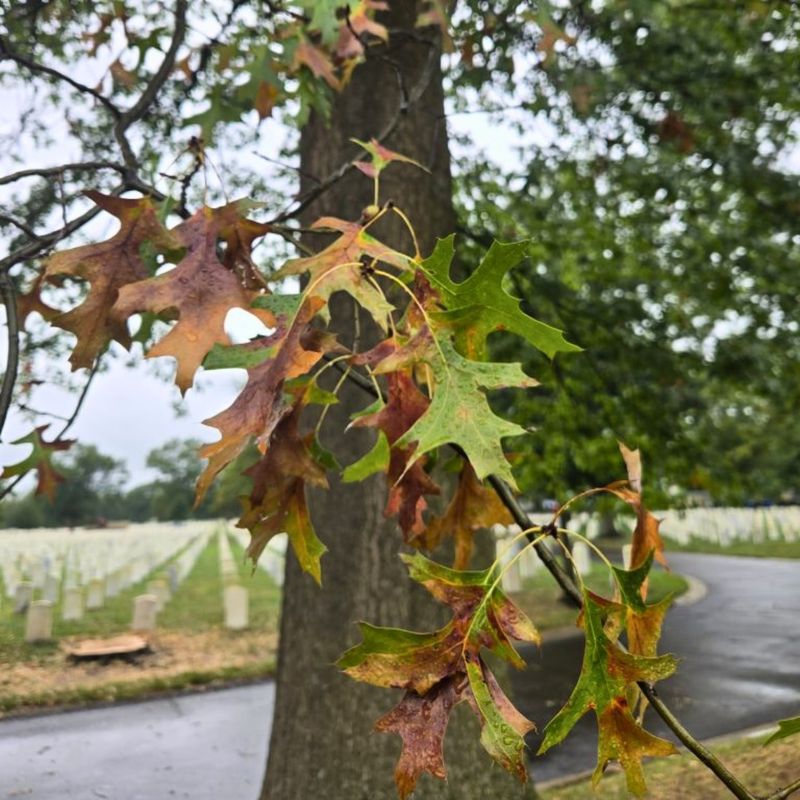
Uniform scorch across the sunniest parts of a canopy usually points in a different direction from one branch suddenly wilting.
A single limb or one side of a maple that loses color, curls, wilts, or drops leaves while the rest remains normal deserves closer inspection.
Localized symptoms can reflect branch injury, cankers, vascular problems, root trouble affecting one portion of the crown, or other issues that simple drought watering will not correct.
Start by tracing the affected branch toward the trunk.
Look for cracked bark, sunken areas, wounds, pruning injuries, loose bark, or a constriction where a tie or wire remained too long. Branch cankers can produce localized wilt and browning along with sunken, cracked, or discolored bark.
Pattern alone still does not identify a disease.
Verticillium wilt can cause symptoms on one branch or part of a maple canopy, but several environmental and root problems create similar symptoms. Brown leaf margins by themselves are not enough to name a vascular disease.
Call a qualified arborist sooner when the branch is large, decline progresses rapidly, bark abnormalities accompany the wilt, or the affected wood creates a safety concern.
That is a better use of professional help than calling over a handful of crispy leaf tips after a dry week.
Environmental scorch tends to paint with a broad brush. A single branch waving a different flag deserves its own investigation.
7. Investigate Unusually Early Leaf Drop
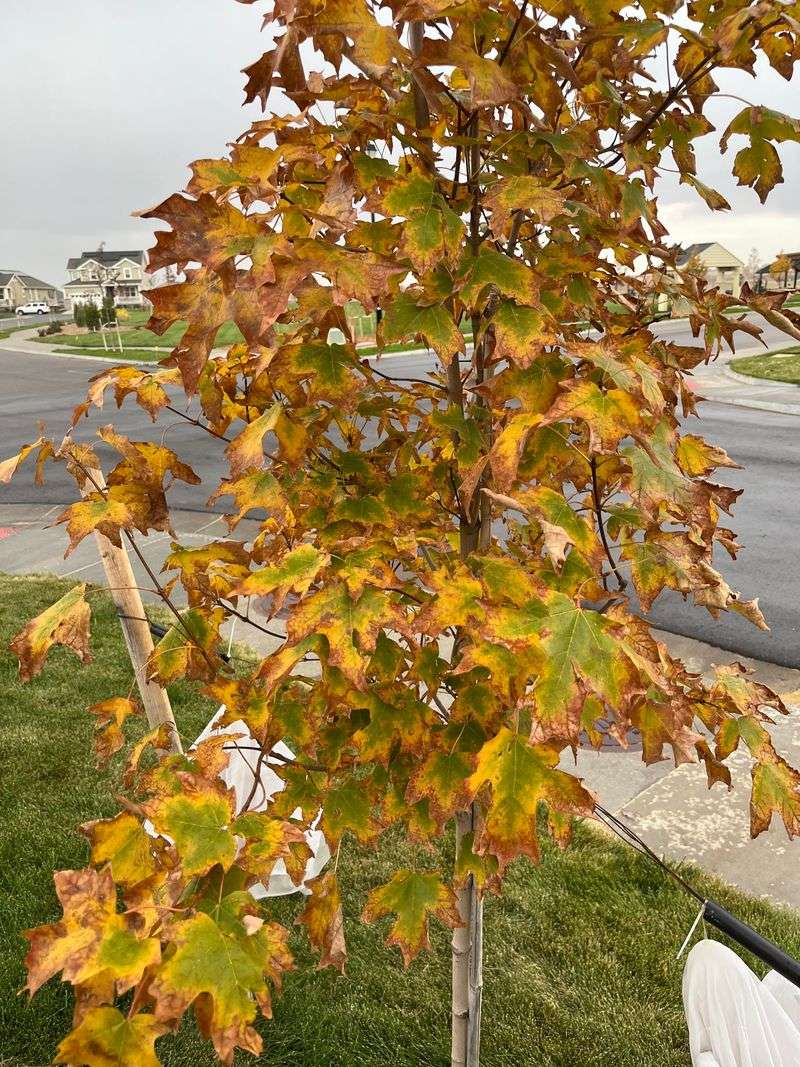
A few scorched leaves falling in August do not automatically signal serious decline.
Trees can shed some foliage during drought stress as available moisture falls short of canopy demand. Drought-stressed trees may show browned margins and premature leaf drop, with stronger stress sometimes extending into branch decline.
Volume and repetition change the concern level.
A tree losing a large share of its canopy in August, especially during more than one year, deserves a wider assessment.
Look for thinning branches, reduced twig growth, bark damage, sparse spring leaf-out, fungal structures around the base, and sections of crown that fail to recover.
Stem-girdling roots and other chronic stresses can produce early color, leaf loss, and branch decline.
Leaf symptoms matter too.
Distinct spots, blotches, curling, unusual discoloration, or damage concentrated on certain canopy levels may point away from simple physiological scorch.
Maple anthracnose, for example, produces visible leaf symptoms and can cause some premature leaf drop, often with affected foliage concentrated in portions of the canopy rather than presenting as simple uniform marginal scorch.
Do not diagnose from fallen leaves alone.
Collect several recently affected leaves, photograph the entire canopy, and note where symptoms started. Those details make a professional assessment far more useful than a bag of completely dried leaves collected weeks later.
One rough August can make a maple look tired.
Repeated early defoliation is different because the tree loses photosynthetic area before the normal end of the season.
That deserves attention to roots, site conditions, and possible pests or disease rather than another shrug at the thermometer.
8. Take Repeat Scorch More Seriously
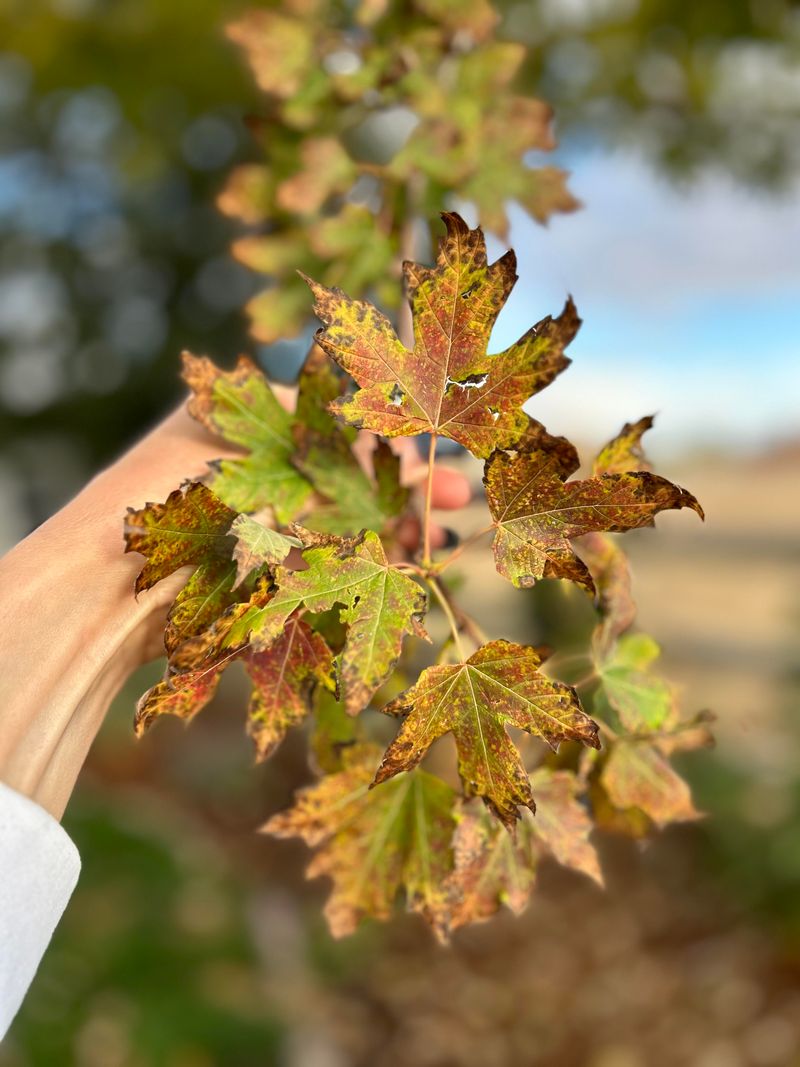
The same maple scorching every August is giving you useful history.
Recurring symptoms can point toward a chronic site limitation rather than one unlucky heat spell.
Compacted soil, restricted rooting space, poor drainage, stem-girdling roots, road-salt exposure, trenching damage, and repeated drought can all produce water-stress symptoms or canopy decline.
Walk the site before examining another leaf.
Look at pavement added near the tree, changes in grade, vehicles crossing the root zone, heavy foot traffic, deep mulch against the trunk, and narrow planting islands.
A maple surrounded by concrete has a different underground world from one growing in open soil.
Check the trunk flare.
Roots circling or pressing against the base can interfere with normal tree development over time. Affected trees can show marginal scorch, poor summer color, early leaf loss, branch decline, and a trunk that lacks its normal widening at soil level.
Correcting serious girdling-root problems is skilled work, especially on mature trees, so random cutting around the trunk is not a good Saturday experiment.
Soil compaction also deserves a measured response.
Aggressive tilling beneath an established maple can damage the same roots you are trying to help. An arborist can assess root-zone conditions and recommend approaches that improve the site without shredding major roots.
Annual scorch does not automatically mean the tree is approaching failure.
It means the recurring stress deserves an explanation. One dry summer can be weather. Five Augusts with the same brown outline are a pattern, and the ground usually knows more about that pattern than the rake does.