Pennsylvania Gardeners Supporting Monarchs Are Planting These 7 Natives Right Now
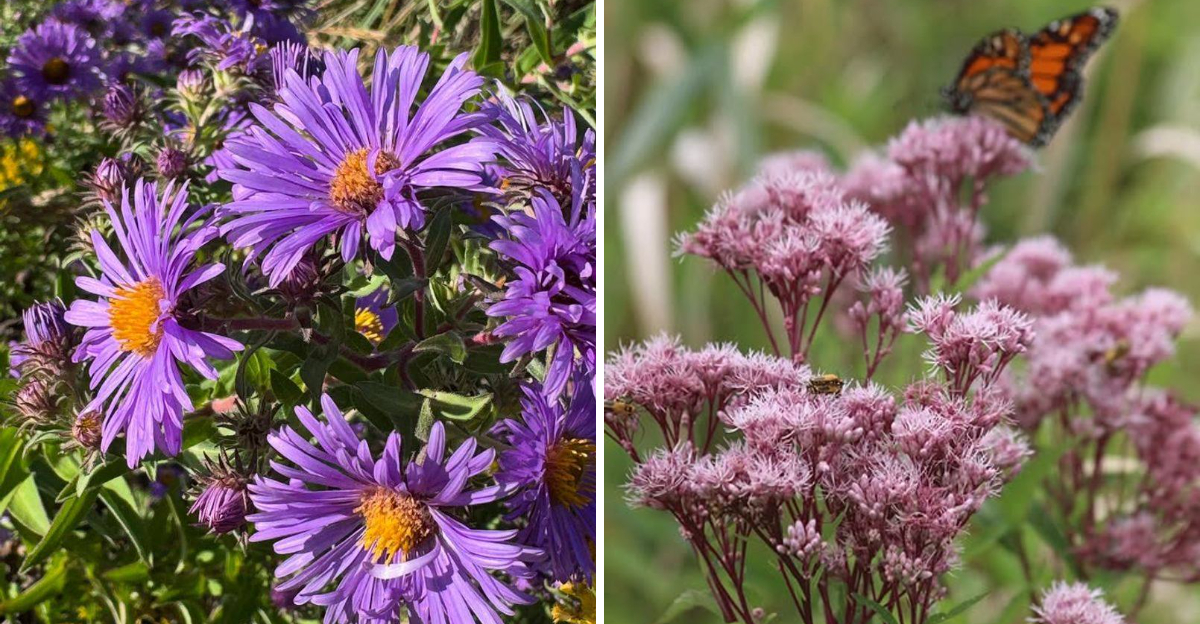
Almost every fall, something remarkable happens over Pennsylvania.
Millions of monarch butterflies move through the state, heading somewhere most of them have never been, navigating by instinct alone.
Almost every spring, a new generation makes the trip back north. What they find along the way determines a lot.
Your yard is part of that route. It might not feel like much, just a patch of garden in one state out of many. But to a monarch passing through on fumes, the right plant in the right place is everything.
Pennsylvania gardeners right now are adding specific natives to their landscapes, plants that do real work during migration and breeding season.
Some feed caterpillars. Some refuel adults for the long haul south. Some do both. The list might surprise you.
A few of these plants have spent years getting ignored or misunderstood, and they turn out to be exactly what monarchs need most. Ready to see what your garden is missing?
1. Plant Common Milkweed For Caterpillars
Walk through an old Pennsylvania meadow in June and you might catch a sweet, almost candy-like scent before you even spot the plant.
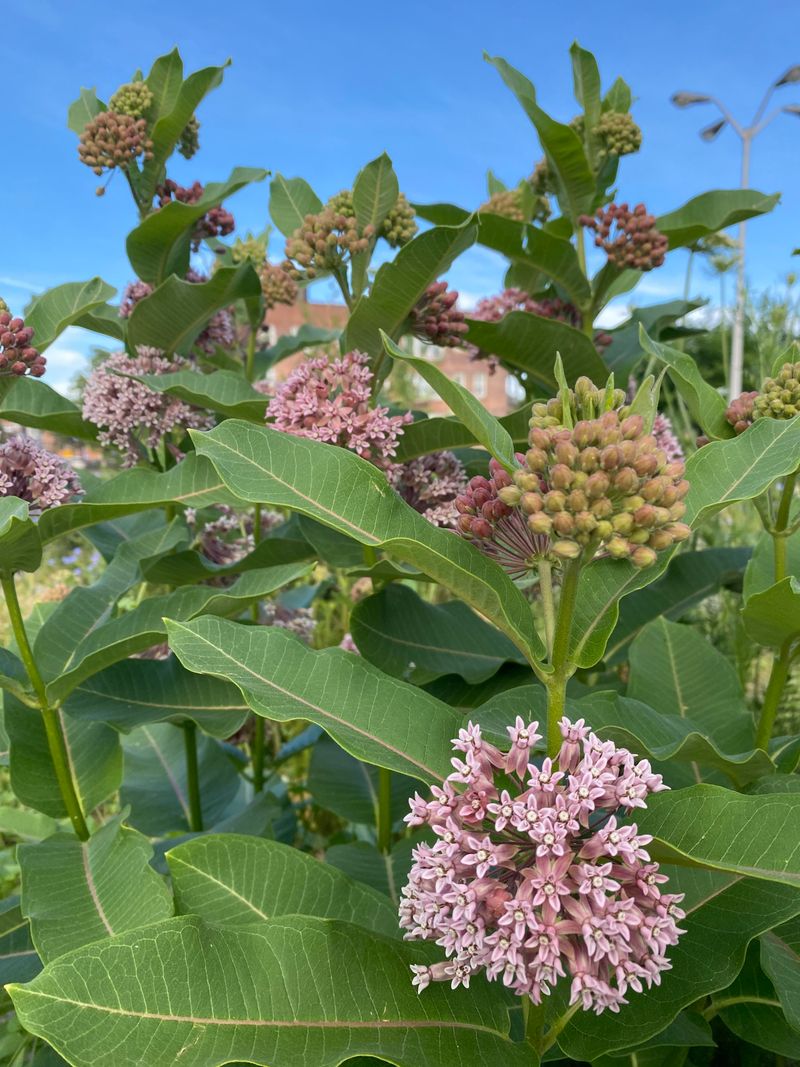
That belongs to common milkweed, Asclepias syriaca, and it is one of the most important plants a monarch gardener can grow.
Monarch females lay their eggs exclusively on milkweed, and caterpillars eat nothing else. No milkweed, no caterpillars.
No caterpillars, no next generation. Common milkweed is where the whole lifecycle begins, and Pennsylvania gardens with average to dry soil in full sun are perfectly suited for it.
This plant grows tall, often reaching four to five feet, and spreads through underground rhizomes. That spreading habit can feel like a lot in a tidy bed.
In a meadow border or naturalized area, it is exactly what you want. It also tolerates poor soil surprisingly well, which makes it one of the lower-maintenance additions you can make.
The pink, globe-shaped flower clusters bloom from late June through July and pull in a wide variety of pollinators beyond monarchs.
Bumblebees, swallowtails, and hummingbird moths all show up regularly. After blooming, the familiar pods split open in fall and send silky seeds drifting across the yard.
Plant common milkweed somewhere it has room to move, and you are essentially setting up a monarch nursery in your own backyard. The caterpillars will find it faster than you expect.
2. Use Swamp Milkweed In Moist Beds
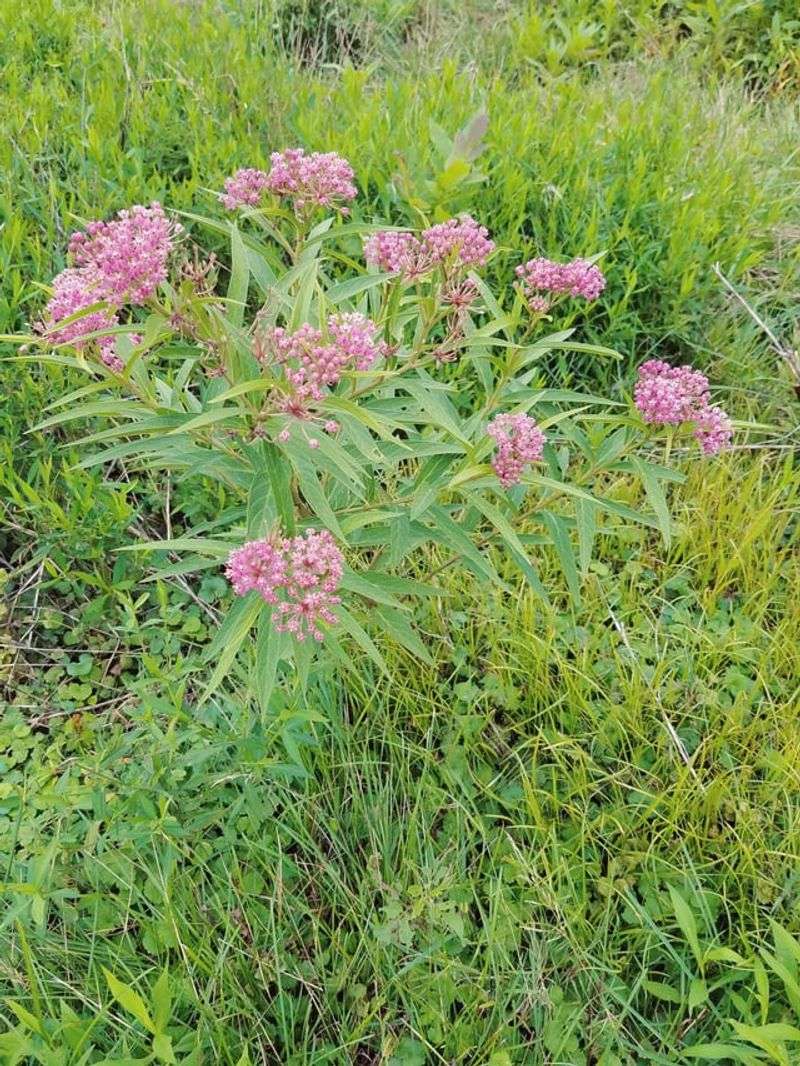
That soggy corner of your yard where nothing thrives? Swamp milkweed, Asclepias incarnata, was practically built for it.
This native grows naturally along stream banks, pond edges, and low-lying areas throughout Pennsylvania, and it genuinely enjoys the conditions most plants refuse.
Unlike common milkweed, swamp milkweed stays in a well-behaved clump. No aggressive spreading, no surprise colonies popping up in the wrong spot.
That makes it a much easier fit for a backyard rain garden or a formal perennial border near a downspout. It reaches three to four feet tall and produces clusters of rosy pink flowers from mid to late summer.
Your Pennsylvania Garden Changes Every Week. Your Plan Should Too.
Gardening in Pennsylvania changes quickly throughout the season. Every Friday you’ll receive a simple weekly plan showing exactly what to plant, prune, fertilize, harvest, and protect so you never miss the right timing.
Here is the part worth paying attention to: female monarchs lay eggs on swamp milkweed just as readily as on common milkweed.
Planting both species extends the window of caterpillar support across the season, which gives more eggs a better shot at making it to adulthood. More caterpillars, more adults, more monarchs heading south in fall.
Swamp milkweed pairs beautifully with Joe Pye weed and New England aster in a wet meadow planting. Once established, it comes back reliably each spring without much help from you.
Goldfinches also love to harvest the silky seed fluff in fall for nesting material, so the plant keeps giving long after the blooms are gone.
Plant a group of three or five for the best visual impact and the strongest caterpillar support your yard can offer.
3. Grow Butterfly Weed In Sunny Soil
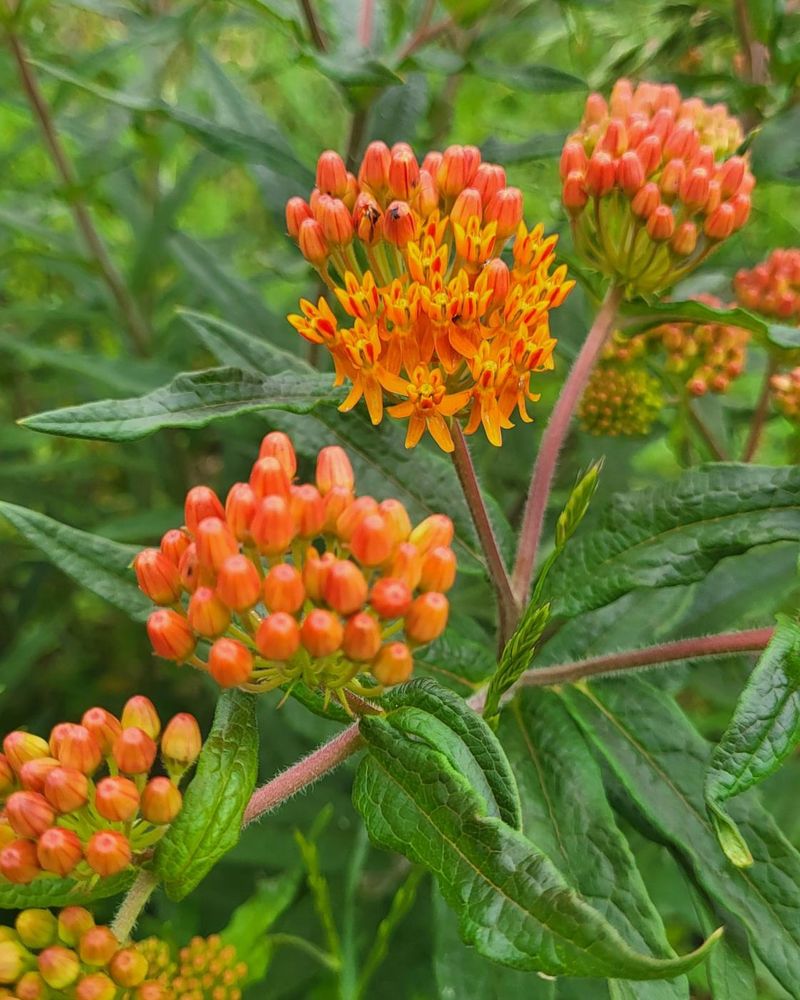
Few native plants stop people mid-stride the way butterfly weed does. Those blazing orange flower heads sitting low against silvery green foliage look almost too vivid to be real on a hot July afternoon.
Asclepias tuberosa is the showiest of the milkweeds, and it earns every bit of attention it gets.
Unlike its milkweed cousins, butterfly weed prefers dry, well-drained, even sandy soil and full sun. Heavy clay or wet ground will cause it to struggle, so placement matters more here than with most plants.
It grows one to two feet tall and wide, making it a natural fit for a sunny border, a rock garden, or a slope that tends to stay dry between rains.
The deep taproot makes it remarkably drought-tolerant once established. That same taproot also means it resents being moved, so pick your spot carefully before planting. This is not a plant you want to relocate in year two.
Butterfly weed supports monarch caterpillars as a host plant, though it tends to attract fewer eggs than common or swamp milkweed.
Where it truly earns its place is as a nectar source for adult monarchs passing through in summer. Pair it with native grasses or prairie dropseed for a low-maintenance combination that looks incredible from July through September.
The seed pods are also gorgeous in fall arrangements, which is a nice bonus for a plant already doing serious ecological work. Pretty and practical, the best combination in any garden.
4. Add New England Aster For Fall Nectar
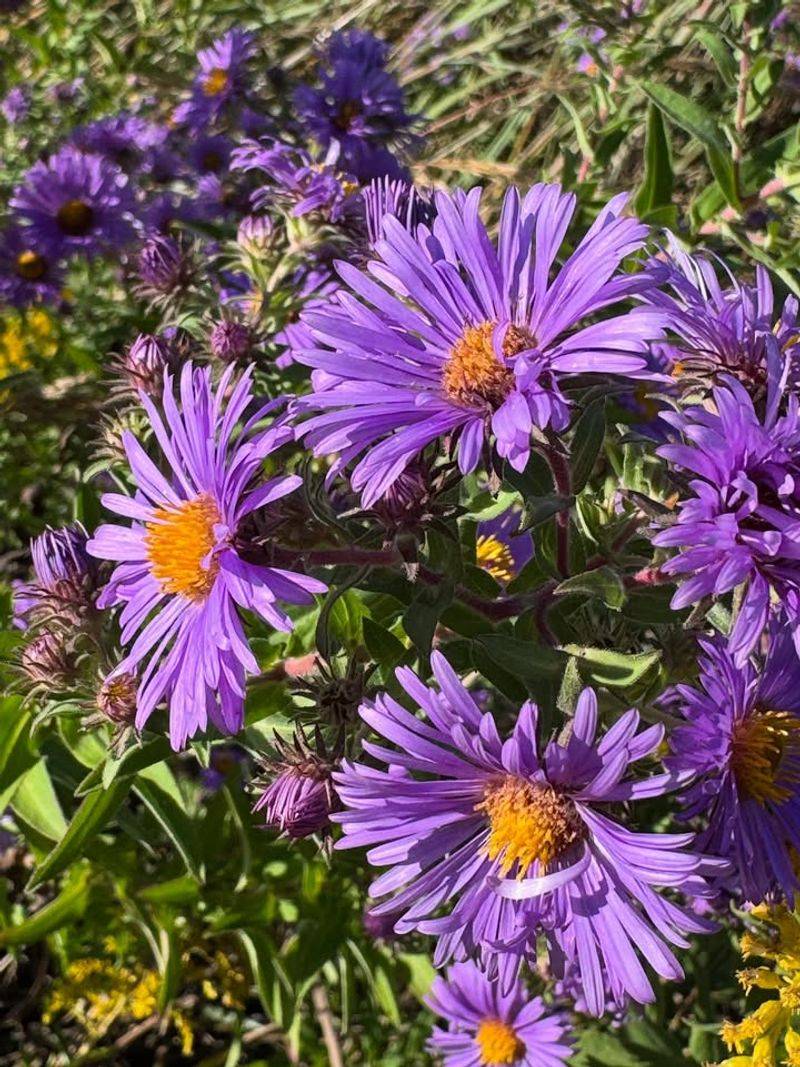
A crisp October morning, low golden light, and a monarch butterfly hovering over a sea of purple flowers.
That scene plays out in Pennsylvania gardens every fall, and New England aster, Symphyotrichum novae-angliae, is usually at the center of it.
This native aster is one of the most valuable late-season nectar plants in the entire eastern United States.
It blooms from late August through October, timing that lines up almost perfectly with the monarch fall migration through Pennsylvania.
Adult monarchs traveling south need reliable nectar to build fat reserves for the journey ahead. A robust stand of New England aster can function as a genuine refueling station for butterflies moving through your region.
The plant grows three to six feet tall in full sun to light shade and tolerates a range of soil types, though it performs best in moist, average garden soil.
It spreads into generous clumps over time and may need staking in shadier spots. Cutting plants back by half in late June encourages bushier, more compact growth and heavier flowering come fall.
Colors range from deep violet-purple to pink and magenta depending on the cultivar, but straight species plants tend to attract the most pollinators.
Pair it alongside goldenrod for a classic fall combination that both monarchs and gardeners genuinely love. New England aster is the kind of plant that makes October feel like a celebration rather than the end of the season.
Plant it once and it will remind you every fall why native plants are worth the effort.
5. Plant Goldenrod For Migration Fuel
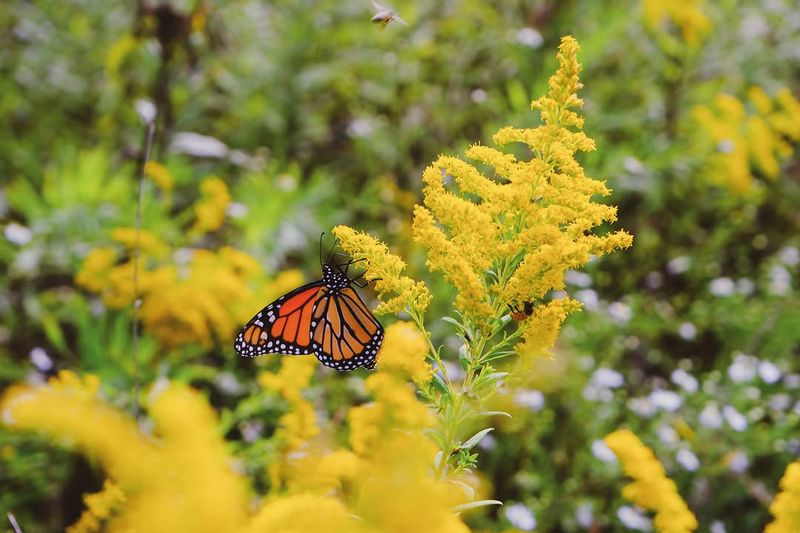
Goldenrod gets a bad reputation it does not deserve.
Many people blame it for fall allergies, but the real culprit is ragweed, which blooms at the same time and spreads pollen through the air.
Goldenrod pollen is heavy and sticky, carried by insects rather than wind, making it essentially allergy-free. Once that misunderstanding gets cleared up, it is easy to appreciate what goldenrod actually is.
Solidago species, particularly Solidago rugosa and Solidago nemoralis, are standout choices for Pennsylvania gardens.
They bloom from late August through October, flooding the garden with golden-yellow plumes right when monarchs are moving south through the state.
Adult butterflies use nectar not just for immediate energy but to build fat reserves that carry them all the way to their overwintering sites in Mexico. Goldenrod is a critical part of that process.
Growing conditions vary by species. Rough-stemmed goldenrod handles moist soil and part shade well, while gray goldenrod thrives in dry, sunny spots with poor soil.
Most species spread by rhizomes, so give them room or use a root barrier in formal beds.
Pairing goldenrod with New England aster creates a dynamic fall duo that provides maximum migration support in a relatively small footprint.
Both plants together form a late-season nectar corridor that migrating monarchs actively seek out. Plant them together this fall and watch what shows up next October.
Spoiler: it will be worth every square foot you gave up.
6. Use Blazing Star For Summer Nectar
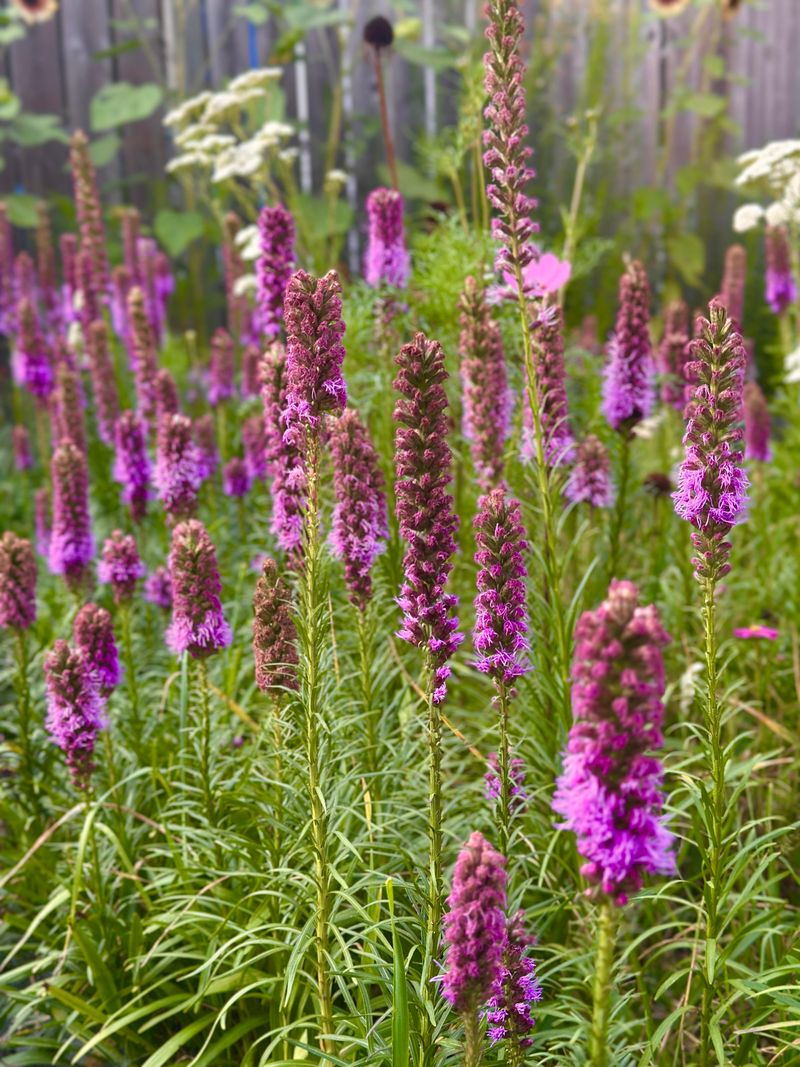
Blazing star in full bloom has a theatrical quality that many garden plants never achieve.
The tall, wand-like spikes rise up to four feet, covered in fluffy purple flowers that open from top to bottom, which is the opposite of how most flowering plants work.
That upward-blooming habit stretches the nectar season out over several weeks, giving monarchs a longer window to visit each plant.
Liatris spicata, commonly called dense blazing star or spike gayfeather, is the most widely grown species and one of the easiest to establish in Pennsylvania.
It thrives in full sun and well-drained to average soil, tolerating heat and moderate drought once the corm is settled in.
Blooming from July through August, it fills a real nectar gap between early summer wildflowers and the fall aster-goldenrod season. Monarchs actively seek out blazing star blooms during their summer residency in the state.
Mid-article moment of appreciation: this plant also feeds goldfinches through winter if you leave the dried seed heads standing. So you are basically running a two-season wildlife operation with one plant.
It pairs naturally with black-eyed Susan, coneflower, and native grasses for a meadow look that requires minimal maintenance after the first season.
Swallowtails, skippers, and bumblebees also crowd in alongside the monarchs, making any planting feel genuinely alive.
Plant blazing star in groups of five or more for the strongest visual effect and the best pollinator draw your sunny border can produce.
7. Grow Joe Pye Weed For Tall Color
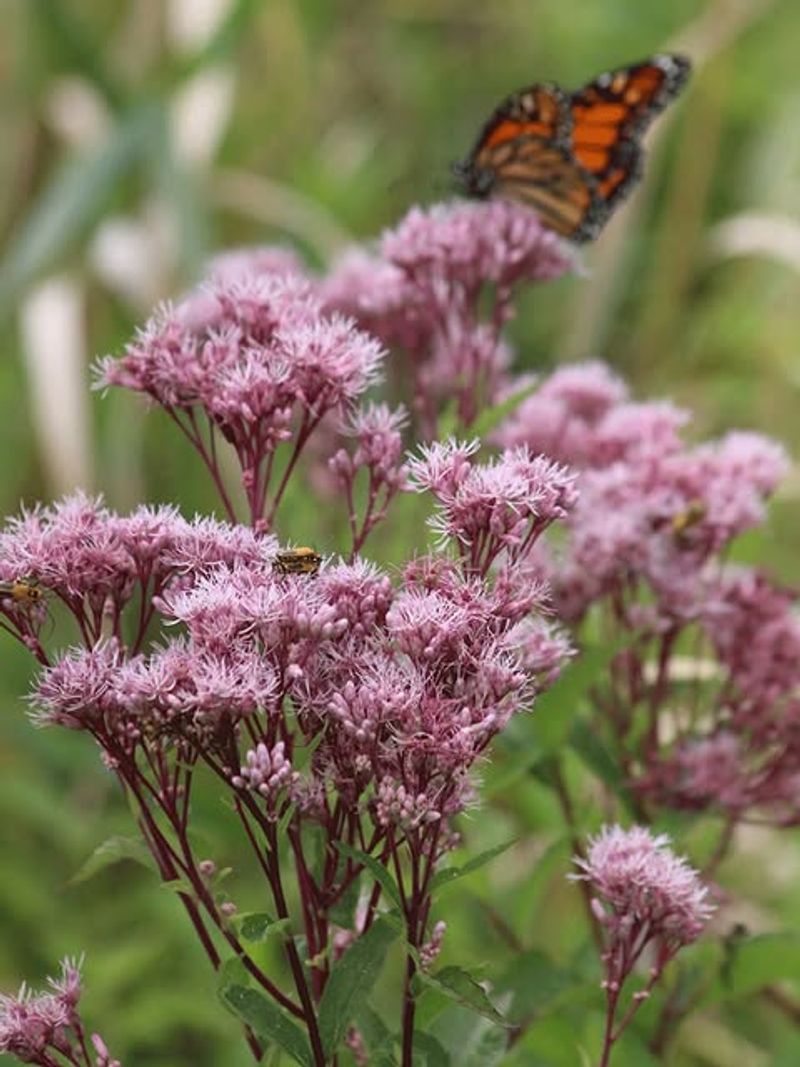
Standing six to eight feet tall at peak summer, Joe Pye weed commands attention from across the yard.
Eutrochium purpureum, or the shorter Eutrochium dubium, produces massive domed flower clusters in dusty mauve-pink that bloom from mid-July through September.
The effect is bold, architectural, and hard to ignore. Gardeners who want height, drama, and serious pollinator traffic all at once have found their plant.
Joe Pye weed grows best in moist to average soil and tolerates part shade, making it a smart choice for low spots, rain gardens, or woodland edges that get a few hours of afternoon sun.
It fits naturally into landscapes that tend to stay wet after rain. Unlike many tall plants, it rarely needs staking because its sturdy stems hold up well through summer storms. That alone saves considerable frustration.
For monarchs, Joe Pye weed serves as a nectar source during the summer breeding season when adults are actively foraging between egg-laying bouts.
It also draws tiger swallowtails, great spangled fritillaries, and native bees of many species, turning any planting into a genuine wildlife hub.
Cut it back by one-third in late May to create a bushier, more compact plant without sacrificing flower power later in the season.
That one small step makes a noticeable difference in how the plant looks by August.
Joe Pye weed is a cornerstone plant for Pennsylvania pollinator gardens, and once you see it in full bloom surrounded by butterflies, you will wonder why you waited so long to plant it.