8 Hummingbird-Friendly Native Plants For Every Montana Garden
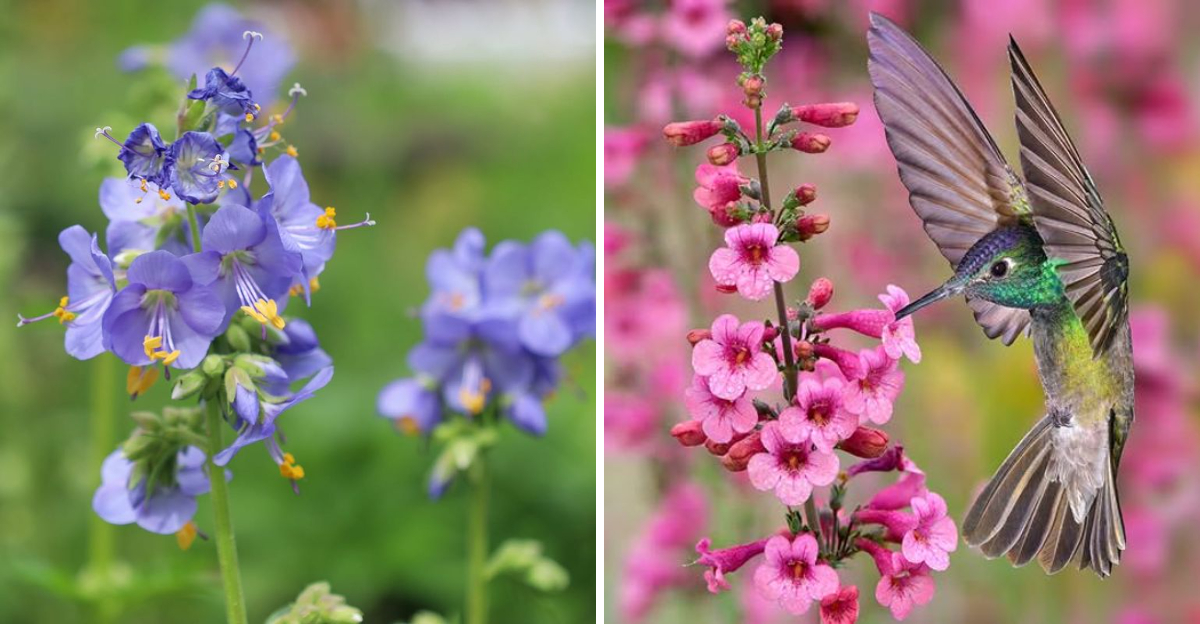
Right now, a hummingbird is looking for your garden. Tiny, fast, and relentless, these birds travel miles hunting for the perfect bloom.
What if yours was the one they kept coming back to? Native Montana plants hold the answer.
Species perfectly built for your climate attract hummingbirds all season long. Electric red blooms, cascading purple clusters, wildflowers that need almost no care.
Centuries of evolution made these plants irresistible to hummingbirds before gardens even existed. Swapping generic fillers for these natives takes one afternoon.
Tough winters, dry spells, unpredictable weather, none of that slows these plants down. From first frost to full summer heat, they hold their own.
Scattered across Montana’s wild landscapes, these plants have fed hummingbirds long before anyone planted a garden.
Every bloom below brings something rare, something hummingbirds genuinely cannot resist. Your garden could be their favorite place on earth. Make it happen this season.
1. Rocky Mountain Columbine
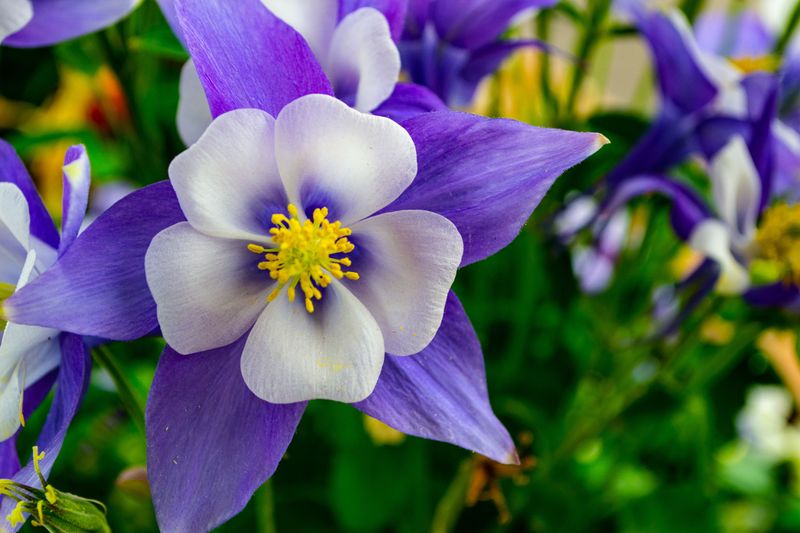
Few flowers stop a hummingbird mid-flight quite like Rocky Mountain Columbine. Those long, elegant spurs are basically nature’s hummingbird straw, perfectly shaped for a long bill to reach deep nectar pools.
This plant blooms in late spring through early summer, filling the gap before many other wildflowers open up. Hummingbirds passing through on migration routes absolutely depend on early bloomers like this one.
Rocky Mountain Columbine thrives in partial shade to full sun and loves well-drained soil. Plant it near a rock garden or woodland edge and watch it spread naturally over time.
The flowers come in stunning blue, white, and purple combinations that look almost painted by hand. Each bloom dangles gracefully on slender stems, swaying in the breeze like tiny lanterns.
Growing columbine from seed is surprisingly easy and rewarding. Scatter seeds in fall, let winter do the stratification work, and expect cheerful sprouts come spring.
One underrated bonus: columbine self-seeds generously, so your patch grows bigger every year without extra effort. That means more blooms, more nectar, and more hummingbird visits season after season.
Keep the soil lightly moist during the first growing season to help roots establish. After that, this native tolerates some dryness once roots are established, though it prefers consistent moisture.
If you want one plant that truly earns its spot in a hummingbird-friendly native plant garden, Rocky Mountain Columbine is your answer.
By midsummer the blooms are spent, but the ferny foliage stays cool and green right through the first frost.
2. Scarlet Indian Paintbrush
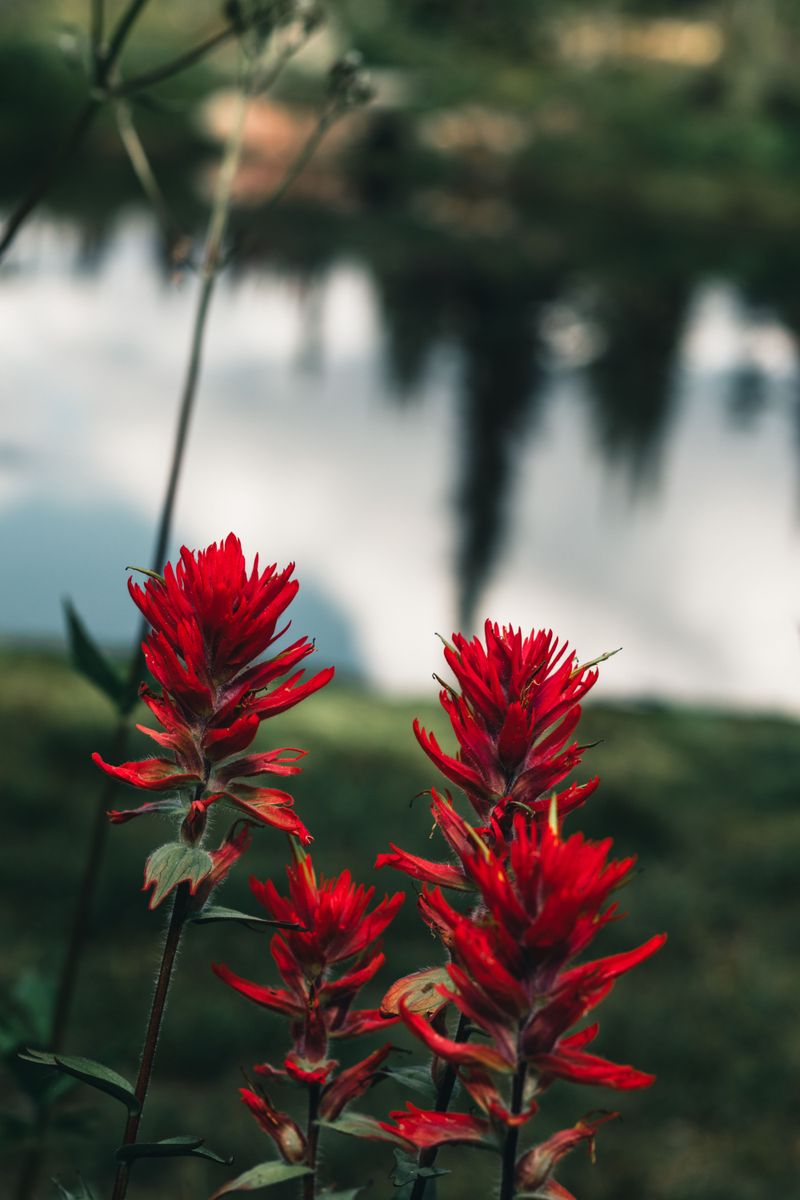
Nothing signals summer in the West like a hillside blazing with Scarlet Indian Paintbrush. Those fiery red bracts glow like tiny torches, and hummingbirds spot them from impressive distances.
Technically, the red parts are modified leaves called bracts, not petals. The actual flowers hide inside, but hummingbirds have no trouble finding the nectar tucked deep within.
Indian Paintbrush is a hemiparasite, meaning it taps into nearby grass roots for extra nutrients. Plant it alongside native bunchgrasses and let it do its fascinating underground work.
This wildflower thrives in open meadows and sunny slopes with lean, well-drained soil. Rich garden soil can actually make it struggle, so resist the urge to over-amend your planting area.
Starting paintbrush from seed is genuinely challenging. It needs a living host plant, typically a native grass, to establish properly.
Sow directly alongside a bunchgrass companion and accept that first-season success is not guaranteed.
Once established, a patch of Scarlet Indian Paintbrush spreads slowly and naturalizes beautifully. Over several seasons, it builds into a reliable, eye-catching display that returns faithfully each year.
Hummingbirds visit paintbrush blooms repeatedly throughout the day, which means extended wildlife-watching opportunities right from your porch.
Few garden experiences beat watching a rufous hummingbird hover over a red-hot cluster of bracts.
3. Penstemon (Beardtongue)
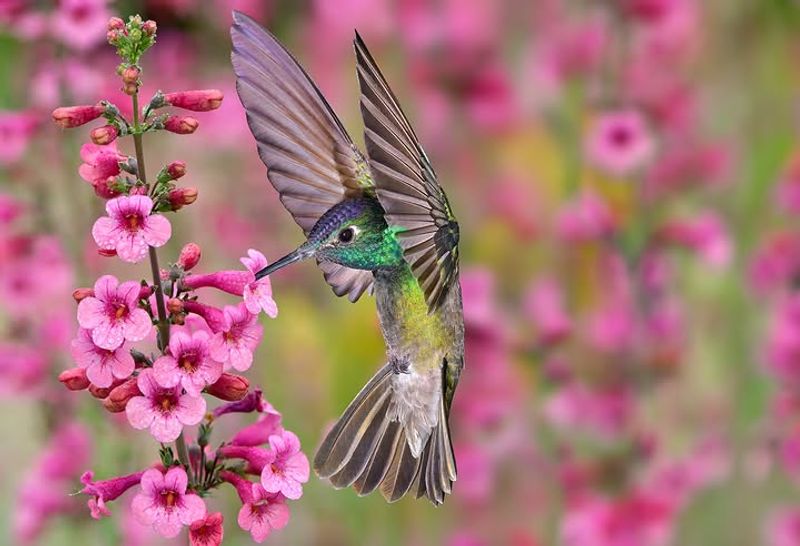
Penstemon is basically the overachiever of hummingbird plants. It blooms prolifically, tolerates drought, survives harsh winters, and looks absolutely stunning while doing all of it.
The tubular flowers are tailor-made for hummingbird bills, creating a perfect fit that makes nectar feeding efficient and satisfying. Watch a hummingbird work a penstemon spike from bottom to top, visiting each flower in sequence.
Montana is home to several native penstemon species, including Penstemon eriantherus and Penstemon nitidus. Each one brings slightly different bloom colors, from soft lavender to deep violet and vivid pink.
These plants thrive in full sun and gravelly or sandy soil with excellent drainage. Wet feet in winter are their only real weakness, so avoid planting in low spots that collect moisture.
Penstemon is incredibly deer-resistant, which is a huge bonus in Montana where deer pressure can wreck a garden overnight. Hummingbirds love it, deer ignore it, and gardeners adore it.
Pair penstemon with native grasses or low-growing ground covers to create a naturalistic planting scheme. The combination looks effortlessly wild and provides layered habitat for multiple pollinators.
For gardeners building a hummingbird-friendly native plant collection, penstemon is a non-negotiable addition.
Remove spent spikes in July and a second flush often pushes through by late August, stretching the nectar season well past when most wildflowers are finished.
4. Wild Bergamot
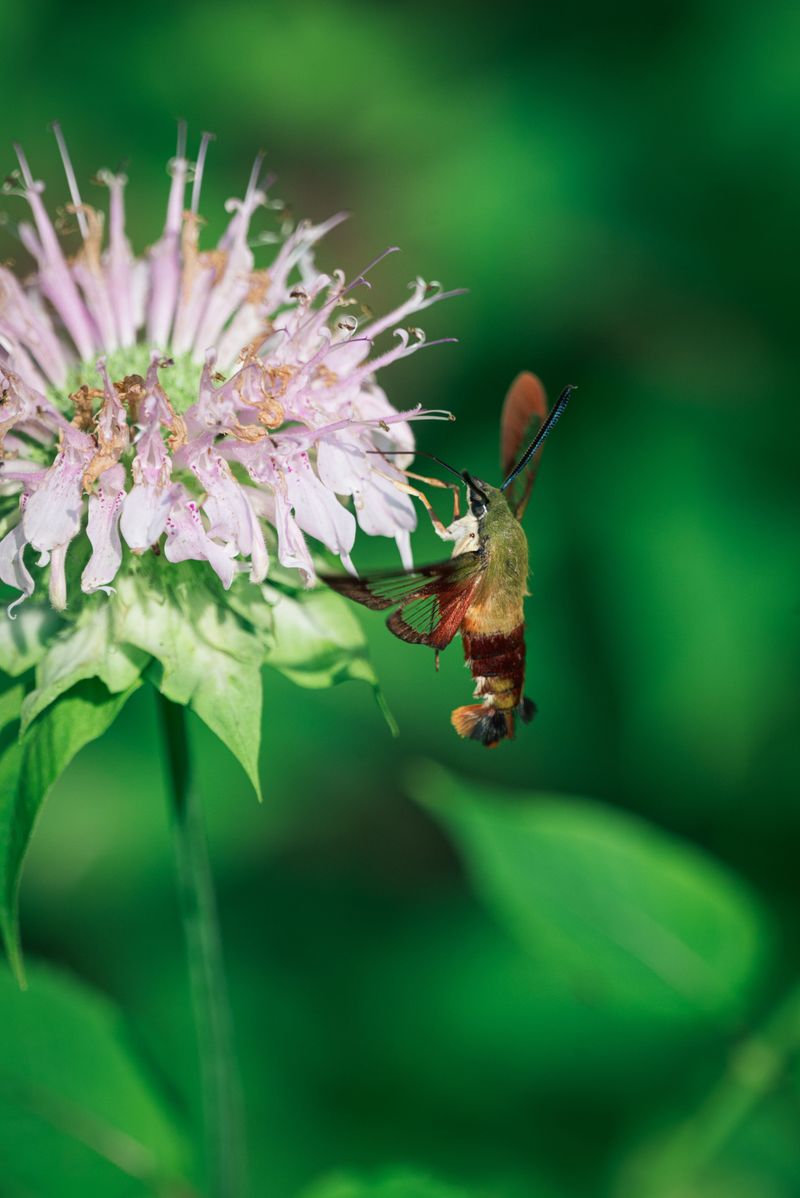
Wild Bergamot has a secret weapon: it smells incredible. Crush a leaf between your fingers and you get a burst of oregano-like fragrance that makes the whole garden feel alive.
Beyond the scent, those shaggy lavender-pink flower heads are absolute hummingbird magnets. The tubular florets that make up each bloom head are perfectly sized for a hovering hummingbird to probe.
This plant belongs to the mint family, which explains both the aroma and its enthusiastic spreading habit. Give it room to roam and it will reward you with a growing colony of blooms each year.
Wild Bergamot blooms in midsummer, bridging the gap between early spring wildflowers and late-season bloomers. That timing is golden for hummingbirds fueling up before their long southern migration.
Plant it in full sun to light shade in average, well-drained soil. It handles dry conditions well once established, making it a smart choice for water-conscious gardeners.
The plant also attracts an impressive variety of native bees, butterflies, and beneficial insects. Your garden becomes a buzzing, fluttering ecosystem rather than just a pretty flowerbed.
Divide clumps every few years to keep plants vigorous and prevent overcrowding. Fresh divisions transplant easily and can be shared with neighbors who want their own hummingbird paradise.
Wild Bergamot proves that a plant can be wildly productive and effortlessly beautiful at the same time. Brush the leaves as you walk past and that sharp oregano scent will follow you all the way back inside.
5. Golden Currant
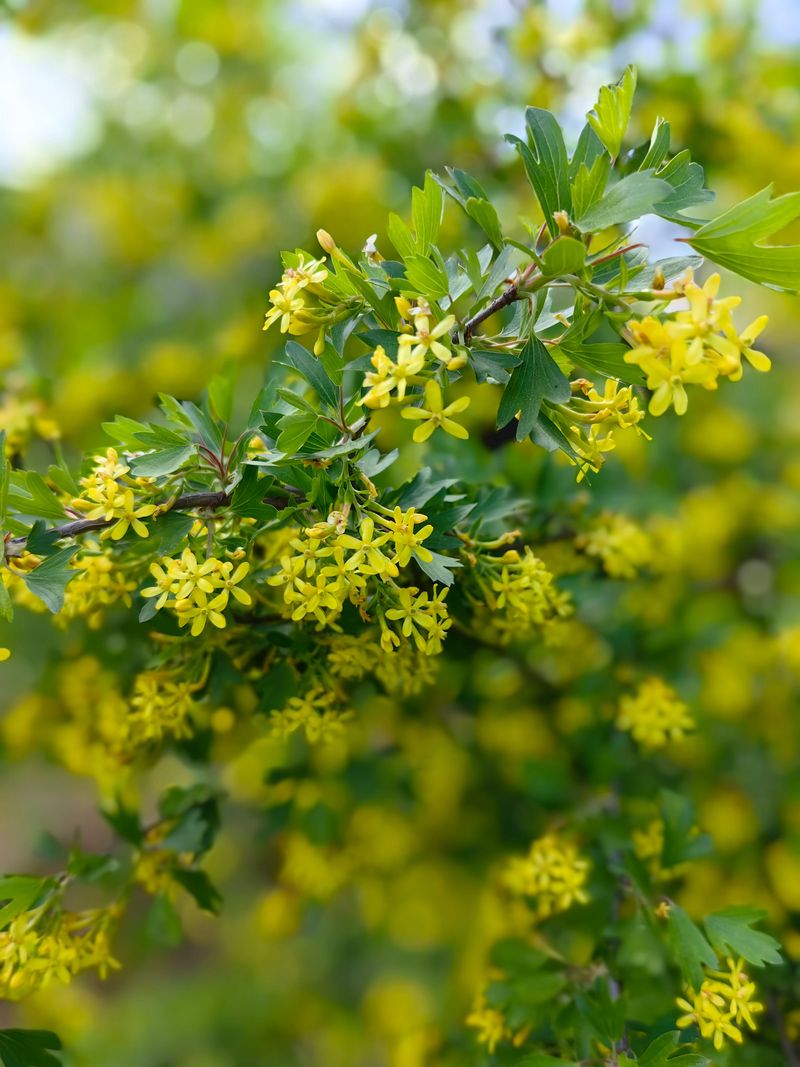
Golden Currant is the early bird of the hummingbird plant world. It blooms in April and May, right when the first hummingbirds arrive in Montana hungry after a long migration north.
Those clusters of golden-yellow tubular flowers are not just pretty. They are packed with nectar and timed perfectly to fuel exhausted travelers who need energy fast.
This native shrub or small tree typically grows six to fifteen feet tall, with older specimens occasionally reaching eighteen feet.
Its multi-season appeal includes fragrant spring flowers, edible summer berries, and fiery fall foliage.
The berries ripen from yellow to red to near-black through summer, attracting birds beyond just hummingbirds. Cedar waxwings, robins, and other species flock to currant shrubs for a reliable food source.
Golden Currant adapts to a wide range of soil types, from sandy riverbanks to clay hillsides. It handles full sun to partial shade, giving gardeners flexibility in placement and design.
Water young plants regularly during their first summer to establish strong roots. After that, established shrubs are impressively drought-tolerant and need minimal intervention.
Prune lightly after flowering to maintain shape and encourage dense, bushy growth. Avoid heavy pruning in fall, as new growth can be vulnerable to early frosts.
Plant it at the back of a border with native grasses at its feet and you get structure, scent, berries, and hummingbirds from April through October.
6. Fireweed
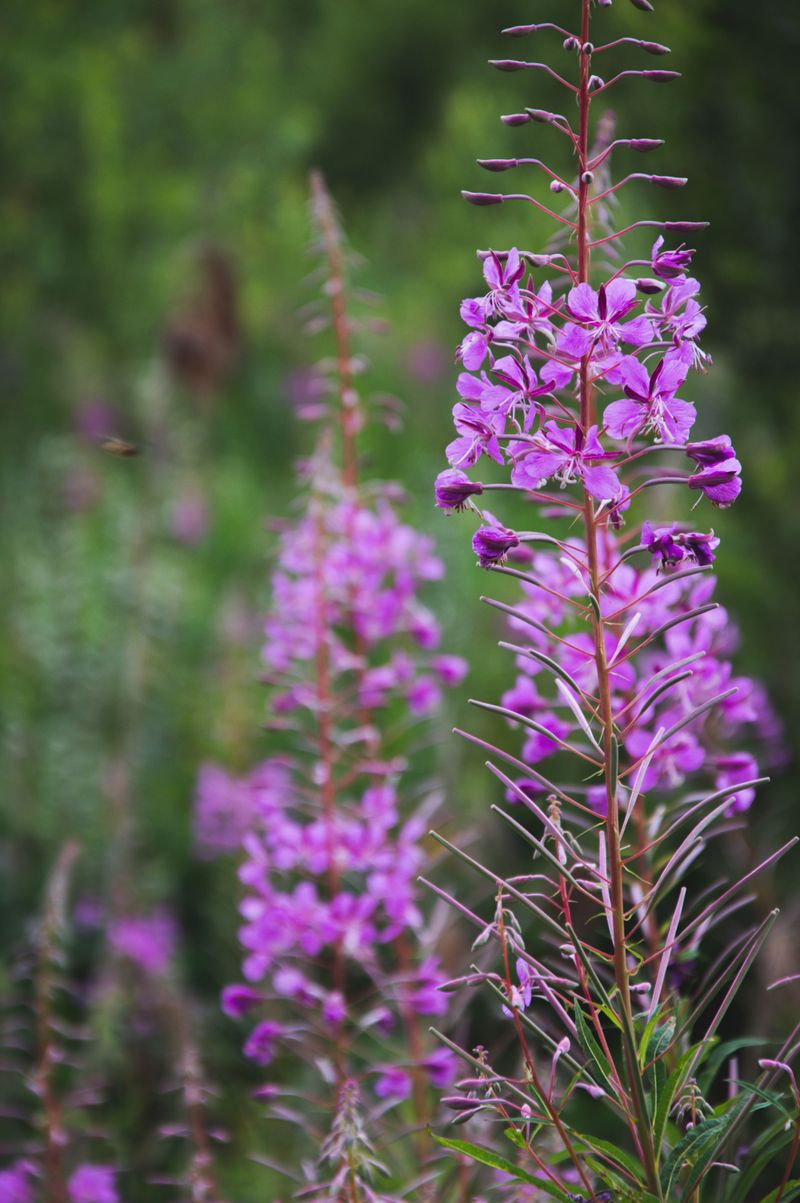
Fireweed earned its name by being among the very first plants to reclaim scorched earth after wildfires. That same fierce resilience makes it an outstanding choice for challenging garden spots.
The tall magenta spikes are impossible to miss, rising four to six feet high in a blaze of pink-purple color. Hummingbirds spot those vivid blooms from far away and make a beeline straight for them.
Blooms open progressively from the bottom of the spike upward, which extends the flowering window across several weeks.
That means a longer nectar buffet for hummingbirds visiting your garden through late summer.
Fireweed spreads aggressively by underground rhizomes, so give it space or contain it with buried edging. Once you accept its wandering nature, it becomes one of the most rewarding plants you can grow.
Plant it in full sun with average to poor soil for the best performance. Rich, moist soil encourages excessive spreading, which can become overwhelming in a smaller garden space.
The plant also produces edible shoots in spring that taste similar to asparagus. Indigenous communities across North America have used fireweed for food and medicine for generations.
After blooming, the seed heads burst open into fluffy white tufts that drift on the breeze like tiny snowflakes. The visual effect is breathtaking, and it signals that summer is winding into fall.
When the seed heads burst open in September and the white fluff drifts across the yard, you will already be thinking about where to plant more next spring.
7. Jacob’s Ladder
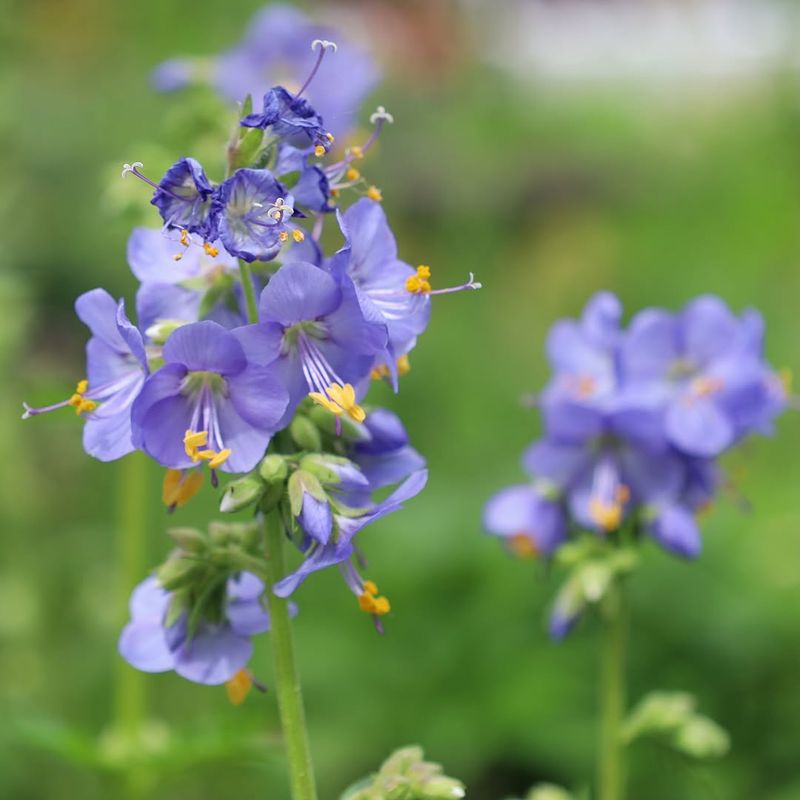
Showy Jacob’s Ladder brings a touch of quiet elegance to shaded garden corners that other hummingbird plants can’t reach. The ferny, ladder-like leaves create beautiful texture even before the flowers appear.
The blue-purple blooms open in late spring and early summer, dangling in loose clusters above the foliage.
Hummingbirds hover beneath the flower clusters, tipping upward to reach the nectar inside each small bell.
This native wildflower prefers moist, shaded conditions along stream banks and in forest understories. If you have a damp, shady spot that stumps most plants, Jacob’s Ladder might be your solution.
It pairs beautifully with native ferns, wild ginger, and other shade-loving ground covers. The combination creates a lush, layered woodland garden that looks natural and feels like a hidden retreat.
Jacob’s Ladder is relatively short-lived as a perennial, but it self-seeds reliably to maintain its presence. Allow a few seed heads to ripen and scatter naturally for a self-sustaining colony.
The plant is non-aggressive and plays nicely with neighbors, unlike some spreaders that take over a bed. Its restrained growth habit makes it easy to manage and position precisely where you want it.
Water consistently during dry spells, as Jacob’s Ladder does not tolerate prolonged drought well. A layer of organic mulch around the base helps retain moisture and keeps roots cool through summer heat.
For hummingbird-friendly native plants that bring grace to shaded spaces, Jacob’s Ladder is a genuinely special find.
Pair it with native ferns along a shaded path and the ladder-like leaves create texture that holds even when the blooms are long gone.
8. Serviceberry
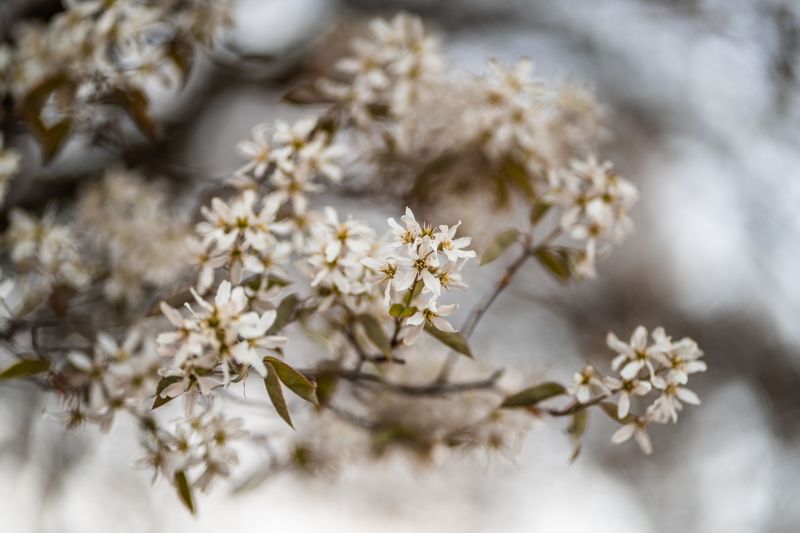
Serviceberry blooms remarkably early in spring. One popular story holds that early settlers used its blooms to mark when the ground thawed enough for burial services.
The true origin of the name, however, remains debated. For hummingbirds, that early bloom time is a lifeline.
Migrating birds arriving in April find serviceberry loaded with nectar-rich white flowers before almost anything else has opened.
This native shrub or small tree typically grows six to fifteen feet tall, with older specimens occasionally reaching eighteen feet. Its multi-stemmed form creates excellent structure and wildlife habitat in a garden or yard edge.
After flowering, serviceberry produces small purple-red berries in June that are sweet, juicy, and eagerly devoured by dozens of bird species. Bears, foxes, and other wildlife also depend on this generous fruiting shrub.
Serviceberry adapts to a wide range of soils and exposures, from sunny slopes to partial shade along stream edges. That flexibility makes it one of the most versatile native plants available for home landscapes.
Fall foliage turns brilliant shades of orange, red, and gold, giving this plant four-season interest that few shrubs can match. It earns its keep in the garden all year long.
Young plants benefit from regular watering during their first two seasons while roots develop. After establishment, they handle periodic dry spells without complaint and rarely need supplemental irrigation.
As the final star of this hummingbird-friendly native plant lineup, serviceberry proves that the best garden plants do multiple jobs beautifully.
By June the berries are ripe, and if you do not get to them first, a flock of cedar waxwings almost certainly will.