Red-Tailed Hawks Are Visiting Montana Yards For This Reason
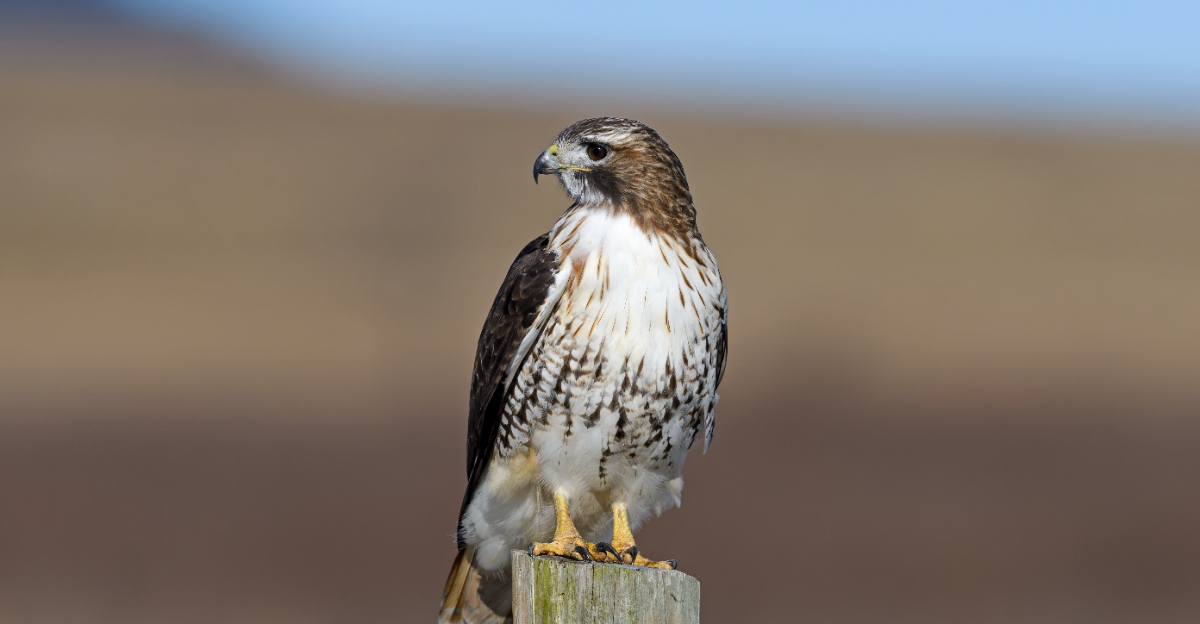
Red-tailed hawks do not wander into yards by accident. When one lands on your fence post or circles low over your lawn, it has already made a calculated decision, your yard has something worth hunting.
Montana homeowners are spotting these broad-winged raptors more frequently, and the reason comes down to one thing: prey.
Yards that attract mice, voles, and ground squirrels become reliable hunting grounds, and red-tailed hawks are quick to figure that out.
They are patient, precise, and surprisingly comfortable around human activity when food is consistent. Once a hawk identifies your yard as productive, it will return.
What looks like a dramatic wildlife moment from your kitchen window is actually a bird running a well-planned route.
Your Yard May Be Hosting The Small Mammals Red-Tailed Hawks Hunt
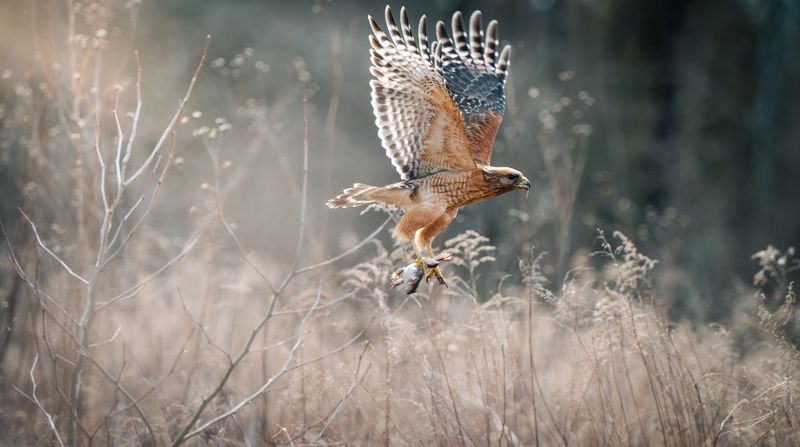
Prey is the whole reason a red-tailed hawk circles your property.
Montana yards are full of small mammals that these raptors actively seek out. Voles, mice, shrews, and ground squirrels are all prime targets.
If your lawn has any of these critters moving around, a hawk will notice fast. Hawks have remarkably sharp eyesight, with visual acuity estimated to be several times greater than a human’s.
They can detect prey movement from well over 100 feet in the air, often from heights that would make the target invisible to the human eye. A yard with steady rodent activity is exactly the kind of hunting ground a red-tailed hawk scans for.
Pocket gophers are especially common in Montana, and red-tailed hawks love them. A single hawk may return to the same yard for weeks if the food supply stays steady.
You are not imagining things if you keep seeing the same bird perched nearby. Rabbits and young cottontails also attract these hunters.
A yard with dense ground cover and plenty of rodent activity is a hawk’s dream location. The more small mammals you have, the more likely a hawk will stick around.
Knowing this can shift how you see your yard. That mouse problem you have been ignoring? A hawk may solve it for free.
Red-tailed hawks visiting Montana yards for this reason are essentially offering natural pest control without any effort on your part.
Bird Feeders And Compost Bins Attract The Prey Hawks Need
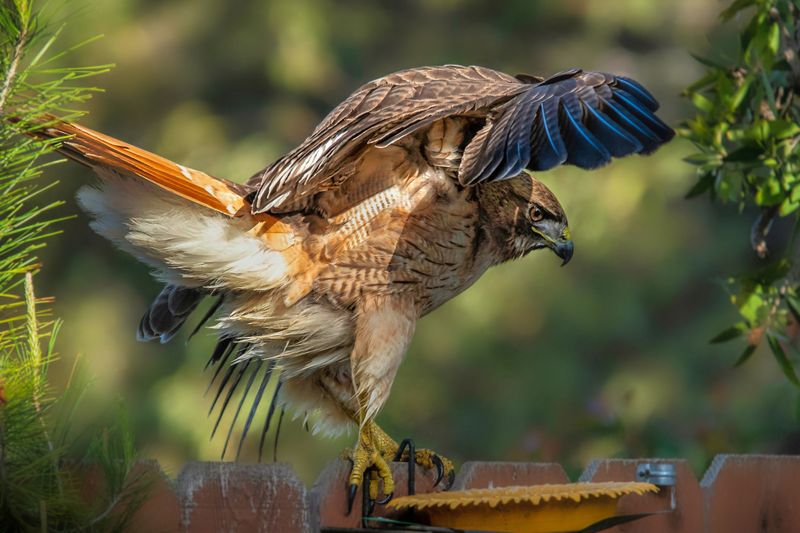
Your bird feeder is doing double duty, and not in the way you planned.
Seed feeders pull in sparrows, finches, and juncos by the dozen. Those small birds are exactly what a hungry hawk is scanning for.
You set up the feeder for the songbirds, but the hawk sees a snack station. Compost bins are another hidden magnet.
Organic scraps attract mice, rats, and insects almost immediately. Rodents that feed near compost piles are easy pickings for a hawk hunting from above.
Ground-feeding birds like doves and towhees are especially vulnerable. They spend long stretches on the open ground, moving slowly and predictably.
A hawk can track that pattern and time a strike with precision. Many Montana homeowners are surprised when a hawk swoops through the feeder area.
It feels alarming at first, but it is completely natural behavior. Hawks follow food chains, and your yard created one without you realizing it.
You do not have to remove your feeders to stop this. Placing feeders near dense shrubs gives small birds a place to escape.
A hawk will still visit, but songbirds will have better odds of survival. Red-tailed hawks visiting Montana yards for this reason are just following instinct.
Your yard accidentally built an ecosystem, and the hawk showed up to complete the circle. That is actually something worth appreciating.
Tall Grass Gives Rodents A Place To Hide
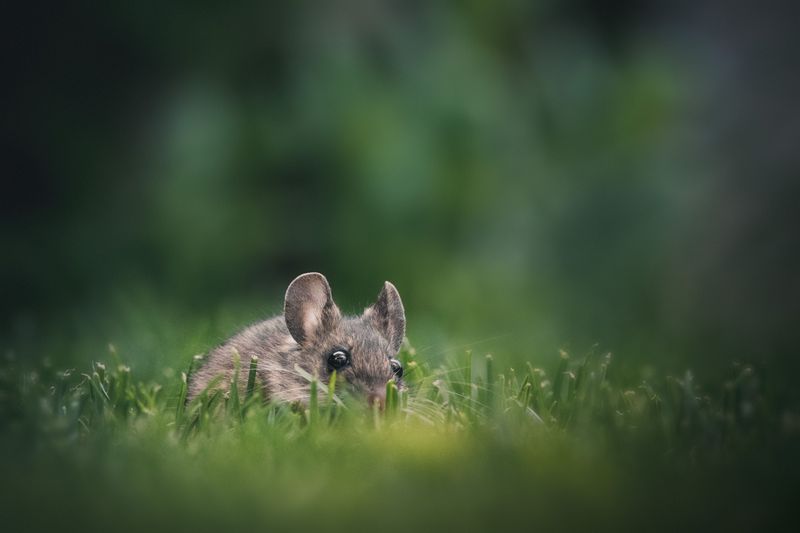
Tall grass gives rodents exactly the kind of cover they need to move, nest, and stay hidden.
When grass grows past a few inches, voles and mice move in quickly. They build runways through the stems and travel without being seen from above.
It feels safe for them, but a hawk overhead sees the movement anyway. Voles are especially fond of thick grass.
They chew runways just below the surface and stay active all year, even under snow. Montana winters push rodents to stay close to sheltered areas like overgrown lawn edges.
Hawks hunt by watching for motion in the grass below. Even a slight rustle from a hidden vole triggers a dive response. The hawk does not need to see the animal, just the movement is enough.
Patches of unmowed grass near gardens or fence lines are common in Montana yards. Homeowners often leave these areas intentionally for pollinators or wildlife habitat.
That is a great idea, but it does invite a full food chain to follow. If you want fewer rodents near your home, mowing regularly helps break up their cover.
Shorter grass makes small mammals feel exposed and less likely to settle in. Hawks will still visit, but rodents will not concentrate as heavily in one spot.
Red-tailed hawks visiting Montana yards for this reason are responding to exactly what tall grass provides. A well-managed lawn balances habitat value with keeping rodent populations from exploding near your house.
Open Lawns Give Hawks A Clear View For Hunting
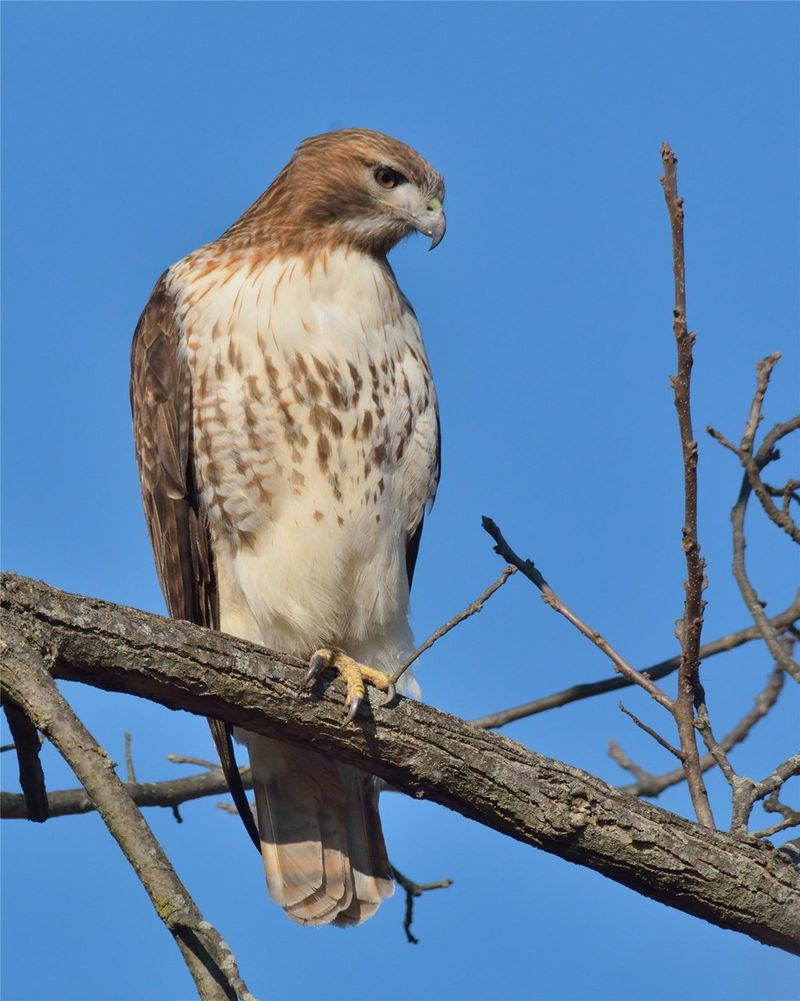
Open space is what red-tailed hawks are built to hunt in.
Red-tailed hawks are not forest hunters by nature. They prefer open terrain where they can see prey from a distance and swoop without obstruction. A flat, open Montana lawn is exactly the kind of landscape they evolved to work.
Unlike smaller raptors, red-tailed hawks need room to maneuver. Their wingspan can reach up to nearly five feet, and they need clear air to dive and pull up safely. Dense trees and shrubs slow them down and reduce their accuracy.
Open lawns also make prey easier to spot from a perch. A hawk sitting on a fence post can scan a large area in seconds. The less clutter on the ground, the faster the hawk can lock onto a moving target.
Many Montana properties combine open lawn areas with natural edges nearby. That mix is ideal for hunting raptors. The hawk hunts across the open ground and retreats to a tree or post to eat undisturbed.
Homeowners with large yards often see hawks more frequently than those in wooded neighborhoods. It is not a coincidence, the open ground is the draw. Hawks are highly efficient, and they go where the conditions favor success.
Red-tailed hawks visiting Montana yards for this reason are simply being strategic. Your open lawn is not just grass, it is prime hunting real estate that a sharp-eyed raptor spotted from hundreds of feet up.
Trees And Elevated Perches Make Your Yard A Preferred Hunting Ground
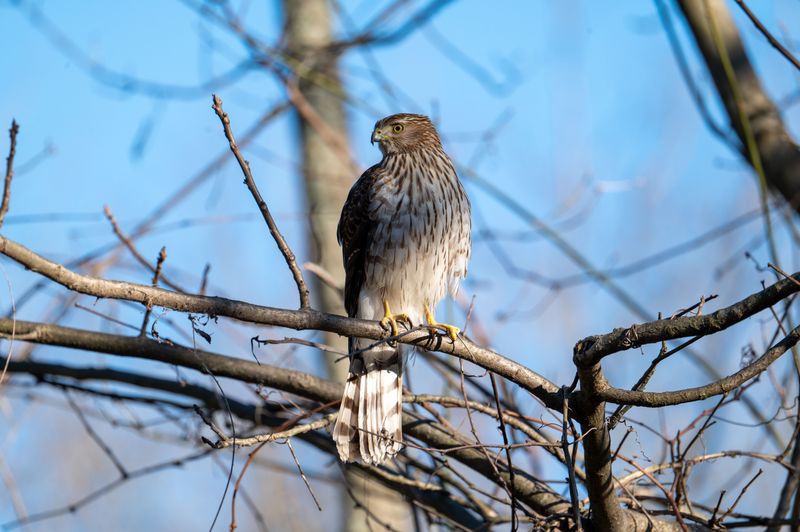
Every great hunter needs a watchtower, and your yard might have several.
Red-tailed hawks are perch hunters at heart. They find a high spot, sit quietly, and wait for prey to reveal itself below. Tall trees, utility poles, fence posts, and roof peaks all serve this purpose perfectly.
Cottonwood trees are common in Montana and grow tall enough to offer excellent sightlines. A hawk perched near the top of a mature cottonwood can see an enormous area below.
That single tree might be the reason a hawk keeps returning to your property. Fence lines are another favorite. A long wooden or wire fence gives a hawk multiple perch options across an open yard.
The bird can move from post to post as it scans different sections of the ground. Utility poles and power lines also serve as perch points.
Hawks frequently use man-made structures when natural perches are limited. Montana properties near open fields often have hawks sitting on poles along driveways or property edges.
The combination of a high perch with open ground below is what makes a yard truly attractive to these raptors. Take away either element and the appeal drops significantly.
Having both is what turns a yard into a reliable stop on a hawk’s daily hunting route. Red-tailed hawks visiting Montana yards for this reason are telling you something clear.
Your yard has the elevation and the openness that makes hunting practical, efficient, and worth coming back to again and again.
What A Red-Tailed Hawk Sighting Says About Your Yard
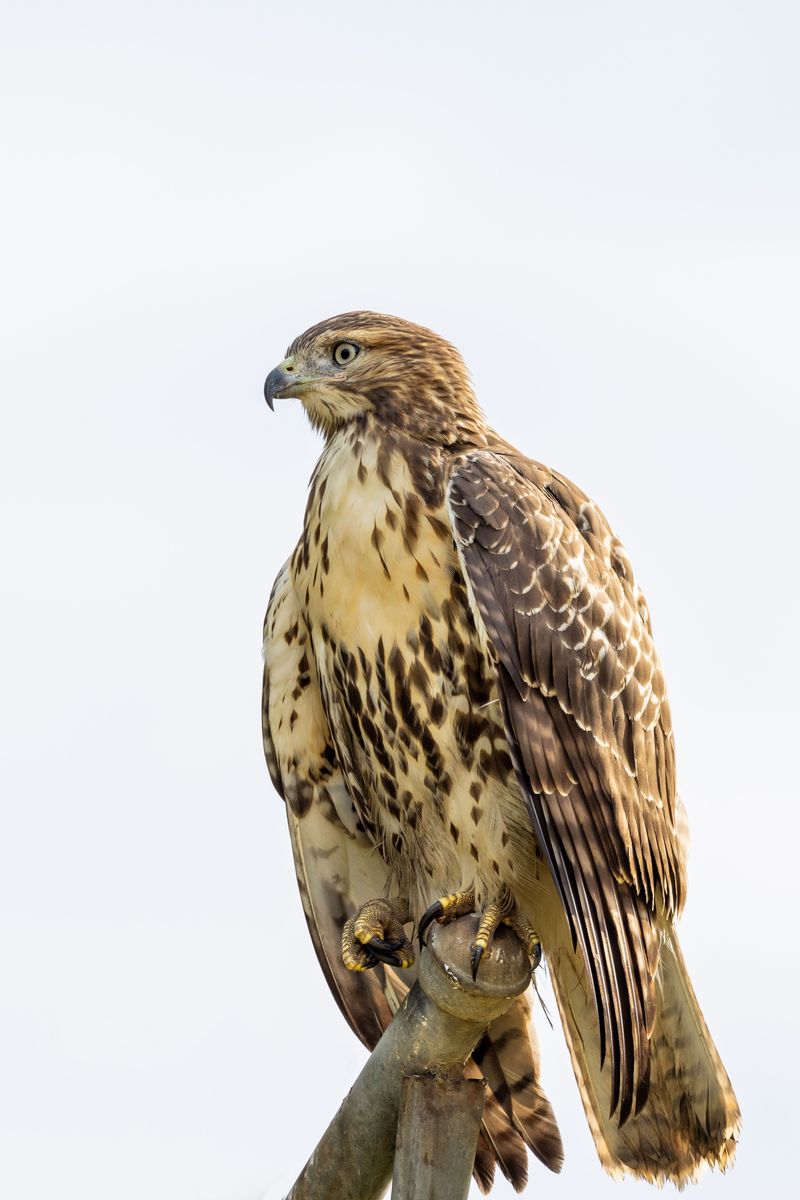
A hawk in your yard is not random, it is a report card.
When a red-tailed hawk chooses your property, it is because your yard passed a checklist. Food is available, perches exist, and the terrain allows a clean approach.
Hawks are efficient and will not waste time on a yard that does not offer what they need. Seeing one regularly means your yard supports a functioning food web.
You have insects feeding birds, birds attracting raptors, and rodents completing the cycle. That is a sign of a healthy outdoor environment, not a problem to fix.
Montana homeowners sometimes worry that a hawk means something is wrong. The opposite is true. A hawk sighting signals that your yard is alive with biodiversity.
You created habitat whether you intended to or not. Hawks also return to yards where they have succeeded before. If a hawk caught prey on your property last week, expect it back soon.
They remember productive locations and factor that into their daily patrol routes. Some homeowners set up cameras after their first hawk sighting and end up with incredible footage.
Watching a red-tailed hawk hunt from start to finish is genuinely thrilling. Few wildlife moments are as raw or as close to home.
Red-tailed hawks visiting Montana yards for this reason are giving you a gift. Your yard earned their attention, and that is something worth celebrating every single time one lands on your fence.