The Georgia Shrubs Painted Buntings Prefer For Cover And Protection
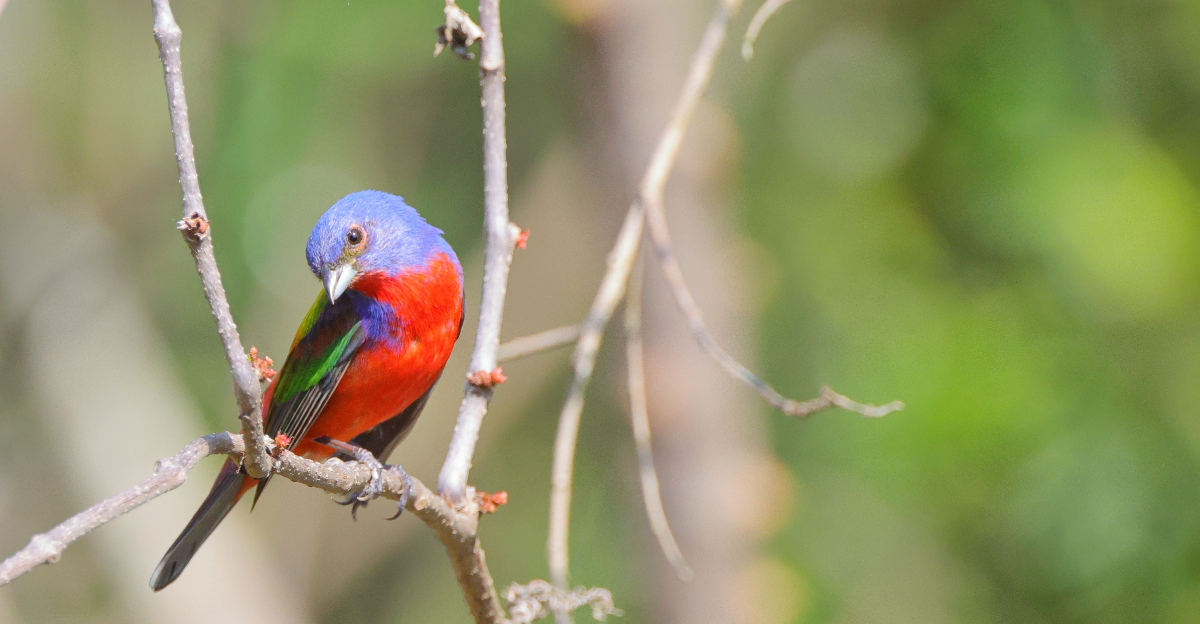
Spotting a Painted Bunting in the yard can feel like a lucky moment. The colors are hard to miss, yet these birds rarely spend all their time out in the open.
A quick glimpse is often followed by a fast retreat into nearby vegetation, leaving many people searching the yard for where the bird disappeared.
Food gets plenty of attention when people talk about attracting birds. Feeders, seed-producing plants, and colorful flowers usually take center stage.
What receives less attention is the role that shelter plays. Birds need places where they can rest, hide from predators, and feel secure throughout the day.
That is where the right shrubs can make a difference. Georgia landscapes already contain several plants that provide the type of cover Painted Buntings prefer.
Some offer dense branching, while others create safe spaces where birds can stay hidden when they are not feeding. Choosing the right shrubs can make a property much more appealing to these colorful visitors.
1. Dense Branches Give Painted Buntings A Safer Place To Hide
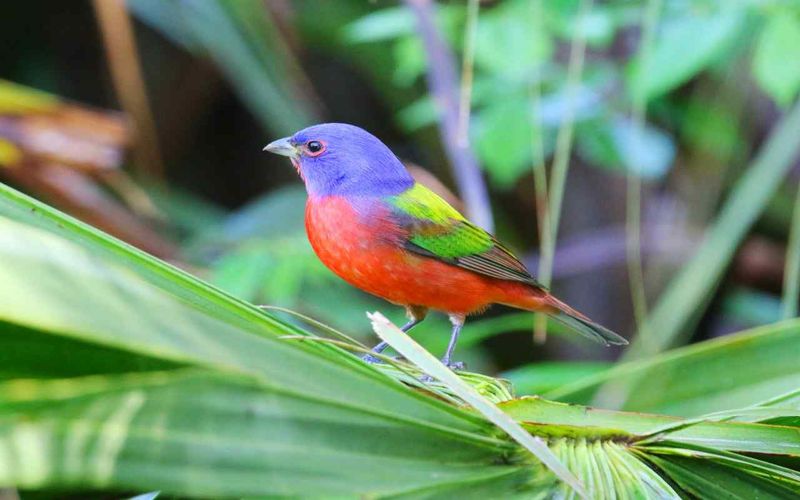
Painted Buntings do not pick a hiding spot randomly. Branch density is one of the first things they look for when choosing cover.
A shrub with thin, spread-out branches offers very little protection. Predators can spot a bird easily when there is nothing blocking the view.
Dense branching creates a maze of twigs and leaves that makes it much harder for hawks, cats, or other threats to reach a bird inside.
Native shrubs with tight, layered growth tend to perform best in this role. Plants that hold their structure through multiple seasons give birds reliable cover year-round.
Even in late fall, shrubs with persistent stems and overlapping branches still provide useful shelter.
Planting shrubs in clusters rather than individually makes a noticeable difference. A single shrub gives limited options.
A group of shrubs creates a connected zone where birds can move, feed, and rest without fully exposing themselves.
Positioning matters too. Shrubs placed near seed feeders give Painted Buntings a quick escape route if something startles them.
Birds that feel unsafe near a feeder will simply stop visiting. Dense cover nearby keeps them coming back consistently.
Pruning shrubs too aggressively can remove the exact branching structure that makes them valuable. Light, selective trimming keeps plants healthy without stripping away the density birds rely on most.
2. American Beautyberry Provides Thick Seasonal Cover
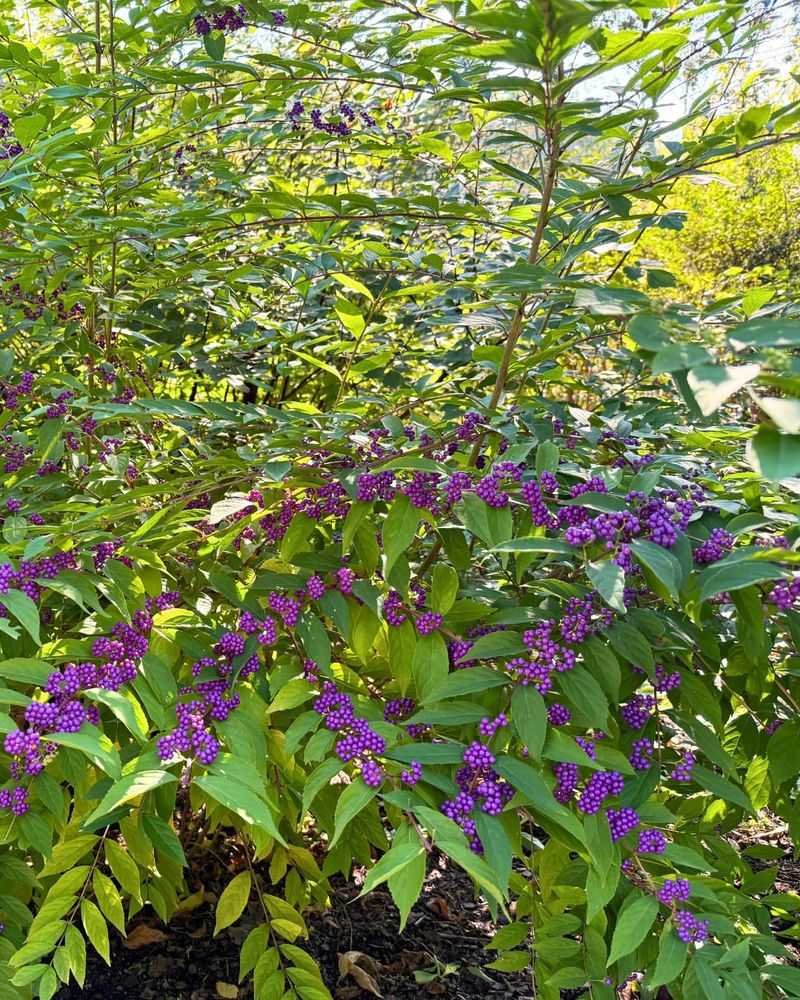
Few shrubs stop people in their tracks quite like American Beautyberry in fall. Those clusters of vivid purple berries are striking, but for Painted Buntings, the real value is in the structure of the plant itself.
American Beautyberry grows with long, arching stems that bend outward and create a natural canopy close to the ground. That low, sweeping shape gives small birds a sheltered entry point that larger predators cannot easily navigate.
During summer, the broad green leaves fill in densely enough to block sightlines from outside the shrub. Birds can move through the interior without being clearly visible.
That kind of cover is especially useful during nesting season when birds are more vulnerable.
Your Georgia Garden Changes Every Week. Your Plan Should Too.
Gardening in Georgia changes quickly throughout the season. Every Friday you’ll receive a simple weekly plan showing exactly what to plant, prune, fertilize, harvest, and protect so you never miss the right timing.
By fall, the berries become a food source on top of the shelter. Painted Buntings eat a variety of seeds and small fruits, and while Beautyberry fruit is more popular with other species, the plant still draws bird activity that benefits the whole yard.
American Beautyberry grows well across Georgia in average to moist soils. It handles part shade without losing much of its form, which makes it flexible for spots that do not get full sun all day.
Cutting it back hard in late winter encourages vigorous new growth. Fresh stems fill in quickly and restore the dense, layered shape that makes this shrub so useful as bird cover through spring and summer.
3. Wax Myrtle Creates Year-Round Shelter
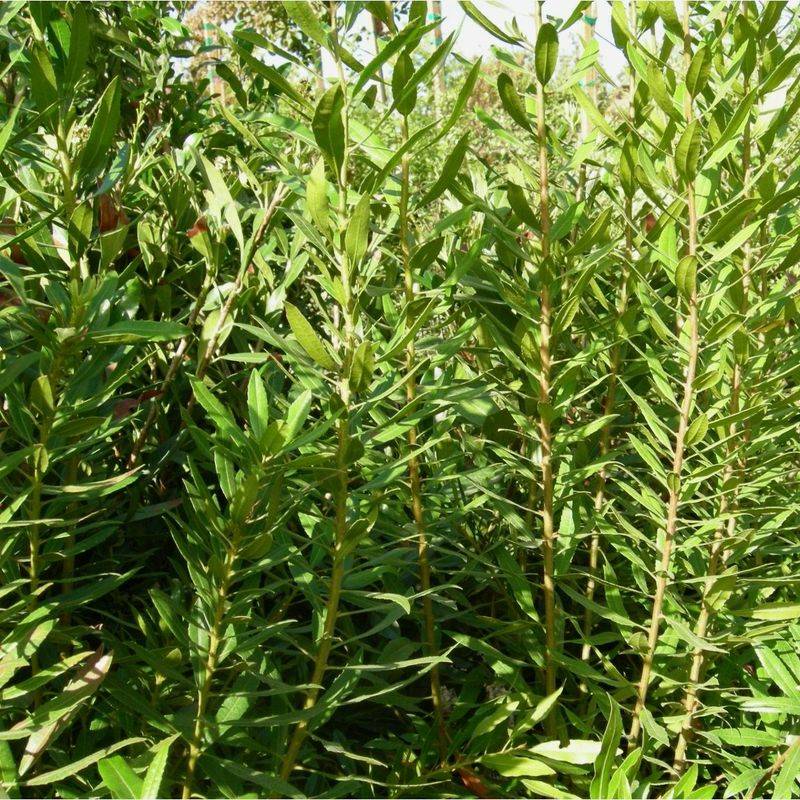
Wax Myrtle earns its place in any wildlife-friendly yard fast. It grows quickly, holds its leaves through winter, and creates the kind of dense evergreen mass that Painted Buntings genuinely seek out.
Evergreen cover is harder to find in winter when most deciduous shrubs drop their leaves. Wax Myrtle stays full and green, giving birds a consistent refuge even during the coldest months of the year.
Small waxy berries appear on female plants and persist well into winter. Many bird species feed on them, which increases overall bird activity around the shrub.
More birds nearby often means Painted Buntings feel safer using the area too.
Wax Myrtle can grow large if left unmanaged. In a yard setting, regular trimming keeps it at a useful size without removing too much of the interior density.
Avoid cutting it into a formal shape, which strips away the natural branching that birds prefer.
Salt tolerance makes Wax Myrtle a solid choice near coastal areas of Georgia. It also handles poor soils and occasional flooding better than many other native shrubs.
That resilience means less maintenance over time.
Planting a few Wax Myrtles together creates a natural hedgerow effect. Birds can move between plants without crossing open ground.
That connected shelter corridor is one of the most effective ways to make a yard feel safe to wildlife year-round.
4. Yaupon Holly Offers Protection In All Seasons
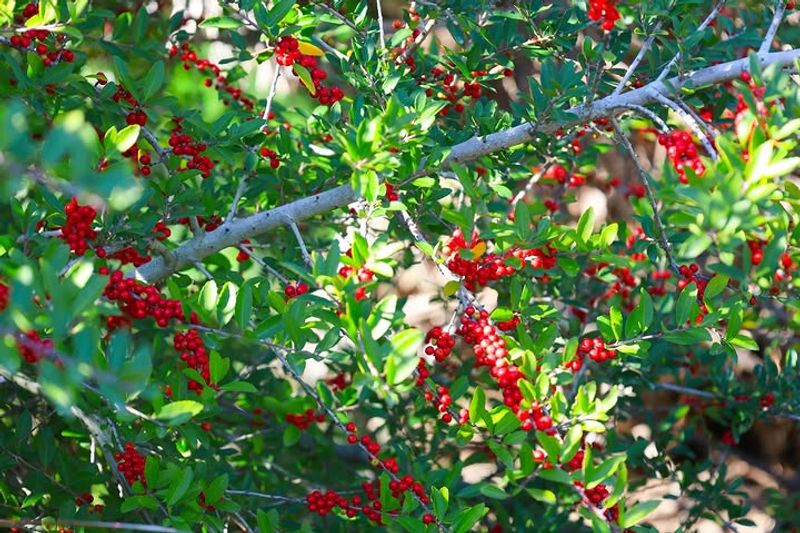
Yaupon Holly is one of the toughest native shrubs in the Southeast, and birds know it. Its dense, spiny branches create a natural barrier that predators are reluctant to push through.
Small birds like Painted Buntings can slip through the tight branching easily. Larger threats cannot.
That asymmetry makes Yaupon Holly an especially effective refuge shrub in yards where cats or hawks are a regular concern.
Red berries appear in fall and can persist through winter on female plants. Those berries attract a wide range of birds, which keeps the area lively.
Painted Buntings benefit from the general cover even when they are not feeding directly on the fruit.
Yaupon Holly holds its leaves year-round, which is a significant advantage over deciduous options. Shelter does not disappear in November.
Birds can rely on the same shrub in January that they used in July.
Growth habits vary depending on the cultivar. Native straight-species Yaupon tends to develop the most natural, bird-friendly branching structure.
Dwarf or weeping forms may offer less effective interior cover, so choosing a full-size variety usually works better for wildlife purposes.
Yaupon Holly tolerates drought, wet conditions, and a wide range of soils. Once established, it needs very little attention.
For gardeners in Georgia looking for a low-maintenance, high-impact shelter shrub, Yaupon Holly is consistently reliable.
5. Chickasaw Plum Forms Dense Thickets For Nesting Birds
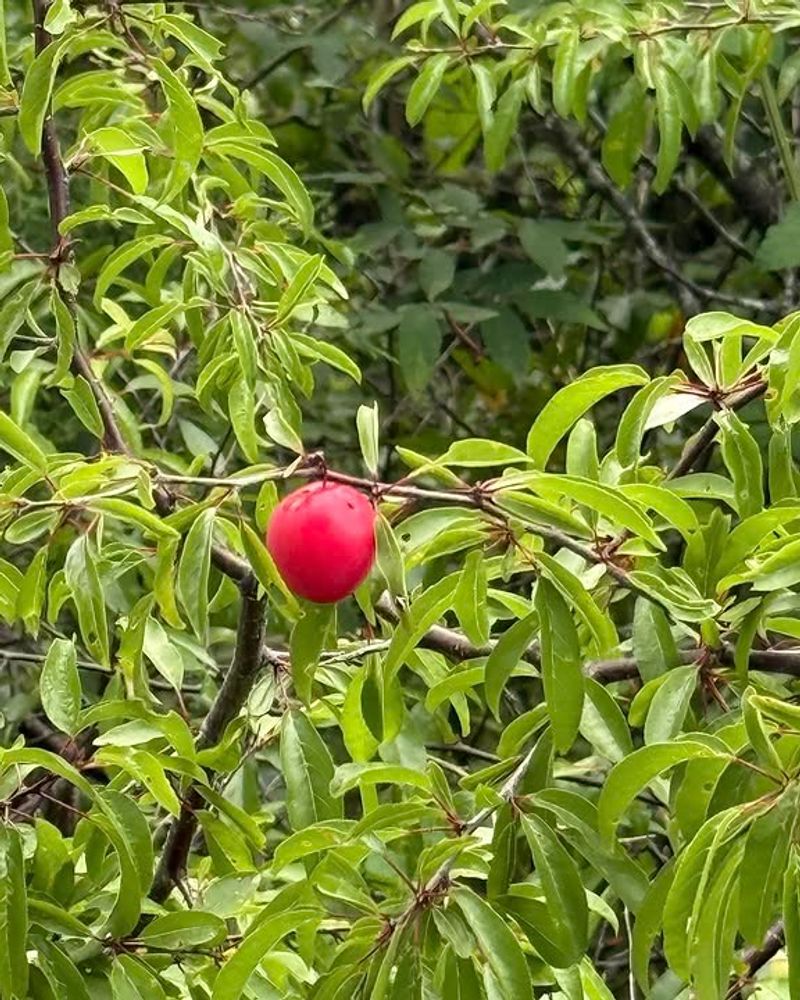
Walk past a Chickasaw Plum thicket in spring and you will hear birds before you see them. That kind of activity tells you exactly how valuable this shrub is to local wildlife.
Chickasaw Plum produces a tangle of thorny stems that builds into an almost impenetrable mass over time. That density is exactly what ground-level and low-nesting birds need.
Painted Buntings nest close to the ground, and a thorny thicket provides serious protection around a nest site.
Spring brings white blossoms that attract insects. More insects mean more food available nearby, which is a real draw during breeding season when birds need extra energy.
The small plums that follow in summer offer additional food value for a range of species.
Chickasaw Plum spreads by root sprouts, which can be a benefit or a challenge depending on your space. In a larger yard or naturalized area, that spreading habit helps it form the kind of wide thicket that gives birds the most protection.
In smaller spaces, occasional management keeps it in check.
It grows across a wide range of soil types and handles dry conditions once established. Full sun encourages the densest growth and the best fruit production.
Partial shade still produces usable cover but with somewhat looser structure.
Few native shrubs build the same level of secure, layered cover as a mature Chickasaw Plum thicket. Nesting birds return to the same sites repeatedly when the cover is reliable.
6. Arrowwood Viburnum Gives Birds A Secure Retreat
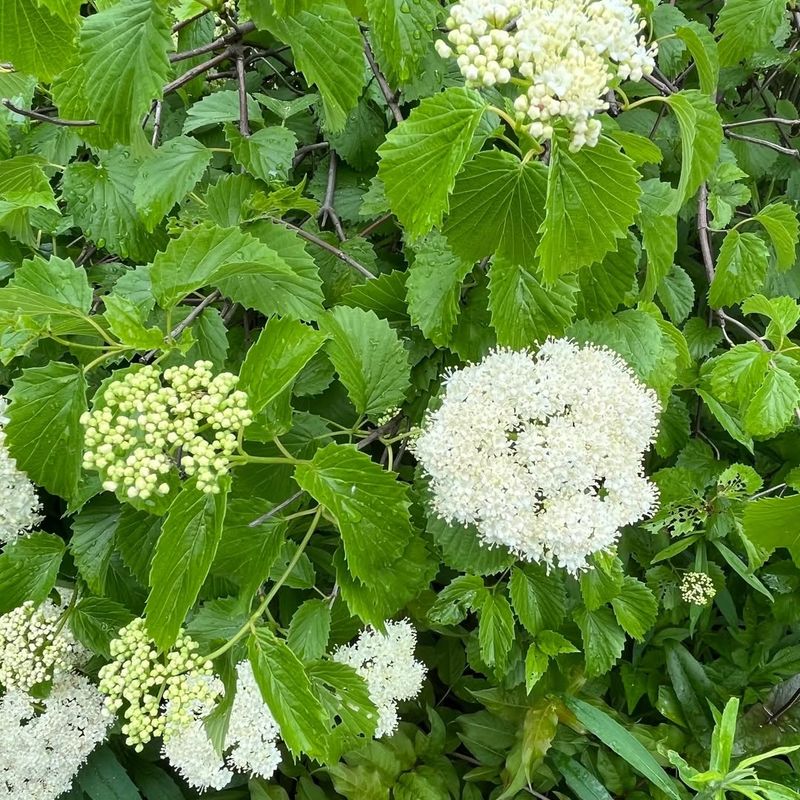
Arrowwood Viburnum does not get the same attention as flashier native plants, but birds notice it. Its upright, multi-stemmed form creates excellent interior cover that small birds use constantly.
Stems grow densely from the base and branch repeatedly as the shrub matures. That layered structure gives Painted Buntings multiple levels of cover within a single plant.
Birds can perch low, move mid-level, or shelter near the top depending on what feels safest at any moment.
Late summer brings clusters of small dark blue berries that birds eat quickly. The fruit does not last long once it ripens, which tells you how actively birds are working through it.
Even after the berries are gone, the branching structure remains valuable shelter.
Fall color on Arrowwood Viburnum adds some visual interest for gardeners. Leaves shift to red or purple tones before dropping.
After leaf drop, the dense stem network still provides reasonable cover through winter, especially in larger, well-established specimens.
Average to moist soils suit this shrub well. It handles part shade without becoming too open or leggy, which makes it useful in spots that do not receive full sun all day.
That flexibility helps in yards where light conditions vary across different areas.
Planting Arrowwood Viburnum near other shrubs creates a connected shelter zone. Birds move between plants more confidently when cover is continuous rather than isolated.
A mixed planting always outperforms a single specimen for wildlife value.
7. Buttonbush Adds Cover Near Moist Areas
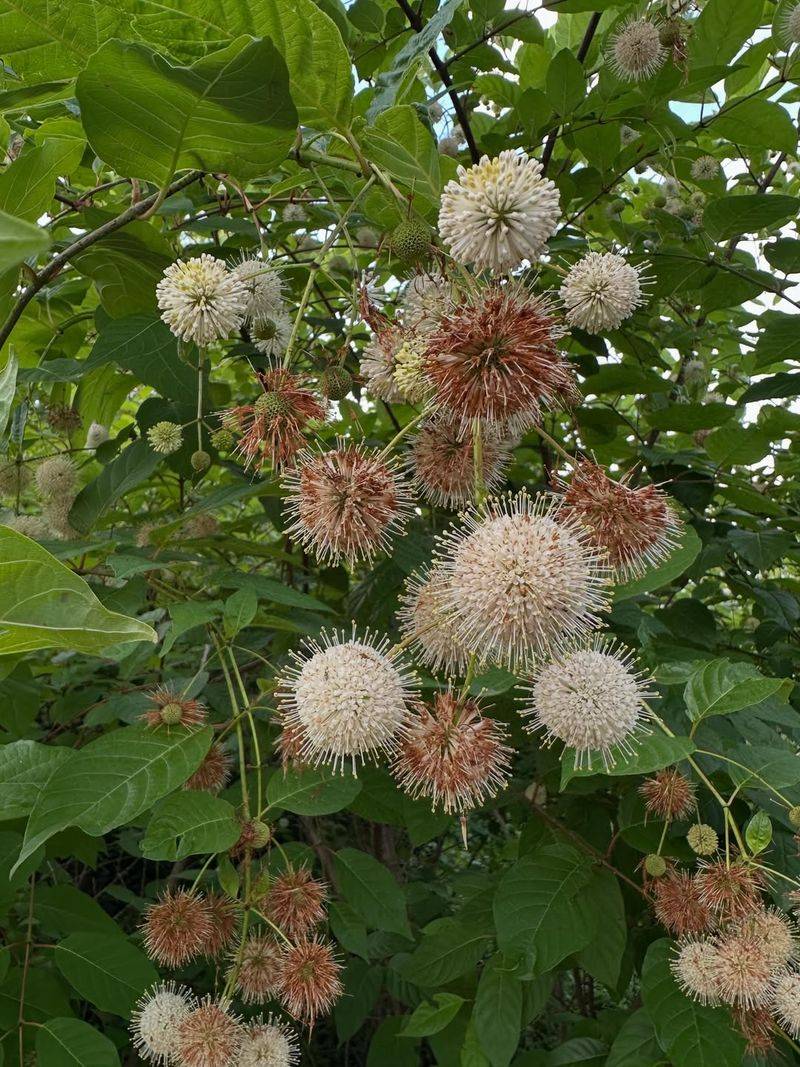
Buttonbush grows where many shrubs struggle. Wet, soggy areas near ponds, streams, or low spots in a yard are exactly where this native shrub thrives.
Painted Buntings are often found near water sources. Buttonbush bridges two needs at once by providing dense cover right at the water’s edge.
Birds can drink, bathe, and retreat to shelter within a very short distance.
Spherical white flower clusters appear in summer and attract pollinators heavily. That insect activity pulls in birds looking for an easy protein source.
During breeding season, that kind of food concentration near cover is genuinely useful for nesting pairs.
Buttonbush develops a dense, shrubby form with multiple stems and overlapping branches. It is not the spiny fortress that Chickasaw Plum creates, but its thick growth still offers meaningful protection for small birds moving through low vegetation near water.
Seed heads persist into winter and provide food for waterfowl and songbirds alike. Painted Buntings may not be the primary users of those seeds, but their presence in the area keeps them connected to the shelter the shrub provides.
Buttonbush tolerates standing water for extended periods, which almost no other native shrub handles as well. If you have a low-lying area in your yard that stays wet after rain, Buttonbush turns that problem spot into productive wildlife habitat.
It fills a niche that few other shrubs can match in Georgia landscapes.
8. Oakleaf Hydrangea Creates Shelter At Ground Level
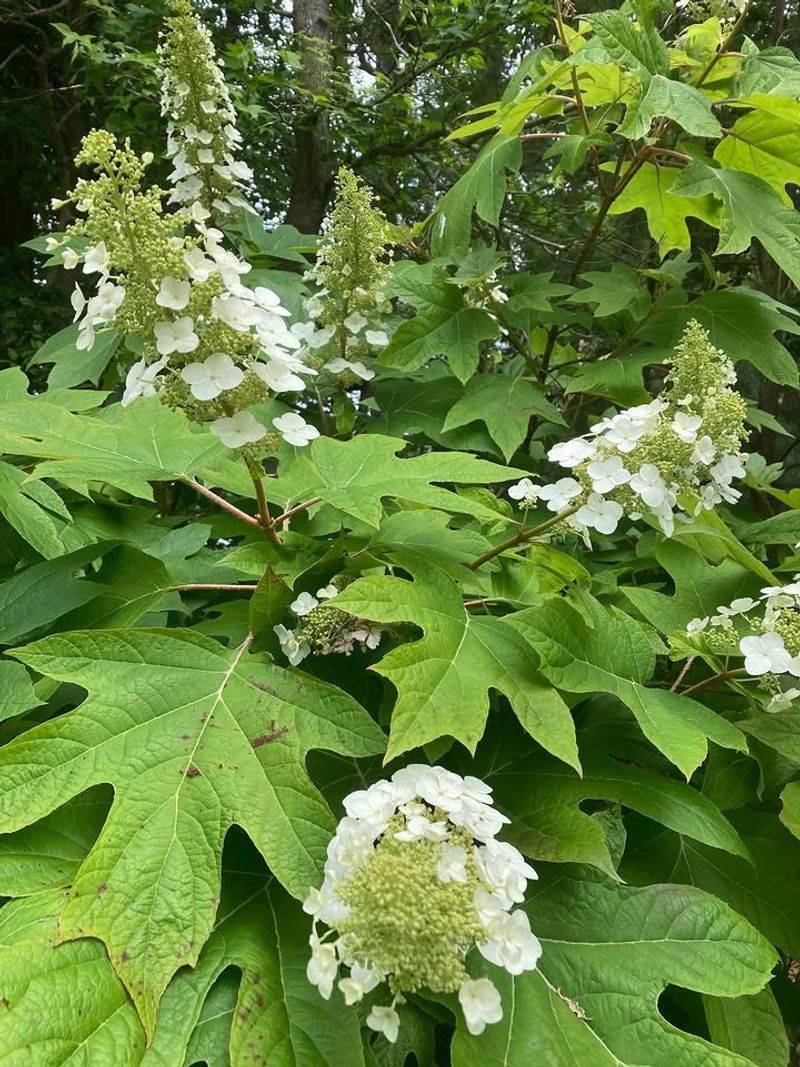
Ground-level cover is one of the most overlooked elements in a bird-friendly garden. Oakleaf Hydrangea fills that gap with a presence that few other native shrubs can match at low heights.
Painted Buntings nest and forage close to the ground. A shrub that provides dense cover starting right at soil level gives these birds a much more useful refuge than one that only fills in higher up.
Oakleaf Hydrangea branches from the base in a way that creates real shelter near the ground.
Large, deeply lobed leaves cover the plant heavily through the growing season. That foliage creates a visual screen that blocks sightlines from outside the shrub.
Birds moving through the lower sections of the plant stay well hidden from above and from the sides.
Showy white flower clusters appear in late spring and early summer. They fade to a papery tan and persist through winter, adding structural interest even after the leaves drop.
The dried flower heads add some visual texture to the winter silhouette without reducing the shelter value of the woody stems.
Oakleaf Hydrangea performs best in part shade to full shade, which makes it ideal for spots under mature trees. Those shaded areas are often underplanted and underused in home gardens.
Adding this shrub there creates productive wildlife habitat in spaces that might otherwise stay empty.
Exfoliating bark on older stems adds character through winter. Established plants can spread slowly by suckering, gradually expanding the ground-level cover zone over several years.