The Most Underrated North Carolina Native Shrub That Helps Deter Ticks Along Wooded Property Edges
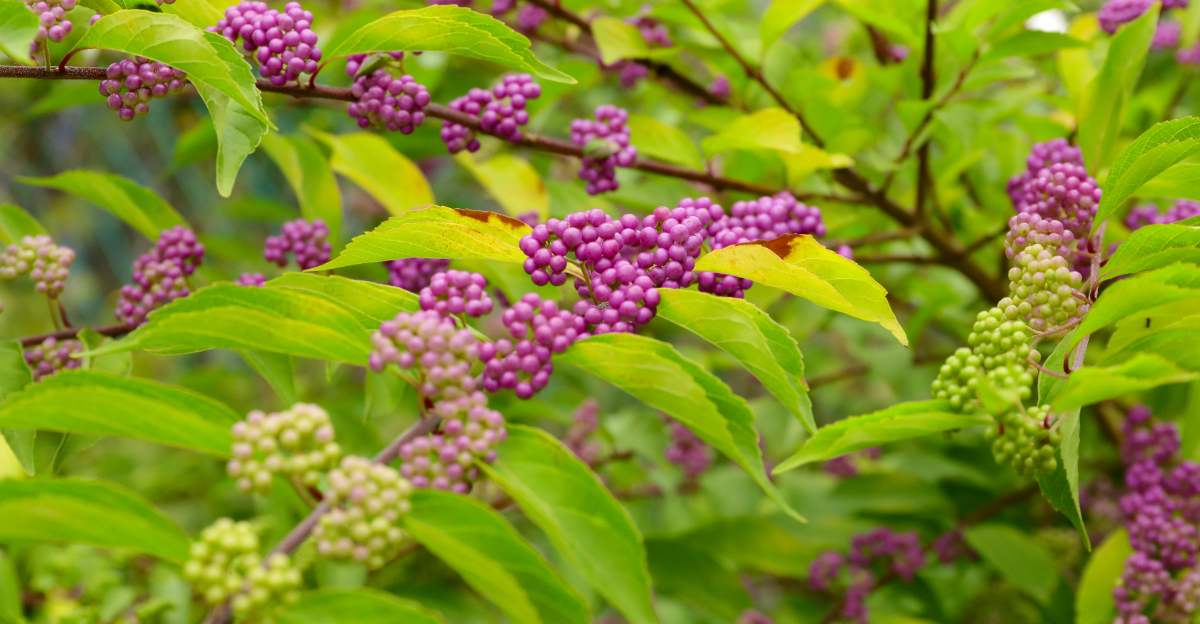
Wooded property edges in North Carolina are where tick pressure is highest and hardest to manage through conventional means.
The transitional zone between maintained yard and natural growth is exactly where ticks concentrate, and no amount of lawn treatment fully addresses what is happening in that boundary area.
One native shrub changes the dynamic along those edges in a meaningful way, altering the microhabitat conditions that ticks depend on while fitting naturally into the visual character of a wooded border.
It handles the variable soil moisture, partial shade, and root competition that make planting along woodland edges challenging for less adapted species.
For North Carolina properties with any amount of wooded boundary, this shrub belongs in that transitional zone as a first-line planting choice.
1. American Beautyberry
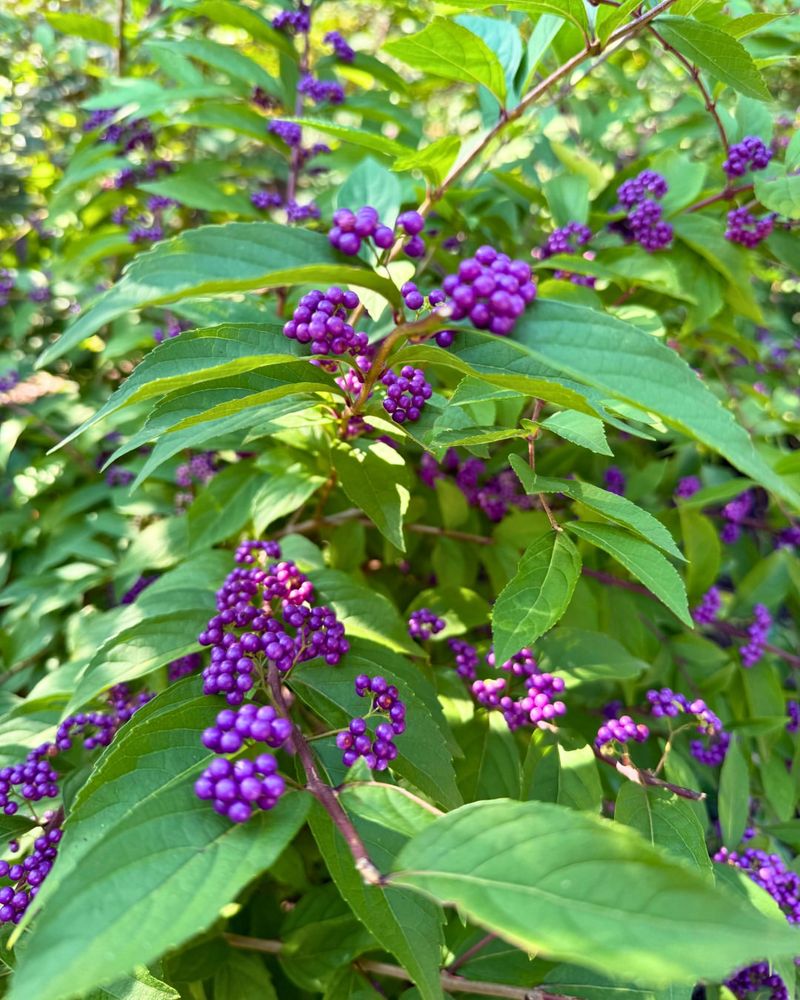
Not every standout plant gets the spotlight it deserves, and American beautyberry is a perfect example of that.
Known scientifically as Callicarpa americana, this native shrub grows naturally in woodlands, thickets, and along the edges where trees meet open ground.
That makes it a natural fit for wooded property borders in North Carolina, where those in-between spaces can be tricky to plant well.
What really sets beautyberry apart from other border shrubs is what happens inside its leaves.
Researchers at the USDA Agricultural Research Service discovered that the leaves contain natural compounds with real tick-repellent properties.
That kind of science-backed credential is rare for a landscape plant, and it gives gardeners a genuine reason to consider it beyond just its appearance.
Still, it is worth being clear about what planting one shrub can and cannot do. A single beautyberry along the tree line will not remove every tick from your yard. Think of it as one smart piece of a bigger plan rather than a complete solution on its own.
Combined with good yard habits, it becomes a meaningful part of a thoughtful approach to managing your wooded edge.
2. It Is Used To North Carolina Conditions
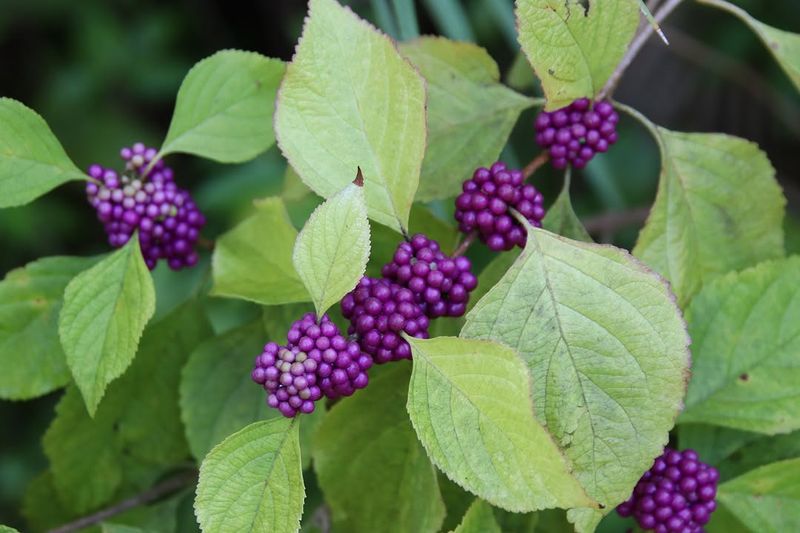
Some plants fight their environment every single season. American beautyberry does the opposite.
Native to the central and southeastern United States, this shrub evolved right alongside the climate, soil, and wildlife found throughout North Carolina.
That natural match means it tends to settle in without the constant fussing that many ornamental shrubs demand.
For gardeners trying to create natural-looking borders or informal property lines, beautyberry fits in beautifully.
It thrives along woodland edges, in thickets, and in those loose transition zones where a manicured lawn gives way to wilder growth. Rather than looking out of place, it looks like it belongs there, because it genuinely does.
Native shrubs also tend to work better with local wildlife and weather patterns than plants brought in from other regions.
North Carolina summers can be hot and humid, and winters can bring unexpected cold snaps.
Beautyberry handles those swings with ease because it has been adapting to this region for a very long time.
Choosing a native shrub for your property edge is not just a feel-good decision, it is a practical one that saves time, water, and effort over the long run.
Your North Carolina Garden Changes Every Week. Your Plan Should Too.
Gardening in North Carolina changes quickly throughout the season. Every Friday you’ll receive a simple weekly plan showing exactly what to plant, prune, fertilize, harvest, and protect so you never miss the right timing.
3. Its Leaves Contain Tick-Repellent Compounds
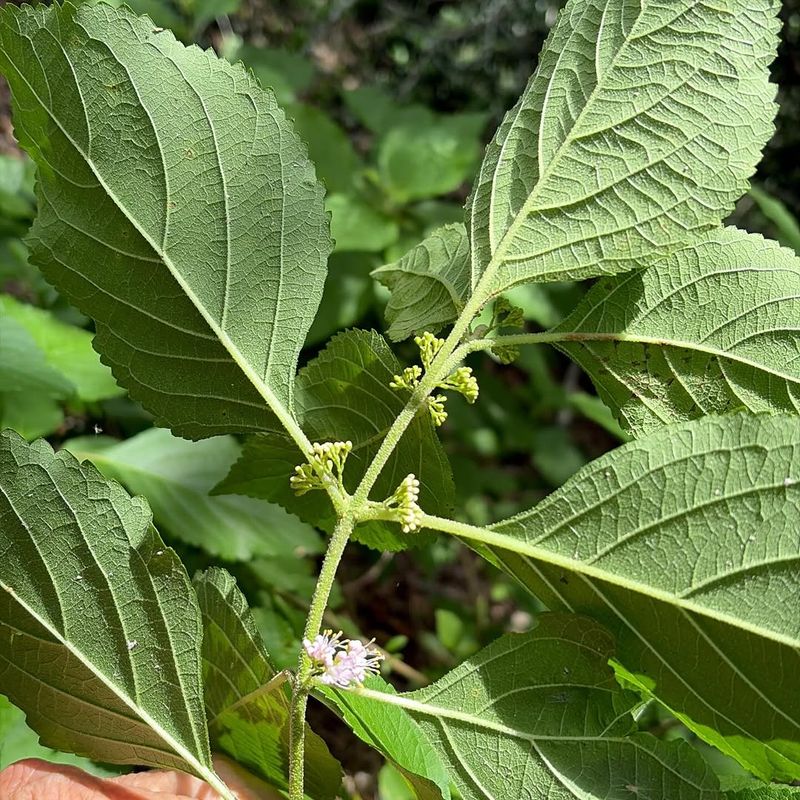
Here is something that surprises most people when they first hear it.
The leaves of American beautyberry contain natural chemical compounds called callicarpenal and intermedeol, and both of these have shown real tick-repellent activity in scientific testing.
That is not a folk remedy or a gardening rumor. It comes from research conducted by scientists at the USDA Agricultural Research Service.
In laboratory studies, these compounds were effective at repelling blacklegged tick nymphs, which are the tiny immature ticks most commonly linked to Lyme disease transmission.
The research tested the leaf compounds directly, not whole shrubs planted in a yard.
So while the science is genuinely exciting, it is important to understand what it actually shows rather than overstating the results.
Planting beautyberry along your property edge will not create an invisible force field against ticks.
What it does offer is a native shrub whose leaves carry naturally occurring compounds with documented repellent properties. That is a meaningful advantage when you are choosing plants for a wooded border.
Combined with other smart yard practices, beautyberry adds a science-supported layer to your overall approach without requiring any extra products or treatments.
4. It Works Best As Part Of A Border Strategy
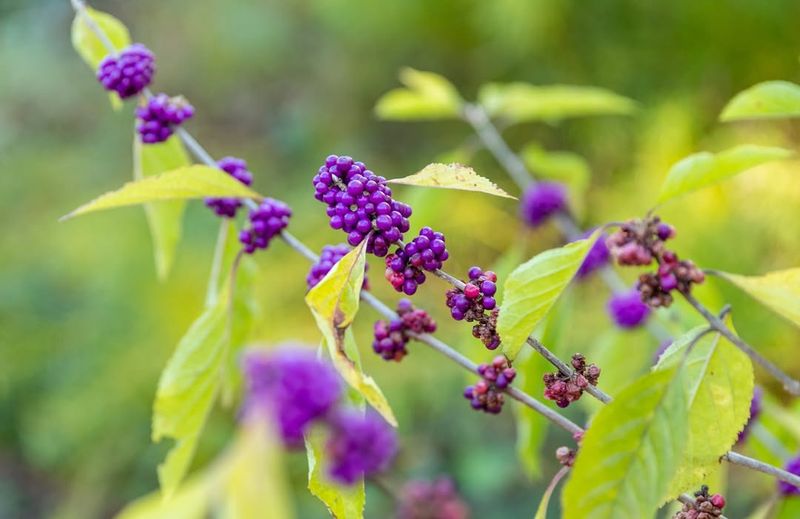
Beautyberry works hardest when it is part of a smarter plan, not when it is standing alone in the middle of a messy border.
Ticks love places where they can wait at body height for a passing host, and that means tall grass, leaf litter, brush piles, and thick overgrown edges are some of their favorite spots.
Managing those conditions alongside your planting choices makes a real difference. A well-thought-out wooded edge includes more than just shrubs.
Keeping a clearly mowed strip between the lawn and the tree line, raking up deep leaf litter, removing brush piles, and maintaining open walking paths all help reduce the kinds of habitat that ticks prefer.
Adding beautyberry into that managed edge gives you the ornamental benefits and the leaf-compound advantage at the same time.
Think of it like building a system rather than relying on a single fix. Each piece of the strategy supports the others, and beautyberry fits naturally into that layered approach.
Its arching shape fills in the border visually while its leaves bring the research-backed compounds into the mix.
When the whole edge is managed thoughtfully, beautyberry becomes much more than just a pretty plant along the tree line.
5. It Fits The Woodland Edge Better Than Many Herbs
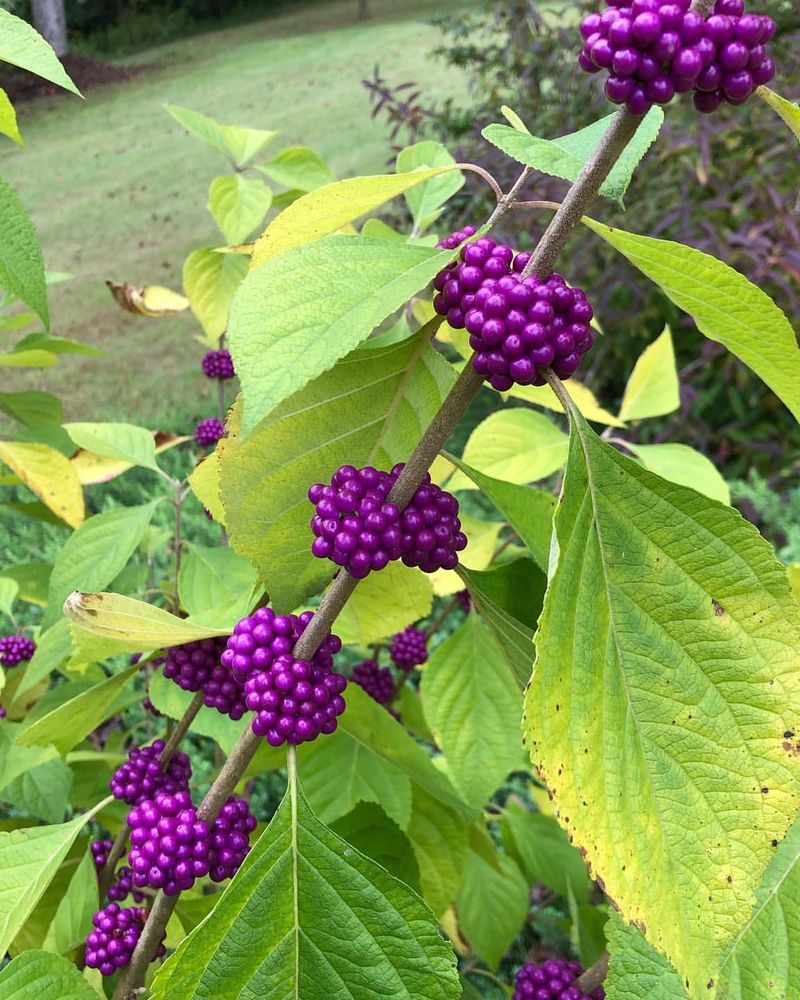
Lavender looks great on a sunny hillside in Provence. Rosemary thrives in a raised bed with gritty, well-drained soil and full sun.
Both of those plants are popular for their tick-repellent reputation, but neither one is a great match for the shaded, humid, woodland-edge conditions found along many North Carolina property lines.
American beautyberry is built for exactly those spots. It handles full sun to partial shade comfortably, and it grows naturally in the kind of transitional woodland margin where most herb gardens would struggle or fail entirely.
For gardeners dealing with a mix of light and shade along a wooded border, beautyberry simply makes more sense than trying to force a Mediterranean herb into the wrong environment.
Choosing the right plant for the right place is one of the most important principles in gardening, and beautyberry earns its spot here because it genuinely fits.
You do not have to amend the soil dramatically, fight with drainage issues, or worry about whether it will survive a humid North Carolina summer. It is already suited for those conditions.
That site compatibility, combined with its tick-repellent leaf compounds, makes it a much more realistic choice for wooded edges than many of the commonly recommended herb alternatives.
6. It Adds A Soft Barrier Without Looking Formal
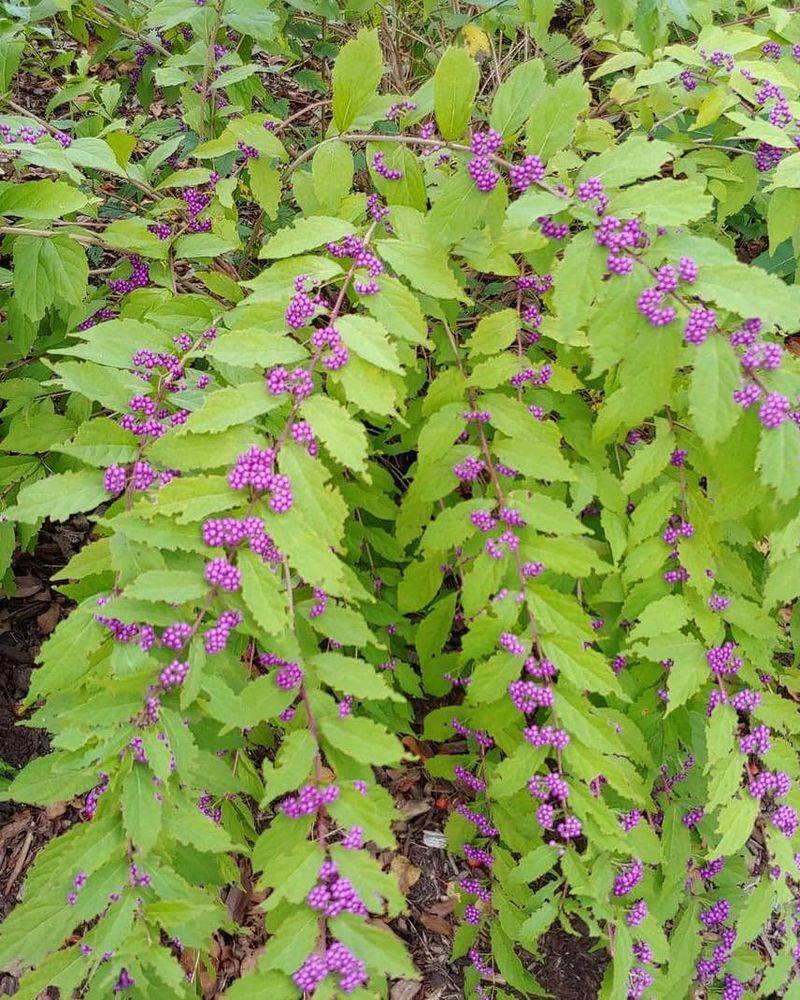
Not every yard calls for a neatly clipped hedge or a perfectly straight row of boxwoods.
For many North Carolina properties with wooded edges, a more relaxed and natural border actually looks far better with the surrounding landscape.
American beautyberry delivers exactly that kind of easygoing structure without any fussing or formal pruning required.
Its arching stems sweep outward in a graceful, fountain-like shape that softens the visual transition between a mowed lawn and the denser growth of the woods beyond.
Rather than creating a hard wall between spaces, it creates a gentle, flowing boundary that feels intentional but never stiff.
Neighbors and visitors often notice it without quite being able to explain why the yard edge looks so good.
For gardeners who want their property to feel welcoming and lived-in rather than overly manicured, beautyberry is a natural match.
It brings structure to the border without demanding that everything around it look perfectly trimmed.
That loose, organic quality is actually one of its greatest strengths, and it is something that formal hedging plants simply cannot replicate.
Planting beautyberry along a wooded edge is a low-effort way to make that transition zone look purposeful, polished in a relaxed way, and genuinely beautiful through multiple seasons.
7. It Offers Purple Berries For Seasonal Interest
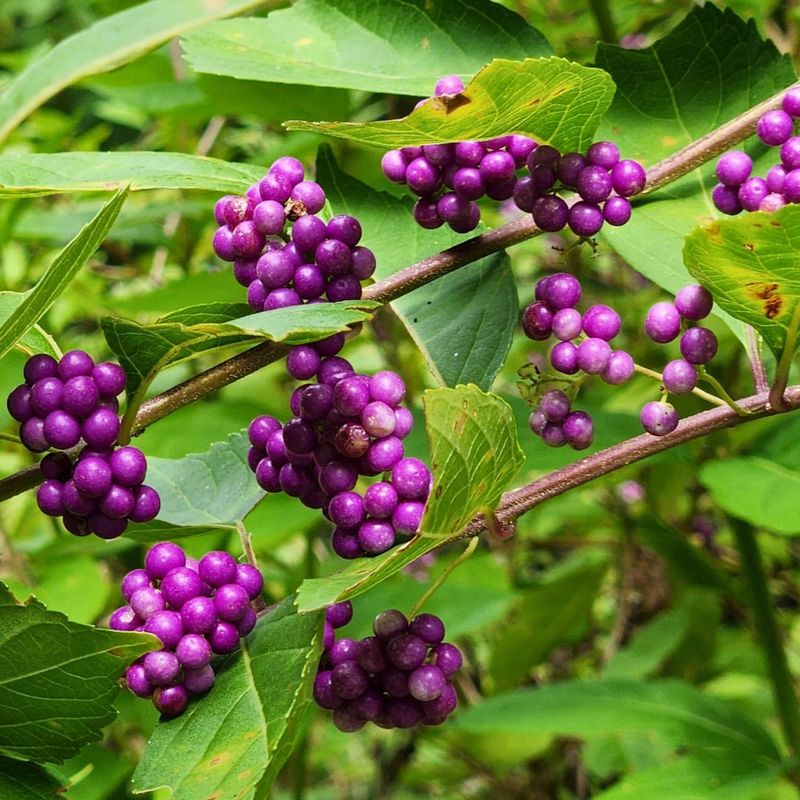
Few plants in the native shrub world stop people in their tracks the way American beautyberry does in late summer and fall.
When those tight clusters of vivid purple to bluish berries appear along every stem, the effect is genuinely striking.
The color is so bold and unexpected that many people assume the plant must be exotic or difficult to grow, and they are surprised to learn it is a low-maintenance North Carolina native.
That ornamental punch is a big part of why beautyberry deserves more attention in residential landscapes. Most border shrubs offer one season of visual interest and then fade into the background.
Beautyberry earns its place through multiple seasons, with attractive foliage in summer and those unforgettable berry clusters carrying the show well into autumn.
Birds tend to discover the berries too, which adds another layer of life and movement to the yard.
For anyone who has been searching for a native shrub that does double duty as both a practical border plant and a genuine showstopper, beautyberry checks both boxes without any extra effort.
The berry color alone is enough to make it worth planting, and the tick-repellent leaf compounds and wildlife value make the decision even easier.
It is genuinely one of the most underused plants available to North Carolina gardeners right now.
8. It Supports Wildlife While Still Serving A Practical Purpose
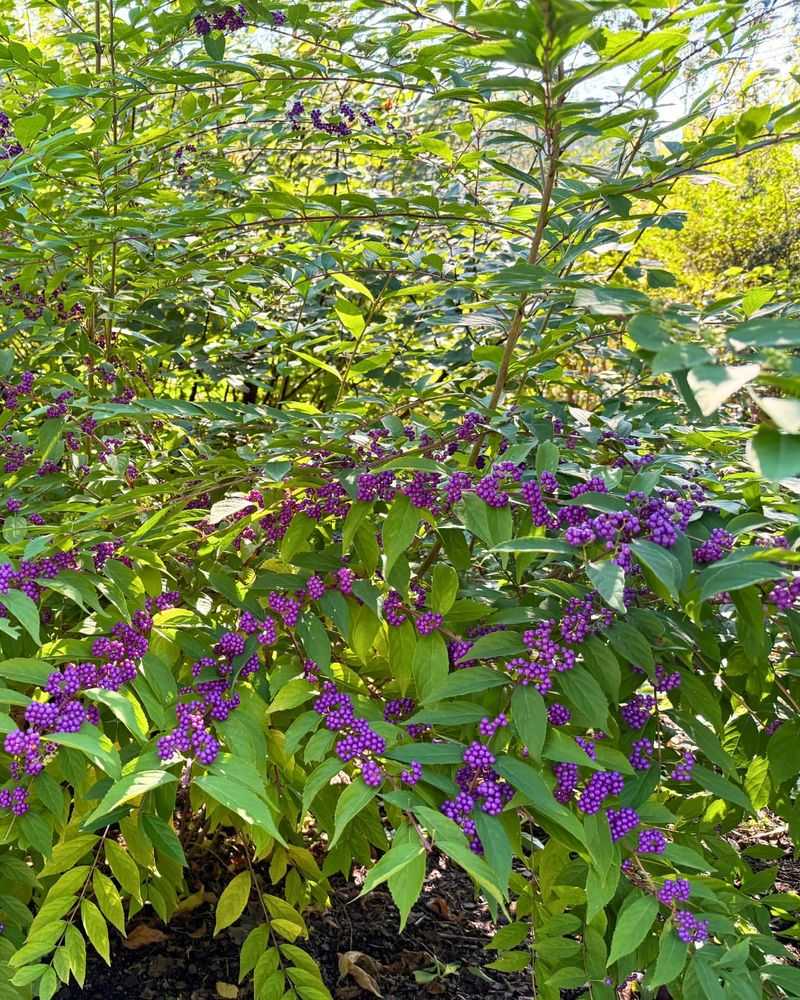
A yard that supports wildlife and a yard managed with tick awareness do not have to be opposites. American beautyberry bridges that gap in a really practical way.
Its berries attract a wide range of native birds, including mockingbirds, robins, catbirds, and towhees, along with small mammals like white-footed mice.
At the same time, its leaves carry the tick-repellent compounds that make it a smart choice for wooded property edges.
The key is pairing wildlife-friendly planting with smart yard habits. Open, clearly defined walking paths reduce the chance of brushing against tall vegetation.
Trimmed edges and reduced clutter limit the hiding spots that ticks prefer. When those practices are in place, a yard full of birds and native plants can still be a yard where people feel comfortable spending time outdoors.
Beautyberry fits naturally into that balance. It provides food and cover for wildlife through its berries and branching structure while also contributing to a more thoughtfully managed border.
Choosing plants that serve more than one purpose is one of the smartest moves a gardener can make, and beautyberry genuinely delivers on multiple fronts at once.
It rewards the birds, supports the local ecosystem, and earns its place in the landscape with real, research-supported credentials rather than just good looks alone.
9. It Needs The Right Placement To Look Its Best
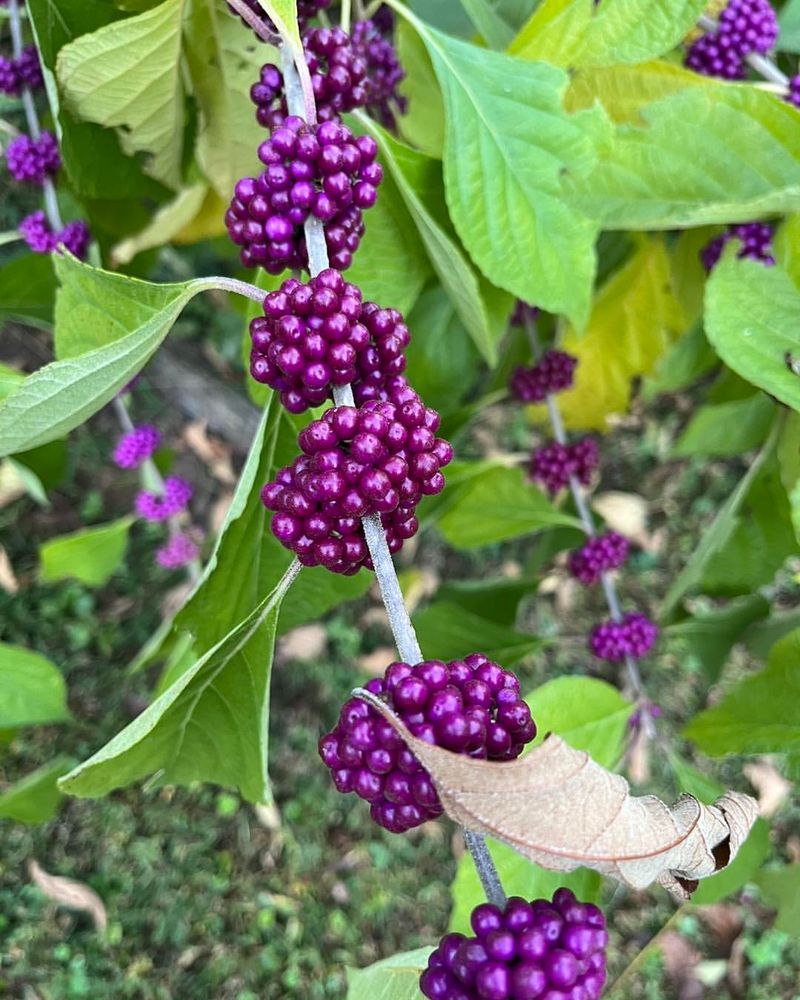
Getting the placement right makes a huge difference with beautyberry.
This shrub performs best in full sun to partial shade, which gives it the light it needs to produce those signature berry clusters without getting stressed by deep, dense shade.
Along most wooded North Carolina property edges, you can usually find spots that offer that ideal mix of filtered light and open sky. Drainage matters too.
Beautyberry prefers soil that does not stay waterlogged for long periods, so avoid low spots where water tends to pool after heavy rain. It also needs room to spread out naturally.
At maturity, the shrub can reach anywhere from three to eight feet tall and three to six feet wide, with those graceful arching stems sweeping outward in all directions.
Crowding it against a walkway or fence cuts off that natural shape and reduces its visual impact significantly.
Giving it space also means it will not require constant pruning to keep it from blocking a path or overwhelming a small planting bed.
When beautyberry has room to grow the way it wants to, it rewards you with that full, fountain-like form that makes it so attractive in the first place.
A little thought about placement before you plant saves a lot of corrective work later and lets the shrub show off everything it has to offer.
10. It’s Helpful, Not Magical
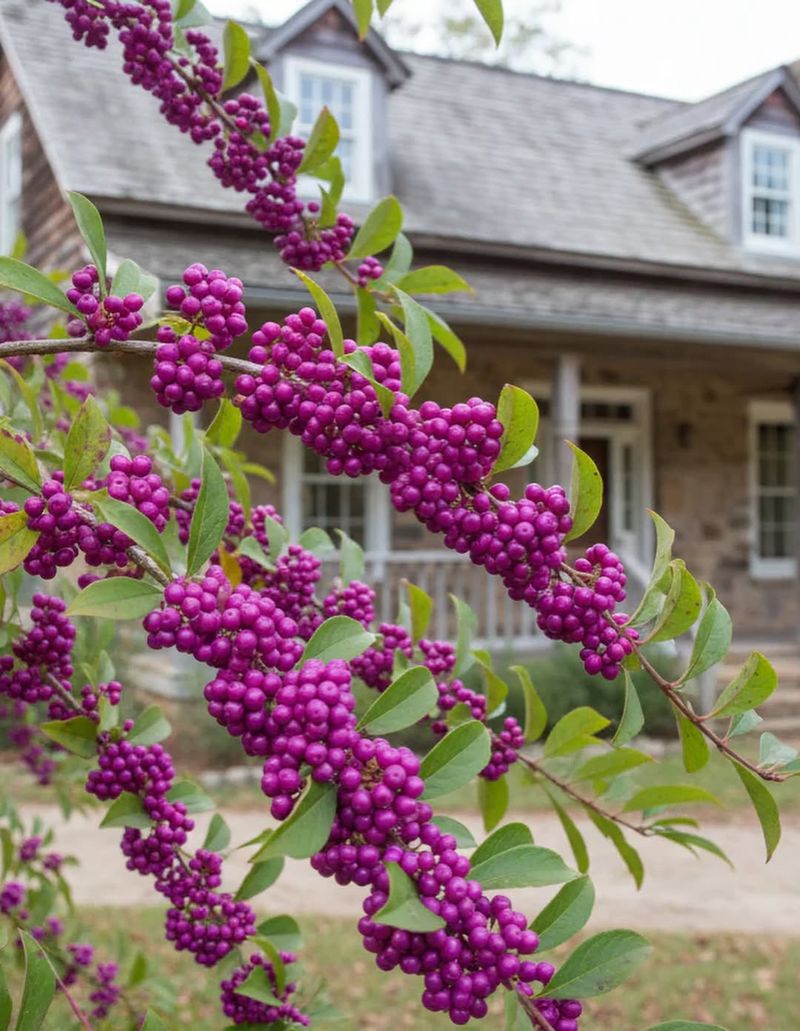
American beautyberry might be one of the most well-rounded native shrubs available to North Carolina gardeners, but it works best when expectations are grounded in reality.
Its tick-repellent leaf compounds are backed by genuine USDA research, its ornamental value is undeniable, its wildlife benefits are real, and its adaptability to wooded edges makes it a natural fit for this region.
That combination of qualities is hard to beat in a single plant. What it cannot do is replace the full set of habits that responsible tick management requires.
Regular mowing, clearing leaf litter, keeping brush piles away from the yard, wearing repellent when spending time near wooded areas, and doing thorough tick checks after being outside are all still essential steps.
Beautyberry adds a meaningful layer to that plan, but it is one layer among several, not a shortcut around the others.
The smartest approach is to treat beautyberry as a valuable member of a larger team.
Plant it along your wooded edge, manage the surrounding area thoughtfully, and enjoy everything it brings to the landscape through the seasons.
The purple berries will stop visitors in their tracks, the birds will thank you, and you will have a native shrub with real science behind it working quietly in your corner. That is a genuinely satisfying return on a single planting decision.