The Underrated Michigan Native For Tick-Smart Gardens And The Edible Harvests
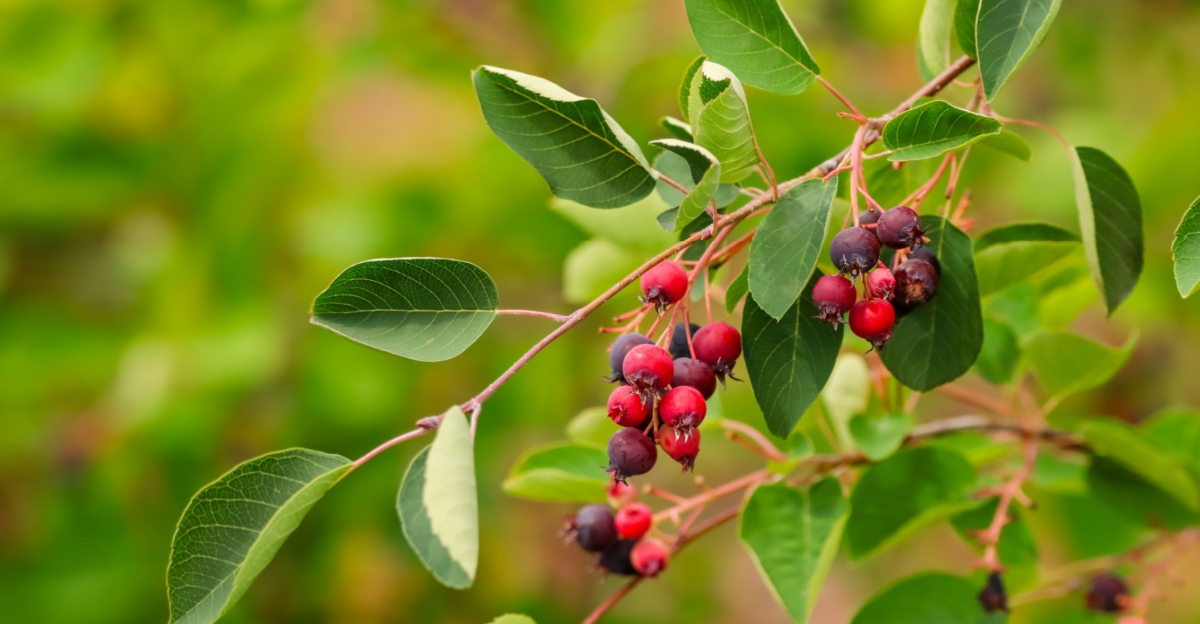
Serviceberry might be Michigan’s most underappreciated native plant, and that is saying something in a state with an impressive native plant roster. It blooms in early spring before most trees have even committed to the season.
It produces sweet edible berries in early summer that attract birds, pollinators, and any gardener paying attention. Fall color arrives in shades of orange and red that rival ornamental trees costing considerably more.
And it does all of this in a compact, adaptable form that fits tight yards, wooded edges, and managed garden borders without taking over.
Placed thoughtfully near paths and patios as part of a layered, well-managed Michigan landscape, serviceberry earns its spot in ways that few other small native trees can match across the whole growing season.
1. Serviceberry Fits A Tick-Smart Garden Design
Tick-smart gardening is less about one magical plant and more about how you design and manage your entire outdoor space.
Serviceberry earns a place in that kind of yard not because it drives ticks away, but because it works well within a thoughtfully organized landscape.
Placing it near a maintained path, a mowed edge, or a patio border keeps it accessible without letting it blend into the kind of dense, shaded, brushy habitat that ticks tend to favor.
In Michigan, ticks are most commonly found in tall grass, leaf litter, and overgrown shrubby areas close to woods.
A well-placed serviceberry near an open, sunny border creates visual interest and edible value without contributing to that kind of high-contact habitat.
Keeping the ground beneath it clear of heavy leaf buildup and trimming lower branches can help reduce the conditions that ticks prefer near high-use zones.
The goal is to combine a beautiful, productive native tree with a yard that stays open, manageable, and lower-risk for outdoor activities. Serviceberry supports that goal when it is planted with intention rather than just tucked into an unmanaged corner.
Michigan homeowners who enjoy spending time outside with kids, pets, or guests will find that thoughtful placement matters far more than any single plant choice.
2. Juneberry Brings Fruit To The Backyard
Biting into a sun-warmed serviceberry in early summer feels like a small reward for choosing native plants.
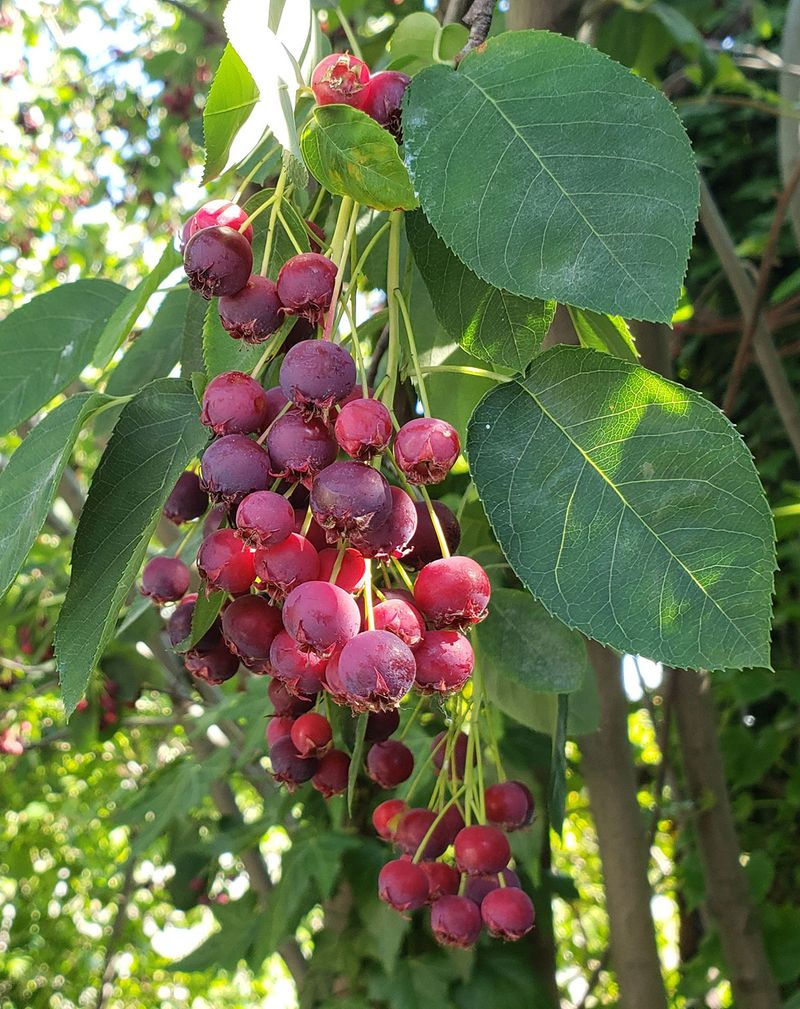
The fruit, which many Michigan gardeners know by the name Juneberry, ripens in late June to early July and offers a mild, sweet flavor that sits somewhere between a blueberry and a mild cherry.
Clusters of small round berries appear on the branches after the spring flowers fade, and a productive shrub or small tree can offer a generous handful for fresh eating right off the branch.
Serviceberry fruit is edible for people and has been used in jams, pies, muffins, and other baked goods for generations.
Indigenous communities across the Great Lakes region relied on these berries long before European settlement, and that history adds a deeper layer of meaning to growing them in a Michigan yard.
The berries are not as tart as highbush blueberries, so even kids who are picky about fruit often enjoy them.
Your Michigan Garden Changes Every Week. Your Plan Should Too.
Gardening in Michigan changes quickly throughout the season. Every Friday you’ll receive a simple weekly plan showing exactly what to plant, prune, fertilize, harvest, and protect so you never miss the right timing.
One honest note worth mentioning is that birds tend to discover the fruit quickly, sometimes before you get a full harvest. Planting more than one shrub or tree can improve your chances of getting a meaningful amount for the kitchen.
Even a modest harvest makes the planting worthwhile, especially when the rest of the season brings flowers, wildlife, and fall color alongside it.
3. Spring Flowers Add Early Garden Beauty
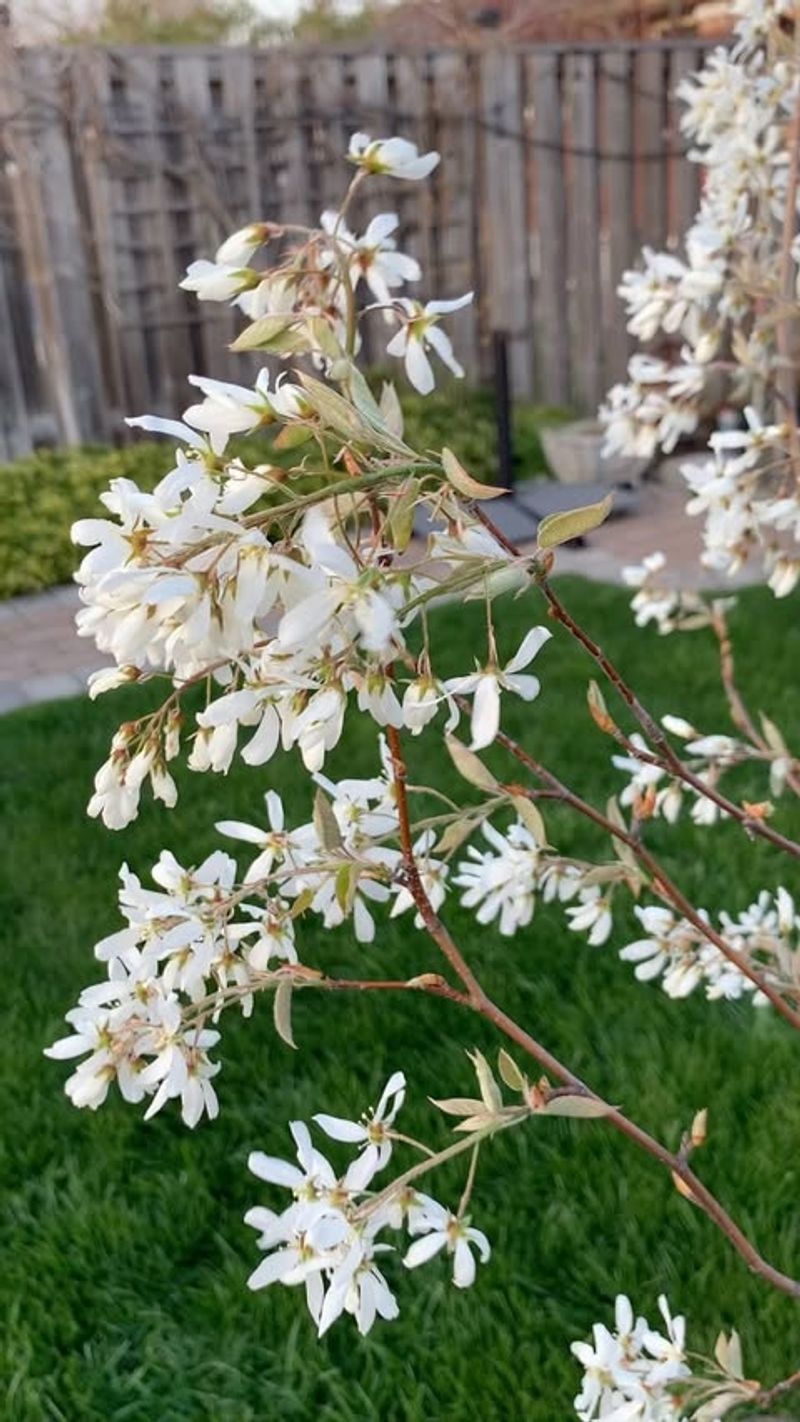
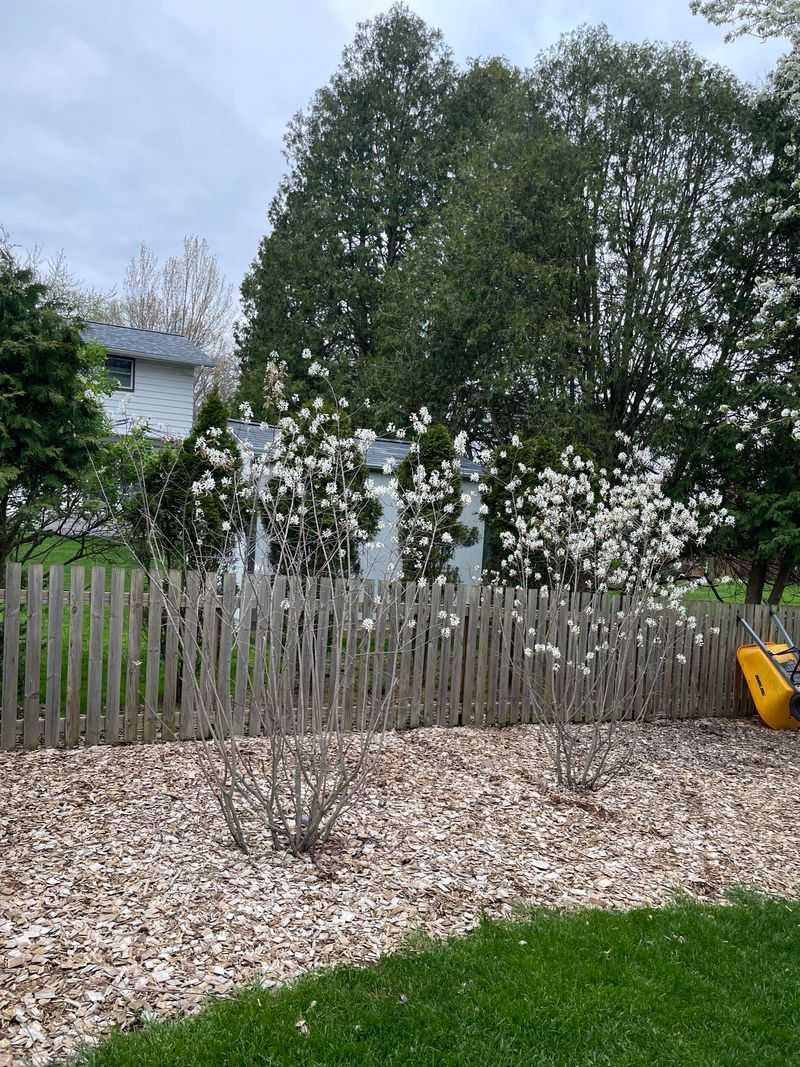
Few sights in a Michigan yard feel quite as hopeful as serviceberry flowers opening in early spring. The blooms appear before most other trees and shrubs have even leafed out, which means the white flowers stand out clearly against the still-bare landscape.
Clusters of delicate petals create a soft, cloud-like effect on the branches, and the timing often coincides with the first warm days when people are eager to be outside again after a long Michigan winter.
The flowers are not just pretty to look at. Early pollinators, including native bees that emerge when temperatures are still cool, benefit from serviceberry blooms arriving so early in the season.
Providing that early nectar source is one of the reasons native plant advocates frequently recommend serviceberry as a valuable addition to Michigan home gardens. It fills a gap in the early-season food web that many ornamental plants simply cannot.
Homeowners who have never grown serviceberry sometimes assume the flowers are unremarkable because the plant is not widely sold at big-box garden centers. Seeing it bloom in person tends to change that impression quickly.
The flowers are graceful without being fussy, and they require no special care to perform well.
A healthy serviceberry planted in a suitable Michigan yard will bloom reliably each spring, offering one of the earliest and most welcome signs that the growing season has returned.
4. Birds May Reach The Berries First
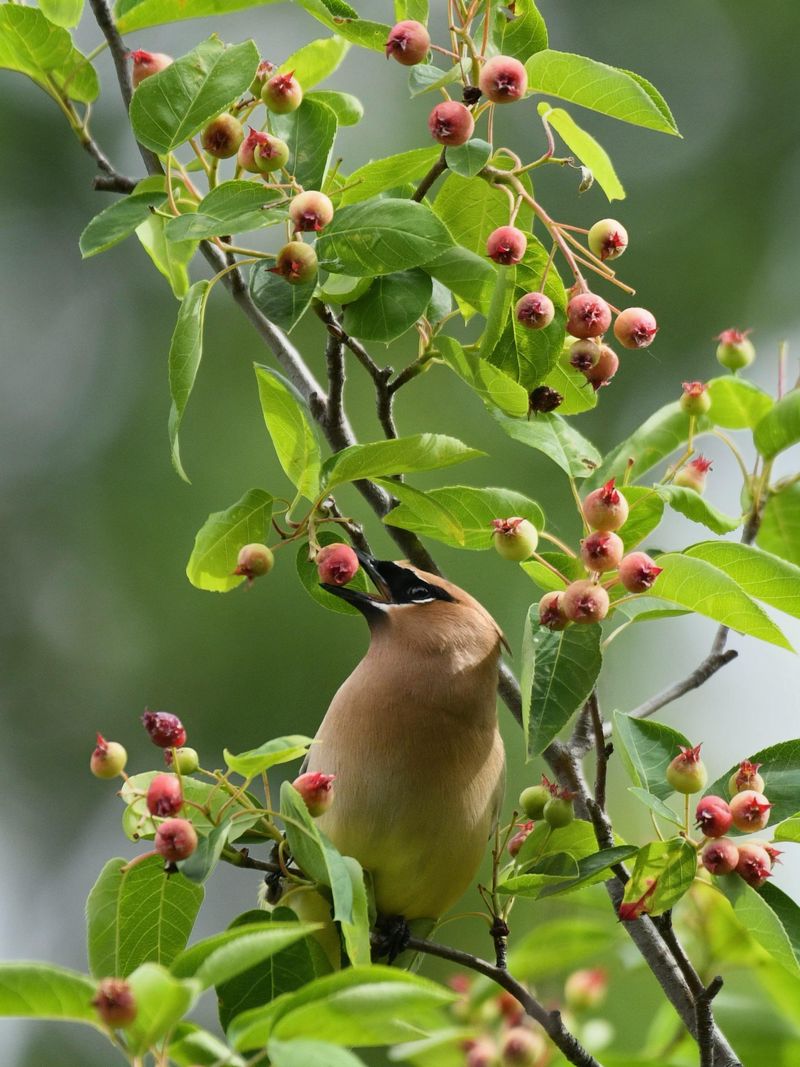
Planting serviceberry in a Michigan yard is essentially an open invitation to the neighborhood birds, and that is not necessarily a bad thing.
Robins, cedar waxwings, catbirds, orioles, and a range of other fruit-eating species are drawn to serviceberry berries reliably each summer.
Watching a small flock of cedar waxwings move through the branches and strip the fruit in a matter of hours is genuinely entertaining, even if it means less fruit for the kitchen.
For gardeners who prioritize wildlife value, this kind of bird activity is exactly the point.
Serviceberry is considered one of the more valuable native fruiting plants for Michigan birds because the berries ripen at a time when many migratory species are moving through or settling in for the summer.
Providing that food source supports local bird populations and adds life and movement to the yard in a way that ornamental plants rarely can.
If getting a meaningful personal harvest matters to you, planting multiple specimens gives both you and the birds a better chance at a share.
Some gardeners drape lightweight netting over a branch or two during peak ripening to protect a portion of the crop.
That approach works reasonably well without causing harm to visiting wildlife. Either way, the birds are part of what makes serviceberry such a lively and rewarding native plant to grow anywhere in Michigan.
5. A Small Tree Works In Many Michigan Yards

Not every Michigan homeowner has a sprawling property with room for large shade trees or expansive native plantings.
Serviceberry is well suited to smaller spaces because it typically grows as a large shrub or small tree, often reaching somewhere between ten and twenty-five feet tall depending on the species and growing conditions.
That manageable size makes it practical for side yards, narrow borders, corners near fences, or the transition zone between a lawn and a more naturalized area.
It can be grown as a single-stem tree for a more formal look or left in its natural multi-stem shrub form for a looser, more naturalistic feel.
Both forms work well in Michigan residential landscapes, and the choice often comes down to personal preference and how much space is available.
Multi-stem forms tend to spread a bit wider and can create a useful screen or informal hedge along a property line.
Homeowners in urban and suburban parts of Michigan will appreciate that serviceberry does not have the aggressive root systems associated with some larger native trees.
It tends to stay where you put it and does not typically cause problems near sidewalks, driveways, or foundations when planted with a reasonable buffer.
That combination of modest size, attractive form, and well-behaved roots makes it one of the more practical native trees available to Michigan gardeners working with limited space.
6. Full Sun Or Part Shade Gives It Flexibility
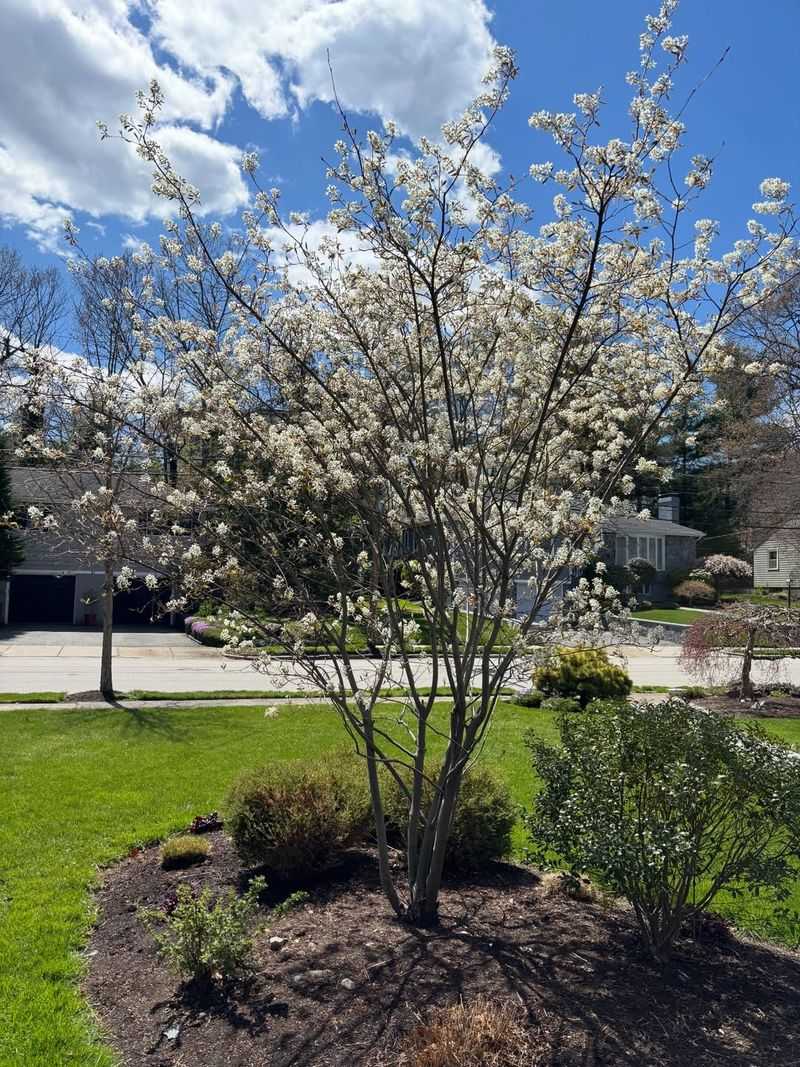
One of the more practical things about serviceberry is that it does not demand a single perfect growing condition. It performs well in full sun, where it tends to fruit most heavily and develop the richest fall color.
It also grows comfortably in part shade, making it a strong candidate for the edges of Michigan woodland gardens, shaded side yards, or spots where taller trees cast a few hours of shadow each day.
That range of light tolerance is genuinely useful in Michigan yards, where conditions can shift dramatically from one corner of the property to another.
A spot that gets morning sun and afternoon shade, or dappled light under an open canopy, is often a challenge for fruit-bearing plants.
Serviceberry handles those in-between conditions better than many other edible natives, which tends to make it easier to place without extensive site modification.
Soil adaptability adds to that flexibility. Serviceberry tolerates a range of well-drained soils and handles the moist conditions common near Michigan woodland edges reasonably well.
It does not thrive in consistently waterlogged ground, so avoiding low spots that hold standing water after rain is a sensible precaution. Beyond that, it is not a demanding plant.
Once established, it requires minimal supplemental watering and fits naturally into the kind of low-maintenance native planting that Michigan gardeners are increasingly drawn to.
7. Managed Edges Matter More Than Repellent Claims

Somewhere along the way, the idea that certain plants repel ticks on their own became popular in gardening circles.
Serviceberry is sometimes mentioned in native plant discussions alongside tick-smart gardening, but it is worth being clear about what that actually means.
Serviceberry does not produce compounds proven to repel ticks in a residential landscape setting. Its value in a tick-smart yard comes entirely from how and where it is planted, not from the plant itself acting as a deterrent.
Ticks in Michigan tend to be most active and most concentrated in areas where tall grass, dense shrubs, leaf litter, and shaded ground create favorable conditions close to where people, pets, and children spend time.
Managing the edges of your yard, keeping grass mowed, clearing leaf accumulation near high-use areas, and creating a clear buffer between naturalized plantings and patios or play areas all reduce tick-contact risk more meaningfully than any single plant choice.
Serviceberry fits into that managed-edge approach because it can anchor a native border without creating a dense, brushy thicket at ground level when maintained thoughtfully.
Pruning lower branches, keeping the area beneath it mulched rather than covered in deep leaf litter, and positioning it back from primary paths and seating areas are all practical steps.
Combined with proven tick-prevention habits like checking for ticks after outdoor time, it becomes one useful part of a sensible outdoor strategy.
8. Fall Color Adds One More Reason To Plant It
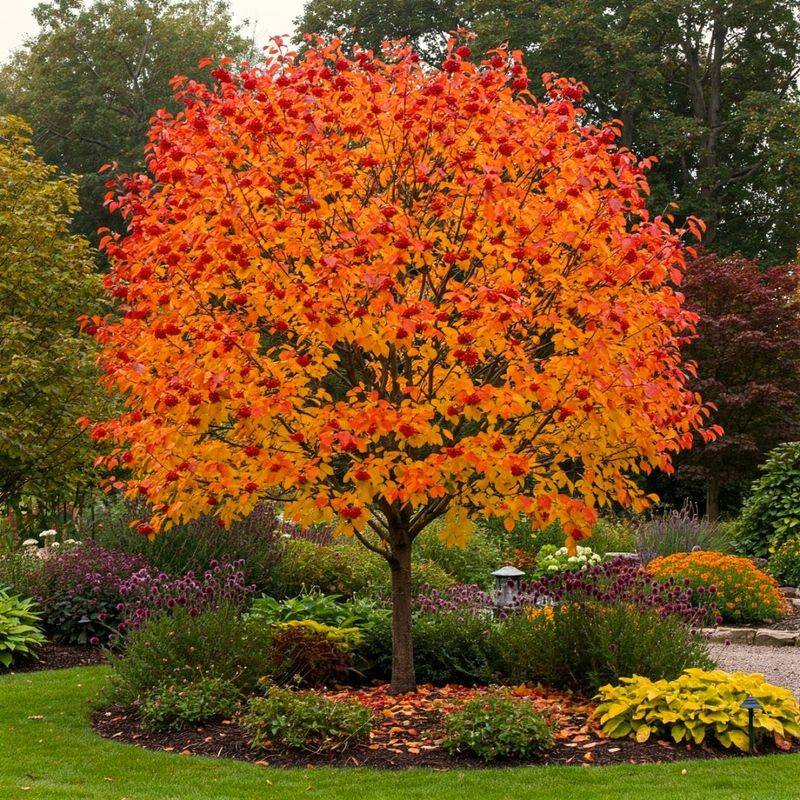
By the time summer winds down, serviceberry has already delivered spring flowers, early fruit, and a season of wildlife activity. Then fall arrives, and the plant offers one more visual reward before Michigan winter sets in.
The foliage turns shades of orange, red, and sometimes yellow depending on the individual plant and growing conditions, creating a warm burst of color that holds up well against the cooler light of a Michigan October.
Fall color on serviceberry tends to be underappreciated simply because the plant is not as widely known as maples or oaks.
Homeowners who grow it often comment that the autumn display surprises them the first time they see it, especially when the leaves catch low afternoon sun and seem to glow from within.
It is not a subtle show, and in a yard that might otherwise rely entirely on larger trees for seasonal color, a serviceberry can fill that role beautifully at a much smaller scale.
Combining spring bloom, edible summer fruit, wildlife value, and fall color in one relatively small, low-maintenance native plant is genuinely rare. Most ornamental trees offer one or two of those qualities.
Serviceberry delivers across the full growing season, which makes it one of the more rewarding natives a Michigan gardener can add to a home landscape.
That four-season appeal is exactly why it deserves more attention in Michigan backyards than it currently receives.