7 Florida Native Plants That Outperform Non-Natives In Peak Summer Heat
July arrives in Florida and the landscape sorts itself out.
Some plants keep performing. Many do not.
The ones that struggle in Florida summer are usually plants that evolved somewhere else, in climates with cooler nights, less humidity, more forgiving soil.
They were selected for how they looked in a nursery in March, not for what would happen to them when August arrived with its full set of conditions.
Florida native plants had a different education. Thousands of years of brutal heat, afternoon thunderstorms, sandy soil that drains before it has time to help, and humidity that never fully lets up.
These plants did not survive those conditions. They were shaped by them.
The difference between a native and a non-native in a Florida summer is not subtle. One is managing. The other is doing exactly what it evolved to do, in exactly the conditions it evolved for.
Have you been replacing the same struggling non-native plants every few years without knowing what was built for your yard all along?
Well, these Florida natives outperform almost everything else when summer gets serious.
1. Plant Firebush For Peak Heat Color
The hottest afternoon of a Florida August, pavement shimmering, every non-native shrub in the neighborhood looking wilted and exhausted.
That is exactly when firebush decides it is time to show everyone how this is supposed to work.
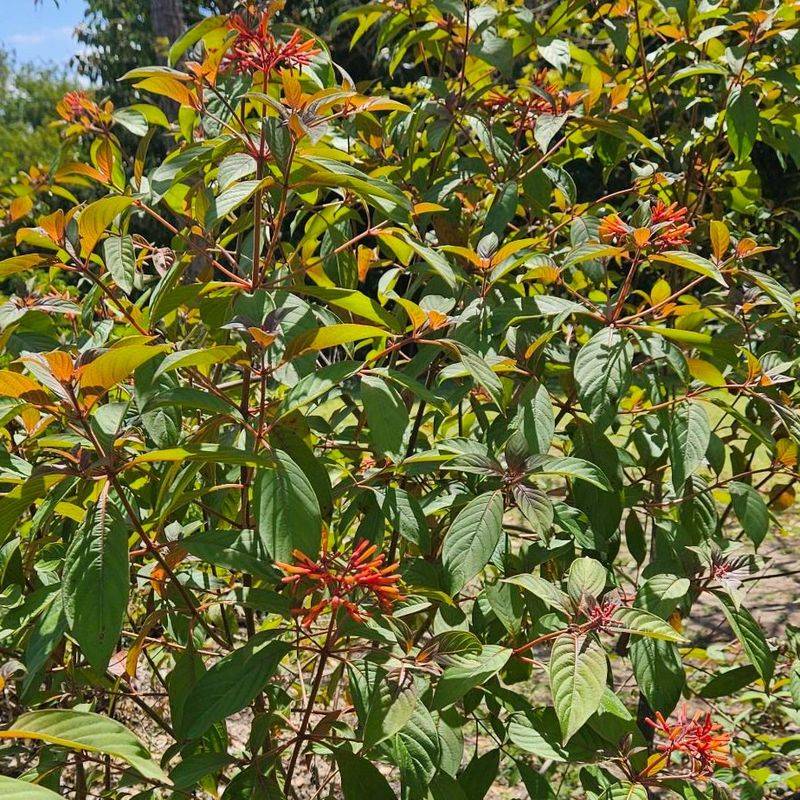
Hamelia patens is a fast-growing native shrub that thrives in full sun and handles Florida’s summer humidity without any visible complaint.
It grows quickly, reaching six to ten feet tall when left unpruned, and responds well to shaping when a more compact form suits the space better.
Planted in well-drained, sandy soil, it largely takes care of itself once the root system establishes.
The wildlife value is exceptional and consistent. Hummingbirds are drawn to the long tubular flowers throughout summer and fall. Butterflies visit regularly.
The small dark berries that follow attract mockingbirds, robins, and other native songbirds, turning the plant into a multi-season wildlife resource rather than just a flowering shrub.
Non-native alternatives like lantana or bougainvillea require significantly more water and attention during peak heat to maintain their appearance. Firebush asks for almost nothing after establishment.
Plant it along a fence line, in a mixed border, or as a bold specimen plant where serious summer color is needed without the ongoing maintenance that most heat-season flowering shrubs demand.
Firebush does not negotiate with Florida August. It just blooms through it and lets the other shrubs figure out their own situation.
2. Use Coontie For Tough Structure
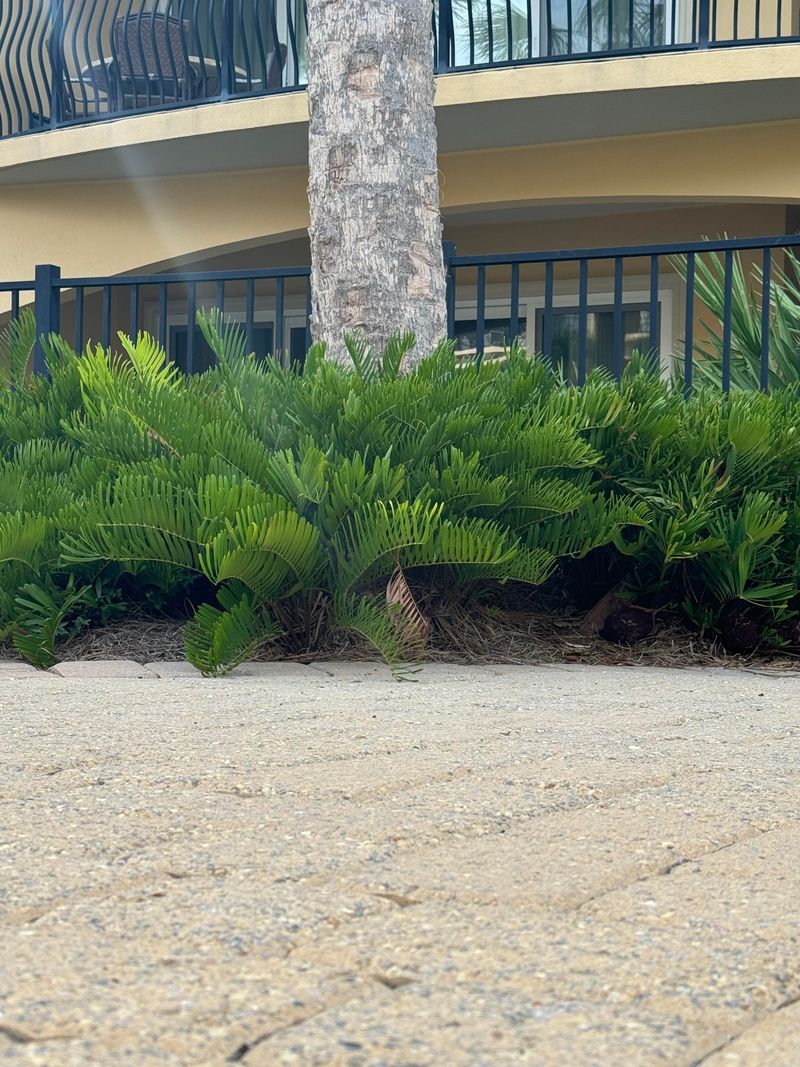
Some plants earn their landscape spot through dramatic flowers or spectacular fall color. Coontie earns its place through a different quality entirely.
Unbreakable, consistent, completely unbothered reliability that has been proven over thousands of years of Florida summers without any help from a gardener.
Zamia integrifolia is the only cycad native to the continental United States. It forms a low, rounded mound of dark green feathery fronds that stay attractive year-round without requiring any seasonal intervention.
Your Florida Garden Changes Every Week. Your Plan Should Too.
Gardening in Florida changes quickly throughout the season. Every Friday you’ll receive a simple weekly plan showing exactly what to plant, prune, fertilize, harvest, and protect so you never miss the right timing.
Full sun to deep shade both work. Nearly any well-drained soil, including pure sand, suits it. Once established, it requires almost no supplemental water even during extended summer droughts that stress everything around it.
Beyond the toughness, coontie plays a direct ecological role that no ornamental substitute can replicate.
It is the sole larval host plant for the atala butterfly, a species that was once nearly absent from Florida but has made a meaningful comeback largely through increased coontie planting in residential and commercial landscapes.
Every coontie planted is a direct contribution to that recovery.
Non-native groundcovers and ornamental grasses frequently turn yellow or require consistent irrigation through summer to maintain any appearance of health.
Coontie stays green and structured through all of it without asking for anything in return.
Use it as a border plant, a groundcover under trees, or a clean accent around entryways. It contrasts beautifully with flowering plants nearby and makes them look more intentional by comparison.
3. Grow Muhly Grass For Airy Texture
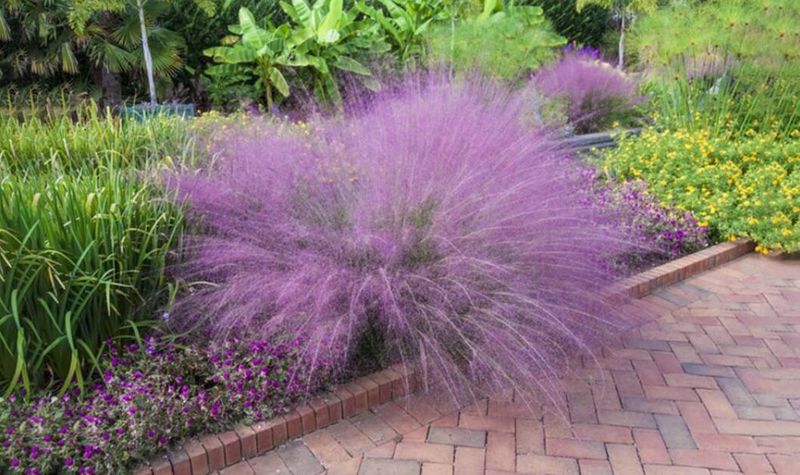
There is a specific moment every fall in Florida when muhly grass turns entire garden beds and roadside medians into something that looks almost cinematic.
Those soft, billowing clouds of pink and purple plumes catch the afternoon light in a way that genuinely stops people.
What makes muhly grass exceptional is not just the fall performance. It is the fact that this plant holds itself together through the entire Florida summer to get there.
Muhlenbergia capillaris is a warm-season native grass that thrives in summer heat and humidity.
It forms neat, arching clumps of fine-textured green foliage that stay attractive from spring through the long summer months before producing that famous bloom display from September through November.
Full sun and sandy, low-nutrient soil suit it perfectly.
Compared to non-native ornamental grasses, muhly grass requires significantly less water and fertilizer to maintain its appearance through peak summer conditions.
It resists most pests and diseases common to Florida summers without any chemical assistance. Extended dry spells after establishment do not compromise the plant visibly.
Planted in large sweeps along driveways, sunny borders, or open lawn areas, the summer presence is clean and textural. The fall performance is genuinely worth planning a planting around.
It pairs naturally with firebush and blanket flower for a layered native planting that covers multiple seasons simultaneously. Cut it back in late winter for fresh, vigorous growth each spring.
Muhly grass spends all summer preparing for its moment. September confirms that the preparation was completely justified.
4. Add Blanket Flower For Sunny Color
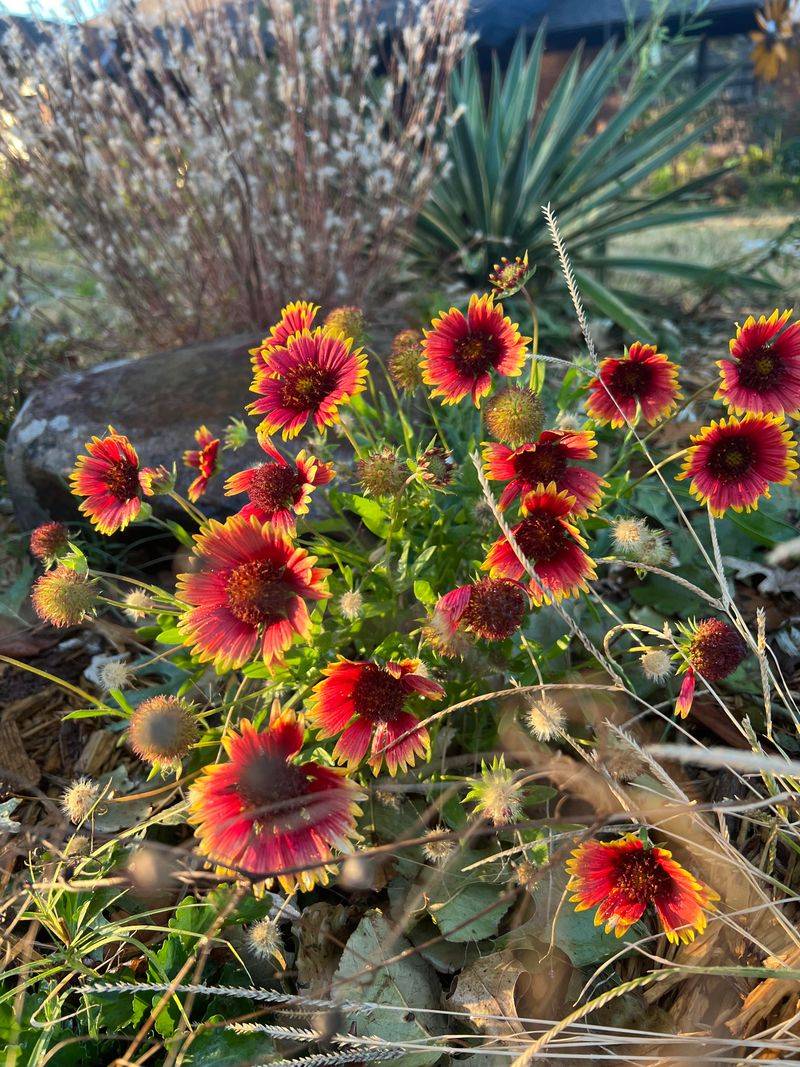
Sandy soil, blazing sun, no shade, and no meaningful rain for two weeks. Most flowering plants would be struggling visibly under those conditions.
Blanket flower, a Florida native wildflower, would be producing vivid color and looking entirely comfortable.
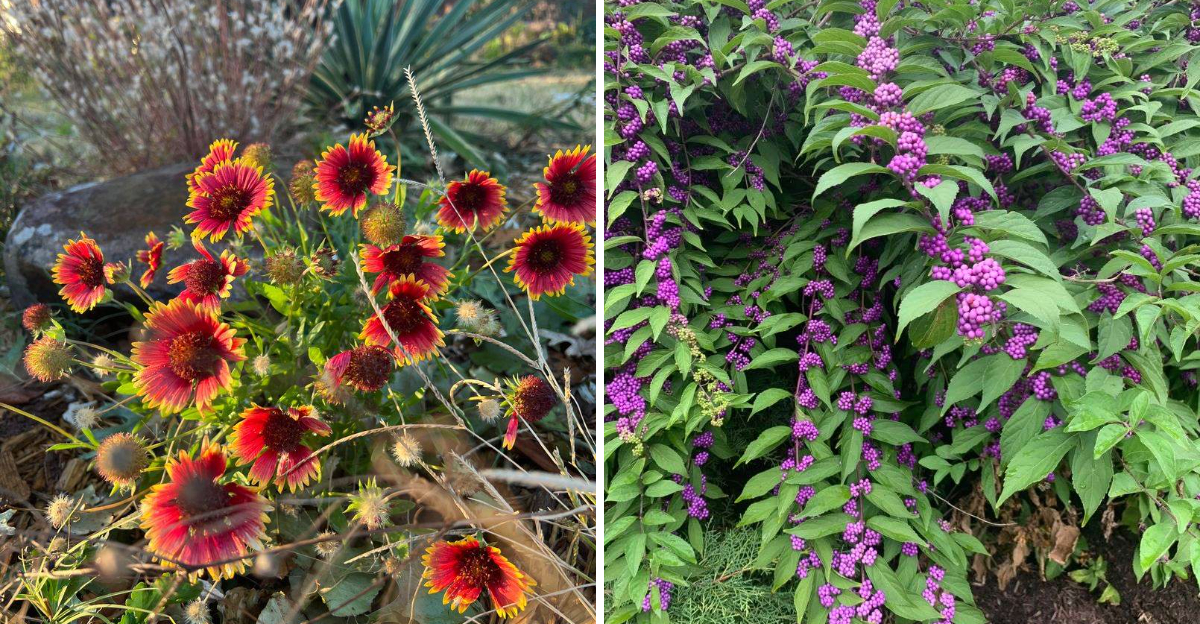
Gaillardia pulchella delivers cheerful daisy-shaped flowers in bold combinations of red, orange, and yellow that bring serious visual energy to the hottest, driest spots in any Florida landscape.
It is a short-lived perennial or annual depending on conditions, but it self-seeds freely. A well-established patch tends to renew itself year after year without any replanting effort from the gardener.
Blanket flower is particularly well-suited to beach and coastal gardens where sandy soil and salt spray challenge most alternatives.
It grows naturally in open fields, roadsides, and dunes across Florida, which communicates everything about its tolerance for conditions that most ornamental plants cannot sustain.
Full sun is essential. Good drainage is equally important. Wet or clay soils create problems, but in sandy, well-drained beds the plant is nearly unstoppable through the full growing season.
Pollinators respond enthusiastically. Bees, butterflies, and small native birds visit the blooms and seeds regularly throughout the growing season.
Non-native bedding flowers like petunias and impatiens require consistent watering and typically look burned out by midsummer. Blanket flower keeps producing color from spring through fall with minimal input.
It is the overachiever of the native wildflower category, and it has been doing this in Florida without encouragement for a very long time.
5. Plant Dune Sunflower In Hot Spots
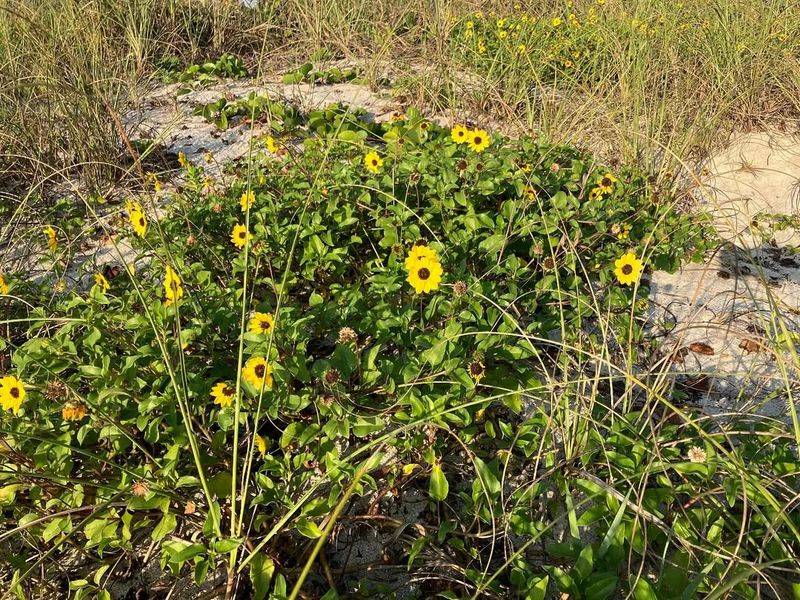
Walk along almost any sunny Florida beach or roadside in summer and a low, sprawling plant covered in cheerful yellow blooms will eventually appear.
That is dune sunflower, and it is one of the most heat-resilient groundcovers Florida produces.
Full sun, drought once established, salt spray tolerance, and the ability to spread quickly across large areas of bare sandy ground make it the right choice for hot slopes, coastal dunes, sunny medians, and areas along driveways where heat radiates up from pavement surfaces throughout summer.
The bright yellow flowers bloom nearly year-round in warm Florida conditions, providing a consistent food source for native bees and butterflies through the seasons.
Goldfinches and other small birds feed on the seeds, adding wildlife value that continues after the blooming cycle completes.
Non-native groundcovers require frequent watering and fertilizing to look acceptable in summer heat. Dune sunflower prefers lean, dry conditions. Overwatering or rich soil actually work against the plant rather than helping it.
The spreading habit requires some planning. Dune sunflower moves aggressively in open areas, which is excellent for erosion control but needs management near formal plantings.
Along fences, slopes, and open beds where coverage is the goal, it delivers more summer performance per square foot than almost any alternative at any price point.
6. Use Simpson’s Stopper For Evergreen Strength
Not every landscape need is about dramatic color or seasonal spectacle.
Sometimes the most valuable plant in a yard is the one that holds its shape, stays genuinely green through everything, and quietly does its job all year long without requiring intervention or producing surprises.
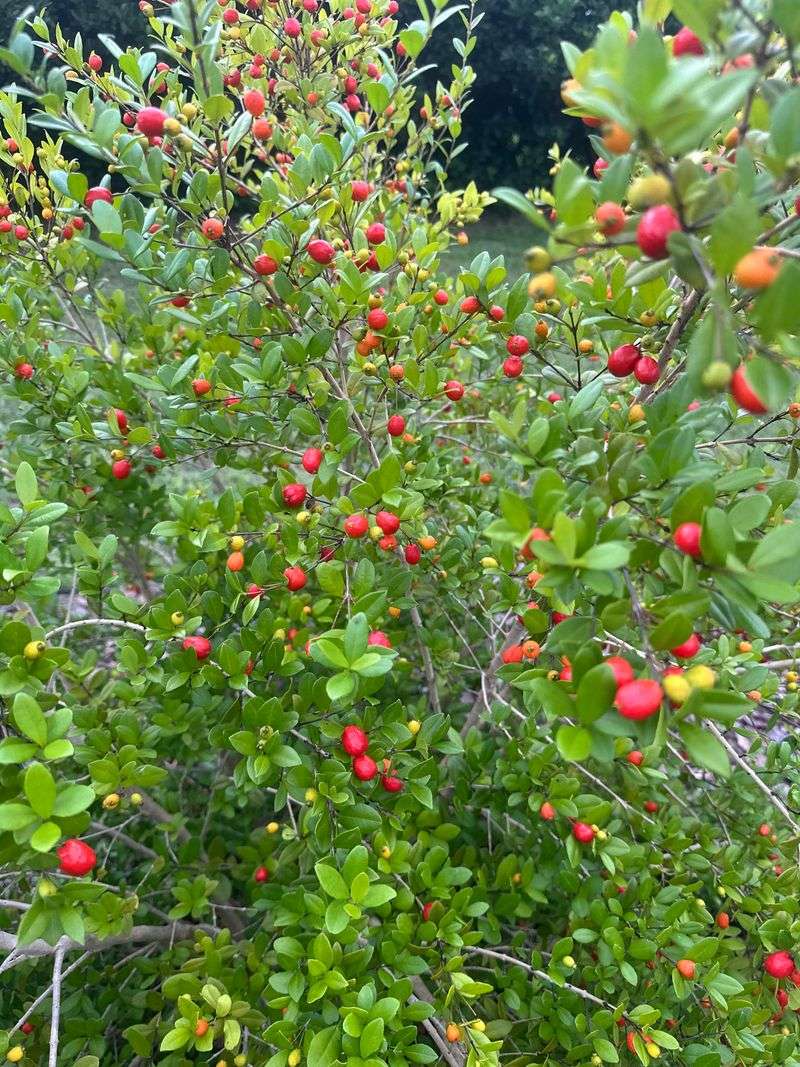
Myrcianthes fragrans is a Florida native shrub or small tree that earns serious respect through reliability rather than showmanship.
Small, fragrant white flowers are followed by bright orange-red berries that birds actively seek out. The dark, glossy evergreen foliage stays attractive through summer heat, humidity, drought, and the brief cold snaps that occasionally arrive in Florida winters.
Full sun to partial shade both work. It adapts well to a variety of well-drained soil types found across the state.
Growth is moderate, reaching eight to fifteen feet tall when unpruned, and the plant responds well to shaping without losing its natural, graceful appearance.
Non-native alternatives like viburnum or Indian hawthorn frequently develop fungal disease problems in Florida’s humid summers. Simpson’s Stopper stays clean and healthy through the same conditions without the same vulnerability.
Cedar waxwings, mockingbirds, and other native birds respond to the berries in fall and winter, extending the plant’s wildlife contribution well past the flowering season.
A row of Simpson’s Stopper along a property line creates a dense, attractive, year-round screen that requires minimal attention to maintain its effectiveness.
It is the plant that shows up every day and never calls in sick. Florida landscapes need more of those.
7. Try Beautyberry For Summer Wildlife
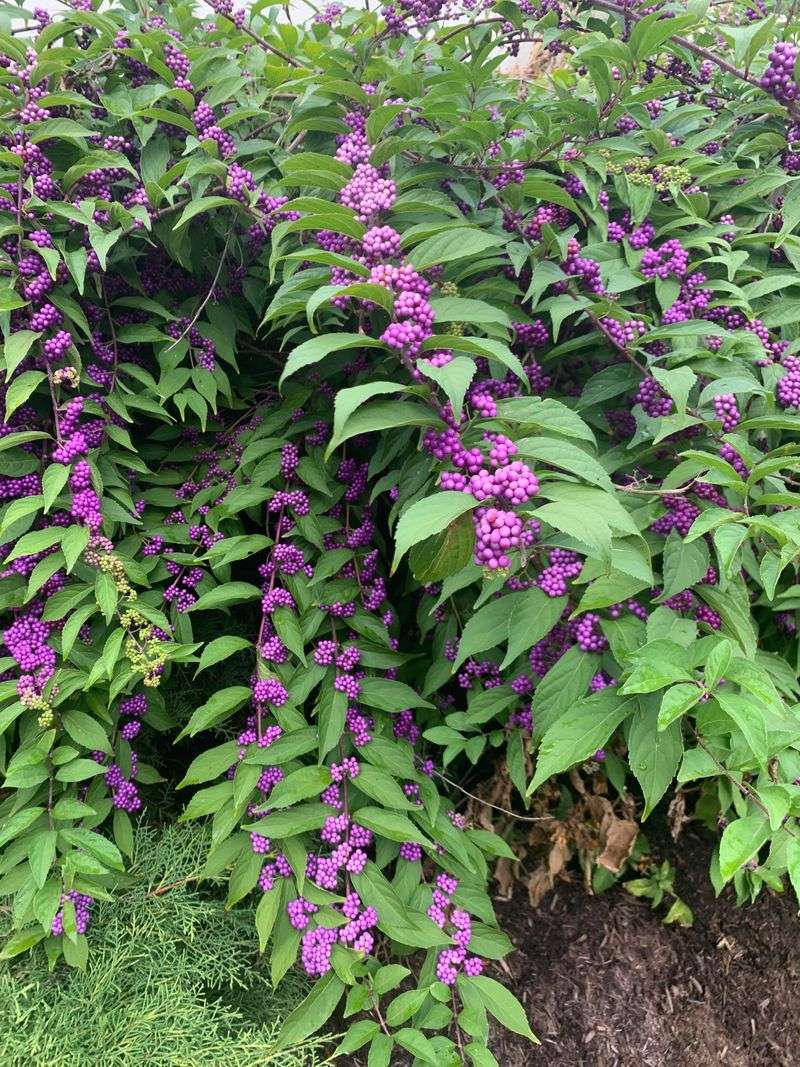
Few plants in Florida stop people in their tracks quite the way beautyberry does when the berries fully ripen.
Those clusters of intensely vivid purple fruit, arranged tightly along arching stems in a pattern that looks almost deliberately theatrical, draw reactions from people who do not typically notice plants.
The wildlife response is equally dramatic.
Callicarpa americana is a fast-growing native shrub that handles Florida’s summer heat and humidity with real ease.
It grows naturally in the understory of Florida’s forests and woodlands, which means partial shade to full sun both work and the plant is genuinely adapted to the variable light conditions that most residential landscapes present.
Sandy, well-drained soil suits it well, though it adjusts to a range of soil types found across the state.
The berries ripen from late summer through fall and create active feeding activity among mockingbirds, towhees, brown thrashers, and many other species that rely on the fruit during migration and fall feeding periods.
The ecological contribution during this specific season is meaningful and direct.
During summer, the large soft green leaves provide lush texture and welcome ground-level cover for wildlife.
Non-native shrubs like nandina also produce berries but carry documented concerns regarding bird health. Beautyberry’s native status removes that concern entirely while delivering comparable or greater wildlife value.
Cut beautyberry back hard in late winter to encourage vigorous new growth and a fuller shape heading into the berry season.
The purple berries arrive almost every year without fail. The birds have had it on their calendar longer than any gardener has.