The Best Cacti And Succulents To Grow In Containers On Texas Patios This Summer
Container gardening on a Texas patio in summer is a study in what plants can actually handle versus what merely looks tough at the nursery in April.
Most container plants start showing their limits by July, but cacti and succulents occupy a completely different category.
One where the intense heat, the fast-drying soil in a pot, and the full sun exposure that bakes a patio from morning to evening are actually closer to ideal growing conditions than anything more moderate.
Texas summers hand container cacti and succulents exactly what they were shaped by over thousands of years of evolution, and the results show in how they perform when everything else on the patio is struggling.
The variety available for container use goes well beyond the standard options most people reach for.
The right selection brings genuine visual interest to a patio through the entire summer with almost no effort required from the gardener once the plants are settled in their pots.
1. Golden Barrel Cactus (Echinocactus Grusonii)
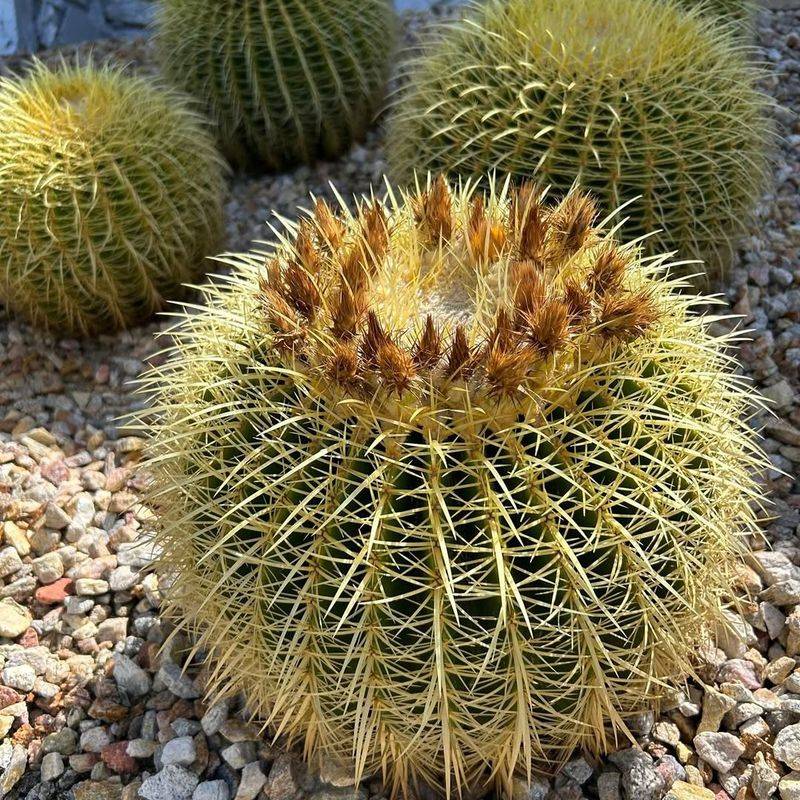
Picture a perfectly round ball of sunshine sitting on your patio, covered in bold yellow spines that practically glow in the Texas sun. That is exactly what the Golden Barrel Cactus looks like, and it is one of the most eye-catching container plants you can grow.
Native to central Mexico, this cactus has earned its reputation as a showstopper in desert gardens across the American Southwest.
Growing a Golden Barrel in a container is surprisingly easy. Choose a pot with excellent drainage holes, and fill it with a cactus-specific potting mix.
These plants love full sun, so place your container in the sunniest spot on your patio. Water deeply but infrequently, letting the soil dry out completely between waterings.
During the hottest Texas summer months, watering once every two to three weeks is usually plenty.
One fun fact about this cactus is that it grows very slowly. A mature Golden Barrel can take up to 20 years to reach its full size of about three feet wide.
So the one you buy today could be a family heirloom someday. Young plants are affordable and widely available at Texas nurseries and garden centers.
Because of its round shape and spiky texture, the Golden Barrel adds a bold, sculptural element to any patio arrangement. It pairs beautifully with other desert plants like agave or aloe.
Just be careful when handling it, as those golden spines are sharp. Use thick gloves or folded newspaper to move or repot it safely. This cactus is as tough as it looks.
2. Prickly Pear Cactus (Opuntia Spp.)
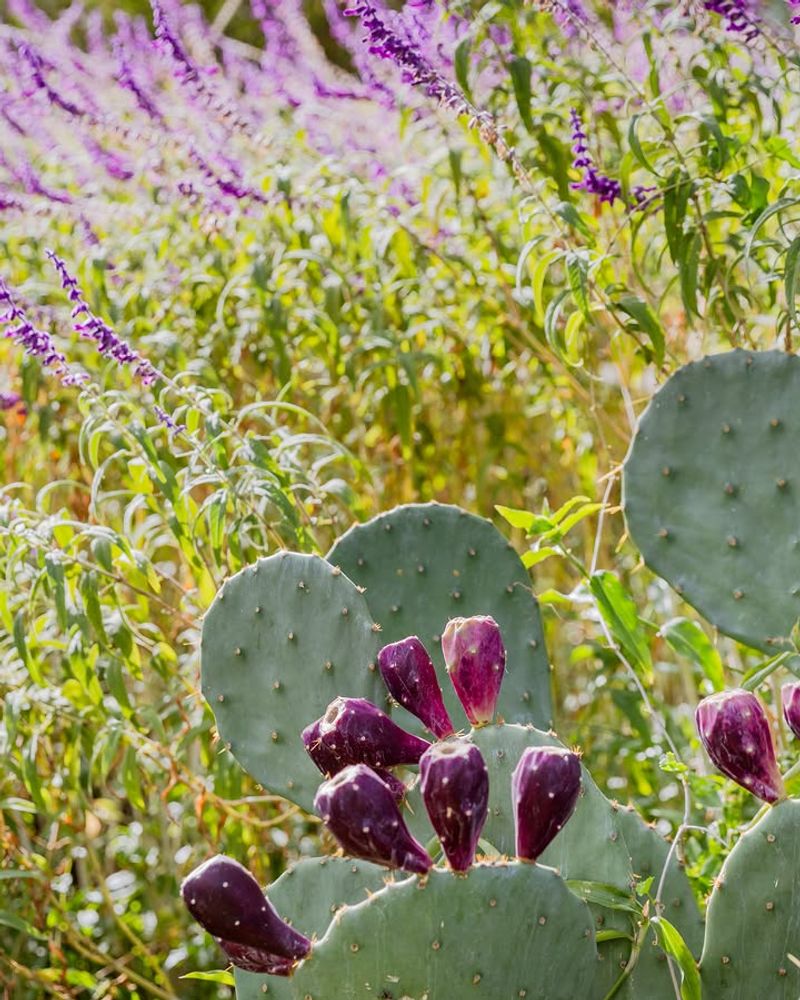
Few plants scream “Texas” quite like the Prickly Pear Cactus. You have probably spotted it growing wild along roadsides and in open fields across the Lone Star State.
But did you know it also thrives beautifully in containers? Growing one on your patio brings a piece of authentic Texas landscape right to your doorstep.
Prickly Pear is famous for its flat, paddle-shaped pads and its stunning flowers, which can range from bright yellow to hot pink depending on the variety. After the flowers fade, the plant produces colorful fruits called tunas, which are actually edible.
Your Texas Garden Changes Every Week. Your Plan Should Too.
Gardening in Texas changes quickly throughout the season. Every Friday you’ll receive a simple weekly plan showing exactly what to plant, prune, fertilize, harvest, and protect so you never miss the right timing.
People use them to make jelly, syrup, and even juice. So this cactus is not just pretty, it is also practical.
For container growing, pick a wide, shallow pot with good drainage. Prickly Pear spreads outward more than upward, so it needs room to stretch.
A sandy or gritty cactus mix works best. Place the container in full sun and water it sparingly. Once established, this cactus can go weeks without water and still look fantastic.
One thing to keep in mind is that Prickly Pear has two types of spines: the large visible ones and tiny hair-like ones called glochids. Both can irritate skin, so always wear gloves when handling the pads.
Despite that, this plant is a favorite among Texas gardeners for good reason. It is tough, beautiful, productive, and deeply connected to the culture and landscape of the state. Adding one to your patio container garden is a decision you will not regret.
3. Agave (Agave Americana)
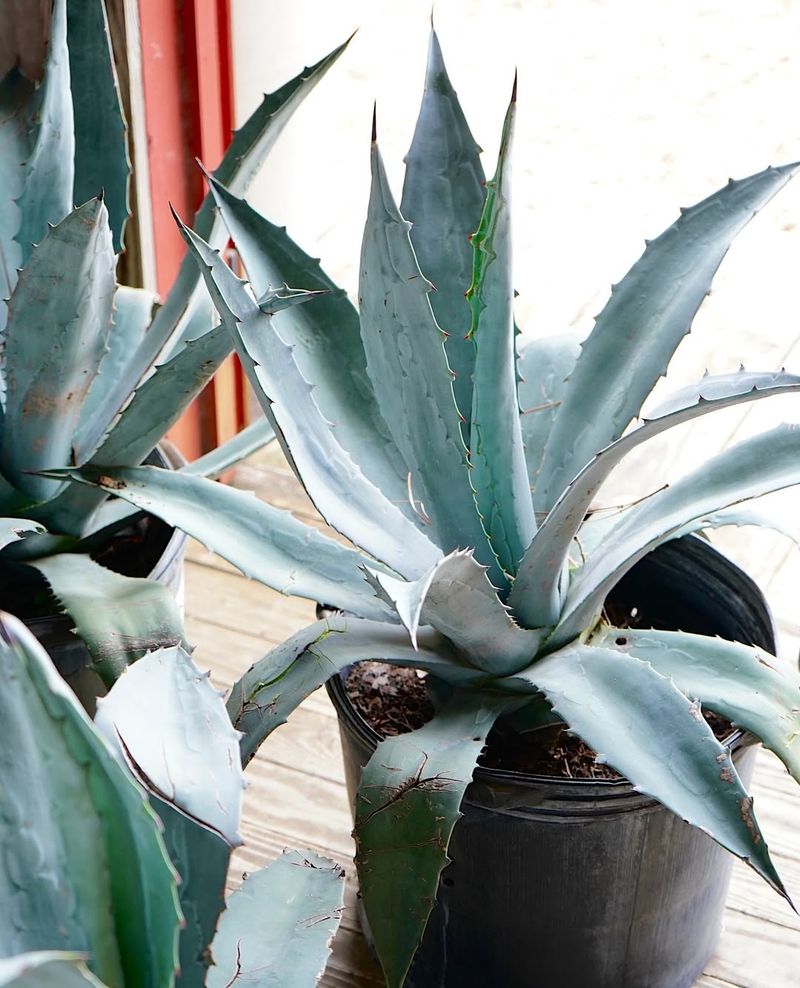
There is something almost prehistoric about an agave plant. Its thick, sword-shaped leaves radiate outward in a perfect rosette, giving it a bold architectural presence that few other plants can match.
Agave americana, sometimes called the Century Plant, is one of the most dramatic and dependable succulents you can grow in a Texas patio container.
Agave plants are built for the heat. They store water inside their thick leaves, which means they can go a long time without rain or watering.
For container growing, use a large, heavy pot to anchor the plant and keep it from tipping over as it grows. A terracotta or concrete pot works great because it allows airflow and prevents the roots from staying too wet.
Fill it with a fast-draining cactus or succulent mix. Place your agave in full sun for best results. This plant genuinely loves the Texas summer sun and will not complain about the heat.
Water it deeply about once a month during summer, and even less in cooler months. Overly wet soil is the one thing agave cannot stand, so always err on the dry side.
The tips of agave leaves are sharp, so position your container away from walkways where people might accidentally brush against it. Agave americana can eventually grow quite large, but it takes many years.
Smaller varieties like Agave parryi or Agave desmettiana are better for tight spaces. Whichever variety you choose, agave will bring a strong, sculptural energy to your patio that looks stunning all season long.
4. Aloe Vera (Aloe Barbadensis Miller)
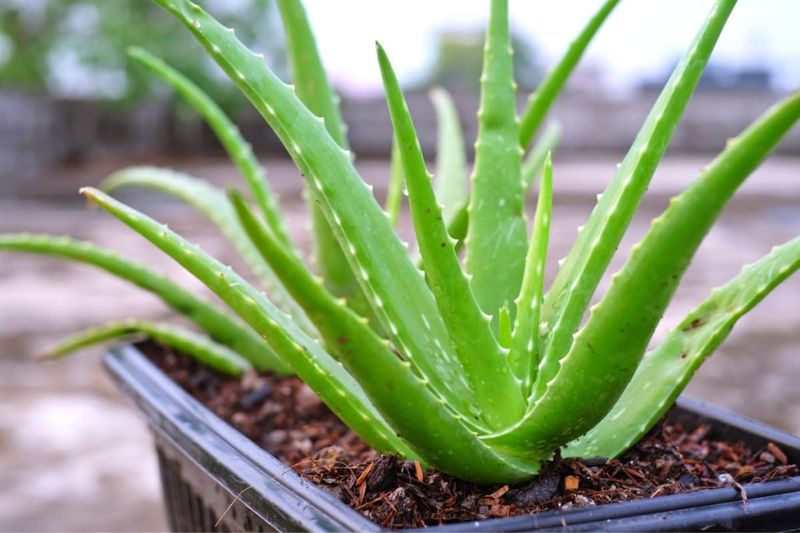
Aloe Vera might just be the most useful plant you ever put on your patio. Beyond its striking appearance, with thick, fleshy green leaves lined with small teeth along the edges, this succulent holds a secret inside each leaf: a clear, cooling gel that has been used for thousands of years to soothe sunburns, minor cuts, and skin irritation.
For anyone spending time outdoors in the Texas heat, having an aloe plant within reach is genuinely handy.
Growing aloe in a container is one of the easiest gardening projects around. Choose a pot that is slightly wider than the base of the plant and make sure it has drainage holes.
Aloe does not like wet feet, so soggy soil is a problem to avoid. A cactus or succulent potting mix is ideal.
Place the container in a bright, sunny spot on your patio, though aloe can also tolerate a bit of afternoon shade if needed.
Watering aloe is refreshingly simple. Water it thoroughly, then wait until the top two inches of soil are completely dry before watering again.
In a Texas summer, that usually means watering every ten to fourteen days. Aloe is very forgiving, so even if you miss a watering session, it bounces back quickly.
Over time, aloe produces small offshoots called pups around its base. These can be gently separated and potted on their own, giving you free new plants to share with friends or expand your patio garden.
Few plants reward you with so much while asking for so little in return. Aloe Vera is truly a patio essential.
5. Red Yucca (Hesperaloe Parviflora)
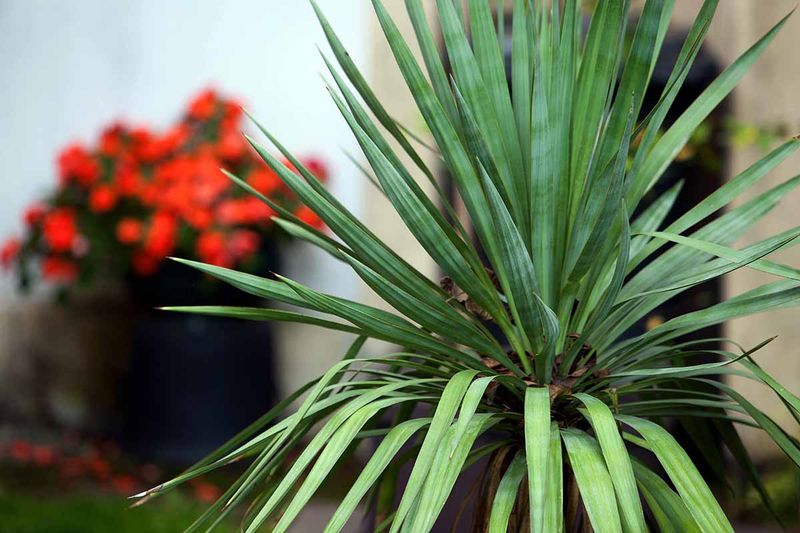
Here is a plant that puts on a show all summer long without asking for much in return. Red Yucca, known scientifically as Hesperaloe parviflora, is not actually a true yucca or a cactus, but it looks and behaves like a tough desert plant.
It sends up tall, slender flower spikes covered in coral-red to salmon-pink tubular blooms that hummingbirds and butterflies absolutely cannot resist.
Native to the Chihuahuan Desert of west Texas and northern Mexico, Red Yucca is perfectly adapted to the harsh Texas climate. It handles full sun, extreme heat, and long dry spells with ease.
In a container, it becomes a stunning vertical accent plant that draws the eye upward. Use a large, deep pot to accommodate its fibrous root system, and fill it with well-draining soil or a cactus mix.
Watering Red Yucca is straightforward. Once established in its container, water it every two to three weeks during summer.
Always let the soil dry out between waterings. Fertilizing is not necessary, and in fact, too much fertilizer can reduce flowering.
Let this plant do its thing naturally and it will reward you with blooms from late spring all the way through fall.
The long, arching leaves of Red Yucca have a graceful, fountain-like form that looks beautiful even when the plant is not blooming. The leaf edges are lined with curling white fibers, adding extra texture and visual interest.
If you want a plant that feeds local wildlife, creates movement in the breeze, and handles Texas heat like a champ, Red Yucca is the one to pick.
6. Agave Parryi (Parry’s Agave)
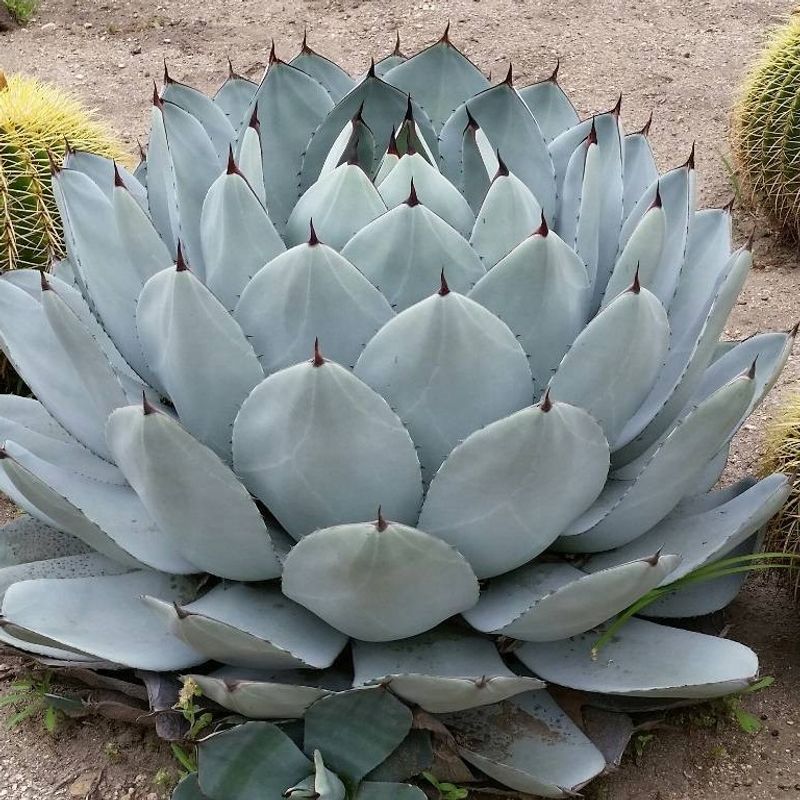
If you love the bold look of agave but do not have room for a giant plant, Parry’s Agave is your answer. This compact, blue-gray beauty forms a tight, symmetrical rosette that looks almost too perfect to be real.
Each leaf ends in a sharp dark spine, and the overall effect is like a living piece of sculpture sitting right on your patio. It is the kind of plant that makes visitors stop and ask, “What is that?”
Agave parryi is native to the mountains of Arizona, New Mexico, and northern Mexico, which means it is well-suited to handle intense sun and dry conditions. In a container on a Texas patio, it thrives with very little fuss.
Choose a pot with excellent drainage and use a gritty cactus mix. The container does not need to be enormous since Parry’s Agave stays relatively compact, usually reaching about two feet tall and two feet wide at maturity.
Watering needs are minimal. During summer, a deep watering every three to four weeks is typically enough.
Make sure the pot drains fully each time, and never let the plant sit in standing water. Parry’s Agave is also more cold-tolerant than many succulents, which means it can stay outdoors in Texas through mild winters without any trouble.
One charming quirk of this plant is the imprint pattern left on each leaf by the one next to it as they grow.
Called “bud imprints,” these subtle marks create a beautiful natural pattern across the surface of the leaves. Parry’s Agave is low-maintenance, long-lived, and endlessly fascinating to look at up close.
7. Sedum / Stonecrop (Sedum Spp.)
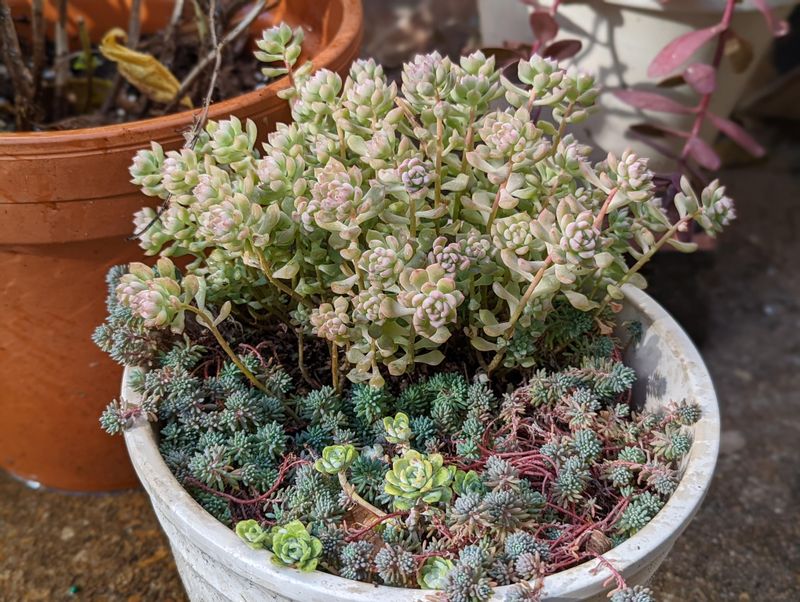
Sedum, commonly known as Stonecrop, might be smaller than the other plants on this list, but do not let its size fool you. This low-growing succulent is packed with personality.
Its plump, fleshy leaves come in shades of green, blue, red, purple, and yellow, and in summer it bursts into clusters of tiny star-shaped flowers that add a cheerful pop of color to any patio container arrangement.
One of the best things about Sedum is how versatile it is. It works beautifully as a filler or trailing plant along the edges of larger containers, softening the look of bold plants like agave or Golden Barrel Cactus.
It also looks wonderful on its own in shallow dishes or wide, low pots. Because it stays close to the ground, it is a great choice for tabletop container displays or window boxes on a patio railing.
Sedum loves full sun and handles Texas heat well, especially varieties like Sedum spurium, Sedum nussbaumerianum, and Sedum rupestre.
Plant it in well-draining cactus or succulent mix and water it every one to two weeks during summer, letting the soil dry completely between sessions.
Overwatering is the most common mistake with Sedum, so when in doubt, hold off on the water.
Propagating Sedum is one of the most satisfying gardening experiences you can have. Simply snap off a healthy stem or leaf, let it dry for a day or two, then press it lightly into moist soil.
Within a few weeks, tiny new roots and leaves will appear. Before long, you will have more Sedum than you know what to do with, which is a wonderful problem to have.