8 Clues A Groundhog Is Living In Your Maryland Garden

Your garden looked fine yesterday. Today, stems are clipped at the soil line and leafy tops are gone without a trace.
Groundhogs are bold, surprisingly stealthy, and persistent once they find a food source they love.
These chunky mammals thrive across Maryland, and once one settles into your yard, your raised beds and flower borders become an open invitation.
Active at dawn and late afternoon, they can strip a plant clean before you ever spot them moving.
Tunnels cut deep, roots get exposed, and whole rows disappear between one morning and the next.
Maryland gardens face this threat quietly, because groundhogs leave behind specific clues most people walk right past.
Soil disturbance, gnawed stems, and collapsed borders all point to one culprit working steadily beneath the surface.
Move fast, read the signs, and protect what you planted. Groundhogs are patient, persistent, and always one step ahead of an unprepared gardener.
1. Vegetable Stems Sliced Cleanly At The Base

Your pepper plants were thriving yesterday. Today, they are gone from the stem down, cut so cleanly it almost looks like someone used scissors.
That sharp, angled cut is a groundhog signature move. Their strong incisors slice through soft stems with surprising precision, leaving behind a stubby base and nothing else.
Rabbits also chew plants, but their cuts tend to be messier and more jagged. A groundhog’s bite is remarkably clean and notably precise, which makes it easy to identify once you spot the pattern.
Check your tomatoes, peppers, beans, and squash first. Groundhogs prefer tender, juicy stems over woody or fibrous ones, so young plants are especially vulnerable during early summer.
The damage often happens in one focused area rather than scattered across your whole yard. Groundhogs are methodical feeders, working through a section before moving on to the next target.
If you find multiple stems cut at the same height, roughly two to four inches off the ground, that pattern strongly suggests a groundhog. A single plant loss could be coincidence, but A row of sliced stems is a clear pattern worth acting on.
Acting early matters because groundhogs can clear a raised bed in just a few nights. Installing a wire mesh fence buried at least twelve inches underground is one of the most effective deterrents available to Maryland gardeners.
2. Softball-Sized Holes Near Your Raised Beds
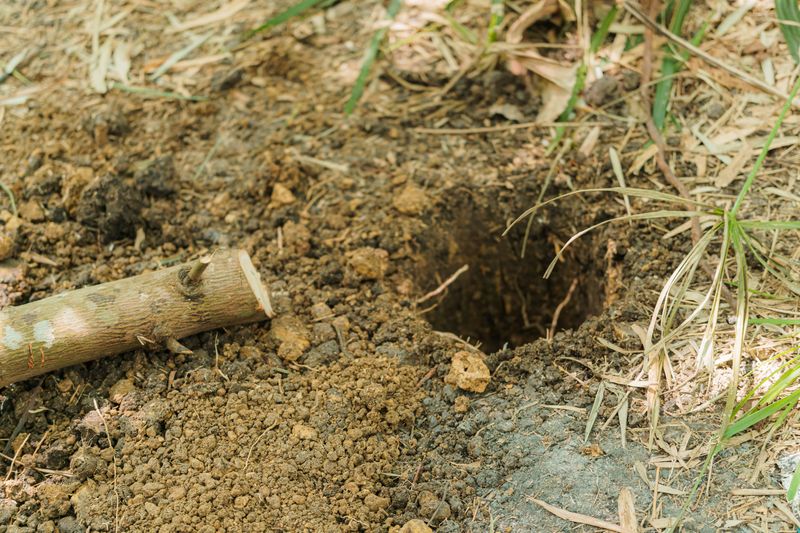
You almost tripped on it this morning. A wide, rounded hole sitting right at the edge of your raised bed like it appeared overnight.
Groundhog burrow entrances are typically ten to twelve inches in diameter, roughly the size of a cantaloupe. That size is one of the clearest ways to tell a groundhog hole from a chipmunk or mole tunnel.
These animals are serious diggers. A single groundhog can move up to several hundred pounds of soil when excavating a burrow system, which is a significant amount of underground activity.
The location of the hole tells you a lot about the groundhog’s strategy. Placing an entrance near a raised bed means it has easy access to food without traveling far from safety.
Your Maryland Garden Changes Every Week. Your Plan Should Too.
Gardening in Maryland changes quickly throughout the season. Every Friday you’ll receive a simple weekly plan showing exactly what to plant, prune, fertilize, harvest, and protect so you never miss the right timing.
Groundhogs often dig their main entrance on a slight slope for drainage, with secondary escape holes nearby. Finding one hole usually means there are more hidden somewhere close, often under a deck, shed, or dense shrub.
Freshly dug holes will have loose, crumbly soil around the opening. If the edges look worn and smooth, the burrow has been active for a while and the animal is well established.
Plugging the hole without a proper plan rarely works. Groundhogs simply dig around whatever you place there, so pairing physical barriers with other deterrents gives you a much stronger chance of reclaiming your garden space.
3. Fresh Soil Mounds Piled Around Entry Holes

Mole hills are small and volcano-shaped. What you are looking at is something else entirely, a chunky, irregular mound of fresh soil heaped right outside a wide tunnel opening.
When a groundhog digs, it pushes excavated earth out of the tunnel entrance, creating these distinctive soil piles. The mounds are usually loose, damp, and noticeably darker than the surrounding ground.
Fresh mounds mean the animal is actively expanding its burrow. Groundhogs renovate and enlarge their tunnels throughout spring and summer, especially when preparing to nest or store energy for winter.
The size of the mound can give you a clue about how deep and extensive the tunnel system is. Larger, more spread-out piles often indicate a burrow that has been growing for several weeks.
You might notice the mounds appearing after rain when the soil is softer and easier to move. Groundhogs take advantage of wet conditions to speed up their digging efforts considerably.
Checking for fresh mounds every morning is a simple way to track whether a groundhog is still active on your property.
Old, crusted mounds suggest the animal may have moved on, while soft new ones confirm ongoing activity.
Maryland’s clay-heavy soil in many counties holds burrow shapes well, making these mounds especially visible and easy to spot.
Once you see one, scan the surrounding area for additional openings within twenty to thirty feet.
4. Multiple Tunnel Openings Along Fences Or Sheds
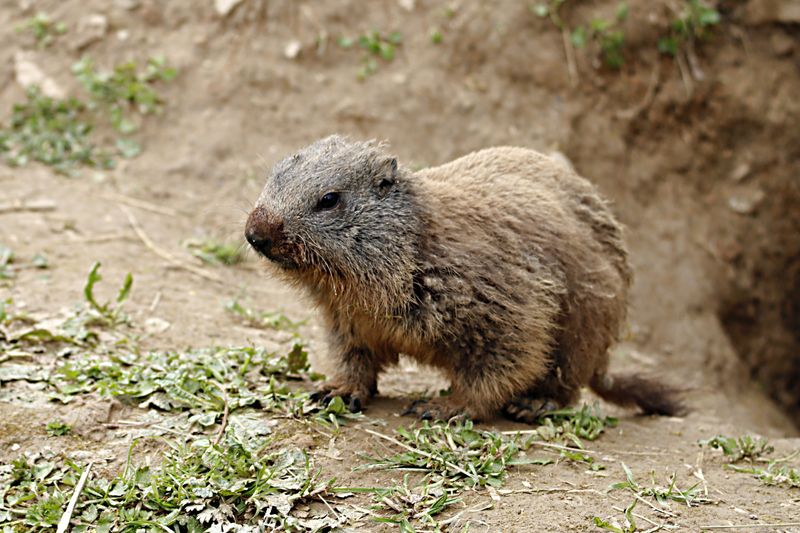
One hole might be a fluke. Three holes along the same fence line is a full-scale groundhog neighborhood, and you are the one who did not get an invitation.
Groundhogs build complex burrow systems with a main entrance and several secondary exits. These escape holes are usually hidden under dense vegetation, fence lines, or the base of a shed or deck.
Finding multiple openings in a row is a strong sign that one or more groundhogs have been living on your property for a while. Established burrows can stretch ten to sixty feet underground with multiple chambers.
The secondary exits are often less obvious than the main hole. They tend to be slightly smaller, with less soil disturbance around the opening, and may be partially hidden by grass or weeds.
Sheds and decks are favorite spots because they provide overhead protection. A groundhog living under your shed has shelter, warmth, and easy access to your garden all in one convenient package.
Check along fence lines where the soil meets the wood or metal base. Groundhogs often dig just inside the fence perimeter, using the structure as a guide and a sense of security while tunneling.
If you discover a network of openings, consider calling a licensed wildlife removal professional in Maryland. Flooding or collapsing an active burrow without guidance risks serious structural damage nearby.
5. Entire Plant Rows Vanishing Overnight

You planted two full rows of lettuce three weeks ago. This morning, those rows are bare soil with nothing left but a few small stems at ground level.
Groundhogs are not nibble-and-move creatures. When they find something they love, they feed thoroughly, clearing entire sections of a garden in a single session.
Lettuce, beans, peas, and leafy greens are among their top favorites. If you grow any of these in Maryland, a resident groundhog will find them and return to your garden as a reliable food source.
The speed of the damage is what shocks most gardeners. One evening everything looks fine, and by sunrise the next morning, a significant portion of the bed is completely stripped clean.
This kind of overnight loss is distinct from deer damage, which tends to be more scattered and leaves behind torn, ragged edges. Groundhog feeding is more thorough and lower to the ground.
Check the soil around the missing plants for tracks. Groundhog footprints are distinctive, with four toes on the front feet and five on the back, often showing claw marks in soft soil.
Protecting remaining plants with a sturdy wire cage or cloche can buy you time while you address the root problem.
Row covers secured at the edges also offer a quick, affordable barrier that slows feeding activity significantly while you plan a longer-term solution for your garden.
6. Gnaw Marks And Chewed Bark On Fruit Trees
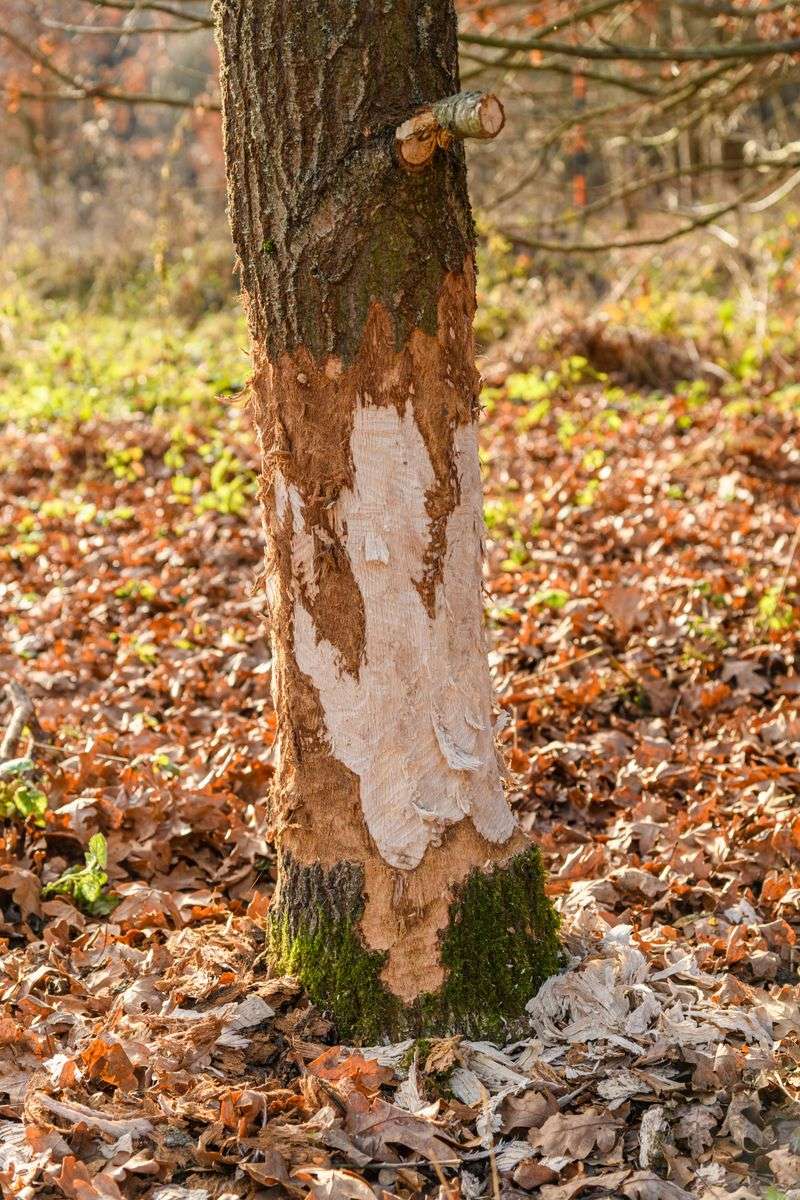
Fruit trees take years to mature, and losing one to a groundhog is a serious setback worth preventing. Spotting gnaw marks early gives you a real chance to protect what you have worked so hard to grow.
Groundhogs gnaw on bark for a few reasons. They sharpen and wear down their continuously growing incisors on woody material, and young tree bark also provides nutrients and moisture during dry spells.
The marks are usually found on the lower twelve to eighteen inches of the trunk. You will see rough, scraped areas where the outer bark has been peeled away, sometimes exposing the pale wood underneath.
Young apple, pear, and cherry trees are especially at risk. Their bark is softer and thinner than mature trees, making it easy for a groundhog to strip significant sections in one visit.
Repeated gnawing in the same spot can girdle a tree, meaning the bark is removed all the way around the trunk.
Girdling cuts off the flow of nutrients and water, which can seriously weaken or eventually destroy the tree. Tree guards made of hard plastic or wire mesh are an easy, inexpensive fix.
Wrapping the lower trunk before damage starts is the smartest approach, especially for trees planted within the past three years.
A clue a groundhog is living in your Maryland garden is often hiding in plain sight on your fruit trees. Check the base of every young tree at least once a week during active growing season to catch problems early.
7. Soil Feeling Soft Or Hollow Underfoot
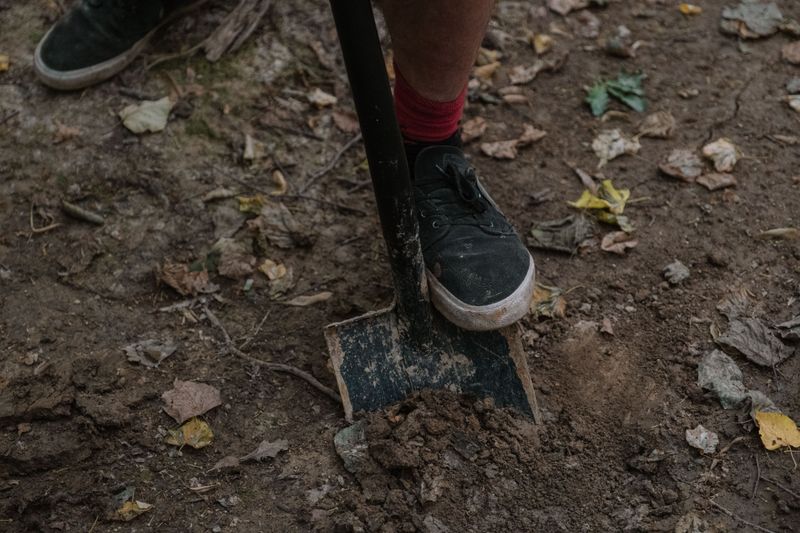
You step onto your lawn and your foot sinks slightly, like the ground beneath is no longer solid.
That spongy, hollow feeling underfoot is one of the strangest and most unsettling signs of groundhog activity.
As groundhogs tunnel below the surface, they remove soil and create empty chambers that leave the ground above feeling unstable. The surface might look completely normal while several feet of tunnel run underneath.
This is more than just a nuisance. Hollow ground near a garden bed, shed foundation, or retaining wall can cause those structures to shift or settle unevenly over time.
Walk slowly across the areas near your raised beds and along fence lines. Pay attention to spots where the ground gives more than usual or where you hear a faint hollow sound when you stomp lightly.
Soft soil patches often correspond with the tunnel routes between burrow entrances. Mapping these soft spots can help you understand the layout of the underground system and how extensive it has become.
Maryland’s rainy springs can make this damage worse. Water infiltrates the tunnels and softens the surrounding soil further, sometimes causing small surface depressions or sinkholes to appear near burrow systems.
If you notice soft ground near your home’s foundation or a deck support post, treat it as a priority.
Soft ground near your foundation or deck posts needs professional eyes quickly. Burrowing activity close to structural supports can compromise their integrity over time.
8. Clover And Leafy Greens Grazed To The Ground

Picture a patch of lush clover one week, and a flat, chewed-down circle of stubble the next. That kind of precision grazing is a reliable sign a groundhog has found its preferred feeding area.
Clover is one of the most attractive plants to groundhogs. They will seek it out specifically, often grazing the same patch repeatedly until nothing remains above the soil surface.
Leafy greens like spinach, kale, and Swiss chard get the same treatment. A groundhog will graze these plants down to a stub, leaving behind only the toughest lower leaf ribs and the root crown.
The grazed area often has a very uniform look, almost like someone mowed just that section at a very low height. The surrounding plants may be untouched, which makes the pattern stand out clearly.
Deer and rabbits also eat clover and greens, but groundhog grazing tends to be lower and more thorough.
They sit close to the ground while eating, which means they can reach every last leaf near the soil surface.
Spotting this pattern near a burrow entrance or a soft patch of ground is a strong confirmation.
Two or more clues appearing together make the identification almost certain, removing any doubt about what animal you are dealing with.
A clue a groundhog is living in your Maryland garden is often this kind of systematic, ground-level grazing.
Planting deterrent herbs like lavender or yarrow nearby can help discourage repeat visits to your most vulnerable green spaces.