What It Means When A Red-Tailed Hawk Shows Up In Your South Dakota Yard
Most people see a large hawk land in the yard and immediately reach for their phone. That instinct is correct. Red-tailed hawks are year-round residents in South Dakota, and they do not choose a perch without a reason.
That fence post, that tree branch, that slow circle above your roofline is all deliberate. Red-tailed hawks have eyesight sharp enough to track a mouse moving through tall grass from a hundred feet up.
Every perch is a calculated move. Your yard earned this visit. Something is moving through your grass, your garden edges, or just beneath the surface that this hawk found worth watching.
South Dakota’s terrain is built for these birds, and a hawk working your space means your land is plugged into a living food chain. Here is what that actually means.
Your Yard Has Something This Hawk Wants
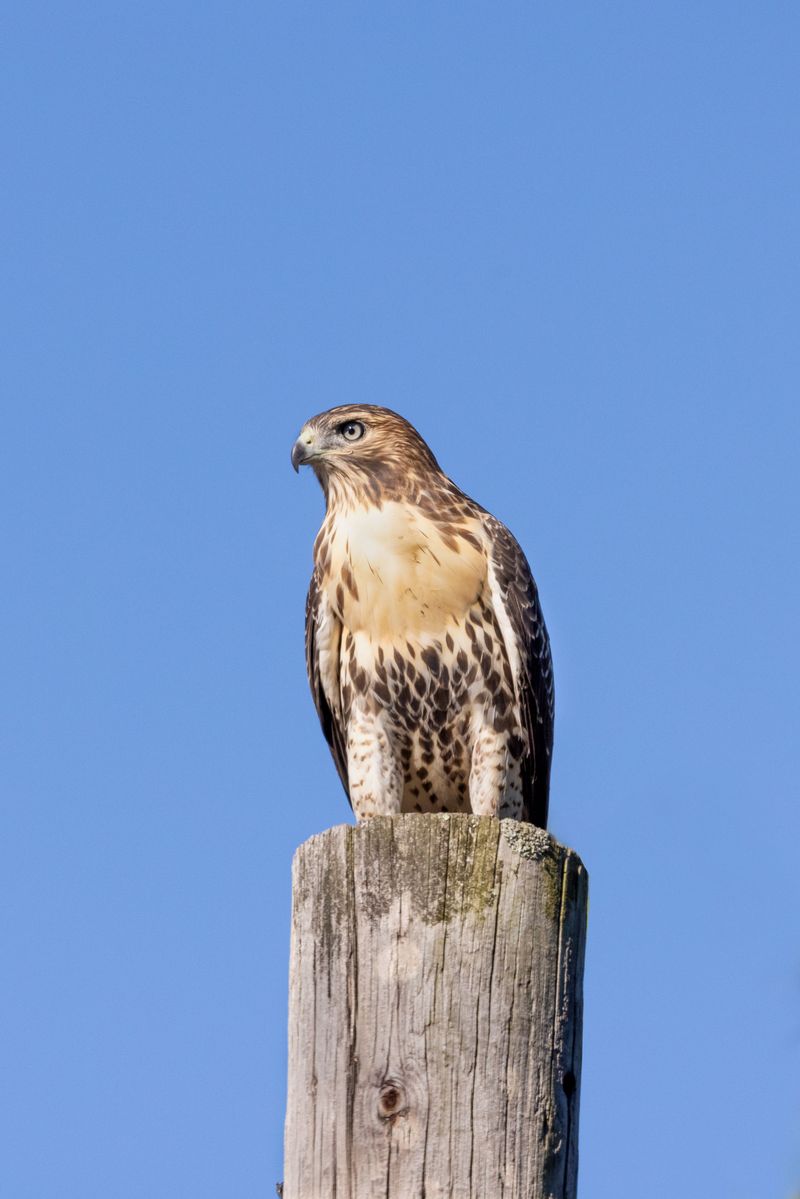
Hunger brought it here. A red-tailed hawk rarely wanders into yards by accident, it follows food the way a shopper follows a sale sign.
Your yard is likely packed with prey. Voles, mice, rabbits, and even large insects are all on the menu for this bird.
Open grassy patches are basically a buffet. Hawks need clear sightlines to spot movement below, and a mowed lawn gives them exactly that advantage.
Bird feeders play a sneaky role too. Feeders attract small songbirds and rodents, which then attract the hawk like a neon sign flashing “free lunch.”
South Dakota yards bordering open fields or grassland edges are especially attractive. That transition zone between mowed lawn and wilder growth is where prey moves most, and hawks know it.
Tall perch spots seal the deal. A fence post, bare tree, or utility pole gives the hawk a throne from which to scan your entire yard without effort.
Your property has essentially passed a hawk quality check. It offers food, visibility, and a good vantage point, three things every hunting raptor needs.
Think of your yard as prime real estate in the hawk market. Once a red-tailed hawk finds a productive hunting ground, it tends to return again and again.
Noticing repeat visits means your yard is consistently delivering results. That is a sign your outdoor space supports a rich and active local food web.
Telling A Red-Tailed Hawk Apart From Other South Dakota Raptors
Not every big hawk is a red-tail. South Dakota hosts several raptor species, and telling them apart takes a quick but confident eye.
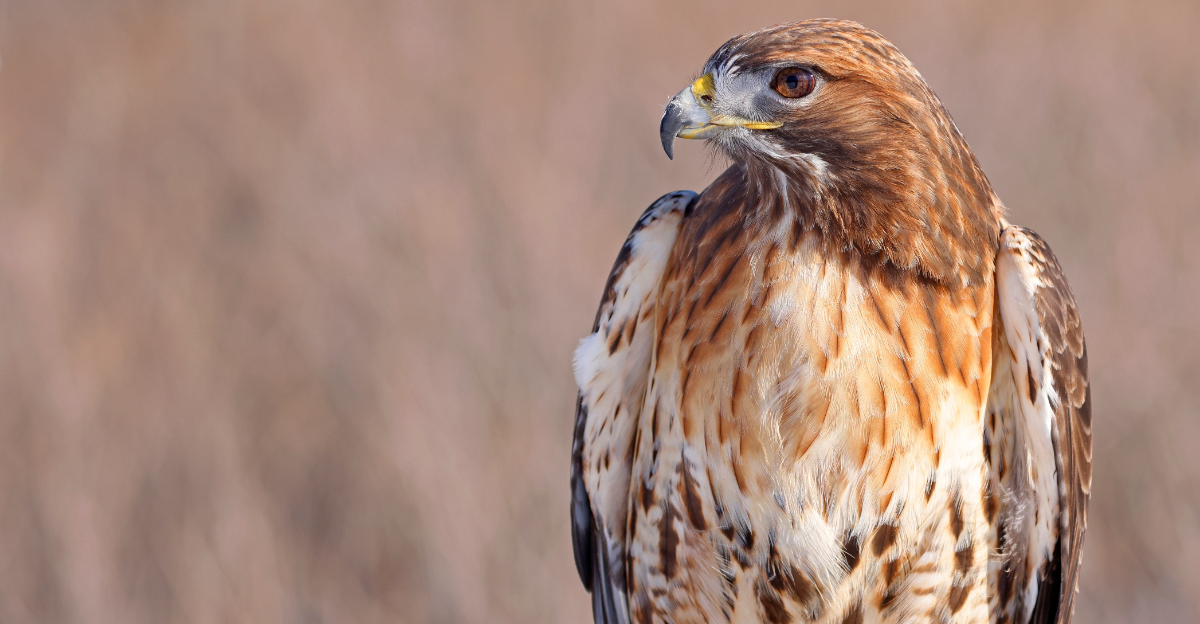
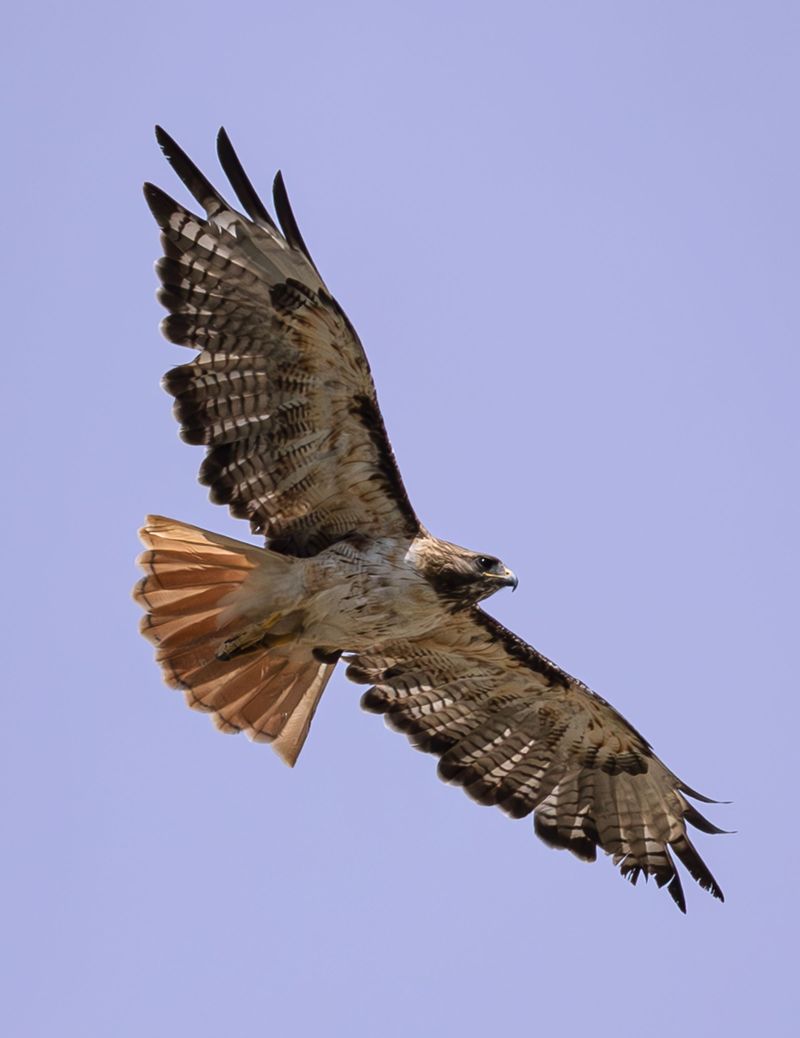
The rusty-red tail is the giveaway. Adults show a brick-colored upper tail that practically glows in sunlight, no other common hawk here comes close to matching that look.
From below, watch for the belly band. Red-tailed hawks have a dark streak of streaked feathers across their pale belly, forming a natural belt across their midsection.
Ferruginous hawks are also large and common on the plains. They look paler overall and lack the bold belly band that red-tails wear so distinctly.
Size alone will not save you. Ferruginous hawks match the red-tail in bulk, so always scan for that belly band and tail color before making a call.
Your South Dakota Garden Changes Every Week. Your Plan Should Too.
Gardening in South Dakota changes quickly throughout the season. Every Friday you’ll receive a simple weekly plan showing exactly what to plant, prune, fertilize, harvest, and protect so you never miss the right timing.
Rough-legged hawks visit in winter and can fool beginners. They have feathered legs and a black belly patch rather than the classic streaked band of the red-tail.
Cooper’s hawks and sharp-shinned hawks are much smaller. If the bird fits neatly on a fence post without looking massive, it is probably not a red-tail.
Wing shape matters more than most people realize. Red-tails have broad, rounded wings built for soaring, while accipiters have short, rounded wings made for darting through trees.
Once you lock in those field marks, rusty tail, belly band, broad wings, you will never misidentify a red-tailed hawk again.
The Real Reasons Red-Tailed Hawks Stick Around South Dakota Year-Round
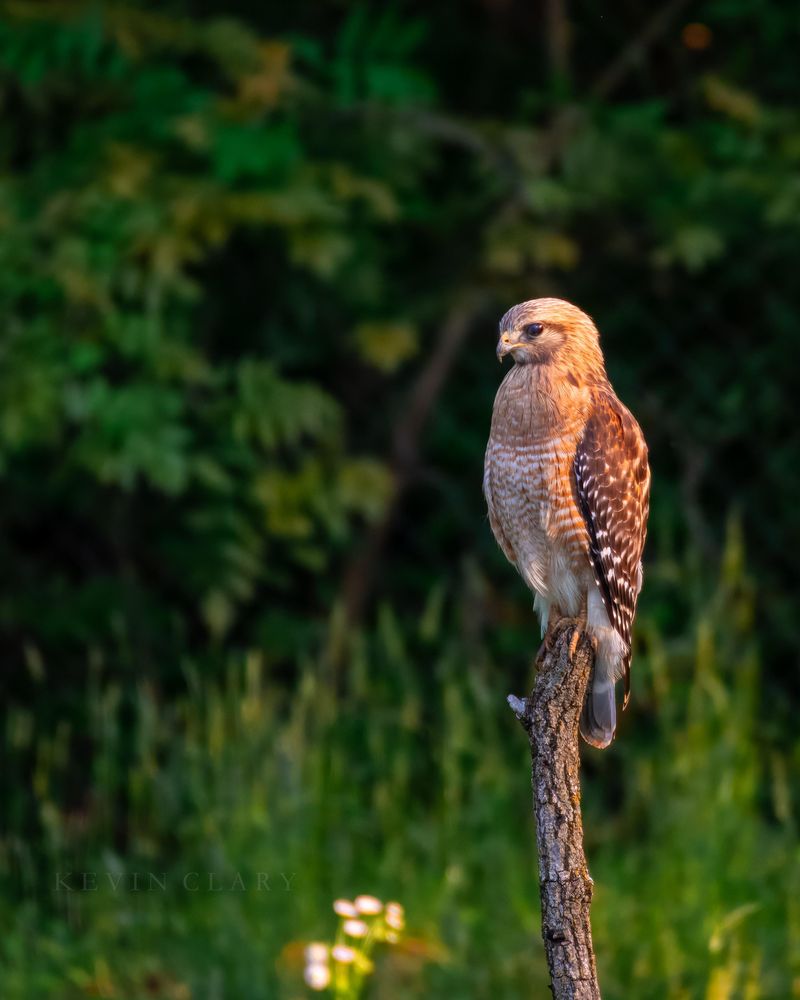
Most people assume hawks fly south for winter. Red-tailed hawks break that assumption with confidence every single year.
They are one of the most cold-tolerant raptors in North America. As long as prey stays active under the snow, many of these birds have little reason to leave.
Voles and mice stay busy in winter. They tunnel beneath snow, but their movements create surface disturbances that a sharp-eyed hawk can spot from fifty feet up.
Open farmland is a huge factor in year-round residency. The wide, flat fields across much of the state give hawks unobstructed hunting ground even in deep winter months.
Pair bonding also keeps them anchored. Mated red-tailed hawks often defend a home territory together, and leaving that territory risks losing it to a competing pair.
Nest sites are worth protecting too. A hawk that has invested time in building or claiming a nest tree is not going to abandon it lightly for warmer weather.
Mild winter days actually trigger hunting surges. When temperatures rise slightly and prey stirs more actively, resident hawks take full advantage of the increased movement.
Seeing a red-tailed hawk in January is not unusual here, it is a sign that your local hawk has found your area productive enough to call it home all year.
Reading A Red-Tailed Hawk’s Behavior In Your Yard
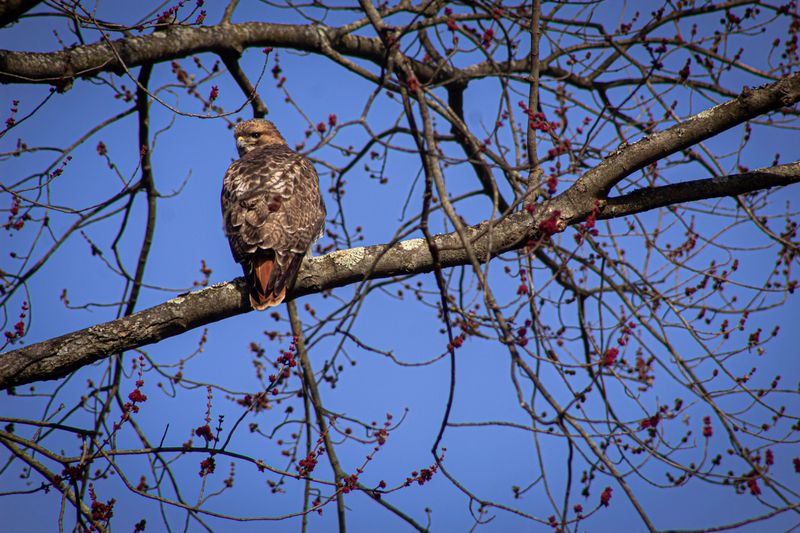
Body language tells the whole story. A hawk that sits tall and relaxed is simply resting, while one crouched low and laser-focused is locked onto prey.
Circling high overhead means scouting mode is active. The bird is mapping territory and checking for movement across a wide area below it.
Loud, repeated calling is often territorial. That classic screaming cry, the one used in every movie as a generic “eagle sound”, signals that the hawk is staking a claim.
Swooping low and pulling up without catching anything is a practice run. Young hawks especially make failed attempts while sharpening their technique on real targets.
Sitting motionless for long stretches is normal hawk patience. These birds can wait out prey without twitching for what feels like an eternity, which looks eerie but is completely healthy behavior.
If a hawk tilts or shifts its head slightly, it is sharpening its read on distance and movement below. That subtle adjustment helps it lock onto a target before committing to a strike.
Aggressive dive-bombing toward people or pets usually means a nest is nearby. Parent hawks guard their young fiercely and will target anything that gets too close.
Learning these behaviors turns every hawk visit into a live nature lesson happening right outside your window, no field trip required.
Yard Features That Draw Red-Tailed Hawks In
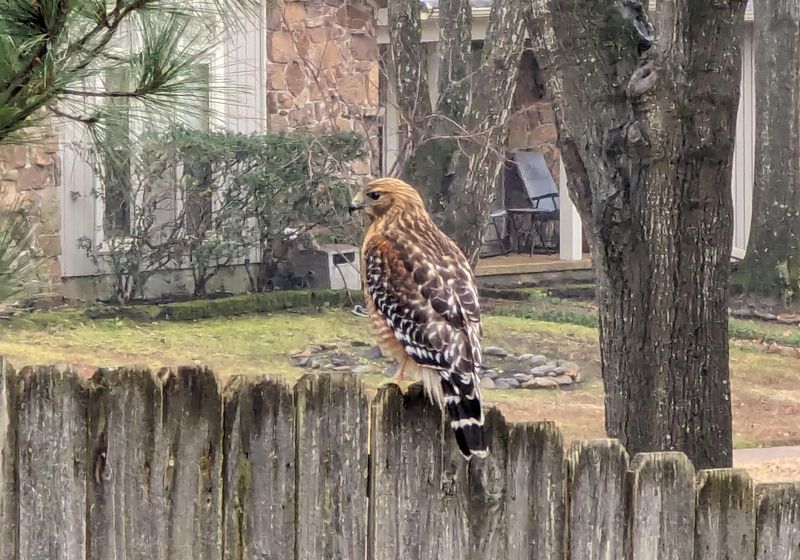
Your yard design matters more than you think. Certain features act like magnets for hunting hawks, and most homeowners have at least a few of them already.
Tall, exposed perches are the number one draw. Bare tree limbs, fence posts, and power lines give hawks the elevation they need to scan wide areas efficiently.
Open lawn space amplifies the appeal. A hawk cannot hunt what it cannot see, so short grass or bare ground creates the perfect visible hunting stage.
Brush piles and wood stacks are prey hotels. Mice and voles love to nest in them, which means hawks love to patrol near them for an easy catch.
Bird feeders create a layered food chain. Seeds attract sparrows and finches, those birds attract the hawk, and suddenly your feeder is a full ecosystem in miniature.
Mature trees along the yard edge offer nesting potential. A red-tailed hawk scoping a yard with big oaks or cottonwoods may be checking for future nest sites, not just food.
Water features like ponds or birdbaths attract prey animals too. Frogs, small mammals, and even large insects gather near water, making it a productive hunting zone for raptors.
You do not need to change your yard to invite hawks, but knowing which features they love helps you understand why they keep choosing your space over your neighbor’s.
Signs A Red-Tailed Hawk Visit Needs A Closer Look
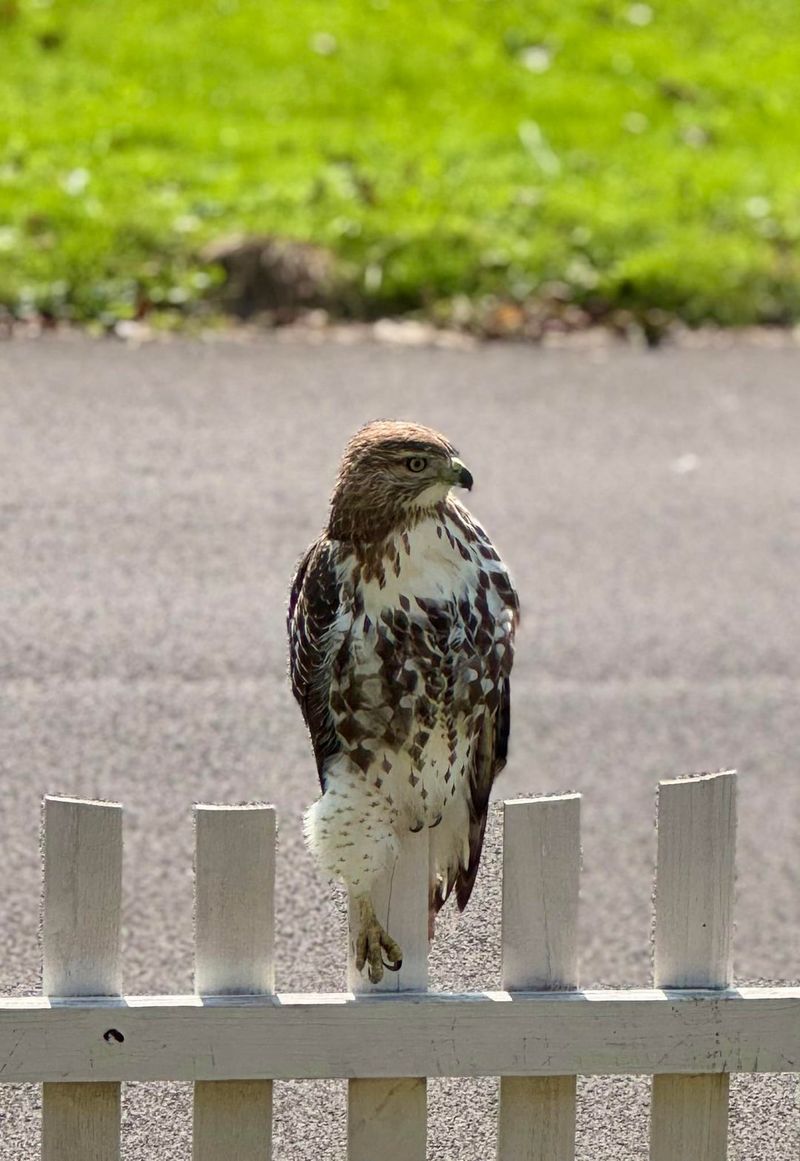
Most hawk visits are completely normal and need no action from you. But a few signs suggest the bird may need some outside help to get back on track.
A hawk sitting on the ground for more than an hour is a red flag. Healthy red-tails almost never stay grounded that long unless something is wrong.
Drooping wings and ruffled feathers signal distress. A bird holding itself that way is likely injured, ill, or suffering from exposure to extreme temperatures.
Crashing into windows is more common than people expect. Glass reflection confuses hawks mid-flight, and a hard strike can cause concussions that leave them dazed for hours.
If a hawk is unresponsive to your approach, do not try to handle it alone. Raptors have powerful talons that can cause serious wounds even when the bird seems weak.
Contact South Dakota Game, Fish and Parks or reach out to the Black Hills Raptor Center to find the nearest option in your area.
Keep pets and children away from a grounded hawk. Even a disoriented bird can react quickly if it feels cornered, and a talon strike is nothing to brush off.
Knowing what a healthy hawk visit looks like makes it much easier to spot when something is off, and acting fast can genuinely make a difference for the bird.