The Best Set-And-Forget California Plants For Around A Pool That Stay Neat On Their Own
A poolside garden should feel relaxing, not like another weekend chore. The best plants for this spot need to handle California sun, reflected heat, and the occasional splash without making a mess.
That means choosing growers that stay neat without constant trimming. It also means avoiding plants that drop leaves into the water every time the breeze picks up.
A good pool plant adds shape and color while keeping cleanup low. It can soften paving, frame a lounge area, or make the whole backyard feel more finished.
But the real win is finding plants that do their job quietly once they settle in. Choose the right set-and-forget options, and your pool area can look polished without asking for attention every time you step outside.
1. Kangaroo Paw Adds Color Without Messy Leaves
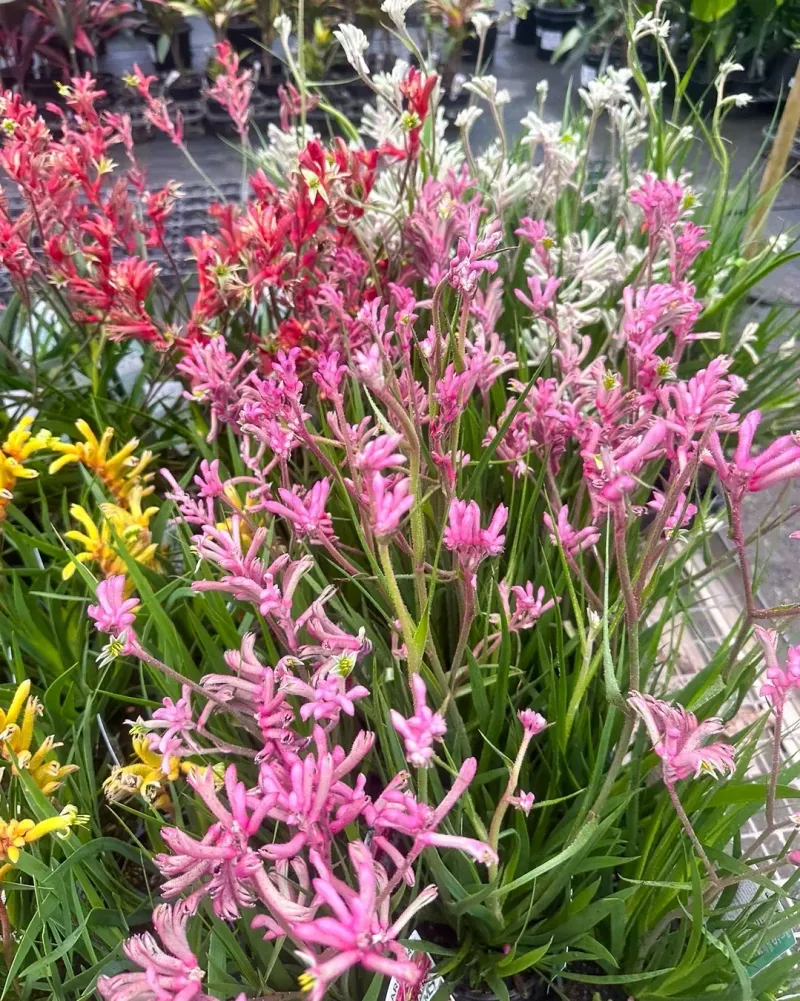
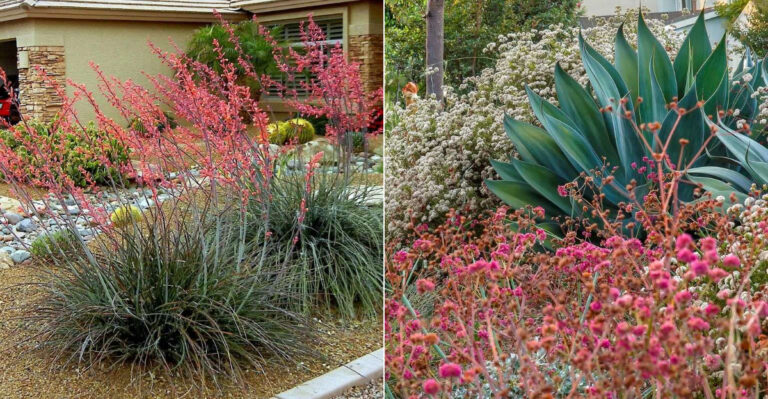
Few plants pull off bold color and low mess at the same time quite like Kangaroo Paw. Originally from Australia, this plant has found a happy home in our warm, dry climate.
It blooms in shades of red, orange, yellow, and pink, and the flowers look almost velvety up close.
The leaves grow in a tidy grass-like clump that stays low to the ground. There are no wide-spreading branches to worry about, and the plant does not drop petals that clog up pool filters.
That alone makes it a poolside winner.
Plant it in full sun and well-draining soil, and it will reward you with blooms from late winter through summer. It handles drought well once it gets established, so you do not need to water it constantly.
Most varieties stay under three feet tall, which keeps sightlines open around the pool.
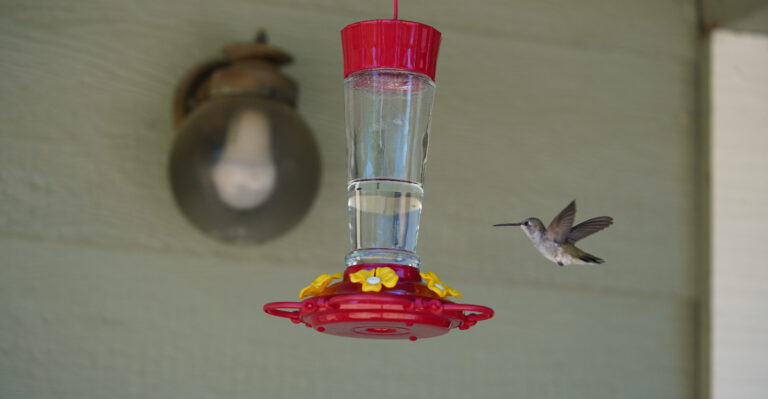
Hummingbirds absolutely love the tubular flowers, so you get free wildlife entertainment as a bonus. Cut the flower stalks down after blooming to encourage fresh growth.
Beyond that simple trim, this plant mostly takes care of itself. It is a great pick for anyone who wants a pop of color without the cleanup work that usually comes with flowering plants.
2. Blue Chalksticks Keeps Pool Edges Cool And Tidy
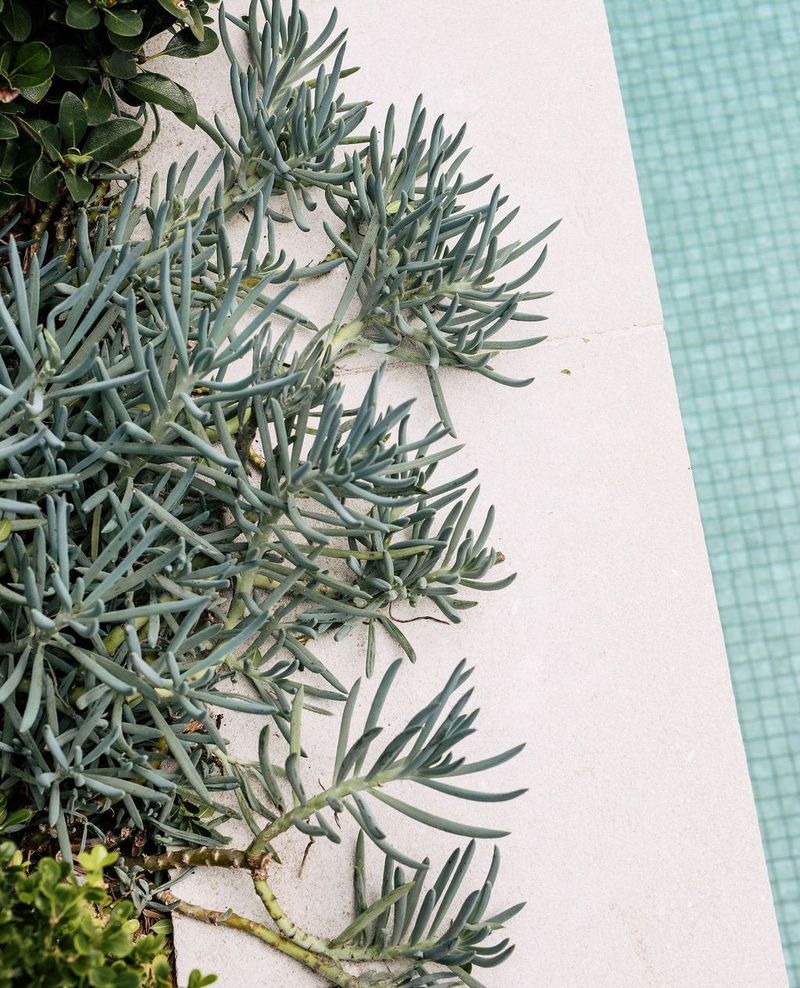
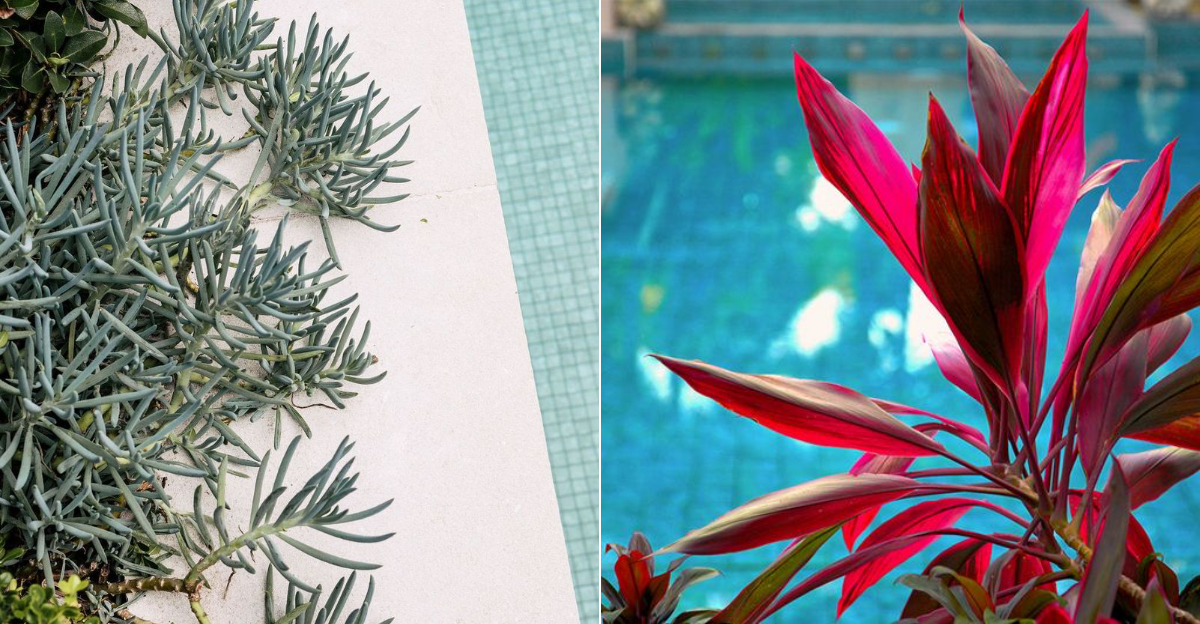
There is something almost calming about the cool, silvery-blue color of Blue Chalksticks. This low-growing succulent is one of the most carefree plants you can put near a pool.
The finger-shaped leaves stay compact and spread slowly, forming a neat, ground-hugging mat.
Because it is a succulent, it stores water in its leaves and barely needs irrigation once it settles in. In the hotter inland parts of California, that drought tolerance is a huge advantage.
It also handles reflected heat from pool decking without any trouble at all.
The plant stays under one foot tall, so it never blocks views or grows over pathways. It does not produce messy seed pods or large flowers that fall into the water.
Small white flowers do appear in fall, but they are tiny and tidy. The whole plant has a sculptural, almost frosted look that pairs well with modern pool designs.
Plant it along border edges or between stepping stones for a clean, finished look. Sandy or rocky soil suits it best, and it does not need fertilizer to thrive.
Your California Garden Changes Every Week. Your Plan Should Too.
Gardening in California changes quickly throughout the season. Every Friday you’ll receive a simple weekly plan showing exactly what to plant, prune, fertilize, harvest, and protect so you never miss the right timing.
Root rot from overwatering is the only real concern, so go easy on the hose. For pool edges that need to look polished with almost zero effort, Blue Chalksticks delivers every single time.
3. Dwarf Olive Gives A Clean Mediterranean Look
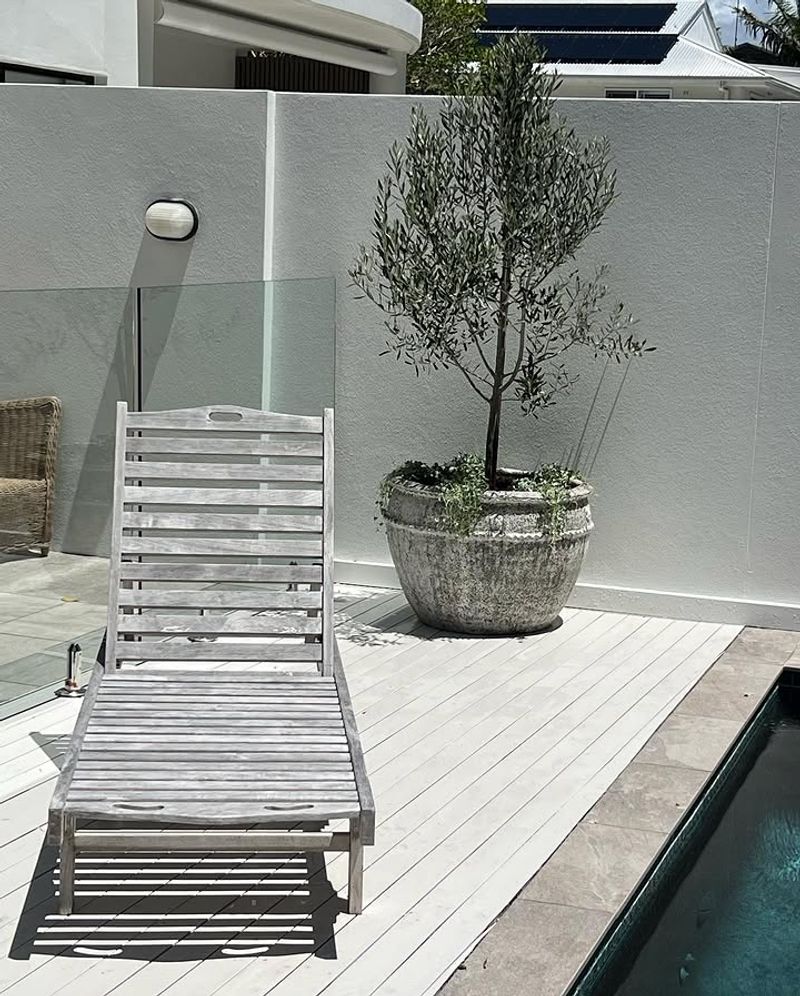
Something about the silvery-green leaves of a Dwarf Olive just makes a pool area feel more elegant. This compact tree brings a classic Mediterranean look without growing into an unmanageable giant.
It tops out at around six to eight feet tall, which is very manageable for most backyards.
The leaves are small and narrow, so even when a few fall, cleanup is easy and quick. Most Dwarf Olive varieties are either fruitless or produce very little fruit, which solves the biggest mess problem associated with standard olive trees.
You get all the beauty without the slippery, staining olives on your deck.
Full sun is where this tree thrives, and it handles drought conditions extremely well once established. The root system is not aggressive, which means it will not crack your pool deck or plumbing over time.
That is a detail many homeowners overlook when choosing trees near a pool.
The shape of the canopy stays naturally rounded with very little pruning needed. A light trim once a year keeps it looking sharp and proportional.
It works beautifully in containers if your pool deck does not have planting beds. Pair it with lavender or rosemary at its base for a full Mediterranean vibe.
For a no-fuss, classy look around any pool, this compact tree is hard to beat.
4. Little Ollie Olive Stays Neat Without Fruit Mess
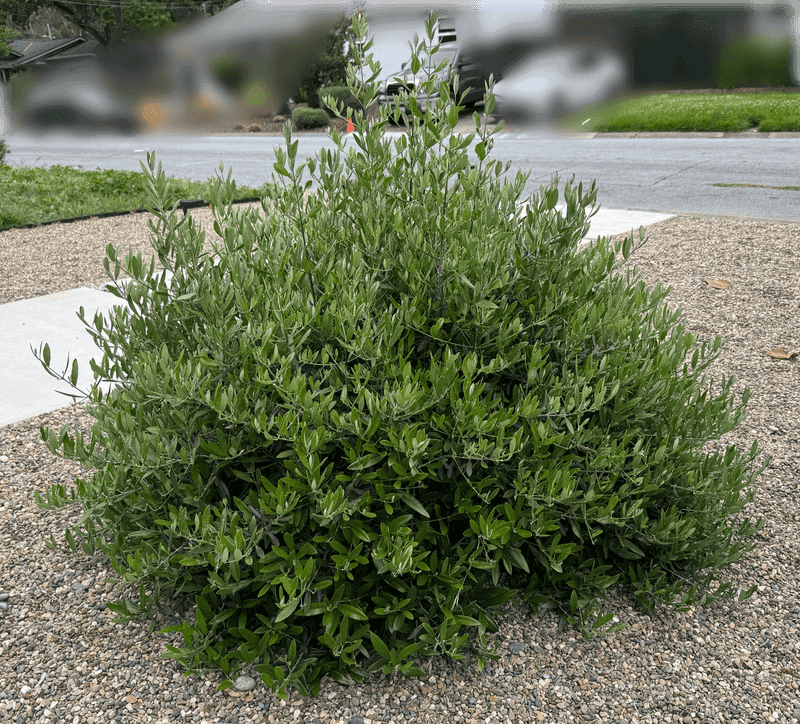
Little Ollie is technically a variety of fruitless olive, but it deserves its own spotlight because it behaves more like a dense, tidy shrub than a tree.
Gardeners in California have been using it along pool edges, driveways, and borders for years because it just works so well in hot, dry conditions.
The leaves are small, dark green, and stay on the plant year-round. Because it is fruitless, there is no messy olive drop to deal with on your pool deck.
That makes it one of the cleanest choices you can plant near water.
It grows slowly and holds a naturally rounded shape without constant pruning. A quick trim once or twice a year keeps it looking polished.
Many homeowners use a row of them as a low hedge along the pool fence, which adds privacy without blocking light or airflow.
Little Ollie handles both coastal breezes and inland heat without complaint. It is drought-tolerant once established and does not need rich soil to perform well.
In fact, too much water or fertilizer can actually make it grow faster than you want.
If you want a plant that looks like someone is taking care of it even when nobody is, Little Ollie fits that description perfectly.
It is one of those rare plants that looks intentional and maintained with almost no effort from you at all.
5. Cordyline Adds Poolside Color With A Slim Shape
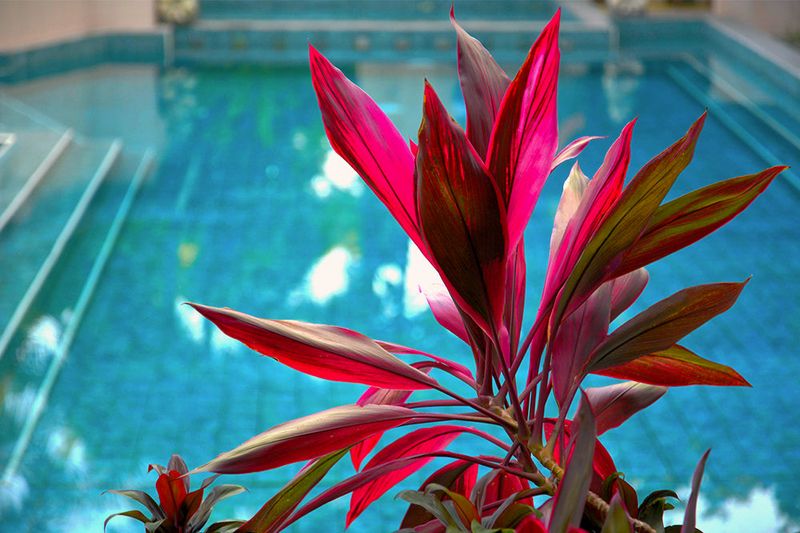
Bold without being messy, Cordyline is one of those plants that makes a pool area feel like a resort.
The long, sword-shaped leaves fan out from a central trunk in shades of deep red, burgundy, green, or striped combinations.
It has a tropical look that fits perfectly with water nearby.
The upright, columnar shape means it takes up very little horizontal space. That is a big deal when you are working with a narrow border between the pool deck and a fence.
It grows tall rather than wide, so it adds height and drama without crowding anything out.
Old leaves drop cleanly from the base as the plant matures, and they are easy to pull off by hand. There are no small petals or sticky sap to deal with.
The plant does produce small flower clusters occasionally, but they are not messy and the bees love them.
Plant it in full sun to partial shade and water it regularly during the first season to help it settle in. After that, it needs very little attention.
It is moderately drought-tolerant and handles reflected heat from pool surfaces without burning.
For poolside areas that need a vertical accent with year-round color, Cordyline delivers a striking look.
Its slim silhouette and rich leaf colors make it one of the most visually rewarding low-maintenance plants available in California.
6. New Zealand Flax Gives Structure Without Constant Cleanup
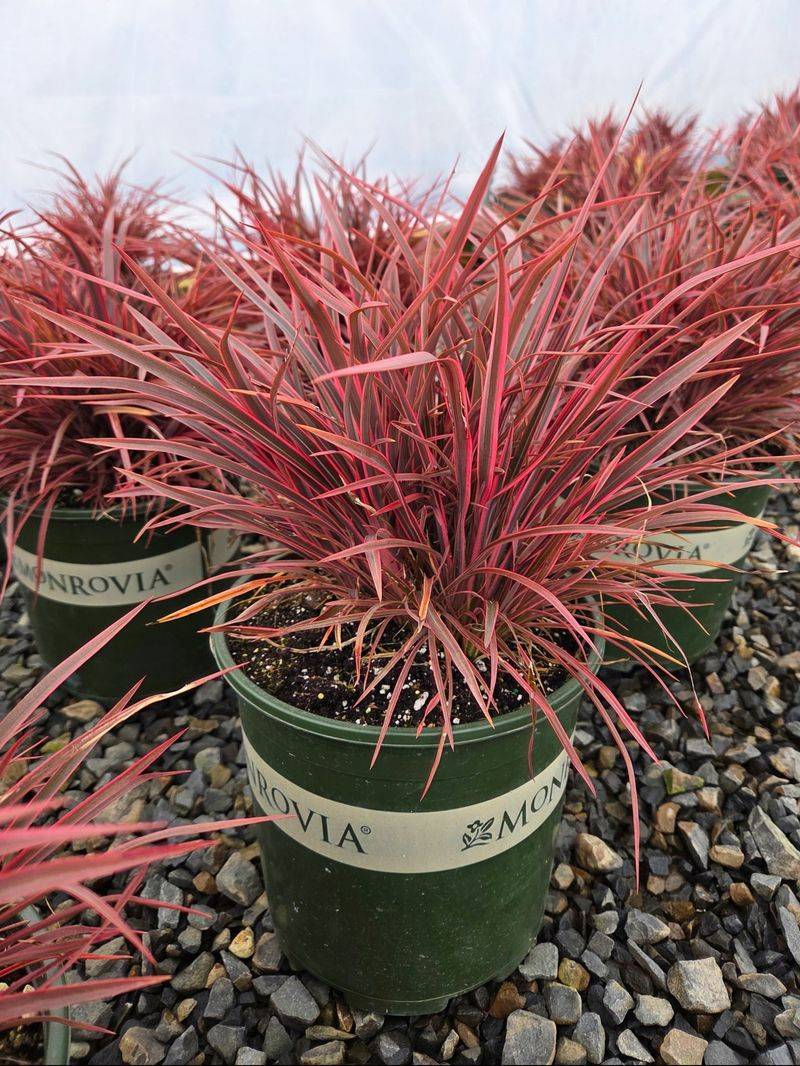
Bold, architectural, and almost completely self-sufficient, New Zealand Flax is the kind of plant that makes a garden look designed.
The long, strap-like leaves shoot upward in a dramatic fan shape, reaching anywhere from three to eight feet depending on the variety.
It creates instant structure in any poolside planting.
The leaves are tough and leathery, so they do not shred in the wind or drop constantly into the pool. Smaller dwarf varieties are available for tighter spaces, and they behave just as well as the larger ones.
You can find leaf colors ranging from green to bronze, burgundy, and even striped combinations.
Hot summers and dry spells do not faze this plant once it is established. It handles the reflected glare off pool water without scorching, which is something more delicate plants cannot manage.
It also tolerates coastal salt air beautifully, making it a strong choice for properties near the ocean.
Trim out any brown or damaged leaves from the base as needed, which takes about five minutes every few months. Beyond that, the plant handles itself.
No deadheading, no frequent pruning, and no messy fruit or seed pods to clean up.
Pair it with gravel or decomposed granite around the base for a clean, modern look. It anchors a planting bed with confidence and holds its shape through every season without needing any extra encouragement from you.
7. Foxtail Agave Looks Sculptural And Stays Clean
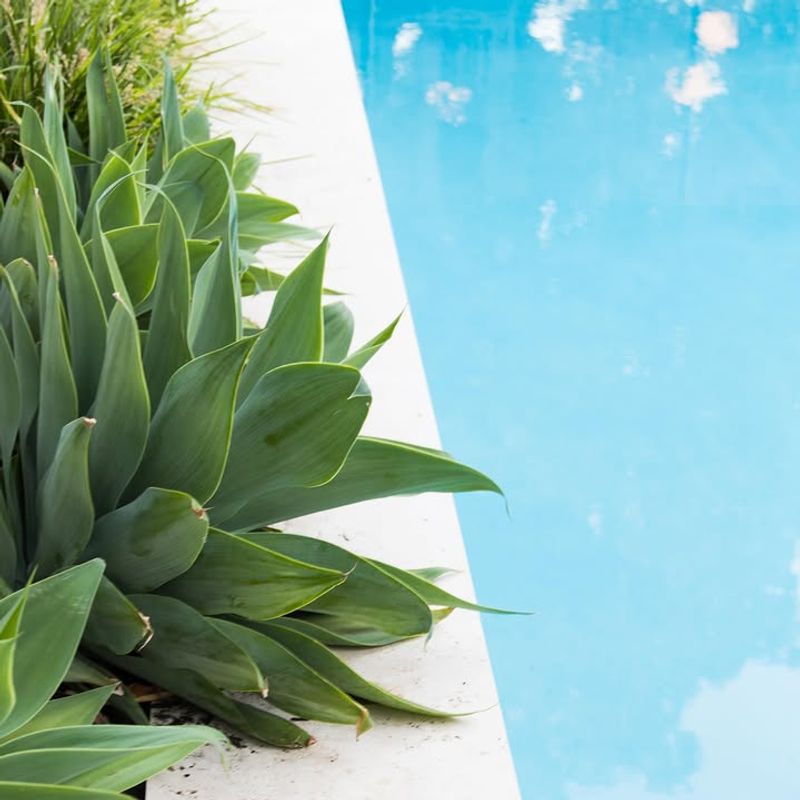
Not all agaves have sharp spines that turn a relaxing pool area into an obstacle course. Foxtail Agave is the exception.
Its leaves are soft-tipped and flexible, which makes it a safe and practical choice around pools where kids and adults are walking barefoot.
The plant grows in a perfect, symmetrical rosette that looks like it was placed there by a professional sculptor.
The blue-green leaves curve gracefully outward and form a globe shape that stays tidy all on its own. No trimming, shaping, or training needed at all.
It handles full sun, reflected heat, and drought with ease. Once established, it can go weeks without water, which is a huge advantage in the hotter inland regions of California.
It does not need fertilizer or rich soil to look its best.
The plant stays relatively compact, usually reaching about three to four feet wide and tall. That size is perfect for poolside planting beds without overwhelming the space.
Old leaves dry out and pull away cleanly at the base, so there is no messy debris buildup.
A tall flower spike does eventually appear after several years, and it is a dramatic, impressive sight. After blooming, the main rosette fades out, but pups often grow around the base to replace it.
Overall, this agave is one of the most satisfying, low-effort plants you can add to a pool landscape.
8. Bird Of Paradise Brings A Resort Feel Without Much Fuss
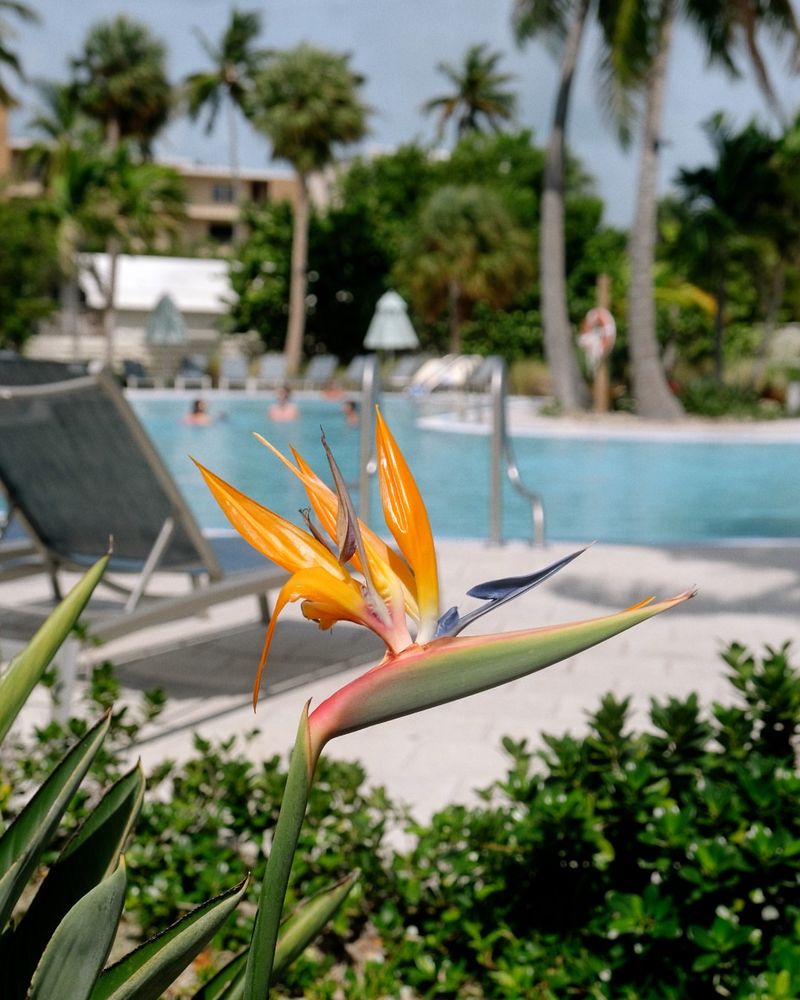
Walk past any hotel pool in the warmer parts of California, and you will almost certainly spot a Bird of Paradise nearby.
That tropical, vacation-ready look is exactly what makes this plant so popular for residential pools too.
The large, paddle-shaped leaves are bold and lush, and the orange and blue flowers are genuinely stunning.
Despite its dramatic appearance, this plant is remarkably easy to care for. It grows in a tight clump that stays in its own space and does not spread aggressively.
The leaves are thick and waxy, so they do not shred or drop constantly into the pool water.
Full sun is where it performs best, and it handles the intense afternoon heat of inland areas without struggling. Once established, it is quite drought-tolerant and does not need much irrigation to keep looking full and healthy.
A deep watering every week or two during summer is usually enough.
The flowers appear in spring and summer and sit on tall stalks above the foliage. They last a long time before they fade, and when they do, you simply cut the stalk off at the base.
That is about the only maintenance this plant regularly needs.
For homeowners who want their pool to feel like a getaway without hiring a gardener, Bird of Paradise is one of the smartest plants to choose. It delivers big visual impact with a surprisingly small amount of work.
9. Fortnight Lily Handles Poolside Heat With A Tidy Clump
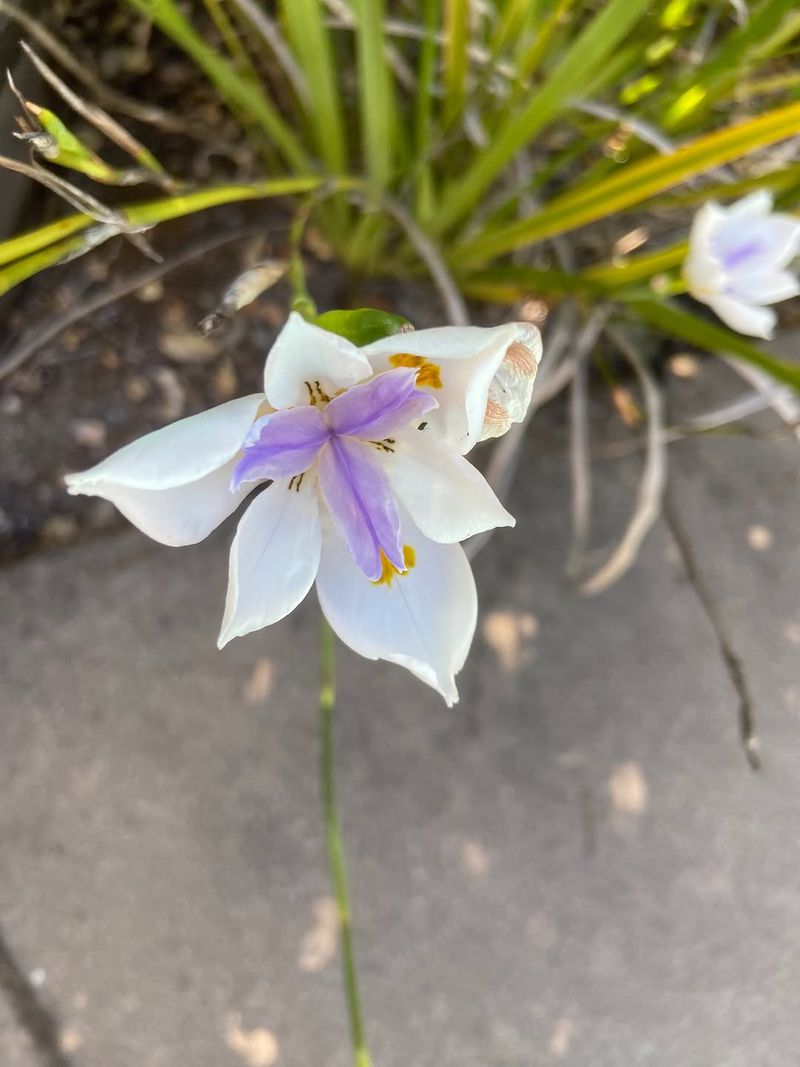
Every two weeks like clockwork, Fortnight Lily pushes out a fresh round of delicate white and yellow flowers.
That predictable blooming habit is actually where the name comes from, and it is one of the reasons gardeners in California love it so much. It just keeps performing without any encouragement.
The plant grows in a dense, grassy clump that stays neat and upright. The leaves are slender and dark green, and they hold their shape through heat, drought, and coastal winds.
The clump does not flop or sprawl, which keeps the pool area looking tidy at all times.
Spent flower stalks can be snapped off by hand, which takes only a minute. The plant does not drop petals into the pool in large quantities, so your filter stays cleaner than it would with more prolific bloomers nearby.
That is a practical detail that really matters over time.
It tolerates full sun and reflected heat from pool decking without any visible stress. Established plants are quite drought-tolerant, though they bloom more consistently with occasional deep watering during dry spells.
They also handle light frost, which makes them a solid choice for cooler northern regions of California.
Divide the clumps every few years to keep them looking fresh and to prevent overcrowding. Other than that simple task, Fortnight Lily runs itself.
For reliable color, minimal mess, and easy upkeep, it earns its place in almost any pool garden.