Popular Oregon Landscape Plants That Are Quietly Becoming Invasive Problems
Some of the most popular plants in Oregon gardens have a secret life beyond the fence line, and it is not a particularly good one. That tidy hedge, the reliable groundcover, the ornamental shrub that has been in the front border for twenty years.
A surprising number of familiar garden favorites are quietly spreading into natural areas, forest understories, and open land in ways that cause real problems for native ecosystems. Birds carry berries into the woods.
Roots slip under fences. Seeds drift further than anyone planned.
Most people who grow these plants have absolutely no idea any of this is happening, which is exactly why it is worth talking about.
Some carry legal restrictions in Oregon, others do not, but all of them have a well-documented history of spreading well beyond where they were originally planted.
1. English Ivy Escapes Into Trees And Forests
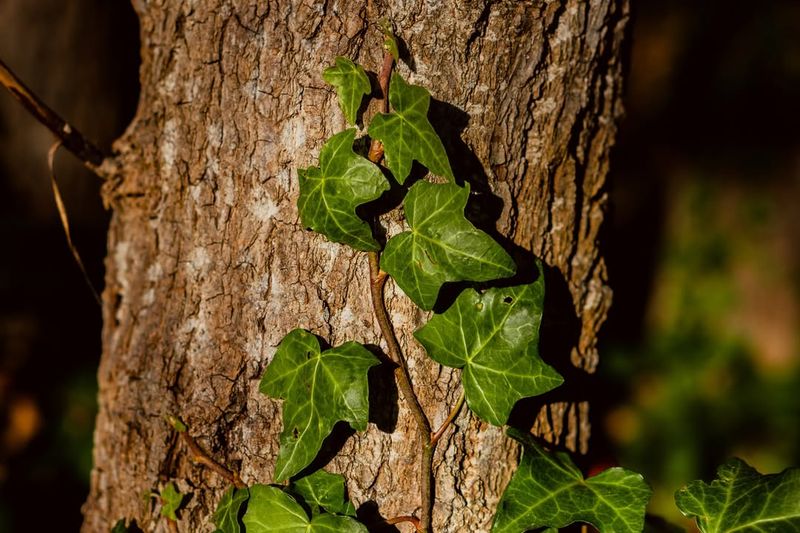
Old foundation plantings of English ivy can look tidy for years before the real problem becomes visible. Once established, ivy spreads along the ground, climbs fences, and then begins moving up tree trunks in ways that put serious stress on mature trees.
In Oregon’s mild, wet western valleys, this plant thrives with very little encouragement.
Ivy on trees adds weight, increases wind resistance, and can eventually cause limb failure. The dense groundcover mats it forms shade out native understory plants and prevent natural forest regeneration.
Parks and natural areas have spent significant resources removing ivy that originally escaped from nearby residential landscapes.
Homeowners often notice ivy on the side of the house or under a hedge long before they realize it has moved into a neighboring tree line.
Removing it from trees involves cutting the stems at the base and leaving the upper portion to dry out and deteriorate in place.
Pulling live ivy from high in a tree can cause dangerous debris falls.
Replacing ivy groundcovers with native alternatives like Oregon grape, sword fern, or low-growing native sedges can solve the problem while keeping the landscape attractive and functional year-round.
2. Butterfly Bush Spreads Beyond Garden Borders
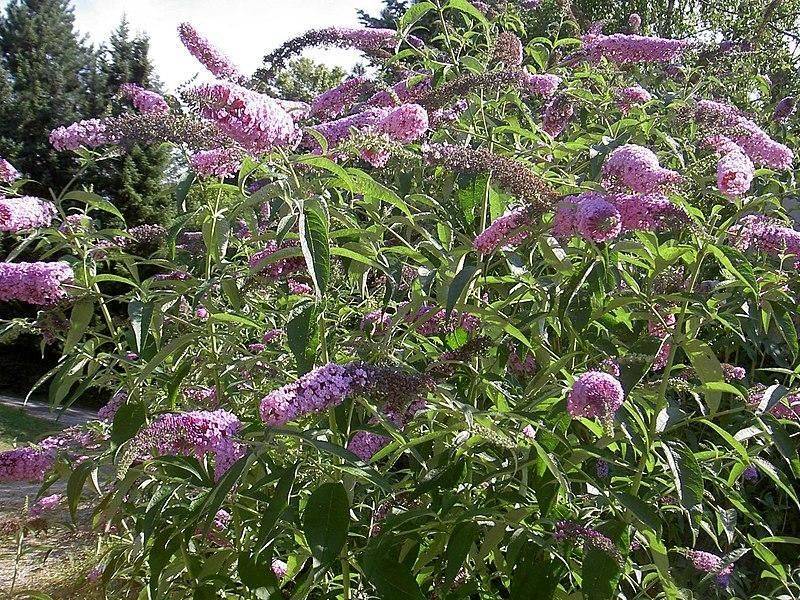
Few shrubs put on a summer show quite like butterfly bush. The long flower spikes in purple, pink, and white attract pollinators all season, and the plant is easy to grow in most Oregon soils.
For a long time it was considered a low-maintenance ornamental with clear wildlife benefits.
The concern with butterfly bush centers on seed production. Standard seed-producing forms can release thousands of tiny seeds that travel on wind and water, establishing in roadsides, stream banks, gravel bars, and disturbed ground.
Oregon law now restricts the sale and propagation of seed-producing butterfly bush cultivars, allowing only approved sterile or very-low-seed varieties to be sold in the state.
If your yard has an older butterfly bush, checking whether it is a regulated seed-producing type is a reasonable first step. Deadheading spent blooms before seeds mature can reduce spread from existing plants.
Replacing older plants with approved sterile cultivars lets you keep the summer color and pollinator value without contributing to the spread problem.
Your Oregon Garden Changes Every Week. Your Plan Should Too.
Gardening in Oregon changes quickly throughout the season. Every Friday you’ll receive a simple weekly plan showing exactly what to plant, prune, fertilize, harvest, and protect so you never miss the right timing.
Nurseries now carry compliant options that perform well and look nearly identical to older varieties in the garden.
3. English Holly Seeds Move With Birds
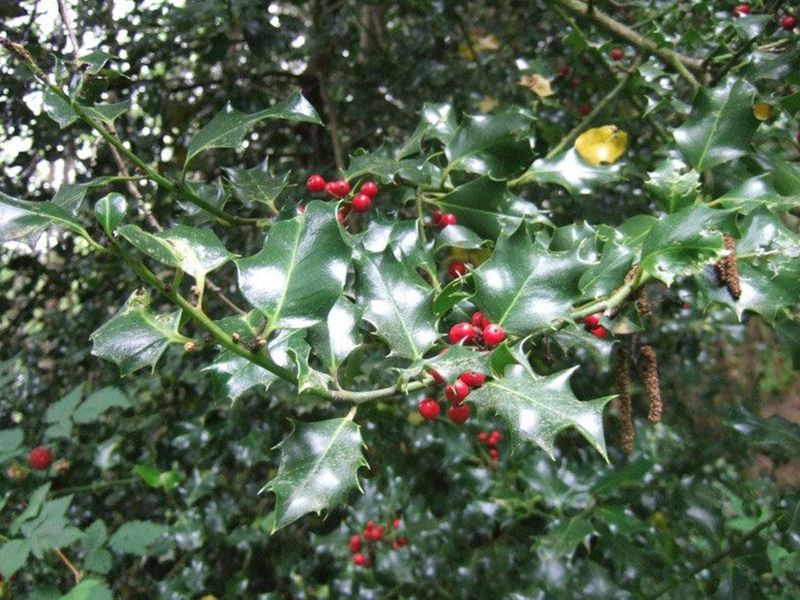
Shiny leaves and bright red winter berries have made English holly a classic choice for Oregon hedges, screens, and holiday decorations for generations.
Many older Oregon properties have mature holly plants that have been in place for decades, looking perfectly well-behaved along property lines and entryways.
The problem is the berries. Birds, especially robins and cedar waxwings, eat holly berries enthusiastically and then deposit seeds in wooded areas, neglected corners, and natural spaces far from the original planting.
Holly seedlings are shade-tolerant and can establish in forest understories where they eventually grow into shrubs that crowd out native vegetation.
In western Oregon, holly has been documented spreading into second-growth forests and natural areas near residential neighborhoods.
It is not currently listed as an Oregon state noxious weed, but it is recognized as a landscape escape that warrants attention in certain parts of the state.
Homeowners who notice seedlings popping up under trees or along fence lines near wooded areas may want to pull them while they are small.
Considering a non-fruiting alternative for new hedges or screens is a practical way to avoid contributing to the spread going forward.
4. Cherry Laurel Slips Into Natural Areas
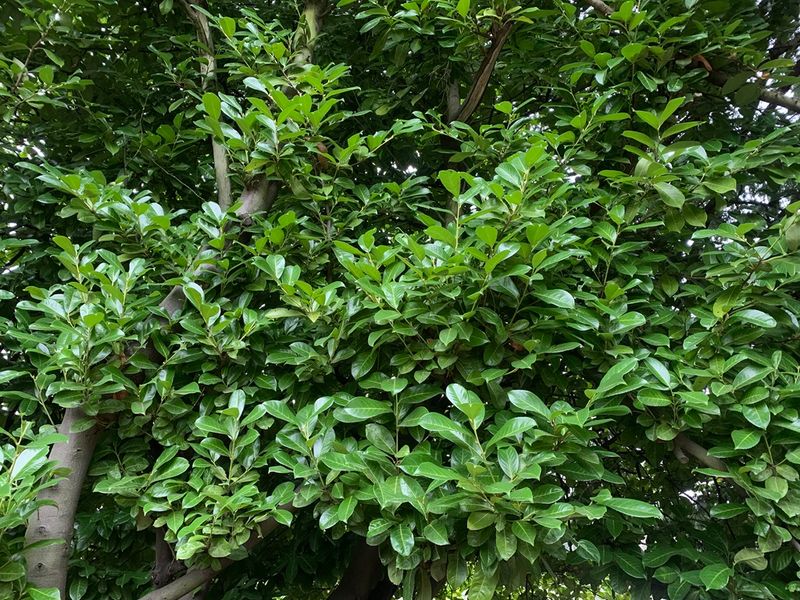
Walk through almost any older Oregon neighborhood and you will find cherry laurel growing as a hedge, screen, or privacy planting. It is fast-growing, tolerates shade, handles wet winters, and stays evergreen year-round.
Those qualities made it extremely popular for decades in western Oregon landscapes.
Cherry laurel produces small dark berries that birds readily consume and scatter into natural areas beyond the garden. Seedlings can establish in woodland edges, neglected areas, and disturbed ground near residential properties.
Over time, spreading plants can form dense thickets that shade out native shrubs and wildflowers in the understory.
Cherry laurel is not currently classified as an Oregon state noxious weed, but it is widely documented as a landscape escape in parts of western Oregon and the Pacific Northwest.
Homeowners with established cherry laurel hedges may notice volunteer seedlings appearing in shady corners of the yard or along fence lines near wooded areas.
Pulling seedlings when they are young is much easier than dealing with established plants later.
For new privacy plantings, Oregon-native alternatives like red osier dogwood, native elderberry, or tall Oregon grape can provide similar screening benefits with far less risk of spreading into neighboring natural spaces.
5. Spurge Laurel Takes Over Shady Understories
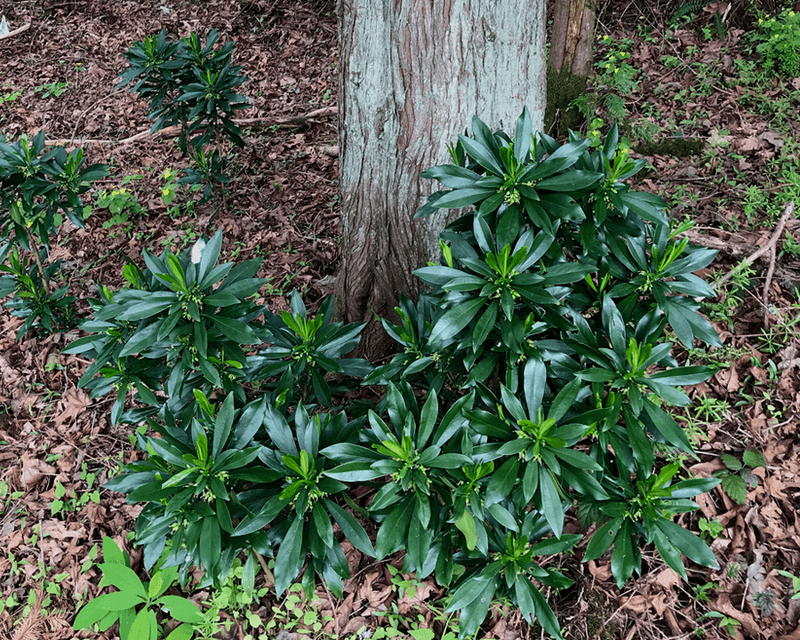
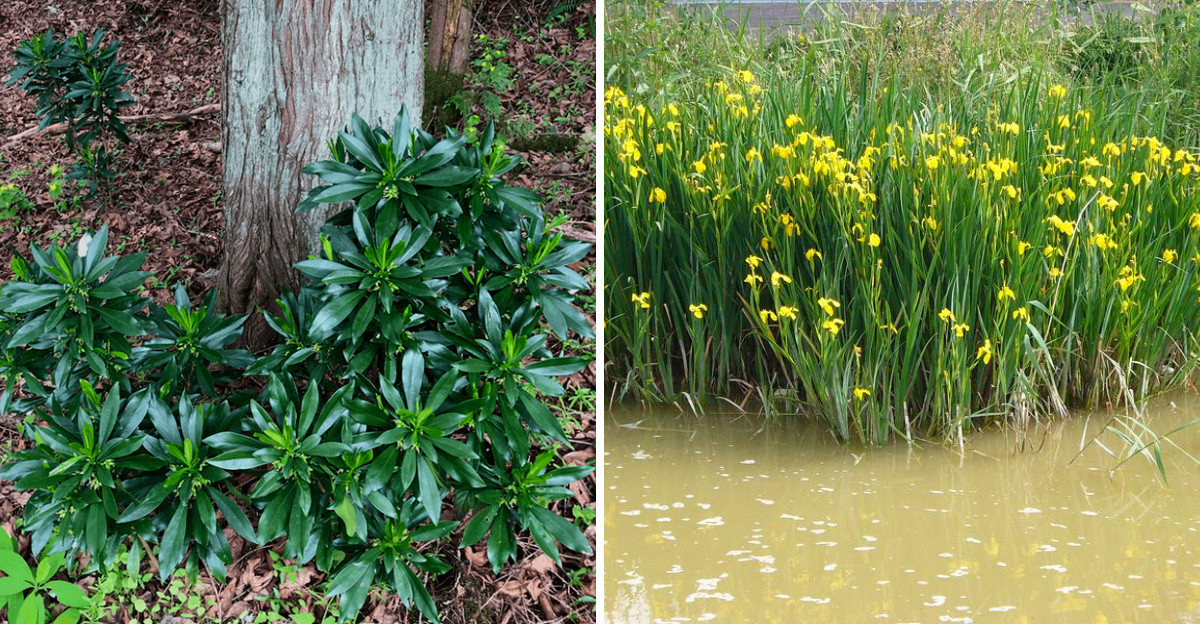
Spurge laurel has a quiet way of taking over. It looks like a tidy, compact evergreen shrub with glossy leaves, and it handles deep shade better than most ornamentals.
That shade tolerance is exactly what makes it such a serious problem in Oregon’s forested areas and shaded understories.
Originally introduced as an ornamental, spurge laurel is now listed as a Class B noxious weed in Oregon.
It produces berries that birds and small mammals carry into natural areas, where it can establish and spread in forest understories with little competition from other plants.
Dense stands crowd out native wildflowers, shrubs, and tree seedlings.
Homeowners with older ornamental plantings may still have spurge laurel in shaded side yards or foundation beds without realizing its regulated status.
Removal requires care because the plant’s sap can irritate skin, so gloves and protective clothing are recommended.
Small plants can be hand-pulled when the soil is moist, while larger shrubs may need to be dug out with the root intact.
Oregon gardeners replacing spurge laurel in shaded spots might consider native alternatives like evergreen huckleberry or low-growing native ferns that provide similar texture without the invasive risk.
6. Yellow Archangel Spreads Through Shade Beds
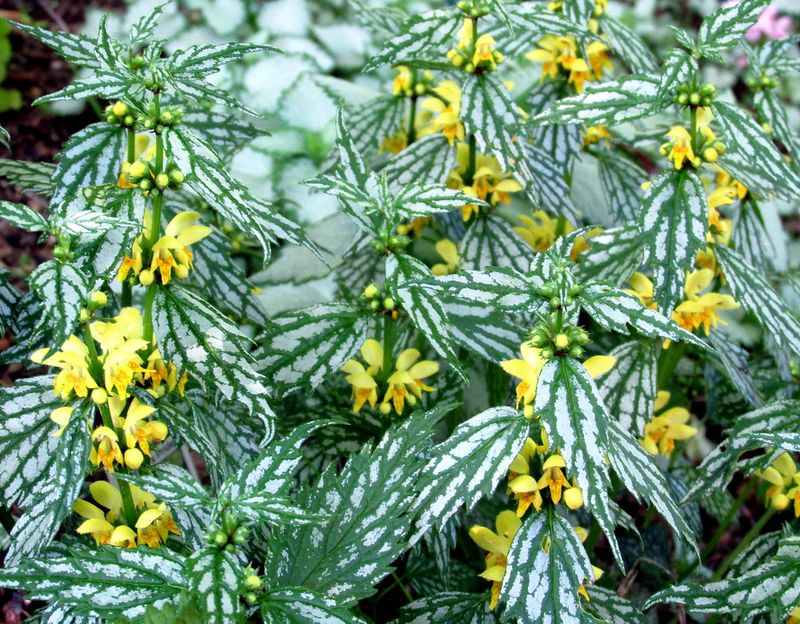
The variegated form of yellow archangel was once a popular choice for brightening up shaded garden beds in Oregon.
The silver-splashed leaves and cheerful yellow spring flowers made it an appealing low-maintenance groundcover for spots where other plants struggled to perform.
Yellow archangel spreads by rooting stems that creep outward along the ground, and it can move well beyond the original planting area over time.
In Oregon, it is listed as a Class B noxious weed and has been documented escaping from gardens into natural areas, particularly in shaded woodland edges, riparian zones, and disturbed forest ground where it forms dense, persistent mats.
Once established outside of a garden setting, yellow archangel is difficult to remove because stem fragments left behind can re-root and start new patches.
Homeowners who notice it spreading aggressively in shaded areas are encouraged to remove it carefully, bagging all plant material rather than composting it.
Disposal in yard waste bins that go to commercial composting facilities, rather than home compost piles, is generally recommended.
Replacing it with native groundcovers like wild ginger or native violets can fill shady spots beautifully while keeping the landscape ecologically sound for Oregon’s native plants and wildlife.
7. Periwinkle Forms Aggressive Evergreen Mats
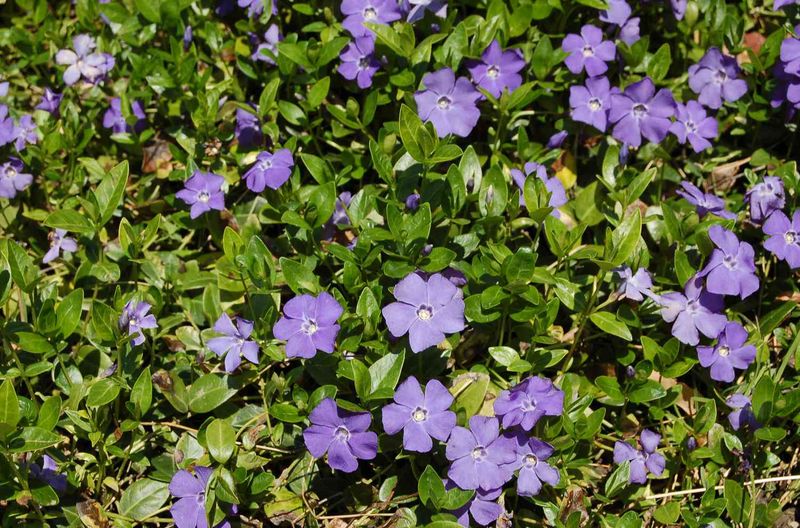
Periwinkle, sometimes called vinca, has covered the ground under trees and along slopes for a very long time.
The glossy evergreen leaves hold color through winter, the small blue flowers appear in spring, and the plant stays put without much watering or attention once it is established.
The issue is how aggressively it can expand. Periwinkle spreads by rooting wherever its stems touch the soil, gradually forming dense mats that exclude nearly everything else.
In Oregon landscapes near natural areas, it can move beyond the garden edge and establish in wooded slopes, riparian corridors, and shaded natural ground where it competes with native vegetation.
Periwinkle is not currently listed as an Oregon state noxious weed, but it is widely recognized as an aggressive nuisance groundcover that can become a persistent problem in certain settings.
Removing established mats is labor-intensive because any stem left in contact with the soil can re-root.
Regular monitoring of the edges where periwinkle meets natural areas is a practical step for homeowners.
For new plantings, native groundcovers such as kinnikinnick, inside-out flower, or creeping Oregon grape offer attractive, low-maintenance alternatives that support local wildlife rather than displacing it.
8. Pampas Grass Escapes From Ornamental Plantings
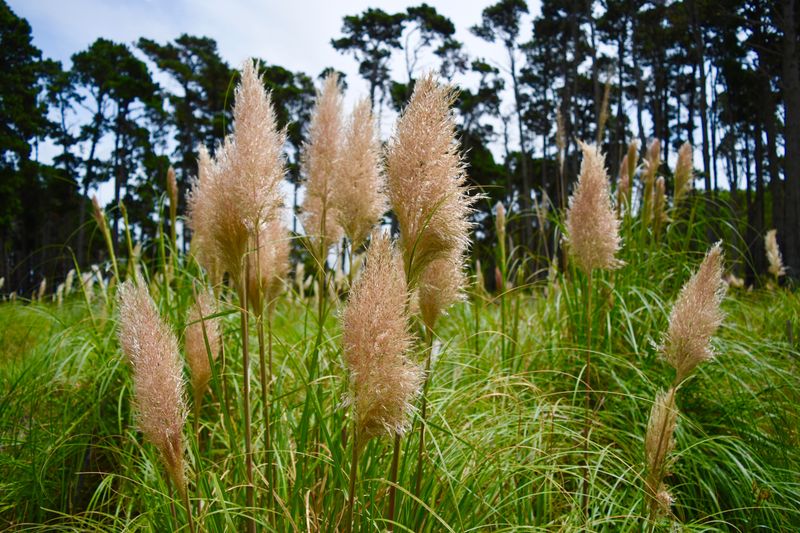
Big, dramatic, and undeniably eye-catching, pampas grass has been used for decades as a bold ornamental accent in Oregon gardens.
The tall silvery plumes that appear in late summer draw attention from a distance, and the plant’s sheer size gives it a presence that few other ornamentals can match.
In suitable conditions, particularly in coastal and western Oregon where mild, moist winters favor its growth, pampas grass can produce large quantities of seeds that travel on the wind.
Escapes from ornamental plantings have been documented in disturbed areas, roadsides, and open land near the coast.
A single mature clump can release thousands of seeds in a season, making placement near open land or natural areas a consideration worth taking seriously.
Not every ornamental grass is invasive, and pampas grass does not pose the same risk in all parts of Oregon. Drier inland areas see far less establishment than coastal zones.
Homeowners with pampas grass near open fields, roadsides, or natural areas may want to remove the plumes before seeds mature as a simple precaution.
Replacing large ornamental grasses with native bunchgrasses like tufted hairgrass or blue wild rye can provide similar dramatic structure while staying ecologically appropriate for Oregon landscapes.
9. Yellow Flag Iris Spreads Along Wet Edges
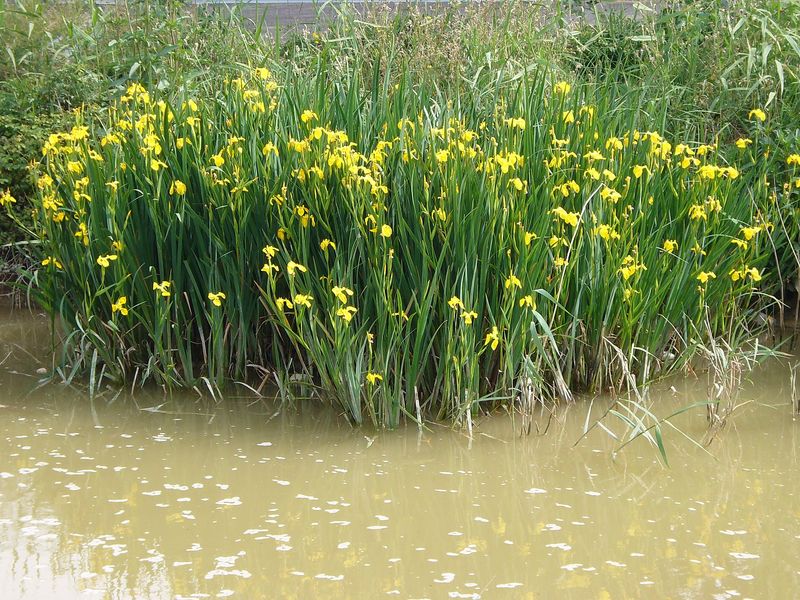
A pond edge or rain garden planted with yellow flag iris looks spectacular in late spring. The tall sword-shaped leaves and vivid yellow blooms are genuinely showy, and the plant handles wet, boggy conditions that would drown most ornamentals.
That combination made it a go-to choice for water features and wet garden edges across Oregon.
Yellow flag iris is listed as a Class B noxious weed in Oregon. It spreads both by seed and by rhizome, and it can establish quickly along ditches, pond margins, stream banks, and marshy areas beyond the original planting.
Dense stands can alter water flow, reduce habitat diversity, and crowd out native wetland plants that provide important ecological functions.
Homeowners with yellow flag iris in water features or along wet garden edges may want to assess whether the plant has already moved beyond its intended area.
Removal from water or wet soil is physically demanding and often requires multiple seasons of effort to fully clear established rhizomes.
Disposing of plant material carefully is important because fragments can re-establish in new locations.
Native alternatives like blue flag iris, camas, or native sedges can bring similar beauty and ecological value to Oregon wet gardens without the documented spread problems associated with yellow flag iris.
10. Myrtle Spurge Moves Into Dry Open Sites
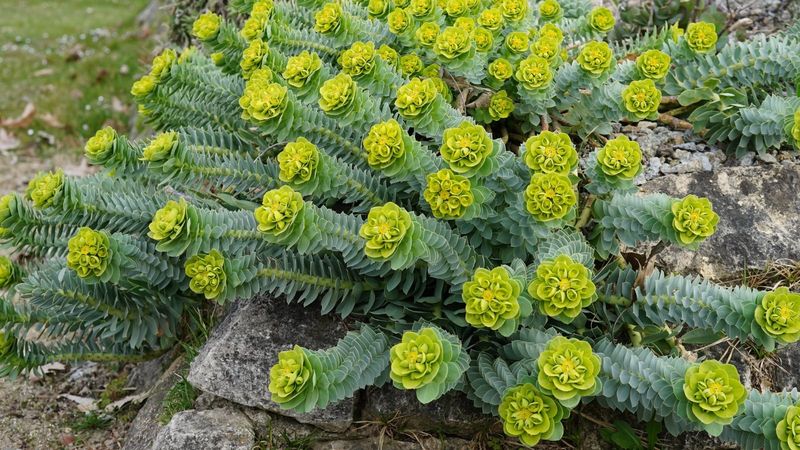
Rock gardens and dry sunny slopes in Oregon have long been planted with myrtle spurge for its low-water needs and interesting blue-green foliage.
The plant forms neat-looking rosettes that spill attractively over rocks, and it tolerates poor, dry soils that challenge most ornamentals.
That drought tolerance made it a logical choice for low-maintenance dry borders.
Myrtle spurge is listed as a Class B noxious weed in Oregon. It spreads by seed, and the seed pods can launch seeds several feet from the parent plant when they dry and pop open.
Escaped plants have been documented moving into dry open sites, roadsides, rangeland edges, and disturbed ground in parts of Oregon where dry, rocky conditions suit the plant well.
The plant’s milky sap is a skin and eye irritant, so wearing gloves and eye protection during removal is genuinely important. Small plants can be hand-pulled before they set seed, while larger infestations may require repeated removal over time.
Homeowners replacing myrtle spurge in dry rock gardens have good native options to consider, including stonecrop species native to the Pacific Northwest, spreading phlox, or low-growing native buckwheats.
All of these thrive in similar dry, sunny conditions without the documented tendency to escape into surrounding open land.