How Georgia Gardeners Grow Healthy Fig Trees In Small Backyards
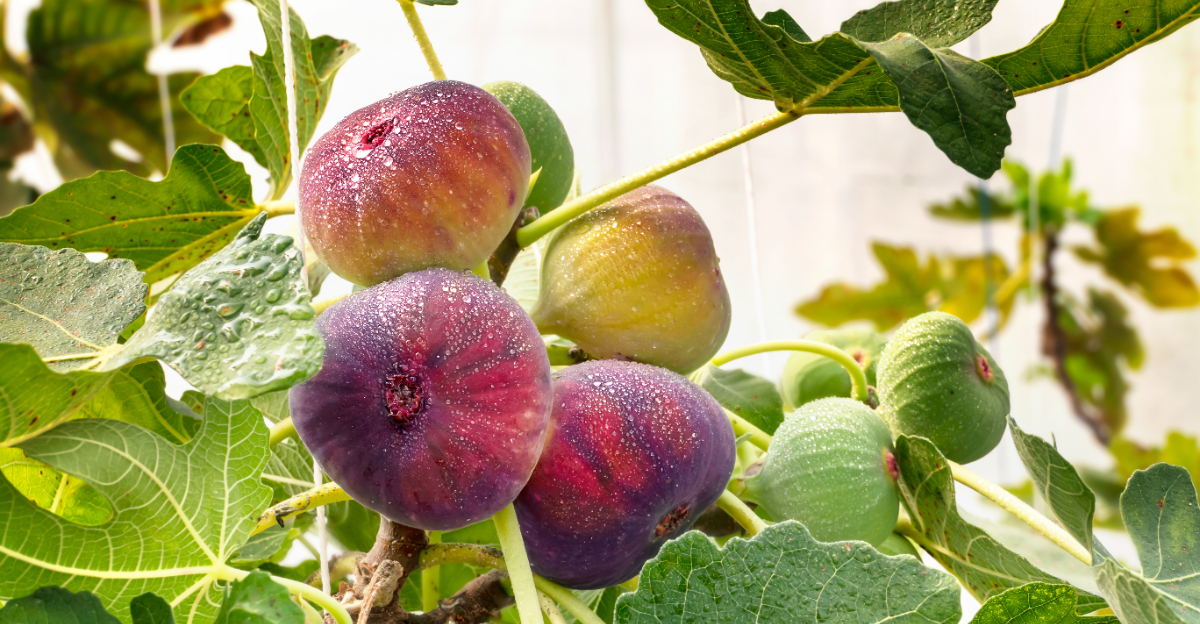
Growing figs in a small Georgia backyard is more rewarding than many people expect.
The warm Southern climate gives fig trees exactly what they love, and with the right approach, even a tight yard can produce a basket full of sweet fruit every summer.
But squeezing a productive fig tree into limited space takes more than just digging a hole and hoping for the best.
Georgia gardeners who get it right know a handful of smart tricks that make the difference between a tree that takes over the yard and one that earns its space every single season.
The good news is that none of these tricks require specialized equipment or years of experience. Most of them are simple decisions made at the right moment, starting before the first shovel goes in the ground.
1. Compact Varieties Fit Small Yards Better
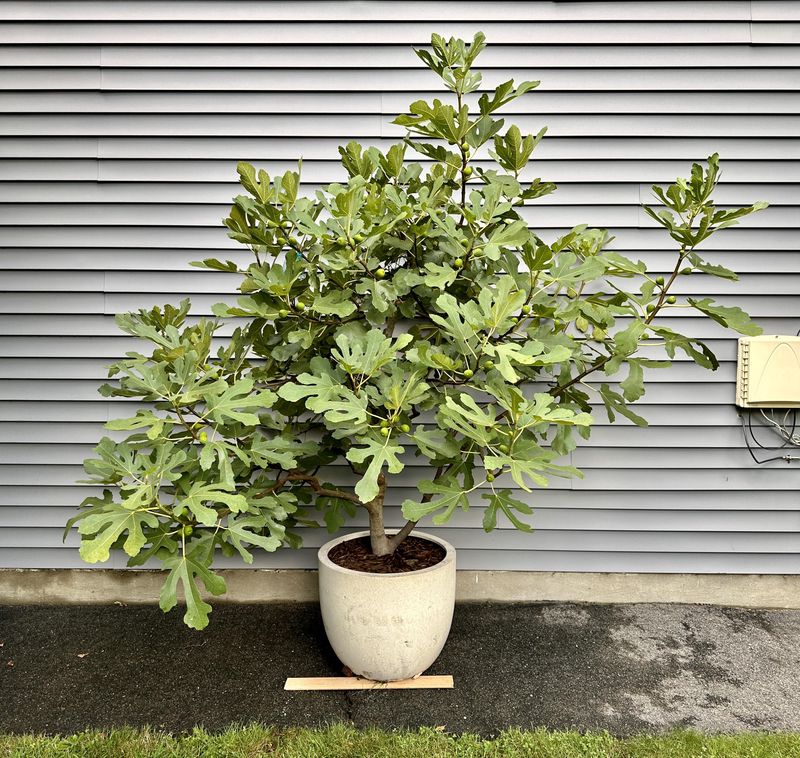
Not every fig tree is built for a tight backyard.
Some varieties spread wide and tall, eventually swallowing a patio, shading a garden bed, and climbing over a fence before you even notice.
Choosing the right variety from the start saves years of fighting a tree that simply does not want to stay small.
Brown Turkey is one of the most popular choices for Georgia gardeners working with limited space. It stays manageable with regular pruning, produces two crops per season, and handles Georgia heat without much fuss.
Celeste is another excellent option. It grows more slowly than many other varieties, tends to stay compact naturally, and produces small, honey-sweet figs that Georgia gardeners have loved for generations.
Petite Negra is worth considering for the smallest yards or patio spaces. It can fruit when only a few feet tall, making it one of the most backyard-friendly options available.
LSU Purple and Alma also perform well in Georgia conditions and respond nicely to size management.
Selecting varieties suited to the state’s climate zones, particularly those that tolerate humidity and resist fruit souring, sets the foundation for every growing decision you make after planting.
A compact variety in a small yard gives you fruit, manageability, and breathing room all at once, which is exactly what a small-space Georgia garden needs and exactly what an oversized variety will never willingly provide.
2. Full Sun Builds A Stronger Harvest
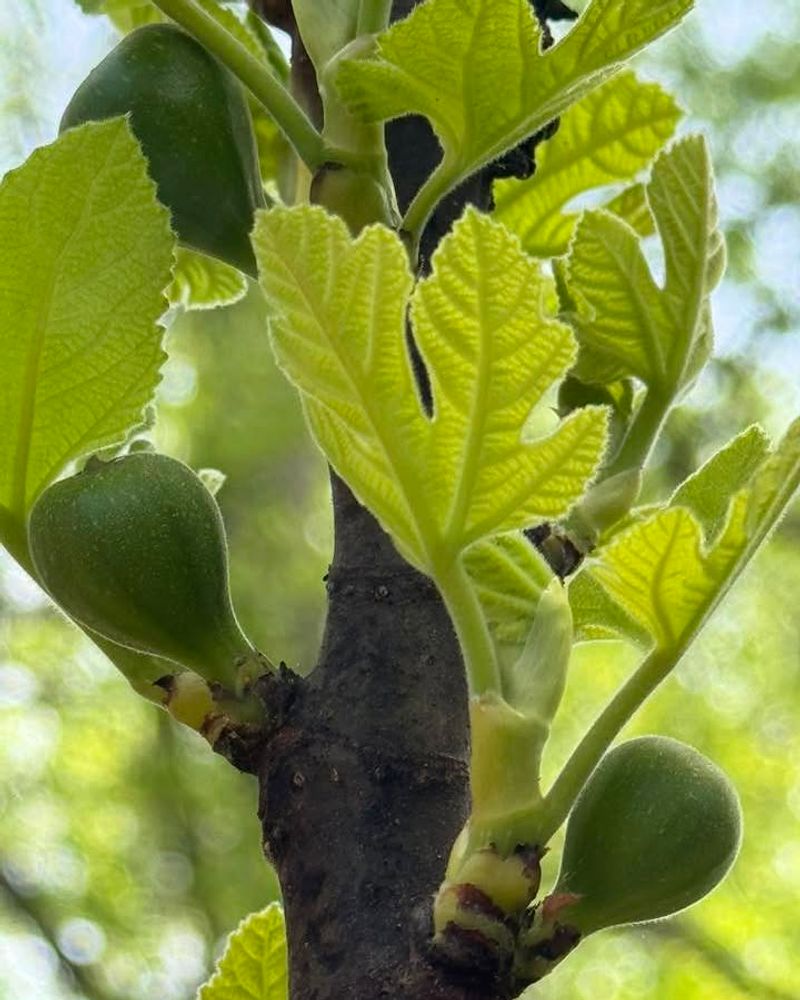
Sunlight is not optional for figs. A tree parked in partial shade might survive, but it will produce a disappointing harvest year after year while you wonder what went wrong.
Georgia gardeners who consistently pull heavy crops from small yards almost always have one thing in common: their trees sit in full, direct sun for at least eight hours every day.
Figs are Mediterranean plants at heart. They evolved in hot, bright climates and carry that preference into every Georgia summer.
When a tree gets the light it craves, it channels energy into fruit development rather than stretching toward the nearest bright patch. Leaves stay greener, growth stays sturdier, and fruit ripens more evenly across the whole tree.
Scouting your yard before planting makes a real difference. Spend a day watching how sunlight moves across your space.
Your Georgia Garden Changes Every Week. Your Plan Should Too.
Gardening in Georgia changes quickly throughout the season. Every Friday you’ll receive a simple weekly plan showing exactly what to plant, prune, fertilize, harvest, and protect so you never miss the right timing.
Note where shadows from the house, garage, or neighboring trees fall during morning, midday, and late afternoon. The spot that stays bright the longest is your best planting location, even if it is not the most convenient one.
South-facing and west-facing exposures typically deliver the most light in Georgia yards. Avoid spots near large shade trees, especially since root competition from those trees creates additional challenges on top of the light problem.
Once a fig tree settles into a full-sun location, the improvement in fruit production is noticeable within a single growing season. Good light is one investment that pays back every summer without any extra effort from you.
3. Distance From Walls Prevents Crowding
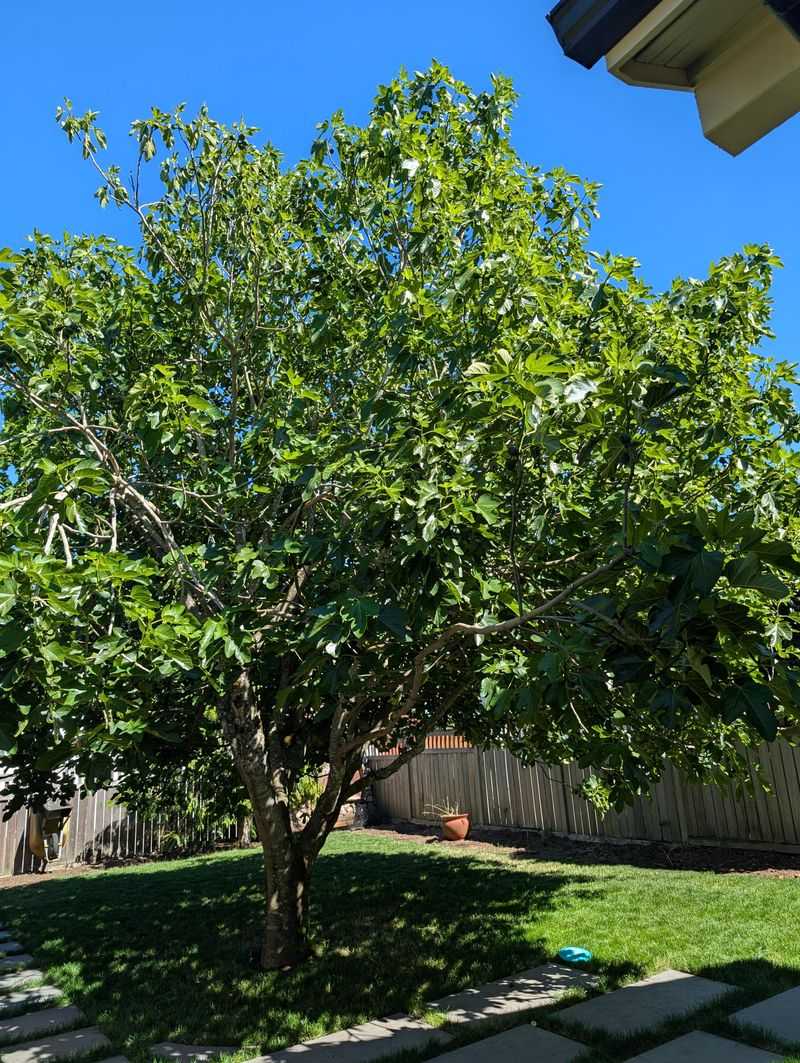
Planting a fig tree too close to a wall, fence, or walkway is one of the most common small-yard mistakes. It looks fine the first year.
By year three or four, branches are pressing against siding, roots are lifting pavers, and pruning feels like a constant battle just to keep the tree from consuming everything nearby.
Giving fig trees at least ten to fifteen feet of clearance from structures is ideal when space allows.
In a small yard that target is not always realistic, but even six to eight feet of buffer makes a meaningful difference in how manageable the tree stays over time.
Walls trap heat, which figs enjoy, but they also restrict airflow and create pruning headaches as branches mature and thicken.
Fences deserve the same consideration. A fig planted right against a wooden privacy fence will eventually push through gaps, press boards outward, and create moisture problems where branches contact the wood.
Keeping even a modest gap between the tree and the fence preserves both the fence and the tree’s shape without requiring dramatic intervention.
Pathways and patios need clearance too. Shallow fig roots can crack concrete and shift stepping stones over several years.
Planting with forethought protects the hardscaping and keeps the tree from becoming a nuisance rather than a pleasure.
Giving a fig tree honest breathing room from the start is one of those quiet decisions that makes every future season easier, cleaner, and more enjoyable in a small Georgia backyard.
4. Containers Make Tight Patios Work
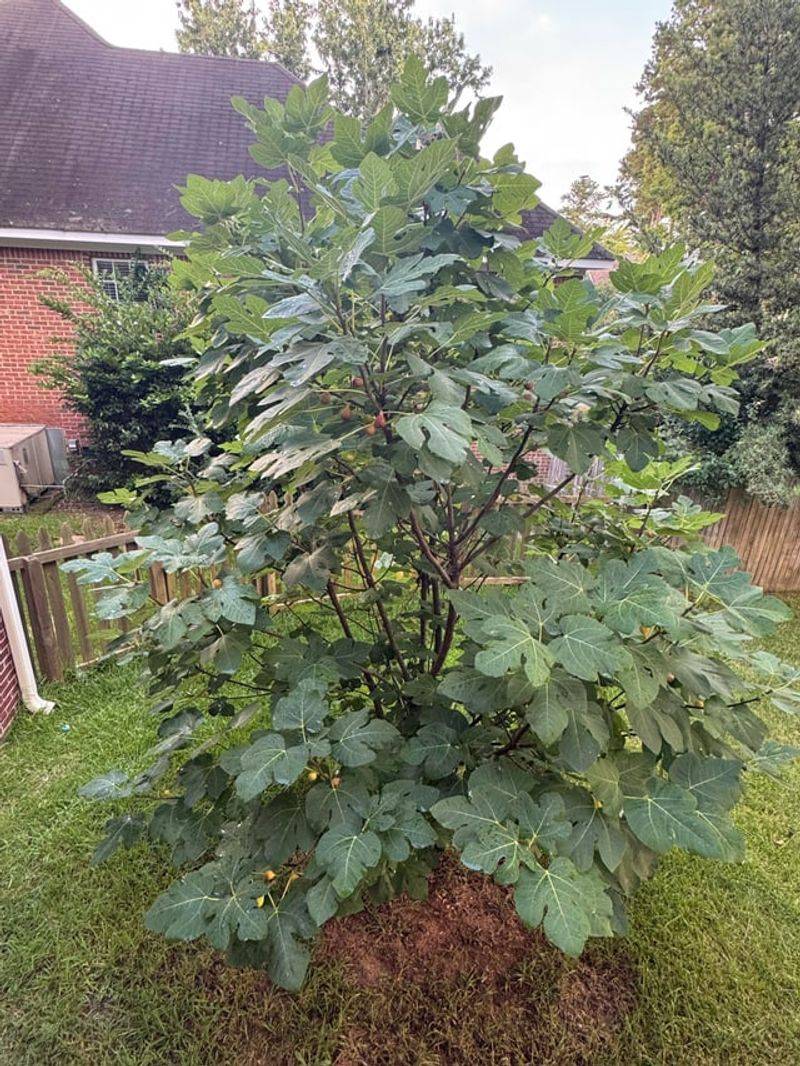
A patio with no planting beds is not a reason to skip growing figs.
Container growing has become one of the smartest strategies for Georgia gardeners working with concrete, brick, or minimal soil space.
A fig tree in a large container can thrive on a sunny patio, produce real fruit, and move to a sheltered spot during cold snaps without any drama.
Container size matters more than most beginners expect. A pot that feels big when you first plant a young tree will become restrictive within two or three seasons.
Start with a container that holds at least fifteen to twenty-five gallons of growing medium. Larger is almost always better with figs, since the root system needs room to establish before the tree can focus its energy on fruiting consistently.
Drainage is non-negotiable. Figs sitting in waterlogged soil quickly develop root problems that slow growth and reduce yields.
Choose containers with multiple drainage holes and use a well-draining potting mix. Elevating the pot slightly on pot feet or bricks helps water escape freely after rain or irrigation.
Compact varieties like Petite Negra and Celeste adapt especially well to container life. They stay smaller naturally, which keeps the pot-to-tree ratio balanced longer.
Fertilize container figs more consistently than in-ground trees, since nutrients wash out with regular watering.
With the right setup, a patio fig tree can produce enough fruit to make summer mornings in a small Georgia backyard feel like a genuinely satisfying reward for a modest amount of effort.
5. Open Bush Pruning Keeps Trees Manageable
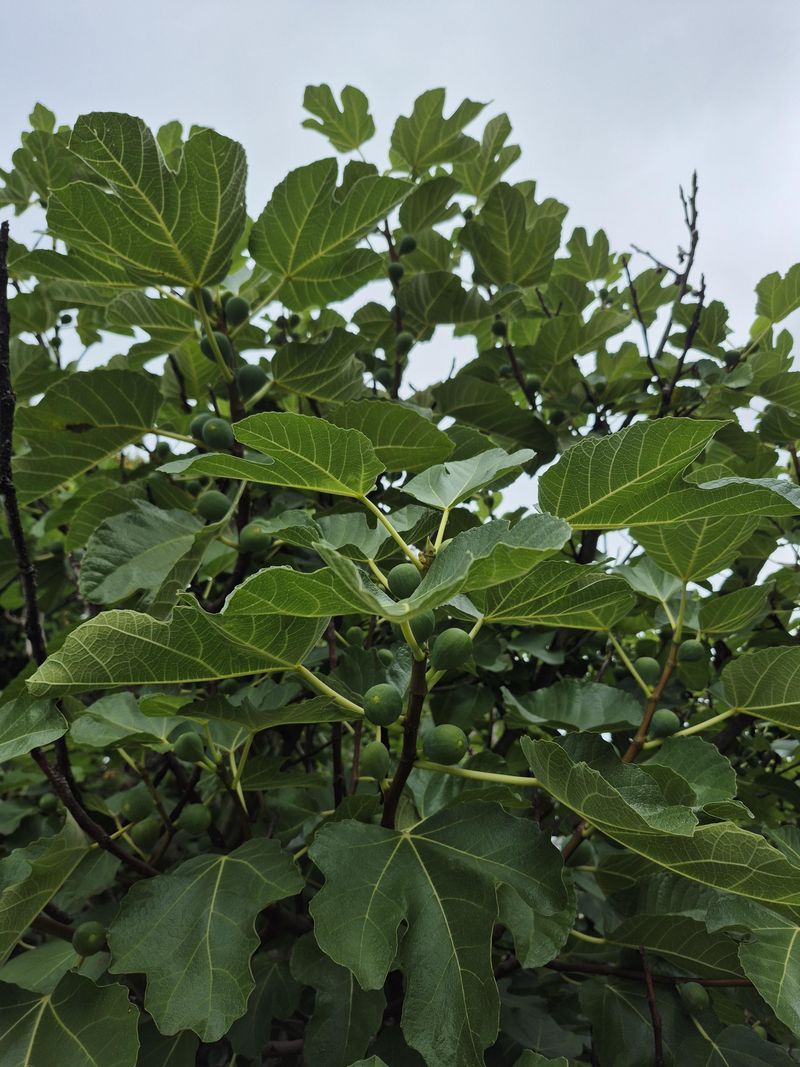
Pruning a fig tree for the first time can feel intimidating, especially when the tree has already filled out with dense growth.
But skipping it entirely leads to a tangled canopy, poor airflow, shaded interior branches, and fruit that hides so deep inside the tree that harvesting becomes a frustrating reach-and-grab situation every afternoon.
Open bush pruning is the most practical approach for small Georgia yards. The goal is a low, wide tree with four to six main scaffold branches spreading outward from a short trunk.
This shape keeps the tree reachable from the ground, lets sunlight penetrate the canopy, and allows air to move through freely, which helps reduce fungal issues during Georgia’s humid summers.
Late winter is the best time to prune, just before new growth begins to emerge. The branch structure is fully visible and the tree is still dormant, which makes decisions easier and cleaner.
Remove crossing branches, dead wood, or shoots growing straight up through the center of the canopy. Cutting back long branches by one-third encourages bushier, more productive regrowth without shocking the tree.
Summer pruning is also useful for controlling height and redirecting energy into fruit rather than excessive leafy growth.
Pinching back shoot tips in early summer slows vertical growth without stressing the tree significantly. Sharp, clean tools make every cut heal faster.
Consistent pruning every year keeps a small-yard fig tree at a size you can manage, harvest comfortably, and genuinely enjoy rather than dread working around.
6. Wide Mulch Protects Shallow Roots
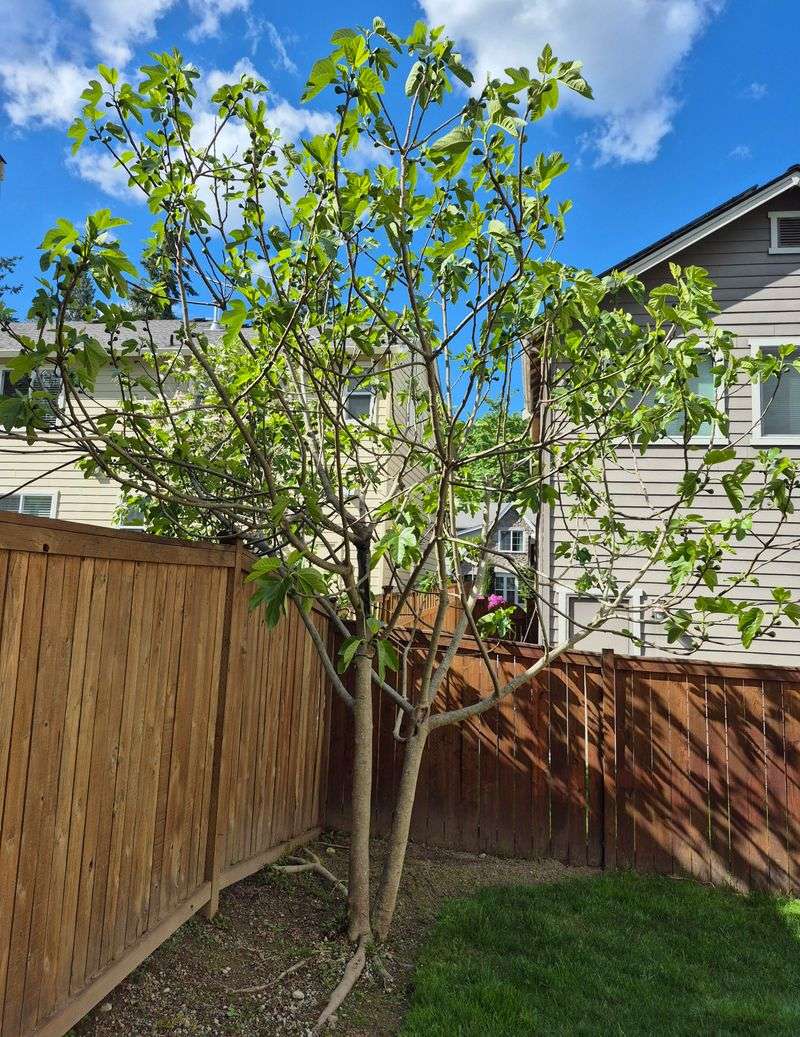
Fig roots are surprisingly shallow.
They spread outward close to the soil surface rather than drilling deep underground, which makes them vulnerable to temperature swings, moisture loss, and soil compaction from foot traffic or lawn equipment.
A wide layer of mulch addresses all three problems at once without any complicated effort on your part.
Spread mulch in a wide circle around the base of the tree, extending at least three to four feet out from the trunk in every direction. In a small yard, that circle might reach close to a fence or path, and that is perfectly fine.
The goal is to cover as much of the root zone as possible. Wood chips, pine straw, and shredded leaves all work well and break down gradually to improve soil structure over time.
Depth matters too. Aim for a three to four inch layer. Too thin and it dries out quickly, offering little protection during Georgia’s summer heat.
Too thick and it can hold excess moisture against the trunk, which creates problems over a longer period.
Always leave a clear gap of two to three inches between the mulch and the trunk itself. Mulch piled against the trunk stays moist and can weaken the bark over time.
Pull it back gently if it creeps inward during rain events. A properly mulched fig tree holds soil moisture longer between waterings, keeps roots cooler during August heat, and needs less attention overall.
That kind of low-maintenance protection is worth every bit of the ten minutes it takes to spread it correctly.
7. Deep Watering Helps During Dry Weeks
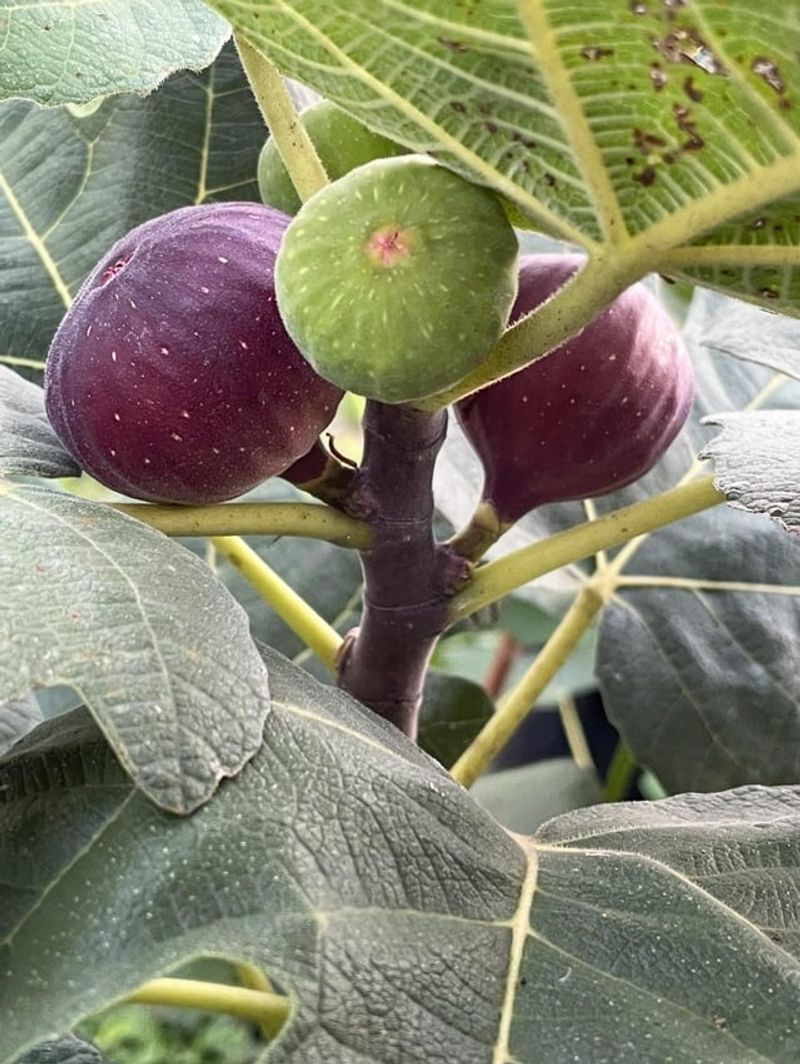
Georgia summers can turn hot and dry fast.
A fig tree that gets frequent shallow watering develops a root system that stays near the surface, making it more vulnerable when a dry stretch drags on for two or three weeks.
Deep, infrequent watering trains roots to reach further into the soil profile, where moisture lingers longer even during hot spells.
The general target for established in-ground fig trees is about one to two inches of water per week during the growing season, either from rainfall or supplemental irrigation.
During peak summer heat or extended dry periods, lean toward the higher end of that range. Young trees in their first two seasons need more consistent attention since their root systems have not yet spread far enough to buffer against dry conditions on their own.
Soaker hoses and drip irrigation are excellent tools for small-yard fig growers. They deliver water slowly and directly to the root zone without wetting the foliage, which helps reduce fungal leaf issues during Georgia’s humid summer months.
Set the system to run for a longer period at lower intensity rather than a quick blast that mostly runs off before soaking in.
Container figs need watering more frequently than in-ground trees since pots dry out faster, especially on hot concrete patios.
Check soil moisture by pushing a finger two inches into the potting mix and watering thoroughly when it feels dry at that depth.
Consistent moisture during fruiting season directly affects fruit size, sweetness, and overall crop quality on any Georgia fig tree, and that connection shows up clearly at harvest time.
8. Nematode Checks Prevent Hidden Setbacks
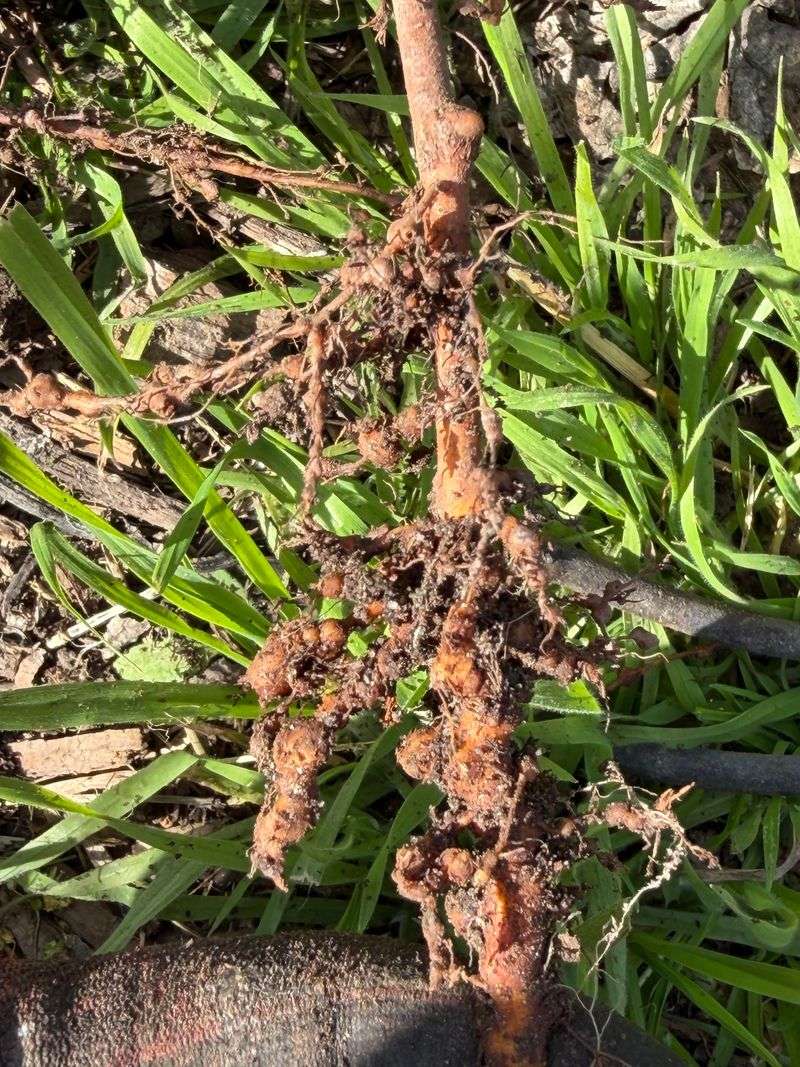
Root-knot nematodes are one of those backyard problems that show up silently. The tree looks slightly off. Growth slows. Leaves pale a little. Fruit production drops without any obvious reason above ground.
By the time the symptoms are noticeable enough to trigger concern, the root system may already be dealing with significant damage from microscopic organisms that most gardeners never think to check for.
Georgia soils, particularly sandy soils common in the southern and coastal parts of the state, carry a higher risk of root-knot nematode populations.
Soil testing before planting fruit trees in areas where nematodes have historically been a concern is worth the small investment.
A soil sample sent to a certified lab can confirm whether nematode pressure is present and at what level, giving you the information needed to choose your planting site wisely rather than finding out the hard way two seasons later.
Choosing a planting site with heavier clay content or improving sandy soil with organic matter before planting helps reduce nematode risk.
Organic matter supports beneficial soil organisms that naturally compete with nematode populations over time.
Rotating cover crops like marigolds in the planting area before establishing a fig tree is another practical strategy that some Georgia gardeners use with good results.
Container growing sidesteps nematode risk almost entirely, since commercial potting mixes are free of field soil.
If backyard soil tests positive for high nematode pressure, a large container on a sunny patio may actually be the smartest long-term growing choice available.
Checking first costs very little and saves a great deal of frustration, which is the kind of trade most gardeners are happy to make.